What Is an ESC in RC Car?
If you just got into RC cars or you’re thinking about buying one, you’ve probably heard the word “ESC” thrown around a lot. Maybe your RC car broke down and someone told you it was the ESC. Or perhaps you’re shopping for a new car and you see ESC mentioned in the specs. Either way, you’re probably wondering what exactly an ESC is and why it matters so much.
Don’t worry. We’re going to break this down for you in a way that makes sense. No fancy tech jargon. No confusing explanations. Just the facts about what an ESC does, how it works, and why you need one.
What Does ESC Stand For?
ESC stands for Electronic Speed Controller. That’s it. It’s a piece of equipment that controls how fast your RC car goes. Think of it like the gas pedal in a real car, except the ESC is what actually makes the motor speed up or slow down based on your commands.
When you move your remote control’s throttle stick, the signal goes to the ESC. The ESC then tells the motor how much power to give it. More power means faster speeds. Less power means slower speeds. No power means the car stops.
Where Is the ESC Located?
The ESC sits somewhere on your RC car. Depending on the model, it could be tucked under the body shell, mounted to the frame, or placed inside a waterproof case. In many modern cars, the ESC is pretty easy to find because it sticks out from the main chassis. It usually looks like a rectangular box with wires coming out of it.
The placement matters because the ESC needs to stay cool. During long racing sessions or fast runs, the ESC generates heat. If it gets too hot, it can shut down or even break. Some RC cars have vents or fans to keep the ESC cool. Others rely on the air moving around it while you’re driving.
How Does an ESC Actually Work?
Here’s where it gets interesting. Your RC car’s motor needs electrical current to run. The ESC manages that current. It takes power from the battery and delivers it to the motor in a controlled way.
The process works like this: Your remote control sends a signal to the receiver on the car. The receiver passes that signal to the ESC. The ESC reads the signal and figures out how much power the motor needs. Then it sends that exact amount of power to the motor.
But it’s not as simple as just flipping a switch on and off. The ESC uses something called pulse width modulation, or PWM. This means the ESC rapidly turns the power on and off, really fast. By changing how long the power stays on compared to how long it stays off, the ESC controls the motor’s speed.
Think of it like this: if the power is on for the whole time, the motor gets full speed. If it’s on for half the time and off for half the time, the motor gets half speed. The ESC does this switching so fast that the motor runs smoothly at whatever speed you want.
The Different Types of ESCs
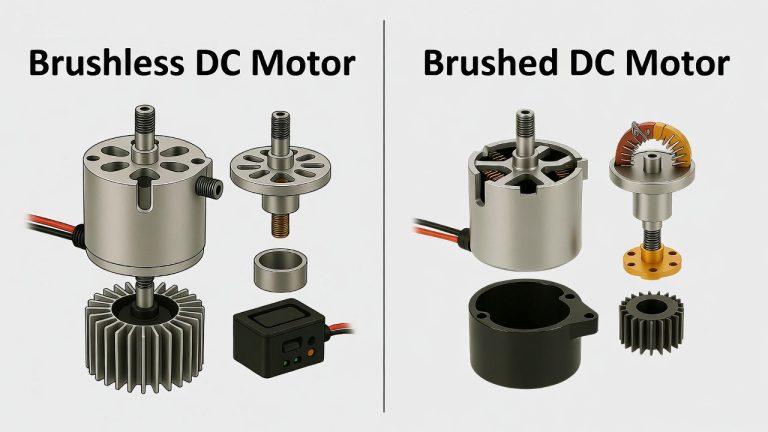
Not all ESCs are the same. There are two main types: brushed ESCs and brushless ESCs.
Brushed ESCs
Brushed ESCs work with brushed motors. Brushed motors have brushes inside them that deliver power to the spinning part. These ESCs are usually simpler and cheaper. They work fine for basic RC cars and beginner setups.
The downside is that brushed motors and their ESCs are less efficient. They lose more power as heat. They also wear out faster because the brushes inside the motor eventually need replacement.
Brushless ESCs
Brushless ESCs are the newer technology. They work with brushless motors, which don’t have brushes. Instead, they use electronics to switch the power delivery. This makes them much more efficient.
Brushless ESCs cost more money, but they give you better performance, less heat, longer motor life, and more control. If you’re serious about RC cars, brushless is the way to go.
What Voltage and Amperage Mean
When you’re looking at ESCs, you’ll see numbers like “60A” or “3S-6S.” Let’s decode these.
The “A” stands for amps, which is short for amperes. This is a measure of electrical current. A 60A ESC can handle 60 amps of current flowing through it. The higher the amps, the more power the ESC can push to the motor. If you have a really fast motor that needs a lot of power, you need an ESC that can handle it.
The “3S-6S” refers to the battery. “S” stands for series. A 3S battery has three cells. A 6S battery has six cells. Each cell is about 3.7 volts. A 3S battery is about 11.1 volts. A 6S is about 22.2 volts.
The important thing to remember is that your ESC must match your battery voltage. If you use a 4S battery with a 3S-only ESC, you’ll fry the ESC. It’s that simple.
ESC Features You Should Know About
Modern ESCs have lots of built-in features. Some of them are really useful.
Brake Function
Most ESCs have a brake setting. When you let off the throttle, the brake function stops the motor and slows the car down. Without it, the motor would just coast and your car would keep rolling. With brake enabled, your car stops much faster. This is super helpful for racing or tight courses.
You can usually adjust how strong the brake is. More brake means quicker stops. Less brake means the car coasts more.
Temperature Monitoring
Many ESCs have a temperature sensor. If the ESC gets too hot, it can lower the power to cool down. Some ESCs will shut off completely if they overheat. This protects your ESC from burning out, but it can be annoying during a long race.
Reverse Function
Some ESCs let you drive in reverse. Others don’t. This depends on the motor and the ESC programming. Most beginner RC cars have reverse. Some race cars don’t because racers don’t want to accidentally go backwards during a race.
Programmable Settings
Fancy ESCs let you change lots of settings. You can adjust the brake strength, set the motor timing, change the throttle response, and more. Some ESCs connect to computers or apps so you can program them easily.
Why Your ESC Is Super Important
The ESC is literally the connection between your remote control and your motor. Without it, your motor doesn’t know what to do. The ESC is what makes your car respond to your commands.
A good ESC gives you smooth acceleration, quick stops, and reliable performance. A bad ESC or a broken ESC can make your car slow, jittery, or completely unresponsive.
If your car suddenly won’t speed up or keeps cutting out, the ESC might be the problem. If your car doesn’t stop when you tell it to, that’s also often an ESC issue.
How to Pick the Right ESC
If you need to buy a new ESC, here are the things that matter:
Match Your Motor Type: Make sure you get a brushed ESC for a brushed motor or a brushless ESC for a brushless motor. They’re not interchangeable.
Check the Voltage Range: Look at your battery. If you have a 3S battery, get an ESC that handles 3S. If you have a 4S, get a 4S-compatible ESC. Don’t guess on this one.
Get the Right Amps: Look at your motor’s power draw. If your motor needs 50 amps, your ESC should handle at least 50 amps. It’s better to go a little higher (like a 60A for a 50A motor) to give yourself some safety margin.
Decide on Features: Think about what you actually need. Do you want programmable settings? Do you want temperature monitoring? Do you want a waterproof case? These add to the cost but can be worth it.
Consider Your Budget: ESCs range from $20 to $200 or more. For a beginner, a basic ESC is fine. As you get more serious, you can upgrade to fancier models.
Common ESC Problems
Sometimes ESCs fail or act weird. Here are some problems people run into:
The Car Won’t Speed Up: The ESC might not be sending power to the motor. This could be a dead ESC or a bad connection. Check all your plugs first.
The Car Won’t Stop: If your brake isn’t working, the ESC might be damaged. Some people reset the ESC to factory settings and that fixes it. If that doesn’t work, you probably need a new one.
The Car Acts Jittery or Cuts Out: This usually means a bad connection or a low battery. It could also be a damaged ESC. Try charging your battery and checking all connections before you replace it.
The ESC Gets Really Hot: All ESCs get warm. Some heat is normal. But if it’s too hot to touch, something’s wrong. Maybe the brake is on too strong. Maybe your battery is pushing too much power through. If heat is the issue, reduce your driving time and let it cool down.
The Car Spins Out of Control: Sometimes the motor direction is backwards in the ESC settings. Most ESCs have a simple way to reverse the motor direction. Check your ESC manual for how to do this.
Caring for Your ESC
Your ESC will last longer if you take care of it.
Keep It Dry: If you drive in wet areas, make sure your ESC is waterproof or enclosed. Water and electricity don’t mix.
Let It Cool Down: Don’t do back-to-back long races. Give your ESC breaks. Let it cool between sessions.
Use the Right Battery: Don’t use a battery that’s too powerful for your ESC. Don’t use a battery with the wrong voltage.
Check Connections: Loose wires cause all kinds of problems. Make sure everything is plugged in tight.
Avoid Dropping It: ESCs are pretty tough, but dropping your car hard can damage the ESC. Be gentle with your RC car.
ESC vs. Motor: What’s the Difference?
People sometimes confuse the ESC and the motor. They’re different parts that work together.
The motor is the part that actually spins. It converts electrical power into motion. The ESC controls how much power goes to the motor.
Think of it like this: your motor is the engine in a real car. Your ESC is like the fuel injection system that controls how much fuel the engine gets.
You can have a super powerful motor, but if your ESC can’t deliver enough power to it, the motor won’t reach its full potential. On the other hand, a weak ESC will limit what even a good motor can do.
Budget ESCs vs. Expensive ESCs
You don’t have to spend a lot of money on an ESC. Budget ESCs work fine for casual driving and learning. They give you basic control and reasonable performance.
Expensive ESCs have more features, better reliability, more precise control, and often last longer. If you’re racing seriously or driving in tough conditions, a nicer ESC is worth the money.
For most people just having fun, a middle-ground ESC is the smart choice. It’s reliable enough for hobby use without costing a fortune.

Brushless vs. Brushed: Which Should You Pick?
If you’re starting from scratch, here’s the quick answer: brushless is better. Period.
Brushless motors and ESCs are more efficient, more powerful, and last longer. They cost more upfront, but they’re worth it. You’ll get better performance and you won’t have to replace the motor brushes.
Brushed systems are cheaper to buy, but you’ll spend more over time replacing worn brushes and dealing with less power.
Understanding ESC Programming
Some ESCs are simple. You just plug them in and they work. Others let you program lots of settings.
If your ESC is programmable, you can often adjust:
- The brake strength
- The throttle response curve (how sensitive the throttle is)
- The motor timing
- The rotation direction
- Low voltage cutoff (to protect your battery)
You don’t need to change these settings unless you’re racing or trying to fine-tune performance. Default settings work for regular driving.
If you want to program your ESC, consult the manual. Some ESCs use a programming card. Others connect to computers or phones. It’s easier than it sounds once you get the hang of it.
How Heat Affects Your ESC
Heat is the enemy of electronics. Your ESC generates heat when current flows through it. The more current, the more heat.
High heat can reduce the ESC’s lifespan. Very high heat can shut the ESC down or damage it. Some ESCs have thermal cutoff protection that shuts them down if they get too hot.
To keep your ESC cool:
- Use it in short sessions
- Make sure it has airflow around it
- Don’t push your battery too hard
- Use a cooler running brake setting if you don’t need full braking power
- Consider a fan or heatsink if you’re doing heavy use
The Role of the Receiver
Your ESC works with the receiver. The receiver gets the signal from your remote control. It sends that signal to the ESC. The ESC then acts on it.
If your receiver is broken, the ESC won’t get commands. If your ESC is broken, it won’t respond to the receiver’s commands. Both need to work together for your car to respond properly.
ESC Brands You Can Trust
Lots of companies make ESCs. Some popular brands include:
- Hobbywing (very popular, good quality)
- Castle Creations (known for brushless ESCs)
- Team Orion (good mid-range ESCs)
- Spektrum (reliable option)
- Stock brand ESCs (often come with the car)
You don’t need an expensive brand if you’re just learning. Stock ESCs that come with RC cars usually work fine. As you get serious, brands like Hobbywing and Castle are worth the extra cost.
What Happens When Your ESC Dies
If your ESC stops working, your car won’t respond to throttle. You can still steer, but the car won’t move no matter what you do.
To confirm it’s the ESC, you can:
- Check that your battery is charged
- Look for damage or burnt smell
- Try to reset it (some ESCs have a reset button)
- Test it with a different battery if you have one
If none of that works, you probably need a new ESC.
The good news is that ESCs are easy to replace. Unplug the old one, plug in the new one, and you’re done. No soldering needed.
Common Beginner Mistakes with ESCs
Here are mistakes beginners often make:
Matching the Wrong Voltage: Getting a 3S ESC when you have a 4S battery. This fries the ESC immediately.
Ignoring Heat: Running the car for hours without breaks. This overheats and damages the ESC.
Not Checking Connections: Loose plugs cause the ESC to cut out randomly. Always make sure everything is plugged in tight.
Using Water Without Protection: Taking your car in water with an unprotected ESC. Water destroys electronics.
Cheap Battery with Nice ESC: Using a super cheap battery with an expensive ESC. The battery can’t handle the power and damages the ESC. Match your parts.
Ignoring the Manual: Every ESC is a little different. Read the manual. It tells you how to set it up and what its limits are.
Final Thoughts on ESCs
Your ESC is one of the most important parts of your RC car. It’s the bridge between your brain (the remote), your commands (the throttle input), and the motor’s action.
A good ESC gives you smooth, responsive performance. A bad or broken ESC makes your car feel sluggish or unresponsive.
Now that you understand what an ESC does, you can shop for one with confidence. You know what voltage and amps mean. You know the difference between brushed and brushless. You know how to pick the right one for your car.
Whether you’re rebuilding a broken car, upgrading an old one, or building a new one from scratch, the ESC is a critical choice. Take your time, match it to your motor and battery, and you’ll have a car that’s fun to drive.
And remember: if something seems wrong with your car, the ESC might be the culprit. It’s worth checking before you assume something else is broken.
Happy driving!