How to Choose RC Tires?
RC cars are fun. They zoom around, jump, and drift. But they won’t do any of that if your tires are wrong. Most new RC fans don’t know where to start when picking tires. There are so many options out there. You see different sizes, compounds, and tread patterns. It gets confusing fast.
This guide breaks it all down for you. We’ll talk about what makes one tire different from another. You’ll learn how to find the right tires for your RC car. By the end, you’ll feel confident making this choice.
Why RC Tires Actually Matter
Your tires are the only thing touching the ground. They grip the track. They grip the dirt. They grip the street. Everything your RC car does depends on what’s under it.
Bad tires make your car slow. They cause weird handling. Your car might spin out when you don’t want it to. Good tires make driving easy. Your car sticks to the surface. It turns sharp. It accelerates hard.
Think of it like shoes. You wouldn’t wear flip-flops to run a race, right? Same thing with RC cars. The tire has to match what you’re doing.
A lot of beginners ignore tires. They focus on the motor or the battery. That’s backwards. Tires are just as important. Sometimes they’re more important.
The Basic Types of RC Tires
RC tires come in a few main categories. Each one does a different job.
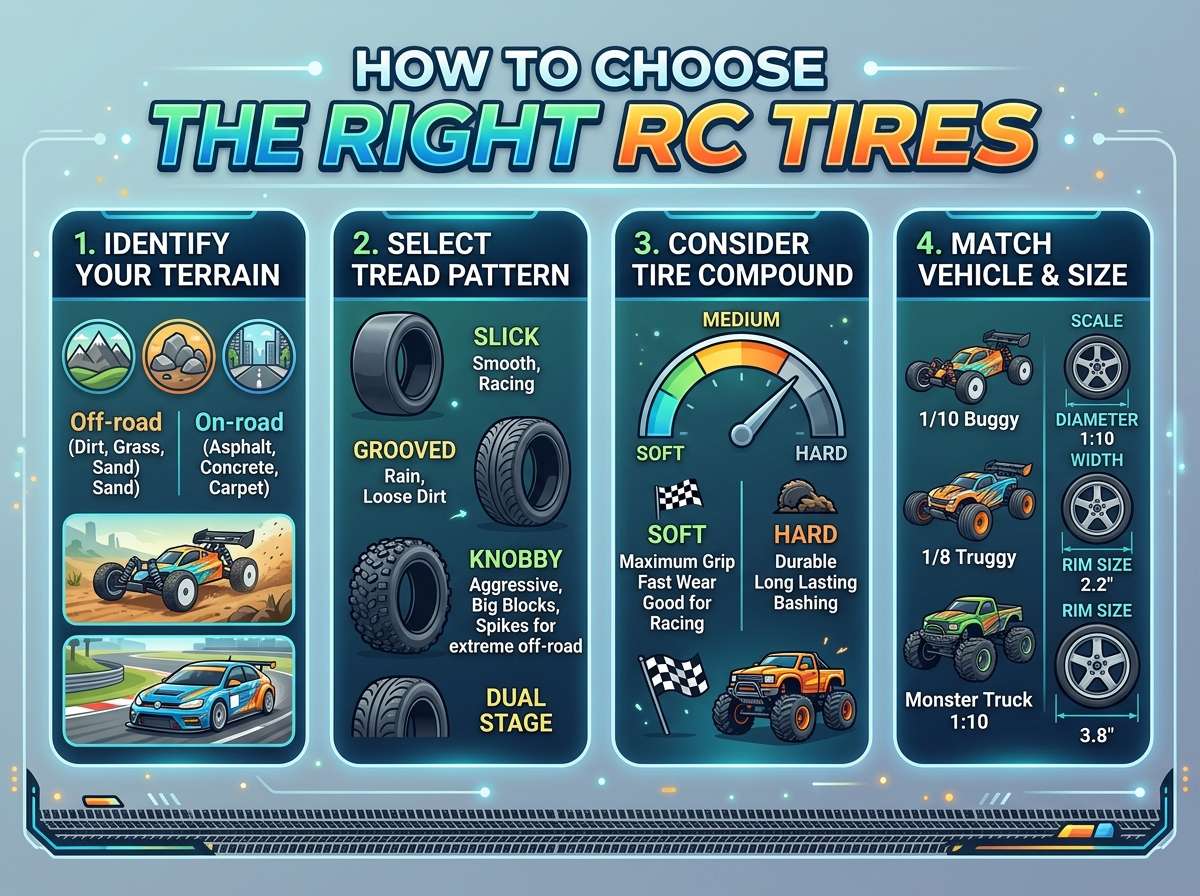
Off-Road Tires
These are knobby. They have chunks sticking out all over. They grip dirt really well. The chunks dig into the ground. This gives you tons of traction on loose surfaces.
Off-road tires work great on trails. They work on sand. They work on grass. Any unprepared surface gets the best grip from these tires. They’re not so good on pavement though. Your car will feel bouncy and slow on concrete.
On-Road Tires
These are smooth. There’s barely any tread on them. They look almost flat. That’s on purpose. Smooth tires grip asphalt really well.
On-road tires are best for pavement. They make your car feel planted. You can take turns fast. You can brake hard. On-road tires are bad for dirt. They slip and slide.
Street Tires
These fall in the middle. They have some texture but not as much as off-road tires. They work okay on pavement and okay on dirt. They’re not perfect for either situation, but they’re decent for both.
Street tires are good if you drive in mixed conditions. You go from asphalt to grass and back again. Street tires let you do that without changing everything.
Rally Tires
Rally tires are somewhere between street and off-road. They give you a bit of everything. You get some traction on pavement and some grip on rough surfaces. Rally tires work well for general driving.
Understanding Tire Compounds
The compound is what the tire is made from. This matters a lot. Different compounds stick differently. They also last different amounts of time.
Soft Compounds
Soft rubber grips really well. It sticks to the surface like glue. Soft tires are great for racing. You get lots of grip. You can go fast.
The downside is wear. Soft tires don’t last long. They wear out quick. You’ll replace them often. They’re also not as durable. You can’t bash them as much.
Soft compounds work best for off-road racing or on-road racing where you want maximum grip.
Medium Compounds
Medium tires are the middle ground. They grip pretty well. They last longer than soft tires. They can handle some abuse.
Medium compounds are popular for general driving. You get decent grip. Your tires last a decent amount of time. It’s a balanced choice.
Hard Compounds
Hard rubber doesn’t grip as much. It slides more. But it lasts a long time. Hard tires can take a beating. You can bash them around and they survive.
Hard compounds are good for bashing. That’s when you drive recklessly and crash. Hard tires handle all that punishment. They’re also good for hot conditions. Heat doesn’t ruin them as fast.
Foam Inserts
Here’s something most beginners don’t know about. The tire doesn’t just stick to the rim. Inside the tire is usually a foam insert. This foam absorbs bumps. It makes the ride smoother. It also affects handling.
Soft foam inserts give you better traction on uneven surfaces. Hard foam inserts give you better grip on smooth surfaces. The foam matters almost as much as the tire itself.
Tire Sizes Explained
RC tires come in different sizes. This can seem confusing at first.
Tire size usually looks like this: 1/10 or 1/8. This is the scale of your RC car. A 1/10 scale car is smaller than a 1/8 scale car.
Your RC car needs tires that fit the rim. You can’t put 1/10 tires on a 1/8 car. They won’t fit.
Tires also have a width and a diameter. The diameter is how big the tire is overall. The width is how wide the tire is side to side.
Bigger diameter tires make your car go faster. They also make your car less responsive. Smaller diameter tires are slower but more nimble.
Width changes how much the tire bends. Wide tires don’t bend as much. Skinny tires bend more. Tires that bend more grip better on rough ground. Tires that don’t bend much grip better on pavement.
Always check your car’s manual. It tells you what size tires you need. Using the wrong size can hurt your car.
Tread Patterns and What They Do
The pattern on top of the tire does real work. It’s not just for looks.
Minimal Tread
On-road racing tires have almost no tread. They’re close to slick tires. Slick tires have no tread at all. Minimal tread lets the whole tire contact the surface. This gives maximum grip on smooth pavement.
Block Tread
Block tread has larger chunks. These chunks are more spaced out. Block tread works well for street driving. It gives you grip on pavement and okay grip on light dirt.
Knobby Tread
Knobby tires have tons of small chunks all over. Each knob digs into the dirt. Knobby tread is the most aggressive. It’s best for off-road driving.
Line Tread
Some tires have lines running across them instead of blocks. Line tread gives you directional grip. You get good traction in the direction the lines go. This is good for racing.
Different tracks and surfaces need different tread patterns. You might need several sets of tires to do well in different conditions.
Picking Tires Based on Where You Drive
This is the most important decision. Where will you actually drive?
Driving at the Track
Tracks are smooth. They’re designed that way. Track tires should have minimal tread. Soft or medium compounds work best. You want maximum grip on that smooth surface.
Slick tires are popular at the track. They have almost zero tread. On smooth pavement, slicks are amazing. Your car hooks up. You get grip for days.
Budget matters here. Racing tires wear out fast. You’ll buy new ones regularly. Plan for that cost.
Off-Road Driving
Off-road is rough. There’s dirt, rocks, roots, and bumps. You need knobby tires with good traction.
Off-road compounds are usually softer. This helps with grip on loose surfaces. Foam inserts matter a lot too. You want soft foam that absorbs all those bumps.
Tire size matters for off-road too. Bigger tires handle rough ground better. They roll over obstacles easier.
Driving on Pavement
Pavement includes parking lots, driveways, and streets. This is smoother than off-road but rougher than a track. Street tires or on-road tires work well.
You don’t need soft compounds. Medium or hard compounds are fine. They last longer. Your tires won’t wear out as fast.
Mixed Conditions
Maybe you drive everywhere. Pavement one minute, grass the next. This is tough. You need a compromise tire.
Rally tires are great for mixed driving. So are street tires with medium compound. You won’t be perfect anywhere, but you’ll be pretty good everywhere.
Some people buy multiple sets. They swap tires depending on where they’re going. This is the best approach if you can afford it.
How to Tell If a Tire is Right for Your RC Car
You need to know if a tire will actually fit and work with your car.
Check Your Manual
Your RC car came with a manual. It lists the right tire size. That’s your starting point. Use that information.
Measure Your Rim
Tires fit onto rims. The rim diameter has to match the tire diameter. If they don’t match, the tire won’t go on.
Measure your rim. Write down the size. This narrows down your options a lot.
Think About Foam Inserts
Different tires need different foam inserts. Some foam is soft. Some is hard. Some is pre-glued. Some isn’t.
Buy the foam that comes recommended for the tire you pick. Using the wrong foam changes how the tire handles. It’s not worth messing with.
Consider Gluing
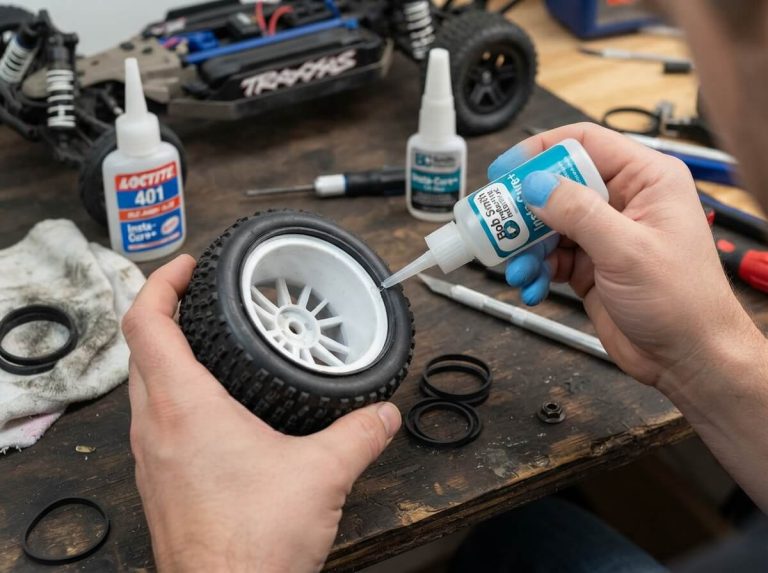
Tires don’t stick to rims by themselves. You have to glue them. This is important.
Most people use contact cement or tire glue. You apply it to both the tire and the rim. Then you stick them together.
Some people use glue that dries fast. Some use glue that stays wet longer so you can adjust. Different people have different preferences.
Think Long-term
How long do you want your tires to last? Soft tires last maybe a few drives. Hard tires last way longer. Plan accordingly.
If you drive a lot, budget for more tires. If you drive rarely, hard compounds make sense. You want the tires to be good next time you use your car.
Tire Wear and When to Replace Them
Tires don’t last forever. You have to replace them eventually.
Signs Your Tires Are Worn
Worn tires are flat on top. The tread gets smooth. They stop gripping as well. Your car slides more. It feels slippery.
Worn tires also get harder. The rubber becomes stiffer. This affects how the car handles.
Some people ignore worn tires. Don’t do that. Worn tires hurt performance. Replace them when they’re done.
How Long Do Tires Last?
It depends. Soft tires on a track might last a few hours of driving. Hard tires for bashing might last weeks. It depends on the compound, how hard you drive, and what surface you drive on.
Track heavily. Wear out faster. Drive gently. Wear them out slower.
Storing Tires
Store tires somewhere cool and dry. Sunlight damages rubber. Heat damages rubber. Keep them in a box in a closet.
Tires last longer if you store them right. Bad storage shortens tire life.
Making Your Final Choice
You’re ready to pick tires now. Here’s how to make the final decision.
Step 1: Know Your Car
Figure out your RC car’s scale and rim size. Write it down. This is required information.
Step 2: Know Your Driving
Where will you drive? A track? A field? A parking lot? Different surfaces need different tires.
Step 3: Know Your Goals
Are you racing for speed? Are you just having fun? Are you bashing? Your goal changes what you need.
Racing needs soft compounds and good grip. Bashing needs hard compounds and durability. Fun driving needs balanced tires.
Step 4: Read Reviews
Look up the tires you’re thinking about. See what other people say. Do they grip well? Do they last long? Are they worth the money?
Step 5: Check Your Budget
How much can you spend? Soft tires cost more than hard tires. Racing tires cost more than casual tires. Know your budget before you shop.
Step 6: Buy from a Good Store
Buy from a shop that knows RC cars. They can answer questions. They can help you pick the right foam. They can show you how to glue tires.
Online shops work too, but you don’t get help. Use them only if you already know what you want.
Step 7: Take Notes
When you buy tires, write down what you got. Write down where you used them. Write down how long they lasted. This helps you make better choices next time.
Common Mistakes Beginners Make
Learning from other people’s mistakes saves time.
Mistake 1: Buying The Cheapest Tires
Cheap tires are cheap for a reason. They don’t grip well. They wear out fast. You end up buying more tires more often. Spending a little more upfront saves money long term.
Mistake 2: Wrong Size
Some people buy the wrong size by accident. The tire doesn’t fit. Or it fits but handles badly. Always double-check the size before buying.
Mistake 3: Ignoring the Foam
The foam insert matters. A lot. Bad foam ruins a good tire. Good foam makes a decent tire great. Don’t skip this.
Mistake 4: Not Gluing Tires Properly
If you don’t glue tires right, they slip on the rim. Your car won’t handle right. Learn to glue tires the right way.
Mistake 5: Keeping Worn-Out Tires
Some people keep driving on worn tires to save money. This backfires. Worn tires ruin your car’s handling. Replace them.
Mistake 6: Buying Too Many Tires At Once
If you’re new, don’t buy ten sets of tires. Buy one or two. Try them out. See what you like. Then buy more.
Mistake 7: Ignoring Surface Conditions
Your local track is different from someone else’s. A smooth track needs different tires than a bumpy track. Adapt your choice to your actual conditions.
Different Tire Brands and What They Offer
Several brands make RC tires. Each has a reputation.
Some brands are known for grip. Others are known for durability. Some are best for racing. Others are best for bashing.
Talk to other RC drivers. See what they use. See what they like. Brand recommendations from real users help a lot.
Different brands work in different climates too. Hot weather might favor one brand. Cold weather might favor another.
Tire Maintenance Tips
Keeping your tires in good shape helps them last.
Clean Them
Dirt builds up on tires. Clean them after driving. Use warm soapy water and a brush. Dry them completely before storing.
Clean tires look better. They also perform better. Caked-on dirt changes how the tire grips.
Check the Foam
Foam inserts can get damaged. Check them regularly. If the foam is cracked or mushy, replace it. Bad foam ruins tire performance.
Balance Your Tires
This is advanced, but worth knowing. Unbalanced tires cause vibration. Your car shakes. It doesn’t handle as well. Balancing tires takes skill, but it makes a difference.
Don’t Over-Inflate
Tires need the right pressure. Check your manual for the right pressure. Over-inflating makes tires hard. They don’t grip as well. Under-inflating makes them soft. They wear out faster.
Getting Started with Your First Tire Purchase
You’re ready. Here’s a simple plan.
First, identify your car and rim size. Write it down. Visit a local RC shop with this information.
Tell them where you drive. Tell them what you do. They’ll recommend tires that fit.
Buy one set. Try them out. Drive around. See how you like them.
Take notes. Write down what you like and what you don’t. Use this information next time.
After you’ve tried a few sets, you’ll know what works for you. Then you can branch out and try new things.
The Long-term View
Choosing tires gets easier over time. You’ll develop preferences. You’ll learn what works on your local track. You’ll find brands you like.
New tire options come out. New compounds get invented. New tread designs appear. Stay curious. Try new things once in a while.
Tire choice isn’t permanent. You can always try something different. There’s no one perfect tire for everyone. There’s just the right tire for your car and your situation.
Quick Reference: Tire Selection Chart
Here’s a quick guide to help you decide.
For Track Racing: On-road tires, soft compound, slick or minimal tread
For Off-Road Racing: Knobby tires, soft to medium compound, soft foam
For Casual Off-Road Driving: Off-road tires, medium compound, medium foam
For Casual On-Road Driving: Street tires or on-road tires, medium compound
For Bashing: Hard compound, durable rubber, whatever grips reasonably well
For Mixed Conditions: Rally tires, medium compound, flexible foam
Final Thoughts
Tire choice matters. It shapes how your RC car drives. It affects your fun and your performance.
Beginners often feel lost. There are so many options. This guide gives you the tools to decide.
Start simple. Use the information here. Make your first purchase. Drive. Take notes. Learn what works.
From there, your knowledge grows. You’ll become more confident. You’ll make better choices. Your RC car will handle better.
Tires are personal. What works great for one person might not work for another. That’s okay. You’ll find your favorite. Keep trying. Keep learning. Keep driving.
The rubber hits the road now. Time to get your RC car rolling with the right tires underneath it. Good luck out there.
Remember: Your RC car is only as good as the tires beneath it. Take time to choose right. Your driving will improve. Your car will feel better. You’ll have more fun. That’s what RC cars are all about.
Peterson is an RC hobby enthusiast and product reviewer with a passion for remote-controlled cars, trucks, boats, drones, and accessories. He enjoys testing the latest RC products, comparing features, and sharing practical buying guides to help beginners and experienced hobbyists make informed decisions. Through RCThing.com, Peterson provides honest reviews, maintenance tips, and expert advice to help readers get the most from their RC adventures.