How To Jump An Rc Car
Key Takeaways
- Jumping an RC car takes practice, a suitable vehicle and a sound setup.
- Start with small hops and short ramps before attempting bigger air.
- Smooth throttle control and a level landing protect both the car and its parts.
- Check tires, battery, suspension and drivetrain after every session.
- Practice in a clear, open area with a firm, flat landing zone.
Introduction
Learning how to jump an RC car is one of the most exciting parts of the hobby. It also takes patience, because a jump depends on speed, angle, weight and timing working together. This guide explains each of these ideas in plain words.
You will learn what a jump actually is, what gear you need, and how the physics works. You will also get a simple step-by-step method, common mistakes to avoid, and basic care tips. The goal is to help you jump with more control and less risk to your car.
Jumping an RC Car Takes Practice and Good Setup
A jump is not only about speed. It depends on how the car is set up and how well the driver controls it. A well-prepared car with sound parts gives you a better chance of a clean result.
Most beginners start by learning small hops. Over time, they build the skill needed for longer air time. Patience matters more than power.
What Does It Mean to Jump an RC Car?
Jumping an RC car means driving it off a raised surface so all four wheels leave the ground for a moment. The car travels through the air and then lands back on its wheels. The distance and height depend on the setup and the driving.
Many people use the word jump for any airborne moment. Hobbyists often separate the terms to describe what happens in the air.
Jumping Versus Air Time and Hops
A hop is a short lift where the car leaves the ground only slightly. It is the best first step for a beginner. A jump is a longer launch that clears more distance.
Air time describes how long the car stays off the ground. More speed and a suitable ramp usually increase air time. Beginners should focus on a controlled landing before chasing more air.
Why Jumping Puts Stress on Your Car
Landing forces can be much stronger than normal driving forces. The suspension, tires, chassis and drivetrain all absorb this shock. Repeated hard landings can wear parts faster.
Because of this, a car used for jumps needs regular checks. Spotting wear early helps prevent bigger failures later.
What You Need Before You Start Jumping
Preparation makes jumping easier and safer. Before you launch, check that the car, battery and location are ready. A little planning prevents many common problems.
Picking a Car Suited for Jumps
Not every RC car handles air well. Cars designed for bashing or off-road use usually have stronger parts and better suspension travel. Lightweight racing cars often struggle with hard landings.
Check the manufacturer’s guidance on jumping before you launch. If the product notes do not mention jumping, treat it with caution.
Checking Tires, Battery and Suspension
Tires should grip well and sit evenly on the rim. Worn or uneven tires can change how the car lands. Inspect them before every session.
A fully charged, healthy battery gives steadier power. The suspension should move freely and return smoothly. Loose or bent suspension parts can cause unpredictable landings.
Picking a Safe Place to Practice
Choose an open area away from people, pets, roads and breakable objects. A flat, clear space gives you room to build speed. Grass and dirt can soften landings, though very soft ground may slow the car.
Avoid wet or uneven surfaces when you are with you just starting out. Wet or uneven ground can cause slips and unpredictable landings, so wait for drier conditions when you can.
How Jumps Work: Physics for Beginners
A jump follows a few simple physical ideas. Speed, ramp angle and weight all shape the path of the car through the air. Knowing these basics helps you predict what will happen before you launch.
How Speed Affects Jump Distance
Speed is the main factor in how far a car travels after leaving the ramp. A faster approach usually sends the car farther. Too much speed, however, can cause the car to overshoot the landing zone.
Start slowly and increase speed in small steps. This lets you learn how the car responds without taking big risks.
How Ramp Angle Changes the Launch
The ramp angle controls the direction the car leaves the ground. A steeper ramp sends the car up higher, while a gentler ramp keeps it closer to the ground. Each angle suits different goals.
For example, a steep ramp creates more height but less distance. A shallower ramp often gives a longer, flatter flight. Beginners usually do well with a moderate angle.
How Weight and Landing Affect Your Car
Weight shifts during a jump, and it affects how the car lands. A car that lands nose first can dig in and flip. A car that lands flat spreads the force across all four tires.
Because of this, aim to keep the car level in the air. A balanced landing reduces stress on the chassis and suspension.
Step-by-Step Guide to Your First RC Jump
A simple, repeatable method helps you learn faster. The steps below describe a basic approach for a first jump. Always follow the manufacturer’s guidance for your specific car.
Building or Setting Up a Simple Dirt Ramp
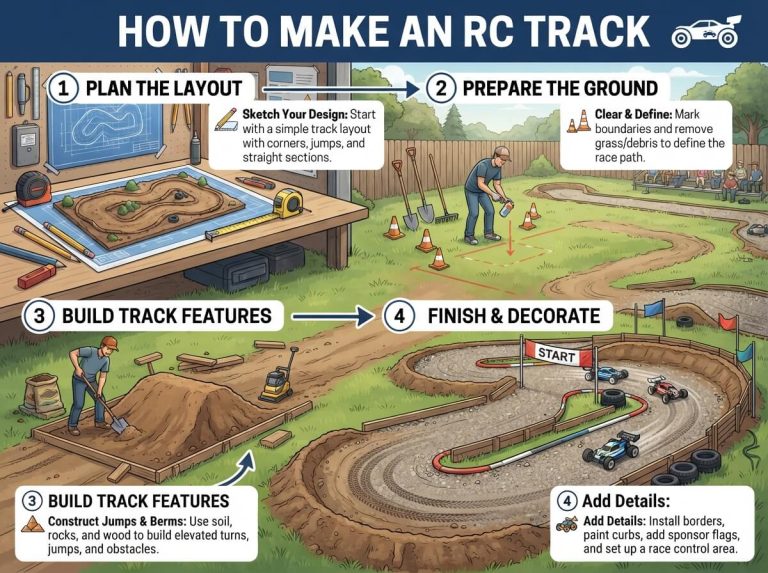
A basic dirt ramp is easy to build. Pack soil into a gentle slope with a firm, flat top. Make sure the landing area is clear and level.
Keep the ramp small at first. A modest size lets you practice without launching the car too far.
Approaching the Ramp at a Steady Speed
Drive toward the ramp in a straight line. Keep your speed steady rather than rushing at the last moment. A calm approach gives the car a predictable launch.
Look ahead to the landing zone, not at the car’s wheels. This helps you keep the car aimed correctly.
Controlling Throttle in the Air
Throttle control matters while the car is airborne. Ease off slightly as the car leaves the ramp to avoid nose-diving. Light, steady throttle helps keep the car level.
Avoid sudden changes. Quick inputs in the air can upset the balance of the car.
Landing Smoothly and Checking for Damage
Let the car settle back onto its wheels without forcing it down. Ease off the throttle as the tires make contact. A gentle landing protects the drivetrain.
After each jump, check the car for loose screws, bent parts and damaged tires. Small problems are easier to fix when they are caught early.
Common Beginner Mistakes and How to Avoid Them
Most early problems come from a few repeated errors. Knowing them in advance helps you avoid frustration. Each one has a simple fix.
Going Too Fast Too Soon
Many beginners increase speed before they understand the car. This often leads to hard landings and broken parts. Build speed gradually over many short sessions.
Landing Nose First or on One Side
A nose-first landing can damage the front end and steering parts. A landing on one side can twist the chassis. Keep the car level and reduce throttle before touchdown.
Ignoring Battery and Gear Wear
A weak battery or worn gears can change how the car responds. Hard jumping speeds up wear on these parts. Check them regularly and replace them when performance drops.
Tips for Better Jumps and Smoother Landings
Steady progress comes from Steady progress comes from practicing the basics in a clear pattern. Small improvements add up over many sessions. The tips below help you move forward with less risk.
Practicing Basic Hops Before Bigger Air
Begin with low hops over a small bump or a shallow ramp. These short lifts teach you how the car reacts when it leaves the ground. Repeat them until your landings feel consistent.
Once hops feel calm, move to slightly longer jumps. Increase only one factor at a time, such as speed or ramp height. This makes it easier to see what caused any change.
Adjusting Suspension Settings for Landings
Suspension settings can change how the car absorbs landings. Softer settings often soften hard impacts, while firmer settings can improve stability at speed. Many manufacturers describe these adjustments in their manuals.
Make small changes and test each one. Avoid changing several settings at once, because this makes results hard to read.
Using Throttle Control for Balance in Air
Light throttle helps keep the car level during flight. Too much power can pitch the nose up, while too little can cause a nose dive. Practice gentle, steady inputs until they feel natural.
In practice, many drivers find that smooth throttle makes the biggest difference. Calm hands usually produce calmer landings.
Comparing Ramp Types and Jump Setups
Ramps come in several forms, and each suits a different stage of learning. Comparing them helps you choose what fits your space and budget. No single option works best for everyone.
Dirt Ramps Versus Built Wooden or Plastic Ramps
Dirt ramps are inexpensive and easy to reshape. They can soften landings, but they wash out or change shape over time. Built wooden or plastic ramps hold a consistent shape, which helps you repeat the same jump.
Built ramps often need more setup and storage space. Dirt ramps suit people who have a suitable outdoor area and want a simple start.
Single Jumps Versus Table-Top and Multi-Jump Tracks
A single jump is the simplest setup. It lets you focus on one launch and one landing at a time. This makes it ideal for beginners.
Table-top and multi-jump tracks add more challenge. They require stronger control and more space. Most beginners should master single jumps before moving on.
Maintaining Your RC Car After Jumping
Jumping adds stress to every part of the car. Regular maintenance keeps it running well and extends its life. A short check after each session is often enough.
Inspecting Chassis, Shocks and Drivetrain
Look over the chassis for cracks or bends. Check the shocks for oil leaks or stiff movement. Listen for grinding in the drivetrain and inspect the gears for wear.
Tighten loose screws and clean away dirt and debris. A clean car is easier to inspect and less likely to hide problems.
Replacing Worn Parts Before They Fail
Replace parts once they show clear wear, rather than waiting for a breakdown. Worn tires, damaged driveshafts and cracked suspension arms are common examples. Spare parts on hand can shorten downtime.
Keep notes on what you replace and when. This record helps you spot patterns and plan future maintenance.
Frequently Asked Questions
Can any RC car jump safely?
Not every RC car is built for jumping. Cars designed for bashing or off-road use usually handle landings better. Always check the manufacturer’s guidance before launching a car off a ramp.
How high can an RC car jump?
Jump height depends on the car, the ramp angle and the speed of the approach. There is no single answer for every model. Beginners should start low and build height gradually.
Do I need a special ramp to jump my RC car?
A special ramp is not required to begin. A simple, firm dirt mound can work for basic hops. Built ramps offer more consistency once you have more experience.
Will jumping damage
Jumping can damage an RC car if landings are hard or the car is not built for it. Regular checks and gentle landings reduce the risk. Careful practice keeps wear under control.
What is the best way to learn RC jumping as a beginner?
Start with small hops on a flat, clear area and build up slowly. Practice one change at a time, such as speed or ramp height. Keep the car level and check it after each session.
Conclusion
Learning how to jump an RC car takes patience, a suitable vehicle and a sound setup. Start with small hops, control your speed and throttle, and aim for level landings. Check the car after every session to protect its parts. With steady practice, jumps become smoother and more predictable.

Peterson is an RC hobby enthusiast and product reviewer with a passion for remote-controlled cars, trucks, boats, drones, and accessories. He enjoys testing the latest RC products, comparing features, and sharing practical buying guides to help beginners and experienced hobbyists make informed decisions. Through RCThing.com, Peterson provides honest reviews, maintenance tips, and expert advice to help readers get the most from their RC adventures.