How to Store LiPo Batteries Safely?
So you’ve got some LiPo batteries sitting around. Maybe they power your drone, RC car, or electric skateboard. You want to keep them in good shape. You also want to avoid turning your garage into a fireworks show. Smart choice!
Storing lithium polymer batteries the right way is actually pretty simple once you know the rules. This guide walks you through everything you need to know. By the end, you’ll be a LiPo battery storage pro.
What Are LiPo Batteries, Anyway?
Let’s start with the basics. LiPo batteries are lithium polymer batteries. They pack a lot of power into a small space. That’s why drones and RC vehicles use them so much. They’re lightweight. They deliver tons of energy.
The catch? They need respect. These batteries can catch fire if you treat them badly. They can swell up. They can fail fast if you don’t store them right.
The good news is that safe storage isn’t rocket science. You just need to follow some simple rules.
Why Proper Lipo Battery Storage Matters
Bad battery storage causes real problems. Fires happen. Batteries fail. Your hobbies get expensive real fast.
Think about what happens inside a damaged lipo battery. The cells degrade. Resistance builds up. Heat increases. Once a battery starts failing, it gets worse and worse. The damage spreads. Eventually, you get a thermal runaway situation.
Thermal runaway is the fancy term for “your battery just decided to turn into a small bomb.” The battery gets hot. Then it gets hotter. Heat damages the battery more, so it gets even hotter. The whole thing happens fast. That’s why proper lipo battery care and storage matters so much.
Safe storage protects your investment. It keeps your gear working longer. It keeps your home and family safe. It’s worth taking seriously.
The Ideal Temperature for LiPo Battery Storage
Temperature is huge when it comes to battery storage. Get this wrong and your batteries will suffer.
LiPo batteries like cool places. Not freezing. Just cool.
The sweet spot is between 50°F and 80°F (around 10°C to 27°C). Within this range, your batteries stay happy. Their internal chemistry stays stable. The cells don’t degrade fast.
Warm storage accelerates battery aging. If you store your batteries in a hot garage or attic, they’ll lose capacity faster. Hot storage can take years off the battery lifespan. In extreme heat, you risk battery damage and failure.
Cold storage does different damage. Freezing temperatures make the battery less responsive. The chemicals inside slow down. You might not be able to charge the battery properly. Cold storage can make batteries swell. It causes internal stress.
So keep your batteries in a room temperature spot. A closet works. A cabinet works. Under your bed works (not the best idea for other reasons, but temperature-wise it’s fine). Avoid the attic, garage, and basement if they get too hot or cold.
Humidity and Moisture: Keep Them Dry
Moisture is the enemy of lithium polymer batteries. Water inside a battery causes corrosion. Corrosion creates resistance. Resistance creates heat. Heat creates problems.
Store your batteries in a dry place. Humidity should stay below 50% if possible. Stay below 60% at least.
Here’s what happens when moisture gets inside a battery. The water mixes with the electrolyte. The electrolyte is the chemical inside that makes the battery work. Water ruins it. The battery stops working right. Corrosion eats away at the connections. Your battery becomes useless.
Use a dry storage container. Airtight is good. You can use a plastic box with a tight lid. Or get a battery storage bag that seals up. Some people use silica gel packets to absorb extra moisture. That’s actually smart. Throw a couple silica packets in your storage box and they’ll keep things dry.
Don’t store batteries in damp basements or bathrooms. Don’t leave them near windows where condensation might form. Definitely don’t leave them outside or in unprotected places.
Charge Level: The 3.85V Rule
Here’s a fact that surprises most people: you shouldn’t store a lipo battery fully charged.
That’s right. That battery sitting at 100% charge is slowly damaging itself while it sits there.
The ideal storage charge level is around 3.85 volts per cell. For a two-cell battery, that’s about 7.7 volts. For a three-cell battery, about 11.5 volts.
Why this specific voltage? At this level, the battery chemistry is most stable. The cells aren’t stressed. The battery can sit for months without getting damaged.
If you charge a battery fully and then store it, you stress the cells. The battery slowly loses capacity. Sometimes the fully charged battery will drain on its own. You come back to a dead battery. You end up with a battery that was already bad when you stored it, making it worse.
On the flip side, don’t store a battery completely dead. A dead battery will lose even more capacity while sitting. Dead batteries are harder to charge back up safely.
So charge your battery to the half-way point. Use a good charger that lets you pick the charge level. Most modern lipo chargers let you do this. Just set it to storage mode, and the charger does the work for you.
Every few months, check on your batteries. If they’ve drained a bit, top them back up to storage voltage. This keeps them in perfect condition for when you need them.
Use a Fireproof Storage Container
You want to contain any potential problems. A fireproof container does exactly that.
If a battery ever catches fire (rare with proper storage, but possible), a fireproof container keeps the fire from spreading. It protects your home and family. It prevents the battery from igniting other stuff nearby.
Good options include:
Fireproof Metal Ammo Box – These are tough and cheap. They’ll contain a battery fire. They’re designed to hold explosives so they definitely handle batteries. Just throw some foam padding inside and you’ve got a safe lipo battery storage box.
LiPo Battery Bag – Specialized lipo battery bags exist for this exact reason. They’re made from fire-resistant material. They’re designed to contain a battery fire. They’re cheaper than ammo boxes and they take up less space.
Fireproof Safe – If you’ve got serious batteries, get a small fireproof safe. It’s overkill for most people. It’s perfect for someone who collects batteries.
Ceramic Fiber Box – Some serious hobbyists use ceramic fiber boxes. They’re super durable and fireproof. They cost more money though.
The container doesn’t need to be fancy. It just needs to be fireproof and sturdy. Store the container in a safe spot. Away from your bedroom. Away from kids. Away from stuff you care about.
Individual Battery Wrapping and Isolation
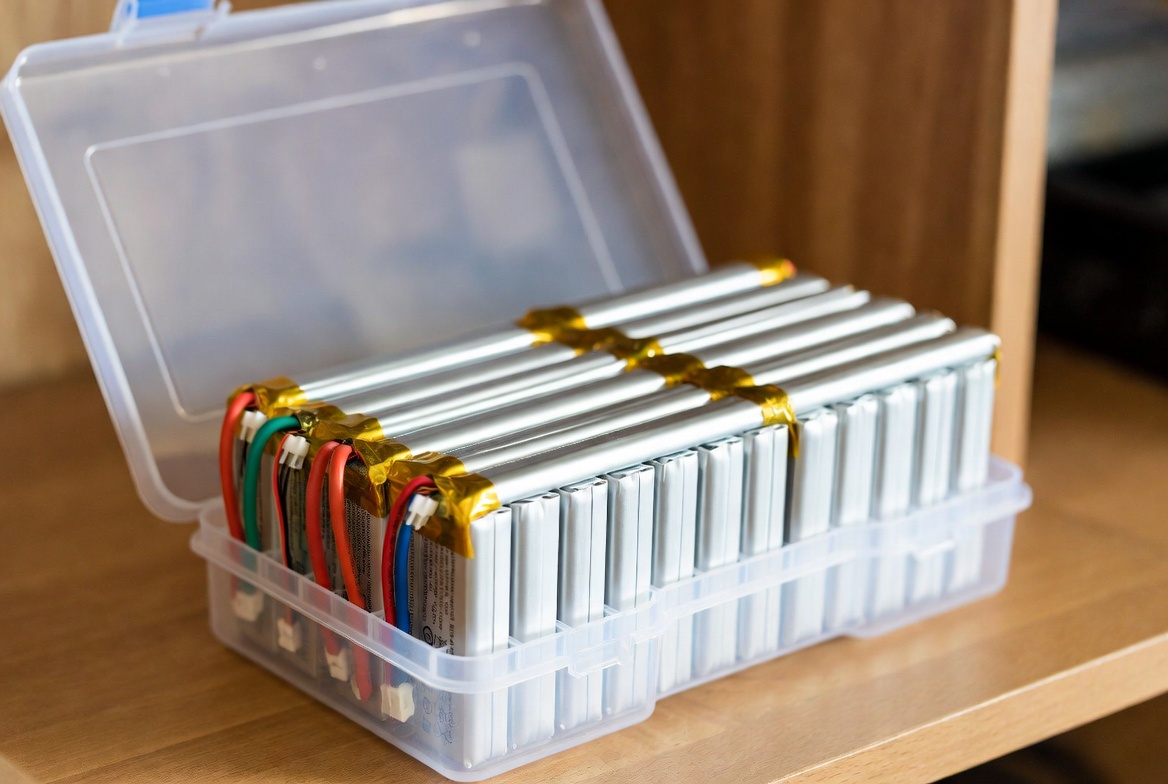
Don’t just toss all your batteries together in a box.
Each battery needs its own protection. Wrapping each battery individually keeps them from touching each other. Touching batteries can cause shorts. Shorts cause fires.
Use electrical tape to wrap around each terminal. Cover the exposed metal contacts. This prevents accidental shorts if batteries touch each other.
Some people use battery sleeves. You slide the battery into a plastic sleeve. The sleeve covers the terminals. It’s quick and effective.
Another option is to wrap batteries in foam. Cut foam so each battery sits in its own little slot. This keeps them separated. Foam also provides cushioning if you ever drop the container.
Label everything. Write the battery specs on a piece of tape. Write the date. Write how many charge cycles the battery has been through. This helps you track battery health.
Avoid Overcharging and Deep Discharging
How you use your batteries affects how you should store them. Heavy use changes battery health.
Each charge cycle stresses a lipo battery a little bit. Each discharge stresses it more. Over time, the battery gets tired. The capacity drops. The battery gets weaker.
Never run a battery all the way dead. That’s deep discharging. It damages the battery badly. If you drain a battery completely and then leave it, you’ll probably kill it.
Never charge a battery more than necessary. Overcharging damages the internal structure. It stresses the cells. It shortens lifespan.
Use a good charger that stops when the battery is full. Don’t leave a battery on the charger for hours after it’s done. Disconnect it as soon as it reaches full charge.
Track your battery usage. If you use a battery a lot, it needs more care. Check it more often. Replace it sooner. If you barely use a battery, it’ll last longer.
Storage Location: Where to Keep Them
Now that you know how to prep your batteries, where do you actually keep them?
The Ideal Spot:
- Cool and dry
- Away from direct sunlight
- Away from heaters and air conditioning vents
- Far from kids and pets
- Not near flammable materials
- Away from water sources
Good Locations:
- A closet in a bedroom
- A shelf in a pantry
- A cabinet in a room temperature area
- A drawer with good ventilation
Bad Locations:
- Hot garages
- Damp basements
- Cold attics
- Bathrooms
- Near stoves or ovens
- Near electrical outlets (just in case)
- Inside car trunks
Think about the temperature where you choose to store batteries. Garages heat up in summer. Basements get cold in winter. Attics can be ovens. None of these work well.
The most stable temperature is found deep inside your house. A closet. A cabinet. A drawer. These places stay close to room temperature all the time.
Monitor Your Batteries Regularly
Safe storage isn’t a set-it-and-forget-it thing.
Every month or so, check on your batteries. Open the container. Look at each battery.
What are you looking for? Bad signs include:
- Swelling or puffing (the battery looks puffy)
- Discoloration
- Cracks or damage
- Corrosion on the connectors
- Weird smell
- Any battery that looks different
If you notice any of these signs, take action. A swollen battery is in trouble. Don’t charge it. Don’t use it. Dispose of it safely.
Also check the charge level. After a few months, even unused batteries drain a bit. Top them up to storage voltage if needed. Don’t let them drain too much.
Get a simple multimeter. It costs ten bucks. Measure the voltage on each battery. Write down the numbers. You’re building a history. If you notice voltage dropping fast, that battery is getting tired.
Battery monitoring takes just a few minutes. It catches problems early. It saves you money and stress in the long run.
What to Do With Old or Damaged Batteries
Eventually, a battery gets too old to use. The capacity drops too much. The battery fails.
Never just throw a battery in the trash. Lithium batteries are toxic. They’re dangerous. They need proper disposal.
Most electronics stores have battery recycling programs. Best Buy does. Many local recycling centers accept batteries. Some hobby shops will take old batteries.
Call ahead and ask. “Do you take lithium batteries?” If they do, bring your dead batteries in. The workers will handle them safely.
Some communities have hazardous waste collection days. Batteries qualify as hazardous. You can drop them off for free.
Never burn a battery. Never bury it. Never leave it in the sun to overheat. Any of these could cause a fire or explosion.
Proper disposal protects the environment. It protects people handling the waste. It’s the right thing to do.
Common Storage Mistakes to Avoid
Learn from other people’s mistakes. Here are the most common lipo battery storage errors:
Storing Fully Charged Batteries – This stresses the cells. The battery loses capacity. Store at 3.85V per cell instead.
Storing in Hot Places – Heat kills batteries fast. The chemicals degrade. Find a cool spot instead.
Mixing Different Battery Types – Don’t store lipo batteries next to alkaline batteries next to something else. Keep battery types separate.
Piling Batteries on Top of Each Other – The weight stresses the bottom batteries. Use dividers. Give each battery its own space.
Ignoring Temperature Changes – In winter, garages get cold. In summer, they’re hot. A stable temperature is way better.
Forgetting to Check Them – Batteries need attention. Check them monthly. Make sure they’re still healthy.
Using a Metal Container Without Padding – Metal containers can cause shorts if batteries touch the metal. Line them with foam or rubber.
Storing Next to Corrosive Materials – Keep batteries away from chemicals. Keep them away from anything that could damage the case.
The Battery Charger: An Essential Tool
A good charger is just as important as good storage.
Invest in a decent lipo charger. Cheap chargers cause problems. They overcharge batteries. They charge unevenly. They can start fires.
A good charger should have:
- A storage mode (charges to 3.85V per cell)
- Balance charging (charges each cell equally)
- Overcharge protection
- A safety timer
- A fan to keep things cool
Most modern chargers have all these features. They cost between thirty and a hundred dollars depending on how many batteries you charge at once.
Never leave a charging battery unattended. Always charge in a safe spot. Never charge on carpet. Never charge on plastic surfaces. Charge on a tile floor or metal surface.
Charge in a fire-safe area. Away from flammable stuff. Away from your bedroom if possible.
The charger is your first line of defense against battery problems. A good charger prevents most issues before they start.
Travel Tips: Storing Batteries Away From Home
Sometimes you need to transport batteries. Maybe you’re flying with a drone. Maybe you’re traveling with an RC car.
Airline regulations exist for a reason. Lithium batteries in checked baggage caused fires on cargo planes. Now there are strict rules.
If you fly, carry batteries in your carry-on bag. Never check them. Most airlines limit how many batteries you can bring.
When traveling by car:
- Keep batteries in a cool bag
- Wrap them individually
- Store them in a fireproof case if possible
- Never leave them in a hot car
- Never leave them in direct sunlight
- Keep them away from fuel
Travel safety is just home storage safety, but more careful.
Summary: Your Lipo Battery Storage Checklist
Here’s everything you need to do:
- Store batteries between 50°F and 80°F
- Keep humidity below 50%
- Charge batteries to 3.85V per cell for storage
- Use a fireproof container
- Wrap each battery individually
- Label everything with specs and date
- Choose a stable temperature location
- Check batteries monthly
- Top up charge level every few months
- Use a quality charger with safety features
- Never store fully charged or fully dead
- Dispose of old batteries responsibly
Follow these steps and your batteries will stay healthy for years.
Final Thoughts
LiPo battery storage might seem complicated at first. It really isn’t. You’re just keeping batteries cool, dry, and at the right charge level.
Think of it like maintaining a car. You don’t need to be an expert. You just follow the maintenance schedule. Same with batteries. Follow the simple rules. Check them occasionally. Your batteries will last longer.
The investment in proper storage equipment is tiny compared to the cost of new batteries. A fireproof case costs thirty bucks. A good charger costs fifty bucks. You’ll save hundreds of dollars by keeping your current batteries healthy.
Your safety matters too. A properly stored battery won’t catch fire. A battery stored wrong might. The small amount of effort required to store batteries safely is absolutely worth it.
Start today. Get a fireproof container. Charge your batteries to storage level. Pick a cool, dry spot. Check on them monthly.
You’re already thinking about this stuff or you wouldn’t be reading this guide. You care about doing things right. That means you’re going to take great care of your batteries.
Safe, smart battery storage is the mark of a serious hobbyist. Now you know the whole process. Go store those batteries the right way!