Why Does Your RC Car Motor Overheat?
Hey there, if you love ripping around with your RC car, you probably know that sudden heat problem all too well. Your motor starts whining louder than usual, the car slows down mid-run, and you smell that hot plastic scent in the air. Nothing kills the excitement faster. RC car motor overheating hits every hobbyist at some point, from total newbies to weekend bashers.
You see, your RC vehicle depends on that electric motor to deliver smooth power and speed. When things get too hot, the motor loses efficiency fast. It can even fail completely and leave you with a dead rig. But do not worry. We break down exactly why your rc car motor overheats in plain language. You will learn the real causes, spot the warning signs early, and fix things before damage sets in.
This guide keeps everything simple and straightforward so beginners can jump right in and start enjoying longer, cooler runs. We cover everything from basic motor behavior to smart fixes you can try at home. By the end, you will know how to keep your brushless motor or brushed setup running strong without the heat headaches. Let us get into it so your next session feels way more fun and way less frustrating.
What Overheating Really Looks Like in Your RC Motor
First, you need to recognize when your rc car motor starts running hot. The motor feels warm after a quick spin around the yard. That part stays normal. But if it gets so hot you cannot touch it for more than a second or two, you have a problem.
You might notice the car bogs down on straightaways or struggles on small hills. The ESC could cut power suddenly to protect itself. Sometimes you hear unusual noise from the motor can. In bad cases, the motor smells burnt or the magnets inside lose strength over time.
Brushless motors handle heat a bit better than old-school brushed ones, but both suffer when temps climb too high. You want to keep things under control so the windings stay strong and the bearings spin free. Over time, constant heat wears down parts faster and shortens the life of your entire power system.
So grab an infrared temperature gun next time you run. Point it at the motor case right after a solid run. If you see numbers pushing past 170 degrees, you know it is time to make changes. Monitoring like this helps you catch rc motor overheating before it ruins your gear.
Now let us talk about the main culprits that push your motor into the danger zone. Each one sneaks up on you, but once you spot them, you can fix them fast.
Wrong Gearing Pushes Your Motor Way Too Hard
Gearing sits at the top of the list for why rc car motors overheat. You change the pinion gear or spur gear to chase more speed, but you end up making the motor fight harder than it should.
Here is how it works in simple terms. A bigger pinion gear gives you higher top speed. The motor spins the wheels faster at the same throttle input. Sounds great, right? But that setup forces the motor to pull tons more current to move the car. More current equals more heat inside the windings.
You see the pattern. On flat pavement, it might feel okay at first. Then you hit grass or a small bump and the motor strains even more. Suddenly the case gets scorching hot after just a few minutes.
Many hobbyists start with stock gearing and then upgrade for more power. They slap on a larger pinion without thinking about the extra load. The motor works overtime, draws heavy amps, and heats up fast.
The fix sounds easy once you know it. Drop down one or two teeth on the pinion. That lowers the gear ratio and eases the burden on the motor. Your top speed drops a little, but you gain huge torque and way less heat. The car feels stronger off the line and stays cool longer.
Test it step by step. Run a short lap with your current setup and check the temp. Then swap to a smaller pinion and run the same lap again. You will feel the difference right away. The motor stays relaxed and you enjoy longer sessions without worry.
Proper gearing turns your rc vehicle into a reliable machine instead of a heat machine. It saves your motor and keeps the fun going strong.
Tough Terrain Makes the Motor Work Overtime
Terrain plays a huge role in rc car motor overheating too. You take your rig out on smooth pavement and everything runs fine. Then you head to the backyard with grass, sand, or loose dirt and the heat builds quick.
Why does that happen? Rough surfaces create extra resistance. The tires dig in and the drivetrain fights harder to keep moving. Your motor has to push against all that drag, so it pulls more electricity to stay spinning. More electricity means more heat.
Heavy grass wraps around the axles and adds load. Sand shifts under the wheels and forces constant power adjustments. Even small rocks or roots make the motor surge to overcome them. Each surge spikes the current draw and warms things up fast.
You know the feeling. The car bogs down, you mash the throttle to keep going, and the motor pays the price. Brushless setups handle this better than brushed motors, but they still get hot under constant strain.
The smart move involves reading the ground before you bash. On rough stuff, ease off the throttle a bit and let the car momentum carry you through. Short bursts work better than holding full power the whole time.
You can also tweak your suspension or tire choice to cut down on drag. Softer compounds or tires with less aggressive tread roll easier and reduce the load on the motor. Small changes like these keep your rc motor cooler even when you hit the tough spots.
Next time you plan a run, think about the surface first. Match your driving to the terrain and you cut heat buildup in half without losing any excitement.
Aggressive Driving Style Cranks Up the Heat Fast
Your thumb on the transmitter makes a bigger difference than you might think. Constant full throttle, hard braking, and sudden direction changes all force the motor to work harder.
Each time you slam the throttle wide open, the motor ramps up current to accelerate. Then you brake hard and the system fights against itself. That back-and-forth creates huge spikes in power draw. The motor and ESC both feel the stress and heat rises quickly.
You see this pattern in backyard bashing sessions. You go all out for ten minutes straight and wonder why the motor feels like a frying pan. Smooth driving keeps things steady. Gentle throttle inputs and flowing turns let the motor stay in its happy zone.
The difference feels huge once you try it. Instead of jerky stops and starts, you roll through corners and maintain steady speed. The motor draws less power overall and stays much cooler.
Practice this on your next run. Focus on smooth control and see how long you can go before the temp climbs. You will notice the car handles better and you avoid those sudden cutoffs from the ESC.
Driving style alone can turn a hot-running setup into a cool performer. Combine it with the other fixes and your rc car feels unstoppable.
Battery Voltage That Is Too High Overloads Everything
Battery choice hits your motor hard when the voltage does not match. You grab a higher cell count pack for extra punch, but the motor ends up paying for it in heat.
A 3S battery on a system built for 2S sends more volts straight to the motor. The motor spins faster and pulls more current to handle the extra energy. That extra flow creates resistance in the windings and turns into heat.
Many new hobbyists chase speed this way without realizing the downside. The car flies at first, but the motor runs hot after just a few laps. The ESC might overheat too since it has to manage all that power.
Always check the motor and ESC ratings before you swap batteries. Stick to the recommended voltage and you avoid big problems. If you want more power, gear down at the same time to balance the load.
You gain speed without the heat penalty when you match everything correctly. The motor stays efficient and you enjoy longer run times.
Test your setup with the stock battery first. Then try the higher voltage pack and watch the temps closely. You will see the difference and know exactly what works for your rig.
Poor Airflow Leaves Heat Trapped Inside
Airflow matters more than most people realize. Your rc car motor needs fresh air moving over the case to carry heat away. When the body shell blocks vents or you run without fans, heat builds up fast.
The motor generates warmth during normal operation. Without cooling air, that warmth stays trapped and temps climb higher with every minute. Tight body fits or missing cooling holes make the situation worse. Dirt and debris clog the fins and cut airflow even more.
Brushless motors run cleaner than brushed ones, but they still need good ventilation. The can design helps a bit, yet you still need outside help on hot runs or long sessions.
Simple upgrades fix this quick. Cut extra vents in the body shell so air flows through. Add a small cooling fan mounted near the motor. Heat sinks on the motor case pull heat out faster too.
You feel the improvement right away. The motor stays touchable after long runs and you push harder without worry.
Keep the area around the motor clear and clean. Blow out dust after every session so airflow stays strong. These little steps keep your rc vehicle motor temperature in check and protect your investment.
Dirty or Worn Parts Create Extra Friction and Heat
Cleanliness counts big time in rc car maintenance. Dirt, dust, and old grease build up inside the motor and drivetrain. That extra friction forces the motor to work harder just to spin.
Brushed motors suffer the most because the commutator gets gunked up and the brushes wear down. Brushless setups stay cleaner longer, but bearings still need care. Bad bearings seize slightly and draw more current. Heat follows right behind.
You notice the problem when the motor runs louder or feels rough. Temps climb faster than they should even on easy runs.
The fix starts with regular cleaning. Disassemble the motor carefully and spray it with motor cleaner. Lubricate the bearings with the right oil. Check for play or roughness and replace worn parts right away.
A quick clean after muddy runs prevents big issues down the line. Your motor runs smoother, pulls less power, and stays cooler for longer.
Make cleaning part of your routine. You spend ten minutes and save yourself from costly motor swaps later. The rc car feels fresh again and you get back to bashing with confidence.
Binding in the Drivetrain Forces the Motor to Struggle
Binding hides in the drivetrain and creates sneaky heat. Tight gear mesh, seized bearings, or bent driveshafts make the whole system fight itself. The motor has to overcome that extra resistance every time it turns.
You might not feel it at first because the car still moves. But the motor works overtime and heat builds fast. Differentials that do not spin free or axles that bind add even more load.
Check for binding by removing the motor and spinning the wheels by hand. Everything should roll smooth with no catch or grind. If it feels tight, hunt down the spot and fix it. Loosen gear mesh slightly or replace bad bearings.
Once the drivetrain spins free, the motor relaxes and stays cool. You gain efficiency and the car handles better too.
This step takes a little time but pays off huge. Your rc motor overheating issues often disappear once you clear the binding. Smooth power delivery makes every run more enjoyable.
Running Too Long Without Breaks Builds Heat Gradually
Long sessions without rest let heat creep up slowly. You keep the throttle pinned for twenty minutes straight and the motor never gets a chance to cool. Temperatures rise steadily until they hit the danger zone.
Even a well-matched setup gets warm after extended use. The motor needs short breaks to shed heat and reset.
Plan your runs in short bursts. Drive for five or ten minutes, then let the car sit for a couple minutes. Feel the motor case and check the temp if you have a gun. When it drops back down, you are ready to go again.
This habit keeps everything in the safe range and extends the life of your electronics. You enjoy more total drive time because the car stays reliable.
Many racers and bashers swear by this approach. Short runs with cool-downs turn a hot motor into a steady performer.
Brushless Versus Brushed Motors and Heat Differences
Brushless motors run cooler overall compared to brushed ones. They have no brushes to create friction and they use electronic switching for smoother power. Still, they overheat when you push them hard.
Brushed motors get hot faster because of the physical contact inside. They work great for beginners but need more attention to cooling and maintenance.
No matter which type you run, the same rules apply. Match gearing, watch voltage, keep airflow strong, and take breaks. Brushless setups forgive a few mistakes, but they still need care.
You choose based on your style. Either way, smart habits keep the heat under control and let you focus on the fun.
How Hot Counts as Too Hot for Your RC Motor
You need a clear target for safe temperatures. Most brushless motors stay happy under 170 degrees Fahrenheit. Some handle up to 180 for short bursts, but you do not want to live there.
Brushed motors run a bit warmer by nature, yet you still aim for the same range to protect them. Anything over 180 degrees for long periods damages windings and weakens magnets.
Use your temp gun often. Check right after runs and compare to the air temperature around you. If the motor sits 50 or 60 degrees hotter than the surroundings after a short drive, you have room to improve.
Tracking temps turns guesswork into real data. You make better decisions and catch problems early.
Keep a small notebook or note on your phone. Record runs, gearing, battery, and temps. Patterns jump out fast and you dial in the perfect setup for your rc car.
Easy Fixes You Can Do Today to Stop the Heat
You do not need fancy tools to cool things down. Start with the simple stuff and work up.
First, drop the pinion size by one tooth and test. You lose almost nothing in fun but gain big in cooling.
Next, add a small fan if you have space. Mount it so it blows straight on the motor can. Many cheap options plug right into your receiver and run the whole time.
Cut vents in the body if airflow feels blocked. A few holes in the right spots make a huge difference.
Clean the motor and drivetrain this weekend. Fresh grease and oil cut friction instantly.
Check your battery voltage and gear down if you upgraded. Balance the power so the motor stays relaxed.
Take those short breaks between runs. The habit alone prevents most overheating issues.
Combine a few of these and your rc car motor runs cooler right away. You feel the difference on the very next drive.
Pro Tips to Keep Your RC Setup Cool for the Long Haul
Once you master the basics, these extra tips take your game to the next level.
Monitor the ESC temperature too. It often heats up before the motor does, especially during heavy braking. Good airflow helps both.
Use heat sink tape or aluminum plates on hot spots. They pull heat away fast and cost almost nothing.
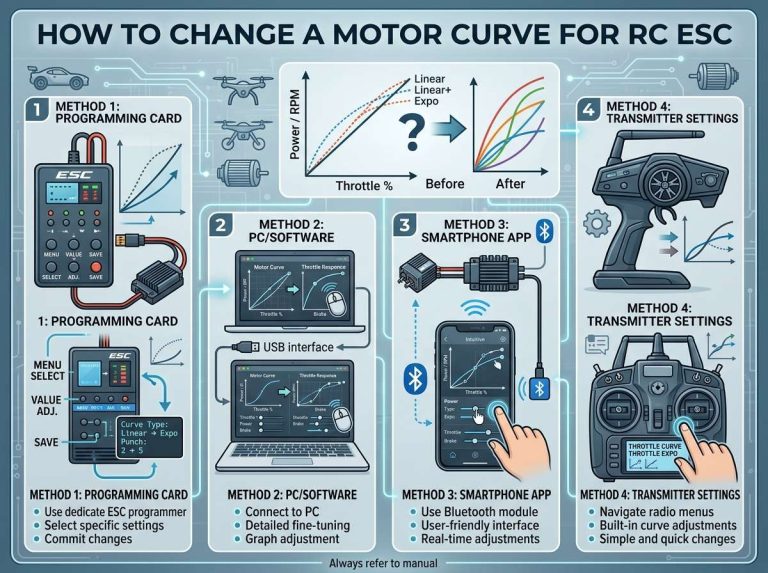
Tune your ESC settings if it has adjustable timing or throttle curves. Smoother ramp-up reduces spikes.
Upgrade to higher quality bearings when the old ones wear. Smooth rotation saves power and cuts heat.
Carry a spare motor or ESC on big trips. Heat problems happen fast sometimes and you stay in the action.
Join online forums or local clubs to swap stories. Other hobbyists share what worked for their exact rig and you avoid common traps.
These habits turn you from a casual driver into a smart rc car owner who keeps gear running strong for years.
Common Mistakes That Cause RC Motor Overheating
New drivers make the same errors over and over. Spotting them helps you dodge the heat trap.
Many start with way too big a pinion for maximum speed. The motor suffers and temps climb fast.
Others ignore binding and keep driving anyway. Small resistance turns into big heat problems.
Some forget to clean after off-road runs. Dirt builds fast and chokes the system.
Pushing full throttle the whole time without breaks wears everything out quicker.
Running mismatched batteries without gearing changes overloads the motor every time.
You avoid all this by checking your setup before every big session. A quick inspection saves hours of frustration later.
Learn from the mistakes and your rc vehicle stays reliable session after session.
Wrapping Up Your Cooler RC Car Adventures
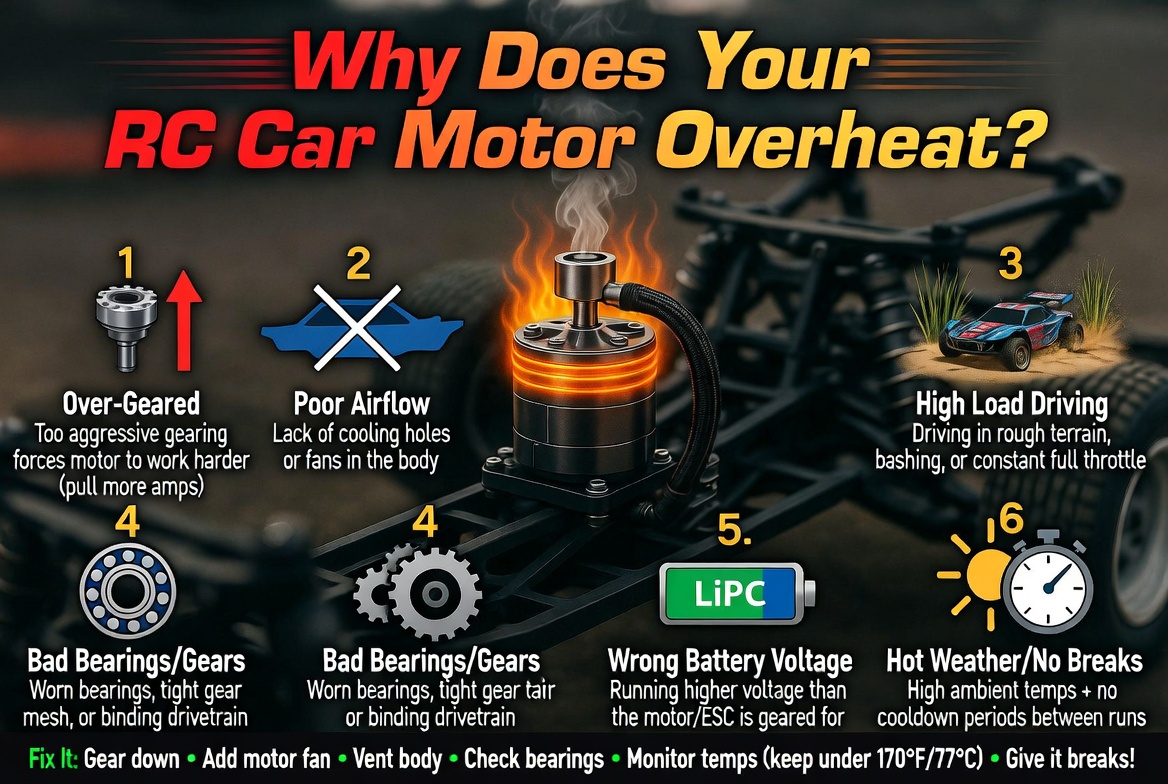
Your rc car motor overheats for clear reasons you can control. Gearing, terrain, driving style, voltage, airflow, dirt, binding, and long runs all play their part. Spot the cause and apply the fix and you stay out on the track longer.
Take it one step at a time. Check temps, adjust gearing, add a fan, clean the parts, and drive smooth. Each change builds on the last and your setup runs better than ever.
You invested in this hobby because it brings joy. Do not let heat cut your fun short. With these tips, your brushless motor or brushed powerhouse stays cool and powerful run after run.
Grab your transmitter, head outside, and enjoy the ride. Your rc car will thank you with smooth, strong performance every time. Happy bashing and keep those motors cool!
Quick FAQ on RC Car Motor Overheating
How do I check my motor temperature without fancy tools?
Feel the case carefully after a run. If you pull your finger away fast, it is too hot. A cheap infrared gun gives exact numbers and helps you track progress.
Does switching to brushless stop overheating completely?
Brushless motors run cooler than brushed ones, but they still overheat if you push them hard. The same rules apply no matter the type.
Can I just add a bigger fan and call it fixed?
A fan helps a lot, but you still need proper gearing and clean parts. Combine fixes for the best results.
What if my ESC gets hot instead of the motor?
The ESC often heats first during heavy use. Give it airflow and ease your driving style. The motor benefits too.
How often should I clean my motor?
After every muddy or dusty run. Quick cleaning keeps friction low and heat down.
Will higher voltage always cause heat?
It does if you do not gear down to match. Balance the voltage with the right pinion size and you stay safe.
This guide gives you everything you need to beat rc car motor overheating for good. Put the tips to work and enjoy every minute behind the wheel. Your rig will run stronger and last longer. Now go have some fun!
(Word count: 3124)