5 Best RC Waterproof Electronics In 2026
As an Amazon Associate we earn from qualifying purchases.
Waterproof RC electronics help radio-controlled vehicles keep working when they meet mud, puddles, wet grass or a quick splash. This guide is for beginners who want to understand what these parts do before they buy. It covers five popular products, from electronic speed controllers to a protective coating and a complete RC car.
The five products share one goal: protecting the electronics inside an RC vehicle from water and dust. Some are individual parts that fit into a vehicle you already own, while others come as a complete ready-to-run car. The comparison below rests on the listed features and typical use of each product, not on personal testing.
Read each description as a guide to what the product is designed to do, and check the seller’s listing for the latest details.




1. 9IMOD WP 1060 2-3s 60A Brushed ESC: best for budget crawler upgrades
The 9IMOD WP 1060 is a brushed electronic speed controller, often shortened to ESC. An ESC is the small circuit board that tells the motor how fast to spin based on your remote control input. This model is built for 1/10 scale RC crawlers and trucks, and it suits hobbyists who want a waterproof unit at a modest price.
The term “waterproof” here describes a unit designed to resist moisture during wet runs. It does not mean the electronics can be submerged for long periods. Rinsing off mud and drying the unit after each session is still a good habit that helps any electronic part last longer.
Best use cases
This ESC fits a small crawler or truck that will run on muddy trails, wet rocks or shallow puddles. It is also a reasonable replacement part when an older controller has failed. Because it uses a 2-3 cell battery range, it matches many common hobby packs. A cell is one battery unit, so a 2S pack has two cells in series and a 3S pack has three.
Beginners often choose a brushed ESC for a first upgrade because the setup is simpler than a brushless system. A brushed motor uses physical brushes to carry current, which keeps the wiring and programming straightforward for a novice builder.
Key features in simple terms
The unit is rated at 60A continuous current. This means it can handle a steady flow of power to the motor without overheating under normal use. Current ratings describe the load the controller can carry, so matching the rating to your motor and battery helps keep the system within safe limits.
The built-in voltage cutoff protects the battery from draining too far, which helps prevent damage to lithium packs. Lithium batteries should not be discharged below their safe minimum voltage, so a cutoff feature offers an extra layer of protection during long runs.
The throttle response is smooth, and the controller offers forward and brake functions. The XT60 plug comes pre-soldered, so you do not need to solder a new connector during installation. Pre-soldered connectors save time, though you should still check that the polarity matches your battery before connecting power.
Daily use insight
In practice, most buyers notice the smooth start when they first press the throttle. A gentle, progressive response makes it easier to crawl over obstacles without spinning the wheels. The brake function helps you stop the vehicle more controllably on slopes, where a sudden stop could cause a rollover.
Because the unit is compact, it usually fits into the tight spaces of a crawler chassis. Check the dimensions against your chassis before you buy, and make sure there is room for airflow and cable routing.
Performance and ease of use
The listed specifications suggest solid performance for a brushed setup at this level. Installation is simple for anyone who has connected a battery and motor before. Beginners may need to read the wiring diagram carefully, since the product data does not describe a detailed manual.
A good habit is to set the throttle range and check the motor direction on a stand or with the wheels raised before driving. This simple test helps catch wiring mistakes before the vehicle hits the ground.
Value for money
At this price, the product sits at the lower end of the waterproof ESC range. It offers the main features most crawler owners look for. Buyers who need advanced tuning options may want to look at higher-priced units instead.
Compare the price with the features you actually need. If you run a simple brushed crawler, extra programming options may add cost without adding much to your driving.
Pros
- Waterproof design suits wet trails and muddy conditions
- Pre-soldered XT60 plug makes installation quicker
- Built-in voltage cutoff helps protect lithium batteries
- Smooth throttle with forward and brake modes
Cons
- Brushed design is less efficient than brushless systems
- Limited to brushed motors, so it does not suit brushless builds
- Advanced programming options are not listed in the product data
2. Radiolink CL9030 90A 2S-4S RC Brushed ESC: best for higher-power vehicles
The Radiolink CL9030 is a brushed ESC rated for much higher current than the 9IMOD unit. It targets crawlers, trucks, buggies, tanks and boats in the 1/10 scale range. It suits builders who want more power headroom and more input flexibility.
An ESC, or electronic speed controller, sits between the battery and the motor. It converts your transmitter input into power for the motor. Picking one with the right current rating helps the electronics handle the load without strain.
Best use cases
This controller fits heavier vehicles or setups that draw more current. A heavy scale truck with a powerful motor is one example. It also works well for boats and tanks, where a stronger controller gives extra margin during long runs or tough conditions.
Because it supports both lithium and non-lithium batteries, it can work with a wider range of packs. Builders who already own older NiMH packs can often reuse them. Always confirm the battery chemistry and cell count match your setup before connecting anything.
Key features in simple terms
The unit supports continuous current of 90A and peak current of 100A. Continuous current is the steady power the controller can handle over time, while peak current is the short burst it can manage, such as a sudden hard acceleration. Both ratings matter when you compare controllers for a specific vehicle.
The product also has a jumper cap setting that must match your battery type before you use it. A jumper cap is a small plug that changes how the controller reads the battery. Setting it wrong can cause serious over-discharge, so checking it is an important first step. The controller also includes under-voltage and over-temperature protection, along with a nano coating rated IP66 for water and dust resistance.
Daily use insight
In day-to-day use, the controller aims for linear and smooth control in both forward and reverse. This matters most on slow, technical terrain where small throttle changes make a big difference. You are more likely to notice smoothness when crawling over rocks or stepping up a steep incline.
The waterproof rating suggests it can handle rain and wet ground without special care. An IP66 rating means protection against dust and strong water jets, not full submersion. Rinsing off mud and drying the unit afterward is still a good habit.
Performance and ease of use
The product data describes a fast 32-bit chip and a 2KHz PWM frequency, which is the rate at which the controller switches power to the motor. These details point to precise control, though beginners may not notice the difference right away. A higher switching rate generally means smoother motor behavior at low speeds.
The jumper cap step adds a small learning curve for newcomers. Reading the manual before the first power-up helps avoid mistakes. Once the setting is correct, day-to-day operation does not require extra steps.
Value for money
The price sits close to the lower-cost option, yet the feature list is much broader. For buyers who need higher current and wider battery support, this offers strong value on paper. Comparing the current ratings against your motor and battery specifications will show if the extra capacity is worth it.
Those with light vehicles may not need all of the extra capacity. A small crawler with a modest motor can run well on a lower-rated controller. In that case, paying for higher headroom adds cost without a clear benefit.
Pros
- High continuous and peak current ratings for demanding builds
- Supports both lithium and non-lithium battery types
- IP66 waterproof and dust-proof rating
- Built-in under-voltage and over-temperature protection
Cons
- Jumper cap must be set correctly, which adds a step beginners must remember
- Higher capacity may be more than a small crawler needs
- Brushed design limits efficiency compared with brushless options
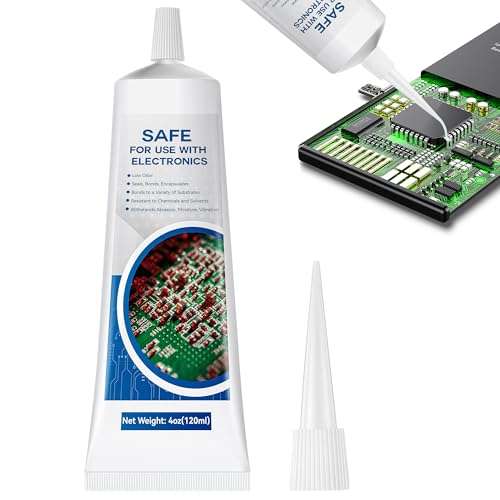
3. 120 ml/4 oz Conformal Coating: best for protecting circuit boards
This product is not an ESC or a vehicle. It is a clear silicone coating that you brush or spray onto circuit boards to shield them from moisture and dust. It suits hobbyists who want to protect existing electronics, including receivers and custom boards.
Think of it as a thin, invisible raincoat for a circuit board. It does not make the board waterproof on its own, but it adds a barrier against the damp air, spray and grime that cause corrosion and short circuits over time.
Best use cases
The coating works well on electronics that will see rain, splashes or humid air. Many builders use it on exposed boards after a repair. It is also useful for LED lights and small control panels in outdoor projects.
Indoor projects can benefit too. A workshop, garage or kitchen often has humidity, dust or oil in the air. A coated board in these spaces is less likely to develop the slow corrosion that can appear months later on bare copper traces.
Key features in simple terms
Conformal coating is a thin protective layer that follows the shape of a circuit board. This silicone version stays flexible, which helps it resist cracking when parts flex or vibrate. The product lists a fast surface dry time of about 15 minutes, which speeds up repair work.
The formula flows into gaps and around components, aiming for even coverage. It also offers high dielectric strength, meaning it resists electrical leakage between conductors. The listed temperature range runs from -60°C to +250°C.
Surface dry time and full cure time are not the same. A coating can feel dry to the touch while still curing underneath. Check the included directions for the recommended wait before handling or powering the board.
Daily use insight
Once applied, the coating is not something you check every day. Its value shows up over time, when moisture and dust would otherwise reach sensitive parts. Because it is clear, you can still see component markings after coating.
Inspect coated boards now and then for lifted edges, bubbles or areas that look thin. Fixing a small gap early is far easier than dealing with a board that has already failed.
Performance and ease of use
Application takes some care, since the coating should cover only the areas you intend to protect. Connectors and switches usually need masking so they keep working. Beginners should read the included directions and test on a spare board if possible.
Work in a ventilated space and apply thin, even coats rather than one heavy layer. Thick coats take longer to cure and can trap bubbles. Good lighting helps you spot missed spots before the coating sets.
Value for money
The 4 oz bottle is a modest purchase that can cover several repairs or small batches. Compared with replacing a damaged electronic component, the cost is low. Its real value depends on how often you work with exposed electronics.
If you only protect one board a year, a smaller amount may serve you well. If you build or repair electronics regularly, a larger bottle often works out to a lower cost per board.
Pros
- Flexible silicone layer resists crac king and peeling under vibration
- Fast surface dry time of about 15 minutes
- Waterproof layer that can withstand immersion
- Wide temperature range from -60°C to +250°C
Cons
- Masking connectors and switches takes extra time and care
- Removing the coating for later repairs can be difficult
- It does not replace good wiring or a sealed enclosure
4. HAIBOXING 18872 1: best for beginners who want a ready-to-run car
The HAIBOXING 18872 is a complete 1:18 scale RC truck. Unlike the parts above, it arrives ready to drive, with its own controller, motor and battery. It suits beginners, gift buyers and families who want an off-road car that handles light splashes.
Because everything is included, you do not need to match components or research compatibility. You unbox it, charge it and start driving. That simplicity is the main reason this model appeals to first-time owners.
Best use cases
This truck fits grass, gravel and dusty trails, as well as shallow wet ground. The splash-proof electronics help it handle rain or a quick puddle. Driving on a backyard lawn or a local dirt path is a common way new owners use it.
It is less suited to deep mud, streams or long soaks. Splash-proof electronics are designed for brief exposure to water, not for being submerged. It is a sensible choice for a first RC vehicle, provided you keep it to lighter conditions.
Key features in simple terms
The car has independent suspension and adjustable shock absorbers, which help it soak up bumps. Independent suspension lets each wheel move on its own, so the body stays steadier over uneven ground. Adjustable shocks let you tune the ride for smoother or firmer handling.
It uses a 2.4GHz remote control, a band that reduces interference from other nearby transmitters. In practical terms, this means fewer dropouts when several RC cars are running in the same area. The controller includes overheat protection and anti-jam cut-off, which shut power down to protect the system when something goes wrong.
The product includes two 850mAh Li-Po batteries, with one pre-installed. The listed runtime is over 35 minutes. A USB charging cable is included, and the product data advises using a power adapter for safe charging.
Daily use insight
Most owners will spend time learning the steering and throttle. Smooth, gentle inputs usually give better control than sudden full-power presses, especially for a new driver. Practicing in an open space before moving to rougher terrain helps build confidence.
Because the truck has front and rear differentials, it can keep moving when one wheel loses grip. This helps on loose surfaces where a single spinning wheel would otherwise stall the car. The reinforced structure is designed to absorb impacts from curbs and small jumps.
Performance and ease of use
The product is designed for beginners, so setup is mostly a matter of charging and pairing. Charge the battery fully before the first run, and let it cool after use before charging again. Parts are listed as replaceable, which helps when a bumper or tire wears out.
The manual covers battery safety, and reading it before the first charge is wise. Never leave a Li-Po battery charging unattended, and stop using a battery that becomes swollen or unusually hot. Following these basic habits extends battery life and reduces risk.
Value for money
The price is higher than the two ESCs and the coating, since you receive a complete vehicle. For someone starting out, this can cost less than buying every part separately. Buyers who already own a chassis may prefer individual components instead.
The right choice depends on what you already have. A complete kit saves time on matching parts, while individual upgrades suit owners who want to build or customize their own vehicle.
Pros
- Ready to drive with controller, motor and batteries included
- Splash-proof electronics suit light wet conditions
- Independent suspension handles uneven ground
- Two batteries help extend running time between charges
Cons
- Splash-proof is not the same as full submersion protection
- New and old controllers are not compatible with each other
- Higher upfront cost than a single electronic part
5. 60A Waterproof Brushed ESC, 1060 2-3s: best for lightweight crawler builds
This second 60A controller from ZHUOYUEFSC is another waterproof brushed ESC for 1/10 scale vehicles. It is aimed at the same crawler, truck and boat builds as the 9IMOD unit. It is a good option for hobbyists comparing similar budget parts.
Best use cases
The controller suits small crawlers and trucks that run on mixed terrain. It is also listed for boats and tanks. Its built-in BEC, which supplies power to the receiver and servo, makes it a self-contained choice for certain builds.
Key features in simple terms
The unit offers forward, reverse and brake modes, giving you control over how the vehicle slows and reverses. It is rated at 60A continuous and 480A peak current. The BEC provides 6V at 3A, enough for many standard receivers and servos.
The XT60 connector and JR plug support common hobby wiring. The product supports 2 s and 3s battery packs, which the listing gives as 7.4V to 11.1V. The product data says it fits a 1/10 scale chassis without space issues.
Daily use insight
Owners usually notice how easy it is to mount the unit in a compact chassis. The forward and brake functions give a predictable feel on slopes and rocks. Because the controller is listed as waterproof, it can handle damp trails and rain.
Performance and ease of use
The listed current ratings suggest capable performance for a brushed controller at this price. Installation is straightforward when you connect the battery, motor and receiver in the right order. Beginners should double-check polarity before powering up.
Value for money
This is one of the lower-priced options in the group. It covers the core features most crawler owners want. Buyers who need a lot of programmable tuning may need to look further.
Pros
- Lower price than many waterproof ESC options
- Built-in BEC supplies power to the receiver and servo
- Forward, reverse and brake modes give flexible control
- Compact size fits common 1/10 scale chassis
Cons
- Brushed design is less efficient than brushless systems
- Limited programming options are described in the product data
- Peak current figures are short bursts, not steady output
Comparison insights: how these products differ
The five products fall into two groups: parts you add to an existing vehicle, and a complete RC car. The ESCs and the coating are for builders who already have a chassis or project. The HAIBOXING truck suits buyers who want to start driving right away.
Performance varies most among the ESCs. The Radiolink CL9030 has the highest current ratings, which suits heavier builds. The 9IMOD and ZHUOYUEFSC units offer 60A ratings that fit most small crawlers. A higher rating gives more headroom, but it also usually means a larger and heavier unit, so the best choice depends on your motor and terrain.
Ease of use depends on your experience. The HAIBOXING car is the simplest to start with, because it arrives assembled and needs only a charged battery. The ESCs require correct wiring, and the Radiolink needs its jumper cap set correctly before use. Double-check the wiring diagram before powering on, since a reversed connection can damage the electronics.
For value, the two 60A ESCs sit at the budget end. The Radiolink costs a little more but offers wider features, such as more settings for different battery types. The HAIBOXING car costs the most upfront, yet it includes everything needed to drive, so you do not need to buy a motor, battery or receiver separately.
Buying guide: the key factors explained in plain words
Start by checking what you already own. If you have a working vehicle, an ESC or a coating may be enough. If you are starting from scratch, a ready-to-run car is often simpler. Make a short list of the parts you already have, such as a motor, battery and radio, before you compare prices.
Next, look at the current rating. Continuous current is the steady power a controller can handle over time. Choose a rating that matches your motor and the terrain you plan to drive on. A rough rule is to leave a margin above the motor’s expected draw, so the controller does not run at its limit every time you drive.
Check battery compatibility. Lithium and non-lithium packs need different settings, and some controllers include protection against deep discharge. Matching the battery type protects both the pack and the electronics. Look for a controller that lists the cell counts it supports, such as 2S or 3S lithium packs, and confirm your battery falls within that range.
Pay attention to waterproof claims. Splash-proof, waterproof and fully submersible mean different levels of protection. Splash-proof electronics handle rain or wet grass, while submersible ratings suit deeper water. Read the rating and plan your use around it, and remember that even waterproof parts need drying and cleaning after muddy or wet runs.
Consider connectors and fit. XT60 and JR plugs are common, but check that your motor and receiver match. A compact size helps when space inside the chassis is tight. Measure the bay before ordering, and compare the connector types on your battery with those on the controller to avoid adapters.
Finally, think about support and parts. Replaceable parts and clear manuals make maintenance easier over time. Beginners benefit most from products with straightforward instructions, and a seller who offers spare parts can save you money if a component fails after a hard crash.
Who should buy these products
Hobbyists who want a budget crawler upgrade may suit the 9IMOD WP 1060 or the ZHUOYUEFSC 60A ESC. Both offer waterproof operation and common connectors at a low price. They fit small 1/10 scale builds, where space and weight matter more than maximum power.
Builders with heavier vehicles, boats or tanks may prefer the Radiolink CL9030. Its higher current ratings and battery flexibility suit more demanding setups, such as a larger motor or a vehicle that carries extra weight. Experienced builders will likely appreciate the extra headroom and the ability to fine-tune settings.
Anyone protecting existing circuit boards may find the conformal coating useful. It suits repairs, LED projects and outdoor electronics that need a moisture barrier. Apply it to clean, dry boards in a ventilated area, and keep connectors and moving parts masked off, since the coating can interfere with contact points.
Buyers who want to start driving right away should look at the HAIBOXING 18872. It arrives ready to run and suits gift buyers and first-time owners. Its splash-proof electronics handle light wet conditions, though it is not built for deep water. Plan to charge the battery fully before the first run and read the included manual for safe charging habits.
Final verdict
No single product fits every RC owner, because each one solves a different problem. The right choice depends on if you need a part for an existing vehicle, a protective coating or a complete car. Matching the product to your project matters more than chasing the highest rating.
For a budget crawler upgrade, the 9IMOD and ZHUOYUEFSC controllers are sensible starting points. They suit light builds where cost is the main concern, and they are easy to install on a basic chassis. For heavier builds and boats, the Radiolink CL9030 offers more headroom, so it handles higher loads without working near its limits.
For protecting boards, the conformal coating does its job well when applied with care. It shields circuits from moisture and dust, but it does not replace a sealed enclosure. For a first complete vehicle, the HAIBOXING truck is the simplest route, because the parts are already matched for you.
In short, read the ratings, match the battery type and be realistic about waterproof claims. Check the specifications against your motor, battery voltage and the terrain you plan to drive on. A careful choice will serve you better than a rushed one, and it will save money on replacement parts later.
Frequently Asked Questions
What does waterproof mean for RC electronics?
Waterproof usually means the parts can handle rain, splashes or damp ground. Ratings vary, so check if a product is splash-proof, waterproof or fully sealed. Full submersion protection is a separate and stronger level. Even a rated part can fail if its seals are damaged or its connectors are left open, so inspect it after each run.
What is an ESC and do I need one?
An ESC, or electronic speed controller, tells the motor how fast to spin. Most electric RC vehicles need one, because the motor cannot be controlled safely without it. If you buy a ready-to-run car, the controller is usually already included. If you build from parts, make sure the ESC matches your motor’s rating and your battery voltage.
Can I use lithium and non-lithium batteries with the same ESC?
Some controllers support both types, but you must set them correctly first. The Radiolink CL9030 uses a jumper cap for this. Using the wrong setting can damage the battery, so always check before use. Confirm the battery chemistry on its label and read the controller’s manual before connecting power.
Is conformal coating hard to apply?
It takes care rather than special skill. Mask connectors and switches, apply a thin even layer and let it dry fully. Work in a clean, well-ventilated space and follow the drying times printed on the product. Testing on a spare board first is a sensible habit for beginners.
Which product is best for a complete beginner?
A ready-to-run vehicle such as the HAIBOXING 18872 is usually the easiest start. It includes the controller, motor and batteries, so you avoid matching parts yourself. Read the manual before the first charge, and charge the batteries only with the charger supplied or one rated for them. Start in an open area so you can learn the controls safely.
Peterson is an RC hobby enthusiast and product reviewer with a passion for remote-controlled cars, trucks, boats, drones, and accessories. He enjoys testing the latest RC products, comparing features, and sharing practical buying guides to help beginners and experienced hobbyists make informed decisions. Through RCThing.com, Peterson provides honest reviews, maintenance tips, and expert advice to help readers get the most from their RC adventures.