5 Best RC Soldering Station In 2026
As an Amazon Associate we earn from qualifying purchases.
If you fly drones, cars or planes with rechargeable batteries, you will soon need to solder connectors. A soldering station for RC gear holds the plug and wire steady so you can work with both hands. This guide helps beginners understand what a good RC soldering station does, and how five popular options compare. The best RC soldering station for you depends on the connectors you use and how often you work with them.
A steady hand matters more than most beginners expect. A plug that shifts while the iron touches it can create a cold joint, or it can melt the housing. A holding fixture keeps the connector in one place so the heat and solder go where you intend. It also frees one hand for the iron and the other for the solder.
All five products are small aluminum or jig-style bases designed for common RC connectors such as XT60, XT90 and T-plugs. Each one aims to clamp or support the connector while you apply heat. The comparison below rests on the listed features and typical use of each product, not on personal testing. Prices and availability are shown in the product listings.
When you compare listings, look at the clamping range first. A fixture that only fits one connector size may leave you without support for wires or plugs you use later. Next, check the base. A wide, heavy base resists tipping when you press the iron down, while a light base may need a clamp or a mat to stay put.
Five RC Soldering Station Options Reviewed



1. RC Soldering Station Jig: best for adjustable clamping of many wire sizes
This jig is a press-board design that uses an adjustable gap to hold connectors and wires. It lists support for silicone wire from 0 to 24 AWG, which is a standard way to measure wire thickness. Smaller AWG numbers mean thicker wire, so the listed range covers a broad set of jobs. It suits hobbyists who work with a mix of connector types and wire sizes.
Key features in plain words
The gap adjusts from 0.5 mm to 9 mm. You press the board to open the gap, place the plug inside, and let it grip. A quick-lock design keeps the grip in place once you let go. Because the gap is adjustable, you can tune it to a loose fit for a large plug or a tight fit for a small one.
Everyday use
In practice, you set the gap, seat the connector, and begin soldering. The listed base is large enough to stay steady on a bench. Because the material is described as resistant to high temperatures, the jig is less likely to warp when the iron is close by. Keep the iron tip on the joint and away from the plastic housing, even when the jig is holding firm.
Performance and ease of use
The listing describes the clamping as very easy to use. For a beginner, a simple press-to-grip action reduces the number of steps. The jig is also compact and light, so it stores easily in a drawer. Expect a short learning curve while you find the gap setting that suits each connector.
Value for money
At the listed price, this is a moderately priced option. Its wide clamping range may suit people who want one jig for many jobs. If you only solder one connector type, a more specialized fixture may cost less per job and fit more snugly.
Pros
- Wide adjustable gap for many connector and wire sizes
- Simple press-to-clamp action
- Compact and easy to store
- Base described as steady and heat resistant
Cons
- Gap-based grip may need a few tries to fit a connector snugly
- Less focused on a single connector type than some rivals
- Seller standing is described as moderate, so buyers may want to read recent feedback
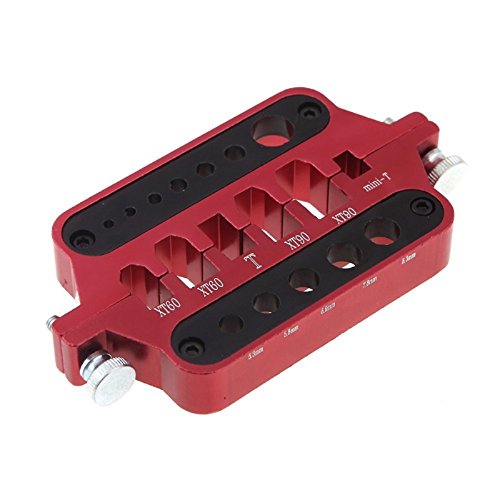
2. ShareGoo Aluminum Welding Soldering Insulate: best for banana and bullet connector work
This is an aluminum welding plate with a black heat-insulating layer. It supports XT60, XT90, T-plug, and several banana and bullet connector sizes. It suits users who work with a range of connector styles and want a flat, fixed plate.
The plate is a simple tool with a clear purpose. It gives you a stable, flat surface to hold connectors while you solder them. If you mainly work with banana or bullet connectors, this design keeps the setup straightforward.
Key features in plain words
The plate has many holes sized for different connectors. Each hole is a fixed opening, so you do not need to measure or adjust a gap. The black insulating layer around the holes is designed to slow heat from spreading across the plate. The listed size is 60 by 110 by 15 mm, and it weighs about 140 grams.
The aluminum body is the main structure that holds the parts in place. The black layer sits on top of it and acts as a barrier between the hot work and the surface beneath. This layer does not replace careful handling, but it adds a measure of protection for your bench.
Everyday use
Because the holes are fixed, you pick the one that matches your connector and set it in place. Many beginners find this quicker than adjusting a gap. For example, if you are soldering a set of bullet connectors, you can choose a matching hole for each one and work through the batch in order.
Its small size also makes it practical for taking to a flying field. A light plate that fits in a bag is easier to carry than a large bench jig. You can set it on a table, hold the connector with one hand, and solder with the other.
Performance and ease of use
The aluminum body helps spread heat away from the connector. This can make it easier to avoid overheating a single spot on the part. The insulating layer is meant to protect the surface beneath, so you can work with less worry about marks on the table.
Setup is simple, though the plate does not grip as firmly as a clamping tool. Instead of clamping, it relies on the fit of the hole and your hand to keep the connector steady. For this reason, you should hold the connector firmly while you work, especially with small parts.
Value for money
At the listed price, this plate is one of the lower-cost options in the group. It may suit someone who wants a basic fixed base for a few connector types. If you need a wide range of wire sizes or a firm clamping action, a different tool may be a better fit.
Pros
- Many fixed holes for banana, bullet and battery connectors
- Heat-insulating layer helps protect the work surface
- Small and light enough to carry
- Low listed price
Cons
- No clamping action, so the connector can shift if not held
- Fixed holes limit fit for unusual connector sizes
- Seller standing is described as moderate, so buyers may want to check recent feedback
3. RC Connector and Silicone Wire Welding Soldering: best for a wide wire-gauge range
This board is built for RC connectors and silicone wire. It lists support for wire from 0 to 24 AWG and a range of connector types, including XT90, XT60, XT30, EC3, EC5, T-plug and JST. It suits people who want one board for many connector families.
The main appeal of this board is its range. Many hobbyists work with more than one connector style, and a single board that covers several of them can reduce the number of tools on the bench. Its design focuses on holding parts while you solder, which is the core job of any jig.
Key features in plain words
The clamping gap runs from 0.5 mm to 9 mm. You press the board to open the gap, then place the connector or wire inside. Once released, the gap holds the part while you solder.
This adjustable gap is the key difference from the fixed-hole plate above. Because the opening changes with pressure, it can accept a wider mix of part sizes. The listing does not give detailed guidance on how each connector should sit, so you will learn the best fit through use.
Everyday use
In practice, the press-and-clamp method works well for shorter jobs. For example, when you are tinning the end of a short wire and setting a connector, the board can hold both parts in place while you work. For longer wires, you may want to support the far end with a second hand or a clamp. The board is designed to free both hands once the part is held.
Keep the wire straight while you solder, especially with thin gauges. A bent or twisted lead can pull out of the gap once the board is released. Taking a moment to line up the part before you let go can prevent this.
Performance and ease of use
The listing describes the operation as easy. Pressing the board to make a gap is a simple motion. Beginners may still need practice to find the right gap for each connector, since a gap that is too loose will not hold the part and one that is too tight can be hard to open.
With a few test pieces, you can learn how much pressure opens the gap and how it grips different sizes. This practice time is worth spending before you work on expensive parts or battery leads.
Value for money
At the listed price, this board sits in the middle of the group. Its broad compatibility list may make it useful for mixed workshops. If you only solder one connector type, a simpler and cheaper plate may meet your needs.
Pros
- Wide range of listed connector types
- Wire support from 0 to 24 AWG
- Simple press-to-clamp operation
- Adjustable gap suits many part sizes
Cons
- Clamping may need trial and error for a tight fit
- Listing offers few details on heat resistance
- Seller standing is described as moderate, so buyers may want to check recent feedback
4. TMH Aluminum Welding Soldering Insulate Station: best for a lightweight multi-plug base
This station is a multi-function aluminum plate for XT60, XT90, T-plug and banana connectors. Its listed weight is 147 grams, and its size matches the other fixed plates in this group. It suits users who want a light, fixed base for many common plugs.
A fixed base like this keeps the connector in one spot while you work. That can free up one hand and reduce the chance of the part sliding during a soldering pass. It does not replace a clamp, but it gives you a stable starting point for simple jobs.
Key features in plain words
The plate uses CNC engraving, a machine process that cuts precise shapes into the metal. It lists support for most common HM plug welding, along with the same bullet and banana sizes as the other plates. The dimensions are 110 by 60 by 15 mm.
The size is small enough to sit on a crowded bench beside a soldering iron and a spool of solder. The listed dimensions also make it easy to compare against other plates before you buy. Check the hole sizes against your own connectors before ordering, since the listing does not show every diameter.
Everyday use
Because the plate is fixed, you pick the matching hole and seat the connector. Its light weight makes it easy to move between the bench and a field. The plate does not grip on its own, so holding the part is still needed.
A typical session starts with picking the hole that matches the plug’s shape. You then press the connector into place and keep it steady while you apply heat and solder. Keeping a small tray nearby for loose parts can help you stay organized during repeated jobs.
Performance and ease of use
The engraved holes are meant to give a neat fit for the listed connectors. Setup is quick, but the plate relies on the user to keep the part steady. Beginners may find a second hand helpful.
A second person can hold the wire while you work with the iron, which makes the job easier. Without that help, you may need a spare hand or a weight to keep the plate from shifting. The plate is simple to learn, but steady hands still make the difference.
Value for money
At the listed price, this station is among the more affordable options. Its light build and fixed holes make it a practical choice for simple, repeated jobs.
Value depends on how often you solder. For occasional projects, a basic fixed plate can cover most needs without extra cost. For frequent use, you may want to weigh the benefits of a clamping design against the added expense.
Pros
- Light weight for easy carrying
- Fixed holes for many common plug types
- Low listed price
- Compact dimensions that fit small benches
Cons
- No clamping, so the connector must be held in place
- Fixed holes may not suit unusual sizes
- Seller standing is described as moderate, so buyers may want to read recent feedback
5. MADCATZ 1 Pcs of Aluminum Welding Soldering: best for a simple, basic setup
This is a single aluminum station with a red finish and a black heat-insulating layer. It supports XT60, XT90, T-plug and banana connectors in the same bullet sizes as the other plates. It suits users who want a plain, low-cost base for occasional work.
A plain design can be an advantage when you are learning. With fewer parts and settings, you can focus on the basics of heating the joint and feeding solder. The trade-off is that you get fewer extras than you would with an adjustable jig.
Key features in plain words
The plate has holes surrounded by a black insulating layer. That layer is meant to limit heat moving across the surface. The size is 60 by 110 by 15 mm, the same as several other plates in this group.
Because the dimensions match other plates, you can swap or compare them easily on the same bench. The insulating layer is a helpful detail, though the listing does not explain how much heat it blocks. Treat it as a general feature rather than a guaranteed level of protection.
Everyday use
In practice, you choose a hole that fits your connector and place the part inside. The listing calls it a simple and durable tool. Because it has no moving parts, there is little to adjust or maintain.
Many users keep a plate like this at the same spot on the bench so the setup stays familiar. Wiping the surface clean after each session helps keep solder residue from building up around the holes. A quick check that the connector sits flat before heating can prevent uneven joints.
Performance and ease of use
Like the other fixed plates, this one depends on the user to hold the connector steady. The listing does not give detailed performance data, so it is best to judge it by its basic design. Setup is straightforward.
Ease of use mostly comes down to the fit of the connector in its hole. A snug fit keeps the part in place, while a loose fit can let it shift as you work. Testing the connector in the hole before soldering is a simple way to check the match.
Value for money
This is the lowest-priced option in the group at the listed price. For a beginner who solders only a few connectors, it may be enough for basic needs.
Low cost makes it easy to try fixed-plate soldering without a large investment. If your needs grow later, you can add more specialized tools. For now, the plate covers the essentials for light, occasional projects.
Pros
- Low listed price
- Simple design with no moving parts
- Heat-insulating layer around the holes
- Compact size for storage
Cons
- No clamping, so the part must be held
- Few extra features compared with adjustable jigs
- Seller standing is described as moderate, so buyers may want to check recent feedback
Comparison Insights: How These RC Soldering Stations Differ
The five products fall into two groups. Two use an adjustable press-to-clamp gap, while the other three are fixed aluminum plates with set holes. The difference affects how easy each one is to use, and how much the user has to hold by hand.
In practice, the adjustable gap is the main design difference. You set the clamp to the size of your connector, then press to lock it in place. A fixed plate has no adjustment, so the connector must fit one of the holes already cut into it.
On performance, the clamping jigs offer more hold on the connector. The fixed plates depend more on careful hand placement. The insulating layers on the plates are meant to protect the surface, but the listings give little detail on how well they work in practice.
For example, when a connector sits slightly off-center on a fixed plate, you may need to reposition it several times before it stays still. A clamp reduces this kind of movement, though it does not remove the need to check alignment before you apply solder.
On ease of use, the adjustable jigs ask for a short learning curve to find the right gap. The fixed plates are quicker to set up, since you only choose a matching hole. Beginners who value quick setup may prefer the plates, while those who need firm grip may prefer the jigs.
A first session with a clamp usually involves testing the gap on a spare connector. Once you find the setting that suits your most common plug, it is easy to repeat. With a fixed plate, the learning is mostly about picking the correct hole and keeping the part steady.
On value, the listed prices range from about $10 to about $19. The lowest-priced options are simple fixed plates. The higher-priced options add clamping and a wider compatibility list. Because of this, the best value depends on the connectors you plan to use most.
If you only solder one or two connector types, a lower-priced plate may cover your needs. If you switch between several sizes, the extra cost of a clamping jig can save time and reduce the number of parts you need to buy.
Buying Guide: Key Factors for Picking an RC Soldering Station
Start with the connectors you plan to solder. Check the listed connector types and bullet or banana sizes before you buy. A station that matches your most common plug will serve you best.
Make a short list of the plugs you already own or expect to use. Compare that list against each product’s stated compatibility. A station that covers your current needs is usually a better choice than one that lists many sizes you will never use.
Next, consider wire size. Wire thickness is often given as AWG, where a higher number means a thinner wire. Make sure the station lists support for the wire range you use.
Thicker wire carries more current and needs more heat to solder cleanly. Thin wire can be damaged more easily if it is held too long under the iron. Matching the station to your wire range helps you avoid both problems.
Think about grip. A press-to-clamp jig holds the part for you, which frees both hands. A fixed plate costs less, but you must hold the connector steady. Beginners often find a clamp easier, though it may take a few tries to set.
Look at heat protection. Many stations use an aluminum body and a heat-insulating layer. These features are meant to protect the work surface. Keep in mind that the listings give limited detail, so treat these features as general design goals.
Finally, consider size and weight. A small, light station is easy to store and carry. This matters if you solder at a field or in a shared space. Compare the listed dimensions and weight to what fits your bench.
Who Should Buy These RC Soldering Stations
Beginners who work with a mix of connectors may find the RC Soldering Station Jig a good fit. Its adjustable gap and listed wire range suit varied jobs. Its press-to-clamp design also keeps both hands free, which matters when you are learning to hold a soldering iron and a wire at the same time.
People who mainly solder banana and bullet connectors may prefer the ShareGoo plate. Its many fixed holes cover a wide size range, so you can seat common connector sizes without adjusting anything. Its low listed price also suits a simple workshop that does not need extra features.
Hobbyists who want one board for many connector families may look at the RC Connector and Silicone Wire Welding Soldering board. Its listed compatibility includes XT90, XT60, XT30, EC3, EC5, T-plug and JST. It suits mixed workshops where you switch between battery packs, speed controllers and motors on the same day.
Users who want a light base for carrying to the field may consider the TMH station. Its listed weight of 147 grams and small size make it easy to pack in a bag or toolbox. It works best for people who can hold the part steady, since its lighter build offers less mass to resist movement.
Occasional users who solder only a few connectors may find the MADCATZ plate enough. It is the lowest-priced option in the group. Its simple design means little to learn, and it works well for a single repair or a short project where you do not need frequent setup changes.
Final Verdict
No single station fits every buyer. The right choice depends on your connector types, how often you solder, and if you want a clamp or a fixed base. The listings give enough detail to match the features to your needs, so read the compatibility and wire range sections before you decide.
For beginners who want firm hold and wide wire support, the adjustable jigs stand out. For those who prefer a low price and a simple plate, the fixed aluminum options are practical. In short, match the station to your most common job, and you will get the most value from it.
Frequently Asked Questions About RC Soldering Stations
What is an RC soldering station?
It is a small base that holds RC connectors and wires while you solder. It frees your hands and keeps the parts steady, which is especially useful for small plugs that are hard to hold. Most are made of aluminum or a heat-resistant material that tolerates the warmth of a soldering iron.
Do I need a clamp, or is a fixed plate enough?
A clamp holds the part for you, which helps beginners who are still learning to position connectors. A fixed plate costs less but needs you to hold the connector in place with your hand or a helper. Choose based on how much hands-free help you want and how often you plan to solder.
What does AWG mean?
AWG stands for American Wire Gauge, a standard for wire thickness. A higher number means a thinner wire, so a 12 AWG wire is thicker than an 18 AWG wire. Check that the station lists a wire range that includes the gauge you plan to use.
Why is there a heat-insulating layer?
The layer is meant to limit heat spreading across the surface beneath the connector. It can help protect the work area from scorching when the iron is applied. The listings give limited detail on how well it performs, so treat it as a general safety feature rather than a guarantee.
Can one station handle every connector?
Most stations cover only certain connector types and sizes. Check the listed compatibility before you buy, and compare it against the plugs you actually own. A single station may not suit every plug, so you may need a second base for an unusual or larger connector.

Peterson is an RC hobby enthusiast and product reviewer with a passion for remote-controlled cars, trucks, boats, drones, and accessories. He enjoys testing the latest RC products, comparing features, and sharing practical buying guides to help beginners and experienced hobbyists make informed decisions. Through RCThing.com, Peterson provides honest reviews, maintenance tips, and expert advice to help readers get the most from their RC adventures.