5 Best LiPo Charger For RC Cars In 2026
As an Amazon Associate we earn from qualifying purchases.
Picking the best LiPo charger for RC cars can feel confusing at first. Many chargers look similar on a product page, yet they differ in power, battery support and how easy they are to set up. This guide helps beginners, hobbyists and anyone shopping for their first RC charger understand the options.
The five chargers covered here share a common purpose: they charge lithium polymer (LiPo) batteries and many other battery types used in radio-controlled cars, boats and drones. Each one offers balance charging, a screen for settings and several charging modes. This comparison rests on the listed features and typical use, not on personal testing, so it shows what each charger offers on paper and what that usually means in everyday use.

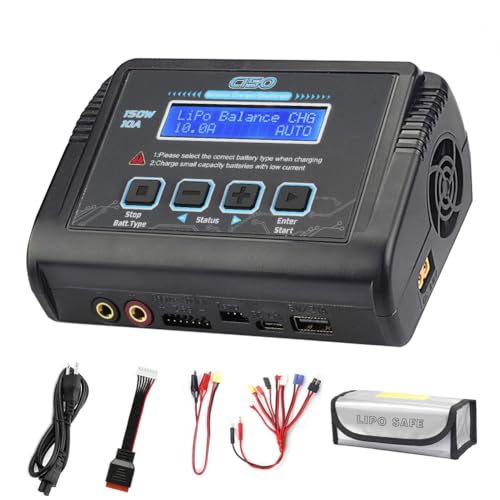


1. LiPo Battery Charger Dual 10A RC Fast: best for charging two batteries at once
This charger is a dual-channel model from Aorika. It can charge two different batteries at the same time, one on each channel. It suits hobbyists who run several packs and want to save time between runs.
Best use cases
Dual charging makes the most sense when you own two or more packs and want to get them ready together. Racers and club drivers often use this kind of setup. A single-channel charger can work for one pack at a time, but it takes longer to cycle through a set.
Key features in plain words
The charger lists a total AC input of 150W, split across the two channels, and a charge current range of 0.1 to 10A per channel. It supports lithium types such as LiPo, LiHV, Li-ion and LiFe, along with NiCd, NiMH and lead acid batteries. A balance feature watches each cell in the pack, which helps keep the cells even.
Daily use feel
Because the screen is large, menus are easier to read than on small-display models. The product notes that you should never put two different batteries on the same channel at once. Keeping that rule in mind is part of routine use.
Performance and ease of use
The listed output is strong for a bench charger in this price range. The “AUTO” function can detect the cell count, which removes one common setting step for beginners. Still, you do need to pick the correct battery type before you start.
Value for money
At the listed price, the charger offers two channels, many modes and memory storage. For buyers who need dual charging, that is a fair trade. For someone with one pack, a simpler single-channel unit may offer better value.
Pros
- Charges two batteries at the same time on separate channels
- Wide battery support, including several lithium and nickel types
- Large screen and an AUTO function that detects cell count
- Stores 20 memory profiles for quick repeat setups
Cons
- Two channels mean more to learn and more care with connections
- Cannot charge two different batteries on the same channel at once
- Can be more than most beginners need with only one pack
2. LiPo Battery Charger: best for a fan-cooled, all-round bench charger
This HTRC model is a single-channel charger with 150W maximum output. It has AC and DC input options and a built-in cooling fan. It suits drivers who want one dependable charger with plenty of extra functions.
Best use cases
This charger fits a home workbench or a pit area where you charge packs one at a time. The DC input lets you run it from a 12V battery or supply when mains power is not handy. It is a practical pick for a single driver who wants room to grow.
Key features in plain words
The charger supports LiPo, LiFePO4, LiHV, NiMH and NiCd batteries, plus lead acid and smart types. The battery meter shows total voltage, capacity percentage and the voltage of each cell.
the internal resistance check can help spot a weak cell before it becomes a problem. That said, the listed setting ranges are wide, so beginners should match the battery type exactly.
Daily use feel
The built-in fan and the fire-resistant shell suggest the designers expected long sessions at the bench. A USB port on the front adds a small convenience for charging a phone or other low-power device. Most users will find the menus workable once they learn the main modes.
Performance and ease of use
Maximum output of 150W is generous for a single channel, and charge current runs up to 10A. Terminal voltage control is listed as an option for experienced users only. For a first charger, sticking to the standard profiles is the safer habit.
Value for money
The feature list is long for the price, which makes this charger attractive to buyers who want many functions in one unit. The 20 memory slots help if you run several battery types. Those who only need basic charging may not use everything it offers.
Pros
- High 150W output for a single-channel charger
- Built-in cooling fan and a fire-resistant shell
- Battery meter shows the voltage of each cell
- Includes AC and DC input options and a USB port
Cons
- Many extra functions can feel like a lot for a first-time user
- Terminal voltage control is intended for experts, so it adds complexity
- Only one channel, so charging two packs means waiting between them
3. LiPo Charger 80W 6A: best budget pick for a simple start
This Aorika model is an 80W, 6A balance charger. It is one of the lower-output options in this group. It suits beginners who want a straightforward charger without a long list of extras.
Best use cases
The charger suits small and mid-size packs used in entry-level RC cars. Its 6A charge current is enough for many common packs when charged at a moderate rate. Hobbyists who mainly run one or two packs may find it sufficient.
Key features in plain words
The built-in cell balancer means you do not need a separate balance board for balance charging. It supports NiMH, NiCd, LiPo, Li-ion, LiFePO4 and lead acid batteries. It also includes short-circuit, overcharge, overcurrent and overheat protection.
Daily use feel
Setup is simple because you pick the battery type and settings on the LCD screen. The product notes that it cannot charge LiHV batteries, so check your pack before you buy. For most day-to-day tasks, the controls stay out of the way.
Performance and ease of use
The 80W output is lower than the 150W models here, so charge times will usually be longer. The protection features give a sense of security for someone still learning. Even so, it is wise to watch the charger while it works, as with any charger.
Value for money
This is the lowest-priced charger in the group, which makes it an appealing first purchase. You get balancing and multiple battery types without paying for dual channels or a high output. Buyers who expect fast charging or LiHV support may want to look at the higher-output options instead.
Pros
- Lowest price in this group, which suits a first charger
- Built-in balancer, so no separate balance board is needed
- Several protection features for everyday safety
- Simple LCD controls for picking battery type and settings
Cons
- Lower 80W output means slower charging than the 150W models
- Cannot charge LiHV batteries, which limits some packs
- Fewer extra functions than the more feature-rich chargers
4. LiPo Battery Charger Dual 10A Fast Balance: best for large screen dual charging
This HTRC dual charger shares many traits with the first Aorika model. It offers two channels, a large scre en and a long list of battery types. It suits buyers who want two channels with an easy-to-read display.
Best use cases
Two channels let you charge two packs in one session, which saves waiting time.
This suits group drivers or anyone running paired batteries for a race day. A single-channel charger would need one pack to finish before the next can start.
Key features in plain words
The charger lists a total AC input of 150W split across both channels, with 10A charge current per channel. It supports LiPo, LiHV, Li-ion, LiFe, NiCd, NiMH, lead acid and smart batteries. A balance feature monitors individual cells, and 20 memory slots store settings for repeat use.
Daily use feel
The large screen makes it easier to read the mode, voltage and current on both channels. The “AUTO” function can identify the cell count, which helps when you are unsure of the pack. As with any dual unit, keep the two channels labelled so you always know which pack is on which side.
Performance and ease of use
The listed output and current ranges are strong for a dual charger at this price. Most of the common functions, such as balance charging and storage mode, are easy to reach from the main menu. Like the other dual model, it asks you to avoid putting two different batteries on one channel.
Value for money
This charger is priced slightly above the first Aorika dual model, but the features look very similar on paper. Buyers may weigh the brand, warranty and seller details before picking between them. For a dual-channel need, it is a reasonable choice.
Pros
- Two channels allow simultaneous charging of two packs
- Large screen makes menus and readings easier to see
- Supports a wide range of lithium, nickel and lead acid types
- Memory storage for 20 saved battery profiles
Cons
- Two channels bring extra setup steps and more cables to manage
- Must not charge two different batteries on the same channel
- A higher price than single-channel options with similar output
5. Lipo Charger H B6 RC Charger LiPo: best compact balance charger for light use
This Haisito charger is an 80W, 6A balance model with a range of connectors included. It is described as lighter and more cost-effective than a similar earlier model. It suits hobbyists who want a compact, practical charger for occasional use.
Best use cases
The charger fits a smaller workspace or a casual driver who charges a few packs now and then. Its included connectors, such as XT60, JST and Deans, give flexibility across different packs. It is a sensible choice for someone building their first set of accessories.
Key features in plain words
An independent lithium balancer monitors and balances each cell during charging. The charger supports NiMH, NiCd, LiPo, Li-ion, LiFePO4 and SLA batteries. Features include a storage charge mode, data storage and load, and cyclic charging and discharging.
Daily use feel
The LCD screen shows charging status and settings as you move through the modes. The listed steps are simple: connect the battery, select the mode and start. The product also lists a 12-month warranty, which gives some peace of mind.
Performance and ease of use
At 80W and 6A, the output is more modest than the 150W models, so charging takes longer. The protection features, including reverse polarity and over-temperature protection, help guard against common mistakes. Taken together, it is an easy charger to learn for a beginner.
Value for money
This is one of the lower-priced chargers in the group, and it includes a good set of accessories. The warranty adds to its appeal for a buyer who wants support. Those who need faster charging or dual channels may prefer a different model.
Pros
- Includes a range of connectors and useful accessories
- Independent balancer monitors each cell during charging
- Several protection features, including reverse polarity protection
- Includes a 12-month warranty, as listed by the seller
Cons
- Lower 80W output means slower charging than the 150W models
- Fewer advanced functions than the dual-channel chargers
- Best suited to one pack at a time, not for group charging sessions
Comparison Insights: How These LiPo Chargers Differ
The five chargers fall into two broad groups. Two of them offer dual channels, while three offer a single channel. That difference shapes how each one fits into a routine.
Output is the next big difference. The 150W models can charge faster than the 80W units, though charge time also depends on pack size and charge rate. Beginners should not assume more watts always means a better choice.
Ease of use varies more than the specifications suggest. Large screens, clear menus and an AUTO cell-count function all help new users. The simpler models with fewer extras can feel more approachable at the start.
Value depends on your needs. A buyer with one pack may find a single-channel, mid-output charger more than enough. A buyer with several packs may save time with a dual-channel model, even at a higher price.
Buying Guide: Key Factors Explained in Plain Words
Before you buy, check which battery types the charger supports. Lithium polymer, or LiPo, is the common choice for RC cars. Make sure your pack type appears on the product’s list, especially if you use LiHV packs.
Output power, listed in watts, affects how fast the charger can work. Higher output can shorten charge times, but it must suit your packs. Charge current, listed in amps, is another number to check against your battery’s rating.
Balance charging is a key feature for lithium packs. It watches each cell so they charge evenly. Most chargers in this group include it, which is a useful safety point for beginners.
Think about how many packs you own. One pack suits a single channel. Two or more packs may make a dual channel worth considering.
Look at safety features such as overcharge, short-circuit and overheat protection. These help guard against common mistakes. A charger that stops on its own when a pack is full is also easier to trust.
Finally, consider a screen you can read easily. Clear menus help you pick the right mode each time. Memory storage for saved settings can also save time on repeat charges.
Who Should Buy These Products: Matching Buyers to Chargers
If you are a complete beginner with one pack, the LiPo Charger 80W 6A is a sensible starting point. It keeps the controls simple and the price low. It suits a first RC car and a modest charging routine.
If you want a compact charger for occasional use, the Lipo Charger H B6 RC Charger LiPo is worth a look. Its connector set and warranty add value. It suits a small workspace and a casual driver.
If you want one strong charger with many functions, the LiPo Battery Charger is a good match. Its 150W output, fan and battery meter suit a home bench. It fits a driver who wants room to grow.
If you run two or more packs and want to save time, the two dual-channel models are the right group. The Aorika dual charger offers a lower price for similar features. The HTRC dual charger offers a large screen and a clear display.
Final Verdict
There is no single best LiPo charger for every RC driver. The right choice depends on how many packs you run and how much you want to spend. Matching the charger to your routine matters more than chasing the highest number on a spec sheet.
For a first purchase with one pack, a simple 80W single-channel model is a practical start. For busy days with several packs, a dual-channel charger can save real time. In short, pick the charger whose battery support and features fit your everyday use.
Frequently Asked Questions
What is a LiPo charger?
A LiPo charger is a device that charges lithium polymer batteries used in RC cars, drones and boats. Most also support other battery types. Many include balance charging to keep cells even.
What does balance charging mean?
Balance charging watches each cell in a lithium pack and keeps them at similar voltages. This helps the pack charge saf ely and last longer. Without it, cells can drift apart over time. Most chargers in this group include a built-in balancer, so no separate board is needed.
Can one charger handle different battery types?
Many chargers in this group support several battery families, such as LiPo, NiMH and lead acid. Always select the correct battery type before you start. Charging a lithium pack on a nickel setting can damage it.
Is a dual-channel charger better than a single-channel one?
A dual-channel charger is better only if you need to charge two packs at once. It saves time for drivers with several batteries. For one pack, a single-channel model is usually simpler and often less costly.
Do I need a LiHV-compatible charger?
You need LiHV support only if your battery is labelled LiHV. Some chargers in this group cannot charge LiHV packs, so check the product list first. Using the wrong setting can harm the battery and the charger.

Peterson is an RC hobby enthusiast and product reviewer with a passion for remote-controlled cars, trucks, boats, drones, and accessories. He enjoys testing the latest RC products, comparing features, and sharing practical buying guides to help beginners and experienced hobbyists make informed decisions. Through RCThing.com, Peterson provides honest reviews, maintenance tips, and expert advice to help readers get the most from their RC adventures.