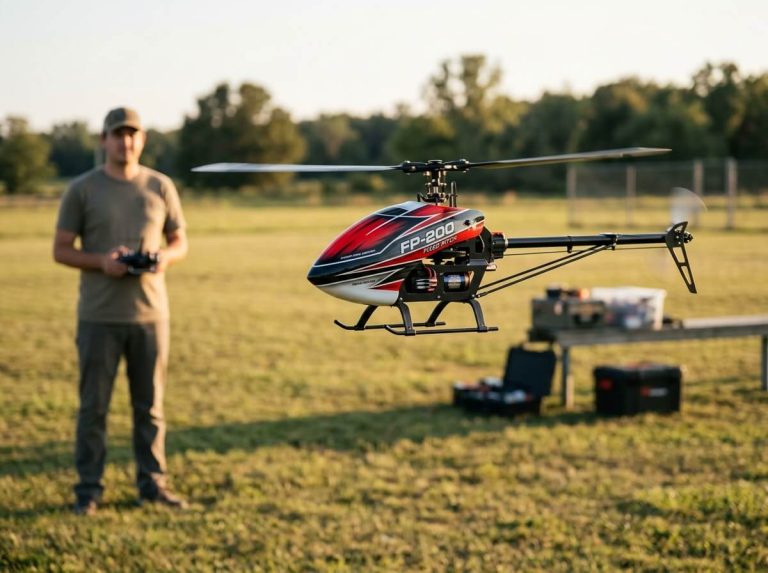
Best Collective Pitch RC Helicopter
Picking the best collective pitch RC helicopter can feel confusing at first. Many toy and hobby models use similar shapes, but their controls and flight behavior can be very different. This guide explains what a collective pitch model is, how it works, and what features matter most for someone just starting out.
You will learn the basic parts that make collective pitch possible, the key features to compare, and the common mistakes new pilots make. The goal is to help you understand the topic clearly so you can judge models on your own terms.
Key Takeaways
- A collective pitch RC helicopter changes the angle of all its main blades together, which gives direct control over lift.
- Throttle and pitch work together, so beginners need time to learn how they interact.
- Size, gyro stability, battery type and build quality all affect how forgiving a model is to fly.
- Indoor micro models, outdoor trainers and advanced hobby models serve different skill levels and budgets.
- Practicing hover in a safe open space and checking the aircraft before each flight prevents many early crashes.
What Is a Collective Pitch RC Helicopter?
A collective pitch RC helicopter is a remote-controlled helicopter whose main rotor blades can change their angle together. This angle is called pitch. When all blades tilt up at the same time, the helicopter climbs. When they tilt down, it descends.
This design gives the pilot direct control over lift. It is the same basic system used on full-size helicopters. Because of this, many hobbyists see collective pitch as a more realistic flying experience.
How Collective Pitch Differs From Fixed Pitch
A fixed pitch helicopter has blades set at a constant angle. To climb or descend, it changes the speed of the rotor. This style is common in very small and inexpensive toys.
Collective pitch models adjust blade angle instead. This often allows smoother vertical movement and more precise control. However, the mechanics are more complex, so these models usually cost more and need more care.
Why Beginners Often Start With Collective Pitch Models
Many beginners choose collective pitch models because they teach real helicopter principles. Learning to balance throttle and pitch builds skills that transfer to larger aircraft. Some people also enjoy the more authentic feel.
That said, collective pitch is not always the easiest option. Some models are harder to master than fixed pitch designs, so the right choice depends on patience and goals.
How Collective Pitch Control Works
Collective pitch control relies on a few linked parts. Each part passes movement from the radio transmitter to the rotor blades. Knowing these parts makes it easier to troubleshoot problems later.
The Role of the Swashplate and Pitch Links
The swashplate is a ring-shaped part around the rotor shaft. It moves up and down to change the pitch of all blades together. It can also tilt to steer the helicopter forward, back or sideways.
Pitch links are small rods that connect the swashplate to each blade grip. When the swashplate moves, the pitch links push or pull the blades. If a pitch link bends or loosens, the blades may respond unevenly, so checking these parts is important.
How Throttle and Pitch Work Together
On a collective pitch model, throttle controls engine or motor speed, while pitch controls blade angle. Both affect lift, so they must be balanced. Adding pitch without enough throttle can cause the helicopter to sink or stall.
In practice, many pilots learn to keep the rotor speed steady and use pitch for climbing and descending. As a result, the helicopter feels more predictable. This balance takes practice, and it is one of the main learning challenges for new pilots.
Key Features to Look For in a Collective Pitch RC Helicopter
Several features affect how easy a model is to learn and how well it holds up over time. Beginners usually benefit from comparing these points before picking a model. The list below covers the most common ones.
Size and Weight Categories Explained
RC helicopters come in several size groups, from tiny indoor models to larger outdoor machines. Smaller models are light and usually fly at low speed. Larger models often handle wind better but need more space and care.
Weight matters too. A lighter helicopter reacts quickly to small inputs, which can feel twitchy to a new pilot. A heavier one can feel steadier but may be harder to move in tight areas.
Flight Stability and Gyro Systems
A gyro is a sensor that helps keep the helicopter level and reduces unwanted spinning. Many collective pitch models include one, and it can make hovering much easier. Without a gyro, the pilot must correct every drift by hand.
Some models offer adjustable gyro settings. Beginners often find that a stable, forgiving setup helps them build confidence faster.
Battery Type and Flight Time
Most electric collective pitch helicopters use rechargeable lithium polymer batteries. Flight time depends on the battery capacity, the model’s weight and how aggressively it is flown. Actual flight time varies a lot, so check the manufacturer’s stated figures and read buyer feedback.
Buyers should also check the charger that comes with the model. A slow or basic charger means longer waits between flights.
Build Quality, Repair Parts and Durability
Beginners crash often, so durability matters. Look for sturdy frames, replaceable parts and clear availability of spare blades, pitch links and landing gear. Strong parts reduce the cost of learning.
It also helps to check if the manufacturer or common hobby suppliers stock spare parts for the model. A model with hard-to-find parts can become expensive to keep flying.
Types of Collective Pitch RC Helicopters
Collective pitch models fall into a few broad groups. Each group suits a different skill level, space and budget. Knowing the groups makes shopping much simpler.
Indoor Micro Helicopters
Micro models are small enough to fly inside a home or large room. They are usually light and inexpensive. They suit practice and short sessions, though they are sensitive to drafts from fans or open windows.
Mid-Size Outdoor Trainer Helicopters
Trainer models are built to be forgiving and durable. They are larger than micro models and handle light breezes better. Many beginners move to this group after gaining basic control indoors.
Advanced Scale and Hobby Grade Helicopters
Advanced models offer more precise control, stronger power systems and detailed designs. They can be rewarding, but they demand more skill and cost more to repair. Most beginners are better off starting with a trainer first.
Tips for Learning to Fly a Collective Pitch Helicopter
Learning takes patience. Small, steady practice sessions usually build skill faster than long, frustrating ones. The tips below help new pilots progress with fewer setbacks.
Practicing Hover Before Forward Flight
Hovering in place is the foundation of all helicopter flying. Practice holding the helicopter steady at a low height before trying to move it. Once hovering feels calm, forward flight becomes much easier.
Managing Throttle and Pitch Coordination
Move the throttle and pitch in small amounts. Large, sudden inputs often cause the helicopter to climb too fast or drop. Focus on one control at a time until the two feel natural together.
Safe Flying Spaces and Basic Maintenance
Choose a flat, clear area free of people, pets and breakable objects. Check screws, blades and pitch links before each session. A few minutes of basic care prevents many avoidable problems.
Common Beginner Mistakes to Avoid
Most early problems follow familiar patterns. Recognizing them early helps new pilots recover faster and av oid repeat crashes. Knowing these patterns in advance makes the learning curve less frustrating.
Overcorrecting Controls and Crashes
New pilots often make large corrections when the helicopter drifts. This usually makes the drift worse. Small, calm inputs give the aircraft time to respond.
When a crash happens, check the parts before flying again. Loose screws or bent pitch links can cause new problems if ignored.
Ignoring Pre-Flight Checks
Skipping checks is one of the easiest mistakes to avoid. Before each flight, confirm the battery is fully charged and secured. Also confirm the blades spin freely and the controls respond correctly.
Collective Pitch vs. Coaxial and Other RC Helicopter Designs
Collective pitch is not the only design available. Coaxial helicopters use two rotors stacked on top of each other, and fixed pitch models are common in toys. Each design has its own strengths.
Ease of Control for New Pilots
Coaxial models are often considered forgiving because they tend to stay stable in the air. Collective pitch models offer more realistic control, which can take longer to master. The easier option depends on how much challenge a beginner wants.
Cost, Repairs and Long-Term Value
Fixed pitch and coaxial models often cost less to buy and repair. Collective pitch models usually have more moving parts and cost more to maintain. Even so, many hobbyists value the skills they build along the way.
Frequently Asked Questions
What makes a collective pitch helicopter different from a regular RC helicopter?
A collective pitch helicopter changes the angle of all its main blades together to climb or descend. Many regular toy helicopters instead change rotor speed for that purpose. This gives collective pitch models more direct and realistic control.
Is a collective pitch RC helicopter good for complete beginners?
It can be, but it depends on the model. Trainer models with a gyro system are usually the friendliest choice for new pilots. Starting with a stable, durable model makes the learning process much smoother.
How long does it take to learn to hover?
The time varies a lot from person to person. Regular short practice sessions usually help more than long, infrequent ones. Patience and steady practice matter more than any set timeline.
Do collective pitch helicopters need special maintenance?
They need regular checks because of their moving parts. Inspect screws, pitch links and blades before each flight. Keeping spare parts on hand also helps reduce downtime after crashes.
What is a reasonable budget for a first collective pitch helicopter?
Prices vary widely by size, features and included equipment. Beginners should compare what each model includes, such as the charger and spare parts. Picking a model with available replacement parts often gives better long-term value.
Conclusion
A collective pitch RC helicopter changes blade angle to control lift, which offers realistic and precise flying. Throttle and pitch must work together, and that takes practice. Size, gyro stability, battery type and build quality all shape how easy a model is to learn.
Beginners do best by starting with a durable trainer, practicing hover in a safe space and checking the aircraft before each flight. With steady practice, the controls become much more natural.

Peterson is an RC hobby enthusiast and product reviewer with a passion for remote-controlled cars, trucks, boats, drones, and accessories. He enjoys testing the latest RC products, comparing features, and sharing practical buying guides to help beginners and experienced hobbyists make informed decisions. Through RCThing.com, Peterson provides honest reviews, maintenance tips, and expert advice to help readers get the most from their RC adventures.