2S vs 3S LiPo Battery for RC
If you’re new to RC racing or drone flying, you’ve probably heard someone talk about 2S and 3S batteries. You might feel confused about what these numbers mean or which one you should use. Don’t worry. This guide breaks down everything you need to know about 2S and 3S LiPo batteries in simple, easy-to-understand language.
What Do 2S and 3S Actually Mean?
The “S” stands for “series.” When battery experts talk about 2S and 3S, they’re talking about how many cells are connected together in the battery.
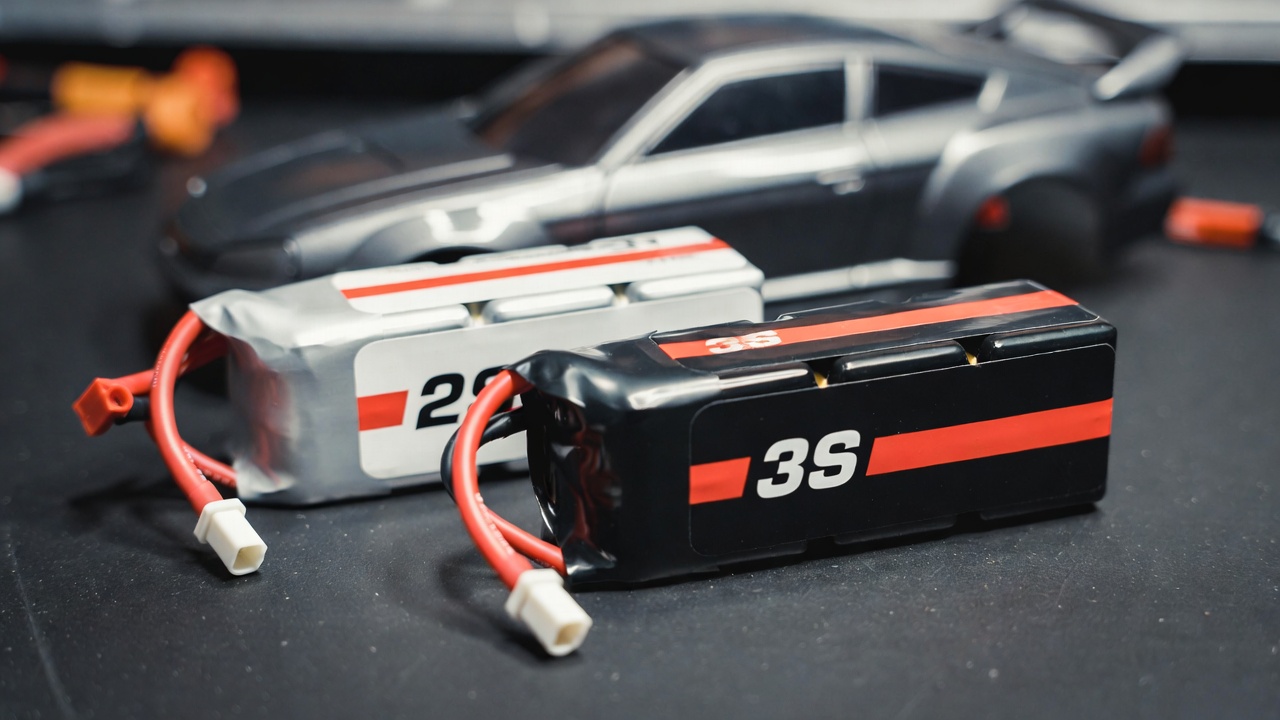
Each cell in a lithium polymer battery gives you 3.7 volts of power. A 2S battery has 2 cells connected together. A 3S battery has 3 cells. Do the math:
- 2S battery = 2 cells × 3.7V = 7.4V
- 3S battery = 3 cells × 3.7V = 11.1V
That’s the big difference. A 3S battery has almost 50% more voltage than a 2S battery. This matters a lot when you’re deciding which one to buy.
How Battery Voltage Affects Your RC Vehicle
Higher voltage means more power. It really is that simple.
When you use a 3S battery instead of a 2S battery, your RC car will go faster. Your RC drone will climb faster. Your helicopter will have more punch. The motor gets more electrical power to work with, and that extra power turns into speed and acceleration.
But here’s the thing: more power is not always better. You have to make sure your vehicle can handle the extra voltage.
Motor Compatibility: The Most Important Factor
Before you plug any battery into your RC vehicle, check what your motor is rated for.
Every motor comes with a voltage rating. Some motors can only handle 2S batteries. Others can handle both 2S and 3S. Some high-performance motors need 3S or even 4S batteries.
Look at your motor’s instructions. It will tell you the voltage range. For example:
- A beginner motor might say: 2S only
- A mid-range motor might say: 2S to 3S
- A racing motor might say: 3S to 6S
If your motor says 2S only, do not use a 3S battery. You will burn out the motor. If your motor says 2S to 3S, you can use either one safely.
Using the wrong battery is the fastest way to damage your motor. Check before you buy.
Speed and Performance Differences
Let’s talk about what actually happens when you go from 2S to 3S.
A 2S battery-powered RC car feels zippy and fun. It accelerates quickly and handles well. For beginners, a 2S car is plenty fast. You can race it, jump it, and have a great time without feeling overwhelmed.
A 3S battery-powered RC car feels totally different. It launches off the line like a rocket. The acceleration is aggressive. The top speed is significantly higher. For people who love speed, 3S feels amazing.
In real numbers, a 3S battery typically gives you 30-50% more top speed than a 2S battery, depending on the vehicle and motor. That’s not a tiny difference.
But speed isn’t the only story. You also need to think about handling and control.
Handling and Control
Here’s something beginners don’t always know: more power can make your RC vehicle harder to drive.
With a 2S battery, your RC car feels manageable. You can make smooth turns. You can control the acceleration. It’s forgiving when you make mistakes.
With a 3S battery, your car becomes twitchy. It accelerates faster, which means you need faster reflexes to control it. It’s easier to lose control, especially on tight turns. If you’re new to RC, this can be frustrating.
This is why most shops recommend starting with 2S batteries. You learn the basics of driving without fighting with the power. Once you get good at driving, you can step up to 3S.
For racing, experienced drivers prefer 3S because they can handle the power and the speed advantage matters. For casual driving and learning, 2S is the better choice.
Battery Size and Weight
Here’s something else to consider: 3S batteries are not just different in voltage. They’re often heavier too.
A 2S battery and a 3S battery with the same capacity (measured in mAh, which is milliamp-hours) will weigh almost the same. But 3S batteries are often sold with higher capacities. A bigger capacity battery is heavier.
Extra weight in your RC vehicle changes how it drives. A heavier vehicle:
- Accelerates more slowly
- Stops less quickly
- Jumps lower
- Handles differently overall
For some vehicles, this weight trade-off is worth it for the extra power. For others, especially small and light racing cars, the extra weight is a problem.
Heat and Battery Temperature
This is important for battery life and safety.
When you use a 3S battery, your vehicle runs harder. Motors get hotter. The battery gets hotter. More heat means your battery wears out faster.
2S batteries run cooler because the motor is not working as hard. Cooler batteries last longer. If you want your batteries to stay healthy for a long time, 2S is the gentler option.
That said, modern RC batteries are built to handle heat. Just don’t ignore the temperature. If a battery gets too hot to touch, stop using it and let it cool down. Really hot batteries can fail or even catch fire.
Battery Runtime and Flight Time
How long does your battery actually run?
This is where the capacity of the battery matters more than the S rating. A battery with higher mAh lasts longer than one with lower mAh, regardless of whether it’s 2S or 3S.
But here’s the catch: using a 3S battery means higher power, which usually means the battery drains faster. You might get 5-10 minutes of run time with a 3S battery, but 10-15 minutes with a 2S battery, depending on the vehicle.
For drones especially, flight time is critical. A battery that drains fast means you spend most of your time charging instead of flying. Many beginner drone pilots stick with 2S batteries because the flight time is longer.
Price: Your Wallet Matters
2S batteries are cheaper than 3S batteries.
There are a few reasons for this. 2S batteries have been around longer and are more common. They’re simpler to manufacture. More people buy them, so they’re made in bulk. All of this means lower prices.
If you’re just starting out and money is tight, 2S batteries are a budget-friendly option. You can buy multiple 2S batteries for the price of one or two 3S batteries. More batteries mean more flying or driving time because you can swap them out while one charges.
But don’t let price be your only reason for choosing. If your motor needs 3S, you have to buy 3S. You can’t cut corners on this.
The Charger Question
Here’s something many beginners overlook: you need a good charger for both 2S and 3S batteries.
A charger that works with 2S also works with 3S. Most modern chargers can handle both. Check the specifications before you buy. Your charger should have a balance plug connector that matches your battery.
The most important thing: always charge on a non-flammable surface. Never leave a battery charging unattended. Follow the charger’s instructions exactly. Bad charging habits cause battery fires. This is not a risk to take.
When to Use 2S Batteries
Choose 2S batteries if:
- Your motor is rated for 2S only
- You’re a beginner and still learning to drive
- You want longer run times
- You’re on a tight budget
- You want your batteries to last longer before wearing out
- You prefer a vehicle that’s easier to control
- Your vehicle is small and light, where extra weight hurts performance
2S is the safe, smart choice for most people starting out.
When to Use 3S Batteries
Choose 3S batteries if:
- Your motor is rated for 2S to 3S or 3S only
- You’re an experienced driver who wants speed and power
- You compete in racing and want every advantage
- Your vehicle is designed to handle the extra weight
- You’re flying a larger drone that needs the extra power
- You have experience with higher-performance vehicles
3S is the choice for people who know their equipment and what they’re doing.
Can You Mix 2S and 3S?
Never use 2S and 3S batteries with the same vehicle unless the motor specifically says it can handle both.
Some vehicles support both, but not all. Check your manual. If it says 2S only, stick with 2S. If it says 2S to 3S, you can use either one and swap between them.
Mixing batteries is not the same as stacking them. You’re not connecting them together. You’re just choosing one battery to use at a time. That’s fine if your vehicle supports both voltages.
Connector Types and Compatibility
Batteries come with different connector types. The two most common are XT60 and JST.
Your battery connector must match your vehicle’s connector. You can’t plug an XT60 battery into a JST port. The connectors are not interchangeable.
When you buy a battery, check what connector it has. Make sure it matches your vehicle. If it doesn’t, you’ll need to solder on a new connector or buy an adapter. Neither option is ideal.
Most vehicles come with a specific connector type. New batteries should match that type. Keep this in mind when shopping.
Storage and Safety
LiPo batteries need proper storage or they will die.
Store batteries at room temperature in a safe place. Many people use a fireproof box or lipo safe bag. Never store a fully charged battery. Let it sit at about 50% charge if you’re not using it for a while.
Keep batteries away from metal objects. Never leave batteries in a hot car or in direct sunlight. These conditions are dangerous.
Check batteries before each use. If a battery is puffed up or bloated, throw it away. If the case is cracked, throw it away. Damaged batteries are a fire risk.
Common Beginner Mistakes
Mistake 1: Buying the wrong voltage People often buy 3S batteries because they think they need them. Then their motor fails. Check your motor rating first.
Mistake 2: Leaving batteries charging overnight Chargers can malfunction. Always stay with your battery while it charges. Thirty minutes of attention is worth preventing a fire.
Mistake 3: Ignoring heat Batteries that get too hot wear out faster and become unsafe. Let them cool down between uses.
Mistake 4: Buying cheap no-name batteries Cheap batteries are more likely to fail. They might catch fire. Stick with trusted brands like Spektrum, Align, or whatever brand your vehicle comes with.
Mistake 5: Not balancing the battery A balance charger makes sure all cells in your battery charge evenly. Use a charger with balance charging. It keeps your battery healthy.
Real-World Scenarios
Scenario 1: Racing RC Car You buy a beginner-level racing RC car. It comes with a 2S battery and says 2S only on the motor. Stick with 2S. As you improve, you can buy a higher-end car that accepts 3S.
Scenario 2: FPV Racing Drone You buy a smaller FPV drone rated for 3S to 6S. You can start with a 3S battery to learn. The flight time will be about 4-5 minutes. That’s enough to practice while you save up for more batteries.
Scenario 3: Large Camera Drone Your big photo drone needs lots of power to carry the camera. You use 3S or 4S batteries. The heavier weight is worth it for the stability and power. Run time is less important because the goal is photography, not long flights.
Scenario 4: Kids’ Toy RC Car Your kid gets a basic remote control car from a toy store. It takes a 2S battery and nothing else. You can’t upgrade it. Buy extra 2S batteries so there’s always one charged and ready to go.
The Upgrade Path
Here’s how most people progress:
Start with a 2S vehicle. Learn to drive. Get comfortable with how RC vehicles handle. Practice in open spaces. Have fun.
After a few weeks or months, you get faster. Your reflexes improve. You crave more speed. At this point, you’re ready to think about upgrading.
Find out if your current vehicle accepts 3S. If yes, buy a 3S battery and try it. See if you like the extra power. If no, plan to save up for a 3S vehicle.
Many people end up owning both 2S and 3S batteries. They use 2S for casual driving and 3S for racing or when they want a challenge.
Understanding LiPo Battery Capacity
The capacity is measured in mAh. One battery might be 1000 mAh, another might be 3000 mAh. Higher mAh means more energy and longer run time.
A 1000 mAh battery is small and light. It drains quickly. Good for small drones or lightweight cars.
A 3000 mAh battery is bigger and heavier. It runs longer. Good for larger vehicles.
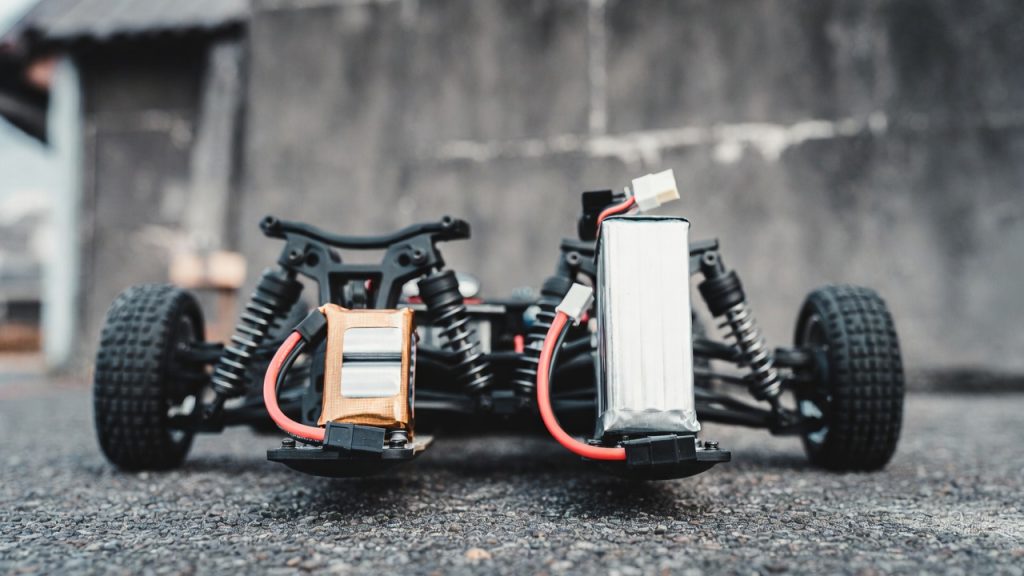
For a given mAh, the voltage rating (2S or 3S) does not change the size much. A 2S 3000 mAh and a 3S 3000 mAh are nearly the same size. The voltage is the only difference.
The Discharge Rating Mystery
Batteries also have a C rating, which is the discharge rate. This tells you how fast the battery can release energy.
A 25C battery is safer and lasts longer. A 100C battery can release energy much faster, which means more power but also more wear.
Beginners should not worry too much about C ratings. Stick with 25C to 50C batteries from trusted brands. These give you good power without going overboard.
Why Your Battery Puffs Up
If a LiPo battery puffs up, it’s a sign of trouble. The internal structure is breaking down. Gases are building up inside.
This happens from:
- Overcharging
- Deep discharging
- Age and wear
- Manufacturing defects
- Crashes that damage the cells
A puffed battery is dangerous. Do not use it. Do not charge it. Throw it away safely.
Many communities have battery recycling programs for LiPo batteries. Use them instead of throwing batteries in the trash.
Reading Specs Like a Pro
When you look at a battery listing, you’ll see something like:
2S 1300 mAh 25C LiPo Battery
Here’s what each part means:
- 2S = voltage (7.4V)
- 1300 mAh = capacity (how long it runs)
- 25C = discharge rate (how fast it releases energy)
- LiPo = battery type
You also might see:
- JST or XT60 = connector type
- Weight in grams
- Dimensions in mm
All of this information helps you pick the right battery. Read the specs carefully.
Balancing Your Batteries
A balanced battery has all cells at the same voltage. This keeps the battery healthy and extends its life.
Most chargers have a balance plug connector. This is different from the main power connector. Plug the balance connector into the charger every time you charge. The charger will balance the cells automatically.
This only takes a few minutes extra, and it makes a huge difference in battery life. Never skip the balance charging step.
The Environmental Impact
LiPo batteries are useful, but they’re not good for the environment when disposed of incorrectly.
Always recycle old batteries. Many hobby shops accept old batteries for recycling. Some communities have e-waste programs that take batteries.
When you’re done with a battery, do not throw it in the trash. Do not just give it away. Recycle it properly.
Final Thoughts: 2S or 3S?
If you’re just starting out, pick 2S. It’s safer, cheaper, and easier to control. You’ll have more fun learning with a vehicle that doesn’t try to kill you with speed.
Once you get good, try 3S. You’ll feel the difference immediately. Speed is intoxicating.
The best choice is always the one your vehicle supports. Check the motor rating. Match your battery to that rating. Do everything else right, and you’ll have a great time with RC.
LiPo batteries are powerful and reliable when you treat them with respect. Learn the basics. Follow safety rules. Take care of your batteries. Do this, and you’ll enjoy RC for years to come.
Now get out there and drive. Or fly. Or whatever your RC vehicle does. The world of RC is waiting for you.
Quick Reference Chart
| Feature | 2S Battery | 3S Battery |
|---|---|---|
| Voltage | 7.4V | 11.1V |
| Speed | Slower | 30-50% faster |
| Control | Easier | Twitchier |
| Heat | Less | More |
| Runtime | Longer | Shorter |
| Price | Cheaper | More expensive |
| Weight | Lighter | Often heavier |
| Beginner Friendly | Yes | No |
| For Racing | Okay | Better |
| Motor Load | Lower | Higher |
| Battery Life | Longer | Shorter |
Compatibility Checklist
Before buying a battery, check:
- [ ] What voltage does your motor accept?
- [ ] What connector type does your vehicle use?
- [ ] What is the capacity (mAh) needed?
- [ ] Do you have a charger that handles this voltage?
- [ ] Does the charger have balance charging?
- [ ] Is this battery from a trusted brand?
- [ ] Do you have a safe place to store and charge?
If you checked all these boxes, you’re ready to buy.
Where to Buy
Good places to buy RC batteries:
- Local hobby shops (best for advice)
- Amazon (convenient, fast shipping)
- Specialized RC websites (huge selection)
- Big box stores like Walmart or Target (basic options)
Avoid very cheap no-name brands. They fail more often. Stick with brands that have reviews from other RC enthusiasts.
One Last Thing
RC flying and driving is about having fun. Do not let the technical stuff stress you out. Start small. Learn the basics. Build your skills gradually.
Your first battery choice is not permanent. You can always buy a different battery next time. Start with 2S. Have fun. Learn. Then make your next choice from a place of experience.
The RC community is friendly and helpful. If you have questions, ask other RC pilots or drivers. They remember being beginners too.
Get out there and enjoy your RC adventure. It’s going to be awesome.