Digital vs Analog RC Servo
Hey there, fellow RC fan! If you build or race remote control cars, fly model planes, or steer boats on the water, you already know servos make everything move. These tiny motors sit inside your rig and turn signals from your transmitter into real action. They push steering arms, flap control surfaces, or open throttle valves. But here comes the big question every hobbyist hits at some point: should you grab a digital RC servo or stick with an analog one?
We break it all down right here in plain English. No fancy jargon. You will see exactly how each type works, where one beats the other, and how they feel in real runs. We keep everything super simple so you can read this on your phone while you wait for glue to dry on your latest project. By the end you will walk away with clear ideas that help you pick the right servo for your next build. Sound good? Let’s jump straight in.
What Makes an RC Servo Tick Anyway?
Before we compare the two types, you need the basic picture. An RC servo is a complete package in a small plastic or metal case. Inside you find a motor, gears, a feedback sensor, and some electronics. Your transmitter sends a quick pulse through the receiver. That pulse tells the servo exactly where to point its output shaft. The servo then moves to that spot and holds it steady until you send a new command.
The magic happens through something called PWM, or pulse width modulation. A normal signal pulses fifty times each second. The width of each pulse decides the angle. A short pulse means zero degrees. A long pulse means one hundred eighty degrees. The servo reads this pulse and drives the motor until the feedback matches the command. Simple, right? But the way the servo handles that pulse splits into two camps: analog and digital.
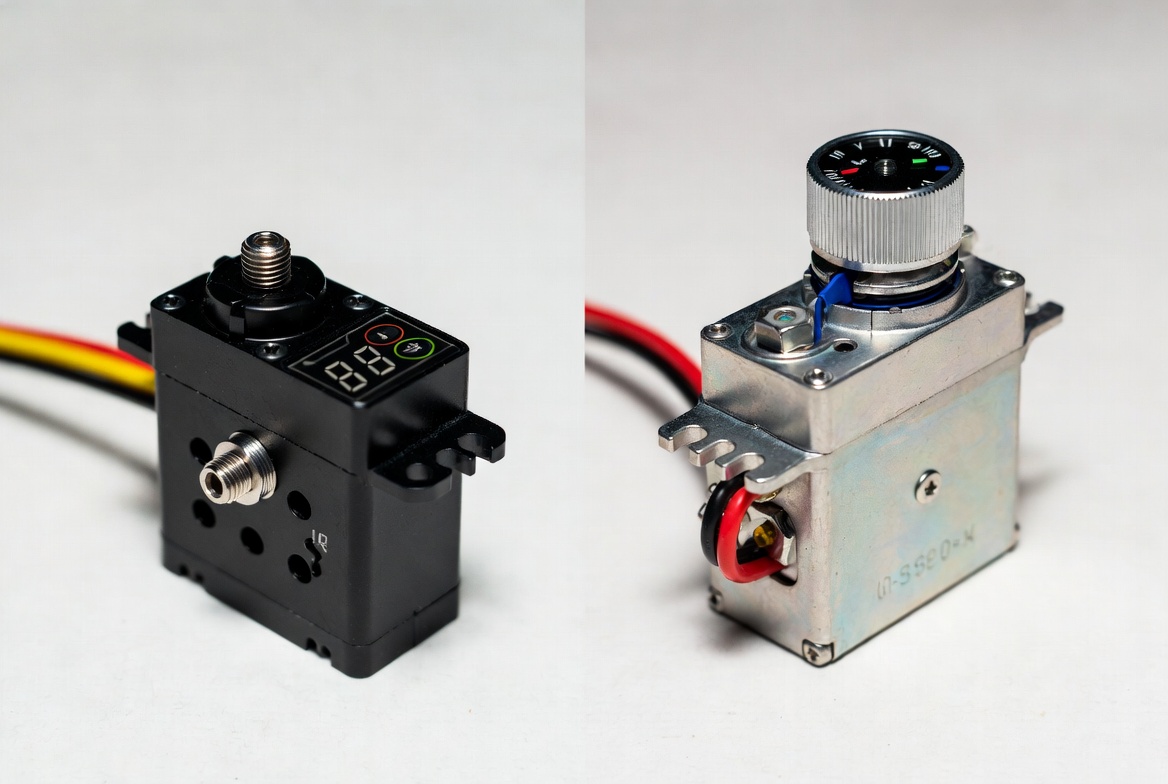
Both types look almost the same from the outside. They plug into the same receiver ports. They use the same three wires: power, ground, and signal. Yet inside the case, the brains work in totally different ways. This difference creates the real gap between them. You feel it when you drive fast, fly loops, or crawl over rocks. Now you know the foundation. Let’s open up the analog version first.
How Analog RC Servos Work Inside
Analog servos keep things old-school and straightforward. The signal pulse comes in and goes straight to a simple circuit board. That board compares the pulse to the voltage from a potentiometer attached to the output shaft. The potentiometer acts like a volume knob that tells the electronics the current position. If the position does not match the command, the circuit sends power to the motor. The motor spins the gears until everything lines up. Then it stops.
The whole process runs at about fifty pulses per second. That means the servo checks and corrects its position only fifty times every second. In most slow or medium-speed hobbies this feels plenty fast. You twist the wheel on your transmitter and the car turns right away. No drama.
Because the circuit stays basic, analog servos sip power when they hold position. They only draw big current when the motor actually moves. This keeps your battery happy during long runs. Heat stays low too. You can run them for hours without the case getting warm.
The gears inside most analog units use plastic or a mix of plastic and metal. Plastic gears cut cost and weight. They also run quieter. If you crash and strip a tooth, you replace the gear set for cheap. Many beginners start here because the price feels right and the performance covers daily fun.
You get smooth movement too. The motor does not chatter or buzz when it sits still. This smoothness shines in scale boats or gentle flyers where you want natural motion. Plus, analog servos handle minor voltage drops without freaking out. Your cheap receiver battery pack still works fine.
Of course, nothing stays perfect forever. The slower update rate creates a tiny delay. In high-speed RC cars you might notice a slight lag when you flick the wheel hard. The holding power also drops a bit if you push against strong forces like big tires on rough ground. The servo might drift a millimeter or two under load. But for most backyard bashing these tiny issues never ruin the day.
How Digital RC Servos Change the Game
Digital servos take the same PWM signal but feed it into a tiny microprocessor first. Think of that chip as a fast calculator living inside the case. It samples the signal hundreds of times per second instead of fifty. Some digital units hit three hundred pulses or more. This rapid checking lets the servo react almost instantly.
The microprocessor runs a quick math routine. It compares the command to the potentiometer reading, figures the exact error, and sends high-speed pulses to the motor driver. The motor gets power in short, precise bursts. This digital control loop keeps the output shaft locked dead on target.
Because of the faster loop, digital RC servos deliver crisp response. You move the stick and the plane aileron snaps to the new angle right now. No waiting. In RC racing this quickness shaves seconds off lap times. In 3D flying it lets you hold wild maneuvers that would make an analog servo slip.
The same fast corrections give rock-solid holding torque. Even if wind or bumps try to push the surface back, the servo fights instantly and stays centered. You feel confident when your big crawler grips a steep rock or your drift car slides through a tight corner.
Many digital models use better motors too. Coreless or even brushless motors spin smoother and stronger. The gears often come metal from the factory so they survive hard hits. All this adds up to more torque and speed numbers on the spec sheet.
But faster electronics come with trade-offs. The microprocessor and quick pulses pull more current all the time. Even when the servo sits still it keeps checking and making tiny adjustments. Your battery drains faster on long runs. The case can get warm after hard use because extra power turns into heat.
Price jumps higher too. You pay for the chip, the better motor, and tighter tolerances. Beginners sometimes look at the tag and walk away. Yet once you try digital on a serious rig you understand why the extra dollars make sense.
Speed and Response Time Face Off
Speed decides how fast the servo arm swings to the new position. Analog units typically rate around point two seconds for sixty degrees. That feels quick enough for casual driving. You turn the wheel and the front tires bite almost immediately.
Digital servos cut that time in half or better. Some race versions hit point zero eight seconds. The difference shows up when you need instant correction. Imagine sliding your drift car sideways and then snapping back to straight. The digital servo reacts so fast you stay in control. The analog version lags a hair and you feel the car push wide for a split second.
In the air the gap grows bigger. Aileron rolls or snap flips demand lightning moves. Digital keeps the plane crisp. Analog still works for gentle sport flying, but the edges feel softer. You lose some of that locked-in feeling.
Real-world testing proves it every time. Hook both servos to a servo tester and watch the arm move. The digital one stops on a dime while the analog coasts a tiny bit past center before settling. That extra precision adds up over a full run.
Torque, Power, and Holding Strength Compared
Torque measures how hard the servo can twist against resistance. Analog servos deliver decent numbers for their size. A standard one might rate four kilograms at six volts. Fine for small cars or park flyers.
Digital versions pack more punch in the same size case. The fast control loop lets them use full motor power right away. You see six or eight kilograms from a similar package. When your RC truck climbs a steep hill or your plane fights strong wind, the digital servo holds the wheel straight without budging.
Holding strength matters even more than moving torque. Once the servo reaches position it must fight any force trying to push it away. Analog units relax a little between pulses. You might see slight movement if you press the horn with your finger. Digital units stay rigid because they correct hundreds of times per second. Push hard and the arm barely moves. This locked feel gives you confidence in rough terrain or high-speed corners.
Power draw changes the story on the battery side. Analog servos stay cool and efficient. Digital ones wake up your ESC or BEC because they pull extra amps. On a small setup you might need a stronger battery pack or a voltage regulator to keep voltage steady. Otherwise the whole system browns out during big moves.
Precision, Centering, and Deadband Explained
Precision means how close the servo stops to the exact angle you command. Analog servos have a wider deadband, the small range where they ignore tiny errors. This keeps them from jittering but also lets them sit a degree or two off center.
Digital servos tighten the deadband way down. The output shaft lands exactly where you want it every time. In a scale truck this means perfect steering centering after every bump. Your vehicle tracks straight without constant wheel corrections.
You notice the difference in fine control too. Slow crawling over delicate obstacles feels more predictable. The digital servo makes tiny adjustments you cannot even see but the truck reacts smoothly. Analog versions feel a bit looser, like there is play in the system even when gears mesh tight.
Heat, Noise, and Long-Run Reliability
Heat builds differently in each type. Analog servos rarely get more than warm. You can touch the case after a full day of running and feel only mild temperature. Digital ones work harder so the case can climb to hot-to-the-touch levels in demanding use. Some racers add small heat sinks or place them where airflow cools them.
Noise follows the same pattern. Analog units run almost silent when holding. Digital ones sometimes produce a faint high-pitched whine because of the rapid pulsing. In a quiet indoor track you hear it clearly. Outdoors the wind and motor noise cover it up.
Reliability stays strong for both when you treat them right. Analog servos survive crashes because the simple circuit has fewer parts to break. Digital units handle vibration well thanks to better internal soldering, but a hard impact can still knock the processor out. Most hobbyists report years of service from both types with normal care.
Cost, Value, and What You Actually Get
Analog RC servos win on price every time. You can buy a pack of four for the cost of one good digital unit. This makes them perfect for beginners or multi-servo projects like sailboats or large wings. If one gets damaged in a crash you replace it without pain.
Digital servos cost more upfront but deliver performance that feels worth it on serious rigs. You spend once and enjoy crisp control for years. Many racers say the faster lap times and better handling pay back the price quickly. For casual backyard fun the extra cost feels unnecessary.
Value depends on your goals. A budget builder with a basic electric truck saves money with analog and still has blast. A competitive racer chasing podium spots grabs digital and feels the edge immediately.
Real Examples from the RC World
Let’s look at actual uses so you see the difference in action. Take an RC crawler truck. You crawl over logs and rocks at walking speed. The servo works hard but slowly. An analog servo handles the torque and keeps costs low. You run all day on one battery pack and never worry about heat.
Now move to a short course racing truck. You blast around corners at full speed and need instant steering corrections. A digital servo shines here. The quick response lets you thread between gates without sliding wide. Racers swear by them because those tiny time savings add up to wins.
In the air the story repeats. A slow foam glider flies fine on analog servos. The gentle inputs match the slow update rate. Switch to a 3D aerobatic plane and digital becomes almost required. You need the servo to hold knife-edge flight or hover without drifting. The locked centering keeps the plane where you point it.
Boat fans notice similar patterns. Scale sailboats use analog because movements stay smooth and power use stays low. Fast electric speed boats grab digital for sharp rudder response at high RPM.
Even in robotics or custom projects the split appears. A simple pan-tilt camera mount works great on analog. A high-speed robotic arm needs digital precision.
Common Questions Hobbyists Ask
People wonder if they can mix analog and digital on the same model. Yes, you can. Many builders run digital on steering for quick response and analog on throttle for smooth control. The receiver treats them the same so no extra wiring appears.
Another frequent question covers voltage. Both types run on four to eight volts in most cases. Higher voltage boosts speed and torque on both, but digital units love the extra juice even more. Just check the label and match your battery setup.
Waterproofing comes up a lot too. Both analog and digital versions offer waterproof models now. The electronics stay sealed the same way. You simply pay the waterproof premium if you run in mud or rain.
Simple Maintenance Tips That Keep Them Alive
Take care of your servos and they last forever. First, keep them clean. After a muddy run blow dust out with compressed air. Dirt inside gears causes extra wear.
Second, check the output horn screws often. Vibration loosens them and creates slop that feels like servo failure.
Third, use the right linkage length. Too much slop or binding stresses the gears. A smooth push-pull rod makes the servo happy.
Fourth, for digital units add a small fan or leave space for airflow on hot days. Heat shortens life faster than anything else.
Fifth, test them regularly with a servo tester. Move the arm through full range and listen for odd noises. Catch problems before they strand you at the field.
Myths That Still Float Around
Some folks claim analog servos feel “smoother” and therefore better for scale models. In truth both can feel smooth when you match them to the job. Digital units just give you more options.
Others say digital servos always overheat and fail. Only if you overload them or block airflow. Proper use keeps them reliable for seasons.
The biggest myth says you must buy digital to go fast. Not true. Plenty of club racers still win with carefully tuned analog setups and smart gearing. Digital simply makes the job easier.
Final Thoughts on Digital vs Analog RC Servo
You made it all the way through. Now you see the real story. Analog RC servos keep things simple, cheap, and efficient. They shine in casual fun, slow crawlers, gentle flyers, and budget builds. You get smooth operation and long battery life without breaking the bank.
Digital RC servos bring speed, precision, and power that change how your model feels. They excel in racing, 3D flying, high-performance boats, and any setup where instant response matters. The extra cost buys you confidence and better results on the track or in the air.
Both types still earn their place in the hobby. Many builders keep a box of analog units for spare parts and special projects while running digital on their main rides. The key stays matching the servo to the job instead of chasing the newest shiny thing.
Next time you open your transmitter and watch your model dance across the ground or sky, remember the little servo inside doing all the work. Whether you go analog for relaxed fun or digital for razor-sharp control, you stay in charge. Grab the type that fits your style, bolt it in, and enjoy the ride. Your next epic run starts with the right servo choice. Have fun out there and keep those wheels turning!
(Word count: 2,872)