How Big Is a 1/16 Scale RC Car?
If you’ve been shopping for a new RC car, you’ve probably seen the term “1/16 scale” pop up again and again. It sounds technical, but it’s really just a simple way to tell you how the toy car compares to a real car. In this guide, we’ll break down exactly how big a 1/16 scale RC car is, how it stacks up against other popular scales, and why this size might be the perfect fit for you.
By the end of this post, you’ll know the exact dimensions, the weight range, the speed you can expect, and who this scale works best for. Let’s dive right in.
What Does “Scale” Even Mean?
Before we talk numbers, let’s clear up what “scale” means in the RC car world. The scale tells you the size ratio between the toy car and the real car it’s modeled after. So a 1/16 scale car is 16 times smaller than the full-size vehicle it copies.
Think of it like a map. A map doesn’t show the real size of a city, but it shows you the shape and layout at a smaller size. RC scale works the same way. If a real truck is 192 inches long, a 1/16 scale copy of that truck would be about 12 inches long, since you divide the real size by 16.
This ratio system helps hobby shops, manufacturers, and buyers speak the same language. Instead of listing a hundred different sizes, they group cars into scale families like 1/8, 1/10, 1/16, 1/18, and 1/24. Each family has its own personality, price range, and use case.
The Actual Size of a 1/16 Scale RC Car
Now for the main question. A 1/16 scale RC car usually measures between 9 and 13 inches in length, depending on the body style and model. Width tends to fall between 6 and 8 inches, and height sits around 4 to 6 inches, though monster truck styles can stand taller because of their big tires.
Here’s a quick breakdown of typical measurements:
- Length: 9 to 13 inches
- Width: 6 to 8 inches
- Height: 4 to 6 inches (taller for monster trucks)
- Weight: 1 to 2.5 pounds, depending on battery size and materials
These numbers can shift a little from brand to brand, since body shape and design style also play a role. A sleek drift car body will sit lower and narrower than a chunky monster truck body, even if both share the same 1/16 scale rating.
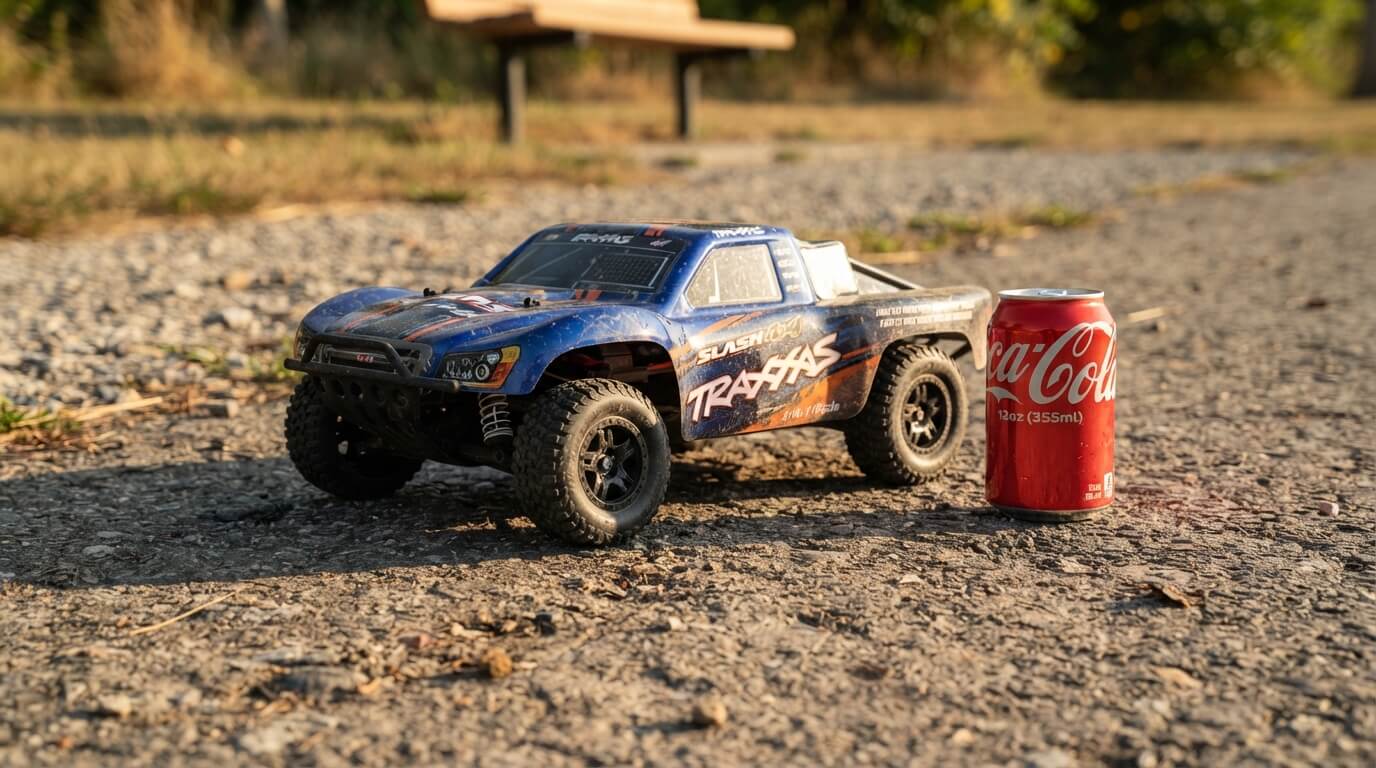
To put this in everyday terms, a 1/16 scale RC car is roughly the size of a shoebox, or a large lunchbox. It fits easily in one hand or under one arm, which makes it super easy to carry around, store, and even pack for a trip.
Why 1/16 Scale Feels Like the “Just Right” Size
A lot of hobbyists call 1/16 scale the sweet spot size, and there’s a good reason for that. It’s small enough to store without taking up a whole shelf, yet big enough to handle rough ground, grass, gravel, and small bumps without much trouble.
Compare that to a tiny 1/24 scale car, which struggles the moment it hits anything rougher than a smooth floor. Then compare it to a massive 1/8 scale car, which needs a truck bed just to transport it. The 1/16 scale sits right in the middle, giving you a fun balance of portability and performance.
This size also tends to be friendly on the wallet. Smaller parts, smaller motors, and smaller batteries usually mean a lower price tag compared to bigger scales, without losing too much fun factor.
How 1/16 Scale Compares to Other Popular Scales
Let’s line up the common RC scales side by side so you can see exactly where 1/16 fits in the lineup.
1/10 Scale
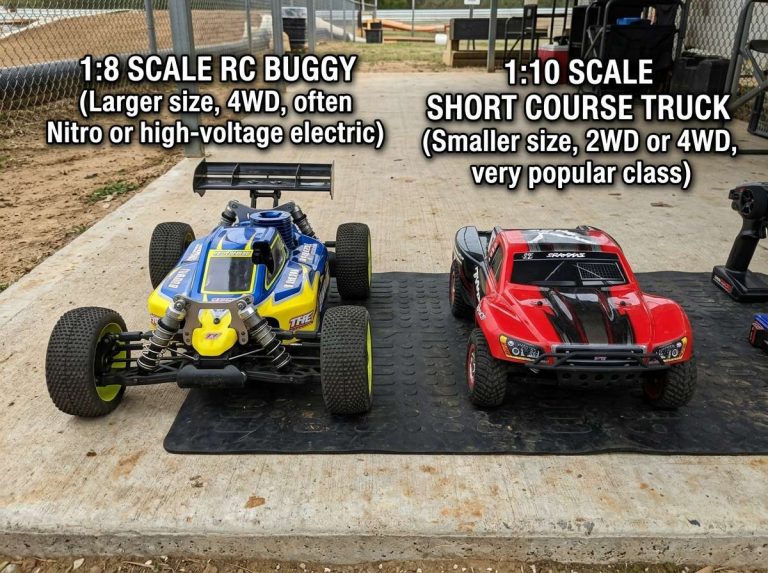
This is one of the most popular sizes among serious hobbyists. A 1/10 scale car usually runs 17 to 20 inches long and can weigh anywhere from 4 to 8 pounds. It’s a beast compared to a 1/16 scale car, offering stronger motors, bigger tires, and tougher suspension parts. But that strength comes with a bigger price and less portability.
1/8 Scale
This is one of the biggest common scales you’ll find outside of gas-powered giants. These cars often stretch past 20 inches and can weigh over 10 pounds. They’re built for speed, power, and rough terrain, but they’re heavy, loud, and pricey. Not exactly something you toss in a backpack.
1/16 Scale
Right here in the middle-small range, offering the best blend of size, speed, and price for casual drivers, kids, and beginners who still want real performance.
1/18 Scale
Slightly smaller than 1/16, usually running 8 to 10 inches long. It’s a close cousin to 1/16 but a touch more compact, often with lighter-duty parts.
1/24 Scale
This is a true mini car, often under 6 inches long. Great for small hands, tight indoor spaces, or desk racing, but it lacks power for rough outdoor terrain.
1/5 Scale
The giant of the RC world. These cars can be over 3 feet long and weigh as much as a small dog. They’re expensive, loud, and closer to a real vehicle than a toy.
So if you line all these up from biggest to smallest, it looks like this:
1/5 → 1/8 → 1/10 → 1/16 → 1/18 → 1/24
This lineup makes it clear that 1/16 sits comfortably in the middle-small zone, giving you enough size to feel solid in your hands while still staying light and easy to manage.
Real Car Comparison: Making the Size Easy to Picture
Let’s use a real-world comparison. Say a real pickup truck measures around 210 inches from bumper to bumper. If you shrink that truck down by a factor of 16, you get a model that’s roughly 13 inches long. That’s basically the length of a standard ruler plus a little extra.
If you shrink a compact sedan that’s about 180 inches long, you’d end up with a model around 11 inches, close to the length of a dinner plate.
This scaling trick works with height and width too. A real car standing 60 inches tall becomes just under 4 inches tall in 1/16 scale. That’s shorter than a soda can standing on its side.
These comparisons help explain why 1/16 scale cars feel like a “mini but mighty” toy. They’re big enough to look like a real vehicle, with clear body lines, wheel wells, and details, but small enough to zoom across your living room floor or backyard without knocking over furniture.
Weight and Materials: Why It Matters
Weight plays a big role in how an RC car handles. Most 1/16 scale cars weigh between 1 and 2.5 pounds. That might not sound like much, but it directly affects speed, stability, and durability.
Lighter cars tend to move faster because there’s less mass for the motor to push. But lighter cars can also flip more easily during sharp turns or jumps. Heavier 1/16 scale models, often built with tougher plastic or added metal parts, handle bumps and crashes better but sacrifice a bit of top speed.
Most 1/16 scale RC cars use a mix of hard plastic shells, plastic or nylon gears, and a metal or plastic chassis frame. Higher-end models sometimes swap in aluminum parts for extra strength, which slightly increases weight but boosts durability.
Speed: How Fast Can a 1/16 Scale RC Car Go?
Speed varies a lot based on motor type, battery power, and gear ratio, but here’s a general range you can expect:
- Basic hobby-grade models: 10 to 15 mph
- Mid-range brushed motor models: 15 to 20 mph
- Upgraded brushless motor models: 25 to 30+ mph
That top-end number might surprise you for such a small car, but brushless motors pack a serious punch even in compact bodies. Just keep in mind that speed can strain smaller gears and parts faster, so if you plan to push your 1/16 scale car to its limits, look for a model built with stronger internal components.
Battery Life and Run Time
Because 1/16 scale cars use smaller batteries to match their compact frame, run time tends to sit around 10 to 20 minutes per charge, depending on driving style and terrain. Racing at full speed drains the battery faster than casual cruising.
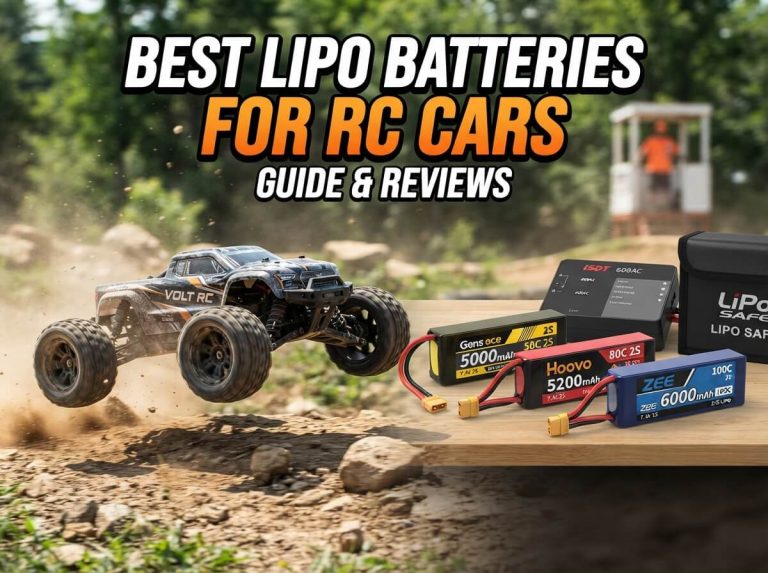
Many hobbyists keep a spare battery on hand so they can swap it out and keep the fun going without waiting hours for a recharge. Charging time usually ranges from 1 to 3 hours with a standard charger, though fast chargers can cut that time down quite a bit.
Where Does a 1/16 Scale RC Car Perform Best?
This size handles a wide mix of surfaces pretty well, though it does have its limits. Here’s a rundown:
- Pavement and driveways: Excellent grip and smooth control
- Grass: Works fine if it’s short and dry; struggles in thick or wet grass
- Gravel and dirt paths: Handles small bumps and loose rocks with ease
- Sand: Tougher for smaller tires, though 4×4 monster truck styles do better
- Mud: Not ideal unless the model is designed specifically for off-road use
- Indoor floors and carpets: Great for casual, low-speed fun
If your driving spot mixes pavement with light dirt trails or a backyard lawn, a 1/16 scale car should handle it just fine. For heavy off-road terrain like deep mud or rocky trails, you might want to step up to a 1/10 scale off-road buggy or truck instead.
Types of 1/16 Scale RC Cars You Can Find
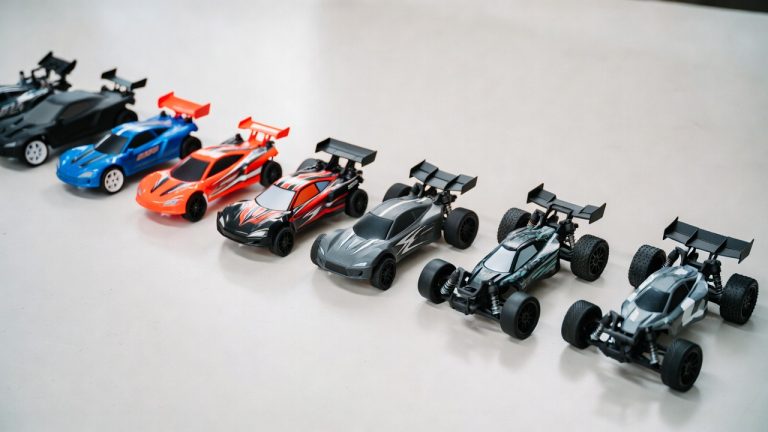
This scale comes in a wide range of body styles, so there’s likely a match for whatever style of driving excites you most.
Monster Trucks
These feature tall, chunky tires and a raised body, built for jumping over small obstacles, rocks, and rough patches of yard.
Buggies
Lighter and built for speed, these off-road style cars handle dirt and grass paths with quick, nimble movement.
Trucks
Modeled after pickup trucks, these often come with a rugged look and decent ground clearance for casual off-roading.
Drift Cars
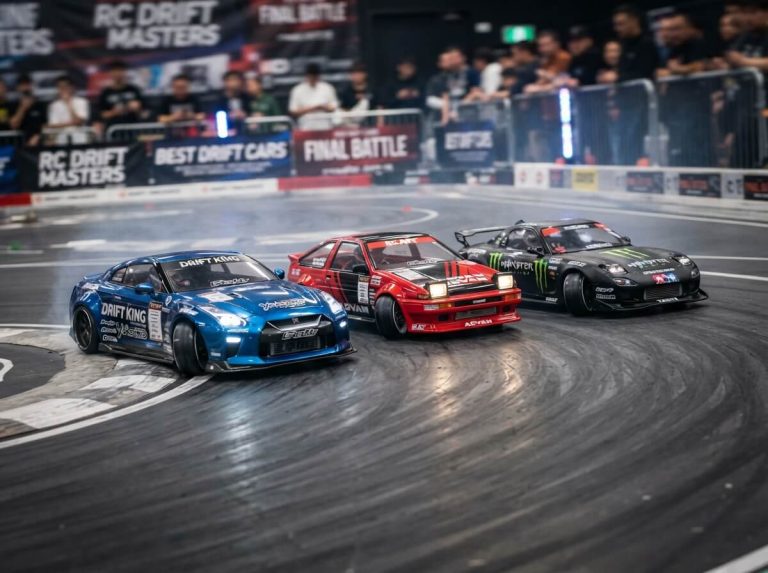
Built low to the ground with slick tires, these are made for sliding around smooth pavement in style.
Rock Crawlers
Slow but tough, these are designed to climb over rocks and rough terrain with strong grip and flexible suspension.
Each style keeps the same general 1/16 scale size but adjusts the shape, tire type, and suspension setup to match its purpose.
Who Should Buy a 1/16 Scale RC Car?
This size tends to work well for a few different groups of people.
Beginners looking for their first hobby-grade RC car often love this scale because it’s affordable, easy to control, and not too intimidating.
Kids and teens enjoy the size because it’s light enough to carry, fast enough to feel exciting, and tough enough to survive a few crashes.
Casual drivers who just want a fun weekend hobby without spending hundreds of dollars usually find 1/16 scale hits the right balance of price and performance.
Space-limited hobbyists living in apartments or smaller homes appreciate that these cars store easily in a closet, drawer, or small shelf without needing a dedicated garage spot.
If you’re someone who wants serious racing power, deep off-road capability, or heavy-duty parts built for constant upgrades, you might eventually outgrow 1/16 scale and move toward 1/10 or 1/8 scale instead. But as a starting point or a casual hobby size, 1/16 is hard to beat.
Pros and Cons of 1/16 Scale RC Cars
Let’s break down the strengths and weaknesses in a simple list.
Pros:
- Compact and easy to store
- Lightweight and easy to carry
- Lower price compared to bigger scales
- Good speed for the size
- Beginner-friendly controls
- Works on multiple terrain types
Cons:
- Smaller parts can be trickier to repair
- Less power than bigger scales like 1/10 or 1/8
- Shorter battery run time compared to larger models
- Can struggle in thick mud or deep sand
- Wind can affect handling slightly more due to lighter weight
Knowing these trade-offs ahead of time helps you set realistic expectations before your first drive.
Tips for Getting the Most Out of Your 1/16 Scale RC Car
If you already own one or you’re planning to grab one soon, here are a few simple tips to boost your experience:
- Keep spare batteries charged. This keeps your playtime going without long breaks.
- Clean the tires after off-road runs. Dirt and grass buildup can slow down performance over time.
- Store it indoors. Sun and moisture can weaken plastic parts faster than you’d expect.
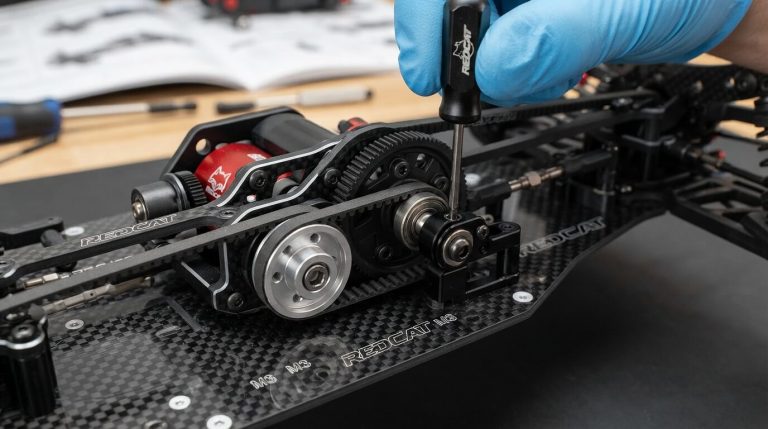
- Check screws and joints often. Small parts can loosen after repeated crashes or jumps.
- Match tires to terrain. Swapping tire types can improve grip depending on where you drive most.
- Avoid deep water. Most 1/16 scale cars aren’t waterproof, so puddles and wet grass should be approached carefully.
These small habits can extend the life of your car and keep it running smoothly for a long time.
Common Questions About 1/16 Scale RC Cars
Is 1/16 scale good for beginners? Yes, this size is often recommended for beginners because it’s affordable, easy to handle, and forgiving during crashes.
Can adults enjoy a 1/16 scale RC car too? Absolutely. Plenty of adult hobbyists enjoy this size for casual backyard fun or as a stepping stone into bigger, more advanced RC cars.
How does 1/16 scale compare to 1/10 scale in real use? 1/10 scale cars are noticeably bigger, heavier, and more powerful, but they also cost more and take up more storage space. 1/16 scale offers a lighter, more budget-friendly alternative with slightly less raw power.
Are 1/16 scale RC cars durable? Many models hold up well to everyday bumps, small jumps, and light crashes, especially models built with reinforced plastic or added metal parts.
What terrain works best for this scale? Pavement, short grass, and light dirt trails tend to work best. Heavy mud, deep sand, and rocky trails are tougher for this size.
Final Thoughts
A 1/16 scale RC car offers a fun mix of size, speed, and price that works well for beginners, casual drivers, and even seasoned hobbyists looking for a lighter option. With a length around 9 to 13 inches, a weight near 1 to 2.5 pounds, and speeds that can climb past 25 mph with the right motor, this scale packs plenty of excitement into a small, easy-to-carry package.
It sits right in that comfortable middle ground, bigger than a tiny desk toy but smaller than the bulky, expensive giants of the RC world. If you want something fun, affordable, and easy to store without giving up real performance, a 1/16 scale RC car is a smart pick to add to your collection or start your RC journey with.