How Big Is a 1:24 Scale RC Car?
If you’re thinking about getting into remote control cars, you might be wondering exactly how big these little vehicles really are. A 1:24 scale RC car is a great choice for beginners and experienced hobbyists alike, but knowing the actual size helps you decide if it’s the right fit for your space and needs. Let’s dive into everything you need to know about 1:24 scale RC car dimensions.
What Does 1:24 Scale Actually Mean?
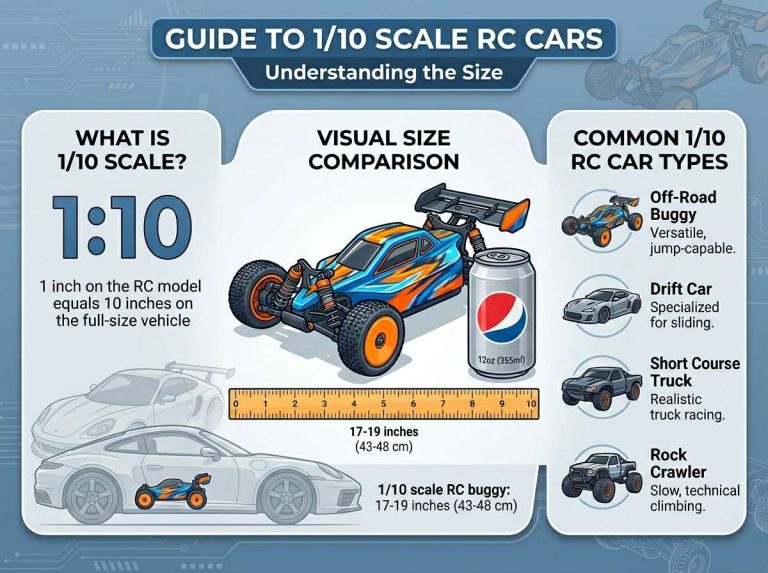
When you see “1:24 scale” on an RC car, it’s telling you the ratio between the model and a real-life car. This means that every inch on your RC car represents 24 inches on a real vehicle. To put it simply, your RC car is 24 times smaller than the actual car it’s modeled after.
Let’s work through a quick example. If a real car is 192 inches long (which is about 16 feet), a 1:24 scale version of that same car would be 8 inches long. The same scaling applies to width, height, and all other dimensions. It’s a consistent reduction, so the proportions stay accurate to the real thing.
This scale system works for all RC cars. Whether you’re looking at a 1:24 scale sports car, truck, or classic vehicle, the scaling principle stays the same. Manufacturers use these standard scales to make it easy for collectors and hobbyists to know what they’re getting.
Typical Size Range for 1:24 RC Cars
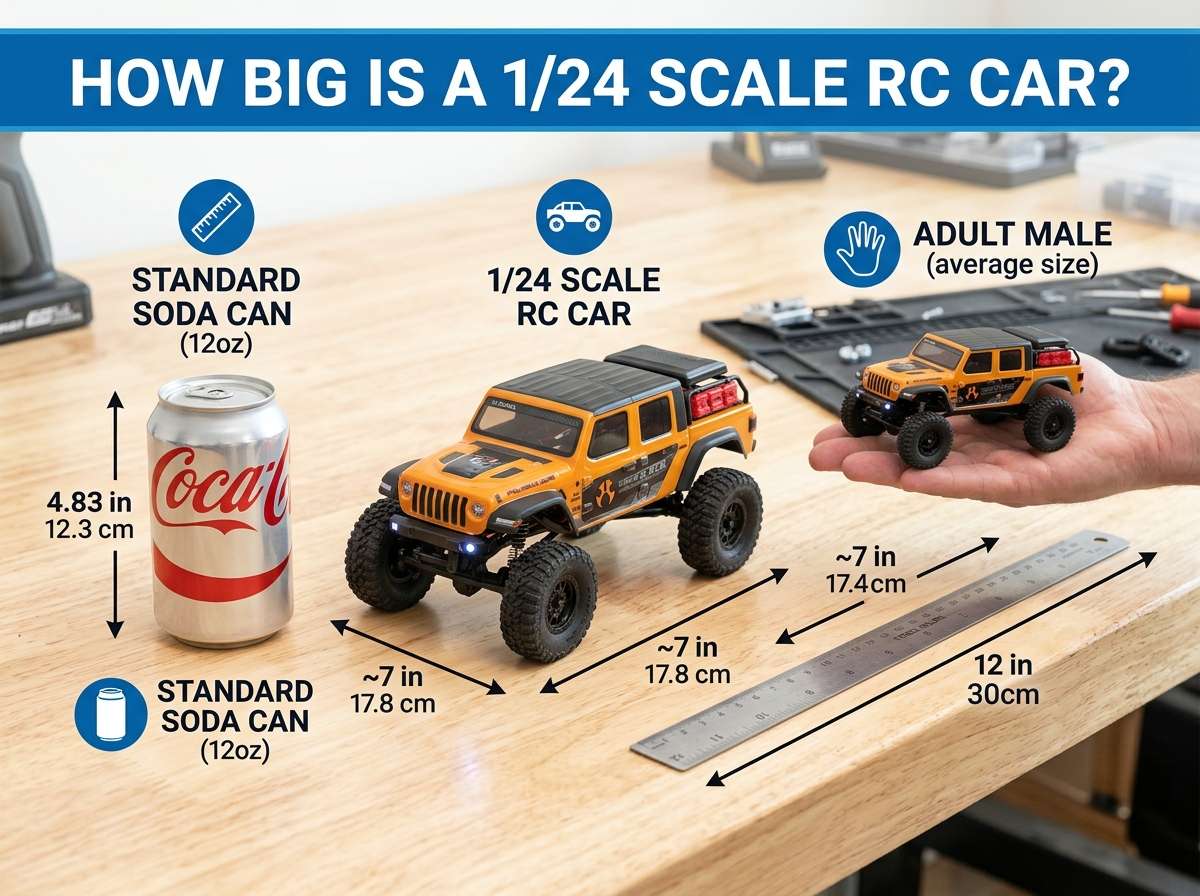
Most 1:24 scale RC cars measure somewhere between 7 and 10 inches in length. The exact size depends on what real car it’s modeled after. A smaller vehicle like a compact car might be closer to 7 inches, while a larger model like an SUV or truck could stretch to 9 or 10 inches.
The width of a 1:24 scale car typically ranges from 3 to 4 inches. The height is usually between 2.5 and 3.5 inches. These dimensions make the cars compact and easy to handle, which is why so many people enjoy this size.
Weight is another important factor. A standard 1:24 RC car weighs between 100 and 300 grams, depending on materials and construction quality. This light weight means you can easily hold it in your hand and transport it without strain. It also keeps the car nimble and quick when you’re driving it.
Comparing 1:24 Scale to Other Popular Scales
The RC car world has several different scales, and it’s helpful to see how 1:24 compares to the competition. Understanding these differences helps you pick the right scale for your needs.
1:18 scale cars are slightly larger than 1:24 models. These measure around 10 to 12 inches long. The extra size gives them more presence and detail, but they take up more storage space. If you want something with heftier feel and bolder proportions, 1:18 might be your pick.
1:32 scale cars go smaller than 1:24. These tiny vehicles run about 5 to 6 inches in length. They’re perfect if you have limited space or want to pack multiple cars into a small area. The tradeoff is that smaller cars can be trickier to control with precision, and they may have fewer feature options.
1:64 scale cars are among the smallest in the hobby world, measuring just 3 to 4 inches long. These are great for display collections and casual play, but they’re not usually built for serious driving performance.
1:24 scale sits right in the sweet spot. It’s large enough to have good detail and realistic proportions, yet compact enough to drive in smaller spaces and store easily.
Physical Dimensions in Detail
Let’s get specific about what a typical 1:24 scale RC car looks like in actual measurements. Keep in mind that exact sizes vary slightly depending on the specific model and manufacturer.
A standard 1:24 scale sedan is around 8 inches long and 3.5 inches wide. If you set it next to a USB charger or a standard pen, you’d see it’s noticeably bigger. But it’s still small enough to fit in your palm or inside a shoe box.
The wheelbase, which is the distance between the front and rear wheels, typically measures around 5 to 6 inches on a 1:24 model. This wheelbase is important for the car’s handling and acceleration. A longer wheelbase gives better stability, while a shorter one allows quicker turning.
The ground clearance, or the space between the bottom of the car and the ground, is usually between 0.5 and 1 inch. This matters if you plan to drive your RC car on uneven terrain. More clearance helps you tackle bumps, grass, and gravel without getting stuck.
Tire diameters on 1:24 models hover around 0.75 to 1.25 inches. The specific size depends on whether you’re driving on a road course or off-road terrain. Off-road tires tend to be slightly bigger and have more aggressive tread.
How Does the Size Affect Performance?
The 1:24 scale size brings real advantages and some limitations when it comes to how your RC car performs. Knowing these tradeoffs helps you understand what to expect once you start driving.
The compact size makes 1:24 cars nimble and responsive. They can turn sharply and accelerate quickly because they don’t carry much weight. If you want a car that feels quick and agile, this scale delivers that experience. The small size also means less momentum, so the car stops more easily than a heavier 1:18 model would.
However, smaller size means smaller motors and batteries. These cars don’t have as much power or runtime as their 1:18 cousins. You might get 15 to 30 minutes of driving time on a single charge, depending on the battery and how aggressively you drive.
Wind affects 1:24 cars more than it does larger scales. Because they’re lighter, a strong gust can push them around. If you like driving outdoors, pick a day with calm weather for the best experience.
The smaller scale also means less ground clearance, so rough terrain can be more challenging. Gravel, thick grass, and rocky surfaces might cause problems. These cars shine best on smooth surfaces like pavement or well-maintained dirt.
Space Requirements for Driving
One of the biggest reasons people love 1:24 scale cars is that they don’t need much space to have fun. Let’s talk about what kind of driving areas work best.
Indoors, you can drive a 1:24 car in a large room, garage, or basement. A space that’s at least 15 by 20 feet gives you enough room to build up some speed and practice turns. Hallways work in a pinch, but they’re cramped for real driving fun.
Outdoors, a driveway or parking lot is perfect. You only need an area about the size of a standard parking space to have a good time. A tennis court or basketball court gives you plenty of room to really open up the throttle.
The compact size means you can take your 1:24 car anywhere. Throw it in a backpack with an extra battery and charger, and you’re ready to drive anywhere you go. That portability is a huge advantage over bigger scales.
Storage and Display Considerations
Because 1:24 cars are small, storing them is simple. You can keep several models in a small shelf unit or display case without taking up much room. A standard bookshelf can hold dozens of 1:24 cars if you arrange them nicely.
Many hobbyists like to display their collection. 1:24 cars look great in glass cases or on open shelves. The size is impressive enough to look good, but not so large that it dominates your room. You get serious show value without serious space requirements.
If you have limited storage, 1:24 is your friend. Unlike 1:18 cars that need dedicated display space, you can tuck away several 1:24 models in a closet or under a bed when they’re not in use.
Battery and Charging Details
The batteries in 1:24 RC cars are small and charge quickly. Most use lithium polymer batteries or nickel metal hydride cells, depending on the model. A typical battery might be 2.4 volts or 3.6 volts.
Charging time is one of the nice things about this scale. Most batteries reach full charge in one to two hours. Some fast chargers can do it in 30 minutes. That means more time driving and less time waiting.
The small battery size makes the cars lightweight, which is great for performance. But it also means the car doesn’t run as long on a single charge. If you plan long driving sessions, grab an extra battery or two so you can keep going while one charges.
Popular 1:24 RC Car Types
Several styles of 1:24 cars are available, and each offers different driving experiences. Knowing your options helps you pick what sounds fun.
Drift cars are built for sideways sliding action. They have special tires and suspension that make them great for smooth surfaces. If you like stylish driving and controlled slides, drift cars are your answer.
Off-road buggies bring tougher suspension and bigger tires to handle rough terrain. These cars can tackle dirt, grass, and bumpy surfaces. If you like taking your car outside and driving on natural terrain, an off-road buggy is ideal.
High-speed racers are built for speed. They have powerful motors and aerodynamic bodies that cut through air efficiently. If you want pure velocity and competitive racing, grab a racer.
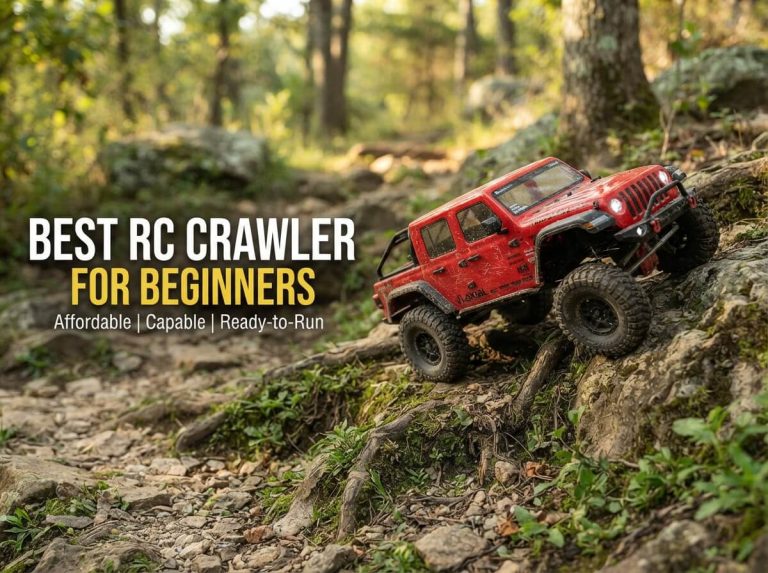
Crawler-style vehicles move slowly and carefully over obstacles. They’re great for technical driving and navigating challenging terrain. These cars climb, crawl, and conquer, making them perfect for problem solvers.
Real-World Size Comparisons
Putting a 1:24 RC car next to everyday objects helps you visualize the actual size. Here are some handy comparisons.
A standard smartphone is about 6 inches long. A 1:24 RC car is slightly larger, typically running 8 to 10 inches depending on the model. So an RC car is roughly the size of two smartphones placed end-to-end.
A paperback book is around 8 by 5 inches. A 1:24 car is similar in length but taller and wider, giving it a more three-dimensional presence than a flat book.
A golf ball measures about 1.68 inches in diameter. You could stack around five golf balls to equal the height of most 1:24 cars.
Your hand spans about 8 to 9 inches from thumb to pinky when spread wide. Most 1:24 cars fit right into your palm with just your fingers closing around it.
A standard coffee mug is about 4 inches tall. A 1:24 car is taller than a mug, showing just how compact these vehicles really are.
These comparisons help you understand the actual size without needing to measure in abstract numbers.
Why 1:24 Scale Is Perfect for Beginners
If you’re new to RC cars, 1:24 scale offers several beginner-friendly advantages. The price is reasonable, making it easy to jump into the hobby without spending a fortune. You can grab a quality 1:24 car for significantly less than a 1:18 model.
The size makes handling easy. You won’t struggle to hold the car or carry it around. New hobbyists don’t need to worry about managing something too large or unwieldy.
The smaller motor and battery mean there’s less power to manage. The car won’t zip away at crazy speeds, giving you time to learn control. You can practice smooth steering and acceleration without the car flying out of control.
Spare parts are usually affordable and easy to find. If you break something, replacing it doesn’t cost a fortune. This takes pressure off when you’re learning because mistakes aren’t as expensive.
Storage and transport are simple. You can keep your car in a box on a shelf and take it anywhere. You don’t need dedicated space or special handling.
Advanced Features on 1:24 Models
Don’t let the small size fool you. Many 1:24 RC cars pack impressive features and detail. Modern models often include suspension systems with multiple adjustment points, allowing you to tune handling for different driving conditions.
Some 1:24 cars come with proportional steering and throttle control, meaning the car responds smoothly to your input rather than just turning all the way or not at all. This makes driving more realistic and fun.
LED lights are common on nicer models. Your car might have working headlights and taillights that add visual appeal. Some even include underglow lighting for nighttime driving.
Working doors, opening hoods, and removable parts add to the realism on premium 1:24 models. You get RC car functionality combined with scale model detail.
Handling the Durability Question
1:24 cars are small, but they’re built tough. Crashes are part of the hobby, and these cars can take a hit. The plastic bodies are designed to absorb impact without shattering.
Most parts are replaceable, so if you break something, you can fix it. The small scale means replacement parts are affordable and usually available.
The little size actually works in the car’s favor when it comes to durability. With less weight, there’s less force behind impacts. The car might crash, but it’s less likely to destroy itself completely.
Regular maintenance keeps your car running well. Clean the body after driving, check that screws stay tight, and replace batteries when they stop holding charge. Simple care extends your car’s life significantly.
Connecting with the RC Hobby Community
The 1:24 scale has a solid community of enthusiasts. Online forums and social media groups are full of people sharing tips, showing off collections, and organizing meetups and races.
Many communities host regular events where people bring their cars to race or display. These gatherings are friendly and welcoming to beginners. You’ll learn tons by watching experienced drivers and hearing their advice.
The hobby community is generous with knowledge. People love helping newcomers get started and sharing techniques for improving driving skills or car performance.
Making Your Choice
When you’re deciding whether 1:24 scale is right for you, think about your space, budget, and what kind of driving interests you. This scale excels in several situations.
If you live in an apartment or small home, 1:24 cars work great. They don’t demand much space for storage or driving.
If you’re just starting out, 1:24 offers an affordable entry point with excellent learning potential. You won’t overcommit financially, and the car is forgiving enough for new drivers.
If you want portability, 1:24 cars win. Throw one in a bag and take it anywhere.
If you like smooth surfaces like pavement or sealed dirt, 1:24 performs beautifully. High-speed racing and drifting are both possible at this scale.
If you need serious off-roading capability or want maximum power and runtime, a 1:18 scale might suit you better.
Conclusion
A 1:24 scale RC car measures typically between 7 and 10 inches long and weighs between 100 and 300 grams. It’s small enough to fit in your hand yet large enough to see plenty of detail and have real driving fun. The size strikes a perfect balance between being portable and compact while still offering impressive performance and features.
The scale is ideal for beginners because of its manageable size, affordable price, and forgiving performance characteristics. It’s also fantastic for experienced hobbyists who appreciate the convenience and enjoy the technical driving that 1:24 cars allow.
If you’ve been wondering whether 1:24 scale is right for you, take one more look at those dimensions. Hold a smartphone or paperback book in your hand to get a feel for the size. Then ask yourself if that fits your space and your driving dreams. For most people getting into RC cars, 1:24 is the perfect place to start.
Now that you understand the size, you’re ready to pick out the specific model that calls to you. Whether you want a drift car, off-roader, racer, or crawler, 1:24 scale delivers the fun and performance you’re looking for.
Peterson is an RC hobby enthusiast and product reviewer with a passion for remote-controlled cars, trucks, boats, drones, and accessories. He enjoys testing the latest RC products, comparing features, and sharing practical buying guides to help beginners and experienced hobbyists make informed decisions. Through RCThing.com, Peterson provides honest reviews, maintenance tips, and expert advice to help readers get the most from their RC adventures.