5 Best RC Helicopter for Beginners In 2026
If you have ever watched a small helicopter zip around a living room and thought “I want to try that,” you are not alone. RC helicopters look like a lot of fun, but they can also feel scary to a first timer. Some models crash on the first flight. Some are too fragile for kids. Some cost a lot but fly like a rock. That is exactly why this guide exists.
Below, we break down five popular RC helicopters that are built with beginners in mind. We look at how they fly, how tough they are, how easy the controls feel in your hand, and how much value you actually get for the price. No hype, no fluff, just plain and honest facts to help you make a smart pick.
By the end of this article, you will know exactly which helicopter fits your skill level, your budget, and your flying space. Let’s get into it.
Why an RC Helicopter Is a Great Starter Hobby
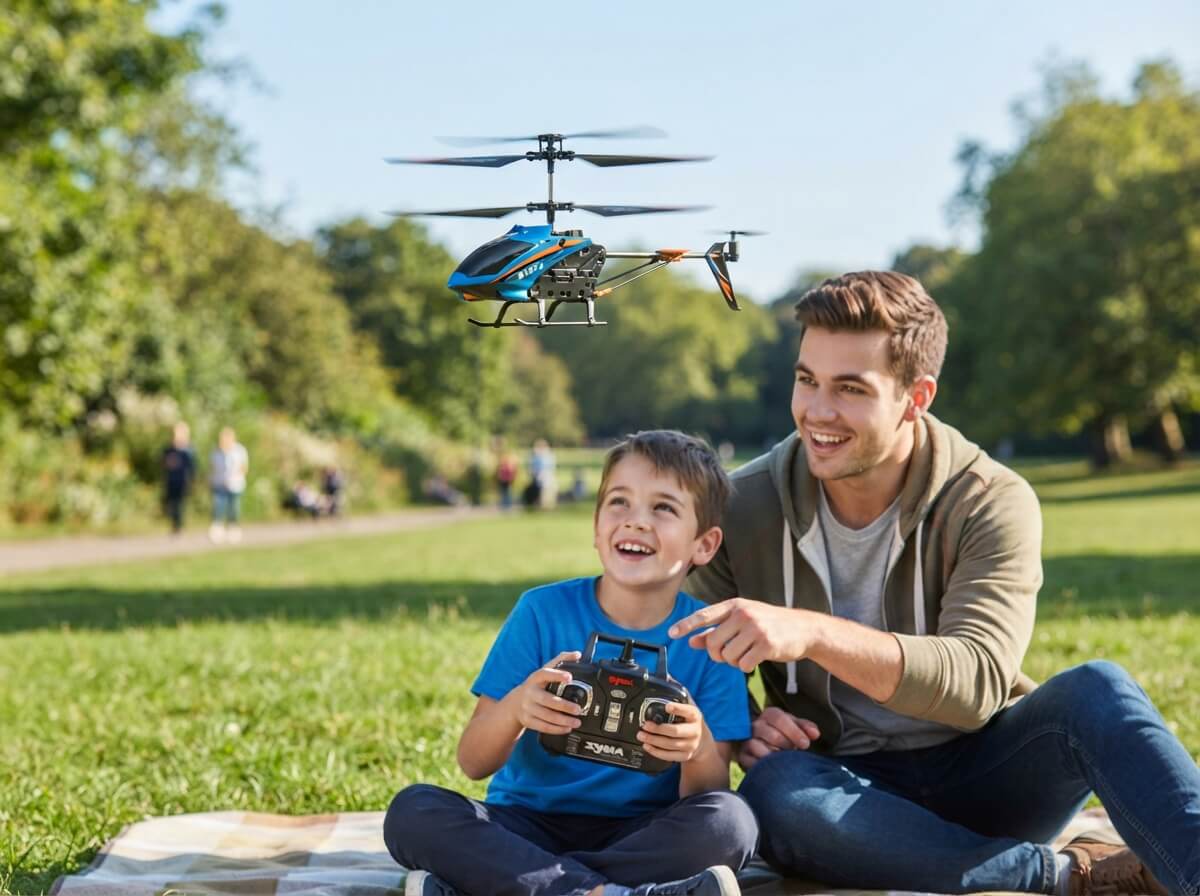
RC helicopters are more than just toys. They teach hand-eye coordination, patience, and basic flight control skills that carry over nicely if you ever move up to drones or bigger aircraft. They are also a fun bonding activity for parents and kids, and a relaxing stress reliever for adults who just want to fly something small around the house after a long day.
The good news is that today’s beginner models are far more forgiving than the ones from years back. Many now come with gyro stabilization, altitude hold, and crash-resistant frames, so new pilots do not need to be experts to enjoy a smooth flight. Still, not every model on the market is built the same way, and that is where this roundup comes in handy.
What to Look For Before You Buy
Before we jump into individual reviews, it helps to know what actually makes a helicopter beginner friendly. Here are the main things worth paying attention to:
- Gyro stabilization – This keeps the tail steady and stops the helicopter from spinning out of control. It is a must-have for anyone new to flying.
- Build material – Look for helicopters with a metal frame or reinforced body. Plastic-only builds tend to snap after a few hard landings.
- Flight time and charging time – Most beginner helicopters give you around 6 to 10 minutes of flight per charge, with charging times ranging from 30 minutes to over an hour.
- Control range – Indoor flying does not need a huge range, but outdoor flying benefits from a stronger 2.4GHz signal.
- Size – Smaller helicopters are easier to fly indoors, while larger ones handle outdoor wind better but need more space.
- Extra features – Altitude hold, one key takeoff and landing, and low battery alerts all make life easier for someone just starting out.
Keep these points in mind as you read through the reviews. Now let’s look at each product in detail.
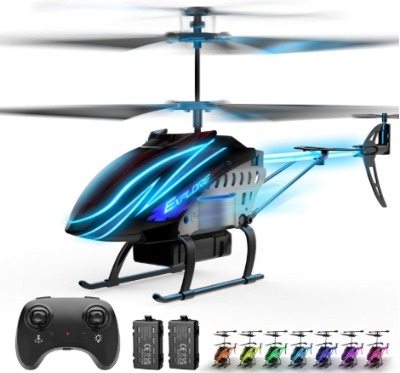
1. BUSSGO RC Helicopter, Remote Control Helicopter for Kids
Product Description
The BUSSGO RC Helicopter is built specifically with young pilots in mind. It has a compact frame, bright colors, and a simple two-channel or basic multi-channel control setup that does not overwhelm a first-time flyer. It is light, small enough to fly indoors, and made to survive the occasional bump into a wall or couch.
Best Use Cases
This model shines as an indoor flyer for kids around age six and up, or for adults who want a fun, low-pressure toy to fly around the living room. It works well as a gift, especially for a birthday or a small surprise treat, since it does not need heavy setup or technical knowledge to get flying.
Key Features Explained Simply
- Built-in gyro – Keeps the helicopter steady in the air so it does not spin around wildly.
- Simple remote layout – Big buttons and clear controls that a child can pick up quickly.
- Lightweight frame – Easy to bounce back after small crashes instead of breaking apart.
- LED lights – Adds a fun glow effect, which also helps with visibility during low light flying.
Real-Life Usage Insight
In casual indoor use, this type of helicopter tends to fly best in a room with high ceilings and few obstacles. Because it is light, small drafts from a fan or open window can push it off course, so closed rooms work far better than open outdoor spaces. Kids usually get the hang of the up, down, left, and right controls within the first few tries.
Pros and Cons
Pros:
- Very easy for kids to control
- Light and forgiving after small crashes
- Affordable price point for casual flying
- Simple charging process
Cons:
- Not great in outdoor wind
- Flight time is on the shorter side
- Build quality feels basic compared to pricier models
Performance and Ease of Use
Flight stability is decent for the price bracket, and the gyro does a fair job keeping things level. It is not a high-performance flyer, but that is not really the goal here. The goal is a smooth, easy first experience, and it delivers on that front.
Value for Money
For the price, this is a solid low-cost entry into the hobby. It will not blow anyone away with advanced flight features, but as a starter toy for a young pilot, it gets the job done without draining your wallet.
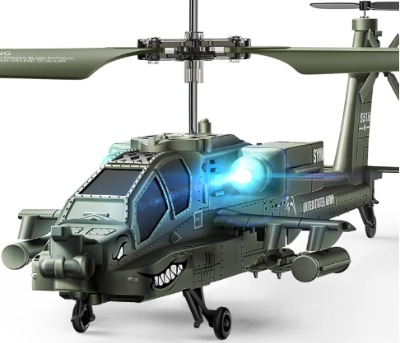
2. SYMA S51H RC Helicopter for Kids, Military Remote Control Helicopter
Product Description
The SYMA S51H takes a more grown-up approach with its military-style design, giving it a sturdy, realistic look that appeals to both kids and adults who like a bit of detail in their toys. Syma is a well-known name in the RC hobby world, known for solid build quality at a reasonable price, and this model carries that reputation forward.
Best Use Cases
This helicopter fits nicely as a step-up model for someone who has already tried a very basic toy helicopter and wants something a bit more capable. It also works well as a display piece thanks to its detailed military look, plus it flies well enough indoors and in calm outdoor settings.
Key Features Explained Simply
- Altitude hold function – Once you let go of the throttle stick, the helicopter holds its height instead of dropping or climbing. This one feature alone makes flying far less stressful for beginners.
- One key return – Some versions include a button that brings the helicopter back toward you if you lose track of orientation.
- Sturdy build – The frame feels more solid than typical toy-grade helicopters, so it holds up better over time.
- 4-channel control – Gives smoother movement compared to basic two-channel toys.
Real-Life Usage Insight
The altitude hold feature is the real standout here. New pilots often struggle with keeping a steady height while also trying to manage direction, so having one less thing to worry about makes a noticeable difference. It flies best in a decent-sized room or a calm outdoor spot with little to no wind.
Pros and Cons
Pros:
- Altitude hold makes flying much less stressful
- Sturdy, detailed design that looks great
- Smooth 4-channel control
- Good option for stepping up from a basic toy
Cons:
- A bit pricier than entry-level toy helicopters
- Still not ideal for windy outdoor conditions
- Charging time can feel long compared to flight time
Performance and Ease of Use
Performance sits a notch above basic toy-grade helicopters. Controls feel more responsive, and the altitude hold genuinely helps smooth out the learning curve. It is still beginner friendly, but it also gives a little more room to grow into as skills improve.
Value for Money
Given the added features like altitude hold and the tougher build, this model offers strong value for anyone ready to move past a basic toy helicopter without jumping straight into an expensive hobby-grade machine.
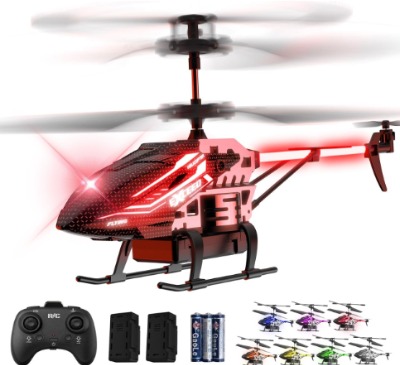
3. RC Helicopter for Kids & Beginners, Remote Control Helicopter
Product Description
This is a straightforward, no-frills option designed purely around ease of use. It skips fancy extras and focuses on the basics: simple controls, a light frame, and a design that gets a total beginner into the air with minimal fuss. It is often marketed directly at first-time buyers who just want something simple to try out the hobby.
Best Use Cases
Great for someone testing the waters before spending more on a higher-end model. It also works well for younger kids who need very basic controls and a toy that can take a few bumps without falling apart. Think of it as the “starter pack” version of an RC helicopter.
Key Features Explained Simply
- Basic 3-channel or infrared control – Keeps things simple, with fewer buttons to confuse a new user.
- Crash-resistant frame – Built to bounce back from small drops, which happens a lot during the learning phase.
- Quick charge, short flight cycle – Designed for short bursts of fun rather than long flight sessions.
- Lightweight design – Easy to control indoors without needing much space.
Real-Life Usage Insight
Because the controls are so simple, this model is often the fastest to learn out of the bunch. New pilots usually get comfortable within the first couple of charge cycles. It is best flown indoors in a mid-sized room, away from ceiling fans and tight corners.
Pros and Cons
Pros:
- Extremely beginner friendly
- Very light and easy to control
- Bounces back well from small crashes
- Budget-friendly price tag
Cons:
- Limited advanced features
- Short flight time per charge
- Not suited for outdoor or windy conditions
Performance and Ease of Use
This is about as easy as RC helicopter flying gets. There is a small trade-off in performance and flight time, but for someone who has never touched a remote control aircraft before, that trade-off is often worth it.
Value for Money
As a low-cost way to try the hobby without committing much money, this option delivers solid value. It is not built to impress with performance, but it does exactly what a true beginner model should do.
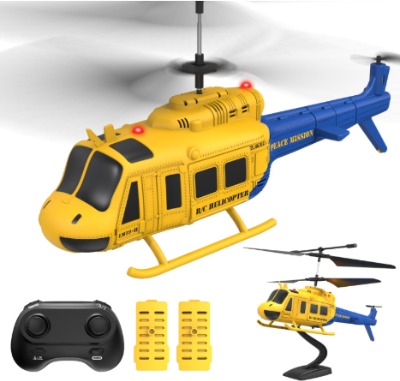
4. UH-1 Huey RC Helicopter, Remote Control Helicopters for Beginner & Adult
Product Description
The UH-1 Huey model is designed to appeal to a wider age range, including adult hobbyists who want a helicopter with a bit more presence and a few smart features built in. Styled after the classic Huey helicopter, it has a larger, more detailed frame along with a 2.4GHz control system for smoother, more reliable handling.
Best Use Cases
This model works well for teens and adults who want a slightly more advanced flying experience without jumping into a fully hobby-grade, harder-to-fly helicopter. It also makes a nice gift option for birthdays or holidays, thanks to its detailed design and easy-to-use safety features.
Key Features Explained Simply
- Altitude hold – Just like with the SYMA model, this keeps the helicopter steady at a set height, reducing stress during flight.
- One key takeoff and landing – A single button press handles takeoff or landing smoothly, which is a huge help for someone still learning stick control.
- Low battery reminder – Alerts you when the battery is running low so you can land safely instead of dropping suddenly mid-flight.
- 2.4GHz signal – Offers a cleaner, more stable connection with less interference from other devices nearby.
Real-Life Usage Insight
The one key takeoff and landing feature is a genuine time saver for new pilots, since lifting off and landing smoothly is one of the trickiest parts of flying by hand. The low battery reminder also helps prevent sudden crash landings, which is a common problem with cheaper toy-grade helicopters that just cut out without warning.
Pros and Cons
Pros:
- Altitude hold and one key functions make flying beginner-friendly
- Stronger, more stable 2.4GHz signal
- Low battery alert prevents surprise crashes
- Good gift option with a classic, recognizable design
Cons:
- Larger size needs more open flying space
- Higher price compared to basic toy helicopters
- Might feel like a step up in complexity for very young kids
Performance and Ease of Use
This is one of the more well-rounded options in the group. It blends beginner-friendly safety features with a slightly more advanced flying feel, making it a good pick for someone who wants a bit more than a basic toy but is not ready for a full hobby-grade aircraft.
Value for Money
Given the number of smart features packed in, this model offers strong value, especially for teens or adults who want a rewarding first flying experience without needing a big learning curve.
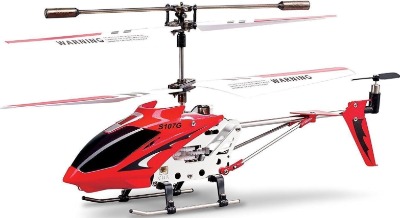
5. Syma S107/S107G R/C Helicopter with Gyro – Red
Product Description
The Syma S107 series is something of a classic in the beginner RC helicopter world. It has been a go-to recommendation for new pilots for a long stretch of time, thanks to its simple design, gyro stabilization, and sturdy metal frame. The red color option gives it a sharp, classic look that stands out.
Best Use Cases
This helicopter is ideal for indoor flying in small to medium rooms. It suits both kids and adults who want a reliable, easy-to-fly model without extra bells and whistles. It is also a popular pick for anyone wanting to test basic 3-channel control before moving up to a 4 or 6-channel model.
Key Features Explained Simply
- Gyro stabilization – Keeps the tail from spinning out, which is one of the biggest hurdles for new pilots.
- Metal frame body – More durable than fully plastic models, so it holds up well against light bumps and drops.
- Infrared control – Works great for indoor flying, though it does mean it needs to stay within line of sight of the remote.
- 3-channel control – Simple up, down, forward, and turning movement that is easy to pick up.
Real-Life Usage Insight
Because it relies on infrared control, this model performs best indoors, away from bright sunlight, which can interfere with the signal. It handles small indoor spaces nicely and tends to recover well from soft crashes into furniture or carpet, thanks to the metal frame.
Pros and Cons
Pros:
- Reliable gyro keeps flight smooth and steady
- Durable metal frame body
- Simple, beginner-friendly controls
- Long track record as a trusted starter model
Cons:
- Infrared control limits it to indoor use
- No altitude hold or advanced smart features
- Flight time is on the shorter side per charge
Performance and Ease of Use
Performance is steady and predictable, which is exactly what a beginner needs. It does not try to do too much, and that simplicity is part of why it has remained popular for so long among new pilots.
Value for Money
Considering the durable build and reliable flight performance, this remains one of the better value picks for indoor beginner flying, especially for someone who wants a no-nonsense model without extra costs tied to smart features.
Comparison Insights: How These Five Stack Up
Looking at all five models side by side, a few patterns stand out clearly.
For pure ease of use, the basic RC Helicopter for Kids & Beginners and the BUSSGO model take the lead. Both strip away extra complexity so a first-time flyer can get comfortable fast.
For added smart features, the SYMA S51H and the UH-1 Huey pull ahead thanks to altitude hold, and in the Huey’s case, one key takeoff and landing plus a low battery reminder. These features genuinely reduce the learning curve compared to fully manual toy-grade models.
For durability and long-term reliability, the Syma S107 stands out with its metal frame construction, giving it an edge in surviving repeated small crashes over time.
For outdoor flying, none of these are true outdoor performance machines, but the UH-1 Huey with its 2.4GHz signal handles light outdoor conditions better than the infrared-based Syma S107 or the basic toy-grade models.
For gifting purposes, the SYMA S51H and UH-1 Huey both have strong visual appeal with their detailed, realistic designs, making them attractive options for birthdays or holiday gifts.
In short, if budget and simplicity matter most, lean toward the basic models. If you want a bit more flying confidence built in through smart features, the SYMA S51H or UH-1 Huey are worth the extra cost.
Buying Guide: How to Pick the Right One for You
Here is a simple way to think through your decision based on your specific situation.
If you are buying for a young child, prioritize a light frame, simple controls, and gyro stabilization. Skip anything with too many buttons or complex features, since young kids do best with straightforward, forgiving toys.
If you are an adult trying the hobby for the first time, look for altitude hold and one key takeoff and landing features. These reduce frustration significantly during the early learning phase and help you build confidence faster.
If your flying space is small, go with a compact, lightweight model designed for indoor use. Larger helicopters like the UH-1 Huey need more room to maneuver safely.
If your budget is tight, the basic beginner models and the BUSSGO option offer a low-cost way to try the hobby without a big financial commitment.
If you plan to fly outdoors occasionally, pick a model with a 2.4GHz control signal rather than infrared, since infrared control needs a direct line of sight and struggles in bright daylight.
If durability matters most to you, look for a metal frame construction rather than an all-plastic build, since metal frames tend to survive crashes better over repeated use.
Who Should Buy These RC Helicopters
These five models are aimed squarely at beginners, so they make the most sense for a specific set of buyers:
- Parents looking for a fun, safe first RC toy for their child
- Adults who want a relaxing, low-pressure hobby to unwind with after work
- Gift shoppers searching for a fun birthday or holiday present that is more engaging than a typical toy
- Total beginners who have never flown any RC aircraft and want an easy entry point
- Hobbyists testing the waters before investing in a more advanced, hobby-grade helicopter
If you are already an experienced RC pilot looking for high-speed acrobatics or long-range outdoor flying, none of these five will fully satisfy that need. They are built for learning and casual fun, not competitive flying.
Common Mistakes to Avoid
Even with a beginner-friendly helicopter, a few common mistakes can lead to unnecessary crashes or frustration. Keep these in mind:
Flying outdoors on a windy day. Most beginner helicopters, especially lighter ones, struggle badly in wind. Stick to indoor spaces or very calm outdoor conditions until you have more experience.
Skipping the instructions. It sounds obvious, but many new pilots jump straight into flying without reading the basic setup and control guide first. This often leads to early crashes that could have been avoided.
Overcharging or undercharging the battery. Follow the recommended charge time closely. Leaving a battery charging for too long can shorten its lifespan, while undercharging leads to unexpectedly short flight times.
Flying in a cluttered space. Ceiling fans, hanging lights, and tight corners are common causes of early crashes. Clear out a decent flying area before you start.
Ignoring the trim controls. Many beginner helicopters have small trim adjustments that help correct drifting. New pilots often ignore these and end up fighting the controls the whole flight instead of fixing the root issue.
Expecting instant mastery. Like any new skill, flying takes a bit of practice. Do not get discouraged if the first few flights end in a wobble or a soft crash. That is a normal part of the learning curve.
Final Verdict
All five helicopters in this roundup serve a clear purpose: getting new pilots into the air with the least amount of stress possible. Here is how they break down in simple terms.
If you want the absolute easiest entry point with a tight budget, go with the RC Helicopter for Kids & Beginners or the BUSSGO RC Helicopter. Both are light, simple, and forgiving.
If you want a bit more flying confidence thanks to altitude hold, the SYMA S51H is a strong pick that balances price and features nicely.
If you want the most complete beginner package, including altitude hold, one key takeoff and landing, and a low battery alert, the UH-1 Huey stands out as the best all-around option for both teens and adults ready for a slightly more advanced experience.
If durability and a proven track record matter most to you, the Syma S107 remains a reliable, no-fuss choice that has stood the test of time in the beginner RC helicopter space.
There is no single “perfect” pick for everyone, since the right choice depends on your budget, your flying space, and who will actually be holding the remote. But every model on this list gives a genuine, beginner-friendly path into the fun world of RC flying, without demanding advanced skills right out of the box.
Take your time, start indoors, keep the tips from this guide in mind, and enjoy the process of learning to fly. It is a small hobby that brings a surprising amount of joy once you get the hang of it.