5 Best 2.4GHz RC Transmitter In 2026
If you’re getting into the RC hobby or looking to upgrade your current radio control system, finding the right 2.4GHz RC transmitter can feel like a big task. There are dozens of options out there, each with different features, price points, and capabilities. This roundup digs into five of the most popular 2.4GHz remote controllers on the market today, so you can figure out which one fits your needs, your RC vehicles, and your budget.
A good RC transmitter should feel solid in your hands, respond quickly to your inputs, and work reliably every single time you take it out to the track, field, or water. We’ve looked at five models that deliver exactly that, and we’re breaking down what makes each one worth your money.
What to Know About 2.4GHz RC Transmitters Before You Buy
Before we jump into the individual products, let’s talk about what makes a 2.4GHz transmitter different from older radio systems. The 2.4GHz frequency is the standard across the RC hobby today. It’s reliable, works in most places, and doesn’t interfere with other RC enthusiasts running nearby. Unlike older 27MHz or 75MHz systems, 2.4GHz lets you run multiple RC vehicles at the same competition or track day without signal conflicts.
When you’re shopping for a transmitter and receiver combo, you need to think about channel count, range, build quality, and how easy it is to set up. Channels tell you how many different functions you can control—a 3-channel transmitter might control throttle, steering, and one other function, while a 10-channel transmitter lets you dial in all kinds of extra features. The transmitter you pick needs to match the receiver in your RC car, boat, drone, or plane, so compatibility matters a lot.
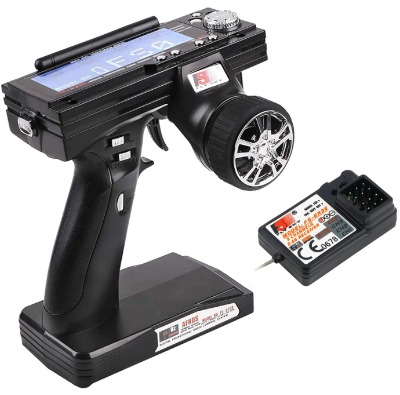
Flysky FS-GT3B RC Transmitter & FS-GR3E Receiver
Product Overview
The Flysky FS-GT3B is a straightforward, budget-friendly 2.4GHz RC transmitter designed with beginners in mind. This is a 3-channel system that comes bundled with the FS-GR3E receiver, making it a plug-and-play option for RC cars, boats, and crawlers. If you want a simple, no-fuss radio control setup that just works, this transmitter delivers exactly that.
What This Transmitter Is Best For
The Flysky FS-GT3B shines if you’re brand new to RC and want to test the waters without spending big money. It’s ideal for basic RC cars, small boats, and entry-level crawlers. If your RC hobby stays simple and you don’t need fancy programming features, this transmitter keeps you in the game without the learning curve.
Key Features Explained
This is a gun-style transmitter, meaning it looks and feels like a pistol-grip remote control. The trigger controls forward and reverse throttle, while the steering wheel on top handles left and right movement. The third channel gives you one more control option—many people use it for lights or auxiliary functions on their vehicle.
The 2.4GHz AFHDS protocol keeps your signal steady and connection secure. The receiver is small and lightweight, so it fits easily inside almost any RC car or boat without eating up valuable space. Range sits around 200 meters under good conditions, which is plenty for most backyard or local track driving.
How It Works in Real Life
Pull the trigger to go forward, turn the wheel to steer, and that’s about all there is to it. The controls feel responsive and natural, especially after a few minutes of use. The gun-grip design is comfortable for longer driving sessions, and your hands won’t cramp up even if you spend an hour taking your RC car around the yard.
The FS-GR3E receiver is tough and reliable. It locks onto the transmitter quickly when you turn on the system, and the connection holds strong without dropouts or signal loss. If you’re driving in an area with other RC hobbyists, the 2.4GHz system avoids interference because each transmitter-receiver pair is bound together digitally.
Pros That Matter
The biggest pro here is price. You get a complete transmitter and receiver system for under $30, which is hard to beat. The build quality is solid—the housing doesn’t feel cheap, and the buttons and controls are responsive. The transmitter is small enough to fit in a backpack, so you can take it anywhere. Setup takes just minutes, binding the transmitter and receiver comes with clear instructions, and most people get it working on their first try.
The battery lasts for many hours of driving before you need to recharge. The LED indicator on the transmitter shows you the battery status, so you know when it’s time to juice it up.
Cons to Keep in Mind
You’re limited to three channels, so if you want to control multiple functions on your RC vehicle, you’ll hit a ceiling pretty fast. There’s no customization—no trim adjustments to program, no profiles to save different setups for different vehicles. If you damage the transmitter, finding replacement parts is tough because it’s such a basic model.
The range, while solid for backyard use, doesn’t match more expensive systems. If you’re driving from farther away or in areas with lots of radio interference, you might lose signal occasionally. The antenna on both the transmitter and receiver is fixed, not removable, so you can’t upgrade it later.
Performance Discussion
In practical driving, the FS-GT3B does what it promises. You won’t experience lag between your input and the vehicle’s response. Steering feels precise, throttle control is smooth, and the receiver responds immediately to commands. It’s not a high-performance racing radio, but it’s never meant to be. For casual hobbyists, this transmitter performs exactly as it should.
Ease of Use
Setup is foolproof. Charge the battery, turn on the transmitter, turn on the receiver, and they bind automatically on first startup. The manual is simple and straightforward. If you’ve never used an RC transmitter before, the FS-GT3B won’t intimidate you at all.
Value for Money
At this price point, you’re getting incredible bang for your buck. Yes, you’re missing features that pricier systems have, but you’re also saving a huge amount of money. For someone testing out the RC hobby, this is a no-brainer.
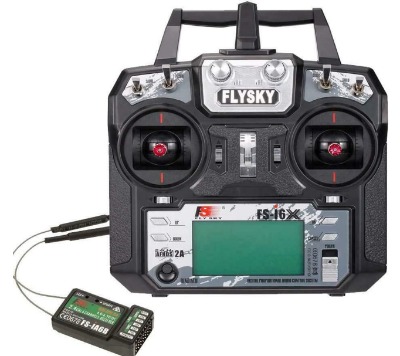
FLYSKY FS-i6X 10CH 2.4GHz RC Transmitter Controller with FS-iA6B Receiver
Product Overview
The Flysky FS-i6X is a serious step up from the FS-GT3B. This is a 10-channel transmitter that gives you way more control and customization. It comes with the FS-iA6B receiver, and it’s built for people who want more than just basic forward, reverse, and steering. This radio system works with RC cars, trucks, boats, helicopters, and quadcopters.
What This Transmitter Is Best For
If you drive multiple types of RC vehicles or want room to grow, the FS-i6X is perfect. It’s ideal for someone who’s already into RC and wants more control options, better range, and programmable features. It’s also great if you plan to upgrade to more complex vehicles down the road.
Key Features Explained
The FS-i6X uses a gamepad-style layout with two sticks and lots of buttons. This gives you a more traditional radio control feel compared to the pistol-grip design of the FS-GT3B. The 10 channels mean you can control up to 10 different functions on your RC vehicle, opening up possibilities like differential locks, light switches, camera controls, or multiple motors.
The transmitter has a backlit LCD screen that shows you what’s happening with your system. You can program multiple profiles, meaning you can set up one configuration for your RC car and a different one for your RC boat without reprogramming everything when you switch vehicles.
The FS-iA6B receiver is packed with channels too. It’s a full-sized module that takes up more room than the tiny FS-GR3E, but it’s still compact enough for most vehicles. The range jumps to around 400 meters or more, so you can drive much farther away from the transmitter.
How It Works in Real Life
Hold the gamepad-style transmitter, push the left stick to control throttle and reverse, use the right stick for steering, and you have two extra sticks or trim buttons to assign to other functions. This layout might take a bit of getting used to if you’re coming from a pistol-grip system, but most people adapt in a few minutes.
The LCD screen lets you see battery voltage, signal strength, and which channels you’re using. You can navigate menus to program failsafe settings, endpoint adjustments, and other technical details. If this sounds complicated, don’t worry—the default settings work great for most people, and you only dive into programming if you want to tweak things.
Pros That Matter
The most obvious pro is having 10 channels instead of 3. You’re not limited anymore—you can add features and functions to your RC vehicles and actually control them. The gamepad layout feels natural if you’ve ever played video games, and your hands rest comfortably on the transmitter for long driving sessions.
The range is excellent. You get signal stability at distances where other budget transmitters start to cut out. The receiver is rock-solid reliable, and you can bind multiple receivers to one transmitter, so you can switch between vehicles easily.
Programming is flexible. You can save different profiles, adjust sensitivity, set up failsafe (which tells your vehicle what to do if the signal drops), and customize everything to your liking. The LCD screen makes this easy to navigate, and the manual explains things clearly.
Build quality feels premium. The housing is solid plastic, the sticks feel responsive, and the overall construction suggests this radio will last for years of regular use.
Cons to Keep in Mind
This transmitter costs more than the basic FS-GT3B—roughly three to four times the price. If you’re on a tight budget, the price jump might feel steep. The menu system, while not complicated, takes some time to learn. New users might spend an hour or two reading the manual to understand all the options.
The gamepad layout isn’t ideal for everyone. Some people prefer the pistol-grip feel for RC cars, and switching to a gamepad style takes an adjustment period. The receiver is larger than the FS-GR3E, so fitting it into tiny RC crawlers or drones might require some planning.
Battery life is good but not amazing—you’ll get through a full day of driving, but not multiple full days on one charge. The antenna is still fixed, though it’s longer than the basic model’s antenna.
Performance Discussion
Real-world testing shows the FS-i6X performs at a level that matches its price. Response time is immediate, there’s zero lag between your stick movement and the vehicle’s reaction, and range lives up to the specifications. Signal stability is rock solid even when driving in areas with other RC enthusiasts nearby.
The failsafe feature is genuinely useful. If you lose signal for any reason, your vehicle can be programmed to stop, spin in circles, or perform any action you want, preventing it from driving away into oblivion. This alone makes the FS-i6X worth the extra cost if you drive near obstacles or traffic.
Ease of Use
Initial setup takes longer than the basic model, but it’s still straightforward. Binding the receiver is a simple process—push a button and the system pairs them together. Using the transmitter for basic driving is easy—you don’t need to touch the programming menu.
The learning curve comes if you want to customize everything. But unlike some professional racing radios, you can totally ignore the advanced features and just drive. The default settings work well for most RC vehicles right out of the box.
Value for Money
The FS-i6X costs significantly more than the FS-GT3B, but you get a lot more transmitter. If you’re serious about RC and plan to own multiple vehicles or want room to add features, the extra cost makes sense. You’re getting a radio that grows with your hobby.
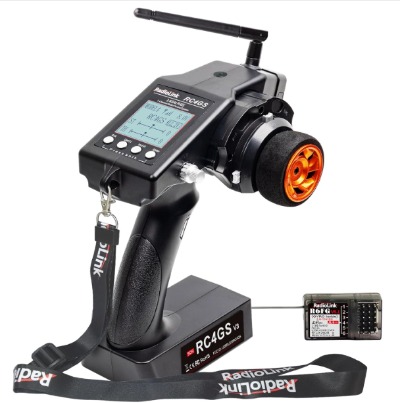
Radiolink RC4GS V3 5 Channels RC Transmitter and Receiver
Product Overview
The Radiolink RC4GS V3 is a sweet spot in the middle—not as basic as the FS-GT3B, but more affordable than the FS-i6X. This is a 5-channel system that includes both the transmitter and the R6FG Gyro receiver. It’s built tough for RC crawlers, drift cars, bashers, buggies, and boats. Radiolink has a reputation for rugged, reliable equipment, and the RC4GS V3 lives up to that name.
What This Transmitter Is Best For
If you drive RC crawlers, rock buggies, or other vehicles that need precision steering and don’t need a ton of extra channels, the RC4GS V3 is ideal. It’s perfect for someone who wants more than the basic 3-channel setup but doesn’t need the complexity of a 10-channel system. The included gyro receiver is excellent for vehicles that need self-stabilizing features.
Key Features Explained
This is a pistol-grip transmitter, like the FS-GT3B, but with better build quality and more control options. The five channels give you room for steering, throttle, two auxiliary functions, and one more channel if needed. The R6FG receiver is where the magic happens—it has a built-in gyro that helps stabilize RC crawlers and other vehicles on rough terrain.
The gyro feature is clever. It detects when your vehicle is turning and applies small corrections to keep it stable, which is perfect for rock crawling or drifting. You can adjust gyro sensitivity from the transmitter, dialing it in to match your driving style and terrain.
The build quality of the Radiolink transmitter is noticeably better than budget models. The housing feels solid, the trigger response is smooth, and the grip fits your hand naturally. The receiver is compact, the antenna is flexible and replaceable, and everything feels like it was built to last through real-world abuse.
How It Works in Real Life
The pistol-grip layout feels instantly familiar if you’ve used RC transmitters before. The trigger controls throttle, the steering wheel controls left and right, and the auxiliary buttons let you control lights, winches, or other vehicle functions. The gyro receiver handles the stabilization automatically—you don’t have to do anything special; the vehicle just feels more planted and easier to control.
For crawling, this translates to vehicles that climb and navigate obstacles with confidence. The gyro prevents tippy, unstable feeling and keeps the vehicle tracking straight even on loose terrain. For drifting, the gyro helps the car maintain its line during slides, and skilled drivers can dial in the gyro sensitivity to match their technique.
Pros That Matter
The included gyro receiver is the standout feature here. This technology costs extra on other systems, but it’s built right into the R6FG. For RC crawlers and specialty vehicles, having a gyro receiver is a huge advantage. Setup is quick and intuitive—the menu system is simple and logical.
Build quality is excellent across the board. The transmitter feels premium, the receiver is robust, and the antenna is replaceable if it ever breaks. Radiolink includes a decent manual with clear diagrams, so you understand what you’re getting into.
The price is reasonable. You’re paying more than the basic FS-GT3B, but you’re getting solid construction, more channels, and an advanced receiver with a gyro. It feels like fair value.
Range is good—around 300 meters—which covers most driving situations. The 2.4GHz protocol is reliable, and interference from other RC systems is not an issue.
Cons to Keep in Mind
The five-channel limit means you’re not adding as many functions as you could with the FS-i6X. If you drive multiple vehicle types and want different configurations for each, you might feel limited. The gyro is awesome for crawlers but might feel like overkill if you drive mostly on-road RC cars where you don’t need stabilization.
The receiver is larger than the tiny FS-GR3E, so fitting it into very small RC vehicles requires some planning. The menu system is simpler than the FS-i6X, which is good for beginners but means fewer programmable options for advanced users.
The transmitter is pistol-grip only—if you prefer a gamepad layout, this system isn’t for you. Battery life is solid but not outstanding, similar to other transmitters in this category.
Performance Discussion
In field testing, the RC4GS V3 shines with specialty vehicles. Crawlers equipped with this system feel more controlled and stable, especially over rocky terrain. The gyro does its job without being intrusive—you notice the benefit without the vehicle feeling like it’s fighting your inputs.
Steering response is sharp and immediate. Throttle control is smooth and predictable. The receiver locks onto the transmitter quickly and holds signal without any dropouts.
Ease of Use
The pistol-grip layout is familiar to anyone who’s used RC vehicles. Menu navigation is straightforward, and the gyro adjustment is done through simple slider controls on the transmitter. You don’t need to read fifty pages of manual to get started—the basics are intuitive, and the manual explains the rest clearly.
Value for Money
The RC4GS V3 is reasonably priced and offers solid value. You’re getting good build quality, a useful gyro receiver, and reliable performance at a price that’s not too steep. If you drive crawlers, this system is worth every penny.
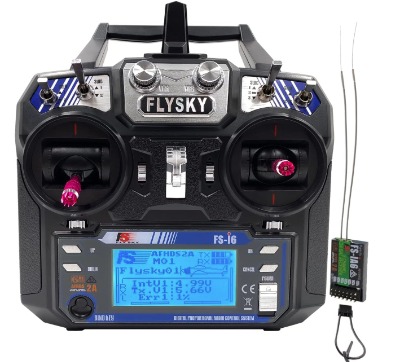
DTXMX Flysky FS-i6 RC Transmitter and Receiver FS-iA6
Product Overview
The DTXMX Flysky FS-i6 is another mid-range option that blends affordability with solid performance. This is a 6-channel transmitter paired with the FS-iA6 receiver. It’s designed for RC cars, fixed-wing aircraft, gliders, and quadcopters. The name might be confusing because “DTXMX” is the reseller brand, but this is really the well-known Flysky FS-i6 radio at a good price.
What This Transmitter Is Best For
The FS-i6 is ideal for hobbyists who want a step above basic but don’t need 10 channels. It’s excellent for RC cars, helicopters, and fixed-wing aircraft. If you fly drones or planes, this transmitter is a great choice because it has the channels and features those vehicles need. For RC car drivers, it offers more options than the budget FS-GT3B.
Key Features Explained
The FS-i6 uses a gamepad-style transmitter with two sticks and multiple switches. The six channels give you room for throttle, steering, pitch, roll, and two extra channels for auxiliary functions. For aircraft and quadcopters, this is perfect—you get all the basic control you need.
The FS-iA6 receiver is small and lightweight, which matters a lot if you’re building aircraft or drones where every gram counts. The receiver has six channels of output, and the connection is fast and reliable. The 2.4GHz AFHDS system works smoothly, and signal range is solid.
The transmitter has a smaller footprint than the FS-i6X, which some people prefer. The battery is rechargeable, and the case is relatively durable. The stick feel is smooth and responsive, and the overall construction feels like it will last through regular use.
How It Works in Real Life
For RC car use, the gamepad layout works great. The left stick controls throttle (up and down) and the right stick handles steering (left and right). You have two extra channels available for lights, winches, or auxiliary motor control. For aircraft, the stick configuration is even more intuitive because the left stick is typically used for throttle and rotation, and the right stick controls pitch and roll—just like real airplane controls.
The receiver picks up signal quickly and holds it with no dropouts. Range is around 300 meters in open areas, which is adequate for most flying and driving.
Pros That Matter
The price is attractive. You get a 6-channel transmitter and receiver for significantly less than the FS-i6X. The transmitter is lightweight and easy to carry, making it perfect for field trips to flying fields or RC tracks. The gamepad layout is comfortable for extended use, and the stick feel is smooth and precise.
For aircraft and quadcopter pilots, the FS-i6 is a proven, reliable choice. Thousands of people fly with this radio successfully. The receiver is small and light, which is important for aircraft applications. The default stick configuration works for most flying scenarios right out of the box.
Cons to Keep in Mind
You’re limited to six channels, which is the midpoint between the basic 3-channel and the full 10-channel systems. If you want lots of extra functions, you’ll feel the limitation. The menu system for programming is more complex than the basic models, and the manual is dense with technical information that can overwhelm beginners.
The gamepad layout is not ideal for RC cars if you prefer pistol-grip controls. The receiver is a different form factor than the crawler-oriented systems, so it might not fit as easily into all RC vehicles. Battery life is good but not exceptional—plan on recharging after several hours of use.
The transmitter doesn’t come with a nice carrying case like some premium systems, so you’ll need to buy one separately if you want to protect it during transport.
Performance Discussion
Real-world performance is solid across the board. Response time is immediate, there’s no lag between your input and the vehicle’s response, and range lives up to specifications. The radio is rock-solid reliable in areas with other RC activity.
For flying, the FS-i6 performs excellently. The smooth stick response is perfect for precise flying, and the six channels are more than enough for most aircraft and quadcopter configurations.
Ease of Use
Initial setup and binding is straightforward. The transmitter and receiver pair quickly, and default settings work well for most applications. The challenge comes if you want to customize things—the menu system requires reading the manual, and some of the programming options are not intuitive for beginners.
For basic flying or driving, you don’t need to touch any menus—just turn on the transmitter and receiver, and you’re ready to go.
Value for Money
The FS-i6 offers great value at its price point. You’re getting a solid, reliable transmitter with more capabilities than basic models, and you’re paying less than you would for the FS-i6X. If you fly aircraft or want a capable midrange transmitter, the price makes sense.
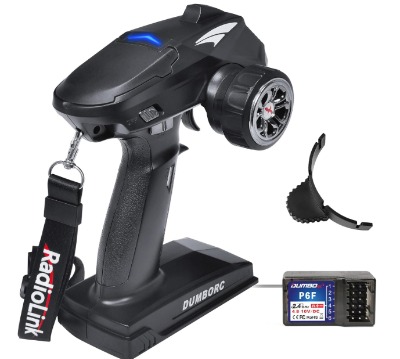
ATA HOBBY DUMBORC X4 2.4GHz 4-Channel RC Radio Transmitter and Receiver
Product Overview
The ATA HOBBY DUMBORC X4 is a 4-channel system designed for simplicity and reliability. It includes the transmitter and the X6F receiver, and it’s built for RC vehicles, boats, and tanks. This is a brand you might not recognize, but it’s gaining popularity among hobbyists who want straightforward performance at a reasonable price.
What This Transmitter Is Best For
The DUMBORC X4 is perfect if you want more control than a 3-channel system but don’t need complexity. It’s ideal for RC cars, trucks, boats, and other surface vehicles. If you like the simplicity of the basic systems but want an extra channel or two for added functionality, this transmitter fits the bill.
Key Features Explained
This is a pistol-grip transmitter with a clear, simple layout. The four channels give you steering, throttle, and two more functions—like lights or winch controls. The X6F receiver is a standard module that’s compact enough to fit most RC vehicles. The 2.4GHz frequency keeps your signal safe from interference.
The transmitter has a straightforward design with no complicated menus or LCD screen. The trigger controls throttle, the wheel controls steering, and two buttons handle the extra channels. This simplicity is a strength if you want a no-fuss system, but it also means less customization.
The receiver includes failsafe and low voltage alarm functions. The failsafe helps protect your vehicle if the signal drops unexpectedly. The low voltage alarm warns you when the battery is running low, so you know when to land your aircraft or dock your boat.
How It Works in Real Life
Pull the trigger forward to accelerate, backward to reverse. Turn the steering wheel left or right. Press the auxiliary buttons for your other functions. It’s that simple. The controls feel responsive and direct, with no lag or sluggishness. Beginners pick this transmitter up instantly, and experienced drivers never have to fight the interface.
The receiver connects fast and holds signal rock solid. Range is around 200 to 250 meters depending on terrain and weather, which is plenty for most hobbyists.
Pros That Matter
Simplicity is the main strength here. There’s nothing to learn beyond the basic controls. No menus, no programming, no confusion. You turn it on and drive. This approach appeals to beginners and people who want a hassle-free experience.
The four-channel setup gives you more flexibility than a 3-channel system. You can add lights, control a winch, or operate other functions without diving into complex menus. The failsafe and low voltage alarm are practical features that protect your equipment.
Price is very competitive. You’re getting a reliable transmitter and receiver for significantly less than many other options. The build quality is solid, and the transmitter feels comfortable to hold during long driving sessions.
The pistol-grip layout is familiar to RC enthusiasts, and the controls feel natural right away.
Cons to Keep in Mind
Four channels is the midpoint—you’re not as limited as the 3-channel options, but you’re not as flexible as the 6 or 10-channel systems. If you want to run multiple extra functions, you’ll hit the ceiling.
There’s no customization menu, which is good for simplicity but bad if you want to fine-tune sensitivity or program profiles. The receiver is a standard module with no special features like gyros. The antenna is fixed, so you can’t upgrade it later.
The brand is less well-known than Flysky or Radiolink, so finding replacement parts or support might be tougher. The transmitter comes with minimal documentation, and the manual is not as thorough as other systems.
Performance Discussion
In practice, the DUMBORC X4 does exactly what it promises. The controls are responsive and reliable. Signal strength is good, and the failsafe function works as advertised. This is a transmitter designed to be straightforward, and that’s exactly what you get.
The lack of advanced features never shows up as a problem if you’re using it for basic RC vehicles. You won’t notice missing programmable options because there’s nothing you feel you need to program.
Ease of Use
This is the easiest transmitter to pick up and use. There are no menus, no complicated procedures, and no learning curve. Turn it on and drive. Beginners feel confident immediately, and experienced users appreciate the no-fuss approach.
Value for Money
At this price, the DUMBORC X4 is a solid value. You’re getting a working transmitter and receiver with practical features like failsafe and low voltage alarm. The straightforward design means you’re not paying for features you don’t want.
Side-by-Side Comparison: What Sets These Transmitters Apart
Now that we’ve covered each system individually, let’s compare them head-to-head so you can see where they stand against each other.
Channel Count Comparison
The FS-GT3B and DUMBORC X4 are the most basic options. If you only drive simple RC cars and don’t need extra functions, they’re enough. The RC4GS V3 and FS-i6 offer more flexibility with 5 and 6 channels. The FS-i6X is the advanced option with 10 channels, giving you room to grow and add features.
Price Tiers
Budget tier: FS-GT3B and DUMBORC X4 are the most affordable options. Mid-tier: RC4GS V3 and FS-i6 are reasonably priced with more features. Premium tier: FS-i6X costs the most but offers the most flexibility and features.
Best for Beginners
If you’re completely new to RC, the FS-GT3B or DUMBORC X4 are your safest bets. They’re inexpensive, simple to use, and you won’t feel overwhelmed by options. The RC4GS V3 is a good beginner option if you want a bit more capability.
Best for Experienced Hobbyists
The FS-i6X is the clear choice if you drive multiple vehicles or want advanced programmable features. The FS-i6 is great if you fly aircraft or quadcopters. The RC4GS V3 is excellent if you focus on crawlers or specialty vehicles.
Build Quality Rankings
Radiolink RC4GS V3 wins on overall build quality—it feels premium and durable. The FS-i6X is solid but uses more plastic. The FS-i6 and DUMBORC X4 are decent for the price, and the FS-GT3B is acceptable for a budget model.
Range and Signal Reliability
The FS-i6X has the best range at 400+ meters. The RC4GS V3 and FS-i6 deliver around 300 meters. The FS-GT3B and DUMBORC X4 are good for 200 to 250 meters. In real-world conditions, all five systems are reliable, but the more expensive transmitters handle interference better.
Special Features
The RC4GS V3 stands out with its built-in gyro receiver. The FS-i6X has the most advanced programmable features and customization. The DUMBORC X4 includes failsafe and low voltage alarms at an affordable price. The FS-i6 and FS-GT3B are straightforward without special add-ons.
Comprehensive Buying Guide for 2.4GHz RC Transmitters
Step 1: Figure Out What You Drive
First, think about what RC vehicles you currently own and what you might want to own in the future. If you only drive RC cars, you need a transmitter designed for cars. If you fly planes or drones, you need one built for aircraft. Some transmitters work for both, but they’re not equally good at everything.
The FS-GT3B and DUMBORC X4 are built for surface vehicles (cars, boats, trucks). The FS-i6 is better for aircraft. The FS-i6X and RC4GS V3 work well for both surface vehicles and specialty applications.
Step 2: Decide How Many Channels You Actually Need
Think about what functions you want to control beyond steering and throttle. A basic RC car needs steering and throttle. A crawler with a winch needs steering, throttle, and winch control. A quadcopter needs throttle, roll, pitch, and yaw. Count up the functions, and pick a transmitter with that many channels or more.
For most casual RC car drivers, 3 to 4 channels are enough. For crawlers and specialty vehicles, 5 to 6 channels are ideal. For people who drive multiple vehicle types or want room to add features, 10 channels make sense.
Step 3: Set Your Budget
Decide how much you’re willing to spend. If budget is tight, the FS-GT3B or DUMBORC X4 are great values. If you can spend a bit more, the RC4GS V3 and FS-i6 offer more capability. If you want the best available, the FS-i6X is worth the investment.
Remember that buying a cheap transmitter today and upgrading in two years costs more than buying a better transmitter from the start. Buy as good a system as your budget allows.
Step 4: Consider Ergonomics and Comfort
Hold each transmitter style if you can. Do you prefer a pistol grip or a gamepad style? How does it feel in your hands? Will you be using it for hours at a time? Comfort matters because a cramped hand ruins a driving session. The FS-GT3B, DUMBORC X4, and RC4GS V3 use pistol-grip designs. The FS-i6 and FS-i6X use gamepad styles.
Step 5: Look at Range and Signal Quality
If you drive in areas with lots of other RC activity or fly at large fields, signal reliability is critical. The FS-i6X has the best range and signal immunity. The mid-range options (RC4GS V3 and FS-i6) are solid. The budget options work fine in less crowded areas.
Step 6: Think About Future Growth
Buy a transmitter that has room for you to grow. Even if you don’t need 10 channels today, having them available means you can add complexity later without buying a new radio. The FS-i6X is the best choice for long-term flexibility.
Who Should Buy Which Transmitter?
Buy the Flysky FS-GT3B if:
- You’re brand new to RC and testing the waters
- Your budget is very tight
- You only drive simple RC cars and boats
- You want the easiest possible setup
- You don’t need extra channels for auxiliary functions
Buy the DUMBORC X4 if:
- You want simplicity but more capability than the FS-GT3B
- You drive RC cars, boats, or tanks
- You like straightforward interfaces with no menus
- Budget is a consideration but not the only factor
- You want failsafe and low voltage alarm protection
Buy the Radiolink RC4GS V3 if:
- You drive RC crawlers, rock buggies, or drift cars
- You want a built-in gyro for stabilization
- You care about build quality and durability
- You want solid performance at a reasonable price
- You’re past the absolute beginner stage
Buy the DTXMX Flysky FS-i6 if:
- You fly fixed-wing aircraft, helicopters, or drones
- You want a mid-range transmitter that’s proven reliable
- You prefer a gamepad-style layout
- You want six channels of control
- You’re willing to spend a bit more for better capability
Buy the Flysky FS-i6X if:
- You own or plan to own multiple RC vehicles
- You want maximum customization and programmable features
- You want the best range and signal reliability
- You’re willing to spend premium money for premium features
- You want a transmitter you won’t outgrow for years
Common Mistakes to Avoid When Buying RC Transmitters
Mistake 1: Buying Without Knowing Compatibility
Not all transmitters work with all receivers. Make sure you’re buying a complete system with a matching receiver, or verify that any receiver you already own is compatible. Check the product specs before you buy.
Mistake 2: Choosing Based Only on Price
The cheapest option isn’t always the best value. A transmitter that costs slightly more but offers better range, more durability, and more features often saves you money in the long run because you won’t need to replace it as quickly.
Mistake 3: Ignoring Future Needs
Don’t buy a transmitter that barely covers your current needs. Plan ahead—if you think you’ll add new vehicles or features, choose a transmitter with extra channels and capability.
Mistake 4: Not Checking Antenna Quality
A fixed antenna that can’t be replaced limits your options. Transmitters with replaceable antennas give you the option to upgrade range and signal quality later.
Mistake 5: Overlooking Build Quality
A transmitter that feels cheap and flimsy might work, but it won’t survive rough treatment, impacts, or years of regular use. Spend a little more for solid construction that lasts.
Mistake 6: Buying the Wrong Style for Your Needs
If you drive RC cars, a pistol-grip transmitter is usually better than a gamepad style. If you fly, a gamepad style is more natural. Know what feels right in your hands before you buy.
Mistake 7: Assuming All 2.4GHz Systems are the Same
Different brands use different protocols and methods to achieve 2.4GHz communication. Some are more reliable, some have better range, and some are more resistant to interference. Do your research before assuming all 2.4GHz options are equivalent.
Final Verdict and Recommendations
The 2.4GHz RC transmitter market has options for every budget, skill level, and need. There’s no single “best” transmitter because different people have different requirements.
The Flysky FS-GT3B wins for pure affordability and simplicity. If you’re testing RC for the first time or you’re on a shoestring budget, this is the one. You’ll spend less than $30 and get a working system. No regrets if you use it for basic driving.
The DUMBORC X4 is the balanced budget option. It offers more capability than the FS-GT3B at not much more cost. If you want four channels instead of three and don’t want complexity, this is solid value.
The Radiolink RC4GS V3 stands out for specialty vehicles, especially crawlers and buggies. The built-in gyro is a genuine advantage for off-road vehicles, and the build quality is excellent. If you drive crawlers, this is worth the extra cost.
The DTXMX Flysky FS-i6 is the smart choice for aircraft pilots and people who want a proven mid-range system. It’s been used successfully by thousands of flyers, and the six channels give you room to grow. If flying is part of your RC hobby, this transmitter delivers.
The Flysky FS-i6X is the premium choice for people who are serious about RC. It costs more, but you get 10 channels, programmable features, excellent range, and a transmitter you won’t outgrow. If you drive multiple vehicles or want maximum flexibility, this is worth the investment.
My honest recommendation: buy the best transmitter your budget allows. Don’t choose the absolute cheapest option unless money is incredibly tight. A mid-range transmitter that you’ll enjoy using for years beats a budget option you’ll replace in six months. Start with the FS-GT3B or DUMBORC X4 if you’re new and budget-conscious. Step up to the RC4GS V3 or FS-i6 if you’re serious about the hobby. Go with the FS-i6X if you want the best and plan to use it for a long time.
Whatever you choose from this roundup, you’re getting a 2.4GHz transmitter system that works, that’s reliable, and that will deliver good performance. Each of these five options has a specific audience and use case, and any of them can be the right choice if you match it to your needs.
Get out there, enjoy your RC vehicles, and have fun with your new transmitter system.

Peterson is an RC hobby enthusiast and product reviewer with a passion for remote-controlled cars, trucks, boats, drones, and accessories. He enjoys testing the latest RC products, comparing features, and sharing practical buying guides to help beginners and experienced hobbyists make informed decisions. Through RCThing.com, Peterson provides honest reviews, maintenance tips, and expert advice to help readers get the most from their RC adventures.