How Much Are RC Cars?
If you have ever walked past a toy store or scrolled through an online shop and stopped at a shiny remote control car, you have probably asked yourself one simple question: how much are RC cars? It sounds like an easy question, but the answer is not just one number. RC cars come in so many shapes, sizes, and speeds that the price can jump from ten dollars to over a thousand dollars. In this guide, we will break everything down in plain words so you know exactly what you are paying for and why the price changes so much.
Whether you are a parent looking for a fun gift, a teenager who wants speed and thrills, or an adult who loves building and racing hobby-grade machines, this post will help you understand the real cost of RC cars. We will also look at hidden costs, batteries, upgrades, and tips to save money without picking a bad product.
Why RC Car Prices Vary So Much
RC cars are not all built the same way. Some are made for kids to play with in the backyard, and some are built like real race cars with metal parts, powerful motors, and advanced electronics. The price depends on a few key things:
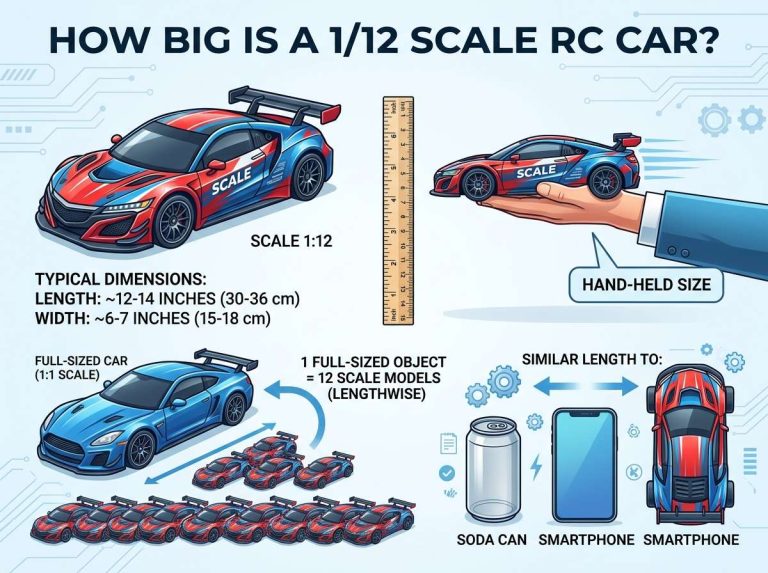
- The size of the car, often called its scale
- The type of motor, brushed or brushless
- The materials used to build the body and chassis
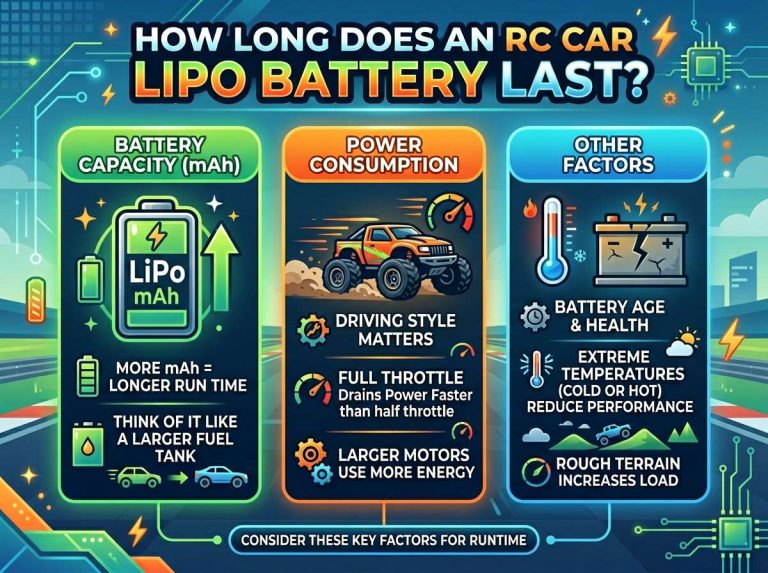
- The battery type and how long it lasts
- Whether the car is ready to run or needs to be built from a kit
- The brand name and reputation
- Extra features like lights, sound, or camera systems
Once you understand these factors, the price tag starts to make a lot more sense. Let’s go through each price range so you can see what you actually get for your money.
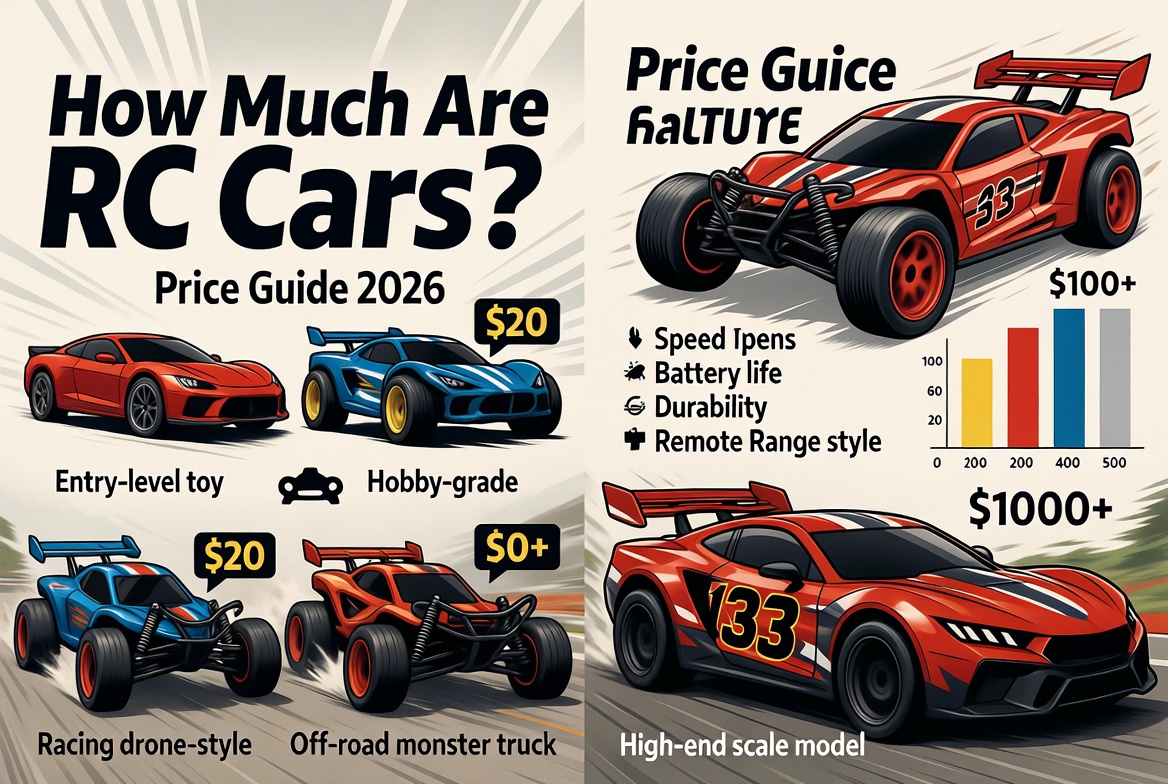
Budget RC Cars: 10 to 40 Dollars
At this price point, you are mostly buying toy-grade RC cars. These are the ones you often see in toy aisles or as impulse buys online. They are simple, light, and made mostly from plastic.
What you get in this range:
- Small motors with limited speed, usually under 10 miles per hour
- Simple steering with basic left and right turns
- Short battery life, often 10 to 20 minutes of play time
- A basic remote control with limited range
- Bright colors and fun designs aimed at kids
These cars are perfect for young children or as a small gift. They are not built for jumps, rough terrain, or long-term durability. If a wheel breaks or the motor burns out, you usually cannot fix it, since parts are not sold separately. Still, for the price, they offer a good bit of fun for a short amount of time.
Entry-Level RC Cars: 40 to 100 Dollars
This range is where things start to get more interesting. You will find cars that are a step above toy-grade but still affordable enough for casual buyers. These are often labeled as ready-to-run models, meaning they come fully built and just need a battery to start driving.
Features you can expect:
- Stronger plastic or a mix of plastic and metal parts
- Better speed, often reaching 15 to 25 miles per hour
- Rechargeable battery packs with longer play time
- Basic suspension for small bumps and rough ground
- Some models include LED lights or simple drift functions
This price range is great for teenagers or adults who want something fun without spending a lot of money. Many popular monster trucks, buggies, and drift cars fall into this category. They can handle light off-road use, jumps, and small obstacles, though they are still not as tough as hobby-grade machines.
Mid-Range Hobby RC Cars: 100 to 300 Dollars
Once you move past the casual toy market, you enter the world of hobby-grade RC cars. This is where serious hobbyists start their journey. Cars in this range are built with better materials, stronger motors, and parts that can actually be replaced or upgraded.
What makes this range different:
- Brushless motors in many models, which are faster and more efficient
- Metal gears and stronger suspension systems
- Higher speeds, often 30 to 45 miles per hour
- Waterproof electronics in some models, allowing rain or puddle driving
- Replacement parts are easy to find online
At this level, brands start to matter a lot more. Well-known hobby brands build cars that last longer and perform better on rough tracks, dirt, grass, or gravel. Many people in this price range also start learning how to do small repairs and upgrades themselves, which is a big part of the RC hobby’s charm.
High-Performance RC Cars: 300 to 700 Dollars
This is where RC cars start to feel like real machines. Cars in this range are built for speed, control, and long-term use. They are usually made for hobbyists who race competitively or who simply want the best performance possible.
Key features in this range:
- High-torque brushless motors capable of speeds over 50 miles per hour
- Aluminum or carbon fiber chassis parts for extra strength
- Advanced suspension systems that handle jumps and rough terrain smoothly
- Long-lasting lithium battery packs with fast charging options
- Precise remote controllers with adjustable settings
People who buy cars in this range usually plan to use them for years, not months. They treat the car like a long-term hobby project, often adding new tires, shocks, or motors over time. Racing clubs and RC tracks are full of cars from this category, since they balance power and control very well.
Premium and Professional RC Cars: 700 to 2000+ Dollars
At the top end, RC cars become serious competition machines. These are not for casual buyers. People who invest in this range are usually racers, collectors, or hobbyists who treat RC cars as a lifelong passion.
What sets these apart:
- Extremely powerful brushless motors with racing-grade speed controllers
- Full metal chassis and suspension systems built for durability
- Custom tuning options for gear ratio, camber, and suspension travel
- Premium batteries that offer both speed and long run times
- Designed to be rebuilt, repaired, and upgraded piece by piece over many years
Some of these cars are sold as kits rather than ready-to-run models. Buyers assemble the car themselves, piece by piece, which is a big part of the fun for serious hobbyists. This range also includes scale models built to look and feel like real vehicles, with detailed bodies, working lights, and realistic suspension travel.
Hidden Costs You Should Know About
The listed price of an RC car is rarely the full story. Many buyers get surprised by extra costs that pop up after the first purchase. Here are the most common ones:
Batteries
Cheap toy cars often use AA batteries, which cost a little but add up over time. Hobby-grade cars use rechargeable lithium battery packs, which cost between 20 and 80 dollars each. Serious racers often own three or four battery packs so they never run out of power during a race day.
Chargers
Basic cars come with a simple charger in the box. Higher-end batteries often need a separate smart charger, which can cost anywhere from 30 to 150 dollars depending on charging speed and features.
Replacement Parts
Tires wear out, gears strip, and shocks leak oil over time. Hobby-grade cars are built to be repaired, but that means you will eventually spend money on new tires, bearings, or suspension arms. Budget around 20 to 100 dollars a year for basic maintenance, depending on how often you drive.
Upgrades
Many hobbyists cannot resist upgrading their car once they get the hobby bug. Popular upgrades include stronger motors, better shocks, metal gears, and stronger drive shafts. These upgrades can range from 10 dollars for small parts to over 200 dollars for a full motor and speed controller swap.
Tools
Basic tool kits for maintenance cost around 20 to 50 dollars. Serious hobbyists often build a full toolbox over time with hex drivers, wrenches, and specialty tools for their exact car model.
RC Car Prices By Type
Different styles of RC cars also affect the price. Let’s break down some popular types and what they usually cost.
RC Monster Trucks
These are the big, bold trucks with oversized tires. Budget models start around 40 dollars, while hobby-grade monster trucks with brushless motors and metal parts can cost 200 to 500 dollars.
RC Drift Cars
Built for smooth, sideways action on flat surfaces. Entry-level drift cars start around 60 dollars, while precision drift setups with adjustable suspension can reach 300 dollars or more.
RC Buggies and Trucks for Off-Road
These handle dirt, grass, and rough trails well. Prices range from 80 dollars for basic models to over 600 dollars for race-ready off-road trucks with long-travel suspension.
RC Rock Crawlers
Slow but powerful, built to climb rocks and steep hills. These usually cost between 100 and 400 dollars, since they need strong axles, low gearing, and tough tires.
RC Race Cars and Touring Cars
Built for flat track racing with high speed and sharp handling. Prices range from 150 dollars for beginner kits to over 1000 dollars for competition-level touring cars.
Micro and Mini RC Cars
Tiny cars meant for indoor play or quick fun. These are usually cheap, often between 15 and 50 dollars, though some collectible micro models can cost more due to detailed designs.
Ready-To-Run vs Kit Builds
Another factor that changes the price is whether the car comes ready to run or as a kit.
Ready-to-run cars come fully built. You just charge the battery, add the remote batteries, and start driving. These are usually a bit more expensive upfront since the manufacturer does the assembly work for you.
Kit builds require you to put the car together piece by piece. These are often cheaper at first glance, but you need to buy your own motor, speed controller, and battery separately, which can add up quickly. Many hobbyists prefer kits because they learn how the car works and can customize every part exactly the way they like.
Brand Reputation and Price
Brand name plays a bigger role in RC car pricing than most people expect. Trusted brands with a long history of building strong, reliable cars often charge more because their parts last longer, their customer support is better, and their community support is stronger, meaning spare parts and upgrades are always easy to find.
Lesser-known brands may offer similar-looking cars at lower prices, but they often use weaker plastic, cheaper electronics, and motors that burn out fast. This does not mean cheap brands are always bad, but it does mean you should research reviews before buying, especially if you plan to use the car often.
How To Save Money On RC Cars
If you love RC cars but want to keep costs low, here are some smart tips:
- Look for bundle deals that include extra batteries or spare parts
- Buy from hobby shops during clearance sales for older models
- Join RC forums or groups where members sell used cars in good condition
- Start with a mid-range hobby car instead of jumping straight to premium models
- Learn basic repair skills so you do not need to pay someone else for small fixes
- Buy universal tools instead of brand-specific tools when possible
Buying used is one of the best ways to save money, especially for hobby-grade cars. Many serious hobbyists upgrade often and sell their older cars at a fair price, still in great working condition.
Is It Worth Spending More On An RC Car?
This depends completely on how you plan to use it. If you just want a fun toy for a birthday gift or casual backyard play, a budget or entry-level car is more than enough. There is no reason to spend hundreds of dollars if the car will only be used occasionally.
If you want a hobby that grows over time, spending more on a hobby-grade car often pays off. These cars last longer, handle rougher terrain, and can be upgraded instead of replaced. In the long run, buying one solid hobby car can actually cost less than replacing several cheap toy cars that break within months.
For racers, spending more is almost necessary. Competitive racing needs speed, precision, and durability that only mid-range to premium cars can offer. A cheap car simply cannot compete on a real racing track.
Common Questions About RC Car Prices
Are expensive RC cars really worth the price?
Yes, if you plan to use the car often or for racing. Expensive cars use better motors, stronger materials, and offer parts that can be replaced instead of thrown away.
Can I find a good RC car under 100 dollars?
Absolutely. Many entry-level hobby cars in this range offer solid performance for casual driving, jumps, and light off-road fun.
Do RC car prices include the battery and charger?
Most ready-to-run models include a battery and charger in the box. Kit builds usually do not, so you need to budget extra for these parts.
Why do some RC cars cost over 1000 dollars?
These are usually built for serious racing or scale realism. They use premium materials, advanced electronics, and parts designed to be rebuilt and tuned for years of use.
Is it cheaper to build an RC car from a kit?
It can be cheaper upfront, but once you add the cost of a motor, speed controller, and battery, kit builds often end up costing close to the same as a ready-to-run model, sometimes more if you choose premium parts.
Final Thoughts
So, how much are RC cars? The honest answer is that it depends on what you need. Small toy-grade cars start around ten dollars and are perfect for casual fun. Mid-range hobby cars in the hundred to three hundred dollar range give solid performance and durability for regular use. Premium racing machines can go beyond a thousand dollars for hobbyists who want the very best speed, control, and build quality.
Before buying, think about how often you plan to drive the car, where you plan to drive it, and whether you want a simple toy or a long-term hobby. Once you know your goals, picking the right price range becomes a lot easier. RC cars can be a simple weekend toy or a lifelong passion, and there is a price point out there for every type of driver.