
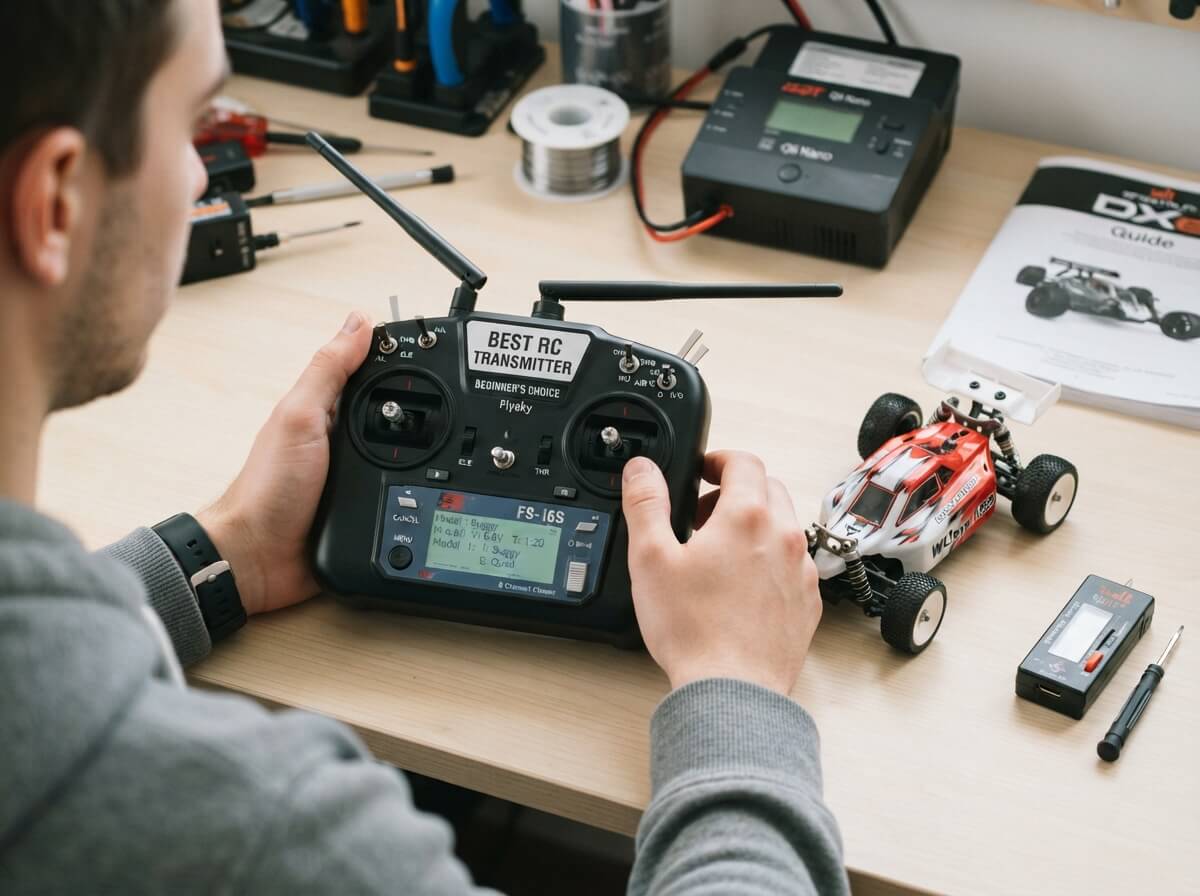
5 Best RC Transmitter for Beginners In 2026
So you want to get into RC cars, boats, or planes, and now you’re stuck staring at a wall of transmitters that all look the same. Two sticks, a bunch of switches, and a price tag that ranges from cheap to “wait, that’s more than my hobby budget.” It’s confusing, and honestly, most guides online just copy specs off Amazon without telling you what actually matters when you’re new to this.
This roundup fixes that. We’re going to walk through five remote transmitters that show up often in searches for the best RC transmitter for beginners, break down what each one is really built for, and be honest about where they shine and where they fall short. No sugar-coating, no fake hype, just plain talk from someone who’s spent real time behind these sticks.
A quick heads-up before we dive in: not every product on this list is a hobby-grade RC transmitter in the traditional sense. One entry, the Gem Remotes 7240, is actually a dock and boat lift controller, not a car, boat, or plane radio system. We’re including it because it shows up in search results tied to this topic and people genuinely want clarity on what it does versus what a true RC hobby transmitter does. Being upfront about that difference is part of giving you an honest review instead of stretching the truth to fill a list.
By the end of this article, you’ll know exactly which transmitter fits your budget, your skill level, and the type of RC vehicle you’re planning to run. Let’s get into it.
Why the Transmitter Matters More Than You Think
New hobbyists tend to focus all their attention on the car, boat, or plane itself and treat the transmitter like an afterthought. That’s a mistake. The transmitter is the thing your hands touch every single second you’re driving or flying. A cheap, laggy, or poorly laid-out radio can make even the best RC vehicle feel clunky and frustrating to control.
A good beginner transmitter gives you smooth throttle response, a stick layout that feels natural, enough channels for the type of vehicle you’re running, and a signal that doesn’t cut out the moment you get some distance from it. It also needs to be simple enough that you’re not digging through forty menus just to adjust steering sensitivity.
Range, channel count, gyro support, and programming options are the main things separating a basic radio from a hobby-grade one. We’ll explain all of that in plain terms as we go through each product, so don’t worry if none of that means much to you yet.
Quick Snapshot Comparison
| Product | Best For | Channels | Approx. Range |
|---|---|---|---|
| Gem Remotes 7240 | Boat lift and dock lift control (not a hobby RC transmitter) | 3 buttons | Around 300-500 ft (line of sight, RF) |
| Radiolink RC6GS V3 | RC cars, crawlers, drifting, boats | 7 | Up to 600m in open areas |
| Radiolink RC4GS V3 | RC crawlers, bashers, buggies | 5 (6-channel receiver) | Up to 400m in open areas |
| Radiolink RC6GS V3 (Gyro/Boat combo) | RC cars and boats needing gyro stability | 7 | Up to 600m in open areas |
| FLYSKY FS-i6X | Planes, drones, cars, and boats | 6 (expandable to 10) | Several hundred meters, AFHDS 2A |
Now let’s break each one down in detail.
1. Gem Remotes 7240 Transmitter: 3 Button Remote Wireless Dock Lift Control
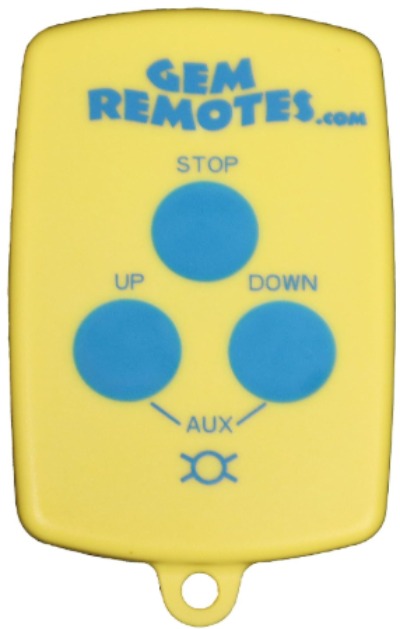
Brand: DOCK SOLUTIONS
Let’s clear this up right away: the Gem Remotes 7240 is not a car, boat, or plane RC transmitter. It’s a wireless remote built to raise, lower, and stop a boat lift or dock lift system. If you landed here searching for a beginner radio to drive a crawler or fly a plane, this isn’t your product. But since it keeps popping up next to hobby RC gear in search results, it deserves an honest explanation so you don’t buy the wrong thing by accident.
What It Actually Does
The 7240 is a compact, three-button transmitter designed to pair with Gem brand lift control boxes made after a certain point in their production run. Press one button to raise your lift, another to lower it, and the third to stop it mid-motion. That’s the entire function. There’s no throttle stick, no steering wheel, no channels to program for speed curves or dual rates, because it was never built for that kind of control.
Key Features Explained Simply
- Three dedicated buttons: Up, down, and stop. No learning curve at all.
- Water-resistant housing: Since it’s meant to be used around docks and marinas, it’s built to handle splashes and damp hands.
- Floating design: Drop it in the water by accident, and it stays on the surface instead of sinking to the bottom of the lake.
- Simple pairing process: A short learn-mode sequence links the remote to your existing lift control box in a matter of seconds.
- Long operating range: You can trigger your lift from a good distance away, which is handy if you’re pulling up to the dock and want the lift ready before you arrive.
Real-Life Usage Insight
Boat owners typically buy this as a spare or replacement remote after losing the original or wearing it out from years near saltwater and sun exposure. It’s a functional, no-frills tool for a specific marine job, not a toy and not a hobby radio.
Pros
- Dead simple to use, zero setup headaches beyond initial pairing
- Waterproof housing that holds up well near water
- Floats if dropped, so you won’t lose it in the lake
- Affordable compared to buying a whole new lift control box
Cons
- Not compatible with RC cars, planes, boats, or drones in any hobby sense
- Only works with specific Gem lift control boxes
- Extremely limited function since it only handles up, down, and stop
- Easy to confuse with actual RC transmitters when shopping online
Performance and Ease of Use
For its actual job, this thing performs fine. Signal reliability is solid at typical dock distances, and the buttons respond instantly. But judged as an RC transmitter, it obviously scores a zero since it wasn’t designed to be one.
Value for Money
If you own a Gem lift system and need a replacement remote, this is a reasonably priced option. If you’re shopping for your first RC transmitter, skip this entirely and look at the next four products instead.
2. Radiolink RC6GS V3 7CH RC Transmitter with R7FG Waterproof Receiver
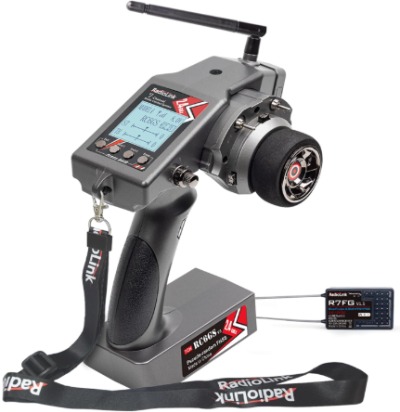
Now we’re getting into actual hobby-grade RC transmitters, and this one is a strong pick for anyone stepping into cars, crawlers, or boats.
Product Description
The RC6GS V3 is a 7-channel surface radio built by Radiolink, a brand that’s earned a solid reputation in the RC car and boat world. It comes bundled with the R7FG receiver, which has a built-in gyro and supports real-time telemetry. That means the transmitter screen can show you live battery voltage and signal strength while you’re driving, a feature that’s normally reserved for pricier setups.
Best Use Cases
This transmitter fits crawlers, drift cars, bashers, tanks, and boats. The 7-channel layout gives you enough room to run mixing functions for twin-motor vehicles like tanks or four-wheel steering rigs, plus extra switches for things like cruise control on crawlers tackling steep terrain.
Key Features Explained Simply
- 7 channels: More room to assign functions like gyro sensitivity, dual rate, or cruise control compared to a basic 3 or 4-channel radio.
- Built-in gyro receiver (R7FG): Keeps your car tracking straight, which is a lifesaver for drift cars and high-speed bashers that tend to fishtail.
- Real-time telemetry: The screen shows battery voltage and signal quality live, so you know when it’s time to swap batteries before your car dies mid-run.
- 30-model memory: You can save settings for up to 30 different vehicles, so switching between your crawler and your drift car doesn’t mean reprogramming from scratch every time.
- Long control range: Rated up to roughly 600 meters in open, interference-free areas, which is far more than a beginner will typically need but nice to have as a safety margin.
- Dual programmable mix control: Handy for twin-engine boats or tank-style vehicles where two motors need to work together.
Real-Life Usage Insight
Crawler drivers appreciate the cruise control switch when descending steep obstacles, since it takes some of the throttle guesswork out of technical terrain. Drift and on-road drivers lean on the built-in gyro to keep the back end from stepping out too aggressively during fast corners, which shortens the learning curve considerably.
Pros
- Gyro-equipped receiver adds real stability for new drivers
- Telemetry keeps you informed about battery health in real time
- Generous channel count for a beginner-friendly price point
- Works across a wide range of vehicle types: crawlers, cars, boats, tanks
- Firmware can be updated over USB, so the radio doesn’t become outdated
Cons
- The menu system takes a short adjustment period since it’s not as intuitive as some flagship radios
- Screen resolution and interface look a bit dated compared to touchscreen competitors
- Runs on 6 AA batteries or a 2S-4S LiPo, so you’ll need to plan your power source
Performance Discussion
Signal stability is a strong point here thanks to the FHSS frequency hopping tech, which keeps interference at bay even in areas where several other RC users are running gear nearby. The gyro function genuinely smooths out steering behavior, which is a big deal for someone who hasn’t developed fine throttle and steering control yet.
Ease of Use
Basic driving functions work right out of the box with almost no setup. Diving into the advanced menu for dual rates, mixing, or telemetry alarms takes a bit of reading through the manual, but nothing here requires an engineering degree.
Value for Money
Given the gyro receiver, telemetry, and 7-channel flexibility bundled together, this transmitter punches above its price bracket. It’s a smart pick for a beginner who plans to grow into more advanced RC vehicles down the road instead of outgrowing their radio in a few months.
3. Radiolink RC4GS V3 5CH 2.4G RC Transmitter with R6FG Gyro Receiver
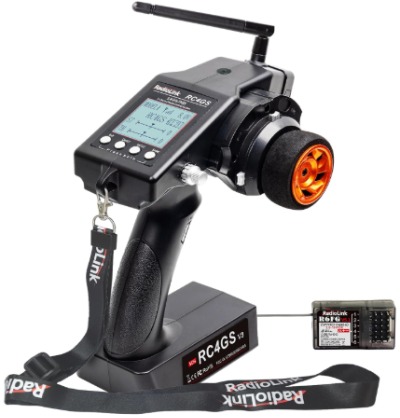
This is the slightly more compact, budget-friendly sibling of the RC6GS V3, and it’s a great starting point if you’re not ready to spend extra for two additional channels you might not use right away.
Product Description
The RC4GS V3 is a 5-channel transmitter paired with the R6FG receiver, which also has a built-in gyro. It’s aimed squarely at crawlers, bashers, buggies, and boats, and it shares a lot of the same core technology as its 7-channel sibling, just trimmed down to keep the cost lower.
Best Use Cases
This radio is a natural fit for someone starting out with a single crawler or basher and not planning to run twin-motor tanks or complex FPV-linked setups just yet. It also works well for RC boats that need stable, straight-line tracking.
Key Features Explained Simply
- 5 channels with a 6-channel receiver: Enough room for steering, throttle, and a few extra switches for things like dual rate or gyro sensitivity.
- Built-in gyro (R6FG): Smooths out steering input and helps prevent skidding, especially useful on loose dirt or gravel.
- Timer function: Great for practicing laps or timed runs if you get into casual racing later.
- One-switch EPA and dual-rate access: Quickly change how far your servos travel or how sensitive your steering feels without digging through menus mid-run.
- DSC simulator port: Lets you plug into RC driving simulator software, which is a genuinely useful way for total beginners to practice steering and throttle control without risking a real crash.
- 30-model memory storage: Save presets for multiple vehicles even though this is the more budget-focused model.
Real-Life Usage Insight
New crawler drivers often use the simulator port to get comfortable with stick control before ever touching a real vehicle, which cuts down on early crashes and broken parts. The gyro receiver earns its keep on loose surfaces where an inexperienced driver would otherwise be constantly correcting oversteer.
Pros
- Lower price point than the 7-channel version while keeping the gyro receiver
- Simulator compatibility is a genuinely smart tool for absolute beginners
- Lightweight, comfortable grip for longer driving sessions
- Reliable FHSS signal technology shared with Radiolink’s higher-end radios
Cons
- Fewer channels means less room to grow into complex multi-motor setups
- Range tops out around 400 meters, which is plenty for most beginners but noticeably less than the 6-channel version
- Some users find the trigger tension a bit stiff until it’s broken in
Performance Discussion
The 12-millisecond response time keeps input lag low, which matters more than people expect when you’re first learning to react to a car sliding or overcorrecting. The gyro does a solid job keeping crawlers tracking straight on uneven terrain.
Ease of Use
Out of the box, this is about as beginner-friendly as hobby transmitters get. The core driving functions need no setup, and the one-button access to EPA and dual-rate settings means you’re not stuck memorizing menu trees just to tweak sensitivity.
Value for Money
For someone who wants a real hobby-grade radio without paying for channels they won’t use yet, this is one of the smarter entry points on this list. It leaves room to grow without demanding a big upfront investment.
4. Radiolink RC6GS V3 7CH Transmitter and Gyro Receiver R7FG for RC Car and Boat
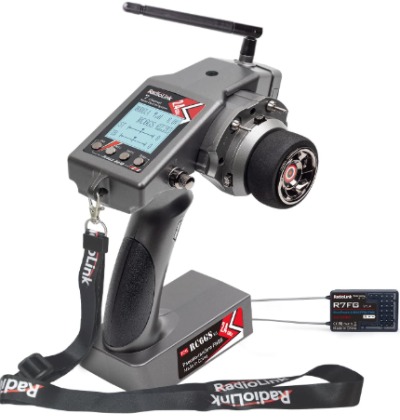
This listing is closely related to product two above, built around the same RC6GS V3 transmitter but bundled and marketed with a stronger emphasis on boat compatibility alongside car and crawler use. Since so many beginners search separately for “RC car transmitter” and “RC boat transmitter,” it’s worth covering the boat-focused angle on its own.
Product Description
Same core hardware as the standard RC6GS V3: a 7-channel 2.4GHz transmitter with the R7FG gyro and telemetry receiver. The difference here is the packaging and marketing lean toward drivers who split their time between land vehicles and RC boats.
Best Use Cases
If you’re planning to run both a crawler and a small RC boat with a single transmitter instead of buying two separate radios, this bundle makes a lot of sense. The dual-motor mixing feature is especially useful for twin-engine boats that need synchronized throttle control.
Key Features Explained Simply
- Dual-engine mix control: Lets you run twin-motor boats smoothly by mixing two channels together under one switch.
- Telemetry voltage alerts: Especially valuable on the water, where losing track of battery level can mean a dead boat drifting away from shore.
- Water-resistant receiver: The R7FG holds up better around splashes and spray than a standard indoor-only receiver would.
- 30-model storage: Keep your boat and your crawler settings both saved without needing separate transmitters.
- Long range signal: Useful on open water where you might drift further from the shoreline than expected.
Real-Life Usage Insight
Boat hobbyists like the low-voltage alarm because a dead battery on the water is a bigger hassle than a dead battery on land. Being alerted before the motor cuts out gives enough time to steer back to shore safely.
Pros
- One transmitter covers both land and water vehicles
- Water-resistant receiver reduces the risk of a ruined session from spray
- Voltage telemetry adds a real safety margin on the water
- Shares the same reliable FHSS signal tech as the standard RC6GS V3
Cons
- Still requires care around fully submerging the transmitter itself, since only the receiver is rated water-resistant
- Slightly more than budget-focused single-purpose radios
- Learning to balance settings between a car profile and a boat profile takes a little practice
Performance Discussion
Performance mirrors the standard RC6GS V3 since the transmitter hardware is identical. Where this shines is the versatility of running two very different vehicle types without needing a second radio in your bag.
Ease of Use
If you’ve already got experience with the standard RC6GS V3, switching to boat mode is mostly a matter of loading the right saved profile. First-timers will want to spend a little extra time in the manual to understand mix control setup for twin motors.
Value for Money
For someone who wants one radio to handle both a crawler and a boat, this bundle saves money compared to buying two separate beginner transmitters. It’s a smart pick if your RC interests are already branching in two directions.
5. FLYSKY FS-i6X 6-10CH Transmitter with FS-iA6B Receiver
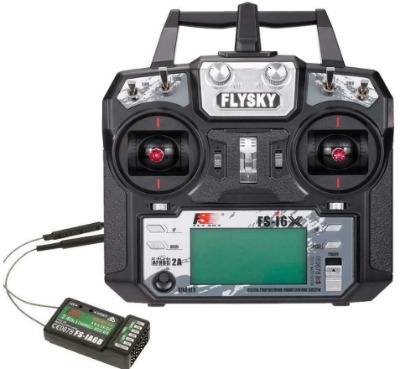
The FLYSKY FS-i6X takes a different lane from the Radiolink options above. It’s less focused on cars and crawlers and more of a flexible all-rounder that beginners flying planes, drones, or running RC boats tend to gravitate toward.
Product Description
The FS-i6X is a 2.4GHz transmitter using FLYSKY’s AFHDS 2A protocol, paired with the FS-iA6B receiver. It ships as a 6-channel setup by default but can be expanded up to 10 channels if you swap to a higher channel receiver like the iA10B. That flexibility makes it a favorite among beginners who aren’t totally sure yet which direction their hobby will grow.
Best Use Cases
This radio works well for fixed-wing planes, gliders, small helicopters, quadcopters, and it can also handle RC cars and boats. If you’re not sure yet if you’ll end up flying or driving, this is one of the more adaptable starter options out there.
Key Features Explained Simply
- Expandable channel count: Starts at 6 but can grow to 10 if your projects get more complex later on.
- AFHDS 2A frequency hopping: A reliable anti-interference system that keeps the signal steady even with other 2.4GHz devices nearby.
- i-BUS support: Lets a single cable carry data for multiple channels instead of running a tangle of separate wires, which simplifies wiring on drones and planes.
- LCD screen: Displays channel values, battery voltage, and settings clearly, even for someone unfamiliar with RC radio menus.
- Model memory storage: Save multiple aircraft or vehicle profiles so switching projects doesn’t mean starting configuration from zero.
- Lightweight ergonomic grip: Comfortable for longer flying or driving sessions without hand fatigue.
Real-Life Usage Insight
New pilots often start with the FS-i6X on a basic trainer plane or a small quadcopter because the stick tension and layout feel approachable rather than overwhelming. Since it also supports cars and boats, some hobbyists use it as a single “do it all” radio while they figure out which corner of the hobby they enjoy most.
Pros
- Genuinely versatile across planes, drones, cars, and boats
- AFHDS 2A protocol offers dependable, low-interference performance
- Expandable channel count means it won’t be outgrown quickly
- Simple LCD interface that’s easy to read at a glance
- Strong community support and widely available tutorials online, since this radio has been popular with beginners for a long stretch
Cons
- Menu navigation involves a bit of a learning curve for programming mixes and advanced functions
- Default 6-channel receiver limits you until you invest in the 10-channel version
- No touchscreen or telemetry as advanced as some newer competitors offer
Performance Discussion
Signal reliability is one of this radio’s biggest strengths. The frequency hopping tech does a good job avoiding dropouts, even in busy flying fields or crowded RC club environments where a lot of other 2.4GHz gear is active. Response feels snappy on the stick, without noticeable lag between input and reaction.
Ease of Use
Basic flying or driving functions are accessible almost immediately. Where beginners tend to slow down is in the deeper programming menu, things like setting flight modes, adjusting expo, or configuring failsafe behavior. None of it is overly hard, it just takes a short YouTube tutorial or manual read-through the first time around.
Value for Money
Given how many different RC categories this radio supports, it’s one of the most cost-effective options for someone who hasn’t fully committed to just one side of the hobby yet. Instead of buying separate radios for a plane and a car, this covers both reasonably well.
Comparison Insights: How These Transmitters Stack Up Against Each Other
Now that we’ve gone through each product individually, let’s line them up side by side in terms that actually matter to a new hobbyist.
For pure car and crawler use, the Radiolink RC4GS V3 and RC6GS V3 both edge out the FLYSKY FS-i6X because they’re purpose-built for surface vehicles, with gyro receivers baked right in. The FLYSKY radio can technically drive a car, but it wasn’t designed with crawler-specific features like cruise control switches.
For flying planes or drones, the FS-i6X takes the clear lead since the Radiolink radios in this list are surface-only transmitters and won’t work for aircraft at all.
For boats, both the RC6GS V3 (standard and boat-focused bundle) and the FS-i6X can handle the job, but the Radiolink option’s water-resistant receiver and voltage telemetry give it a practical edge for marine use.
For budget-conscious beginners, the RC4GS V3 is the lightest hit to your wallet while still including a genuine gyro receiver, which is honestly the feature that helps new drivers the most.
For anyone still deciding what direction to take their hobby, the FS-i6X offers the widest net since it spans planes, drones, cars, and boats under one radio.
And again, the Gem Remotes 7240 isn’t part of this comparison in any meaningful sense, since it’s a completely different category of product built for lift systems rather than hobby RC control.
Buying Guide: What to Actually Look For
If none of the five products above feel like a perfect match, here’s what to keep in mind while shopping around on your own.
Channel Count
More channels give you more room to add features like gyro sensitivity switches, dual rates, or mixing for twin-motor vehicles. A beginner running a simple car might only need 3 or 4 channels, but going with 5 to 7 gives you room to grow without needing a whole new radio down the line.
Frequency and Interference Resistance
Look for 2.4GHz radios using frequency hopping tech like FHSS or AFHDS 2A. These systems automatically jump between frequencies to avoid interference from other RC users, WiFi routers, and other wireless devices nearby.
Gyro Support
A gyro-equipped receiver helps keep vehicles tracking straight and reduces oversteer, which is a genuinely big help for someone still building muscle memory with throttle and steering input.
Range
Most beginners don’t need anything close to the maximum rated range of these transmitters, but a larger buffer means more consistent signal quality even at moderate distances, and it protects against dropouts in areas with some interference.
Ergonomics
Stick tension, grip shape, and overall weight matter more than people expect once you’re driving or flying for extended sessions. A radio that feels awkward in your hands will tire you out faster and hurt your control precision.
Simulator Compatibility
If a radio supports a DSC port for simulator software, take advantage of it. Practicing stick control in a simulator before risking a real crash is one of the smartest ways for a new hobbyist to build confidence.
Battery Options
Some transmitters run on AA batteries, others support LiPo packs. Think about which is more convenient for your setup, especially if you’re already running LiPo batteries for your vehicle and want to reduce the number of battery types you keep on hand.
Who Should Buy These Products
New crawler and basher drivers should lean toward the Radiolink RC4GS V3 or RC6GS V3, since the built-in gyro receivers genuinely make early driving sessions less frustrating.
Aspiring pilots or drone hobbyists should look at the FLYSKY FS-i6X, since it’s the only true aircraft-capable radio on this list and has a long track record with the beginner flying community.
Mixed hobbyists who plan to run both land vehicles and boats, or who haven’t decided which RC category they’ll enjoy most, benefit the most from the FS-i6X’s flexibility or the RC6GS V3’s car-and-boat bundle.
Budget-focused beginners who still want a real hobby-grade experience should start with the RC4GS V3, since it delivers the core gyro and telemetry benefits at a lower entry cost.
Boat lift owners, not RC hobbyists at all, are the only audience that should actually consider the Gem Remotes 7240, and only if they already own a compatible Gem lift system.
Common Mistakes Beginners Make When Buying a Transmitter
Buying based on channel count alone. More channels sound impressive, but if you’re only running a basic car, you don’t need 10 channels sitting unused. Match the channel count to your actual vehicle plans instead of chasing the biggest number.
Ignoring gyro support. New drivers often skip past gyro-equipped receivers to save a few dollars, then wonder why their car keeps fishtailing. That small feature makes a real difference in the learning curve.
Forgetting about battery type. Some radios need AA batteries, others want LiPo packs. Not checking this ahead of time leads to an annoying surprise once the box arrives and you realize you need to buy extra batteries just to turn it on.
Assuming all transmitters work with all vehicles. Surface transmitters built for cars and boats won’t fly a plane or drone, and aircraft radios aren’t built with crawler-specific features like cruise control. Match the radio type to your actual hobby.
Overlooking simulator support. This is an easy way to practice control skills risk-free, and skipping it means learning entirely through trial and error, usually with a few broken parts along the way.
Confusing lookalike listings. As we saw with the Gem Remotes 7240, not every product that shows up under “RC transmitter” searches is actually built for hobby vehicles. Always read the description carefully before checking out.
Skipping the manual entirely. Beginner transmitters are more approachable than advanced ones, but they still have menus worth learning. A ten-minute read through the manual saves a lot of confusion later.
Final Verdict
For most people searching for the best RC transmitter for beginners, the Radiolink RC4GS V3 stands out as the smartest overall starting point. It combines a genuine gyro receiver, simulator compatibility, and a manageable price tag, giving new drivers real support while they build confidence behind the sticks.
If your budget allows a bit more room and you want extra channels for future projects like twin-motor tanks or RC boats, the Radiolink RC6GS V3 is a natural step up, especially the car-and-boat bundle if you’re planning to split time between land and water.
For anyone drawn to flying rather than driving, the FLYSKY FS-i6X remains one of the most trusted entry points into planes, drones, and gliders, backed by years of community tutorials and a genuinely expandable channel system.
As for the Gem Remotes 7240, it’s a solid product in its own right, but only for boat lift owners needing a replacement remote. It has no place in an RC hobby shopping cart and shouldn’t be confused with the four true hobby transmitters covered here.
Whatever direction your hobby takes, the biggest lesson from this roundup is simple: match the transmitter to your actual vehicle type, don’t overspend on features you won’t use yet, and don’t underestimate how much a gyro receiver or simulator port can smooth out those early, wobbly first weeks of driving or flying.
2 Comments