How Much Is a Large RC Plane?
So you want a big RC plane. Maybe you saw one flying at a local park and your jaw dropped. Maybe you watched a video online and thought, “I need that in my life.” Either way, you’re here for one reason: you want to know how much it costs to own one.
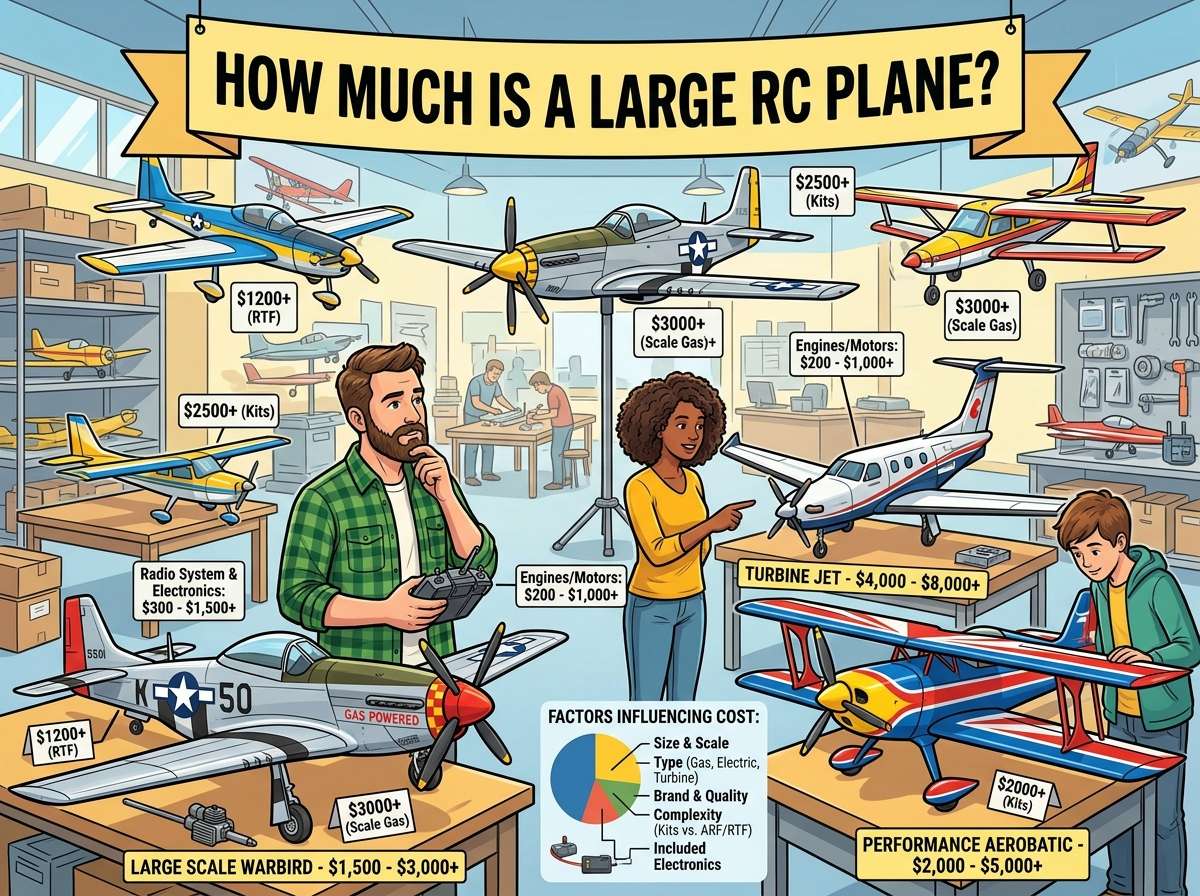
The short answer is that large RC planes can cost anywhere from 150 dollars to well over 2,000 dollars. But that answer alone won’t help you much. The real cost depends on a bunch of things like size, materials, power source, and how ready the plane is to fly out of the box.
In this guide, we’ll break down every piece of the puzzle. By the end, you’ll know exactly what to expect to pay, what drives the price up or down, and how to avoid wasting money on the wrong plane. Let’s dig in.
What Counts as a “Large” RC Plane?
Before we talk numbers, let’s get clear on size. In the RC hobby world, plane size is usually measured by wingspan, not length. A large RC plane typically has a wingspan of 60 inches or more. Some giant scale models stretch past 100 inches, which is over 8 feet wide.
To put this in perspective:
- Small park flyers: under 30 inches
- Medium trainer planes: 30 to 60 inches
- Large RC planes: 60 inches and up
- Giant scale models: 80 inches or more
The bigger the plane, the more it costs to build, ship, and fly. Bigger wings need stronger frames, bigger motors, bigger batteries, and more powerful radio gear. Every part scales up together, and so does the price tag.
Average Price Range for a Large RC Plane
Let’s cut straight to the numbers you came here for.
Budget large RC planes: 150 to 400 dollars These are usually made from foam, come as almost-ready-to-fly kits, and use basic electronics. They’re great for hobbyists who want size without spending a fortune.
Mid-range large RC planes: 400 to 900 dollars This range includes balsa wood or fiberglass builds, better motors, and more durable parts. Many trainer and sport planes fall here.
High-end large RC planes: 900 to 2,000 dollars Expect premium materials, retractable landing gear, scale detailing, and powerful brushless motors. These planes fly smoother and last longer.
Giant scale and warbird replicas: 2,000 to 6,000 dollars or more These are built to look and fly like the real thing. Some hobbyists spend years building these from scratch, and the finished product can rival a small aircraft in complexity.
Keep in mind that these numbers cover just the plane itself. We’ll talk about extra costs in a bit, because they add up fast.
What Affects the Price of a Large RC Plane?
Plenty of factors push the price up or down. Here’s a look at the biggest ones.
1. Build Material
Foam planes are the cheapest option. Foam is light, easy to mold, and cheap to produce, so manufacturers can sell foam planes at lower prices. The downside is that foam dents and cracks more easily.
Balsa wood planes cost more because balsa is a natural material that needs skilled hands to cut, glue, and shape. These planes are lighter and stronger for their size, which makes them fly better in wind.
Fiberglass and carbon fiber planes sit at the top of the price ladder. These materials are tough, light, and built to survive hard landings. Racing drones and competition planes often use carbon fiber for this reason.
2. Ready-to-Fly vs. Kit Builds
There are three common ways large RC planes are sold:
Ready-to-Fly (RTF): Everything comes included, sometimes even the radio controller and battery. These cost more upfront but save you time and hassle.
Almost-Ready-to-Fly (ARF): The plane is mostly built, but you still need to add the motor, battery, and radio gear. This option balances cost and convenience.
Kit or “build from scratch”: You get raw materials and instructions. This is the cheapest route price-wise, but it demands skill, patience, and extra tools. It’s a labor of love more than a quick purchase.
If you’re new to the hobby, an RTF or ARF plane is usually the smarter path. Kits are fun once you know your way around a workshop.
3. Power System
Large RC planes run on either electric motors or gas/nitro engines.
Electric planes use brushless motors paired with lithium batteries. They’re quieter, cleaner, and easier to maintain. Prices for electric large planes usually land in the 200 to 1,200 dollar range.
Gas and nitro planes use small combustion engines, similar to tiny versions of real airplane engines. These planes tend to cost more because the engines themselves are pricier, and you’ll also need fuel, glow plugs, and other maintenance gear. Expect to pay 500 to 3,000 dollars or more for a solid gas-powered large plane.
4. Brand Reputation
Well-known brands charge a premium because they’ve built trust over time through consistent quality and support. Lesser-known brands might offer a similar-looking plane at a lower price, but the flight performance and durability can vary a lot. Sometimes it pays to spend a little extra on a trusted name.
5. Scale Detail
Some large RC planes are built to mimic real aircraft down to the rivets and paint scheme. These scale models take more time to produce and often include extras like retractable landing gear, working flaps, and LED lights. All that detail adds cost.
Hidden Costs You Need to Budget For
This is where a lot of beginners get caught off guard. The plane itself is just one part of the total spend. Here’s what else you’ll likely need.
Transmitter and Receiver
Unless you’re buying a full RTF bundle, you’ll need a radio transmitter and receiver to control the plane. A decent beginner transmitter runs from 60 to 200 dollars. More advanced ones with extra channels and programming features can cost 300 dollars or more.
Batteries and Chargers
Electric large planes rely on lithium polymer batteries, known as LiPo batteries. A single large battery can cost 40 to 150 dollars, depending on capacity. You’ll want at least two batteries so you can fly one while the other charges. Add a good charger too, since cheap chargers can damage your batteries or even cause fires if mishandled.
Propellers and Spare Parts
Propellers break. It’s just part of the hobby, especially when you’re learning. Keep a few spares on hand, usually priced between 5 and 20 dollars each.
Tools and Field Gear
You’ll need basic tools like screwdrivers, glue, a battery checker, and a field box to carry everything to the flying spot. This adds another 50 to 150 dollars to your setup.
Insurance and Club Fees
Many local flying clubs require members to carry liability insurance. Some clubs bundle this into membership fees, which can range from 50 to 150 dollars a year. It’s a small price for peace of mind, especially with a large plane that carries real weight and speed.
Cost Breakdown Example
Let’s walk through a real-world example so you can see how the numbers stack up.
Say you want a 70-inch electric trainer plane, ARF style.
- Plane (ARF kit): 350 dollars
- Motor and ESC combo: 100 dollars
- Two LiPo batteries: 160 dollars
- Charger: 60 dollars
- Transmitter and receiver: 150 dollars
- Propellers (spare set): 20 dollars
- Field box and tools: 80 dollars
Total: around 920 dollars
That might sound like a lot, but remember this is a one-time setup cost. After this, your ongoing expenses are mostly batteries, propellers, and the occasional repair.
Cheaper Ways to Get Into Large RC Planes
If your budget is tight, there are still smart ways to enjoy this hobby without breaking the bank.
Buy used gear. Local hobby clubs and online marketplaces often have gently used planes for sale at half the original price. Just inspect the frame and electronics carefully before buying.
Start with foam. Foam planes cost less and are more forgiving during crashes. They’re a great way to build flying skills before investing in pricier materials.
Buy bundles. Some retailers sell starter bundles that include the plane, transmitter, battery, and charger all in one package. Bundles usually save you money compared to buying each item separately.
Join a club first. Some flying clubs let new members try out planes owned by other hobbyists before buying their own. This helps you figure out what type of plane fits your style before spending a dime.
Is a Large RC Plane Worth the Cost?
For many hobbyists, yes. Large planes fly more smoothly in wind compared to small park flyers, since their size and weight help them stay stable in gusty conditions. They also tend to be easier to see from a distance, which matters a lot once your plane climbs high into the sky.
On the flip side, large planes need more space to fly safely. You can’t just launch one from your backyard unless you have a big open field nearby. Local flying clubs usually have dedicated runways and open airspace, which makes them the best spot for large plane hobbyists.
If you’re serious about staying in this hobby for years, spending a bit more on a quality large plane often pays off. Cheaper planes can work fine for casual fun, but they may not hold up as well over time.
Tips Before You Buy
Here are a few quick tips to keep in mind as you shop around.
Check the wingspan and weight together. A large wingspan with heavy materials might need a stronger motor than advertised. Always check the recommended battery and motor size listed by the manufacturer.
Read reviews from real hobbyists. Look for reviews that mention flight stability, crash durability, and ease of assembly. Marketing photos rarely tell the full story.
Think about storage and transport. Large planes take up more space at home and in your car. Some models come with detachable wings to make storage easier, which is worth considering if space is tight.
Factor in skill level. Beginners should look for planes labeled as trainers, since these often include features like self-leveling flight modes that help new pilots avoid crashes.
Don’t skip insurance. A large plane moving at speed can cause real damage if something goes wrong. It’s better to be covered than sorry.
Frequently Asked Questions
Can I build my own large RC plane to save money? Yes, building from a kit can save money on labor costs since manufacturers charge extra for assembly. But you’ll need tools, time, and some skill with woodworking or foam cutting. It’s a rewarding project if you enjoy building as much as flying.
Do large RC planes need special batteries? Most electric large planes use LiPo batteries with higher capacity than smaller planes. Always match the battery to the manufacturer’s recommendation to avoid overloading the motor or damaging the plane.
How long does a large RC plane last? With proper care, a well-built large plane can last for years. Crashes are the biggest threat to lifespan, so flying carefully and maintaining your gear goes a long way.
Is gas or electric better for a large RC plane? Electric is quieter, cleaner, and easier for beginners. Gas engines offer longer flight times and a more realistic sound, but they need more maintenance and knowledge to run properly.
What’s the cheapest way to start flying large RC planes? Look for foam ARF kits paired with a basic transmitter and a couple of batteries. This combo can get you flying for under 500 dollars if you shop smart and watch for sales.
Final Thoughts
Large RC planes can cost anywhere from a couple hundred dollars for a basic foam trainer to several thousand dollars for a giant scale masterpiece. The price depends heavily on materials, power system, brand, and how much assembly work is already done for you.
Before you buy, think about your skill level, your budget, and how much time you want to spend on setup versus flying. A clear budget plan, including hidden costs like batteries and transmitters, will save you from surprises down the road.
At the end of the day, this hobby rewards patience and research. Take your time, compare a few models, and talk to other hobbyists before making your first big purchase. Once you find the right plane for your budget and skill level, there’s nothing quite like watching your own large RC plane soar across an open sky.