
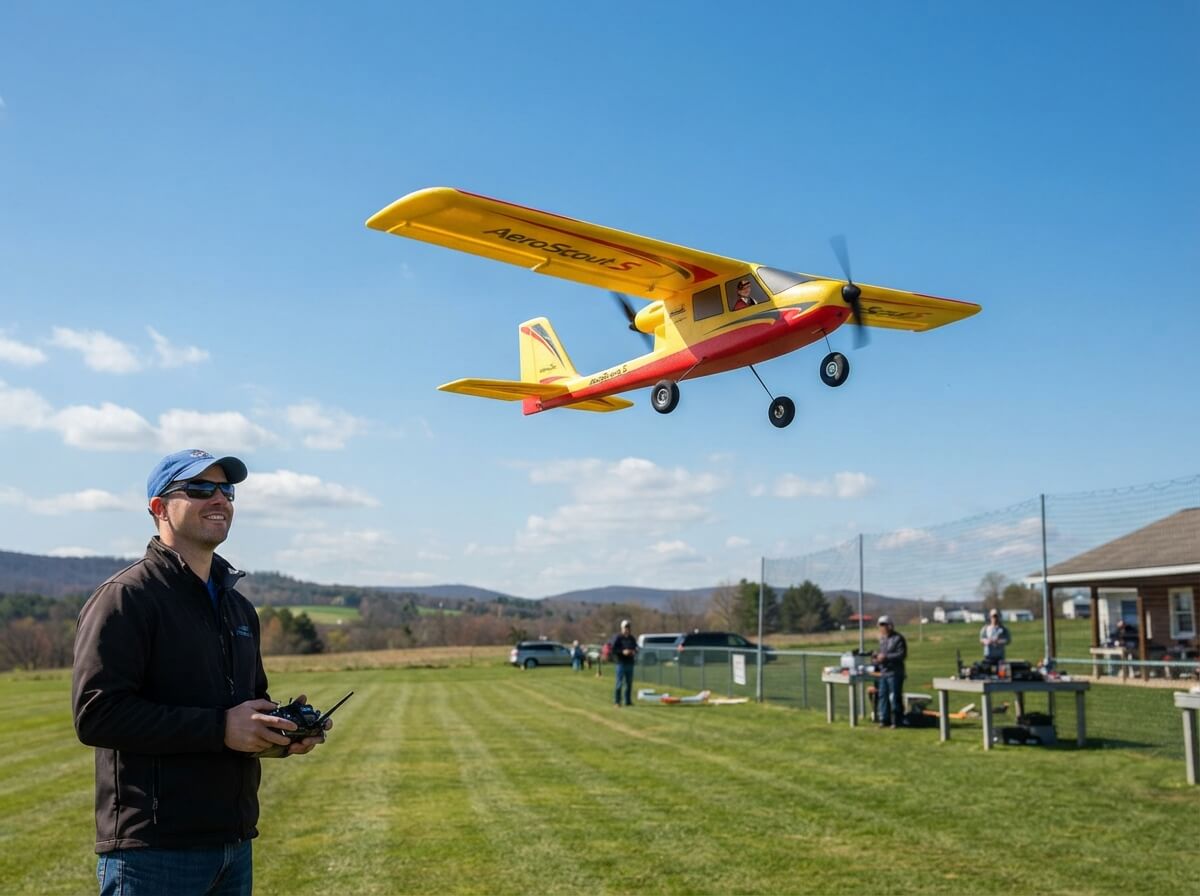
5 Best RC Trainer Plane In 2026
Finding the best RC trainer plane can feel like a big job when you are new to the hobby. Every box says “easy to fly.” Every listing shows a happy pilot. Prices jump from cheap to serious money. So how do you know which beginner RC plane deserves your cash?
This roundup keeps it simple. It looks at five popular trainer airplanes: two versions of the HobbyZone Carbon Cub S 2, the tiny HobbyZone Apprentice STOL S 700, the big E-flite Apprentice STS 1.5m, and a budget-friendly Volantex 4CH glider. Each one takes a different path to the same goal, which is getting you off the ground and back down in one piece.
A quick note on how this review works. The details come from maker specs, store listings, and the kind of feedback pilots commonly share. Nothing here claims hands-on ownership. Prices also move around a lot, so this article talks about price levels instead of exact numbers. Check the current price before you buy.
What Makes a Good RC Trainer Plane?
A good trainer plane does a few simple things well.
- It flies slowly and stays stable. A slow plane gives your brain time to react.
- It forgives mistakes. Beginners crash. A tough foam body and cheap spare parts turn a crash into a small bump instead of a big loss.
- It gives you help in the air. Stability tech, like a gyro or flight controller, can level the wings when you let go of the sticks.
- It comes with what you need. Missing parts slow you down. A plane that needs a radio, battery, and charger bought separately costs more than the sticker shows.
- It lets you grow. A plane that only does one trick gets boring fast. The best trainers let you turn the training wheels down as you improve.
SAFE Technology in Plain Words
Three of the five planes use SAFE, which stands for Sensor Assisted Flight Envelope. Think of it as a helper inside the plane. Sensors watch how the plane tilts and climbs. In the gentlest mode, the plane limits how far it can bank or pitch. If you let go of the sticks, it levels itself.
These SAFE planes let you switch between Beginner, Intermediate, and Experienced modes with a flip of a switch, and a Panic Recovery button helps stop a loss of control. That means one plane can stay useful long after your first week.
Quick Comparison Table
| Plane | Wingspan | Best For | What You Still Need |
|---|---|---|---|
| Carbon Cub S 2 1.3m RTF Basic | 1.3m | Rough fields, grass, room to grow | Battery and charger |
| Carbon Cub S 2 1.3m BNF Basic | 1.3m | Pilots with a compatible radio | Transmitter, battery, charger |
| Apprentice STOL S 700 RTF | 700mm | Small spaces, true all-in-one start | Nothing |
| Apprentice STS 1.5m RTF Basic | 1.5m | Club fields, instructor lessons | Battery and charger |
| Volantex 4CH Glider | About 600mm | Tight budgets, light-weight fun | Nothing (transmitter batteries may be included) |
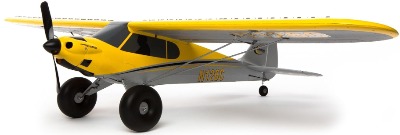
1. HobbyZone Carbon Cub S 2 1.3m RTF Basic (HBZ320001)
Product Description
The Carbon Cub S 2 is a scale-style trainer based on a modern take on the classic Super Cub. It has a bright, friendly look and a tough foam body. The airplane has a brushless motor, a telemetry-capable speed controller, and a factory-installed flight controller, receiver, and servos. It also has taildragger landing gear with oversized tundra-style tires and a steerable tailwheel.
“RTF Basic” means the plane comes with a transmitter. The box holds the plane, the installed electronics, a Spektrum DXS transmitter, and a manual. You still have to buy a 3S LiPo battery and a compatible charger. Keep that in mind when you compare prices.
Best Use Cases
This plane fits a pilot who wants one airplane for a long time. It works well for learning the basics and for practicing on grass, dirt, or gravel. It also suits people who want a bit of fun once the basics are easy, because it can do loops, rolls, and inverted flight in the right hands.
Key Features Explained Simply
- 1.3m wingspan. It is big enough to see easily in the sky, yet small enough to fit in a car.
- SAFE technology. The plane helps you level out, and you can turn the help down later.
- Three flight modes. Beginner mode holds you back, Intermediate gives you more freedom, and Experienced mode gives you full control.
- Panic Recovery. You press one button and the plane levels out. It is a lifesaver when you get confused about which way is up.
- Big tundra tires. They roll over bumpy ground without much fuss and keep the prop clear of the grass.
- Optional upgrades. You can add SAFE Plus GPS features like AutoLand, Virtual Fence, and Holding Pattern, plus a Landing Assist Sensor for smoother landings. You also can add floats and fly from water.
- Flight simulator support. You can practice on a computer before risking the real thing.
Real-Life Usage Insight
A typical first session goes like this. You charge a battery, bind nothing (it comes ready), and walk to an open field. You set the plane to Beginner mode, point it into the wind, and slowly add throttle. The tail comes up, the plane rolls, and it lifts off without a fight.
The taildragger layout deserves an honest note. Two wheels sit up front and one small wheel sits at the tail. On the ground, these planes can swing sideways if you use too much throttle or rudder too fast. It is a skill you learn in a few sessions, and grass helps because it slows the roll. A pilot who wants an easy, straight taxi might prefer a tricycle-gear plane like the Apprentice STS.
Battery size matters here. A 3S 1300mAh battery gives you a lively feel, while a 3S 2200mAh battery gives you more flight time. A retailer spec lists roughly five to seven minutes of flight time on a typical pack, and that number shrinks if you keep the throttle high. Plan for a few spare batteries, since short flights mean more downtime.
Pros and Cons
Pros
- Very friendly flying with SAFE help
- Great on rough or grassy fields
- Grows with your skills
- Transmitter included in the RTF Basic version
- Spare parts and upgrades are easy to find
Cons
- Battery and charger cost extra
- The taildragger takes practice on the ground
- Flight times can feel short with small batteries
- It costs more than small budget planes
Performance Discussion
In the air, the Carbon Cub S 2 feels calm. It flies slowly, turns in wide, easy arcs, and glides down without dropping like a rock. The brushless power system gives enough push for steady climbs. In Experienced mode, it wakes up. Loops and rolls come out clean, though it still flies like a scale trainer, not a race plane.
Wind is the main test. At 1.3m with a light foam body, it handles a breeze better than the small planes, but strong gusts will still push it around. Calm mornings and evenings are your best friends.
Ease of Use
Setup is quick. The plane arrives mostly pre-assembled with the drive system, servos, flight controller, and receiver already installed. You attach the wing and landing gear, fit the battery, and go. No glue or special tools are needed. The learning curve after that is gentle, since you can start in Beginner mode and move up when you feel ready.
Value for Money
This plane offers strong value if you plan to stick with the hobby. You pay more than you would for a tiny starter, and you must add a battery and charger. In return, you get a durable plane with real upgrade paths. For a serious beginner, it is a smart spend. For someone who just wants a quick weekend toy, it might be more than needed.
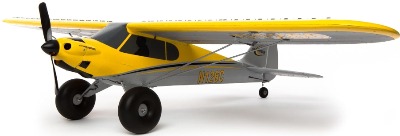
2. HobbyZone Carbon Cub S 2 1.3m BNF Basic with SAFE (HBZ32500, Yellow)
Product Description
This is the same Carbon Cub S 2 airframe in a Bind-N-Fly version. The idea is simple. You skip the transmitter and use your own. The box holds the plane with the motor, speed controller, servos, flight controller, and receiver installed, plus a manual. You need a full-range 6+ channel Spektrum DSMX or DSM2 compatible transmitter, a 3S 2200mAh LiPo battery, and a compatible charger. The trim is yellow and gray, and it looks great against green grass.
Best Use Cases
This version fits pilots who already own a compatible radio. It also suits people who move up from an older plane and want to use the same transmitter. Instructors and club members sometimes prefer it because they can set up the radio their own way and keep the same feel across planes.
Key Features Explained Simply
- Bind-N-Fly setup. You pair the plane’s receiver with your own radio. Pairing takes a few minutes once you know the steps.
- Same SAFE technology. You get the same helpful flight modes and Panic Recovery as the RTF version, as long as your radio assigns switches for them.
- Same tough EPO foam. It shrugs off small bumps and can be repaired with foam-safe glue.
- Same upgrade options. SAFE Plus and Landing Assist Sensor add-ons still work.
- Big wheels, scale looks. The proven Cub design carries over untouched.
Real-Life Usage Insight
Here is where a lot of new buyers trip. A BNF plane feels cheaper at first glance, and then the shopping cart grows. You need a radio, a battery, and a charger. If you already own a compatible Spektrum radio, the math works out nicely. If you do not, the total can pass the price of an RTF version, and you also have to set up switches for the flight modes.
For a first-time pilot who has zero gear, the RTF Basic version is the safer path. For a pilot with a radio on the shelf, the BNF version is a smart way to save cash.
Pros and Cons
Pros
- Lower entry price for people with a compatible radio
- Same friendly flying and rugged design as the RTF version
- Works with the radio you already know
- Room to grow with add-ons
Cons
- No transmitter, battery, or charger in the box
- Setup takes more effort for beginners
- Total cost can climb fast if you buy a new radio
- Wrong radio settings can cause confusing behavior
Performance Discussion
The performance matches the RTF version because the plane itself is the same. It has stable, slow, calm flight in Beginner mode and lively handling in Experienced mode. The main difference comes from your radio. A good radio with smooth sticks and well-chosen switches makes the plane feel even nicer. A poorly set up radio can make it feel odd, so take your time with the manual and check every control before takeoff.
Ease of Use
This one asks more from you. You bind the receiver, check that each control moves the right way, and set your flight-mode switch. None of it is hard, but a complete beginner might feel lost without help. A friend from a local club can make the process much smoother.
Value for Money
Value depends on what you own. With a compatible radio and a spare battery, this is a fine deal. Without them, it loses its edge. Add up the full cost before you decide.
3. HobbyZone Apprentice STOL S 700 RTF with AS3X/SAFE (HBZ6100)
Product Description
The Apprentice STOL S 700 is a small, bright trainer built for tight spaces. It is scaled down from the popular Apprentice 1.5m and 1.2m models and tuned for short takeoff and landing on typical grass surfaces. Its wingspan is 700mm, or about 27.5 inches, and it weighs roughly 157 grams with the recommended battery. Some listings also mention AS3X, which is Horizon Hobby’s stability tech, but SAFE is the main beginner helper here.
The biggest selling point is the box. It holds the plane, a 300mAh 2S LiPo battery, a USB-C charger, a Spektrum SLT6 transmitter with four AA batteries, and a RealFlight Trainer Edition trial key. The listing says nothing extra is needed to start.
Best Use Cases
This plane fits people with small yards, parks, or sports fields nearby. It suits kids who are old enough to handle a hobby-grade plane with adult help, and adults who want a low-stress first step. It also works as a “pocket-size” practice plane for experienced pilots.
Key Features Explained Simply
- Everything included. You open the box, charge the battery, and get flying. That saves a lot of shopping headaches.
- SAFE technology. Beginner, Intermediate, and Experienced modes are available, and a Panic Recovery button helps prevent crashes.
- STOL design. The plane can take off and land in short spaces on grass, which means you do not need a huge field.
- Steerable tailwheel and oversized tires. They help with rolling on uneven ground.
- Thumbscrew wing. The wing attaches with thumbscrews, so you can install and remove it easily. That helps a lot for carrying and quick repairs.
- USB-C charging. You can charge from many common power sources.
- Simulator key. The trial key lets you practice at home before flying outside.
Real-Life Usage Insight
Small planes feel different from big ones. The Apprentice STOL S 700 reacts faster to wind, and it also looks smaller in the sky. That means you must stay close. A good habit is to fly within a comfortable distance where you can still see which way the plane faces.
The wind limit is worth respecting. The maker says it performs well in winds up to about 5 mph. Anything stronger will push a plane this light. Early mornings tend to be your best window.
Battery life is short because the pack is small at 300mAh. Expect quick sessions, then a recharge break. Buying a second battery is a cheap way to double your fun.
Pros and Cons
Pros
- Truly ready to fly, with nothing else to buy
- Fits in small spaces and in a car with ease
- SAFE modes help beginners
- Simulator access included
- Tough EPO foam body
Cons
- Sensitive to wind because it is so light
- Short flight times on the small battery
- Included transmitter is basic compared with the Spektrum DXS
- Smaller size means it is harder to see at a distance
Performance Discussion
The plane flies slowly and gently in Beginner mode. It climbs at a gentle angle and turns in easy circles. Landings are short and controllable thanks to the STOL design. In Experienced mode, it can do loops, rolls, and inverted flying, so it does not become boring as your skills grow.
On breezy days, it can feel twitchy. That is normal for an ultra-micro plane, and it is the price you pay for the small size. In calm air, it is a joy.
Ease of Use
Ease of use is the top strength here. You do almost no assembly, and the manual guides you through a few simple steps. The included radio has enough switches for SAFE modes, which keeps things simple. A beginner with no gear and no club nearby will find this the least stressful starting point in the roundup.
Value for Money
Value is good, mainly because you spend once and you are ready. You do not need to hunt for a charger or radio. The small size and short flights mean you will probably buy extra batteries, but those cost little. If you want an all-in-one package for tight spaces, this plane makes sense.
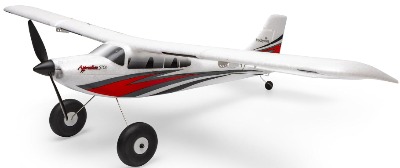
4. E-flite Apprentice STS 1.5m RTF Basic Smart Trainer with SAFE (EFL370001)
Product Description
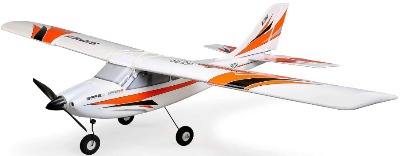
The Apprentice STS 1.5m is the big brother of the group. It has a 59-inch wingspan, which gives better visibility and helps it handle more wind while you learn at an RC club field. It is based on a long-loved trainer design, and STS stands for Smart Trainer with SAFE. The listing describes it as an official trainer of the Academy of Model Aeronautics and many clubs worldwide.
The box holds the plane, a brushless motor, a 30A telemetry-capable speed controller, servos, a flight controller, a receiver, and a remote. It needs a compatible LiPo battery and charger, plus AA batteries for the transmitter.
Best Use Cases
This plane is the classic choice for learning with an instructor at a flying field. It also suits club training programs and pilots who want a big, steady plane that is easy to see. If you like the idea of flying with help from experienced friends, this one fits well.
Key Features Explained Simply
- 1.5m wingspan. It looks large, flies slowly, and is easy to track in the sky.
- Tricycle landing gear. The wide-stance gear has a steerable nose wheel. That makes rolling in a straight line simple on a runway or flat grass.
- SAFE technology. Three flight modes and Panic Recovery help you recover from a mistake.
- SAFE Plus and Landing Assist options. These add-ons bring features like AutoLand and smoother landings.
- Big battery choices. A 3S 3200mAh battery is suggested for strong all-round performance, while a 3S 4000mAh battery can give longer flights of about 20 to 30 minutes or more.
- Simple assembly. No glue is needed.
- Optional floats. You can turn it into a water plane later.
Real-Life Usage Insight
At a flying field, this plane feels grown-up. It looks like a real trainer, and it acts like one. It flies with a steady, floaty feel that gives you time to think. Landings feel less scary than with smaller planes because the big wing keeps the speed low.
There is a trade-off. The plane is large, so you need space to store and carry it. A small apartment might struggle with the size. You also need a proper field. Flying a 1.5m plane in a tight park is not a good idea, and many places have rules about where you can fly.
Pilots often say the plane’s size makes wind less scary, and that matches the design. A larger, heavier plane holds its line better than a tiny one. Still, gusty days can make any trainer a handful.
Pros and Cons
Pros
- Very stable and easy to see
- Tricycle gear keeps takeoffs simple
- Works well with instructors and clubs
- Long flights possible with a bigger battery
- Strong upgrade path with SAFE Plus and Landing Assist
Cons
- Battery and charger cost extra
- Needs a large open field
- Takes more room to store and carry
- Costs more than the small budget options
Performance Discussion
The Apprentice STS flies like a proper trainer should. Takeoff is straight and smooth, climbs are gentle, and turns are wide and easy. In Beginner mode, it holds itself steady even if your hands get nervous. As you move up to Experienced mode, the plane still flies gently, but you can start to do loops and rolls.
It is not a fast or wild plane, and that is fine. Its job is to teach you good habits, and it does that job well. Bigger batteries give you long, relaxed practice sessions, which is great for building muscle memory.
Ease of Use
Ease of use is excellent. Tricycle gear removes the tricky ground handling. SAFE modes help in the air. The larger size makes orientation easier because you can see the plane’s nose and tail from far away. A first-timer with an instructor beside them will have a smooth start.
Value for Money
This is a bigger spend, and the value shows over time. You get a durable plane, a good transmitter, a design trusted by clubs, and upgrade paths that keep it useful. You must add a battery and charger, so budget for those. If you plan to fly at a proper field and want a plane that lasts, the price is easy to justify.
5. Volantex RC Plane, 4CH Remote Control Glider for Beginners and Adults
Product Description
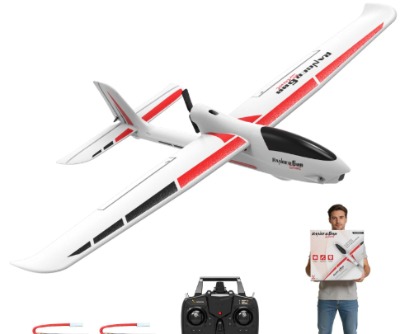
This Volantex plane is the budget pick in the group. It is a small, light foam glider with a rear-mounted propeller. Listings for this style of plane, often sold as the Ranger600, describe a 4-channel setup with a gyro. The key specs include a 600mm wingspan, a 6-axis gyro stabilizer, three flight modes, one-key aerobatics, and a control range of about 200 meters. Since sellers use slightly different titles and bundles, check the exact listing before you buy.
Other spec sheets list a flying weight of about 60 grams, a 10mm coreless motor, and a 3.7V 400mAh LiPo battery. The package usually includes the plane, remote controller, charger, spare propellers, manuals, and AA batteries.
Best Use Cases
This plane suits people who want to try RC flying without a big spend. It also works for kids who are old enough to handle a small aircraft with an adult, and for adults who want a light, crash-friendly plane for parks and open yards. It is a good “test the hobby” plane before you buy a bigger trainer.
Key Features Explained Simply
- 6-axis gyro. It helps keep the plane steady, much like a simple safety net.
- Three flight modes. Beginner mode gives the most help, and Expert mode gives you full control.
- One-key aerobatics. You press a button and the plane does a flip or roll. It is fun, and it also teaches you what the plane can do.
- Lightweight EPP foam. It bends and bounces back after small crashes.
- Multiple batteries. Some bundles include more than one battery, which cuts downtime. A full charge takes about 150 minutes, though.
- Pusher-style glider design. The prop sits at the back, which helps protect it in bumpy landings and gives a smooth glide.
- Low battery and range alerts. These help you avoid flying too far or too long.
Real-Life Usage Insight
A plane this light behaves differently from a full-size trainer. It floats. It also moves around more in the wind. A calm day at a park or big yard is almost required. Once the breeze picks up, the plane can get pushed sideways or even carried off course.
Small foam planes like this usually launch by hand, so a gentle toss into the wind is normal. Landings on grass are soft, and a crash rarely does harm beyond a bent wing or a popped-off part. That forgiving nature is a real plus for a beginner.
Do not expect the same support you get from HobbyZone or E-flite. Spare parts and upgrade options are more limited, and you will not find features like Panic Recovery with SAFE or GPS add-ons. The gyro helps, but it is a simpler system.
Flight time claims vary by listing. One seller states about 10 to 20 minutes per charge. Treat that as a best-case number and plan for less with hard throttle use.
Pros and Cons
Pros
- Low price for a 4-channel gyro plane
- Light, tough foam body
- Often comes with multiple batteries
- Easy to carry and store
- Simple, ready-to-fly setup
Cons
- Sensitive to wind
- Harder to see at long distance
- Limited spare parts and support
- No advanced upgrades
- Slow battery charging
Performance Discussion
In calm air, the plane flies smoothly and glides a long way. The gyro takes the edge off twitchy moves, and Beginner mode feels friendly. The glider shape helps it float and stay in the air. Aerobatics are easy to trigger with one button, which is fun for a light plane.
The limits show up quickly, though. With a small wing and a light body, it will not punch through wind. It also does not have the same feel as a larger trainer, so the skills you learn transfer only partly. Still, it teaches the basics of throttle, turns, and reading the sky.
Ease of Use
This plane is simple. It is fully assembled, and the setup takes minutes. The controls feel light, and the flight modes make the first flights easier. The main learning task is judging the wind and keeping the plane in sight.
Value for Money
The value is strong for a low-risk start. You spend far less than on the HobbyZone or E-flite models, and you still get a real 4-channel radio and a gyro. The catch is that it lacks the long-term growth and support of the bigger names. If your budget is tight, this plane is a fair place to begin. If you already know you love the hobby, a bigger trainer will pay off sooner.
Comparison Insights: How the Five Planes Stack Up
Now that each plane has had its turn, it helps to look at them side by side.
Size and space. The Apprentice STS is the largest and needs a proper field. The Carbon Cub models sit in the middle and can work on big open grass. The Apprentice STOL and the Volantex are small and fit yards and parks.
What is in the box. The Apprentice STOL is the most complete. The Volantex is also close to ready to fly. The Carbon Cub RTF Basic and the Apprentice STS need a battery and charger. The Carbon Cub BNF needs those plus a transmitter.
Stability help. The HobbyZone and E-flite planes use SAFE with Panic Recovery. The Volantex uses a gyro with three modes. SAFE feels more polished and gives you more room to grow.
Ground handling. The Apprentice STS has tricycle gear, which is easy to steer. The Carbon Cub and Apprentice STOL use taildragger layouts, which need a bit more care on the ground.
Wind handling. Bigger planes handle wind better. The STS wins here, the Carbon Cub follows, and the small planes need calm days.
Growth potential. The Carbon Cub and Apprentice STS lead thanks to SAFE Plus and Landing Assist options. The Apprentice STOL is also capable in higher modes. The Volantex has the least room to grow.
Cost to get started. The Volantex costs the least. The Apprentice STOL is a mid-level spend that covers everything. The Carbon Cub RTF Basic and Apprentice STS cost more once you add a battery and charger. The Carbon Cub BNF can be a bargain if you already own a compatible radio, and it can be a poor deal if you do not.
Buying Guide: How to Pick the Best RC Trainer Plane
A little planning saves you a lot of stress. Here is what matters most.
Start With Your Flying Space
Look at where you will fly. A big open field lets you use a larger plane like the Apprentice STS or Carbon Cub. A small yard or park pushes you toward the Apprentice STOL or the Volantex glider. Trees, power lines, roads, and crowds are all risks, so give yourself lots of space.
Check What Is in the Box
Terms matter here.
- RTF (Ready to Fly) usually means the plane, radio, and often the battery and charger are included. Read the fine print, because “RTF Basic” can leave out the battery and charger.
- BNF (Bind-N-Fly) means the plane comes without a radio. You use your own.
Add up the full cost of the plane, radio, battery, charger, and spare batteries.
Look for Stability Help
Stability tech makes a big difference for a first plane. SAFE with Panic Recovery gives you a strong safety net. A simple gyro helps too. Try to pick a plane that lets you turn the help down later so it grows with you.
Think About Wingspan and Weight
Bigger, heavier planes usually handle wind better and are easier to see. Small, light planes are easier to carry and cheaper, but they get pushed around. If your area is often windy, lean toward a larger plane.
Understand Battery and Charger Basics
Most of these planes use LiPo batteries, which need careful handling. Use the right charger, charge on a safe surface, and never leave a charging battery alone. Store batteries in a cool place and stop using any that look puffy or damaged. Extra batteries also mean more flying time, so plan on at least one spare.
Practice on a Simulator First
A flight simulator turns crashes into free lessons. Some packages include simulator access, and others let you add it. Even an hour or two of practice on the computer makes the first real flight calmer.
Check Spare Parts and Support
Every beginner breaks a prop, a landing gear, or a wing at some point. Planes from big brands usually have a full line of spare parts. Smaller budget planes can be harder to repair. That difference can decide whether a crash is a small fix or the end of your plane.
Learn the Local Rules and Find a Club
Rules for model aircraft differ from place to place. Check what applies where you live before you fly. A local club also helps a lot. Instructors can check your setup, help with your first takeoff, and save you from common mistakes.
Who Should Buy Which Plane?
Buy the Carbon Cub S 2 RTF Basic if you want a durable, versatile plane that grows with you. It suits pilots with open grass or dirt fields who do not mind buying a battery and charger.
Buy the Carbon Cub S 2 BNF Basic if you already have a compatible Spektrum radio and want to save money. It also suits pilots who want to keep using one radio across many planes.
Buy the Apprentice STOL S 700 if you have limited space and want everything in one box. It is a great fit for a first-timer who wants a low-stress start, as long as you fly in calm weather.
Buy the Apprentice STS 1.5m if you plan to learn at a club field with an instructor. It is also a good match for pilots who want a big, stable plane with easy ground handling.
Buy the Volantex 4CH Glider if you want the lowest cost way to try the hobby. It suits people with mild weather, open yards, and no plan to spend much at first.
Common Mistakes to Avoid
Beginners tend to repeat the same errors. Skip them and your first weeks will go much better.
- Flying in strong wind. Wind causes more first-flight crashes than almost anything else. If tree branches sway hard, stay home.
- Skipping the simulator. Free practice is the cheapest way to build skill.
- Ignoring the pre-flight check. Always test each control before takeoff. Move the sticks and watch the surfaces. A reversed control causes instant trouble.
- Turning off the safety help too soon. Stay in Beginner mode until landings feel easy. Moving up too fast leads to frustration.
- Flying too far away. When a plane gets small in the sky, you lose track of which way it faces. Keep it close.
- Forgetting about battery care. Use the right charger, do not over-discharge, and never charge a damaged battery. Land early when the plane feels weak.
- Buying only the plane. Many listings leave out the battery, charger, or radio. Add up the full cost first.
- Not checking the balance point. A plane that is nose-heavy or tail-heavy flies badly. Follow the manual for the center of gravity, especially after you swap batteries.
- Taking off from bad ground. Tall weeds or bumpy dirt can flip a small plane. Pick a clear, flat area.
- Flying alone with no help. A club mentor or experienced friend saves you from many mistakes.
- Panicking with the throttle. When things go wrong, many new pilots freeze or push every stick at once. Use Panic Recovery if your plane has it, or let go of the sticks and stay calm.
- Rushing repairs. Use foam-safe glue and check that parts line up. A rushed repair can cause problems on the next flight.
Frequently Asked Questions
What is the easiest RC plane for a total beginner?
Planes with stability tech and a stable, slow-flying design are easiest. The Apprentice STOL S 700 is the simplest for a first-timer with no gear, while the Apprentice STS 1.5m is a great match for learning with an instructor.
Is RTF better than BNF for beginners?
Usually, yes. RTF planes include a radio, so you skip the setup steps. BNF planes suit people who already own a compatible transmitter.
Do I need a flight simulator?
You do not need one, but it helps a lot. It lets you crash for free and learn the sticks before your first real flight.
How long do these planes fly on one battery?
It depends on the battery size, plane, and how you use the throttle. Small planes fly for a short time per pack. Bigger planes with larger batteries can fly much longer. Spare batteries are the easy fix.
Can I fly these planes in the wind?
Light winds are fine for the larger planes. Small planes need calm air. When in doubt, wait for a calmer time.
Are foam RC planes durable?
Foam planes handle small crashes well and can often be repaired with foam-safe glue. Hard hits still cause damage, so practice in soft, open areas.
Should I buy a bigger or smaller trainer?
Bigger trainers fly more steadily and are easier to see, but need more space. Smaller trainers are easier to store and cost less, but they react more to wind. Match the plane to your space and local weather.
Final Verdict
Every plane in this roundup can help you learn, and each one has a clear best fit.
The HobbyZone Carbon Cub S 2 1.3m RTF Basic earns the top spot as the best RC trainer plane for most beginners with open space. It is friendly, tough, capable on rough ground, and full of upgrade options. Just remember to budget for a battery and charger.
The E-flite Apprentice STS 1.5m is the best pick for club-style learning. Its size, tricycle gear, and calm flight make lessons smooth, and it works well with an instructor.
The HobbyZone Apprentice STOL S 700 is the best all-in-one starter for small spaces. You open the box and go, and the simulator key is a nice bonus. Just save it for calm days.
The HobbyZone Carbon Cub S 2 BNF Basic makes sense only if you already own a compatible Spektrum radio. In that case, it is a smart way to save money. Without a radio, it loses its price edge.
The Volantex 4CH Glider is the best low-cost way to test the hobby. It is light, simple, and forgiving in calm air, though it lacks the support and upgrades of the bigger brands.
If you want one simple answer, go with the Carbon Cub S 2 RTF Basic for open fields and the Apprentice STOL S 700 for tight spaces. Then add a simulator, a spare battery, and a friendly club mentor. Those three extras do more for your progress than any single feature on a spec sheet.
Happy flying, and enjoy every safe landing.
I can put this article in a Markdown file for WordPress if you’d like. A suggested meta description is: “Looking for the best RC trainer plane? See honest reviews of five beginner-friendly models, plus a buying guide, common mistakes, and a final verdict.”
One Comment