
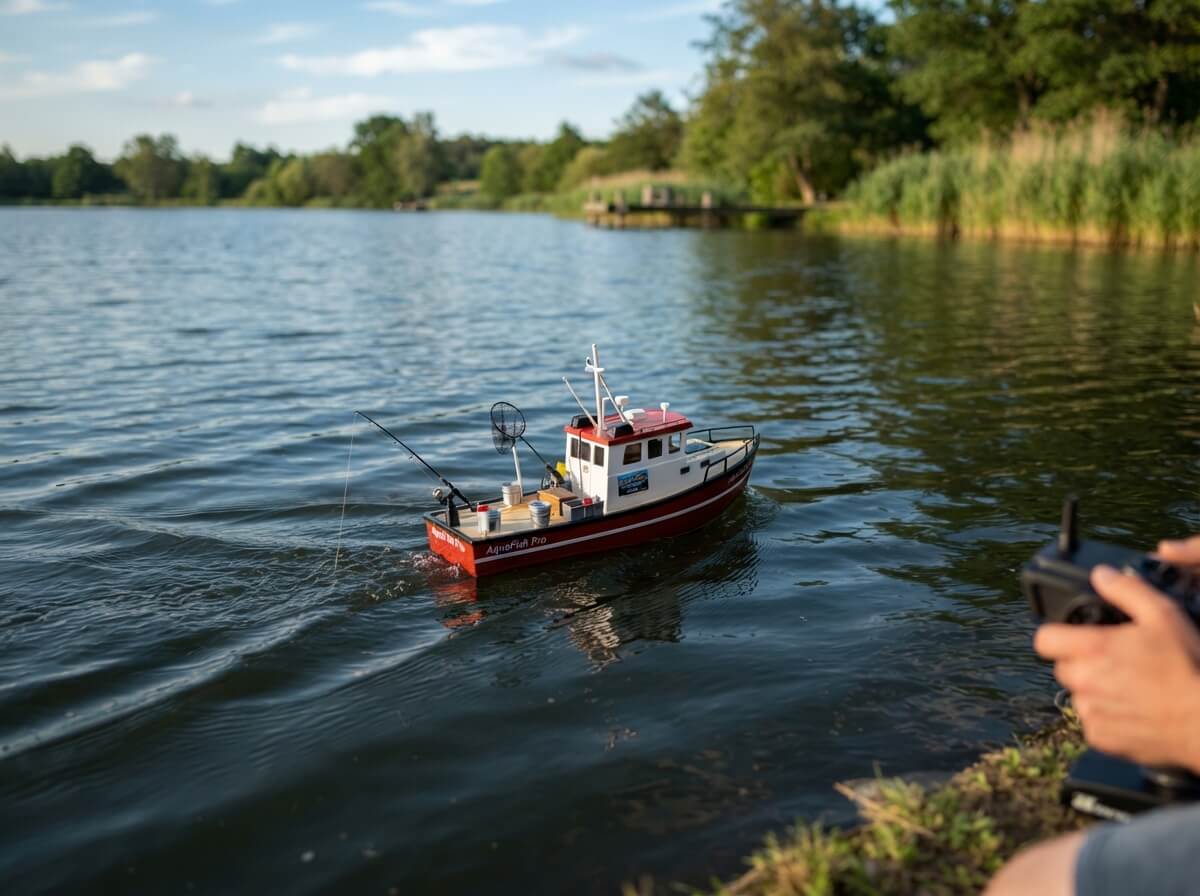
5 Best RC Fishing Boat In 2026
Fishing from the bank has one big problem. The fish are often way out where your arm can’t cast. A remote control fishing boat solves that. It carries your bait or your hook rig to the exact spot you want, then it drives back to you. No boat ride, no wading, and no wasted casts.
That is why so many carp anglers and bank fishermen now look for the best RC fishing boat they can afford. These little boats, often called bait boats, have grown from clunky toys into smart tools with GPS, big batteries, and multiple bait bins.
This roundup covers five options. Two are RIAHNEAH bait boats with different feature sets. One is a generic bait boat listing with very few details. One is a line drop model with a huge battery. The last is a kids’ boat from CAPTAER that has nothing to do with fishing, but still deserves a fair look.
Here is how this review works. It looks at each product’s listed features and at how boats like these behave on the water. It does not invent test numbers or make wild claims. Where a listing leaves out details, this article says so.
By the end, you will know which boat fits your fishing style, your budget, and your skill level.
Quick Comparison at a Glance
| Product | Best For | Listed Range | Listed Load | Listed Battery |
|---|---|---|---|---|
| RIAHNEAH Dual 390 Motor Bait Boat | Beginners on lakes and ponds | 1,968 ft | 3.3 lbs (3 bins) | 2 x 5,200mAh |
| RIAHNEAH GPS Bait Boat 21.7 Inch | Carp anglers who want GPS | 1,968 ft | 4.4 lbs | 5,200mAh |
| Generic “Bait Boat” Listing | Careful shoppers who check specs first | Not listed | Not listed | Not listed |
| RC Bait Boat with Line Drop | Heavy loads and rig placement | Not listed | 6.61 lbs (4 bait) | 12,000mAh |
| CAPTAER Kids RC Boat | Kids and pool fun | Not listed | Not for fishing | Rechargeable, 60-120 mins |
1. RIAHNEAH Fishing Bait Boat with Dual 390 Motors and 2 x 5,200mAh Batteries
Product Description
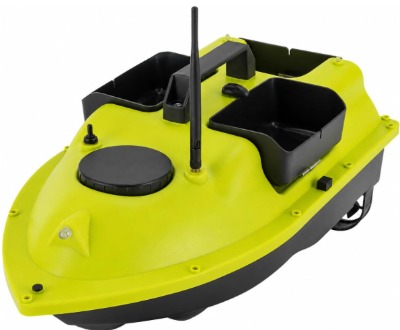
This green bait boat is built for lake, river, and even sea use, at least according to the listing. It runs on two 390 motors and comes with two 5,200mAh batteries. The listed range is 1,968 feet, which is about 600 meters. It has three bait bins with a total capacity of 3.3 pounds (about 1.5 kg). It also includes an auto return function, a low battery alert, and a portable carrying bag.
In simple words, this is a well-rounded starter boat. It does the main job of a bait boat and adds a few safety features that beginners will appreciate.
Best Use Cases
This boat works well for:
- Small to medium lakes and ponds
- Slow rivers and canals with light current
- Feeder fishing where you spread bait in a small area
- Carp and coarse fishing on the bank
- Anglers who want to try a bait boat before spending more
Key Features Explained Simply
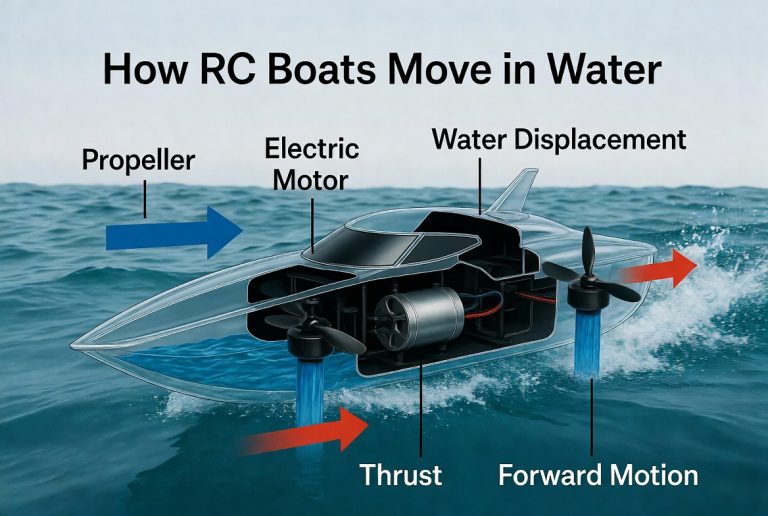
Dual 390 motors. The boat has two motors, one on each side. Two motors give better steering and more push than one. The boat turns by changing the speed of each side, which feels natural after a few minutes of practice.
Two 5,200mAh batteries. This is a big plus. You can run one battery, swap in the second, and keep fishing. Many bait boats come with only one battery, so a spare saves you a long wait.
Triple bins. Three bait compartments let you split your load. You can drop a little bait at one spot, move, and drop more somewhere else. You can also keep different bait types apart, such as pellets in one bin and corn in another.
3.3 lbs capacity. That is enough for a short session or a few careful drops. It is not a huge load, so plan your bait weight.
Auto return and low battery alert. If the battery runs low, the boat warns you and heads home. Check the manual to learn exactly how the return works, because different boats trigger it in different ways.
Carrying bag. It sounds small, but a bag keeps the boat safe in the car and easy to carry along the bank.
Real-Life Usage Insight
On the water, a boat like this feels simple and friendly. You load the bins, set the boat down gently, and drive it out. Most beginners get the hang of the controls within a few short runs. The best trick is to stay in shallow water near the bank for your first trip, so you can learn how the boat turns and how it reacts to wind.
The 1,968 feet range is a best-case number. It assumes a clear line of sight and calm conditions. Reeds, waves, and low antenna angles all cut into that distance. A smart angler treats the listed range as a ceiling and plans to fish well inside it.
The green color also deserves a mention. It looks nice, but it can blend into weeds and dark water at distance. Some anglers stick a strip of bright tape or a small flag on the hull so they can spot it easily.
Pros and Cons
Pros
- Two batteries mean longer fishing sessions
- Three bins give flexible bait placement
- Auto return and low battery alert add peace of mind
- Carrying bag makes transport easy
- Friendly for beginners
Cons
- 3.3 lbs is a modest load for heavy baiting
- No GPS waypoints listed
- Green hull can be hard to see at long range
- Sea use needs extra care because salt water is hard on electronics
Performance Discussion
Twin motors give steady speed and decent turning for a boat this size. It should handle calm water well. In choppy water or strong wind, any light bait boat struggles, and this one is no exception. The hull stays smaller and lighter than heavy carp boats, so it is best for gentle conditions.
Battery life depends on how much you load and how fast you drive. Slow, smooth driving stretches the runtime a lot. With two batteries in your bag, running out of power mid-session is much less likely.
Ease of Use
This is one of the easiest boats in the roundup. The controls follow a standard remote layout, the alerts are clear, and the auto return acts like a safety net. Beginners can start fishing with it fast.
Value for Money
For a boat with two batteries, three bins, a bag, and auto return, the package is strong. You get the extras that many brands sell separately. If you want a simple, reliable starting point, this is good value.
2. RIAHNEAH GPS RC Fishing Bait Boat, 21.7 Inch, 16 Waypoints, Auto Cruise
Product Description
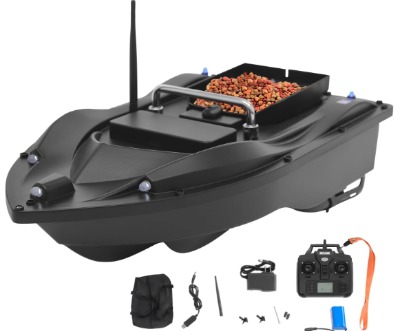
This is the more advanced RIAHNEAH boat. It measures 21.7 inches (about 55 cm) and adds GPS to the mix. The listing highlights 16 waypoints, auto cruise, dual motors, a 4.4 lbs load (about 2 kg), a 5,200mAh battery, an ABS hull, automatic return, and night vision. The range matches the first boat at 1,968 feet.
It is aimed at carp fishing, which makes sense. Carp anglers care about hitting the same spot again and again, and GPS helps with exactly that.
Best Use Cases
This boat suits:
- Carp anglers who bait the same spot every session
- Larger lakes where distance and accuracy matter
- Anglers who want a hands-off trip out and back
- Evening or early morning fishing, where the night vision feature might help
- Anyone ready to move beyond a basic bait boat
Key Features Explained Simply
GPS with 16 waypoints. A waypoint is a saved spot on the water. You can store up to 16 of them, then send the boat back to any one later. That means you can drop bait on the same productive area without guessing.
Auto cruise. The boat can drive to a saved point on its own. You watch it go instead of steering the whole way. This also cuts down on wobbly, wasteful paths across the water.
Dual motors. Just like the first boat, two motors give balanced power and steering.
4.4 lbs load. This gives you more bait capacity than the first boat. It is a real step up for anglers who use heavier baits or want longer sessions between reloads.
5,200mAh battery. A solid size for a boat this big, though only one battery is listed. Consider buying a spare if you fish long days.
ABS hull. ABS is a tough plastic that handles bumps and knocks well. It is not a magic shield, but it holds up to normal bank use.
Night vision. The listing mentions night vision. Since sellers use that term in different ways, read the product page closely to see if it means lights, a camera, or something else before you count on it.
Automatic return. The boat heads back to you when needed, and GPS makes this much more accurate than basic return systems.
Real-Life Usage Insight
GPS boats reward a little patience. Before launching, let the boat sit in the open for a minute or two so it can lock onto satellites. If you rush this step, the waypoints and return function can act strangely.
Once it works, the experience is very smooth. You mark your spot, load the bins, set auto cruise, and watch the boat glide out. On a big lake, this saves a lot of effort and a lot of battery, because the boat takes a cleaner line.
Also keep in mind that consumer GPS is accurate to a few meters, not a few inches. It puts you in the right area, but it will not place bait on the exact same spot every time. That is normal for the whole category.
Pros and Cons
Pros
- GPS with 16 waypoints helps you find your spots again
- Auto cruise makes long trips easier
- Bigger 4.4 lbs load
- Tough ABS hull
- Strong return function
Cons
- Costs more than basic bait boats
- Only one battery is listed
- More settings mean a longer learning curve
- The night vision feature is not explained clearly in the title
Performance Discussion
The larger hull gives this boat better stability than smaller models. It should handle mild wind and light ripples better than the first boat. GPS steering keeps the path steady, which also saves battery.
Heavy loads always slow a boat down and drain the battery faster. Still, with 4.4 lbs of capacity, this model looks well suited for real carp sessions.
Ease of Use
Basic driving is easy, but the GPS features take some practice. Plan a short test day where you set a few waypoints without any bait on board. Once you know how the menu works, everything feels simple.
Value for Money
You pay more, and you get more. GPS, larger capacity, and a tougher build all justify the higher price for serious carp anglers. If you only fish a small pond a few times a year, this is more boat than you need.
3. Generic “Bait Boat, RC Bait Boat, Fishing Bait Boat” Listing
Product Description
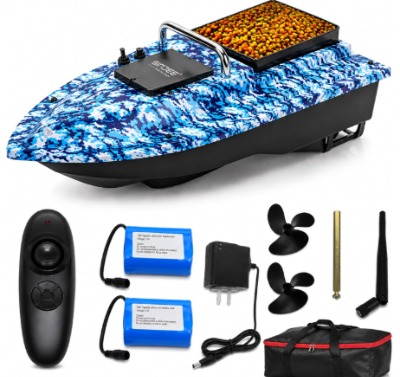
Here comes the tricky one. The listing name for this product is just “Bait Boat, RC Bait Boat, Fishing Bait Boat.” It gives no brand, no range, no battery size, no load capacity, and no feature list.
That makes an honest review hard. It is unwise to invent numbers, so this section focuses on what you should look for and what risks come with a listing this vague.
Best Use Cases
A basic bait boat like this can suit:
- Anglers on a tight budget
- Small ponds where long range is not needed
- Shoppers who read the full product page and confirm the specs before buying
- People who want a simple first bait boat to learn the basics
Key Features Explained Simply
Since the listing lists no features, use this checklist when you look at the full product page:
- Range. Look for a clear number and a remote type, such as 2.4GHz.
- Bait capacity. Check the total weight and how many bins it has.
- Battery size and runtime. Bigger mAh usually means more time on the water.
- Return function. Look for signal-loss return or low battery return.
- Hull material and size. Tougher plastic and a wider hull mean better stability.
- Support. Check if the seller offers spare parts, a manual, and a return policy.
Real-Life Usage Insight
Vague listings often lead to surprise. Sometimes the boat works fine. Sometimes the range is short, the batteries are small, or the manual is hard to follow. With no brand or spec sheet, you cannot compare it to other boats or know what support you will get.
A useful trick is to read customer questions and reviews on the product page. Look for comments about range, battery life, and broken parts. Those comments tell you more than the title does.
Pros and Cons
Pros
- The concept is simple and easy to grasp
- Could be a low-cost way to try bait boating
- Might work fine for small waters
Cons
- No listed specs, so you cannot compare it fairly
- No brand information in the title
- Unknown range, battery, and load
- Support and spare parts are unclear
Performance Discussion
Performance is a question mark. Without numbers, no honest reviewer can promise range, speed, or battery time. Treat any claim you cannot verify with caution.
Ease of Use
Most basic bait boats use simple remotes, so the driving itself is usually easy. The real issues tend to be poor manuals and weak support. Before you buy, check that instructions come in clear English.
Value for Money
Value depends on the price and on what the full listing shows. If the seller gives clear specs, a fair price, and a solid return policy, it can be a decent budget try. If the page stays vague, spend a little more on a boat with a proper spec sheet, like the two RIAHNEAH models above.
4. RC Bait Boat with Line Drop, 12,000mAh Battery, 4 Bait Bins, 6.61 LBS
Product Description
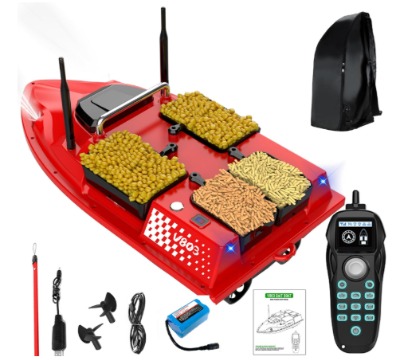
This boat targets anglers who want more than a simple bait dropper. The listing highlights a line drop feature, a huge 12,000mAh battery, four bait containers, and a 6.61 lbs capacity (about 3 kg). It is the heavy hitter of the group when it comes to load and battery size.
Best Use Cases
This boat fits:
- Carp and coarse anglers who bait heavily
- Long sessions where you do not want to swap batteries
- Anglers who want to place their hook rig, not just their bait
- Bigger lakes where a lot of bait must go out at once
- Anyone who wants fewer trips back to the bank
Key Features Explained Simply
Line drop. This is a clip system that carries your hook rig or line out with the boat, then releases it at your chosen spot. It puts your hook right in the bait zone. Without it, you cast into the general area and hope.
12,000mAh battery. This is more than double the size of the batteries on the RIAHNEAH boats. A bigger battery normally means longer runtime, though it also adds weight and takes longer to charge.
4 bait containers. Four bins give you a lot of flexibility. You can spread bait in several spots or keep different types separate.
6.61 lbs capacity. This is the biggest load in the roundup. It suits heavy baiting and long sessions.
Real-Life Usage Insight
Line drop boats reward practice. The boat pulls your line as it travels, and that drag can slow the boat and cut its effective range. Many anglers use thinner line or a light lead line for the trip out to reduce the pull. Keep the line slack under control too, so it does not tangle in the motors.
Wind matters a lot here. A heavy, loaded boat with a line attached fights harder against gusts. Pick calm days for your first tries.
The big battery is a real comfort on long sessions. Even so, a heavy load and a line dragging behind will eat into the runtime. Plan your trips and keep an eye on the battery indicator.
Pros and Cons
Pros
- Highest bait capacity in this roundup
- Line drop puts your rig right on the spot
- Huge 12,000mAh battery for long sessions
- Four bins for flexible baiting
Cons
- Range and remote details are not in the listing title
- Heavy loads slow the boat down
- Line drop takes practice
- Bigger battery means longer charge times
Performance Discussion
With a big battery and strong load capacity, this boat looks built for serious sessions. Expect good staying power, though speed will drop with a full load. The line drop adds real fishing value, since it moves you from “bait near the area” to “hook right in the bait.”
Ease of Use
This is not the easiest boat here. Driving is simple, but managing the line drop, the load, and the wind takes practice. Start in calm water, do short test runs, and add complexity slowly.
Value for Money
For anglers who bait heavily and want line placement, this boat gives a lot of capability. The huge battery and the line drop can justify the cost. For casual weekend fishing on small ponds, it is probably more than you need.
5. CAPTAER Remote Control Boat for Kids
Product Description
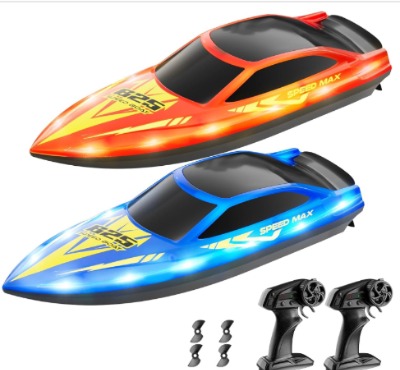
This one is not a fishing boat, and the article says so up front. The CAPTAER boat is a toy racing boat made for pools, lakes, rivers, and ponds. The listing highlights LED lights, self-righting design, waterproof build, fast speed, two speed modes, and rechargeable batteries with 60 to 120 minutes of playtime.
Why include it? Because many shoppers who search for the best RC fishing boat end up buying a toy by mistake, and others want a fun boat for their kids alongside a bait boat for themselves. It also makes a decent practice boat for learning remote control basics.
Best Use Cases
This boat suits:
- Kids who love water toys
- Backyard pool fun
- Family trips to a pond or calm lake
- Practicing steering before you own a real bait boat
- Gift giving for young boat fans
Key Features Explained Simply
LED lights. The lights make the boat easier to see and add a cool look, especially near dusk.
Self-righting. If the boat flips over, it rolls back upright. This is a great feature for kids, because a capsized boat would otherwise end the fun.
Two speed modes. A slower mode helps beginners learn control. The faster mode is there for racing fun.
Rechargeable batteries with 60 to 120 minutes of play. That gives a good amount of playtime for a toy boat. Real runtime depends on how hard the boat is driven.
Waterproof. The listing calls it waterproof, which is standard for a boat, but always follow the manual on how deep or how long you can use it.
Real-Life Usage Insight
Toy boats like this give kids a fast, exciting ride on calm water. Self-righting keeps the game going after flips, and the two speeds let younger kids grow into the controls.
It does not carry bait, drop lines, or tow a rig, and it is not built for fishing. Do not buy it expecting to fish with it. Also keep it away from strong wind and rough water, where a small toy boat can drift out of reach.
Pros and Cons
Pros
- Fun and easy for kids
- Self-righting design saves the day after flips
- LED lights add visual fun
- Two speed modes suit beginners and faster players
- Good practice tool for learning RC controls
Cons
- Not a fishing boat and cannot carry bait
- Best for calm water only
- Limited range compared to bait boats
- Not useful for real angling tasks
Performance Discussion
For a toy, the performance looks solid. Speed is fast enough to be exciting, and the runtime is generous for the category. It works best on pools and calm ponds.
Ease of Use
This is the easiest boat in the roundup. Kids can start playing in minutes. The two speed modes help new drivers build confidence.
Value for Money
As a toy, it offers good value. As a fishing tool, it offers none. Buy it for fun and for practice, not for anglers who want to reach far spots.
Comparison Insights: How the Five Boats Stack Up
Putting all five side by side shows clear winners in different areas.
Best for beginners: The first RIAHNEAH boat. Two batteries, three bins, auto return, and a carrying bag give new anglers a smooth start.
Best for accuracy: The RIAHNEAH GPS boat. Sixteen waypoints and auto cruise help you return to the same productive spots.
Best for heavy baiting: The line drop boat. With 6.61 lbs of capacity, four bins, and a 12,000mAh battery, it leads on raw power.
Biggest question mark: The generic bait boat listing. Without specs, you cannot rate it fairly.
Best for kids: The CAPTAER boat. It is fun, but it is a toy.
Load and Bait Capacity
Capacity ranges from 3.3 lbs on the first boat to 4.4 lbs on the GPS boat and 6.61 lbs on the line drop boat. Bigger loads mean fewer trips, but they also slow the boat and use more battery.
Battery Life
The line drop boat wins on paper with 12,000mAh. The first RIAHNEAH boat wins on convenience with two swappable 5,200mAh batteries. The GPS boat has a single 5,200mAh battery, so a spare is a smart add-on.
Range and Control
Both RIAHNEAH boats list 1,968 feet. That figure describes ideal conditions. Real range usually falls short once you add waves, plants, and low antenna angles.
Smart Features
Only the GPS boat lists waypoints and auto cruise. Only the line drop boat lists a line release. The first RIAHNEAH boat focuses on simple safety features like auto return and low battery alerts.
Ease of Use
The first RIAHNEAH boat and the CAPTAER toy are the simplest. The GPS boat and the line drop boat take more practice, but they reward it.
Buying Guide: How to Pick the Best RC Fishing Boat
Shopping for a bait boat feels confusing at first, because listings throw a lot of numbers at you. Here is a simple guide to what matters.
1. Start With Your Fishing Style
Think about where and how you fish. A small pond needs a small, simple boat. A large lake needs range, capacity, and maybe GPS. If you fish with a hook rig, a line drop feature might help a lot.
2. Check the Bait Capacity
Look at total weight and the number of bins. More bins give more flexibility. Heavier capacity helps with long sessions, but bigger loads slow the boat.
3. Look at Real Range, Not Just the Number
A listed range of 1,968 feet sounds great, but plan on less. Reeds, waves, and a low remote signal all cut distance. A good rule is to fish well inside the listed range.
4. Care About Battery Size and Extras
Battery size shows up in mAh. A bigger number usually means more runtime. Spare batteries add flexibility. Also check that the boat has a low battery alert.
5. Look for a Return Function
Auto return protects you if the signal drops or the battery runs low. GPS return is even more accurate. For a beginner, this feature saves a lot of stress.
6. Think About GPS and Waypoints
GPS is great for big waters and repeat spots. It adds cost and a learning curve, though. If you fish small ponds, you can skip it.
7. Look at Hull Build and Size
A larger, wider hull stays steadier in wind. ABS plastic handles bumps well. A tiny, light hull turns fast but struggles in chop.
8. Check Motors
Twin motors give better steering and balance. Bigger or stronger motors help when the boat carries a heavy load.
9. Think About Lights and Night Fishing
Lights make the boat easier to spot in low light. If you fish at dusk or after dark, look for clear details about what the lights or night features actually do.
10. Look at Transport and Storage
A carrying bag or a compact size makes life easier. You will carry this boat along muddy banks, so weight and shape matter.
11. Read About Support and Spare Parts
Props, batteries, and hoppers can wear out. Brands that sell spares and answer questions save you a lot of trouble later.
12. Check the Rules Where You Fish
Some lakes, clubs, and competitions ban bait boats or limit their use. Always check the rules before you buy. Nothing is worse than owning a boat you cannot use on your local water.
Who Should Buy These Products?
Buy the first RIAHNEAH boat if you:
- Are new to bait boats
- Fish small to medium lakes and ponds
- Want two batteries and easy safety features
- Like a simple carrying bag setup
Buy the RIAHNEAH GPS boat if you:
- Fish carp or feed the same spots often
- Use large lakes where accuracy matters
- Want auto cruise and waypoint saving
- Feel ready to learn a few extra settings
Buy the generic bait boat only if you:
- Can read the full listing and confirm every spec
- Have a very tight budget
- Fish a small, easy water
- Check the return policy first
Buy the line drop boat if you:
- Bait heavily and want more capacity
- Want to place your hook rig with the boat
- Fish long sessions and hate swapping batteries
- Are willing to practice in calm conditions
Buy the CAPTAER boat if you:
- Want a toy boat for kids
- Need a cheap way to practice remote control skills
- Plan to use it in pools or calm ponds
Common Mistakes to Avoid
Bait boats look simple, but small mistakes can cause big headaches. Watch out for these.
Trusting the listed range fully. The number on the box is a best case. Keep the boat well inside your comfort zone, especially in your first weeks.
Overloading the bins. More bait feels great until the boat sits low, moves slowly, and drains the battery. Load in steps and see how it handles.
Skipping a shallow water test. Always test a new boat near the bank first. Check steering, turning, and the return function before you send it far out.
Launching in strong wind. Light boats fight wind hard. Wait for calmer conditions or fish a sheltered bay.
Forgetting to charge the remote. Everyone charges the boat battery. Many people forget the transmitter. A dead remote means no control.
Ignoring weeds and snags. Plants can wrap around props and stop the boat. Steer around them, and keep some distance from thick reeds.
Using the boat in salt water without a plan. Some listings mention sea use, but salt is hard on motors, screws, and electronics. Rinse the boat with fresh water after every trip and dry it well.
Leaving batteries charging without watching them. Lithium batteries need care. Charge them on a safe surface, away from anything flammable, and never leave them unattended.
Storing batteries the wrong way. Store batteries at a partial charge in a cool, dry spot, following the maker’s advice.
Ignoring local rules. Some waters ban bait boats. Read the rules first so you do not risk a fine or a ban.
Buying a toy when you need a tool. The kids’ boat looks similar in pictures, but it cannot carry bait or drop a line. Read the product details carefully.
Frequently Asked Questions
How far can an RC fishing boat go?
Listings for the two RIAHNEAH boats mention 1,968 feet, about 600 meters. Real range depends on conditions, so plan on less.
Do bait boats scare fish?
Any noise or movement can spook fish, especially in shallow water. Drive slowly near your fishing area and keep the boat quiet when you drop bait.
Can I use a bait boat in a river?
Yes, in slow, gentle rivers. Strong current is a problem for small, light boats, so stay away from fast water.
What is the difference between a bait boat and a regular RC boat?
A bait boat carries bait or a fishing line and drops it at a chosen spot. A regular RC boat, like the CAPTAER toy, is only for play.
How much bait can these boats carry?
That depends on the model. The listings here mention 3.3 lbs, 4.4 lbs, and 6.61 lbs for the three fishing boats with stated capacity.
Do I need GPS?
Not always. GPS helps on big lakes and for repeat spots. For small ponds, a simpler boat with auto return does the job.
Final Verdict: Which Is the Best RC Fishing Boat?
After going through all five, the answer depends on how you fish.
Best overall for most anglers: RIAHNEAH Dual 390 Motor Bait Boat. It gives you two batteries, three bins, auto return, a low battery alert, and a carrying bag. It is friendly for beginners and covers the basics without extra complexity. For most people searching for the best RC fishing boat, this is the smartest place to start.
Best for serious carp anglers: RIAHNEAH GPS Bait Boat. GPS waypoints, auto cruise, and a larger 4.4 lbs load make it a strong tool for repeat spots and bigger lakes. It costs more and takes more practice, but the payoff is real.
Best for heavy baiting and rig placement: RC Bait Boat with Line Drop. The 12,000mAh battery, four bins, and 6.61 lbs capacity give it the most muscle. It asks for more skill, so it fits experienced anglers best.
Best for kids and fun: CAPTAER Remote Control Boat. It is a toy, not a fishing tool, but it is a great pick for family time and for learning remote control basics.
Buy with caution: the generic Bait Boat listing. With no specs in the title, it is hard to recommend. Only buy it after you confirm every detail on the full product page.
A bait boat will not catch fish for you. It just puts your bait in a better place. If you start with the right boat for your water, practice in calm conditions, and respect the limits of range, load, and battery, you will fish smarter and enjoy it more.
Would you like me to turn this article into a downloadable file, such as a Word doc or a Markdown file?



One Comment