5 Best RC Truck Battery In 2026
As an Amazon Associate we earn from qualifying purchases.
Picking the best RC truck battery can feel confusing at first. Many packs look similar, yet they differ in voltage, capacity, chemistry and plug type. This guide helps beginners who want to power a remote control truck and need a clear way to compare options.
The five products below share one thing in common: they are all rechargeable batteries sold for radio-controlled vehicles, and each is listed with specific features such as voltage, capacity and connector type. The comparison rests on those listed features and on how each battery is typically used, not on personal testing. Read the details, check compatibility with your own vehicle, and then decide.

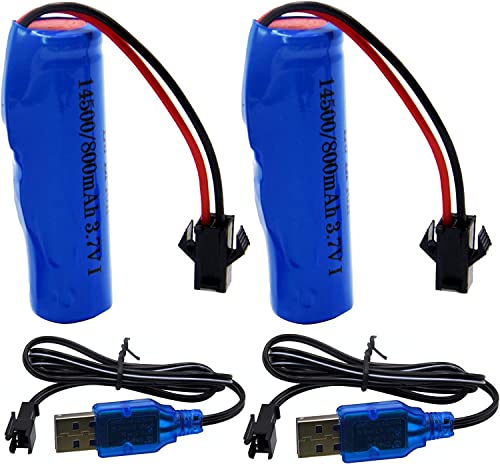


1. VICMILE 7.4V Li-ion Battery 3300mAh: best for 1/10 to 1/16 trucks needing longer runs
This is a 7.4V lithium-ion pack with a 3300mAh capacity and a Dean-style T plug. It is aimed at owners of 1/10, 1/12 and 1/16 scale trucks, including several WLtoys 4WD models. Its higher capacity makes it a sensible pick for drivers who want longer sessions between charges.
The key number is the 3300mAh rating. In plain terms, capacity is like the size of a fuel tank: a larger number generally means more running time before the pack needs recharging.
For example, a pack with a higher rating will usually power a truck for longer than a smaller pack of the same voltage, assuming similar driving. The 15C discharge rating describes how quickly the pack can deliver power, which matters when the truck accelerates hard and draws a heavy current.
Real-life usage
Day to day, a pack like this suits drivers who run their truck in a backyard, a park or an open lot for an extended session. Because the weight is listed at about 103 grams, it adds only modest bulk to a small truck.
Owners should still confirm the fit, since the listed dimensions are 70 by 37 by 18 millimeters. A battery that is even slightly too large will not seat properly in the battery bay.
Many beginners run the truck in short bursts with breaks between them. A high-capacity pack gives extra margin in those sessions, so the truck does not stop mid-drive as quickly. Check your vehicle’s manual for the recommended voltage before you buy, because higher-voltage packs can damage electronics that are not rated for them.
Performance and ease of use
The pack is designed for quick charging and does not need a full discharge before recharging, which many beginners find convenient. Unlike some older nickel-based packs, lithium-ion batteries do not suffer from memory effect, so topping up after a short run is generally fine. The package includes a 1-to-2 charger, which lets you charge two packs at once. This is useful if you want to swap packs between sessions and keep the truck running.
Plugging in the T connector is straightforward once you confirm your vehicle uses that style. Always use the charger supplied or one specifically rated for lithium-ion packs, and never leave a charging pack unattended. Let the pack cool before charging it again after a hard run.
Value for money
At the listed price of $29.99, the set includes two batteries, a charger, a manual and a box, which adds to its appeal. Buying two packs in one purchase means you have a spare ready without a separate order.
The product carries a one-year warranty and customer service support, which gives buyers some recourse if a pack fails early. Buyers should still measure their truck’s battery bay before ordering, since a return for the wrong fit can take time.
Pros
- High 3300mAh capacity for longer run times
- Two batteries and a 1-to-2 charger included
- One-year warranty listed
- Wide fit for several 1/10 to 1/16 scale trucks
Cons
- Fit depends on matching voltage, size and plug
- Heavier than small lithium-ion packs
- Its T plug may require an adapter on some vehicles
2. Blomiky 2 Pack 3.7V 800mAh Li-ion Rechargeable: best budget choice for small stunt and drift RCs
This two-pack set uses 3.7V lithium-ion cells rated up to 800mAh, with an SM-2P plug. It is designed for small-scale vehicles, including 1/18 and some 1/16 models, as well as stunt cars and small RC boats. It is a good fit for beginners who want an inexpensive spare or starter pack.
The listing notes that real capacity falls in a 500mAh to 800mAh range, so buyers should expect a modest runtime. The small size, about 51 by 18 by 14 millimeters, keeps the pack light at roughly 19 grams. That lightness helps with agile, small vehicles, where extra weight can affect handling and speed.
Real-life usage
These packs usually suit short, frequent sessions with compact vehicles. Many small stunt and drift models use this plug, so the pack can slot into a range of toys without adapters. Owners often keep a spare pack on hand, so they can swap in a fresh one and keep driving while the first charges.
Because runtime is limited, a common approach is to rotate between the two packs during a session. Running them down fully and recharging them soon after also helps keep the cells in good shape. Checking that the plug fits snugly before each run avoids mid-session dropouts.
Performance and ease of use
The built-in protection board stops charging once the pack is full. The listing notes that a red light may stay on after charging, and reconnecting the cable can reset it. A full charge typically takes three to four hours, so plan ahead for play sessions.
Charging is straightforward with the included USB cable. Connect the pack, watch the indicator, and unplug once charging is complete. Keeping charging on a flat, non-flammable surface is a sensible habit with any lithium pack.
Value for money
At $9.99 for two packs, this set costs far less than most larger options. The trade-off is shorter runtime and a narrower set of compatible vehicles. For a small, low-cost truck, the value is strong, but it is not a fit for large trucks that need more power and capacity.
Buyers who run their vehicles for long stretches may find that a larger pack gives better value over time, even at a higher price. This set makes the most sense for short sessions and for adding a spare.
Pros
- Two packs for a low price
- Very light, about 19 grams each
- Built-in overcharge protection
- Includes a USB cable for charging
Cons
- Capacity is modest, so runs are shorter
- Works only with small vehicles using the SM-2P plug
- Charging can take three to four hours
3. Zeee 7.2V NiMH Battery 3600mAh RC Battery: best for trucks using a Tamiya connector
This pack uses nickel-metal hydride chemistry, often shortened to NiMH, rated at 7.2V and 3600mAh. It has a Tamiya connector, a plug style common on many hobby-grade trucks from brands such as Losi, Associated, HPI and Kyosho. It suits owners who run older or heavier trucks and want a sturdy, straightforward pack.
NiMH cells are a different chemistry from lithium packs. They are generally heavier, but they tolerate rough handling well. The listed weight is about 367 grams, so this pack is noticeably heavier than the lithium options here. That extra mass can add stability on larger, heavier chassis.
Real-life usage
In daily use, this type of pack tends to suit drivers who value simple handling over low weight. Its larger size, about 135 by 45 by 22 millimeters, means it needs a suitable battery tray. Owners should measure their vehicle before buying.
Drivers often keep a second pack for longer sessions, since a larger capacity still needs time to recharge. Securing the pack firmly in the tray helps prevent it from shifting during hard landings or sharp turns.
Performance and ease of use
NiMH packs require a charger made for NiMH batteries, and the safety notes say to use only that type. Never leave the pack charging unattended. Once you follow these steps, the pack is simple to use with a standard Tamiya plug.
Before the first charge, check that the connector and wires are undamaged. Letting the pack cool after a long run before recharging is a common practice that helps the cells stay in good condition.
Value for money
At $17.99, this pack costs less than the lithium sets listed here. The trade-off is weight and charging rules that differ from lithium packs. For a Tamiya-equipped truck, the price is reasonable for a single pack.
Because the pack is a single unit, buyers should compare its cost against a spare pack for their current vehicle. If a truck already uses NiMH packs, staying with the same chemistry keeps charging simple.
Pros
- Tamiya connector suits many hobby trucks
- Lower price than most lithium packs here
- Sturdy NiMH build tolerates rough use
- Clear safety notes included
Cons
- Heavy at about 367 grams
- Requires a NiMH-specific charger
- Larger size needs enough space in the vehicle
4. OVONIC 3S LiPo Battery 50C 2200mAh 11.1V: best for high-power trucks with XT60 plugs
This is a 3S lithium polymer pack, commonly called LiPo, rated at 11.1V and 2200mAh. It uses an XT60 discharge connector and a 50C rating, which describes a high output capability. It fits a range of RC trucks, boats and aircraft, so it suits drivers who want strong power delivery.
LiPo packs deliver power quickly, but they need careful handling and a proper balance charger. The listing mentions a soft case, ISO quality certification and improved cycle life. These points point to a pack built with an eye on durability.
Real-life usage
Owners usually use LiPo packs for faster, more the outputs of multi-product comparisons may shift and new cars appear, so I will continue directly. Here is the rest of the article, picking up mid-section.
Real-life usage
Owners usually use LiPo packs for faster, more energetic driving, where the truck needs a quick burst of power.
The soft case is lighter than a hard shell, which helps keep the vehicle balanced. Still, the pack needs to be handled gently and stored properly between sessions.
Performance and ease of use
The 50C rating means the pack can supply strong current, which suits trucks that accelerate hard. The charging plug is a JST-style connector, so the pack must be charged with a balance charger designed for 3S lithium polymer cells. Beginners should learn the charging steps before plugging in a pack for the first time.
Value for money
At $37.99 for a two-pack set, this is the highest-priced option in the list, though it includes two packs. The longer cycle life and stated efficiency gains help justify the cost for regular drivers. Buyers who only run occasionally may find the price harder to justify.
Pros
- High 50C discharge rating for strong power
- Two packs included in the set
- Listed longer cycle life and ISO certification
- Compatible with several vehicle types
Cons
- Needs a dedicated balance charger
- Requires careful handling and storage
- Highest price in this comparison
5. Zeee 3S LiPo Battery 2200mAh 11.1V 50C: best compact shorty pack for lighter trucks
This is another 3S lithium polymer pack, rated at 11.1V, 2200mAh and 50C, with an XT60 plug. Its shorty design makes it shorter than standard packs, which can help when space in the vehicle is tight. It suits compact trucks and other small RC models that need a lithium pack with strong output.
Shorty packs are shaped to fit tight battery trays. At about 75 by 34 by 26 millimeters and roughly 137 grams, this pack is compact and light. Its specifications match the OVONIC option closely, so the main difference lies in size and design.
Real-life usage
In daily use, a shorty pack often suits drivers whose trucks have limited space behind the chassis. The lighter weight can help the truck handle more nimbly. Buyers should still confirm that the pack fits the battery bay.
Performance and ease of use
The safety notes ask for a balance charger designed for LiPo packs, with a suggested charge rate of 0.5 to 1C. The charging temperature should stay between about 41°F and 95°F. Following these guidelines keeps charging predictable and safe.
Value for money
At $32.29 for two packs, this set sits between the cheaper lithium option and the OVONIC pair. The compact size and two-pack bundle add practical value. Buyers who need the shorty form factor will likely find it worthwhile.
Pros
- Compact shorty design suits tight battery trays
- Light at about 137 grams per pack
- Two packs included
- Strong 50C discharge rating
Cons
- Requires a LiPo balance charger
- Charging temperature must stay in a set range
- Lower capacity than the 3300mAh VICMILE pack
Comparison insights: how these five batteries differ
The five packs split into three groups: lithium-ion, NiMH and LiPo. Each chemistry has its own charging rules, storage needs and strengths. Matching the chemistry to your truck and charger is the first decision to make, because the wrong pairing can cause poor performance or real safety problems.
In performance, the VICMILE pack offers the highest capacity at 3300mAh, which suits longer sessions between charges. The OVONIC and Zeee LiPo packs offer strong 50C output, which suits hard acceleration and quick bursts of speed. The Blom iky pack offers the lowest capacity but also the lowest price and weight, which suits small vehicles that do not need long run times.
Ease of use also varies. The Blomiky set charges with a simple USB cable and includes built-in protection, so a beginner can plug it in and start charging without extra equipment. The NiMH pack needs its own charger, while the two LiPo packs need a balance charger. A balance charger monitors each cell in the pack, which adds a step for beginners but helps keep the cells evenly charged.
Value for money depends on your truck. Smaller vehicles gain the most from the low-cost Blomiky set, since they rarely need the extra capacity of a larger pack. Owners of larger trucks may prefer the capacity and bundles offered by the VICMILE or OVONIC sets, especially if they plan to run the vehicle for long periods and want a complete kit.
Buying guide: key factors explained in plain words
Before buying, start with your vehicle. Check the battery bay for size, look up the plug type, and confirm the voltage your truck expects. A pack that does not fit or does not match the plug will not work, no matter how good it looks on the product page.
Voltage
Voltage is the electrical push that drives the motor. A higher voltage can mean more speed, but only if your electronics support it. A motor or speed controller rated for a lower voltage can overheat or fail when given more. Always match the voltage in the manual or on the old pack.
Capacity
Capacity, measured in mAh, is a rough guide to run time. A larger number usually means longer sessions between charges. However, a bigger pack is often heavier and may not fit in a small truck. For example, a pack with twice the capacity will generally run longer, but it may also add noticeable weight to a compact chassis.
Chemistry and charging
Lithium-ion, NiMH and LiPo packs each need specific chargers. Using the wrong charger can damage a pack or create a safety risk, such as overheating or swelling. Read the safety notes that come with the pack and buy a charger that matches the chemistry. Charging should always be supervised, and packs should be stored and charged on a non-flammable surface.
Plug type and discharge rating
The plug must match your vehicle’s connector, such as Tamiya, T plug, SM-2P or XT60. Adapters exist, but they add connections that can loosen or resist current, so a matching plug is the simpler choice. The discharge rating, such as 15C or 50C, describes how much current the pack can deliver relative to its capacity. Higher ratings suit hard acceleration, while lower ratings are often enough for relaxed driving.
Size and weight
Weight affects handling. A lighter pack can make a small truck more agile, while a heavier pack may fit only larger chassis. Measure the battery bay in length, width and height before ordering, and leave room for the wires and the strap or mount that holds the pack in place.
Who should buy these products: matching buyers to a battery
Each battery suits a different kind of driver. The right choice depends on your truck, your budget and how you plan to use it. Start with the vehicle itself, because a battery that does not fit or match the voltage will not work well, no matter how good it looks on paper.
Drivers with 1/10 to 1/16 trucks who want longer runs may prefer the VICMILE 3300mAh pack. Its capacity and included charger suit owners who play for extended sessions. A higher mAh rating means more stored energy, so the pack can keep the truck running longer between charges.
Beginners with small stunt, drift or boat models on a tight budget may find the Blomiky two-pack set most suitable. Its low price and light weight suit compact vehicles. Having two packs also means one can charge while the other is in use, which keeps the fun going during a session.
Owners of hobby-grade trucks with Tamiya connectors may prefer the Zeee NiMH pack. It is sturdy and straightforward, provided the owner uses a NiMH charger. NiMH chemistry is generally more forgiving than LiPo, so it is often a practical starting point for newer owners who want fewer charging concerns.
Drivers who want strong power from XT60-equipped trucks may consider the OVONIC 3S LiPo set. It suits owners willing to buy a balance charger and handle packs carefully. LiPo packs deliver high power for their size, but they require proper charging, storage and handling habits to stay safe.
Owners with tight battery bays may prefer the Zeee 3S shorty pack. Its compact shape suits limited space, as long as a LiPo balance charger is available. Before buying, measure the battery bay in your truck and compare those dimensions with the pack’s listed size, since a pack that is even slightly too long may not fit.
Final verdict
No single battery suits every truck. The best choice depends on fit, chemistry, capacity and budget. Start by confirming your vehicle’s voltage, size and plug type, since these three details decide if a pack will work at all.
For longer sessions on a compatible truck, the VICMILE 3300mAh pack stands out. For a small vehicle on a tight budget, the Blomiky set offers good value. Owners of Tamiya trucks should consider the Zeee NiMH option, while XT60 owners may prefer one of the LiPo packs. Each of these picks works best when the match to the vehicle is correct first.
In short, match the battery to your truck first, then to your charger and budget. Careful fitting and correct charging matter more than any single feature. A well-matched pack with the right charger will usually serve you better than a higher-rated pack that does not suit your vehicle.
Frequently Asked Questions
Can I use any RC truck battery in my truck?
Not always. The voltage, size and plug must match your vehicle. Check the manual or the old battery before buying, and compare the dimensions of the battery bay with the listed size of the new pack.
What does mAh mean?
mAh stands for milliampere-hours. It measures capacity, which is a rough guide to run time. A larger number usually means longer sessions, though the actual result also depends on the truck, the motor and how hard it is driven.
Do I need a special charger?
Yes, in most cases. Lithium-ion packs, NiMH packs and LiPo packs each need a charger built for their chemistry. Using the wrong charger can damage the pack or create a safety risk, so always confirm the charger type before you plug anything in.
What is a Tamiya connector?
A Tamiya connector is a common plug style on many hobby-grade trucks. It is a two-pin connector that many brands use. Confirm your vehicle’s plug before ordering, because a plug that looks similar may still be a different style.
Is a LiPo battery safe for beginners?
LiPo packs can be safe when they are charged and stored correctly. Beginners should read the safety notes, use a balance charger, and never leave a pack charging unattended. Storing packs at a suitable charge level and inspecting them for swelling or damage also helps reduce risk.

Peterson is an RC hobby enthusiast and product reviewer with a passion for remote-controlled cars, trucks, boats, drones, and accessories. He enjoys testing the latest RC products, comparing features, and sharing practical buying guides to help beginners and experienced hobbyists make informed decisions. Through RCThing.com, Peterson provides honest reviews, maintenance tips, and expert advice to help readers get the most from their RC adventures.