How Big Is a 1:12 Scale RC Car?
If you’ve just started looking into remote control cars, you’ve probably seen numbers like 1:12, 1:18, or 1:10 thrown around. These numbers can feel confusing at first, but they’re actually pretty simple once you understand what they mean. Today, we’re diving deep into the world of 1:12 scale RC cars to help you figure out exactly how big these little machines really are.
What Does 1:12 Scale Actually Mean?
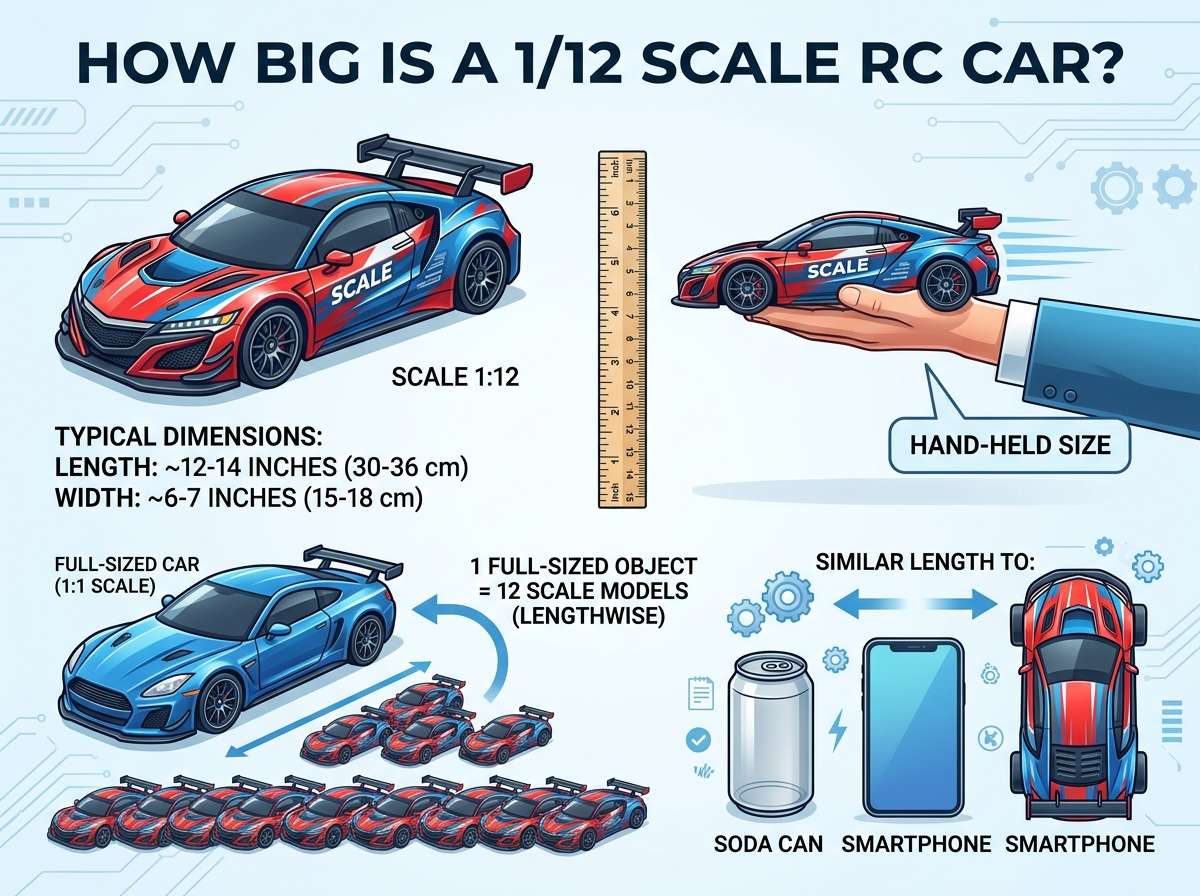
Let’s start with the basics. A scale is just a way to compare the size of a model to the size of the real thing. When you see 1:12, it means that one unit on the RC car equals 12 units on the real vehicle. Think of it as a ratio that shrinks everything down proportionally.
So if a full-sized car is 144 inches long, a 1:12 scale model would be exactly 12 inches long. The math is straightforward: you simply divide the real car’s measurement by 12, and you get your RC car’s size. This ratio applies to all parts of the car, from the length and width to the height and wheel diameter.
Real-World Size of a 1:12 Scale RC Car
Now for the practical stuff. How big does a 1:12 scale RC car actually look when you hold it in your hands?
Most 1:12 scale RC cars measure between 10 and 14 inches in length. The width usually ranges from 6 to 8 inches, and the height sits somewhere around 4 to 5 inches. When you pick one up, it fits comfortably in both hands, which makes it bigger than smaller scales like 1:18 or 1:24, but still portable and easy to manage.
Think about holding a ruler. A 1:12 scale car is roughly the length of two rulers placed end to end. That’s a good way to visualize it if you need a quick mental picture. These cars are substantial enough to show real detail and have genuine presence, but they’re not so big that you can’t transport them easily or find space to run them.
How 1:12 Scale Compares to Other RC Car Sizes
Let’s put 1:12 scale in perspective by comparing it to other popular sizes you’ll see in the RC hobby.
A 1:18 scale car is smaller. These typically run 7 to 10 inches long and feel more compact in your hand. They’re great for kids and for people who want something easy to carry around. However, they have less detail and can feel a bit fragile.
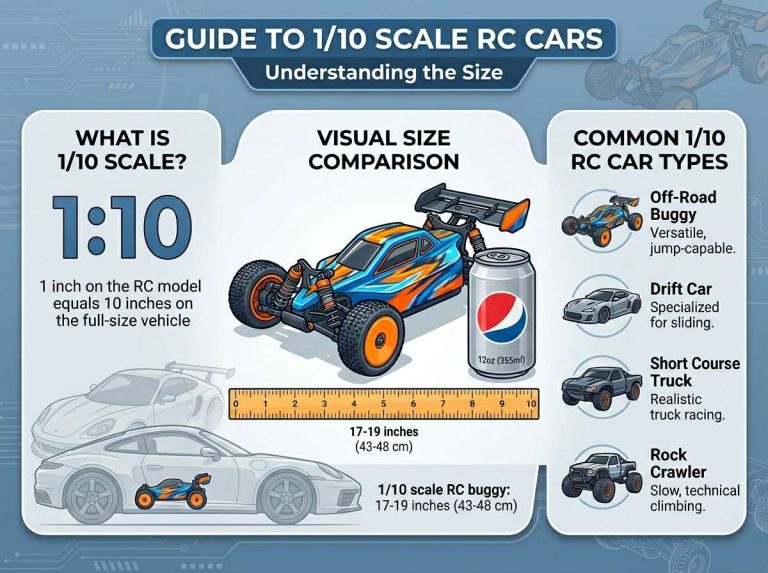
A 1:10 scale car is actually larger than 1:12. These monsters can stretch 14 to 18 inches in length and are the serious player’s choice. They’re the workhorses of the RC world, especially for off-road racing and high-performance driving. The bigger size means more room for powerful motors and better handling on rough terrain.
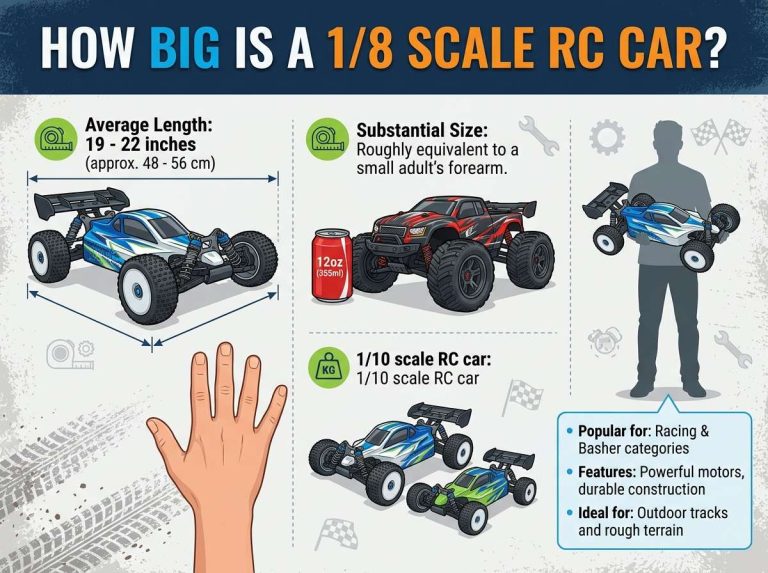
Then there’s 1:8 scale, which is the heavyweight champion. These giants can be 18 inches or longer and are typically reserved for serious racers and collectors. They cost way more money and demand serious storage space.
So where does 1:12 fit? It’s right in the sweet spot for many hobbyists. It’s bigger and more impressive than 1:18, but smaller and more affordable than 1:10. It hits that perfect balance between impressive detail and practical usability.
Why Size Matters in RC Cars
You might wonder why all this fuss about size? Well, size affects everything about how your RC car performs and what you can do with it.
Bigger cars like 1:12 scale models can carry more powerful motors and batteries. This means they can go faster and run longer on a single charge. The extra size also means more stability on the track. When you’re driving a larger RC car, it feels less twitchy and easier to control, especially if you’re still learning.
The larger chassis also gives you more room to upgrade and modify your car. You can swap out components, add new parts, and customize your vehicle without running into space issues. Many hobbyists love this aspect because it lets them build their own personal machine.
Storage is another consideration. A 1:12 scale car takes up less space than a 1:10, but more than a 1:18. If you live in an apartment or have limited storage, this could matter. You’ll need room for the car, the battery charger, the controller, spare batteries, and any parts you might want to keep on hand.
What You Can Do With a 1:12 Scale RC Car
These cars aren’t just for looking at. They’re built for action and fun. Let’s talk about the real-world activities you can enjoy.
On-Road Racing and Street Driving
Many 1:12 scale cars work great on roads and smooth surfaces. You can set up cones for slalom courses, create obstacle courses in parking lots, or just cruise around on smooth pavement. Some people build scale-model street circuits and host casual races with friends.
Off-Road Adventures
If your 1:12 scale car has the right tires and suspension, it can handle dirt, grass, and gravel. It won’t tackle the roughest terrain like a big 1:10 scale truck, but it can manage light trails and backyard courses just fine. Off-road 1:12 models are less common than on-road versions, but they definitely exist and have loyal fans.
Collecting and Display
Some people buy 1:12 scale RC cars primarily as display pieces. They set up detailed track layouts, build miniature garages and pit areas, and create authentic racing environments. These collector-focused cars often come with incredible detail and look stunning under good lighting.
Casual Fun with Friends
You don’t need to be competitive to enjoy RC cars. Many people grab their 1:12 scale models, find an open area, and just drive around for fun. It’s relaxing, entertaining, and doesn’t require the same commitment as serious racing.
Performance Specs for 1:12 Scale Models
Let’s talk about what you can expect performance-wise from a 1:12 scale RC car.
Most 1:12 scale cars hit speeds between 20 and 40 miles per hour, depending on the specific model and motor. High-end racing models might reach 50 mph, while casual recreational cars often top out around 25 mph. This is plenty fast enough to be exciting without being dangerous or out of control.
Battery life typically runs 15 to 30 minutes of actual driving time, though this varies based on your driving style. If you constantly hammer the throttle and do aggressive maneuvers, your battery drains faster. Smooth, controlled driving extends your runtime.
The motors in 1:12 scale cars usually range from 370 brushed motors for casual models to high-torque brushless motors for racing and performance versions. Brushless motors run cooler, last longer, and deliver better power, but they cost more money upfront.
Charging time for batteries normally takes 1 to 3 hours depending on battery capacity and charger type. Fast chargers can cut this down significantly if you’re willing to spend a bit more on charging equipment.
Price Range for 1:12 Scale RC Cars
Budget matters when you’re getting into the hobby, so let’s be real about costs.
A basic 1:12 scale RC car will run you between 50 and 150 dollars. These are good starter models that give you everything you need to get going, though they might not have the fanciest features or materials.
Mid-range 1:12 scale cars cost between 150 and 400 dollars. These models have better motors, nicer suspensions, and more detailed bodies. They’re built to handle more aggressive driving and will last longer with proper care.
High-end racing and collector models start at 400 dollars and can easily exceed 1000 dollars. These are precision machines made with the finest materials and components. They’re designed for serious competition or serious collecting.
Don’t forget to budget for batteries, chargers, spare parts, and accessories. A quality charger might cost 50 to 150 dollars. Spare batteries run 30 to 100 dollars each. Over time, these extras add up, but they’re worthwhile investments that improve your experience.
Maintenance and Upkeep for 1:12 Scale Models
Owning an RC car means taking care of it. The good news is that 1:12 scale cars aren’t overly complicated to maintain.
After each driving session, you should clean your car with a soft brush to remove dirt and dust. This takes just a few minutes and keeps everything looking good. If your car got wet or muddy, rinse it gently with fresh water and let it dry completely before storing it.
Check the battery before each session. Make sure it’s charged and in good condition. Most RC batteries last about 300 to 500 charge cycles before they start losing performance, so plan on replacing them periodically.
Inspect the tires for wear and damage. Worn tires hurt your car’s handling and speed. Fortunately, tires are cheap and easy to replace.
The motor and electronics don’t need much attention if you’re gentle with your car and don’t run it in extreme conditions. However, if you notice decreased performance or odd noises, you might need to open things up and investigate.
Choosing the Right 1:12 Scale RC Car for You
So you’re thinking about getting a 1:12 scale RC car. How do you pick the right one?
First, think about what you want to do with it. Do you want to race seriously? A high-performance racing model is your best bet. Do you want casual backyard fun? A recreational model works perfectly fine. Are you interested in collecting? Look for models with exceptional detail and build quality.
Second, think about your budget. Be honest about how much you want to spend, not just on the car but on the whole hobby. Remember that parts, batteries, and chargers add up.
Third, read reviews and watch videos. YouTube has tons of content about specific RC car models. Seeing a car in action before you buy gives you real insight into how it performs and whether it’s right for you.
Fourth, think about your space. Do you have somewhere to drive? A smooth driveway? A parking lot? A dirt field? Your available driving space influences which type of car makes the most sense.
Common Beginner Mistakes to Avoid
Let’s talk about mistakes that new RC car enthusiasts often make.
Don’t run your battery completely dead. This damages the battery and shortens its lifespan. Charge it when it starts to slow down, not when it completely stops.
Don’t use tap water to clean your car. Tap water has minerals that can cause corrosion. Use distilled water instead, or just use a dry brush.
Don’t store your car in extreme temperatures. Batteries especially suffer if left in hot cars or freezing garages. Store your RC car in a cool, dry place.
Don’t ignore small problems. If something sounds or feels off, check it out. A small issue now becomes a big problem later if you ignore it.
Don’t crash on purpose. Yes, it’s tempting to see how hard your car can crash, but this damages components and shortens your car’s life. Drive responsibly and your car will reward you with years of fun.
The 1:12 Scale Community
One of the best things about owning an RC car is the community. People who love this hobby are generally friendly, helpful, and excited to share knowledge.
You’ll find active communities on forums, social media groups, and local clubs. These places are great for asking questions, getting advice on repairs, and finding other people to drive with. Many areas have local RC clubs that host regular meetings and races. Joining a club connects you with experienced drivers who can teach you how to get the most from your car.
Online tutorials and guides are everywhere. YouTube channels dedicated to RC cars range from beginner guides to advanced racing techniques. Manufacturers also provide manuals and support to help you maintain and upgrade your vehicle.
Upgrades and Customization Options
One reason many people love 1:12 scale RC cars is that they’re customizable. You can modify your car to suit your style and driving preferences.
Motor upgrades are popular. Swapping a basic motor for a high-performance brushless motor dramatically improves speed and power. This is one of the most impactful upgrades you can make.
Suspension upgrades improve handling. Better shocks and springs let your car corner faster and handle rough surfaces more smoothly.
Tire upgrades matter too. Different tire compounds and tread patterns perform better on different surfaces. Racing slicks work great on pavement, while grippy off-road tires handle dirt better.
Body shells let you change your car’s appearance. Want your car to look like a sports car, a vintage racer, or a monster truck? Swap the body shell and you’ve got a completely different look.
LED lights and light kits add cool visual flair. Many people install working headlights and taillights on their RC cars.
Custom wheels and cosmetic parts let you express your personality. Paint jobs, decals, and custom details transform a basic car into something uniquely yours.
Safety Considerations
RC cars move fast, so safety matters. Here are some responsible practices.
Always drive in designated areas where you won’t hit people or damage property. A parking lot, a quiet field, or an RC track are all appropriate places. A busy sidewalk is not.
Wear eye protection if you’re racing or driving at high speed. A flying car part or rock kicked up by the tires could hurt your eyes.
Keep the controller pointed away from your face and body. Antennas sometimes break, and you don’t want debris flying at your head.
Don’t let children drive without adult supervision. RC cars can surprise you with their speed and power. Younger kids need guidance to operate them safely.
Be respectful of other people’s space and property. Don’t drive on someone’s lawn without permission, and keep your car away from people and animals that might get startled.
Final Thoughts on 1:12 Scale RC Cars
A 1:12 scale RC car sits in a sweet spot in the hobby. It’s big enough to have real presence and impressive performance, but small enough to be portable and affordable. These cars offer an incredible mix of fun, customization possibilities, and community connection.
Whether you’re a complete beginner just discovering the hobby or someone looking to add to an existing collection, 1:12 scale models deserve serious consideration. They deliver real entertainment value and open the door to a fascinating world of remote control racing and collecting.
The size lets you enjoy genuine RC driving without the massive commitment required by larger scales. You get serious performance, impressive detail, and endless customization options all in a package that fits in your hands and your budget.
Start with a good quality model that matches your interests and budget. Join the community, learn from others, and don’t be afraid to experiment. Upgrade gradually as your skills and interests grow. Most importantly, have fun. RC cars are meant to bring joy, not stress.
The world of 1:12 scale RC cars is welcoming, exciting, and endlessly rewarding. Take the leap, get your hands on one of these cool machines, and discover why millions of people around the world love this hobby. You’re going to have a blast.
Peterson is an RC hobby enthusiast and product reviewer with a passion for remote-controlled cars, trucks, boats, drones, and accessories. He enjoys testing the latest RC products, comparing features, and sharing practical buying guides to help beginners and experienced hobbyists make informed decisions. Through RCThing.com, Peterson provides honest reviews, maintenance tips, and expert advice to help readers get the most from their RC adventures.