110 vs 118 Scale RC Cars
If you’re new to the world of remote control cars, you’ve probably seen numbers like 110 and 118 thrown around. These numbers might look confusing at first, but they actually tell you something really important about your RC car. Let’s break down everything you need to know about these two popular scales.
What Do These Scale Numbers Actually Mean?
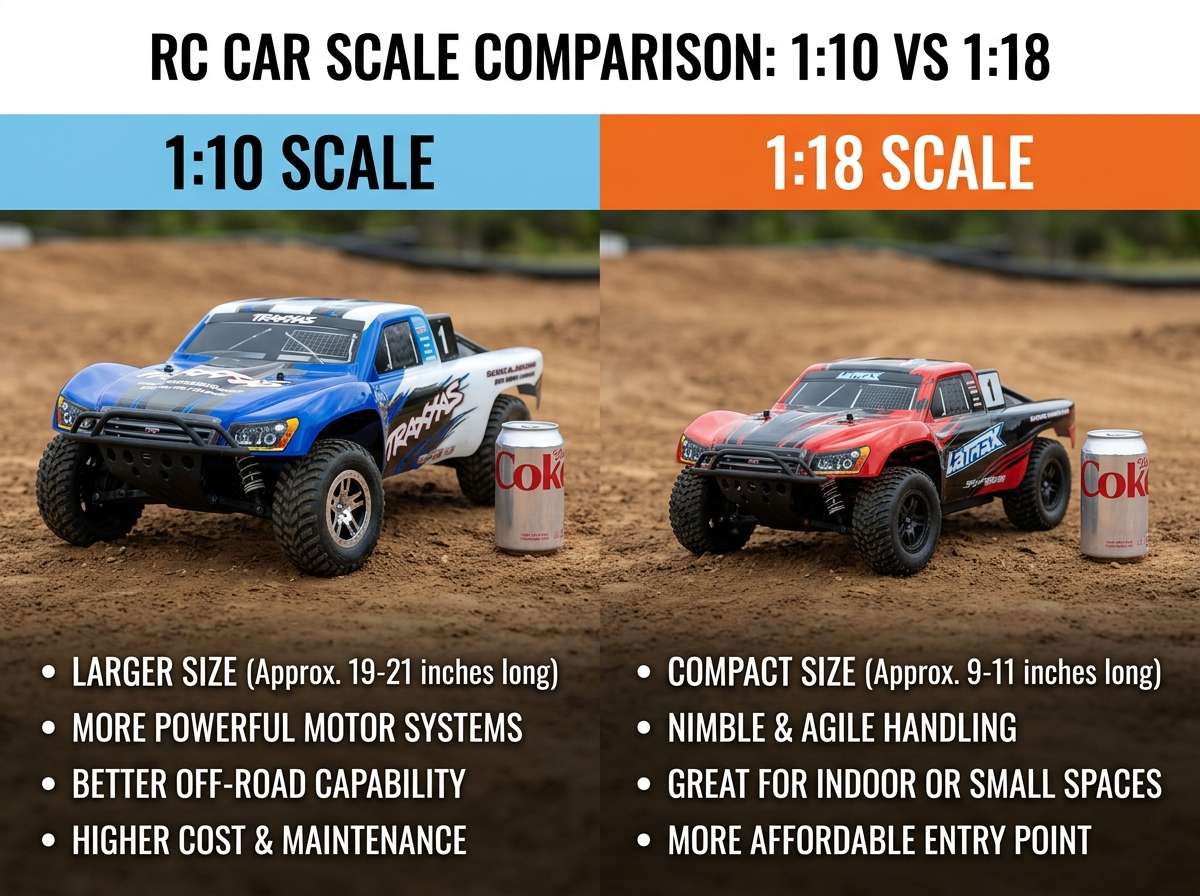
Scale is basically a ratio that tells you how big your RC car is compared to a real car. When we say a car is 110 scale, that means it’s 1/10th the size of a real vehicle. So if a real car is 400 inches long, your RC model would be 40 inches long.
The same logic applies to 118 scale cars. These vehicles are 1/18th the size of their real-world counterparts. This makes them noticeably smaller than their 110 cousins. Think about it this way: if you shrink a real car to 1/18th of its size, you get something that’s only about half as big as the 110 version.
Size Comparison: The Big Picture
This is where things get really interesting. The size difference between these two scales is massive, and it affects everything about how you use your car.
A 110 scale RC car typically measures around 15 to 17 inches in length. These are substantial models that grab people’s attention. You can hold them easily in your hands, but they take up real space on your shelf or display. When you’re driving one, you feel like you’re controlling something significant.
The 118 scale vehicles, on the other hand, are much more compact. These tiny racers usually measure between 7 to 9 inches long. They’re small enough to fit in your pocket. Kids can carry them around easily, and adults love them because they don’t demand much storage space. This size difference is crucial when you’re thinking about space in your home or what you want to transport to the track.
Price: How Much Will You Spend?
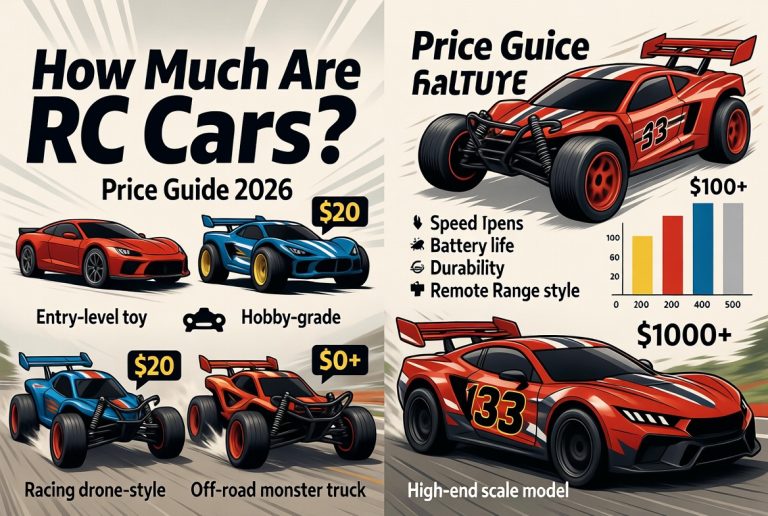
Your budget plays a huge role in deciding between these two scales. Generally speaking, 110 scale RC cars cost more than their 118 counterparts. A quality 110 model can run you anywhere from 150 to 500 dollars or even higher. You’re paying for that bigger body, more powerful motor, and superior durability.
118 scale cars are way more budget-friendly. Entry-level models start around 30 to 80 dollars, making them perfect for beginners or anyone who doesn’t want to drop serious cash on a hobby. Even high-end 118 models usually stay below 200 dollars. This price difference matters big time if you’re just starting out and want to dip your toes into RC cars without spending a fortune.
Performance and Speed: How Fast Can They Go?
Now we’re getting into the fun stuff. Both scales can deliver impressive speed and thrilling driving experiences, but they do it differently.
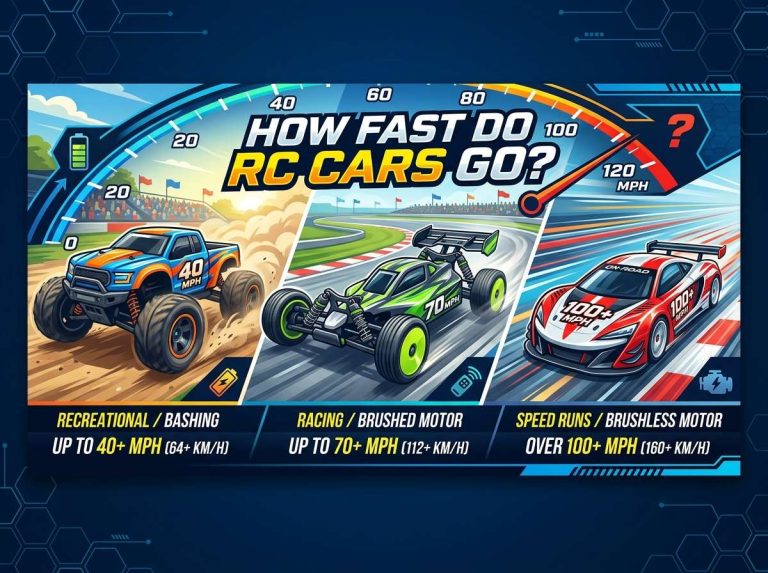
110 scale RC cars generally hit higher top speeds. Casual models cruise around 20 to 30 miles per hour, while serious racing machines push past 60 miles per hour. Some high-performance 110 vehicles can reach speeds over 100 miles per hour with the right setup. These cars have more power under the hood, stronger motors, and better acceleration. When you drive a 110 car, you feel the raw power and control.
118 scale cars are no slouches, though. They move quick for their size. Most models reach speeds between 15 to 40 miles per hour, which feels incredibly fast when you’re looking at such a tiny machine. The acceleration feels snappier because of the lower weight. On a small track or your living room, a 118 car feels just as thrilling as a much larger vehicle would feel on a bigger course.
Battery Life and Runtime: How Long Can You Play?
Battery performance differs between these scales in interesting ways. The battery is your RC car’s heart, and size affects how long it can keep pumping power.
110 scale vehicles typically run longer on a single charge. Their bigger batteries pack more capacity, giving you 20 to 45 minutes of playtime depending on your driving style and battery quality. If you’re cruising and not hammering on the throttle constantly, you might stretch it even further.
118 scale cars usually give you 15 to 30 minutes per charge. The smaller bodies hold smaller batteries, so runtime drops. However, this isn’t necessarily a bad thing. Many hobbyists buy extra batteries and rotate them. While you’re charging one, you run another. This way, you get extended playtime without waiting around.
Off-Road vs. On-Road: Different Terrains, Different Needs
Both scales come in different styles designed for specific terrain. Your favorite driving spot should influence your decision.
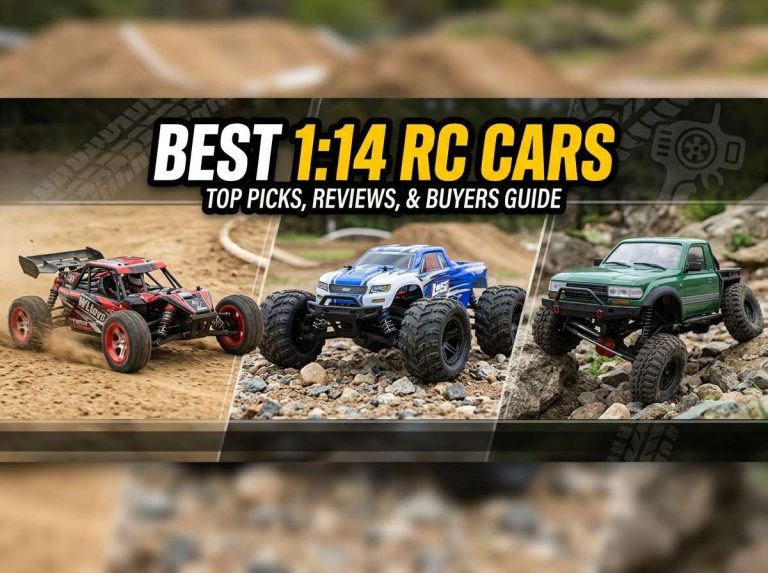
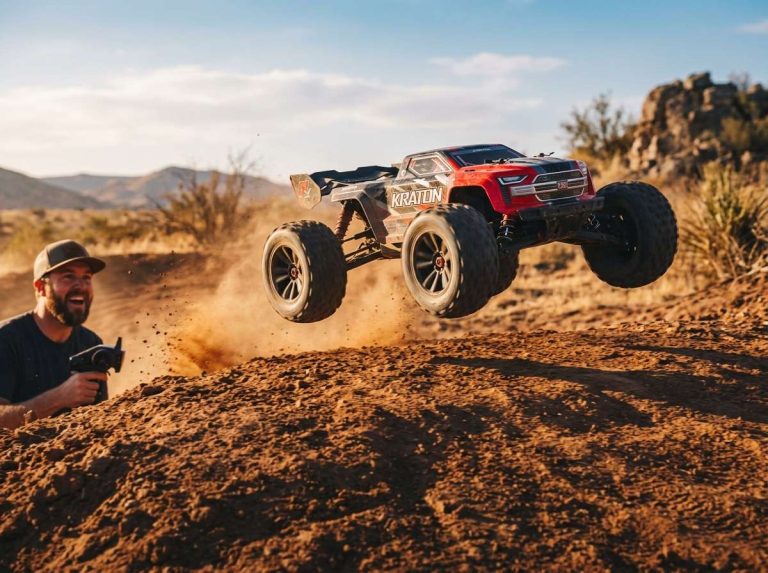
Off-road 110 cars are absolute beasts. They handle dirt, grass, gravel, and rocky terrain like champs. Their larger size means bigger suspension, better ground clearance, and tougher construction. These vehicles crush obstacles that would stop smaller cars. Off-road 110 models are perfect for exploring your backyard or a local dirt track.
Off-road 118 cars are nimble and fun. They handle smaller trails and dirt patches well. They’re great for indoor spaces that have a bit of terrain or sandy areas. They’re not as tough as their bigger cousins, but they’re quick and easy to handle.
On-road 110 vehicles are built for speed on pavement. They have low-slung bodies, responsive steering, and smooth suspension tuned for racing. These cars tear up street courses and concrete tracks. Serious RC racers love 110 scale on-road cars because they deliver consistent performance.
On-road 118 models are nimble speedsters. They’re perfect for smooth indoor tracks or paved surfaces. These tiny racers dart around with precision. They’re popular in competitive circuits because they’re affordable to buy and maintain.
Customization and Parts Availability: Building Your Dream Car
One major advantage of the 110 scale is the massive aftermarket parts ecosystem. The RC community has been racing 110 models for decades, so manufacturers make tons of upgrade parts. Want new shocks? Done. Need a different chassis? You’ve got options. Grille kits, light bars, tires, motors, and suspension components—everything is available. You can spend years customizing a 110 car and always find something new.
118 scale has a decent parts market, but it’s not nearly as extensive. You’ll find basic upgrades and maintenance parts easily enough. For heavy customization, your options shrink fast. This is fine if you just want to enjoy driving as-is, but it’s limiting if you’re the tinkering type.
Maintenance and Repairs: Keeping Them Running
Both scales need regular maintenance to stay healthy. The bigger question is how hard repairs become when something breaks.
110 scale cars are easier to work on simply because they’re bigger. You can see what you’re doing, and your hands fit better into tight spaces. Replacement parts are easier to source, and repair guides are plentiful online. If something breaks, you’ll likely find the fix without too much trouble.
118 scale cars demand more patience during repairs. Everything is smaller and tighter. Your hands might feel clumsy working on such a tiny vehicle. However, there’s an upside: fewer things break because there’s less moving around and less wear. The smaller motors and lighter construction actually reduce the strain on components.
Who Should Buy a 110 Scale Car?
110 scale RC cars are perfect for you if you have the space and budget. These cars shine if you want serious performance, extensive customization options, and durability. Racing enthusiasts gravitate toward 110 models because they deliver consistent, predictable performance on competitive tracks.
Adults who want a challenging hobby will love 110 cars. The learning curve is steeper, but the rewards are bigger. You get a real sense of accomplishment when you dial in the perfect setup and nail a perfect run.
If you plan to race competitively, go 110. Most serious RC racing happens at this scale. The tournaments, the track time, the community—it’s all centered around 110 vehicles.
Families with teenagers or older kids benefit from 110 cars too. Kids can learn serious mechanical skills by maintaining and upgrading these machines. The investment is worth it for long-term enjoyment and education.
Who Should Buy a 118 Scale Car?
118 scale RC cars are ideal for beginners and anyone with limited space. These vehicles are the perfect entry point into the hobby. You spend less money, so if you decide RC cars aren’t for you, you haven’t lost much.
Parents looking for toys for younger children should lean toward 118 models. The small size is less intimidating, and kids can handle them easier. There’s less damage potential too—smaller, lighter vehicles are less likely to cause injury if they crash into someone.
If you live in an apartment or small house, 118 scale cars are your friends. They store easily and don’t demand much space for a track or play area. You can have a blast in your living room or a small backyard.
Adults who want relaxing, casual fun will appreciate 118 cars. You can grab one, drive for 20 minutes, and put it away without much fuss. No complex maintenance, no overwhelming upgrades. Just pure driving enjoyment.
Travel enthusiasts should definitely check out 118 models. Their tiny size makes them perfect for throwing in a suitcase. Take your car on vacation and enjoy some playtime wherever you go.
Durability and Longevity: Built to Last?
110 scale cars, especially quality models, are built tough. They use stronger materials, reinforced chassis, and more durable components. With proper care, a 110 vehicle lasts for years. Parts replacements keep them running even after hard crashes.
118 scale cars are more fragile but also more forgiving. They weigh less, so crashes are usually less violent. That said, the plastic on these tiny machines is thinner. A hard impact can crack something. Repairs are possible but might cost a decent chunk because you’re often replacing entire assemblies rather than single components.
Driving Experience: What Does It Feel Like?
Driving a 110 scale car feels powerful and responsive. The larger size gives you better visibility of what the car is doing. You feel connected to the machine. The controls feel substantial in your hands. Cornering feels planted, and acceleration feels meaty. If you like feeling in control and commanding a machine, 110 cars deliver.
118 scale cars feel quick and darty. Everything happens faster because the vehicle is smaller and lighter. You develop sharp reflexes driving these tiny speedsters. The learning curve is less steep because inputs are more forgiving. You can recover from mistakes easier. It’s more playful and less serious, which some people absolutely love.
Community and Support: Finding Your Tribe
110 scale RC cars have massive communities. Online forums overflow with tips, tricks, and racing action. Local clubs and racing events happen regularly. Finding someone to help you or learn from is easy. You’ll discover tutorials for every possible question.
118 scale communities exist but are smaller. You’ll find forums and online groups, but the activity level is lower. This means fewer resources and less local competition. However, the hobby is still very much alive, and you won’t struggle to find support.
Storage and Display: Where Will They Live?
Storage is a practical consideration many people overlook. A 110 scale collection takes up serious shelf space. One car is manageable, but two or three models demand dedicated storage. They’re big enough to display prominently, which is awesome if you love showing off your vehicles.
118 scale cars are display-friendly in any space. You can line up ten of them on a single shelf. They fit on desks, nightstands, or car models. They’re perfect for people who want a collection without the storage headache.
Battery and Charging: Power Management
110 scale cars typically use larger battery packs. Charging times are longer—usually 1 to 3 hours depending on the charger. The upside is longer runtime, so it’s worth the wait. Battery replacement costs more because you’re powering a bigger machine.
118 scale cars charge faster. Most models go from zero to full in 30 to 60 minutes. If you invest in a good charger, you can top off a battery while using another. Battery costs are lower, making replacements more affordable when they eventually wear out.
Weather Considerations: Indoor vs. Outdoor
110 scale cars handle variable weather better. Their larger size means better water resistance (though you still shouldn’t submerge them). They perform well in cold weather too. You can take them out in less-than-perfect conditions and not worry as much.
118 scale vehicles are more sensitive to weather. Rain is their enemy, and cold temperatures drain batteries faster. These cars perform best in good weather, indoors, or in controlled environments. This limitation pushes many 118 owners toward indoor racing.
Learning Curve: How Hard Is It to Get Good?
Learning to drive a 110 car takes more time. The size means the physics feel more realistic. You need to learn proper throttle control, braking technique, and cornering skills. Making mistakes teaches you valuable lessons. The payoff is that once you get good, you feel truly skilled.
118 scale cars are more forgiving teachers. You can pick one up and start having fun immediately. Learning still happens naturally, but it’s less frustrating. You progress faster and feel confident sooner. This makes them better for young drivers or casual hobbyists.
Noise Level: How Loud Are They?
110 scale cars with brushless motors can get pretty loud. Racing at full throttle creates a high-pitched whine. If you live in an apartment, this might bother neighbors. You’ll probably want to keep your racing to reasonable hours.
118 scale cars are quieter overall. They’re smaller, lighter, and often run brushed motors or slower brushless setups. The noise is noticeably less annoying. You can have fun without worrying as much about noise complaints.
The Verdict: Making Your Final Choice
So which scale wins? Honestly, there’s no universal answer. Both are fantastic choices depending on your situation.
Buy a 110 scale car if you have space, budget, and passion. You want the best performance, most customization options, and longest possible playtime. You’re willing to learn maintenance skills and enjoy building your hobby investment.
Go with 118 scale if you’re starting out, have limited space, or want casual fun. You’ll save money and still get an exciting driving experience. The learning curve is gentler, and cleanup is easier.
Many enthusiasts eventually own both scales. A 110 car becomes your serious racer while a 118 serves as your fun, grab-and-go option. There’s no rule saying you have to stop at one.
Real-World User Experiences: What Actual Owners Say
People who drive 110 scale cars often rave about the realistic feel. They talk about how controlling one of these machines makes them feel like a professional race car driver. The responsiveness matches their inputs perfectly. They enjoy upgrading components and watching their car evolve. Many describe it as meditative—the focus required quiets their mind. Spending an afternoon tuning suspension or replacing worn parts becomes therapy.
Owners of 118 scale models consistently mention the fun factor. They love the instant gratification. You can open the box, charge the battery, and start racing in minutes. Parents appreciate how their kids get excited instantly. The tiny size never fails to impress people who see it for the first time. Many owners talk about the smile they get from watching something so small move so fast.
Competitive racers swear by 110 vehicles. They describe the precision possible at this scale. Racing at competitive events, feeling the track conditions through the controller, and pushing a finely-tuned machine to its limits—this is what drives them. The 110 scale racing community is tight-knit, supportive, and incredibly passionate.
Casual hobbyists love 118 cars. They mention not feeling pressured to spend tons of money on upgrades. They drive for entertainment, not competition. The low stakes mean low stress. These people came to the hobby to relax and have fun, and 118 cars deliver exactly that.
Terrain-Specific Performance: Which Excels Where?
On smooth pavement, 110 scale on-road cars absolutely dominate. Their low center of gravity, responsive steering, and smooth handling make them tear up concrete. These are racing machines built for speed on hard surfaces. They carve corners with precision that’s genuinely impressive.
118 on-road models handle smooth surfaces well too, but with less refinement. They’re still quick and fun, just less predictable at high speeds. They work great for casual track sessions or running laps in the driveway.
In dirt and grass, 110 off-road cars shine brilliantly. Their larger wheels, better suspension travel, and higher ground clearance mean they handle rough terrain beautifully. Jumps, rocks, roots—these cars power through obstacles. The suspension soaks up impacts that would stop smaller vehicles.
118 off-road models handle groomed dirt well. They’re fun on cleared trails and smooth dirt tracks. Heavy mud or large obstacles might stop them. They’re perfect for small hobby tracks or backyard courses with modest terrain.
Indoors, 118 cars win hands-down. Their small size means you can set up a course in your living room or garage. 110 models need more space and are trickier to manage indoors without constantly running into walls.
Upgrades That Make a Difference
For 110 scale cars, popular upgrades include better suspensions that improve handling, stronger motors that boost speed, upgraded bearings that reduce friction, lighter chassis materials for faster acceleration, and better tires that improve traction. Each upgrade noticeably changes how the car performs.
118 scale cars benefit less from upgrades, but some improvements help. Better tires increase traction, upgraded motors provide noticeable speed boosts, and improved bearings reduce resistance. That said, the baseline performance is already good, so upgrades are optional rather than expected.
The Costs Over Time: Total Investment
Don’t just think about purchase price. Think about the total cost of ownership. A 110 scale car costs more upfront but might not cost much more over time if you drive it occasionally. If you upgrade constantly, costs add up fast. Parts are cheaper for 118 models, but you’re also replacing them less often because there’s less to upgrade.
A good budget strategy for 110: Buy one good model and invest in spare batteries. Running costs stay reasonable. If you race, entry fees add up, but that’s your choice.
For 118: Buy a decent model and extra batteries. Total spending stays low. You might enjoy buying multiple cars at different price points rather than upgrading one expensive machine.
Resale Value: What’s It Worth Later?
110 scale cars hold value decently well. Popular models from known brands maintain resale appeal. You might recover 40 to 60 percent of your purchase price if you sell it in good condition.
118 scale cars depreciate faster. Since they cost less initially, the actual dollar loss is smaller. You might recover 30 to 50 percent. The lower barrier to entry means more used models flood the market, driving prices down.
Neither scale is an investment. Buy them because you want to drive them, not expecting to make money back later.
Safety Considerations: Protecting Yourself and Others
RC cars are safe toys, but they deserve respect. 110 scale vehicles can cause real injuries if they hit someone at top speed. The motor has genuine power. Keep these cars away from people when driving at speed.
118 scale cars are less dangerous because of their size and lower speed potential. Still, protect your eyes and don’t run them toward people’s faces. Common sense rules keep everyone safe.
Always drive in designated areas away from crowds. Respect other people’s space. Fast-moving RC cars deserve the same courtesy you’d give a cyclist.
Seasonal Considerations: Enjoying Year-Round
Cold weather affects RC cars. Batteries lose capacity in cold. Lubricants thicken. 110 cars handle cold better due to their size. 118 models struggle more in freezing temperatures.
Hot weather is easier on both scales, though extreme heat damages batteries. Store them in a cool place.
Wet weather is rough on both types. Avoid water when possible. If your car gets wet, dry it completely before the next drive.
Final Thoughts on RC Cars at These Scales
The 110 vs. 118 debate really comes down to your personal situation. Both scales have active communities and solid support. Both deliver fun and excitement. The right choice is the one that fits your life.
Start by thinking about your space, your budget, and what you want from the hobby. Want competitive racing? Go 110. Want casual fun and easy storage? Grab 118. Want both experiences? Get one of each.
Remote control vehicles bring joy to millions of people worldwide. Whether you pick a massive 110 scale beast or a tiny 118 speedster, you’re in for a fun ride. The hobby rewards patience, teaches mechanical skills, and connects you with awesome people who share your passion.
The RC car hobby is more than just driving toys around. It’s about learning, competing, creating friendships, and challenging yourself. Both scales offer these benefits at different levels. Your local hobby shop can let you hold both sizes and get a feel for what clicks with you.
Get out there, pick your scale, and start driving. The RC car community is waiting to welcome you with open arms. You’re about to join a hobby that brings genuine happiness and excitement. Make your choice based on what works for you, not what anyone else says. Both scales are winners, and you’ll win either way.
Peterson is an RC hobby enthusiast and product reviewer with a passion for remote-controlled cars, trucks, boats, drones, and accessories. He enjoys testing the latest RC products, comparing features, and sharing practical buying guides to help beginners and experienced hobbyists make informed decisions. Through RCThing.com, Peterson provides honest reviews, maintenance tips, and expert advice to help readers get the most from their RC adventures.