

5 Best RC Warbird for Beginners In 2026
If you have always wanted to fly a model airplane but felt scared of breaking it on day one, you are in the right place. Warbirds are the old-school fighter planes from World War II, like the Spitfire, the P-51 Mustang, and the Corsair. They look great in the air, and many modern RC versions are built to be friendly to new pilots. This roundup covers five popular RC warbirds that beginners often look at, and it explains what each one does well and where it falls short.
Every plane here is a ready-to-fly (RTF) model. That means the box includes the plane and a transmitter, which is the handheld remote you use to control it. You still need to charge the battery and sometimes add a few small parts, but you do not need to build a kit from scratch. That makes RTF planes a great starting point for anyone new to the hobby.
Keep in mind that this article is based on product listings, published specs, and general feedback from the hobby community. Specs and included items can change from one batch to the next, so always check the listing before you buy.
What Makes an RC Warbird Good for Beginners
Before we look at the planes one by one, let’s talk about what really matters for a first-time pilot. A pretty paint job is nice, but it will not save your plane when you are learning to land.
Gyro Stabilization
A gyro is a small sensor inside the plane that senses when it tilts or rolls. Stabilization uses that sensor to nudge the control surfaces back to level. A six-axis gyro reads movement in six directions, which helps the plane hold a steady attitude when the wind pushes it around. For a beginner, this feature is a big help. It makes the plane feel calmer and gives you more time to think about what your thumbs are doing.
That said, gyro stabilization is not a magic shield. It helps the plane stay level, but it cannot fix a bad landing approach or a dive into the ground. Think of it as training wheels that slowly lose their usefulness as your skills grow.
Channel Count
The channel count tells you how many separate controls the transmitter can send to the plane. A 3-channel plane usually handles throttle, aileron (roll), and elevator (pitch). A 4-channel plane adds rudder, which controls the nose left and right on the ground and in the air.
Three channels are simpler, and many beginners find them easier to learn. Four channels give you more control and smoother turns, which helps once you move past basic flying. Neither is wrong. It depends on how fast you want to grow.
Build Material and Durability
Most RC warbirds in this price range use lightweight EPP foam or similar foam materials. Foam is popular because it bends on impact instead of cracking, and it is cheap to repair with a bit of tape or glue. Beginners crash a lot, so a plane that survives a few bumps is a real advantage. Look for a plane with a sturdy wing, a secure fuselage, and parts that come off easily for repair.
Radio System and Range
Most modern RC planes use a 2.4GHz radio system. This type of radio is far less likely to suffer interference than older frequencies, and it locks onto the transmitter automatically once you turn both on. For a beginner, 2.4GHz means fewer headaches with binding and setup.
Wingspan, Weight, and Flying Space
A bigger plane is usually more stable in the wind, but it is also heavier and harder to carry. Smaller planes are easier to transport, but they can be twitchy in gusty weather. A good beginner plane sits in the middle. You also need a flying space that is open, flat, and free from trees, power lines, and people. A local park field or an empty soccer field often works well.
Quick Comparison at a Glance
Here is a simple table to help you see the main differences before we dive into the details.
| Product | Channels | Stabilization | Plane Style | Best For |
|---|---|---|---|---|
| 3CH Spitfire RC Plane | 3 | 6-axis gyro | British fighter | Absolute beginners who want easy handling |
| LEAMBE F4U Corsair 4CH | 4 | Listed as easy control | US Navy fighter | Beginners ready to learn rudder control |
| 3CH P-51D Mustang | 3 | 6-axis gyro | North American fighter | Beginners who want stable, simple flying |
| volantexrc 4CH | 4 | Check listing | General RC plane | Budget-minded pilots wanting more control |
| LEAMBE P51 Mustang 4CH | 4 | Listed as easy control | North American fighter | Beginners who want a warbird with rudder |
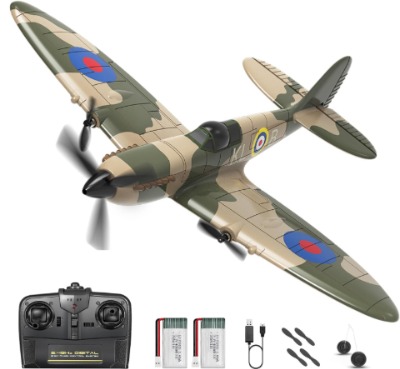
1. 3CH Spitfire RC Plane, Stabilized RC Warbird for Beginners
Product Description
This is a 3-channel RC model of the famous British Spitfire fighter. The listing highlights a six-axis gyro stabilization system, a 2.4GHz ready-to-fly setup, and a classic warbird design. The plane is marketed as beginner-friendly, and that message fits the feature set. It is a simple, direct entry point into the warbird world.
Best Use Cases
This plane fits best for a new pilot who wants to learn basic flight without the extra complexity of rudder control. It also works well as a first plane for a younger teen with an adult nearby to help. It is a good choice for flying in a large open field on calm or light-wind days. Many people also enjoy it as a casual sport plane for slow, relaxed circles around the field.
Key Features Explained Simply
The six-axis gyro is the main selling point. It works quietly in the background and helps the plane stay level when a light gust hits. The 3-channel layout keeps the transmitter simple. You only use the throttle, the aileron stick, and the elevator stick. That simplicity matters because your brain has fewer things to juggle while you learn.
The 2.4GHz system means you do not have to worry about picking a free radio frequency. You turn on the transmitter, connect the plane, and you are ready to go, at least in theory. Setup is usually quick once you know the steps.
Real-Life Usage Insight
In real life, the first few flights with a 3-channel plane feel very different from what you expect. Most beginners find that the plane wants to drift or turn when they least expect it, and the gyro helps calm that. Still, a bit of wind can push a light plane off course, so you need to keep the nose pointed in the right direction and be ready with small, gentle corrections. Plan on spending a lot of time practicing straight-line flight and gentle turns before you attempt anything else.
Many new pilots also find that the Spitfire’s classic look draws attention at the park. People ask questions and want to watch the flight. This can be fun, but it also means you might have a small crowd when you are nervous. Keep your focus on the plane and give yourself space.
Honest Pros
- Simple 3-channel control that is easy to understand
- Gyro stabilization helps keep the plane level
- Classic Spitfire look that stands out in the sky
- Ready-to-fly format means less setup work
- 2.4GHz radio reduces the chance of interference
Honest Cons
- Without rudder control, turns can feel wide and less precise
- Light planes can struggle in windy conditions
- Gyro help has limits, and a rough landing can still damage the plane
- As with most RTF models, you will want spare parts such as propellers, since they break easily during learning
Performance Discussion
Performance in a plane like this is about calm, steady flight. It is not built for high-speed loops or hard aerobatics. Expect smooth, gentle maneuvers when conditions are good. The gyro helps the plane feel predictable, and that predictability is what most beginners need. If you push it hard or fly in strong gusts, it will show its limits quickly.
Ease of Use
For most beginners, this is one of the easier planes in the group. The 3-channel setup removes a layer of complexity. The gyro reduces how much correction you must make. If your goal is to get comfortable in the air without feeling overwhelmed, this plane makes the learning curve feel less steep.
Value for Money
The value depends on what you expect. You get a classic warbird look, gyro stabilization, and an RTF package, which is a solid combination for a beginner. The trade-off is that a 3-channel plane will not grow with you as much as a 4-channel model. If you plan to stay in the hobby for years, you may outgrow it sooner. For a first plane, though, it offers a reasonable entry point.
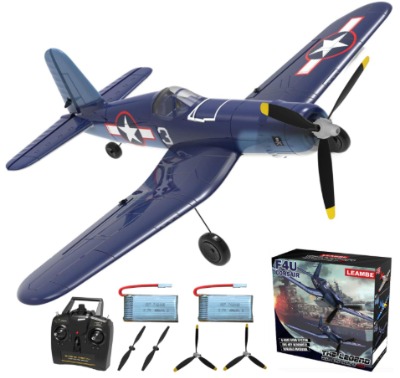
2. LEAMBE 4 Channel RC Plane, Ready to Fly Aerobatic Aircraft, Easy Control for Beginners, F4U Corsair RC Airplane Best Gift for Adults
Product Description
This is a 4-channel ready-to-fly model of the F4U Corsair, the American naval fighter known for its inverted gull wings. The listing describes it as an aerobatic aircraft with easy control for beginners. It is also marketed as a gift for adults, which tells you the brand sees it as a fun hobby piece for grown-ups as well as a learning plane.
Best Use Cases
This plane suits a beginner who wants to move beyond basic straight-and-level flying. Four channels give you rudder control, which helps with coordinated turns and taxiing on the ground. It is a good match for someone who already flew a simple plane or a trainer and wants a sportier warbird. It also works as a gift for an adult who has shown interest in model aircraft.
Key Features Explained Simply
The four-channel setup is the headline feature. Rudder control lets you steer the nose on the ground, which makes takeoff and landing more manageable. In the air, rudder helps you keep turns clean and reduces the wobbly feel that some 3-channel planes produce. The listing mentions aerobatic capability, which should be read carefully. Basic aerobatic moves such as gentle rolls or loops require more experience and a stable plane, so think of the claim as a sign of potential, not a promise that you will pull off stunts on day one.
The Corsair’s distinct look, with its bent wings and bold shape, makes it easy to spot in the sky. The listing refers to easy control, which suggests the plane is set up to respond in a predictable way. Real results will still depend on your skill, the weather, and how well the plane is set up.
Real-Life Usage Insight
Most people who move from a 3-channel plane to a 4-channel one notice the difference right away. Ground steering feels more natural. Turns feel cleaner once you learn to coordinate the rudder with the aileron. Still, rudder adds a new thing to learn, and some beginners find their hands get confused at first. Practice with slow, wide circles until the movement feels automatic.
Expect a bit of a learning curve during takeoff. Many pilots find that the plane wants to veer to one side on the runway, and the rudder helps correct it. Keep your throttle steady and make small rudder inputs. A smooth takeoff sets up the rest of the flight.
Honest Pros
- Four-channel control gives more precise steering
- Rudder helps with takeoff, landing, and ground handling
- The Corsair design looks sharp and easy to recognize
- Marketed with an easy-control focus for newer pilots
- Good option for someone who wants room to grow
Honest Cons
- Rudder adds complexity that some beginners find tricky at first
- Aerobatic claims should be treated with caution for new pilots
- Foam parts can still break in hard landings or crashes
- Performance in wind will depend on skill and setup
Performance Discussion
This plane should handle basic flying well when conditions are calm. You can expect controlled turns, steady flight at moderate speeds, and a smoother feel than a basic trainer. For higher-end maneuvers, you will need more experience and possibly a bit of tuning. Keep your expectations grounded. The listing’s aerobatic label reflects the plane’s sporty design, but it does not mean the plane is built for advanced stunts without practice.
Ease of Use
Ease of use here is a mix of simplicity and skill. The controls are not hard to understand, but four channels do take more practice than three. Once your hands learn the coordination, the plane feels very natural. Plan on a few sessions of ground steering and gentle circling before you attempt longer flights.
Value for Money
For the features offered, this plane is a strong value. You get four channels, a classic warbird look, and an RTF package, which is more than many basic trainers give. The main question is whether you are ready for four channels. If you are, the value is excellent. If you feel nervous, a simpler plane might be a better first step, and you can move up later.
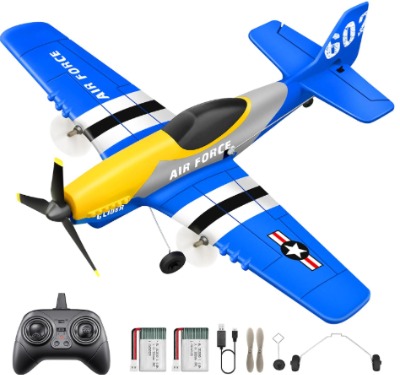
3. 3CH P-51D Mustang RC Plane, Stabilized RC Warbird for Beginners
Product Description
This model brings the P-51D Mustang into the same simple setup as the Spitfire from the same brand. The listing shows a 3-channel configuration, six-axis gyro stabilization, a 2.4GHz ready-to-fly system, and a classic warbird design. The P-51D is one of the most recognized fighters of its era, and the plane’s sleek shape makes it a favorite with RC fans.
Best Use Cases
This plane fits the same type of beginner as the Spitfire. It suits someone who wants a calm, predictable trainer with a famous look. It is a good option for relaxed flying in an open park or a large field. If you enjoy the Mustang’s design and want a simple way to start, this model delivers that experience without much fuss.
Key Features Explained Simply
The gyro stabilization works the same way as on the Spitfire. It senses tilt and helps keep the wings level, which takes some stress away from your early flights. The 3-channel layout keeps controls simple, with throttle, aileron, and elevator as the main inputs. The 2.4GHz radio system helps avoid interference and makes setup more straightforward.
The Mustang shape is slim and quick-looking, which gives it a strong presence in the air. The model’s proportions are meant to capture that classic fighter feel, and many people find it very satisfying to watch. It is a visual plane first, and that look is part of the fun.
Real-Life Usage Insight
In real flying, a 3-channel plane often feels more lively than people expect. The Mustang’s shape can make it look fast, but the controls are kept simple for a reason. Early flights are about learning how much input the plane needs. Small stick movements usually work best. If you push the sticks hard, the plane can climb or turn sharply, and beginners often overcorrect.
Plan your flights around the wind. Light breezes are usually fine for a stabilized trainer, but gusts can make the plane drift or dip. A good habit is to check the wind before you take off, and to keep your flights short while you learn.
Honest Pros
- Simple 3-channel control makes the early learning curve gentler
- Gyro stabilization adds confidence during early flights
- The P-51D look is popular and easy to appreciate
- 2.4GHz radio setup is generally smooth
- Good choice for relaxed, low-speed flying
Honest Cons
- No rudder control, so turns can feel less precise
- Light planes can be pushed around by gusts
- The gyro helps but does not replace careful flying
- Parts such as propellers may need replacement after early crashes
Performance Discussion
Performance is best described as calm and controlled. You can expect smooth turns and gentle climbs when conditions are favorable. The plane does not suit high-speed maneuvers, and that is fine for a beginner. The gyro gives the plane a steady feel, which helps you practice without constant fear of losing control.
Ease of Use
Ease of use is strong here. The 3-channel system is simple, the gyro helps keep the plane level, and the RTF setup removes much of the guesswork. Most beginners can start making short, controlled flights after a few practice sessions. The main challenge is learning to read the plane’s movement in the wind.
Value for Money
This plane offers good value for a first warbird. You get a famous design, gyro help, and a simple control layout. The biggest limitation is that you will need to move to a 4-channel plane eventually if you want more precise handling. For many beginners, that move is part of the fun, and this model serves as a solid starting point.
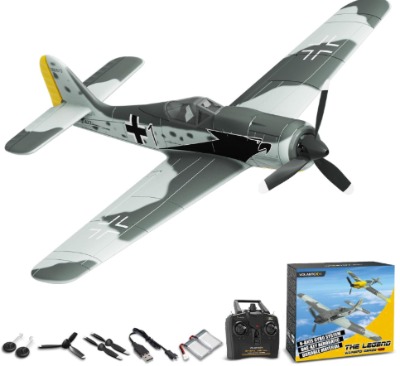
4. volantexrc RC Plane, 4CH Remote Control Airplane for Beginners & Adults
Product Description
This is a 4-channel RC airplane sold for both beginners and adults. The listing focuses on a general RC plane experience rather than a specific warbird model. It gives you four channels, which means rudder control is included, and it is marketed as suitable for new pilots and experienced fliers who want a relaxed plane to fly.
Best Use Cases
This plane works well for someone who wants four-channel control without spending a lot of money. It suits a beginner who has already practiced with a simpler plane, or someone who wants to start with rudder right away. It is also a practical option for flying at a park or open field when you want a general-purpose RC plane rather than a specific fighter design.
Key Features Explained Simply
The four-channel layout gives you throttle, aileron, elevator, and rudder. This setup supports smoother turns and better control on the ground. The volantexrc brand is known in the RC world for producing practical, budget-friendly models, and this plane follows that approach. The listing focuses on usability rather than a dramatic design.
Since the listing does not stress warbird styling, you should check the details before buying if the look matters to you. Specs such as gyro presence, battery type, wingspan, and included parts can vary by model, so confirm them in the listing before ordering.
Real-Life Usage Insight
Real-life flying with a 4-channel general plane tends to feel more balanced than a basic trainer. Rudder helps you steer on the runway and keep turns clean in the air. Expect a bit of a learning curve if you are new to rudder, and practice gentle inputs. Many beginners find that long, gradual turns are the best way to build confidence.
Because this plane is marketed for both beginners and adults, some buyers may expect it to handle like a more advanced model. Keep your flights modest and focus on learning the basic handling before attempting anything fancy.
Honest Pros
- Four-channel control gives more precise steering and turns
- Marketed for both new and experienced pilots
- Practical option for those on a tighter budget
- General-purpose design suits a wide range of flying styles
- Rudder control helps with takeoff and landing
Honest Cons
- The listing does not focus on warbird styling, which may matter to some buyers
- Four channels require more practice than three
- Specs and features should be checked carefully before purchase
- Foam parts can break in rough landings, so spares are helpful
Performance Discussion
Performance should be steady for basic and intermediate flying. You can expect controlled turns, steady cruising, and a smooth response when you keep inputs small. Advanced maneuvers are not the main focus, so this plane is best for learning and relaxed flying. Wind will still affect it, so pick calm days for your first sessions.
Ease of Use
Ease of use depends on your experience. The controls are straightforward, but the rudder adds a layer of skill. Beginners who take time to practice ground steering and gentle circles often adapt quickly. The plane does not promise self-leveling in the same way a gyro-stabilized warbird does, so expect to do more of the work yourself.
Value for Money
This plane offers good value for four-channel flying. If you want rudder control without paying a premium, it can be a smart choice. The trade-off is that you give up some of the warbird look and the gyro help found in other models in this roundup. For buyers who care most about function, that trade may be well worth it.
5. LEAMBE 4 Channel RC Plane, Ready to Fly Aerobatic Aircraft, Easy Control for Beginners, P51 Mustang RC Airplane Best Gift for Adults
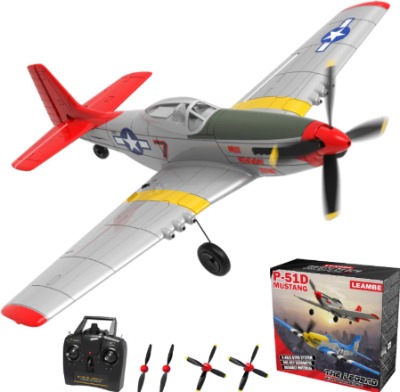
Product Description
This is a 4-channel ready-to-fly P-51 Mustang from LEAMBE. It shares the same family of features as the brand’s Corsair model: four-channel control, an easy-control focus for beginners, and an aerobatic label in the title. It is also positioned as a gift for adults, which suggests a casual hobby appeal.
Best Use Cases
This plane suits a beginner who wants a Mustang look and four-channel control at the same time. It is a good pick for someone who has practiced with a basic trainer and wants the next step. It also fits a buyer who wants a gift for an adult who has shown interest in model planes and likes classic fighters.
Key Features Explained Simply
The four-channel system is the main feature. Rudder control makes ground handling easier and helps you turn more smoothly in the air. The Mustang design brings a slim, classic silhouette that many people enjoy watching. The listing uses the phrase easy control, and that suggests the controls are tuned to be forgiving for newer pilots, though real results depend on setup and skill.
The aerobatic wording is best treated as a general sign of the plane’s sporty nature. It does not mean the plane is designed for complex stunts without experience.
Real-Life Usage Insight
In real flying, the four-channel setup helps you take control of the plane’s direction. Beginners often find takeoff and landing feel less stressful once they learn rudder use. Expect to spend your first sessions practicing gentle turns and short straight passes. Keep your inputs small, and let the plane respond before you add more.
As with any foam warbird, landings are where most damage happens. Aim for a smooth, slow approach, and keep the nose level. A lot of beginners overcorrect on the final approach, so take it slow.
Honest Pros
- Four-channel control adds precision and steering options
- Mustang design is a classic and attractive choice
- Easy-control focus suggests a forgiving setup for newer pilots
- Good gift option for adults who enjoy aircraft
- Offers room to grow as your skills improve
Honest Cons
- Rudder control requires some practice to master
- Aerobatic claims should be read as a general sign, not a guarantee
- Foam parts can break, so keep spares on hand
- Wind can still push the plane around, especially in gusts
Performance Discussion
Performance should be solid for steady, controlled flight. The plane is best suited to relaxed circuits, gentle turns, and practice runs. You can expect a responsive feel with four channels, but you should not expect advanced aerobatic results without experience and careful setup. Calm weather gives the best results for early flights.
Ease of Use
Ease of use is good for a four-channel plane. The controls are not complicated, but rudder and aileron coordination take time to learn. Most people who are patient with their practice find the plane feels natural after several sessions. The main challenge is staying calm during takeoff and landing.
Value for Money
This plane offers strong value if you want a Mustang with four-channel control. You get a classic design and a feature set that supports growth. The trade-off is that four channels take more practice than three. If you are ready for that step, the value is very good. If you want something simpler, the 3-channel Mustang from the same category may fit better.
Comparison Insights
Now that you have seen each plane up close, let’s compare them in a more practical way. The biggest split in this group is between 3-channel and 4-channel models. The Spitfire and the 3-channel P-51D are the easiest to learn, because they remove rudder from the equation. The Corsair, the volantexrc, and the 4-channel Mustang give you more precise control, but they ask more from your hands and brain.
Gyro stabilization is another key difference. The two HAWK’S WORK models both list a six-axis gyro, which gives them an extra layer of help in the air. That help can make a big difference in the first few flights, especially in light wind. The LEAMBE models and the volantexrc plane focus more on four-channel control and easy handling, so your learning will rely more on your own skill.
Looks also play a role. If the classic warbird silhouette matters most to you, the two Mustangs and the Spitfire will likely appeal more. The Corsair has a unique bent-wing shape that stands out. The volantexrc plane is more of a general-purpose design, which may suit buyers who care more about flight function than the exact fighter look.
For a first plane, the 3-channel models often make the most sense. They keep the learning curve manageable and reduce the number of things you must master at once. Once you feel comfortable with throttle and basic turns, a 4-channel model can help you grow. Many pilots move from a 3-channel trainer to a 4-channel sport plane after a few months of practice, but that timeline varies from person to person.
Durability is similar across the group, since most of these planes use foam construction. Expect some crashes while you learn, and plan to keep a few spare propellers and tape nearby. Repairs are usually affordable, which is one reason foam is so popular for beginners.
Buying Guide: What to Check Before You Order
A good beginner plane can still disappoint if you buy without checking a few key details. Here is a simple list of things to look at before you click the buy button.
Check the Channel Count
Decide whether you want 3-channel or 4-channel control. Three channels are simpler and cheaper to learn with. Four channels give more control but ask for more practice. Be honest about your patience and your goals.
Confirm What Is Included
RTF means ready to fly, but the exact package can differ. Check whether the listing includes the plane, transmitter, battery, charger, and spare parts. Some packages need you to supply batteries for the transmitter. Missing items can delay your first flight.
Look at Battery Type and Flight Time
Many small RC planes use rechargeable lithium polymer (LiPo) batteries. Read the listing to see what type of battery is included and how many you get. Plan to charge batteries safely and never leave them charging unattended. Flight time varies a lot with weather, throttle use, and battery condition, so treat any listed time as a rough guide.
Check Wingspan and Size
Wingspan affects how the plane handles wind and how easy it is to transport. Smaller planes are lighter and easier to carry, but they can be more sensitive to gusts. Larger planes are more stable, but they need more space and a sturdy case or bag.
Think About Your Flying Space
You need a flat, open area with no obstacles. A park or sports field is often ideal. Avoid flying near trees, buildings, power lines, roads, and crowds. Check local rules too, since some parks have restrictions on RC aircraft.
Look for Spare Parts Availability
Propellers, landing gear, and wing parts will break at some point. Check whether the brand or seller offers replacement parts or whether they are easy to find online. Keeping a small spare kit can save you from long waits.
Read Reviews With Care
Customer feedback can be useful, but look for patterns rather than single comments. Pay attention to notes about setup, binding, and build quality. Be cautious about reviews that sound overly excited without details.
Who Should Buy Which Plane
Choose the 3CH Spitfire if you are a true beginner who wants a calm, simple plane with gyro help. It suits new pilots who want to focus on basic flight and enjoy a classic British fighter look.
Choose the LEAMBE F4U Corsair if you already have some flying experience or you are ready to learn rudder control. It fits buyers who want a distinctive design and a plane that can grow with them.
Choose the 3CH P-51D Mustang if you love the Mustang look and want a simple, stabilized trainer. It is a good match for relaxed pilots who value easy handling over advanced control.
Choose the volantexrc 4CH if you want four-channel flying without a premium price. It suits budget-minded buyers who care more about function than a specific warbird design.
Choose the LEAMBE P51 Mustang 4CH if you want a Mustang design with four-channel control. It fits buyers who are ready for rudder use and want a classic fighter look with room to grow.
Gift buyers should also think about skill level. A four-channel plane can be a wonderful present for an adult who already likes RC hobbies, but a 3-channel model may be a safer bet for someone who has never flown before.
Common Mistakes to Avoid
Many beginners make the same few mistakes, and most of them are easy to avoid once you know about them.
Flying in too much wind. Gusts can push a light plane around quickly. Pick calm, still days for your first flights, and keep an eye on the wind before every takeoff.
Overcorrecting. When the plane drifts, it is tempting to move the sticks hard. Small, gentle inputs work much better. Let the plane respond before you add more correction.
Skipping the range check. Before flying, check that the transmitter and plane are connected and that controls move in the right direction. A quick test on the ground saves a lot of trouble in the air.
Ignoring battery safety. Use the correct charger, never leave lithium batteries charging unattended, and stop flying when the battery gets low. Damaged or swollen batteries should be retired safely.
Flying too close to people. New pilots often lose track of the plane’s position. Keep a safe distance from spectators and fly away from crowds until your skills improve.
Expecting too much too soon. Even a stabilized plane takes practice. Set small goals, such as one smooth circuit or one safe landing, and build from there.
Forgetting spare parts. Propellers and landing gear break during learning. Keep a few spares nearby so a small crash does not end your session.
Rushing the landing. Most crashes happen during landing. Approach slowly, keep the nose level, and reduce throttle gently as the plane gets close to the ground.
Final Verdict
If you want the easiest path into the warbird world, the 3-channel models from HAWK’S WORK are the most beginner-friendly picks in this roundup. The Spitfire and the P-51D both offer six-axis gyro stabilization, a 2.4GHz ready-to-fly setup, and classic looks. They keep the learning curve manageable, and they give you a calm, predictable flight style.
If you are ready for more control, the four-channel models are a good next step. The LEAMBE F4U Corsair brings a distinctive design and rudder control, and the LEAMBE P51 Mustang offers a similar feature set with a classic fighter look. The volantexrc 4CH is a practical, budget-friendly option that focuses more on function than warbird styling.
Our overall pick for the best RC warbird for beginners is the 3CH Spitfire or the 3CH P-51D from HAWK’S WORK, depending on which look you prefer. They give a new pilot the best combination of stability, simplicity, and fun. Once you feel confident, you can move up to a four-channel model like the Corsair or the Mustang from LEAMBE and enjoy more precise handling.
No plane will make you a pro overnight. Expect crashes, expect slow progress, and enjoy the learning process. With patience, a calm field, and a plane that suits your skill level, you will be flying smooth circuits sooner than you think.
Frequently Asked Questions
What is the easiest RC warbird for a complete beginner?
A 3-channel model with gyro stabilization is usually the easiest starting point. The Spitfire and the 3-channel P-51D from HAWK’S WORK both fit this profile.
Do I need a flight simulator before flying a real RC plane?
A simulator is not required, but it can help you practice basic controls on a computer before you fly. Many beginners find it useful for learning the stick movements.
Is gyro stabilization the same as auto-landing?
No. Gyro stabilization helps keep the plane level, but it does not land the plane for you. You still control throttle, turns, and landings.
Do I need a 4-channel plane to learn rudder control?
Yes. Rudder is only available on 4-channel models. If you want to learn rudder early, pick one of the 4-channel options in this roundup.
Where should I fly my first RC plane?
Look for a large, flat, open area away from trees, buildings, power lines, and crowds. A quiet park or sports field is often a good choice, provided local rules allow it.
How long does it take to learn to fly?
It depends on how often you practice and how comfortable you feel with the controls. Many beginners get comfortable with basic flight after several short sessions, but mastering landings and turns can take longer.