
5 Best Rc Boat Kit In 2026
As an Amazon Associate we earn from qualifying purchases.
Looking for the best RC boat kit can feel confusing at first. Remote control boats range from simple paddle toys made of wood to large, fast racing hulls that need experience to run safely. This guide helps beginners, families, school groups and hobbyists understand what each type offers before they buy.
The five products covered here share one basic idea: each one is a remote control boat, either sold as a kit you build yourself or as a ready-to-run model with some assembly. They differ widely in size, power, build material and the age or skill level they suit.
This comparison rests on the listed features and typical use of each product type, not on personal testing. Where a detail is not listed by the seller, this guide says so rather than guessing.


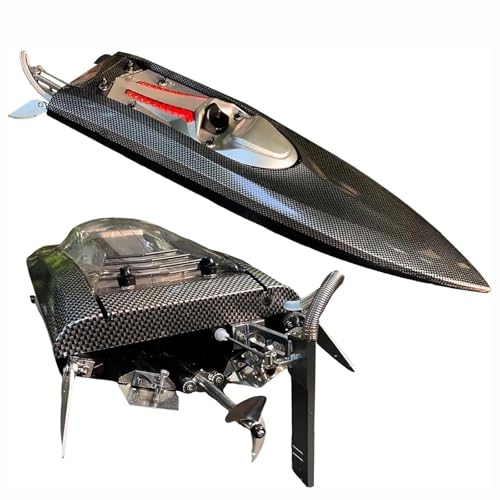
1. 2.4G RC Boat Kit: best for budget DIY builders
What this kit is and who it suits
This kit is a set of parts for building a basic remote control boat. It includes a remote, a receiver board, two motors, two propellers and the mounting hardware. It suits hobbyists and school groups who want to learn how a small RC boat works, and who are comfortable following a set of build steps.
The kit is sold as a collection of components rather than a finished boat. The builder needs to supply or prepare a hull and fit the parts into it. A school class might, for example, use a plastic food container or a shaped foam block as a simple hull, which keeps costs low while the students focus on wiring and mounting. That makes this kit a good fit for people who enjoy hands-on projects.
Key features in plain words
The remote uses a 2.4G signal, a common radio frequency for modern remote controls. A 2.4G link is generally less prone to interference from nearby devices than older radio bands, which helps the boat respond consistently. The remote has four channels and eight buttons, which allow forward, backward, left and right movement. The listed control range is 50 to 100 meters, though real range depends on conditions such as obstacles and battery charge.
The two motors are rated for 3V to 6V. Running them near the top of that range will generally give more speed, but it also drains batteries faster and puts more strain on the motors. Each motor drives a propeller through a shaft and mount. The kit also includes metal connectors, a bottom plate and a pack of screws, so the builder does not need to source these separately.
Real-life use and what to expect
In practice, most of the work happens during assembly. Mounting the motors straight and keeping the shafts aligned matters a lot for smooth steering. A shaft that sits at a slight angle can cause the boat to pull to one side or vibrate at speed. Builders should plan extra time for this step and test-fit parts before fixing them permanently.
Because the kit does not include a finished hull, the final look and balance depend on the builder. A well-sealed hull will keep the electronics dry, so waterproofing is an important step. Silicone sealant, rubber gaskets or a watertight box for the receiver are common approaches. Test the sealed hull in a bathtub or shallow tub before a full run on open water.
Performance and ease of use
Performance depends heavily on the hull and how well the parts are fitted. A light, well-balanced hull with aligned propellers will usually handle better than a heavy or lopsided one. With a careful build, the boat should respond to the remote in all four directions. Results will vary from one build to the next, and this guide does not claim a specific top speed.
Ease of use is moderate. Beginners with basic tools, such as a screwdriver, pliers and a small drill, and some patience can finish it. Younger children will likely need adult help with wiring and sealing, but can often take part in picking the hull, painting and testing.
Value for money
The low price makes this kit one of the most affordable ways to learn RC boat building. Buyers get the electronics and motors without paying for a finished hull, which keeps the cost down. The main extra expense is the hull and any sealing materials. For a budget project or a classroom activity, this value is strong, especially when the learning goals are clear.
Pros
- Low price for a complete electronics and motor set
- Four-direction control with a remote range listed at 50 to 100 meters
- Good learning project for building and wiring basics
- Includes screws, connectors and mounts needed for assembly
Cons
- No hull is included, so the builder must provide or prepare one
- Assembly takes patience and careful alignment
- Results depend heavily on the builder’s skill and chosen hull
2. RC Boat: best for kids learning STEM through a paddle boat
A wooden paddle boat for young builders
This kit is a wooden paddlewheel boat with a remote control. It is designed for children around ages 8 to 12, and it sits firmly in the science and craft toy category. Adults can join in on the build as well, which often makes the project more enjoyable for the whole family.
The boat comes with pre-cut pieces and clear instructions. The focus is on building the boat first and then seeing how the paddlewheel moves it through the water. Many kids find that the build itself is as rewarding as the final test run.
Features that support lear ning
The paddlewheel mechanism shows how propulsion works in a simple, visible way. Children can watch the wheel turn and see how it pushes the water backward, which moves the boat forward. This makes the boat a useful teaching tool for discussing action and reaction in a hands-on setting.
The kit also supports basic STEM learning. It encourages problem-solving, careful measuring and an early knowing of how mechanical parts work together. A child who notices that a loose fitting slows the wheel has already begun to think like an engineer.
Real-life use in pools and ponds
Because the boat is wooden and paddle-driven, it suits calm water such as a bathtub, a pool or a pond. Rough waves or strong wind may push it off course, and the boat can be harder to keep in a straight line. Most families will use it on still water, where the paddlewheel has the best chance to move the boat predictably.
Setup is quick once the pieces are cut and glued or fitted together. Parents can help younger children with the trickier steps, such as lining up parts or holding pieces while adhesive sets. Taking time over these steps usually leads to smoother running later.
Performance and ease of assembly
The listed design emphasizes simple assembly with no special tools. This is a clear strength for the target age group, since children can complete much of the build without needing a workshop. Speed and power are modest, which suits gentle play rather than fast racing.
Control covers forward, backward and turning movements. For many children, this is enough to enjoy steering the boat around a small area, such as a pool corner or a bathtub. Learning to make smooth turns takes a little practice, and that practice is part of the fun.
Value for money
The price sits in the mid-range for a children’s kit. Buyers get a complete build project, a remote and a wooden hull in one package. For a learning gift, the value is reasonable, especially for families who want a project that combines building, play and a basic look at how boats move.
Pros
- Designed for ages 8 to 12 with pre-cut parts and clear instructions
- Paddlewheel design makes the science of propulsion easy to see
- No special tools needed for assembly
- Works in pools, bathtubs and ponds with calm water
Cons
- Lower speed and power than adult racing boats
- Best suited to calm water, not open or rough conditions
- Younger children may need adult help with some steps
3. DIY RC Paper Boat Kit: best for classroom and craft projects
A paper boat you build and decorate
This kit combines paper crafting with remote navigation. It includes colored cardboard, dual propellers, a power unit and a remote. Children build the hull by hand and decorate it in their own style.
The result is a personal project that doubles as a toy. Each boat looks a little different because every builder chooses their own colors and designs. It fits weekend craft time, classroom activities and family play.
Power, batteries and water use
The boat uses a dual propeller setup for steady forward movement on water. The listed battery options include rechargeable packs charged by USB cable. This reduces the need to buy new batteries often, which can save money over several play sessions.
The design suits bathtubs, small pools and shallow ponds. The product description lists it as waterproof, but buyers should still keep the power unit away from splashing and avoid deep water. A quick check of the remote and power unit after each session helps keep the kit in good shape.
Learning value and ease of use
The kit helps children explore buoyancy, which is the way objects float, and propulsion, which is how things move forward. Simple experiments with the boat can lead to good questions about water and motion. For example, a child can add small weights to the hull and watch how the boat responds.
Assembly is approachable for younger builders with adult guidance. The paper hull needs care, so younger children may need help with cutting and folding. Teachers can use the build as a short lesson on shapes, folding and following step-by-step instructions.
Durability and expectations
A cardboard hull will not last as long as wood or plastic. It is best treated as a short-term craft and play project. Repeated soaking can soften the paper over time, so drying the boat thoroughly after each use helps it last longer.
Value for money
The price is on the lower side of the group. Buyers get a craft project, a remote and a rechargeable power system together. For classroom use or birthday gifts, the value is solid, especially when several children can share one set of activities.
Pros
- Combines hands-on crafting with remote control play
- Rechargeable USB power option reduces battery waste
- Dual propellers support steady forward movement
- Suits classrooms, parties and family projects
Cons
- Paper hull is less durable than wood or plastic
- Best for calm, shallow water only
- Younger children may need help with cutting and folding
4. VilogaRC RC Plywood Outrigger 600mm Wooden Air Boat Model Kit: best for hobbyists who enjoy building
A larger wooden racing hull to build
This is a model kit for building a racing-style boat from laminated plywood. The hull is 600mm long and 365mm wide, which makes it much larger than the children’s kits in this group. It suits adults and experienced hobbyists who enjoy a longer build.
The kit is sold in multiple combinations, so buyers can choose the parts that match their plans. The listed hull weight is 850g. Checking the included parts list before ordering helps avoid surprises about what is and is not in the box.
Features explained simply
The hull has two removable hatch panels. These give access to the electronics and make it easier to swap batteries. Many hobbyists value this feature because it avoids taking the whole boat apart.
The sponson booms, which are the side supports that keep the hull stable, are made from carbon fiber. Carbon fiber is a strong, light material. The listed design aims for a rigid frame without adding much weight, which helps the boat hold its shape at speed.
Real-life use and setup time
Building this kit takes a meaningful amount of time and care. Gluing, sanding and fitting the plywood parts comes before any electronics work. Buyers should expect a project spread over several sessions rather than a quick assembly.
Once built, the boat is best run on open, calm water with enough space. Its size gives it presence on the water, but it also needs more room to run safely. Keeping a clear area around the course makes a big difference for both the boat and the people nearby.
Performance and ease of use
The product is described as a high-speed racing boat, and its rigid frame and light materials support that goal. Actual speed depends on the motor and battery chosen by the builder. The kit does not come with a finished power system in the data provided.
Ease of use is moderate to advanced. Beginners can learn the process, but the build and setup will reward some prior experience with tools and electronics. Reading the full instructions before cutting or gluing anything can prevent costly mistakes.
Value for money
The price is higher than the entry-level kits, and it reflects the larger hull and better materials. Buyers also need to budget for motors, batteries and electronics. For a dedicated hobbyist, this is a reasonable investment in a long-term project that can be upgraded over time.
Pros
- Large hull that offers a strong, realistic racing look
- Removable hatch panels make electronics and battery access easy
- Carbon fiber sponson supports add rigidity with low weight
- Several combinations allow the builder to customize the setup
Cons
- Higher price, and extra budget needed for power components
- Longer build time than simpler kits
- Needs open water and some experience to run well
5. Ssccgym 25inch UDI022 Large Remote Control Boat: best for experienced adult hobbyists
A large, fast, ready-to-run style boat
This is the largest and most powerful product in the group. It is a 25-inch remote control boat with brushless power and a 4-wheel-drive style control design. The listed age guidance is 14 years and up, which signals an adult or experienced audience.
The size makes a real difference on the water. A boat of this length holds its line better in wind and wave chop than a small toy boat does. It also feels more substantial in the hand during setup and launch.
It is not a beginner toy. The boat is designed for people who already understand battery care and safe water use. Anyone new to remote boats should expect a learning curve before enjoying it fully.
Key features in plain words
The boat includes forward, backward and turning control, along with omnidirectional movement. A high-speed steering gear helps it turn more smoothly. The listed top speed is 50 km/h, or about 31 mph.
Several safety features are listed. The boat rights itself when it capsizes, and it gives an alarm for going out of range or for a low battery. A water-cooled system and a double-layer roof cover help protect the electronics.
The out-of-range alarm is worth paying attention to. If the boat drifts beyond the controller’s signal range, the warning gives the operator time to bring it back. Owners should still keep the boat within sight and within range at all times.
Power and battery options
The standard setup uses an 11.1V 3S battery with a balance charger. Buyers can upgrade to a 14.8V 4S battery for more power, according to the listing. Battery care matters a great deal with lithium packs, so users should read the charging guidance carefully.
The controller is a 4-channel 2.4G independent unit. It supports the upgraded 3S and 4S lithium packs and gives the user separate control of each function. Keeping the controller charged and the transmitter firmly in hand helps avoid unexpected interruptions on the water.
Lithium batteries store a lot of energy, so they need careful charging and storage. Owners should always use the balance charger supplied and follow the maker’s instructions. Poor battery handling is a real safety risk with this type of pack.
Many hobbyists charge batteries in a fire-resistant container and never leave them unattended while charging. They also avoid charging a battery that is damaged, swollen or hot to the touch. Storing packs at a partial charge, as the maker directs, is a common habit for longer battery life.
Real-life use and where to run it
A boat this size needs a large, open area of water with plenty of space to maneuver. Small ponds and bathtubs are not suitable. Users should also check local rules about where remote boats may be run.
Daily use involves more setup than a children’s kit. Charging, checking the hull and rinsing the boat after use all take time. Owners who enjoy this routine will find it rewarding.
Freshwater use also calls for basic care. Rinsing the boat after a session helps remove dirt and residue, and drying the hull and electronics before storage reduces the risk of corrosion. Checking seals and the roof cover before each outing is a simple habit that pays off.
Performance and ease of use
Performance is the strongest point of this product, with high listed speed and responsive steering. The brushless system and the upgraded electronics support that performance. Real results will depend on water conditions and battery health.
Ease of use is advanced. The controls are not hard to learn, but safe operation requires knowledge of batteries, water and weather. Beginners should start slowly and seek guidance from experienced users.
Wind and waves have a strong effect on how a boat handles. Even a powerful boat will struggle in rough, gusty conditions. Picking calm days for the first few sessions makes it easier to build confidence with the controls.
Value for money
This is the highest-priced product here, and the price reflects its size, power and feature set. It is not a budget choice. For a committed adult hobbyist who wants a fast, capable boat, the value can make sense over time.
Buyers should also count the cost of extras. A larger battery, an additional charger or spare parts can add to the total. Looking at the full cost of ownership gives a more honest picture than the sticker price alone.
Pros
- Strong speed and power for an experienced hobbyist
- Self-righting feature and capsize protection add practical safety
- Low-battery and out-of-range alarms help prevent loss of control
- Upgrade path to a larger battery for more performance
Cons
- Highest price in this group, with extra costs for batteries and chargers
- Requires battery knowledge and careful handling
- Needs large open water, which not every buyer can access
Comparison insights: how the five products differ
The five products sit at very different points on the scale. The paper boat and the wooden paddle boat are gentle play items. The two larger hulls and the high-speed boat are hobby projects for older users.
Performance rises sharply with size and power. The Ssccgym boat is built for speed, while the paddle boat is built for calm, slow movement. The VilogaRC kit sits between them, with a strong hull that still depends on the builder’s choice of motor.
Ease of use follows a similar pattern. The paper boat and the wooden paddle boat are simplest, with clear steps and few tools needed. The 2.4G kit and the VilogaRC model ask for more patience, while the Ssccgym boat needs the most knowledge to run safely.
Value for money depends on the buyer’s goal. A low-cost kit gives strong learning value for the money. A higher-priced model makes sense only when the buyer plans to use it often and has the skill to get the most from it.
Buying guide: key factors explained in plain words
The first factor is the intended user. Ages, skills and experience should guide the choice. A kit for children needs simple assembly and gentle power, while an adult hobby model needs more care.
The second factor is the water where the boat will run. Bathtubs and small pools suit light boats. Ponds and open lakes need stronger, larger hulls, and the builder should check local rules before use.
The third factor is the power system. Look at the battery type, the charging method and the voltage. Rechargeable USB packs are convenient for light use, while lithium packs require careful handling.
The fourth factor is build time. Some kits are finished in an afternoon, while others take days of gluing, sanding and wiring. Buyers should match the build to the time they have.
The fifth factor is the total budget. Remember to include extra items such as batteries, chargers and tools. Some kits look affordable but need more parts before they run.
Who should buy these products
Families with young children who want a simple, gentle project should consider the RC Boat paddle kit. It suits ages 8 to 12 and offers a clear learning experience.
Teachers and parents who want a craft-based activity can look at the DIY RC Paper Boat Kit. It suits classroom sessions, birthday gifts and family play, with simple steps and a rechargeable power system. Hobbyists who enjoy building and tinkering may find the 2.4G RC Boat Kit a good starting point.
It is affordable, and the builder can choose a hull that fits their plans. Adult enthusiasts who want a larger project should consider the VilogaRC plywood racing kit. It offers a strong hull and room for customization, but it asks for more time and budget.
Experienced adult hobbyists who want speed and power, and who already understand battery safety, should look at the Ssccgym 25inch boat. It suits large, open water and committed owners.
Final verdict
No single product is the best choice for every buyer.
The right pick depends on age, skill, budget and the water where the boat will run. Matching the product to the user matters more than chasing the highest specifications.
For young children and first-time builders, the wooden paddle boat and the paper boat kit offer the gentlest start. They need few tools, simple steps and calm water, which keeps the project manageable and fun. A child who finishes a build often feels more motivated to try the next one.
For learners who want to understand RC electronics, the 2.4G kit provides good value. It shows how a radio signal, a receiver and a motor work together, which makes it a useful hands-on lesson. The parts are easy to inspect, so a learner can see how each piece connects.
For serious adult hobbyists, the larger hulls offer more room to grow. They can carry better motors, upgraded parts and more advanced setups over time. Adults who plan to customise or race their boats will usually find these hulls more rewarding than a basic kit.
Frequently Asked Questions
What is the best RC boat kit for a complete beginner?
For a complete beginner, a simple kit with clear instructions and gentle power works best. The wooden paddle boat or the paper boat kit are good starting points. Both suit calm water and need few tools, so the first build stays low-stress.
Can children build these RC boat kits without help?
Older children can often manage the steps alone, especially with clear instructions and a patient pace. Younger children usually need adult help with cutting, gluing or fitting parts. Adult guidance makes the project safer and more enjoyable, and it gives the child a chance to ask questions as they go.
Do these kits run in a swimming pool or bathtub?
Light kits such as the paddle boat and the paper boat are designed for pools, bathtubs and calm ponds. Larger boats need open water with more room to turn and stop safely. Users should always check the listed use and avoid deep or rough water, where a boat can drift out of reach.
What should I know about lithium batteries in RC boats?
Lithium batteries store a lot of energy and need careful charging and storage. Use the charger supplied, follow the maker’s instructions and never leave packs charging unattended. Store packs somewhere cool and dry, not in direct sun or inside a hot car. Handle damaged batteries with care, stop using them if they swell or smell unusual, and replace them when needed.
Is a more expensive RC boat always better?
A higher price usually means a larger hull, more power and more features. It does not always mean a better result for every buyer. A simpler kit can offer better value for beginners, children or a learning project, because it teaches the basics without extra complexity. Spending more only pays off when the extra features match how the boat will actually be used.
Peterson is an RC hobby enthusiast and product reviewer with a passion for remote-controlled cars, trucks, boats, drones, and accessories. He enjoys testing the latest RC products, comparing features, and sharing practical buying guides to help beginners and experienced hobbyists make informed decisions. Through RCThing.com, Peterson provides honest reviews, maintenance tips, and expert advice to help readers get the most from their RC adventures.



2 Comments