5 Best Rc Boat Batteries In 2026
As an Amazon Associate we earn from qualifying purchases.
Finding the right power source for your remote-controlled vessel can feel overwhelming for a newcomer. The best rc boat batteries are those that match your specific model’s voltage, plug type, and physical size requirements. This guide provides a clear overview of five popular options to help you navigate these technical factors without unnecessary complexity. These products are common options for RC hobbyists who need replacement or spare power packs. They vary significantly in chemistry, discharge rates, and connector styles, which are the most important factors for safe and effective operation. This comparison focuses on manufacturer specifications and typical usage scenarios rather than personal testing or performance claims. You should always consult your boat’s manual to confirm the specific voltage and connector type required before making a purchase. Using an incompatible battery can cause permanent damage to your vessel’s electronic speed controller or motor.
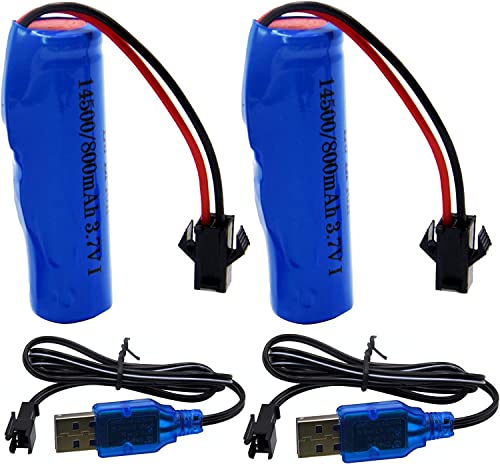


1. Blomiky 2 Pack 3.7V 800mAh Li-ion Rechargeable: best for small stunt craft
This battery pack is designed for small-scale RC vehicles and boats that operate on low-voltage systems. It is a lithium-ion unit, which is a common chemistry for hobby-grade toys. Because of its compact size, it fits into the tight battery compartments found in many entry-level amphibious boats and stunt cars. The pack is lightweight, which helps maintain the buoyancy and maneuverability of smaller watercraft. Its design focuses on simplicity for owners who operate basic remote-controlled toys.
Key Technical Features
The battery uses an SM-2P connector, which is a standard two-pin plug for smaller electronics. It offers a capacity between 500mAh and 800mAh, providing a moderate amount of runtime depending on how aggressively the boat is driven. It comes with a USB charging cable that includes built-in protection to prevent overcharging. This safety feature helps manage the current flow and protects the battery cells during the energy replenishment process. The output voltage remains consistent at 3.7 volts, ensuring the motor receives a steady stream of power during operation.
Daily Usage Insights
In practice, these batteries are straightforward to handle for a beginner. Charging takes several hours. Users often notice that the status light on the USB cable might not turn off immediately once the battery reaches full capacity, so it is helpful to reconnect it to verify the charge status. The light should turn off once the process is complete. Proper storage is also important, as lithium-ion units perform best when kept in a cool, dry place away from direct sunlight when not in use. You should avoid leaving the battery plugged into the charger after the process finishes to preserve the internal chemistry.
Pros
- Includes a USB cable with built-in overcharge protection.
- Compact size fits many small-scale RC stunt and water vehicles.
- The SM-2P plug is a common industry standard for this class of toy.
- Provides a reliable replacement for original manufacturer batteries.
- Lightweight design ensures the boat sits properly in the water.
- Simple plug-and-play operation for beginners.
Cons
- Long charging time of three to four hours.
- Requires careful matching of plug size and voltage.
- Not suitable for high-speed or brushless motor boats.
- Capacity may decrease over time with frequent deep discharge cycles.
- Charging status light can be difficult to read on some cables.
2. Blomiky 7.4V 600mAh Li-ion SM-5P Plug Battery: best for specific mini boats
This 7.4V battery is tailored for specific mini RC boats that utilize a five-prong SM-5P connector. It serves as a direct replacement part, meaning it is built to mimic the physical and electrical specifications of the original battery included with models like the R308MINI. It utilizes Li-ion chemistry, which is a stable and efficient energy storage solution commonly used in smaller remote-controlled models. The pack is designed to fit the exact dimensions of standard mini-boat battery trays, ensuring it stays secure during operation.
Connector and Design
The defining feature of this power pack is the SM-5P plug. This connector features a five-pin layout, although the middle pin remains empty. It is vital to verify that your boat’s current battery matches this exact pin configuration before purchase. The red wire denotes the positive pole, while the black wire serves as the negative pole. This plug design helps prevent incorrect polarity during installation, provided the user aligns the pins carefully with the boat’s internal socket. The housing of the plug is molded from durable plastic that resists wear from repeated plugging and unplugging sessions.
Performance Expectation
With a 600mAh capacity and a 10C discharge rate, this battery provides runtime similar to the original factory equipment. It offers a balance between physical weight and power output, ensuring the boat remains light enough to maintain its agility during turns and maneuvers on the water. This is a basic, no-frills power source intended for casual hobbyists who want to keep their mini boats running as intended. Because it is a 2S Li-ion pack, it provides consistent voltage throughout most of the discharge cycle. Users should expect a steady power drop-off as the battery nears the end of its charge, which acts as a helpful indicator to bring the vessel back to shore.
Pros
- Specific design ensures compatibility with listed RC boat models.
- Lightweight build does not add unnecessary drag to the boat hull.
- Reliable 600mAh capacity for standard recreational boating sessions.
- Straightforward installation due to the unique five-prong plug configuration.
- Compact size fits easily into the tight battery compartments of mini RC boats.
- Stable chemistry provides a predictable power curve for beginners.
Cons
- Limited to specific boat models using the SM-5P connector.
- The 10C discharge rate is not intended for high-performance racing or aggressive speed runs.
- Requires a compatible charger specifically designed for the SM-5P plug type.
- Li-ion chemistry generally offers a lower burst current compared to LiPo alternatives.
- The battery housing is not intended for high-impact crashes or water submersion.
3. Zeee 3S Lipo Battery 2200mAh 11.1V 50C: best for performance models
This unit is a Lithium Polymer, or LiPo, battery. LiPo batteries are known for their high power delivery and energy density, making them a popular choice for faster boats that require a significant burst of speed. This 3S pack provides 11.1 volts, which is a common standard for many mid-sized RC hobby models that use brushless motors. The pack is wrapped in a protective heat-shrink material that guards the cells against minor punctures and moisture.
Power and Discharge Rates
The 50C discharge rate indicates that the battery can release a large amount of energy quickly when the throttle is applied. This capability is essential for brushless motors that need high current to reach and maintain top speeds. With a 2200mAh capacity, it offers a solid balance between extended runtime and the physical weight of the battery pack. The high discharge capability helps prevent voltage sag during heavy acceleration, which keeps the boat responsive on the water. This high-current delivery is what allows faster boats to plane across the surface effectively rather than dragging in the water.
Safety and Charging Requirements
LiPo batteries require more attention than Li-ion units. You must use a dedicated balance charger to ensure each of the three internal cells is charged to the same voltage level. Never leave these batteries unattended while they are connected to a charger. Keep the batteries within the recommended temperature range to ensure safety and longevity. Proper storage, typically at a storage voltage of 3.80V to 3.85V per cell, helps prevent the battery from swelling or losing capacity over time. Always inspect the battery casing for signs of physical damage or puffiness before each use.
Pros
- High 50C discharge rate allows for strong motor performance and rapid acceleration.
- Standard XT60 connector is widely used and easily compatible with many modern RC speed controllers.
- Comes in a convenient two-pack, allowing you to swap batteries for longer sessions.
- Suitable for a wide variety of high-performance models beyond just RC boats.
- 3S configuration provides the higher voltage necessary for competitive or fast-paced boating.
- High energy density provides a long runtime relative to the size of the pack.
Cons
- Requires a specific balance charger to maintain cell health and safety.
- Needs more careful handling, monitoring, and storage protocols than Li-ion batteries.
- Heavier weight can affect the buoyancy and trim of smaller, lightweight boat hulls.
- Risk of permanent damage if the battery is discharged below the safe minimum voltage threshold.
- Requires a fireproof storage bag to mitigate risks during charging or storage.
4. Blomiky 2 7.4V 600mAh 4.44Wh Lion Battery: best for hobby-grade H-series boats
This battery serves as a versatile power source for the widely used H-series of remote-controlled boats. It delivers 7.4 volts and 600mAh of capacity, matching the requirements of many recreational craft. The pack uses an SM-2P connector, a standard plug style found in many entry-level hobby models. It functions as a reliable replacement when your original power cell reaches the end of its service life. Users often keep these packs on hand to extend their time on the water during a single outing.
Compatibility and Adapters
A key part of this package is the included adapter cable. Manufacturers sometimes change the connector type within the same model line, which can lead to compatibility issues for owners. This adapter helps bridge the gap between different plug versions. It ensures you can connect the power source to your boat without needing to solder new wires or replace the original motor system. You should check the connector shape on your current battery before making a purchase to ensure a proper fit.
Practical Use
The battery has a compact, lightweight design that fits into the hull of various remote-controlled ships without adding excessive weight. This keeps the center of gravity low, which helps the boat maintain stability on the water. It is built for casual recreational sessions where the focus is on steady operation rather than extreme speed or competitive racing. The construction reflects the standard quality found in typical lithium-ion packs for this category of remote-controlled toys. Because of its size, it fits easily into the narrow battery trays of smaller scale boats.
Pros
- Includes adapter cables for compatibility with different boat versions.
- Reliable power for common H-series remote control boats.
- Lightweight design helps maintain boat handling on the water.
- Easy to swap in and out of the battery compartment.
- Compact size allows for better placement in smaller hulls.
Cons
- Capacity is modest, so long sessions may require extra packs.
- Performance is tuned for recreation rather than high-speed racing.
- Connector type must be verified against the boat’s manual.
- Slower charging times compared to high-discharge racing packs.
5. URGENEX 11.1V 3000mAh Li-ion Battery: best for high-speed brushless boats
This URGENEX battery provides a high-capacity power solution for brushless remote-controlled boats. It operates at 11.1 volts and offers 3000mAh, giving the motor the sustained energy required for faster speeds. The unit features a Dean-Style T-plug, a robust connector engineered to handle higher electrical currents than the standard plugs found on basic models. This ensures efficient power transfer to the propulsion system. It is a common option for hobbyists upgrading their standard boats to more powerful brushless setups.
High-Capacity Benefits
The 3000mAh capacity provides a significant energy reserve compared to standard entry-level batteries. This larger capacity allows you to keep the boat running for longer periods during your time at the lake or pond. The 15C discharge rate ensures the power moves from the cells to the brushless motor system with stability. It prevents sudden voltage drops that can occur during heavy acceleration or tight turns. This consistent flow of energy helps maintain top speed even as the battery levels begin to decrease.
Durability and Service
The internal chemistry supports at least 300 charge cycles, providing a long lifespan for a pack of this capacity. The battery does not suffer from a memory effect, which is a common issue with older battery types. You do not need to drain the power completely before starting a recharge. This adds convenience for users who want to top off their power between short trips to the water. The casing is designed to be durable enough to handle the vibrations and minor impacts that occur during high-speed operation. Proper storage in a cool, dry place helps maintain the integrity of the internal cells over many uses.
Pros
- High 3000mAh capacity allows for longer run times.
- Robust Dean-Style T-plug handles high power requirements well.
- No memory effect means you can charge it whenever convenient.
- Designed for a long cycle life of at least 300 charges.
- Stable discharge rate supports brushless motor performance.
Cons
- Heavier and larger than basic 600mAh batteries.
- Requires a battery compartment that can fit the larger dimensions.
- Not suitable for boats designed only for 7.4V systems.
- Higher voltage may cause damage to motors not rated for 11.1V.
Comparison Insights: How to Evaluate Your Power Needs
The main difference between these batteries lies in their voltage, capacity, and connector types. For beginners, the most common mistake is buying a battery that does not fit the boat’s plug. Always check your boat’s original battery plug before making a purchase. If the plug does not match, the battery will be useless without an adapter, which can add unnecessary resistance or complexity. Performance is primarily determined by the battery’s voltage and discharge rate. A 7.4V battery is generally for entry-level or recreational boats, while an 11.1V battery is for faster, brushless models. If you use a higher voltage than your boat is rated for, you risk damaging the motor or the electronic speed controller. Always stick to the voltage recommended by the manufacturer. Value for money is subjective to your specific boat. A high-capacity 3000mAh battery might seem like a better deal than a 600mAh battery, but if it does not fit in your boat’s hull or if the plug is wrong, it offers zero value. The best value comes from picking the battery that perfectly matches your boat’s specific requirements, ensuring you get the most runtime and reliability for your investment.
Buying Guide: Key Factors for Beginners
When searching for the best rc boat batteries, start by checking the voltage. Your boat’s manual will specify the required voltage, usually 3.7V, 7.4V, or 11.1V. Using the wrong voltage can cause the electronics to overheat or fail. If you are unsure, check the label on your current battery, as it will state the nominal voltage clearly. Next, look at the capacity, which is measured in milliampere-hours, or mAh. This number tells you how much energy the battery can store. A higher mAh rating generally means you get a longer runtime before needing to recharge. However, higher capacity batteries are often physically larger and heavier, so you must ensure the battery fits inside your boat’s compartment without making it top-heavy. The connector type is arguably the most important physical factor. Plugs like the SM-2P, SM-5P, XT60, and Dean-Style T-plug are not interchangeable. If your boat uses an SM-2P plug, a battery with an XT60 connector will not work unless you use a specialized adapter. For beginners, it is easiest to find a battery that uses the exact same plug as the one that came with your boat. Consider the battery chemistry, specifically the difference between Li-ion and LiPo. Li-ion batteries are generally more stable and easier to maintain, making them great for casual boats. LiPo batteries are more powerful but require strict adherence to charging safety rules, such as using a balance charger and never leaving them unattended. If you are just starting, Li-ion is often the more approachable option. Finally, check the discharge rate, often labeled as a “C” rating. This number tells you how fast the battery can release its stored energy. A high C-rating, such as 50C, is necessary for high-performance boats with brushless motors. If you use a battery with a C-rating that is too low for your boat’s motor, the boat may feel sluggish or lose power during acceleration.
Who Should Buy These Batteries
The Blomiky 2 Pack 3.7V 800mAh Li-ion battery is ideal for someone who owns a small, entry-level stunt boat or a toy-grade amphibious vehicle. If your boat is small and used for casual fun in a pool or a calm pond, this is a suitable replacement. It is designed for those who want a simple, plug-and-play solution without needing complex charging equipment. The Blomiky 7.4V 600mAh Li-ion SM-5P battery is best for owners of specific mini boats like the R308MINI. If your boat requires this unique five-prong plug, this battery is essentially your go-to option. It is intended for hobbyists who want to keep their mini-boat running just like it did out of the box. The Zeee 3S 2200mAh 11.1V 50C LiPo battery is for the intermediate hobbyist who has moved up to high-performance or brushless RC boats. If you are looking to increase speed and responsiveness, this battery provides the necessary power delivery. It is for the user who is comfortable using a balance charger and understands the safety requirements of handling LiPo batteries. The Blomiky 2 7.4V 600mAh Li-ion battery is perfect for owners of the popular H-series boats. Because it includes an adapter, it is a great option if you are worried about the specific version of your boat. It is designed for those who want a reliable, hassle-free power source for their recreational boating sessions. The URGENEX 11.1V 3000mAh Li-ion battery is the best option for users with high-speed brushless boats. If you find yourself frustrated by short runtimes, the 3000mAh capacity provides a significant upgrade. It is for the user who wants to spend more time on the water and less time swapping batteries, provided their boat’s compartment is large enough to accommodate the size.
Final Verdict
The best rc boat batteries are those that prioritize compatibility above all else. While it is tempting to look for the highest capacity or the lowest price, the reality is that an incompatible battery is useless. Always start by verifying the voltage and the plug type specified in your boat’s user manual. For small, recreational boats, the Blomiky 3.7V and 7.4V Li-ion options offer a simple and effective path to keeping your vessel on the water. They are designed for ease of use and are well-suited for beginners who do not want to manage complex charging hardware. These packs are straightforward and reliable for their intended use cases. For those operating faster, more advanced boats, the Zeee 3S LiPo and URGENEX 11.1V Li-ion batteries represent the next step up. These batteries provide the power density needed for brushless motors and longer runtimes. While they demand more careful handling and specific charging equipment, they offer the performance required for a more engaging hobby experience.
Frequently Asked Questions
What happens if I use a battery with a higher voltage than my boat requires?
Using a higher voltage than recommended can cause the boat’s motor and electronic speed controller to overheat or burn out. These components are designed to handle a specific electrical load. Exceeding those limits often leads to melted wiring, fried internal circuits, or total system failure. Always stick to the voltage rating specified by the manufacturer to avoid permanent damage to your equipment.
Can I charge my LiPo battery with a standard Li-ion charger?
No, you should never use a standard Li-ion charger for a LiPo battery. LiPo batteries have specific chemistry that requires precise voltage cut-offs to prevent fires or swelling. These batteries require a dedicated balance charger that can monitor the voltage of each individual cell to ensure they charge safely and evenly. Using the wrong charger often results in an unbalanced pack that performs poorly or becomes dangerous.
How do I know if my battery is fully charged?
Most chargers will have an indicator light that changes color or turns off when the charging process is complete. Some modern units feature digital screens that display the exact voltage per cell. Always read the manual that came with your specific charger, as some USB-based chargers require you to reconnect the battery to confirm it has reached full capacity. Never leave a battery charging unattended.
What is the difference between a Dean-Style T-plug and an XT60 connector?
These are two different industry-standard connectors for high-current applications. A Dean-Style T-plug features a flat, rectangular shape, while the XT60 uses a yellow, bullet-style housing. They are physically shaped differently and are not compatible with each other. You must ensure the battery matches the specific plug already installed on your boat’s electronic system to avoid risky modifications.
Why is the “C” rating on my battery important?
The C-rating indicates the battery’s ability to discharge energy quickly. A higher C-rating allows the battery to provide the high bursts of power needed for fast acceleration and top speeds in high-performance boats. If the rating is too low, the boat may lose power during sharp turns or fail to reach its potential speed. Matching the C-rating to your motor’s needs ensures consistent performance on the water.

Peterson is an RC hobby enthusiast and product reviewer with a passion for remote-controlled cars, trucks, boats, drones, and accessories. He enjoys testing the latest RC products, comparing features, and sharing practical buying guides to help beginners and experienced hobbyists make informed decisions. Through RCThing.com, Peterson provides honest reviews, maintenance tips, and expert advice to help readers get the most from their RC adventures.