5 Best Wooden Rc Boat Kit In 2026
As an Amazon Associate we earn from qualifying purchases.
Wooden RC boat kits appeal to people who enjoy building something with their own hands and then running it on the water. This guide helps beginners who want to find the best wooden RC boat kit without prior experience.
It explains what each kit includes, how the options differ, and what to think about before buying. Many first-time buyers are surprised by how much of the enjoyment comes from the build itself, not only from the final run.
The five products in this round-up share a few traits. Each one is a wooden kit meant to be assembled, and each is designed to take electric power, so the boat can be driven by remote control. Several use laminated plywood, and some offer different package combinations. The comparison below rests on the listed features and typical use, not on personal testing. Where a detail is not listed, this guide does not assume it.



1. Viloga High Speed RC Boat: best for a compact racing-style build
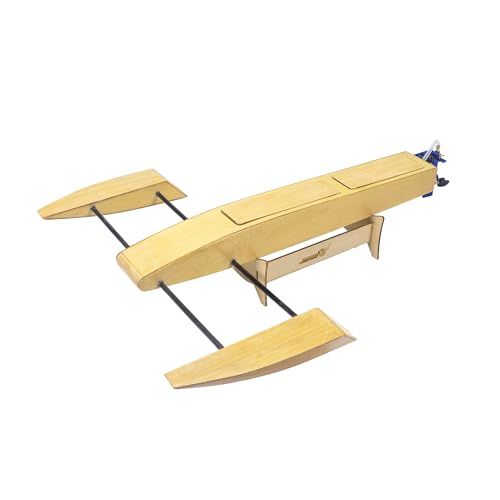
The Viloga High Speed RC Boat is a classic-style racing boat kit built from laminated plywood. It is a compact model, with a hull length of 495mm and a width of 380mm. It suits adults who want a small, fast-looking boat to build for ponds, pools or lakes. A boat this size fits easily in a car boot, so it is simple to carry to a local water spot.
Key features in simple terms
Laminated plywood means thin layers of wood glued together. This makes the hull stiff and fairly light. The hull weighs 230g according to the listed specs. A stiff hull holds its shape under the stress of fast turns, while a light hull reduces the power needed to get moving.
The kit includes two removable hatch panels. These give access to the electronics and make it easier to swap batteries. Carbon fiber sponson boom supports are also listed. Sponsons are the side pods that help keep the boat steady, and the booms connect them to the hull. Carbon fiber is strong for its weight, which helps the supports stay rigid without adding much mass.
What building and daily use usually feel like
Most buyers spend the most time on the assembly stage. The removable hatches help a lot here, because wiring and battery changes are easier than in a sealed hull. Since the product offers several combos, the build length depends on which package is chosen. A basic hull-only kit needs less wiring work than a version with a full motor and controller set.
After assembly, daily use mostly means charging batteries, running the boat, and drying the hull afterward. The removable panels make that routine simpler, because a wet interior can be opened and aired out. Even so, the boat still needs careful handling around water. Wood can swell or warp if it stays wet for long periods, so dry it fully after each session.
Performance and ease of use
Because the hull is light, it can respond quickly in the water when powered. The listed specs point to a racing-style shape, which generally favors speed over calm-water comfort. Beginners should expect a boat that rewards careful driving. Smooth throttle inputs and gentle turns tend to work better than sudden full-power changes, especially for a first build.
Value for money
At the listed price, this is one of the lower-cost options in this round-up. Buyers who only want a basic racing boat to build may find it a good match. Those who want a full electronics package should check which combo they are buying, since the price can change with the choice. Comparing the exact contents of each combo against the price is the most reliable way to judge value.
Pros
- Compact size that is easy to handle and transport
- Removable hatch panels for easier electronics access
- Lightweight laminated plywood hull
- Several package combos to choose from
Cons
- A small hull can be less forgiving in rough water
- Wooden parts need drying and care after each run
- Full electronics are not always included in the base option
2. AEORCACC RC Boat Wooden Trimaran Hull Kit: best for stable, low-resistance running
The AEORCACC RC Boat Wooden Trimaran Hull Kit uses a triple-hull design. A trimaran has one main hull and two smaller side hulls. This kind of boat is often chosen for its balance and smooth running on the water.
The kit suits hobbyists who enjoy building a model from wood and then fitting it with their own equipment. It is a practical choice for anyone who wants a boat with a distinct look and a hands-on build process.
How the trimaran design works
The listed features say the triple-hull setup provides stability and reduced water resistance. In plain words, the side hulls help the boat stay level, and the shape can slip through water with less drag. This is a useful feature for buyers who want a steady, predictable boat.
A single-hull boat can tilt or wobble when wind or waves push against it. The outer hulls act as outriggers, which can resist that tilt. The exact result still depends on weight distribution, so the boat should be trimmed carefully for the best balance.
Build options and what is included
The kit offers seven package combinations. The basic option is a wooden hull kit, while larger packages add more of the parts such as a flexible shaft, rudder, ADS300L motor, ESC, and servo. The precision-cut plywood pieces are meant to simplify assembly. Buyers should check the package details before ordering, so they know exactly what arrives in the box.
Each part of the electronics has a specific job. The motor provides power, the ESC controls the motor’s speed, and the servo turns the rudder. Knowing these roles makes it easier to compare packages and decide which one fits your plans.
Assembly and daily use
Pre-cut parts usually make the build more approachable for newcomers. The unassembled kit also leaves room to add or change electronics. This suits builders who like to customize their boat over time.
Daily use mostly depends on the setup chosen. Charging, cleaning and drying the wooden hulls are the main routine tasks. Keeping the wood dry helps the boat last longer. After each session, rinsing off water and letting the hulls air out can prevent swelling and wear.
Performance and ease of use
The trimaran shape is generally aimed at steady running with less water drag. That said, actual speed and handling depend on the motor, propeller and battery chosen. Beginners can start with a simpler package and upgrade later.
Handling also depends on where you test the boat. Calm water such as a small pond or lake is a common starting point, since it lets you learn the controls before moving to rougher conditions.
Value for money
At the listed price, this is a moderately priced option. The wide range of package combinations gives buyers flexibility. Those who already own some electronics may find the base kit especially useful.
Comparing the total cost of a full package with the cost of buying parts separately can help you judge the value. The price of the base kit alone does not show the full cost of a running boat.
Pros
- Triple-hull design aimed at stability and lower drag
- Seven package combinations to suit different budgets
- Pre-cut plywood parts that simplify assembly
- Room to add custom electronics
Cons
- Electronics often need to be bought separately in the basic option
- Trimaran builds take careful alignment of three hulls
- Performance depends heavily on the chosen motor and battery
3. VilogaRC RC Plywood Outrigger 600mm Wooden Air Boat: best for a larger, more substantial build
The VilogaRC RC Plywood Outrigger 600mm Wooden Air Boat is the largest hull in this round-up. Its hull length is 600mm and its width is 365mm. It suits adults who want a bigger boat with more presence on the water.
Size matters most when you plan where the boat will run. A hull this long needs open water with room to turn, such as a pond or a larger lake. It is less suited to small garden ponds or crowded public water.
Size and construction
The hull is made from laminated plywood and shares the same classic styling as the smaller Viloga model. The listed height is 85mm, and the hull weighs 850g. The extra mass suggests a sturdier feel than the lighter 495mm option.
Laminated plywood is built from thin layers of wood glued together. This construction is common in wooden model boats because it resists warping better than solid wood of the same thickness. Check the finish and edges when the kit arrives, since small imperfections are normal in wood and can be sanded smooth before assembly.
Features that matter during use
Like the smaller Viloga, this kit includes two removable hatch panels. These make it easier to reach the electronics and change batteries. Carbon fiber sponson boom supports are listed as lightweight and rigid.
Sponsons are the side floats that keep an outrigger boat stable. The boom connects them to the hull. Rigid supports help hold the floats in position, which helps the boat stay balanced when it turns or meets small waves. Easy access to the hatches also means you can check the battery and wiring without taking the whole boat apart.
Assembly and daily use
A larger hull gives more room inside for wiring and components. Many builders find this easier than working in a tight space. Still, the bigger build can take more storage space and more effort to carry to the water.
Plan a clear, flat table for assembly, since the longer parts need room to lay out. Before the first run, test the controls with the boat on a stand or in shallow water. After each session, dry the hull fully and store it in a cool, dry place so the plywood does not swell or warp.
Performance and ease of use
A heavier, longer hull usually tracks more steadily than a light, compact one. In practice, it may feel less jumpy, though it will not be as quick to turn. Buyers who want a calm, confident ride may prefer this size.
Wind has a bigger effect on light boats, while heavier hulls resist it more. Even so, the performance still depends on the motor, battery and how well the parts are fitted. Handling improves when the weight sits evenly between the sponsons.
Value for money
At the listed price, this is the highest-priced option in this round-up. The cost reflects the larger size and the multi-combo choice. Buyers should weigh the extra spending against how much they plan to use the boat.
If you want a boat mainly for short sessions on a small pond, a smaller hull may give you most of the fun for less money and space. The larger size makes more sense for people who plan regular use on bigger water and want a boat that feels substantial.
Pros
- Larger hull that offers more presence and internal room
- Removable hatch panels for easier maintenance
- Carbon fiber sponson supports listed as rigid and light
- Multi-combo options for DIY customization
Cons
- Higher price than the other options in this round-up
- Bigger size needs more storage and transport space
- Heavier hull is less quick to respond than a compact boat
4. Viloga RC Boat Kit: best for a complete, ready-to-run package
The Vilo ga RC Boat Kit shares the 495mm outrigger hull of the first Viloga model, but this version comes with a fuller set of parts. It suits buyers who want to start running soon after assembly, without shopping for each component separately.
A complete package saves time and avoids mismatched parts. When each component is chosen separately, you have to check that the motor, speed controller and battery work together. A matched set reduces that guesswork, although you should still confirm the battery specifications before buying.
What the package includes
The listed package covers the kit, a basic accessories pack, shafting, a blade, a 75mm metal rudder and a water pipe. It also includes a 28mm 3700kv water-cooling motor, a 40A water-cooling ESC, and a 9g servo. The ESC is the speed controller that manages the motor, and the servo turns the rudder.
The listing states that transmitter and receiver are not included. Buyers will need their own remote control unit to steer and control the boat. This is an important detail for beginners to check before ordering.
Assembly and daily use
The hull follows the same laminated plywood build as the smaller Viloga model. Its two removable hatch panels make wiring and battery changes simpler. Since the motor and electronics come with the package, the assembly includes installing the water-cooling system as well as the hull.
Keep the wiring neat and secure so nothing rubs against moving parts. Check that the shafting and blade turn freely before you close the hatch. Use the parts list to confirm everything is present before you start, so you do not stop halfway through a build.
Daily use involves charging the battery, running the boat, rinsing the parts and letting the wood dry. Water cooling is a feature of this setup, so the water pipe and cooling parts should be checked after each run. Keeping these parts clean helps them work properly.
Performance and ease of use
With a motor and ESC included, the boat is set up to run without a long shopping list. The overall performance depends on the battery and how the parts are fitted. Beginners should follow the assembly steps carefully so the motor and rudder respond correctly.
Test the rudder movement before the first run. The servo should turn the rudder smoothly in both directions once your transmitter is paired. If the response feels slow or uneven, check the linkage and the servo arm before assuming a fault with the motor.
Value for money
At the listed price, this option sits in the middle of the range. The main benefit is that many core parts arrive together. Buyers who already own a transmitter and battery may find this a sensible way to get a complete setup.
If you do not own a transmitter, factor that cost into your budget before you buy. Adding it later can raise the total price well above the listed figure, so compare the full cost of running the boat, not just the kit.
Pros
- Core electronics and rudder come in one package
- Removable hatch panels for easier access
- Compact hull that is easy to handle
- Clear list of included parts
Cons
- Transmitter and receiver are not included
- Water-cooling parts need regular checks and cleaning
- Beginners may need time to set up the electronics correctly
5. Billing Boats 1:12 Scale Slo-Mo-Shun IV Seattle Speed Boat: best for a detailed scale model
The Billing Boats 1:12 Scale Slo-Mo-Shun IV Seattle Speed Boat is a scale model kit. A scale model copies a real boat at a smaller size, here at 1:12. This means every part is reduced by the same ratio, so the finished model keeps the proportions of the original speed boat. It suits buyers who enjoy detailed craft work and want a model that looks like the real thing.
A kit like this is often chosen for display as much as for the water. Shelf-ready models can be admired for their lines, deck details and finishing. Builders who enjoy slow, careful work usually get the most from it.
Size and construction
The listed dimensions are 29 inches long, 9 inches high and 12 inches wide. Those measurements give the model a substantial presence on a shelf or in a display case. A larger hull also leaves more room for fittings and internal parts.
The kit uses plank-on-frame construction, which means thin wooden planks are attached over a frame. This method is how many traditional wooden boats were built, so the finished hull looks authentic. The parts are laser-cut wood, so the pieces fit closely and assembly is more precise. Less sanding and trimming is usually needed than with hand-cut parts.
Build style and what to expect
Plank-on-frame building takes more patience than a simple pre-shaped hull. Each plank must be placed carefully to keep the shape even, and small gaps or uneven spacing show up quickly on a model this size. Glue needs time to set, so builders often work in short sessions over several weeks.
Beginners who like detailed model work will find this a rewarding challenge. Those who prefer quick results may find it slow going. It helps to read the full instructions before starting and to lay out all parts first.
The kit is described as ready for RC. It comes with a stern tube with shaft, a rudder and fittings set. These items cover the drive and steering side of the build. The motor is not included, so buyers must choose and add their own, along with the other radio control parts needed to run the boat.
Performance and ease of use
Because this is a scale model, its main strength is appearance and craftsmanship rather than speed. The hull is designed to look like a real racing hydroplane, not to win races. Once an RC system is fitted, it can run on the water in calm conditions. Ease of use depends on how much detail the builder wants to add and how carefully the drive system is set up.
Running a scale hull also means paying attention to balance and waterproofing. Shaft alignment and sealing the stern tube properly help prevent leaks and vibration. Builders who take time over these steps usually get smoother, more reliable running.
Value for money
At the listed price, this is the most expensive option in this round-up. The cost reflects the scale detail and the plank-on-frame build. Buyers should also budget for the motor, speed control, receiver, transmitter and batteries if they plan to run the boat. These extras can add noticeably to the total cost.
Buyers should consider if they want a display-quality model that can also run. If the main goal is a fast, simple boat for the pool or lake, a different kit may suit better. If the goal is a detailed replica, the price may be easier to justify.
Pros
- Detailed the scale model look that copies a real speed boat
- Laser-cut wood parts for a closer fit
- Stern tube, shaft, rudder and fittings included for RC use
- Suits buyers who enjoy detailed craft building
Cons
- Motor is not included and must be bought separately
- Plank-on-frame build takes more time and patience
- Highest price in this round-up
Comparison insights: how the five kits differ
The five kits share a wooden build and electric power, but they differ in size, scope and effort. The smaller Viloga boats are compact and quick to handle, which makes them easier to carry to the water. The larger VilogaRC model offers more room and a steadier feel in choppy water.
The AEORCACC trimaran focuses on stability and flexible setup. Its three hulls spread the load, which helps it sit level and track straight. The Billing Boats scale model sits apart, because it values appearance and detailed building over pure running performance.
On value, the right choice depends on what each buyer needs. The Viloga RC Boat Kit gives a fuller parts list at a mid-range price. The Billing Boats model costs the most, but it suits a different goal. Buyers should compare included parts, not just the headline price, and add up the cost of any items they still need to buy.
Buying guide: key factors in plain words
Size is the first thing to consider. Smaller hulls are easier to carry, store and transport to the water. Larger hulls usually feel steadier in choppy conditions but take more space in your home and more effort to lift and launch.
Check what is included. Some kits are only a hull, while others add a motor, speed controller, servo and rudder. A basic kit may need extra parts before the boat can run, so read the parts list closely and compare it with the listing photos.
Think about the build. Pre-cut parts make assembly easier and often reduce the number of hours needed to finish the boat. Plank-on-frame models take more time, but many builders find the process rewarding. Choose a level that matches your patience and skill.
Consider the remote control. Some packages do not include a transmitter and receiver. Beginners should confirm this before ordering, so they do not get surprised when the boat arrives unable to steer. Look for the words “transmitter” and “receiver” in the product description.
Plan for care. Wooden hulls need drying and cleaning after each run, especially after exposure to salt or dirty water. Water-cooled setups also need regular checks, such as confirming that the cooling passages are clear. Good care helps the boat last longer and keeps performance consistent.
Who should buy these products
Beginners who want a small, quick racing-style boat may like the first Viloga High Speed RC Boat. Its compact size keeps it manageable for a first build and for短 test sessions in a pond or small lake. Smaller boats also fit easily into a car trunk.
Buyers who want stable running and a flexible setup may prefer the AEORCACC trimaran kit. Its seven package combinations let buyers start simple and add parts over time, such as a better motor or a second battery, as their interest grows.
Adults who want a bigger boat with more presence should consider the VilogaRC 600mm model. It suits those who have space for a larger build and a steadier ride, particularly on open water where wind and small waves are more common.
Buyers who want a complete parts list in one box may find the Viloga RC Boat Kit a sensible choice. It works best for those who already have a transmitter, since that keeps the total cost predictable and avoids a second shopping trip.
Model fans who value detail and realism may enjoy the Billing Boats scale kit. It suits patient builders who want a display-quality model that can also run. Expect a longer build time and careful handling of fine parts, especially rigging and small fittings.
Final verdict
There is no single winner for every buyer. The right kit depends on if you want speed, stability, size, a complete package or scale detail. Each product in this round-up serves a clear purpose, so start by deciding which of those matters most to you.
For most beginners, a compact kit with a clear parts list is a practical starting point. The Viloga RC Boat Kit and the first Viloga High Speed RC Boat both fit that role. Still, buyers should always check the included parts, the water they plan to use and their own budget before deciding.
Frequently Asked Questions
Do I need building experience to assemble a wooden RC boat kit?
No prior experience is strictly needed, but patience helps. Pre-cut kits are usually easier than plank-on-frame models. Following the instructions step by step makes a big difference.
What is the difference between a hull kit and a full RC kit?
A hull kit usually contains only the wooden boat body. A full kit adds parts such as a motor, speed controller, servo and rudder. Buyers should check the package list before ordering.
Do these boats come with a remote control?
Not always. Some listings state that the transmitter and receiver are not included. Buyers should confirm this detail for each product.
How do How do I care for a wooden RC boat after using it?
Rinse the boat with fresh water after each run. Dry it fully before storing it, so the wood does not swell or warp. Check water cooling parts regularly if the kit includes them.
Are wooden RC boats suitable for pools as well as lakes?
Some listings mention pools and lakes, but conditions vary by model. Smaller hulls are easier to handle in calm water. Always check the water is safe and clear of obstacles before running any boat.
Which kit should a complete beginner start with?
A compact kit with a clear parts list is usually the easiest start. The Viloga RC Boat Kit and the first Viloga High Speed RC Boat both suit that goal. In short, choose the option that matches your budget, space and build patience.

Peterson is an RC hobby enthusiast and product reviewer with a passion for remote-controlled cars, trucks, boats, drones, and accessories. He enjoys testing the latest RC products, comparing features, and sharing practical buying guides to help beginners and experienced hobbyists make informed decisions. Through RCThing.com, Peterson provides honest reviews, maintenance tips, and expert advice to help readers get the most from their RC adventures.