How Fast Can a Radio Control Car Go?
Radio control cars are pure fun, and one of the first questions people ask is simple: how fast do these little machines actually go? The answer might surprise you. Some RC cars zoom along at speeds that seem impossible for something you hold in your hands. Others move slower but with incredible precision and control. Let’s dive into the world of RC car speeds and discover what makes these vehicles so thrilling to operate.
The Basics of RC Car Speed
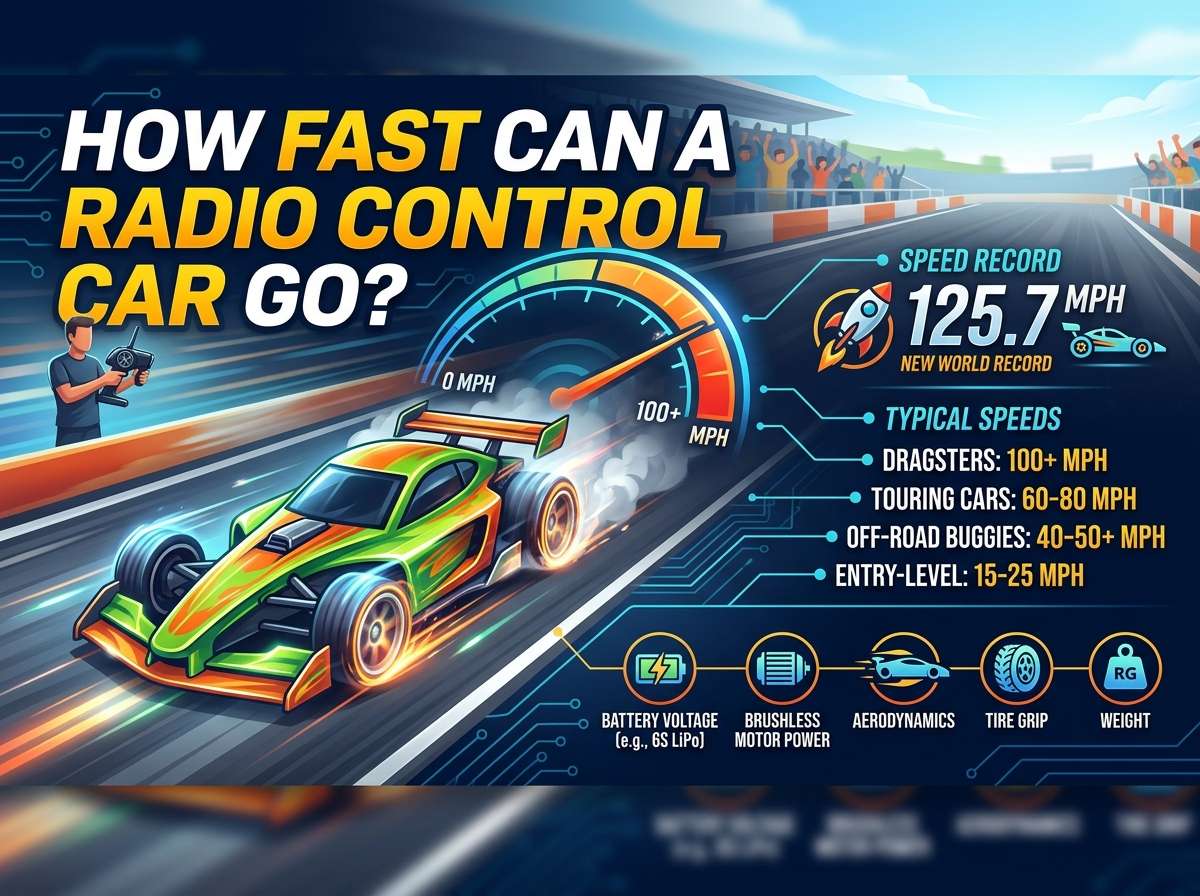
Radio control cars come in many shapes and sizes. The smallest ones might only reach 5 miles per hour, while the fastest can exceed 100 miles per hour. Yes, you read that right. These tiny machines can move faster than speed limits on residential streets.
The speed of an RC car depends on several key factors. The motor type matters a lot. Battery power affects how fast the car can go. The gearing ratio changes the performance. The size and weight of the vehicle play huge roles too. Even the surface you race on impacts speed significantly.
When people talk about RC car speeds, they usually refer to the maximum speed under ideal conditions. This means a flat, smooth surface with fresh batteries and optimal setup. Real-world speeds are often lower because of friction, air resistance, and terrain changes.
Entry-Level RC Cars and Their Speeds
If you’re starting out, entry-level RC cars are perfect for learning. These models typically reach speeds between 10 and 25 miles per hour. They’re slow enough to control easily but fast enough to feel exciting.
Entry-level cars use brushed motors most of the time. Brushed motors are simpler and cheaper than other motor types. They work great for beginners because they’re forgiving and reliable. You won’t break them easily with rough handling.
Most beginner RC cars run on regular alkaline batteries or basic rechargeable packs. These batteries don’t last forever, but they work well for casual play. As your skills grow, you might want to upgrade to better batteries that hold more power.
The gearing on entry-level cars is set for fun and control rather than raw speed. Lower gearing means slower top speeds but better acceleration and easier control. This setup helps new drivers avoid crashes and learn proper handling techniques.
Intermediate RC Cars: Finding the Sweet Spot
Once you have some experience, intermediate RC cars open up new possibilities. These vehicles typically hit speeds between 30 and 50 miles per hour. That’s when things get really exciting.
Intermediate cars often use brushless motors. Brushless motors don’t have brushes that wear out over time. They run cooler than brushed motors and produce more power from the same battery. This extra power translates directly to higher speeds and better performance.
Intermediate models also benefit from better battery technology. Lithium polymer batteries, often called LiPo batteries, pack way more power than standard rechargeable cells. LiPo packs come in different configurations. A 2S LiPo battery provides moderate power, while 3S packs deliver serious speed.
The suspension on intermediate cars is usually much better than entry-level models. Better suspension means the car stays planted on the ground at higher speeds. The tires are also superior, offering more grip and stability during fast runs.
Gearing becomes an important consideration at this level. Different gear ratios let you customize your car’s speed and acceleration. Drivers can experiment with various setups to find the perfect balance for their driving style.
High-Performance Racing RC Cars
Now we get to the serious stuff. High-performance RC racing cars can reach speeds between 50 and 100 miles per hour. Some specially tuned models push beyond this range entirely.
These cars use cutting-edge brushless motors that spin incredibly fast. The electronic speed controllers that manage the motor can handle massive amounts of power. Everything is engineered for maximum performance and minimal weight.
Racing cars run on high-quality LiPo batteries with multiple cells. A 4S battery configuration delivers nearly double the power of a 2S battery. Some racing setups use even higher voltage systems for extreme speeds.
The bodies of racing RC cars are designed by engineers and tested in wind tunnels. Every curve and angle reduces air resistance. The chassis is made from lightweight materials like carbon fiber and aluminum. Weight reduction at this level is critical because every gram matters.
Racing tires are specialized for different track conditions. Soft tires provide grip on smooth surfaces but wear quickly. Hard tires last longer and work better on rough terrain. Professional drivers often have several tire sets for different situations.
The electronics in racing cars are equally impressive. High-quality receiver boards process signals from the transmitter almost instantly. Servo motors respond with lightning-fast precision. Everything works together in perfect harmony to deliver ultimate performance.
Electric RC Cars vs. Nitro RC Cars
The world of RC cars splits into two main camps: electric and nitro-powered vehicles. Each type has different speed characteristics.
Electric RC cars run on batteries and motors. They’re quiet, clean, and require minimal maintenance. Electric cars are perfect for beginners and racing enthusiasts alike. Modern electric models can match or exceed the speeds of nitro cars.
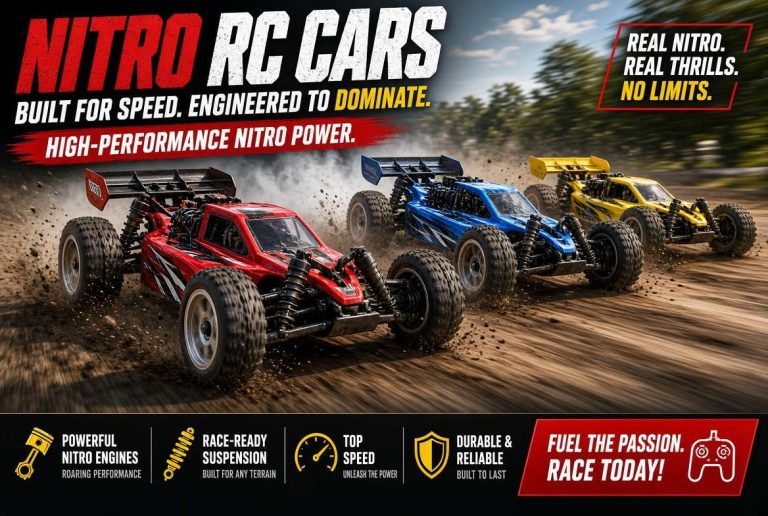
Nitro RC cars use small engines powered by specialized fuel. These cars produce a distinctive high-pitched whine that many enthusiasts love. Nitro engines can deliver impressive power and speed. However, they require more maintenance and skill to operate properly.
Speed-wise, both types can reach similar maximum velocities. A high-end electric car and a well-tuned nitro car might hit comparable numbers. The real difference lies in the experience. Nitro cars have instant throttle response and continuous power delivery. Electric cars have more torque and better acceleration from a standstill.
Electric cars have one huge advantage: they’re easier to control at high speeds. Beginners can get comfortable with electric cars much faster than nitro models. This makes electric RC cars the better choice for most people learning about speed and performance.
Scale and Its Impact on Speed
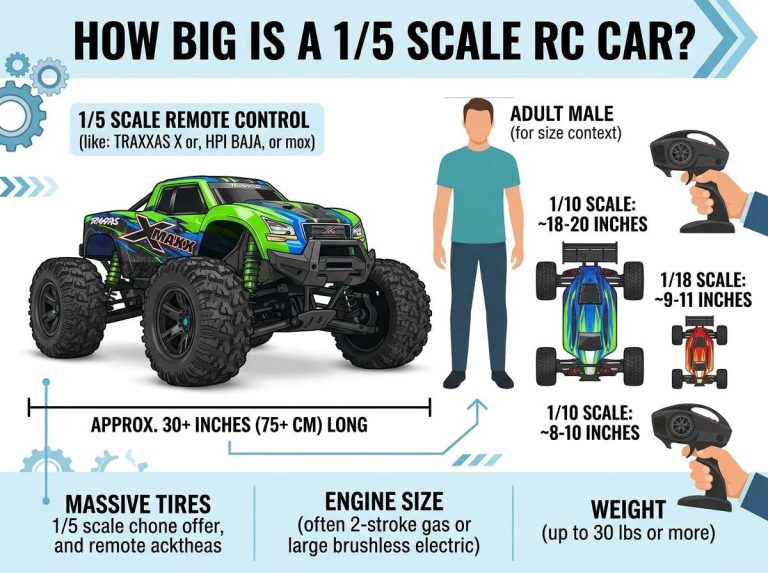
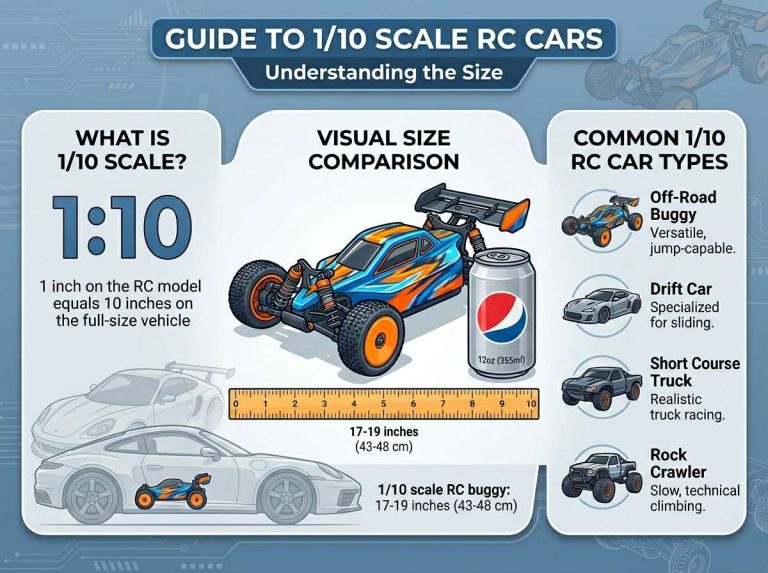
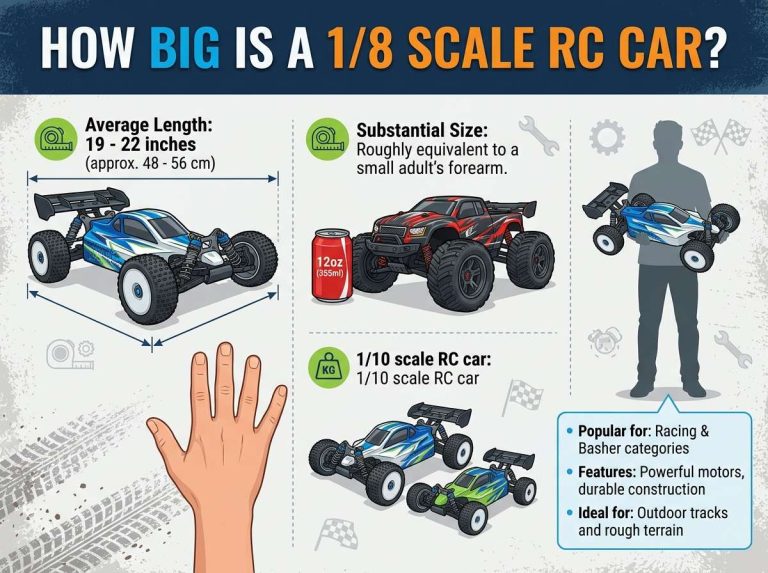
RC cars come in different scales. Scale refers to the ratio of the model’s size compared to a real vehicle. Common scales include 1/10, 1/8, 1/5, and 1/4.
Smaller-scale cars like 1/10 models are typically faster in real-world speeds. They’re lighter and use smaller, simpler motors. A 1/10 scale racing car can easily exceed 60 miles per hour.
Larger-scale cars like 1/5 models are heavier and more powerful. They have bigger engines or motors that produce serious torque. Even though they’re heavy, they can reach impressive speeds. However, the actual miles per hour might be lower than smaller scales because of their mass.
Scale models also affect how speed feels. Driving a 1/4 scale truck at 30 miles per hour feels much faster and more thrilling than a 1/10 car at 60 miles per hour. The larger vehicle’s proportions make speed feel more dramatic.
The track or terrain also changes based on scale. 1/10 cars race on small indoor tracks or outdoor courses. 1/5 and 1/4 models need larger spaces but offer a different experience. Size, speed, and the driving experience all connect together.
Track Type and Terrain Effects
The surface you drive on dramatically impacts RC car speed. Smooth, well-maintained surfaces let cars reach their theoretical maximum speeds. Rough, uneven terrain slows everything down.
Asphalt tracks are ideal for reaching peak speeds. The smooth surface allows tires to grip perfectly. Air resistance is the only thing holding the car back at high speeds. On asphalt, even moderate RC cars can show off their real potential.
Carpet tracks are popular for indoor racing. They provide consistent grip and allow for tight cornering. Speeds on carpet are usually lower than asphalt because the surface creates more friction. However, carpet tracks offer a forgiving racing environment.
Dirt tracks are unpredictable and challenging. Loose soil moves under the tires, reducing grip and stability. Cars tend to drift and slide on dirt, which actually looks cool but limits top speed. Many drivers prefer dirt because it’s more fun and forgiving than paved surfaces.
Grass or grass-like surfaces slow cars down significantly. Weeds and uneven ground create obstacles that reduce speed. Off-road RC cars are designed for grass and dirt, so they handle it better than on-road models. Still, they don’t reach the speeds possible on smooth surfaces.
Wet conditions affect all surfaces. Water reduces grip and can cause the car to hydroplane on asphalt. Wet grass becomes slippery and muddy. Most drivers wait for dry conditions because wet surfaces are unpredictable and can damage electronics.
Motor Types and Speed Capabilities
The motor is the heart of any RC car. Different motor types deliver different performance levels and characteristics.
Brushed AC motors were the original RC car motors. Brushes inside the motor create electrical contact and cause the shaft to spin. They’re simple, cheap, and reliable. Modern brushed motors still power many beginner and intermediate cars.
Brushless DC motors are the current standard for performance vehicles. Without brushes, they run cooler and more efficiently. Brushless motors produce more power per unit of weight. They accelerate faster and reach higher top speeds than equivalent brushed motors.
Some high-end RC cars use special motor designs optimized for racing. Sensored brushless motors have tiny sensors that tell the speed controller exactly what the motor is doing. This allows for smoother acceleration and better control at extreme speeds.
Motor size matters too. Larger motors have more power and can spin faster. A large brushless motor combined with the right gearing can make a car go incredibly fast. The biggest racing motors can spin at over 30,000 RPM.
Battery Technology and Power Output
Batteries supply the energy that makes RC cars go fast. Battery quality directly affects speed and performance.
Older nickel-cadmium batteries were heavy and held relatively little power. They powered early RC cars but weren’t ideal for speed. Modern drivers never use these old batteries.
Nickel-metal hydride batteries improved on their predecessors. They held more power and didn’t have the environmental issues of nickel-cadmium. Many intermediate cars still use NiMH batteries today.
Lithium polymer batteries revolutionized RC car performance. LiPo batteries pack incredible amounts of power into small packages. They’re lighter than older battery types, which helps cars go faster and accelerate quicker.
Battery configuration affects speed significantly. A 2S LiPo battery has two cells in series, providing about 7.4 volts. A 3S battery delivers about 11.1 volts. A 4S battery provides 14.8 volts. More voltage means more power to the motor, which means faster speeds.
Battery capacity, measured in milliamp-hours or mAh, affects how long the car runs. A larger capacity means longer playtime but also more weight. Most RC drivers balance capacity with weight for the best speed and runtime combo.
Gearing Ratios Explained
Gearing controls how power from the motor transfers to the wheels. Different gearing setups change the car’s speed and acceleration characteristics.
High gearing, also called low-ratio gearing, increases top speed. The wheels spin faster relative to the motor speed. High-geared cars are quick and reach their maximum speeds fast. However, they have less torque and might struggle on rough terrain.
Low gearing, or high-ratio gearing, increases torque and acceleration. The wheels don’t spin as fast relative to motor speed, but they get more force. Low-geared cars accelerate hard from a standstill. They’re better for climbing obstacles but don’t reach as high top speeds.
Racing drivers change their gears based on the track. On smooth, high-grip surfaces, they use higher gearing to maximize speed. On rough or low-grip surfaces, they might use lower gearing for better control.
Pinion gears and spur gears make up most gear systems. The pinion gear is small and mounted on the motor shaft. The spur gear is larger and mounted on the axle. The ratio between these two gears determines overall speed characteristics.
Changing gearing is usually simple. You swap the pinion gear for a different size. Just a single tooth difference changes the gearing ratio. Drivers keep several pinion gear sizes on hand to tune their cars for different conditions.
Aerodynamics and Air Resistance
At high speeds, air resistance becomes a major factor limiting RC car velocity. Aerodynamic design reduces drag and lets cars go faster.
RC car bodies are shaped to slice through air efficiently. The front is pointed to deflect air around the car. The sides taper smoothly. The rear extends slightly to create a wake. All these features reduce drag.
Wings and spoilers help manage airflow over the car. Front wings create downforce to keep the car planted on the track. Rear wings generate lift or downforce depending on angle and shape. These aerodynamic devices become critical at speeds above 50 miles per hour.
Ground effect is an advanced aerodynamic principle. The space between the car’s bottom and the ground creates air pressure differences. Smooth bottoms and minimal ground clearance take advantage of this effect.
Dirty airflow from fast-moving tires can lift the car at high speeds. This creates instability and reduces control. Engineers design car bottoms and diffusers to manage this air movement and keep the vehicle stable.
Aerodynamic tuning is often the difference between first and second place in professional racing. Small changes to body shape or wing angle can reduce drag by small but meaningful amounts. At racing speeds, this means the difference between winning and losing.
Speed Records and Extreme Performance
The fastest RC cars have reached truly mind-bending speeds. Some custom-built vehicles exceed 150 miles per hour. These aren’t typical racing cars; they’re purpose-built speed machines.
Commercial racing cars commonly reach 70 to 100 miles per hour. These vehicles are competitive in sanctioned races. They have balanced setups that prioritize speed while maintaining control.
The fastest standard 1/10 scale racing cars top out around 100 to 120 miles per hour in perfect conditions. Factory-fresh cars might not reach these speeds, but meticulously tuned vehicles operated by skilled drivers can.
1/8 scale racing cars often hit higher speeds because they’re bigger and can carry more powerful systems. Some 1/8 racing buggies exceed 100 miles per hour regularly. The larger size means more space for powerful motors and bigger batteries.
1/5 and 1/4 scale vehicles can reach incredible speeds because they have room for truly massive motors and fuel systems. Some 1/4 scale trucks have been clocked at over 80 miles per hour, which is breathtaking when you see it in person.
Drag racing RC cars are specifically built for straight-line speed. These vehicles sacrifice handling and durability for maximum acceleration. Some drag racing cars accelerate from 0 to 60 miles per hour in under three seconds.
Factors That Limit Maximum Speed
Several factors prevent RC cars from going infinitely fast. Understanding these limits helps you get the most from your vehicle.
Weight is a fundamental limitation. Heavy cars need more power to accelerate and more energy to maintain speed. Lighter cars use less energy and go faster with the same motor. This is why racing cars use carbon fiber and aluminum instead of plastic and steel.
Power availability sets a hard ceiling on speed. The largest motors and batteries available only provide so much power. At some point, adding more power becomes impractical or impossible with current technology.
Motor RPM limits the top speed. A motor that spins at 30,000 RPM combined with high gearing creates top speeds. A motor that only spins at 20,000 RPM won’t reach the same speed. Physical motor limitations prevent indefinite RPM increases.
Tire grip determines how much power can actually move the car. If tires can’t grip, the car just spins its wheels and doesn’t accelerate or maintain speed. Soft tires grip better but wear quickly. Hard tires last longer but slip more easily.
Aerodynamic drag increases with speed. At 20 miles per hour, air resistance is minimal. At 80 miles per hour, air resistance becomes significant. At 150 miles per hour, air resistance is the primary force opposing motion.
Transmission efficiency matters too. Mechanical friction in gears, bearings, and shafts wastes energy. More efficient transmissions waste less energy. This is why quality racing cars spend money on precision-machined components.
Control and stability become increasingly difficult at extreme speeds. A car that’s easy to control at 30 miles per hour might be nearly impossible to control at 80 miles per hour. Drivers need serious skill and the car needs perfect setup.
Improving Your RC Car’s Speed
If you want your car to go faster, several upgrades make a real difference.
Upgrade the motor first. A better brushless motor produces more power. Choose one rated for your current battery voltage or go higher if you upgrade batteries too. A quality motor costs more but delivers better performance and reliability.
Swap in a higher-voltage battery. If your car supports 3S batteries and you’re running 2S, upgrade to 3S. The increased voltage provides substantially more power. Make sure your speed controller can handle the higher voltage before making this change.
Change to higher gearing if your track allows it. If you’re running low gear ratios, try a smaller pinion gear to increase top speed. This is the cheapest speed upgrade available. You might need to tune your driving style to handle higher speeds.
Reduce weight anywhere you can. Remove unnecessary plastic pieces. Replace steel fasteners with titanium versions. Use lighter batteries if runtime allows. Every gram you remove helps the car accelerate and reach higher speeds.
Improve aerodynamics with a streamlined body. Some bodies are shaped better than others. Lower-drag bodies let the motor work more efficiently. You might see a 5 to 10 mile per hour speed increase just from a better body shape.
Upgrade to better tires with more grip. Tires that don’t slip waste less motor energy. Better tires let the car accelerate harder and maintain speed more effectively. This is often overlooked but makes a real difference.
Ensure your track is smooth and well-maintained. A bumpy track slows everything down. Smooth surfaces let cars reach their true potential. If you control the track, spend time maintaining it properly.
Speed and Control: Finding Your Balance
The fastest cars aren’t always the most fun to drive. Speed becomes useless if you crash constantly.
Beginners should focus on control first, speed second. A car you can keep on the track at 20 miles per hour is way more fun than one you can’t control at 40. Build your skills gradually.
As your abilities improve, gradually increase your car’s speed. You’ll develop better handling skills as you tackle faster machines. This natural progression builds confidence and prevents frustration.
Some drivers prefer precision over raw speed. These racers love tight courses where cornering matters more than top speed. Others love open tracks where they can push maximum speed. Figure out what you enjoy most.
Track design plays a huge role in the relationship between speed and fun. Technical courses with tight turns make speed less important. Open tracks with big straights reward top-speed machines.
Choosing the Right Speed for You
Different people want different things from RC cars. Think about what excites you.
If you want relaxing fun, an entry-level car reaching 15 to 25 miles per hour is perfect. You can operate it without stress and enjoy casual racing with friends.
If you want competitive racing, an intermediate or high-performance car is necessary. You need the speed to compete. However, you also need the skill to handle it.
If you want to break records and test limits, high-performance racing cars are your target. These machines are expensive and demand serious commitment. But the thrill is worth it.
If you want to learn about mechanics and tuning, any car works. But a platform that lets you experiment with upgrades makes learning more fun. Intermediate cars often hit the sweet spot for learning and performance.
Practical Speed Considerations
Real-world speeds differ from theoretical maximum speeds. Several factors affect actual performance.
Battery age reduces speed. A battery that’s a few years old provides less power than a fresh one. Before comparing speeds, make sure everyone has fresh, fully charged batteries.
Temperature affects battery performance. Cold batteries don’t perform as well as warm ones. Speed measurements made in winter might be slower than the same car tested in summer.
Radio interference can prevent your transmitter from working properly. This reduces steering responsiveness and can slow down your car. Make sure your RC area is free from interference.
Driver skill makes an enormous difference. An expert driver will get more speed from a car than a beginner. The same car might hit 40 miles per hour in one person’s hands and only 25 miles per hour in another’s.
Setup matters tremendously. A properly tuned car goes faster and is easier to control. An out-of-tune car might be slow and hard to drive. Professional racers spend hours perfecting their setup.
The Joy of RC Car Speed
RC cars offer a unique thrill. These machines deliver speed and power in a format you can hold and control. Whether you prefer leisurely cruising or pushing maximum speeds, there’s an RC car for you.
The beauty of the hobby is that speed comes in many forms. A perfectly controlled 20-mile-per-hour run might be more satisfying than an out-of-control 60-mile-per-hour crash. The speed matters less than the experience.
Starting slow and gradually increasing speed and complexity lets you grow into the hobby naturally. You’ll develop skills, gain knowledge, and discover what truly excites you.
RC cars represent a perfect blend of technology, physics, and pure fun. Speed is just one aspect of this wonderful hobby. As you explore the world of radio control vehicles, you’ll find that the fastest cars aren’t always the most rewarding. But they sure are exciting to try.
Whether you’re watching a friend’s car zoom past or pushing your own machine to its limits, RC car speed is genuinely thrilling. Jump in, start with something manageable, and see how fast your passion takes you.
Peterson is an RC hobby enthusiast and product reviewer with a passion for remote-controlled cars, trucks, boats, drones, and accessories. He enjoys testing the latest RC products, comparing features, and sharing practical buying guides to help beginners and experienced hobbyists make informed decisions. Through RCThing.com, Peterson provides honest reviews, maintenance tips, and expert advice to help readers get the most from their RC adventures.