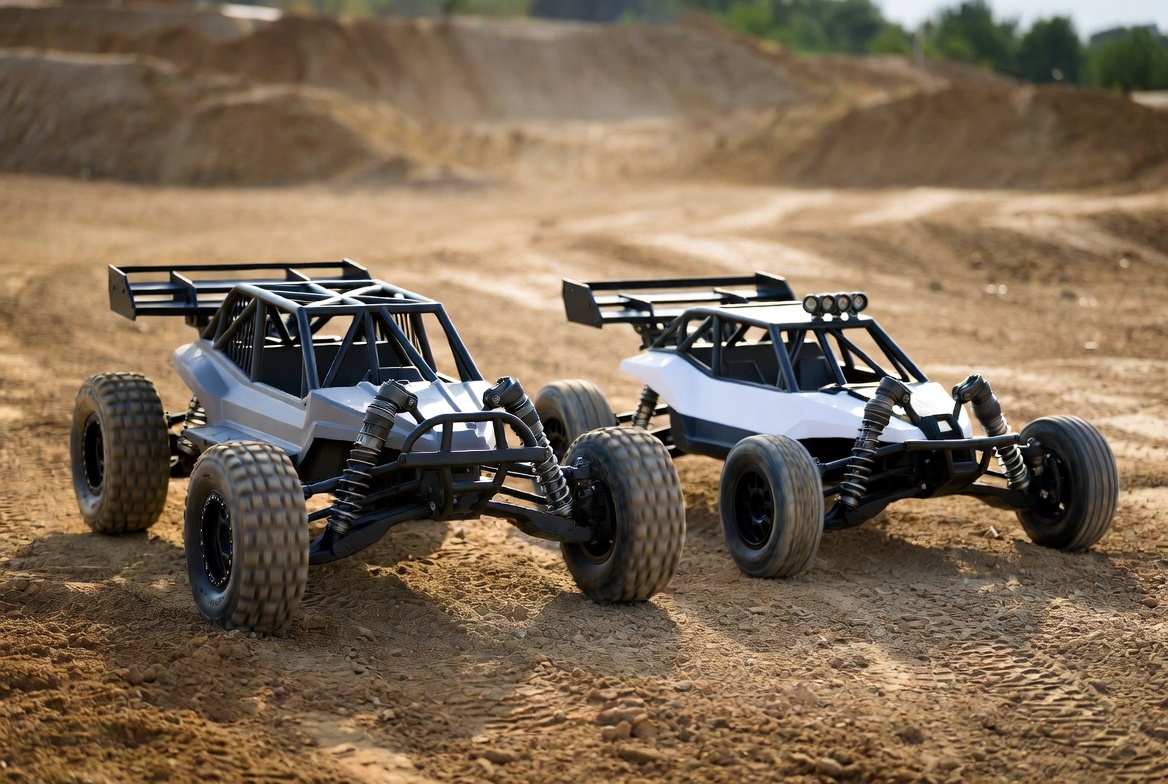
RC Truggy vs RC Buggy
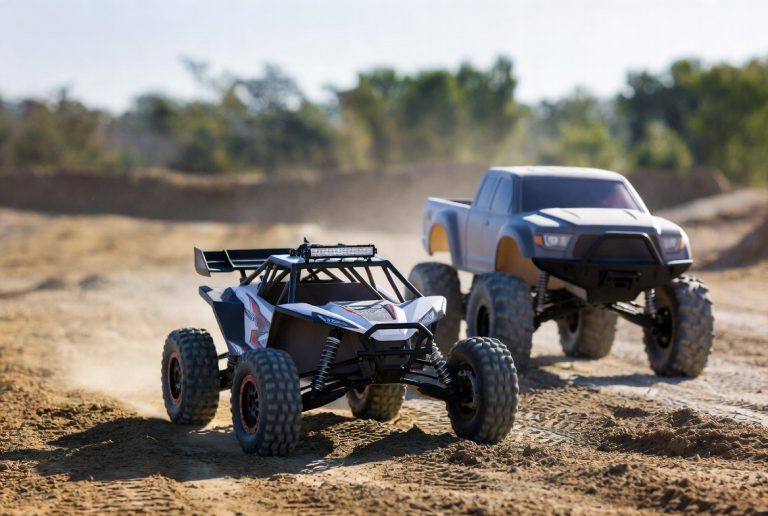
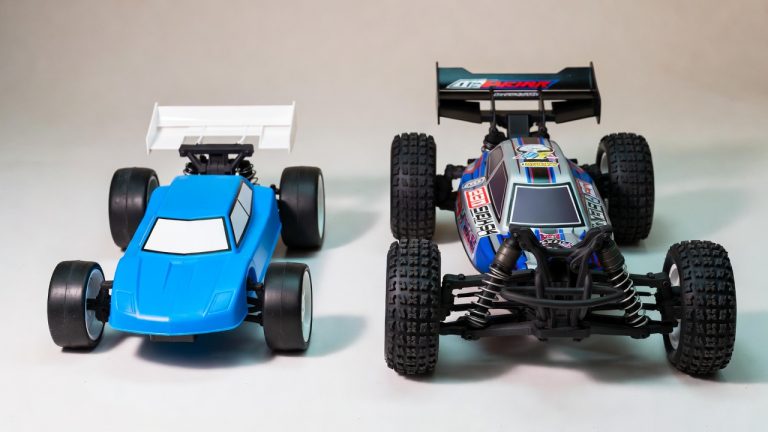
If you’re getting into the world of remote control vehicles, you’ve probably heard people talking about RC buggies and RC truggies. These two types of cars look pretty similar at first glance, but they’re actually quite different. Let me break down everything you need to know about these amazing machines.
What Is an RC Buggy?
An RC buggy is a small remote control car that’s built for racing on dirt and sand. Think of it as a lightweight vehicle with a long wheelbase and lots of ground clearance. Buggies have been around for a long time and remain super popular with RC enthusiasts.
A typical RC buggy features:
- Long and narrow frame – The chassis is stretched out to give stability while turning
- High ground clearance – Plenty of space between the wheels and body
- Wide tires – Big, soft tires that dig into dirt and sand
- Powerful suspension – Springs and shocks that handle bumpy terrain
- Light weight – Usually made from plastic, aluminum, or carbon fiber
The whole point of a buggy is to go fast on rough dirt tracks. They handle jumps well and can take a beating without breaking. Most buggies are built for 2-wheel drive or 4-wheel drive action, with the 4WD versions being more capable on tricky terrain.
What Is an RC Truggy?
A truggy (short for truck-buggy) is basically a mix between a truck and a buggy. It takes the best parts of both vehicles and combines them into one powerful machine. Truggies are newer than buggies and have gained a ton of fans over the past few years.
A typical RC truggy has these features:
- Shorter, wider frame – More compact than a buggy but bigger than a truck
- Higher ground clearance than trucks – Even better for rough terrain
- Medium-sized tires – Bigger than buggy tires but different in design
- Heavy-duty suspension – Built to handle serious punishment
- Heavier overall – More weight means more control on fast terrain
Truggies sit somewhere in the middle between a buggy and a truck. They combine the racing speed of buggies with the tough build of trucks. This makes them perfect for people who want both power and speed.
Key Differences Between Buggies and Truggies
Let’s talk about the main ways these two vehicles differ. Knowing these differences will help you pick the right one for your needs.
Size and Frame Design
Buggies are built to be slender and light. Their long frames help them stay stable while you’re racing at high speeds. The wheelbase is stretched to give excellent balance during sharp turns.
Truggies take a different approach. They have shorter frames that are wider at the base. This setup gives them a lower center of gravity and makes them harder to flip over. If you’re racing in rough areas with lots of rocks and jumps, the truggy’s design helps it stay planted.
Suspension Systems
Both vehicles have suspension, but they work differently.
Buggy suspension is designed for speed and agility. The springs are tuned to let the suspension travel a long way. This lets the buggy absorb jumps and bumps while staying flat on the ground. Buggies feel nimble and responsive because of this setup.
Truggy suspension is built for control and stability. It’s stiffer than buggy suspension, which means it doesn’t move as much. This keeps the truggy from bouncing around too much at high speeds. The suspension also handles bigger rocks and obstacles better.
Tire and Wheel Setup
You’ll notice right away that buggies and truggies use different tires.
Buggy tires are tall and narrow. They’re designed to dig into soft dirt and sand. The tread pattern helps them grip loose terrain. Buggy owners often swap out tires based on track conditions. Some use tires for dirt, others for sand, and some for mixed terrain.
Truggy tires are shorter and wider. They’re built to handle rocky ground and obstacles. The tread pattern is more aggressive, which gives better grip on hard-packed dirt and gravel. Truggies do well on tracks with rocks, roots, and rough patches.
Weight and Power
Buggies are lightweight machines. This low weight makes them fast and easy to move around. Less weight means the motor doesn’t have to work as hard to reach high speeds. Buggies often get amazing battery life because of this.
Truggies are heavier. The extra weight comes from stronger parts and more durable materials. This weight helps the truggy stay stable at high speeds and handle rough impacts. The motor has to work harder, but truggies have more grunt and power for tough terrain.
Speed Potential
Buggies are made for raw speed. Their light weight and aerodynamic design let them hit really high speeds. On smooth dirt or sand, a buggy can get moving fast.
Truggies are strong but not quite as quick as buggies. The extra weight slows them down a bit. But truggies make up for it with better control at speed. You can go faster on rough ground in a truggy than you could in a buggy.
Where to Race Each Type
The place where you race matters a lot. Different locations work better for different vehicles.
Best Tracks for Buggies
Buggies shine on smooth dirt tracks and sand. Places with packed dirt and minimal obstacles are perfect for buggies. Racing clubs often have dedicated buggy tracks that are groomed and maintained. These tracks are designed to let buggies show off their speed.
You’ll also see buggies doing well at beach racing. Sand is soft and loose, which is exactly what buggy tires love. The light weight and tall tires make buggies natural sand racers.
Best Tracks for Truggies
Truggies do best on rough, rocky terrain. Areas with obstacles like rocks, roots, and jumps are where truggies excel. They can bash through tough ground that would give a buggy trouble.
Truggies also work great on mixed terrain tracks. A track with some dirt, some rocks, and some jumps plays to the truggy’s strengths. You need something that can handle anything the track throws at you, and truggies do that well.
Which One Is Better for Beginners?
If you’re new to RC racing, this is a big question. Both vehicles can work for beginners, but each has pros and cons.
RC Buggy for Beginners:
Buggies are great for people just starting out. They’re usually cheaper than truggies, which means you spend less money getting started. Parts are easy to find and relatively inexpensive. If something breaks, you can fix it without spending a ton of cash.
Buggies also teach you good racing habits. You learn smooth steering and throttle control because the buggy responds quickly to your inputs. The light weight means every move you make matters, so you develop good technique fast.
RC Truggy for Beginners:
Truggies can work for beginners too, but they cost more upfront. The bigger parts and tougher materials mean higher prices. You’ll also spend more on replacement parts.
That said, truggies are more forgiving. Their stable platform and heavier weight mean small mistakes don’t punish you as much. If you steer wrong or hit the gas too hard, the truggy might just bash through instead of flipping over.
Handling and Control Differences
How a vehicle handles is everything in RC racing. Let’s talk about the feel of each type.
Buggy Handling
Buggies feel light and responsive. They turn sharp and react quickly to your steering input. This is great because you can make precise moves, but it also means you need to be smooth with the controls. Jerky movements get punished fast.
Buggies also like to slide around corners, which takes practice to master. You need to learn how to brake, turn, and accelerate in the right order. Get the rhythm right and buggies are a blast. Get it wrong and you’re spinning out.
Truggy Handling
Truggies feel stable and planted. They don’t turn as tight as buggies, but they grip the ground better. You can be a bit rougher with the controls and still get good results. This makes truggies more forgiving.
The heavier weight helps the truggy feel connected to the ground. You get good feedback about what the terrain is doing. Truggies also handle high speeds better because they don’t get twitchy or nervous.
Maintenance and Repair
Eventually, your RC vehicle will need some love. Let’s talk about keeping these machines running.
Buggy Maintenance
Buggies need regular maintenance because they’re driven hard. Dirt and sand get everywhere and wear parts down quickly. You’ll need to clean the suspension and bearings often. The tires also wear out faster because they’re made from soft rubber.
Repairs are usually simple and cheap. Most buggies use standard parts that are sold everywhere. If you break a servo or need a new shock, you can find what you need quickly and for a decent price.
Truggy Maintenance
Truggies also need regular cleaning, but their tougher parts don’t wear out as fast. The suspension might last longer because it’s built stronger. You won’t need to replace parts quite as often.
When repairs are needed, they can cost more. Truggy parts are bigger and more robust, so they cost more money. You might also need specific parts that aren’t as common as buggy parts.
Costs: Buggy vs Truggy
Let’s be real—price matters when you’re buying an RC vehicle.
Buggy Costs
A decent entry-level RC buggy runs from around fifty to one hundred fifty dollars. Mid-range buggies that are more durable cost two hundred to four hundred dollars. High-end racing buggies can run over one thousand dollars.
Parts are cheap because buggies are so popular. A replacement suspension arm might cost ten to twenty dollars. Tires are typically five to fifteen dollars. This makes keeping a buggy running on a budget pretty easy.
Truggy Costs
Truggies are pricier. An entry-level truggy starts around one hundred to two hundred dollars. Better truggies run three hundred to five hundred dollars. The fanciest truggies can cost two thousand dollars or more.
Parts cost more too. A suspension arm might run twenty to forty dollars. Tires can cost twenty to thirty dollars per set. The bigger parts mean bigger bills when something breaks.
Battery Life and Performance
How long your RC vehicle runs on a battery charge is super important.
Buggy Battery Life
The light weight of buggies means the motor doesn’t work as hard. You can get forty minutes to an hour of run time on a good battery. Some lighter buggies push even longer. The efficiency is amazing.
Buggies are perfect for quick racing sessions. You get a lot of run time before needing to charge. This means more fun between battery swaps.
Truggy Battery Life
Truggies are heavier, so the motor works harder and the battery drains faster. You’re looking at thirty to forty-five minutes of run time. The shorter battery life is a trade-off for the extra power and stability.
If you want long run times in a truggy, you’ll need multiple batteries and a good charger. This adds to your costs but keeps you racing longer.
Upgrades and Customization
Both buggies and truggies are super customizable. You can make them your own.
Buggy Upgrades
Buggy parts swap easily because the market is so big. You can upgrade the suspension, add better shocks, or swap in a different motor. Aluminum parts replace plastic parts for more durability. Carbon fiber upgrades make things lighter.
Most upgrades are affordable because there’s so much competition among manufacturers. You can build a custom buggy slowly over time without breaking the bank.
Truggy Upgrades
Truggies can be upgraded too, but there are fewer options. The selection of aftermarket parts is smaller than the buggy market. This means upgrades can cost more.
You can still do things like upgrading the motor, improving the suspension, or adding armor to protect the body. The customization is real, just less extensive than with buggies.
Common Mistakes New Drivers Make
Learning from other people’s mistakes helps you avoid problems.
Buggy Mistakes
New buggy drivers often steer too hard and flip over. The responsive handling catches people by surprise. They also max out the throttle too fast and lose control. Learning smooth inputs takes time.
Another mistake is not maintaining the buggy regularly. Dirt gets into everything and causes problems fast. If you skip cleaning your buggy, it’ll break down sooner.
Truggy Mistakes
New truggy drivers sometimes think the weight means they can be rough. They crash hard or drive recklessly, assuming the truggy will take it. While truggies are tough, they still need respect. Crashing constantly breaks things.
Another issue is ignoring the suspension setup. Truggies have more adjustable suspension, and getting it wrong makes the vehicle feel wrong. Taking time to set it up correctly makes a huge difference.
Community and Support
When you get into RC racing, you join a community.
Buggy Community
The buggy community is huge. You’ll find tons of forums, YouTube channels, and local racing clubs. Parts and advice are easy to find. Most shops carry buggy parts. If you get stuck, someone in the community can help you out.
Buggy racing events are common. You can find races almost every weekend somewhere nearby. This makes it easy to get into competitive racing if that’s what you want.
Truggy Community
The truggy community is smaller but growing fast. It’s still easy to find help and parts, just not quite as easy as with buggies. You’ll find online communities and some local racing groups. The smaller community means everyone knows each other pretty well.
Truggy racing is becoming more popular. More events are popping up, especially in rough terrain racing. If you like being part of a growing scene, truggies offer that.
Making Your Final Decision
So which one should you buy? Let’s break it down.
Get a Buggy If You:
- Want raw speed and quick acceleration
- Like racing on smooth dirt or sand
- Need something affordable
- Want tons of parts and support available
- Like tight, responsive handling
- Are new to RC and want to learn quickly
- Have a limited budget for repairs
Get a Truggy If You:
- Like handling obstacles and rough terrain
- Want a stable, forgiving platform
- Don’t mind spending more money
- Enjoy bashing and exploring, not just racing
- Like heavier vehicles that feel planted
- Want something that can handle anything
- Prefer durability over lightweight speed
The Real Talk: You Might Want Both
Here’s a secret—lots of RC enthusiasts own both a buggy and a truggy. They’re different enough that owning both makes sense. You can race the buggy on smooth tracks and bash around with the truggy on rough terrain. Each vehicle teaches you different skills.
If you can only get one, start with what appeals to you most. Your first vehicle should be something you actually want to drive. If speed excites you, get a buggy. If exploring rough terrain sounds fun, get a truggy.
Tips for Getting Started Right
Whether you pick a buggy or a truggy, here are some tips for success.
First, buy from a reputable brand. Cheap knockoffs break quickly and aren’t worth the headache. Stick with brands that have good reviews and community support.
Second, invest in a good charger. A quality charger keeps your batteries healthy and lasts longer. It’s worth spending extra here.
Third, get spare parts. You’ll need extra tires, shock oil, and small parts. Having these on hand means you don’t have to stop racing to wait for mail.
Fourth, watch tutorials. YouTube has amazing content about setup, driving technique, and maintenance. Learning from experienced drivers speeds up your progress.
Fifth, take care of your vehicle. Clean it after every race. Check over the parts before racing. Fix small problems before they become big ones. A well-maintained RC vehicle lasts forever.
Looking at Popular Models
If you’re trying to decide, checking out popular models helps. Both buggies and truggies have proven options that perform well.
Popular buggy choices include classic 2-wheel drive designs and modern 4-wheel drive platforms. These vehicles have huge parts availability and loyal fan bases. Racing clubs often feature these models in competitions.
Popular truggy models are tough machines built for bashing and racing. They’re known for durability and stability. The truggy community loves these platforms because they work so well.
Checking reviews and watching videos of these models helps you understand what you’re getting.
The Future of RC Racing
Both buggies and truggies are evolving. Technology keeps improving. Motors are getting faster, batteries are lasting longer, and parts are getting lighter and stronger.
Buggies continue to be the most popular type for serious racing. The simple, proven design keeps winning races. But we’re seeing more upgrades and refinements every year.
Truggies are growing in popularity. More events feature truggies, and more innovations are coming to the platform. The gap between buggy and truggy performance is shrinking.
Both vehicles have bright futures. If you love RC racing, there’s never been a better time to get started with either type.
Final Thoughts
RC buggies and RC truggies are both awesome machines. They’re different, and both have strengths that appeal to different people. Buggies offer speed, simplicity, and affordability. Truggies deliver power, stability, and capability on rough terrain.
The best choice is the one that excites you most. Think about where you want to race. Think about what style of driving makes you happy. Then go buy that vehicle and hit the track.
Your RC adventure is about to start. Whether you choose a zippy buggy that dances across dirt or a tough truggy that crushes through obstacles, you’re in for an amazing ride. The RC community is welcoming and helpful. Parts are affordable. Racing is fun. And the machines are incredible.
So stop researching and start driving. Get out there and experience the rush of controlling a high-speed machine from your transmitter. Your first jump, your first fast lap, your first crash—these moments are waiting for you.
Welcome to the world of RC racing. It’s way more fun than you think.