How to Make Drift Tires for RC Car?
If you love racing your RC car and want to get that satisfying drifting action going, you’ve come to the right place. Drift tires are essential for any RC drift car, and the good news is you can make them right at home without spending a fortune. This guide walks you through everything you need to know about creating drift tires that work like a charm.
Why Drift Tires Matter for RC Cars
Before we jump into the how-to part, let’s talk about why drift tires are so important. Regular RC tires have lots of grip, which is perfect for normal racing. But when you want to drift, that extra grip actually gets in your way. Drift tires are designed to have less grip on the track, which lets your RC car slide around those corners with style.
Drift tires let your car move sideways instead of just going forward. This is the magic that makes drifting look so cool and feel so satisfying. Without proper drift tires, your RC car will just push straight ahead, and you won’t get that drifting effect at all.
Understanding Tire Drift Basics
The main difference between a regular tire and a drift tire comes down to the rubber compound and the grip level. Drift tires use a harder rubber that doesn’t stick to the track as much. The tread pattern also plays a role, but it’s really all about reducing friction between the tire and the ground.
Your RC drift car’s tires work best when they’re slick or have very little tread. The smoother surface means less grip, and that’s exactly what you want. Some people even polish their drift tires to make them even slicker.
Materials You’ll Need to Make Drift Tires
Let’s get down to business. Here’s what you need to gather before you start making your drift tires:
Essential Materials:
- Rubber compound (foam or hard plastic tires)
- Sandpaper (various grits: 80, 120, 220, and 400)
- Tire polishing compound or paste wax
- Foam inserts for your tires
- A drill or rotary tool
- Polishing pads or microfiber cloths
- Masking tape
- A workspace with good lighting
- Safety glasses
- Measuring tools
Some people use aluminum wheels as well, but the tire material is what really matters for drift performance. You can start with basic RC car tires and modify them, or buy pre-made drift tire kits that you then customize.
Step-by-Step Process for Making Drift Tires
Step 1: Start with Your Base Tires
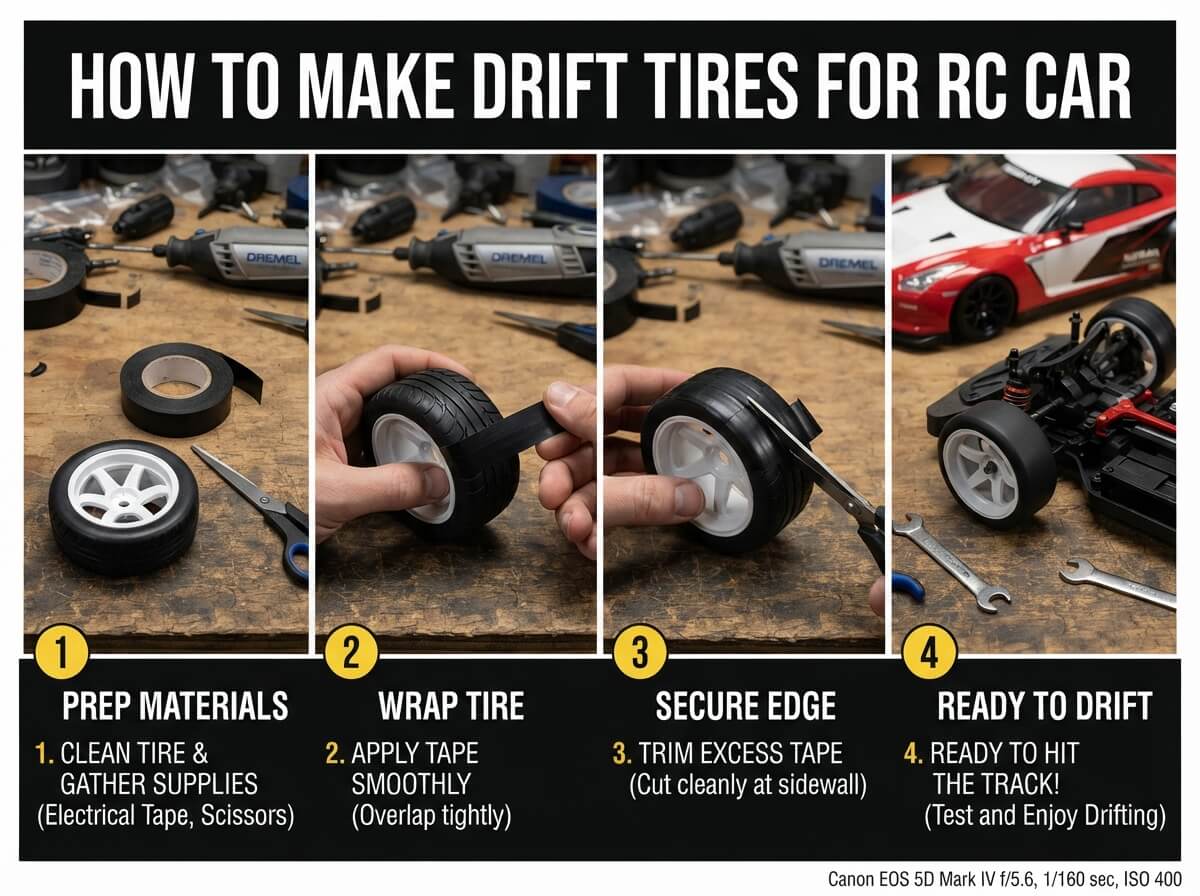
Begin with a decent set of RC car tires. You can use street tires or slick tires as your starting point. The key is to pick a tire that fits your wheel size perfectly. Make sure they’re clean and dry before you begin working on them.
Step 2: Rough Up the Surface with Sandpaper
Take your coarse sandpaper (80 or 120 grit) and start sanding the tire surface. Work in circular motions and apply even pressure all around the tire. This roughing up process removes the factory texture and starts creating a new surface. You want to feel resistance as you sand, which tells you the old surface is breaking down.
Don’t rush this step. Spend at least five to ten minutes on each tire with the coarse sandpaper. Your arms might get tired, but this is where the real work happens.
Step 3: Progress to Medium Grit Sandpaper
Once you’ve roughed up the tires with coarse sandpaper, grab your medium grit sandpaper (120 or 220 grit). This step smooths out the scratches from the previous sanding. Sand each tire for about five more minutes, keeping your movements consistent and even.
Step 4: Fine Sand for a Smooth Finish
Now take your fine grit sandpaper (220 or 400 grit) and sand each tire one more time. This creates a really smooth surface that will help your drift tires perform at their best. The finer grit leaves a much smoother finish than what you’d get if you stopped earlier.
At this point, your tires should feel quite smooth to the touch. That smooth surface is what reduces grip and lets your RC car drift better.
Step 5: Apply Tire Compound or Polish
This is the step that really makes a difference. Apply a tire compound, paste wax, or polishing compound to your tires. Rub it in with a microfiber cloth or polishing pad. Use circular motions and work your way around each tire carefully.
The compound fills in any tiny imperfections and creates an ultra-slick surface. Some people apply two coats for maximum slickness. If you’re doing two coats, let the first one dry and harden before applying the second.
Step 6: Install Foam Inserts
Foam inserts go inside your tires and give them structure. They keep the tires from deforming too much during hard driving. Fit your foam inserts into your drift tires carefully. Make sure they’re snug and sitting properly.
Good foam inserts make a huge difference in how your tires perform. They help your RC car handle better during drifting runs and make the whole experience smoother.
Step 7: Mount Your Drift Tires on Wheels
Put your newly made drift tires on your wheels and mount them on your RC car. Make sure everything is tight and secure. Spin the wheels by hand to make sure they turn freely without any rubbing.
Tips for Making Your Drift Tires Work Better
Tire Softness Matters
The harder your tire compound, the less grip it has. Most drift tires are made from hard rubber or plastic-based compounds. If you start with very soft tires, you might need to sand them down more or use stronger compounds to reduce their grip enough for drifting.
The Importance of Even Sanding
Uneven sanding creates tires that won’t perform right. They’ll grip in some spots and slip in others, making your RC car hard to control. Take your time and sand evenly all around each tire. Your drifting will thank you.
Keep Your Work Area Clean
Rubber dust gets everywhere when you’re sanding. Keep your workspace clean as you work. Dust on your tires can affect how the compound sticks later, so wipe down your tires between sanding steps.
Test and Adjust
After you make your drift tires, take them out for a test run. Your RC car might need some setup adjustments to drift well with your new tires. The tire compound affects how the car handles, so be patient as you dial everything in.
Use a Tire Shine Product
Some people swear by specific tire shine products designed for RC cars. These can make your drift tires even slicker. Experiment with different products to see what works best for your setup.
Different Methods for Making Drift Tires
The Basic Sanding Method
This is the method we walked through above. It’s the most affordable and works great for beginners. You can make quality drift tires with nothing but sandpaper and some simple supplies.
The Compound-Only Method
Some RC car fans just apply a tire compound to their regular tires without all the sanding. This method is faster but doesn’t work as well as the full sanding and compound process. It’s a good quick fix if you need driftable tires in a hurry.
The Polishing Method
This approach involves using a rotary tool with polishing pads to create the smooth surface instead of hand sanding. It’s faster but requires more equipment. A polishing tool can do in five minutes what takes thirty minutes by hand.
Hybrid Method
Many people use a mix of approaches. They might sand by hand to rough up the tires, then use a rotary tool for faster finishing work. Find what works best for your situation and available tools.
Common Mistakes to Avoid
Sanding Too Aggressively
Aggressive sanding can damage your tires or create an uneven surface. Use firm but controlled pressure, and let the sandpaper do the work. You’re not trying to destroy the tire; you’re just modifying its surface.
Skipping the Progressive Sanding Stages
Jumping from coarse sandpaper straight to fine grit doesn’t work well. Each step prepares the surface for the next one. Skip a step, and you’ll have an inferior final product.
Using the Wrong Tire Compound
Not all polishes and waxes work the same on RC tires. Some are too thick or sticky. Others dry too fast or don’t provide enough grip reduction. Experiment to find what works best.
Forgetting to Clean Between Steps
Dust from coarse sanding can get trapped and cause issues later. Clean your tires thoroughly between each sanding stage. This ensures better results and helps your compound stick properly.
Installing Foam Inserts Wrong
If your foam inserts aren’t seated properly, your tires won’t perform right. Take time to fit them correctly. They should be snug but not so tight that they break.
Maintaining Your Drift Tires
Once you’ve made your drift tires, you need to keep them in good shape. Clean them after every run to remove dirt and debris. A simple wash with warm water and soap works fine.
Let them dry completely before storing them. Damp tires can develop issues and lose their performance over time. Store your drift tires in a cool, dry place away from direct sunlight.
Every few runs, you might need to touch up the tire surface. Apply another coat of compound, or do some light sanding if the tires are losing their slickness. Good maintenance keeps your drift tires performing at their best.
What Tire Compound Should You Use?
Different tire compounds offer different levels of slickness. Some popular options for RC drift cars include:
Paste Wax
Affordable and easy to apply, paste wax works well for beginners. It reduces grip and makes tires slicker. You can find it at most hardware or automotive stores.
Tire Polish
Designed specifically for vehicles, tire polish can work great on RC tires. Apply it carefully and buff it to a shine.
Silicone-Based Products
These create a very slick surface but can be messy. They work great if you apply them carefully and don’t use too much.
Specialized RC Tire Compound
Some companies sell drift tire compounds made specifically for RC cars. These often work better than generic products, but they cost more.
How Track Surface Affects Your Drift Tires
Your drift tires perform differently on different track surfaces. Smooth concrete tracks need different tire preparation than rough asphalt. Test your tires on your actual track and adjust if needed.
If your local track is smooth and slick, you might need extra coating. A rougher track surface might need less preparation. Pay attention to how your RC car performs and make adjustments accordingly.
Getting the Grip Level Right
Finding the perfect grip level for your tires is key to good drifting. Too much grip means your car won’t slide around corners. Too little grip makes the car hard to control and unpredictable.
Start with a moderate amount of compound and see how your RC car handles. If it’s not drifting enough, add more compound or sand the tires more. If it’s too slippery, remove some compound or add traction.
This adjustment process takes time and experimentation. Most people find their perfect balance after a few test runs.
Advanced Tips for Experienced RC Drivers
Once you’ve mastered the basics, you can get creative with your drift tire setup. Try different combinations of sanding grits and compounds. Some people layer multiple compounds for specific effects.
You can also experiment with different foam insert densities. Harder inserts provide better support but can change how your tires feel. Softer inserts are more forgiving but might wear faster.
Some advanced drivers even modify the tread pattern on their drift tires, creating custom grooves that help with water drainage or provide subtle grip changes.
Why Homemade Drift Tires Beat Pre-Made Ones
Making drift tires yourself gives you control over every aspect of the final product. You can customize them for your specific track conditions and driving style. Commercial drift tires work for general use, but homemade tires can be fine-tuned to perfection.
Plus, making your own drift tires costs much less than buying premade ones. You’ll save money and get exactly what you want. Once you know the process, making new tires whenever you need them becomes quick and easy.
Getting Started with Your First Set
Don’t overthink this. Grab some sandpaper, some old RC tires, and a tire compound. Start with the basic sanding method. Sand your tires, apply compound, and get them on your RC car.
Take your car out and see how it drifts. The first time you feel your RC car sliding smoothly around a corner on tires you made yourself feels amazing. From there, you can refine your technique and experiment with different approaches.
Final Thoughts on Making Drift Tires for RC Cars
Creating drift tires for your RC car is a skill that gets better with practice. Your first attempt might not be perfect, but that’s okay. Each set of tires teaches you something new about what works and what doesn’t.
Start with the basics, follow the steps carefully, and don’t rush the process. Good drift tires come from patience and attention to detail. The smooth, satisfying feeling of drifting a perfectly set up RC car makes all that effort worthwhile.
Whether you’re racing competitively or just having fun at home, homemade drift tires give you the performance and control you need. Get started today, and soon you’ll be drifting like a pro. The RC car drifting community is amazing, and once you master this skill, you’ll understand why so many people love it. Happy drifting!