How to Fly an RC Airplane?
Flying an RC airplane brings pure joy to people of all ages. If you’re new to the world of remote control planes, this guide will walk you through everything you need to know. From buying your first model airplane to mastering the skies, we’ve got you covered.
What Exactly Is an RC Airplane?
An RC airplane is a small aircraft that you control from the ground using a remote control transmitter. Unlike full-size planes, these flying machines respond instantly to your commands. The remote sends signals to a receiver inside the aircraft, which moves the control surfaces like the wings, tail, and elevators.
Remote control aircraft come in many shapes and sizes. Some planes are simple trainers built to help beginners learn. Others are advanced models that require serious flying skills. The beauty of RC flying is that you can start small and work your way up to more complex aircraft.
Choosing Your First RC Airplane
The plane you pick will shape your entire flying experience. Beginners should look for aircraft designed specifically for training purposes. These trainer planes have stable flight patterns and forgive small mistakes. They cost less than advanced models and can take a beating without falling apart.
Look for planes with these features:
- High-wing design for better stability
- Durable foam or plastic construction
- Good glide ratio for smooth landings
- Built-in landing gear or float system
The size matters too. Start with planes that have a wingspan between 40 to 60 inches. These models are large enough to see in the sky but small enough to handle easily. They also have slower flight speeds, giving you more time to react to control inputs.
Essential Gear You’ll Need
To fly an RC airplane, you need more than just the plane itself. Gather these items before your first flight:
The Remote Control Transmitter: This is your command center in the sky. The transmitter sits in your hands and sends signals to your aircraft. Entry-level transmitters have two or more channels. Each channel controls a different function like throttle, ailerons, elevator, and rudder.
The Receiver: This small device lives inside your plane. It picks up signals from the transmitter and tells the servo motors where to move the control surfaces.
Servo Motors: These tiny machines move the control surfaces. You’ll have servos for ailerons, elevators, and rudders. Quality servos respond quickly and hold their position firmly.
The Battery: RC planes run on rechargeable lithium polymer batteries, called LiPo batteries. These pack lots of power into a small space. Always buy a battery designed for your specific aircraft model.
The Motor or Engine: Electric motors are common on modern trainers and sports planes. Some larger models use small gas engines. Electric is easier for beginners because it’s cleaner and quieter.
A Charger: You can’t fly without charged batteries. Get a charger designed for LiPo batteries to keep your plane ready to launch.
A Launch Area: Find an open field with no trees, power lines, or buildings. A park, field, or beach works perfectly. You need at least 100 by 100 feet of clear space for training flights.
Pre-Flight Checks Save Your Airplane
Before every single flight, run through a checklist. This habit prevents crashes and keeps your plane in the air longer.
Check your battery first. A fully charged battery should feel warm, never hot. If it’s puffed up or smells strange, don’t fly. Replace it immediately because damaged batteries can cause fires.
Walk around your plane and look at the control surfaces. Push the ailerons, elevators, and rudder by hand. They should move smoothly without binding or sticking. If they don’t, find and fix the problem before taking off.
Tighten all screws and bolts. The vibration from flying loosens fasteners over time. A loose wing or tail surface will ruin your flight faster than anything else.
Check your transmitter battery too. Low transmitter batteries cause signal loss, which means your plane won’t respond to your commands in the sky.
Check that your receiver is bound to your transmitter. This means they’re paired and can talk to each other. If binding fails, you’ll launch your plane and watch it fly away uncontrollably.
Learning the Controls
Your transmitter has sticks and switches that do different jobs. The right stick usually controls pitch and roll. That means moving it up makes the nose go up, and moving it left or right banks the wings.
The left stick controls throttle and yaw. Push it up to give your engine more power. Move it left or right to turn using the rudder.
New pilots often try to steer the plane like a car. That’s wrong. In the sky, you bank the wings to turn. This means using the ailerons to lift one wing and lower the other. The plane then follows the direction the wings point.
Get your hands on a flight simulator before you go to the field. Computer flight simulators teach you muscle memory without risking your real plane. Spend hours in a simulator, and your real first flight becomes much easier.
Your First Flight
The morning of your first flight, arrive early at your field. You want calm air with light winds, ideally less than five miles per hour. Wind pushes small planes around and makes flying harder.
Do your pre-flight check one more time. Then, position yourself with the plane in front of you. Your RC airplane will fly toward you when you first take off, so you need space behind you.
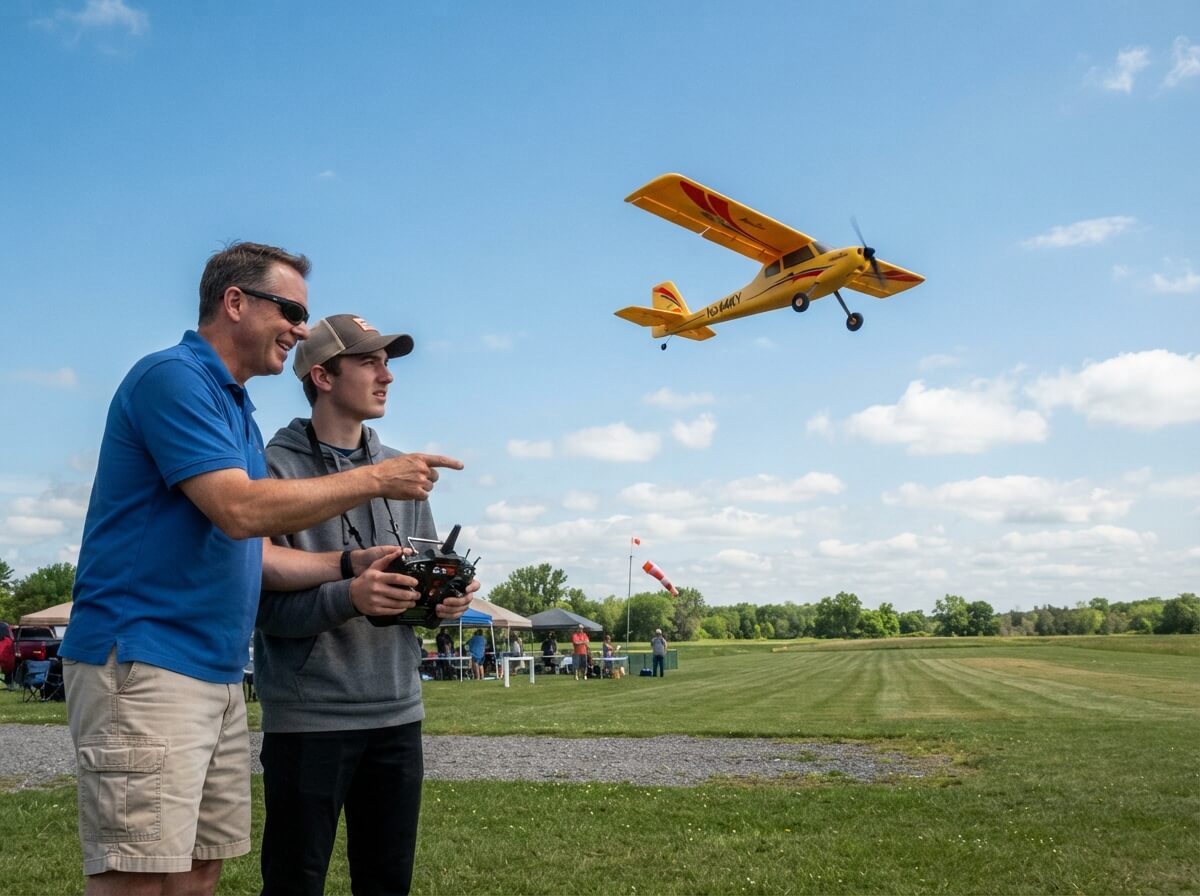
Have a friend help you. One person should hold the plane while the other operates the transmitter. Make sure the control surfaces move the right direction before the plane leaves the ground.
Launch your plane by either hand-tossing it or using a runway if your field has one. Gently push the throttle stick forward. The plane should pick up speed and lift into the air.
Once airborne, stay calm. Make small, gentle inputs on the control sticks. New pilots push too hard and make the plane do wild movements. Small movements produce smooth, controllable flights.
Fly in a big circle in front of you. Don’t try anything fancy on your first few flights. Just get used to how the plane responds to your inputs. Spend your first flights practicing gentle turns and maintaining altitude.
Controlling Pitch and Roll
The elevator controls pitch. Moving your right stick forward pushes the elevator down, which makes the nose drop and the plane descend. Pull the stick back to raise the elevator, which makes the nose come up.
The ailerons control roll. These are the flaps on the wings. Move the right stick left to lower the left aileron and raise the right one. This makes the left wing go up and the right wing go down, rolling the plane to the right. It sounds backwards at first, but you’ll get used to it.
Practice these movements slowly. Make one control input at a time. If you move both sticks together, the plane gets confused and doesn’t do what you want.
Landing Your Airplane Safely
Landing is the hardest part of flying an RC airplane. You’ve done the fun part—now bring that bird back in one piece.
Set up your landing approach by reducing throttle and heading toward your landing area. Aim for a gentle descent angle. Too steep and you’ll hit hard. Too shallow and you’ll run out of field.
As you get close to the ground, start reducing throttle. Your plane should be descending slowly and moving forward at a reasonable speed. When you’re about three feet up, reduce power even more and let the plane settle onto the ground.
The last part is the trickiest. Just before touchdown, gently pull back on the elevator to level the plane. This slows your descent and lets the wheels touch down gently. If you miss this timing, the plane will either dive into the ground or float back up into the air.
Don’t get discouraged if your first landings are rough. Every pilot crashes during training. Your trainer plane is built tough and can take hits. Most crashes just leave small dents or bent props.
Common Beginner Mistakes to Avoid
New pilots make the same errors over and over. Learning about these mistakes helps you avoid them.
Flying too far away: Keep your plane close enough that you can see which way it’s pointed. If you can’t tell which direction the nose faces, you can’t control it well.
Over-correcting: Make small input adjustments. Big jerky movements cause wild maneuvers and loss of control.
Ignoring wind conditions: Strong wind will push your plane all over the sky. Wait for calm days when you’re learning.
Neglecting the pre-flight check: Skipping this step leads to in-flight failures. Always check your plane before launching.
Flying near other people: Keep your flight area clear of spectators. RC planes can cause injuries if they hit someone.
Forgetting about battery limits: Your battery won’t last forever. Land before your plane runs out of power. A plane with dead batteries will fall from the sky.
Improving Your Skills
Once you’re landing safely and flying smooth circles, you can advance your skills. Try flying figure-eights to practice coordinated turns. Fly at different altitudes to get comfortable with the controls at various heights. Practice takeoffs and landings until they’re second nature.
Join a local RC flying club. Other pilots offer advice, let you try their planes, and provide encouragement. Most clubs have experienced instructors who teach newcomers for free.
Watch YouTube videos of expert pilots. See how they handle their planes and copy their techniques. Video tutorials teach you new maneuvers and help you understand what smooth flying looks like.
Types of RC Aircraft to Explore
After mastering a trainer plane, you can explore other flying machines. High-performance aerobatic planes do flips and rolls. Gliders fly without engines and stay aloft using thermal air currents. Scale models look like real military or civilian aircraft and fly just like the real things. FPV drones let you see through a camera mounted on the aircraft and experience flying from the plane’s perspective.
Maintenance Keeps Your Plane Flying
RC airplanes need care to stay in good shape. After each flight, walk through your plane and look for damage. Fix bent propellers by replacing them, not straightening them. Bent props are weaker and more likely to break mid-flight.
Check servo arms and control rods for cracks or bending. These parts move thousands of times and eventually wear out. Replace them before they fail completely.
Keep your transmitter in a safe place. Protect it from water and dirt. Replace the batteries in your transmitter regularly so you always have power when you need it.
Store your plane indoors in a dry location. Moisture damages electronics and corrodes metal parts. Keep it away from direct sunlight because UV rays damage foam and plastic.
The Joy of RC Flying
Flying an RC airplane connects you to the wonder of aviation. You control a real flying machine from the ground using radio signals. There’s nothing like the feeling when you nail a perfect landing after working hard to improve your skills.
The hobby brings people together. RC pilots share flying fields and help each other troubleshoot problems. Many lifelong friendships start on the flight line.
Whether you fly for relaxation, competition, or pure fun, RC aviation offers endless enjoyment. Start with a quality trainer plane, learn the basics through practice, and don’t get discouraged by crashes. Every expert pilot crashed many times before they got good.
Your first flight might be rough. Your landings might be clumsy. But every hour in the air teaches you something new. Soon you’ll fly smooth, controlled patterns and pull off landings that make other pilots nod in approval.
Getting Started Today
You don’t need expensive equipment or years of training to start flying RC planes. You need curiosity, patience, and willingness to practice. Begin with a trainer aircraft made for beginners. Spend time in a flight simulator building muscle memory. Find a local flying field and show up early for calm wind conditions.
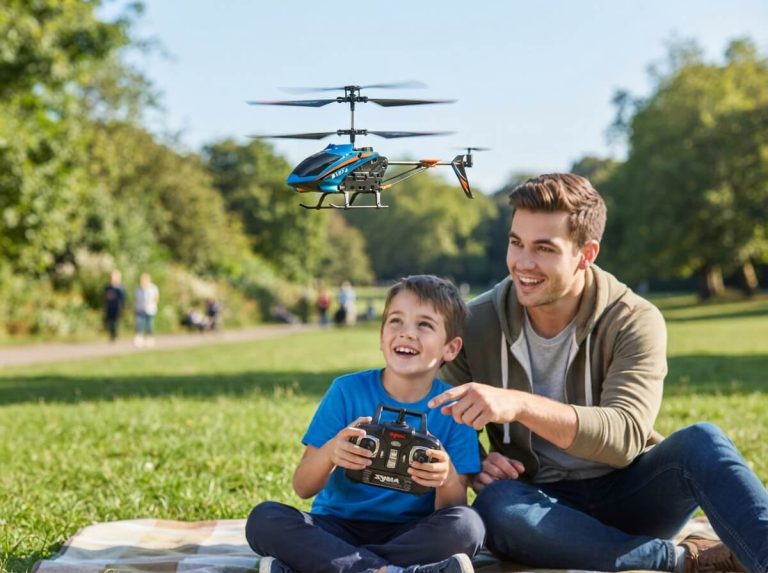
Bring a friend to help with your first flight. Have them hold the plane while you check your transmitter. Take it slowly on your initial flights and focus on smooth, gentle control inputs.
Each flight teaches you something. Each crash shows you what went wrong. Each successful landing builds your confidence. Before long, you’ll look up at your plane doing exactly what you want, exactly when you want it to do it.
The sky is waiting for you. Your RC airplane adventure starts now.