5 Best Glue for RC Tires In 2026
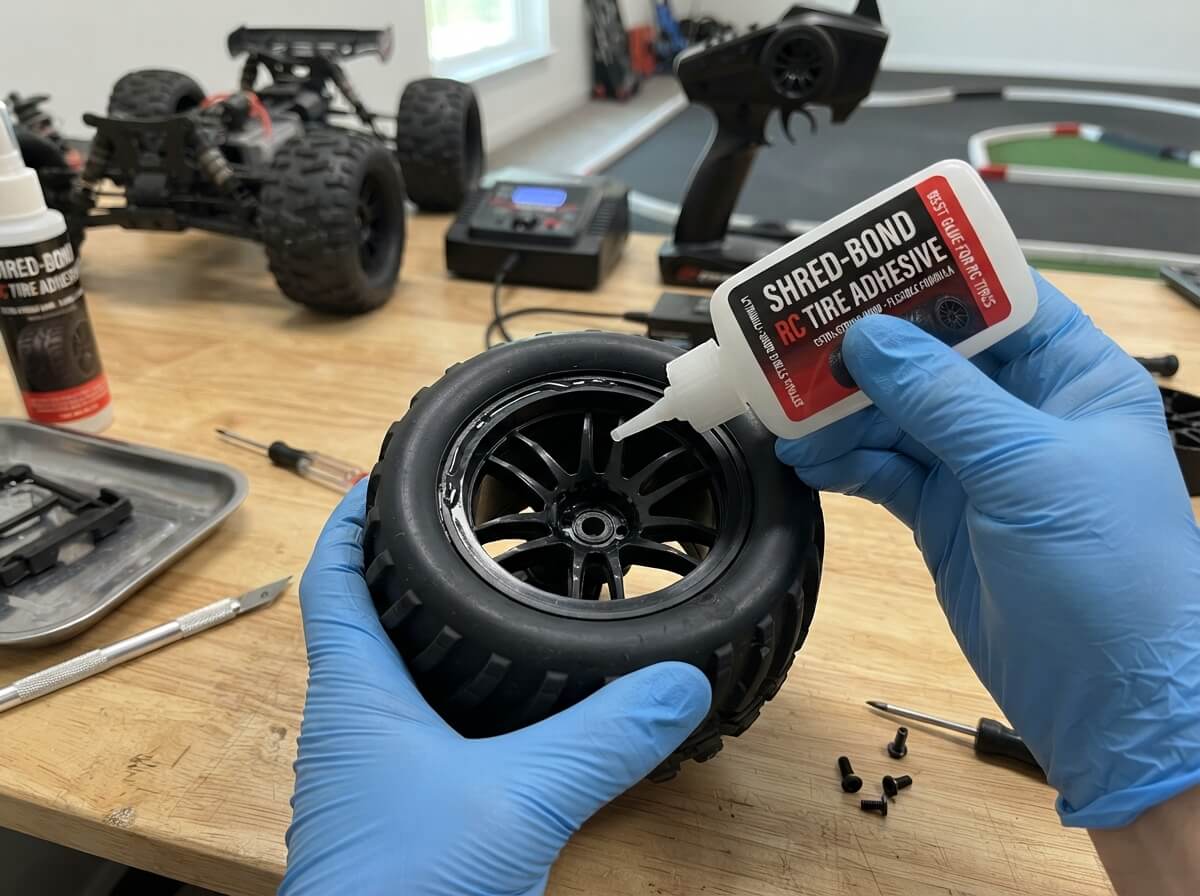
If you race RC cars or just bash around the backyard, you already know the pain of a tire peeling off the rim at the worst moment. It usually happens mid-race, right when you’re closing in on first place, and suddenly your tire is flapping around like a loose flag. That single moment is why so many hobbyists end up searching for the best glue for RC tires instead of just grabbing whatever bottle is sitting in the garage.
Not all glue works the same way on rubber. Some bottles dry too fast and turn brittle after a few runs. Some never fully cure and leave a sticky mess on your rims. Some smell so strong you have to glue tires outside with the door open. This guide walks through five different rubber and CA glues that hobbyists commonly reach for, breaking down what each one is actually good at, where it falls short, and who it fits best.
By the end, you’ll have a clear picture of which glue matches your setup, your budget, and your patience level, because let’s be honest, gluing tires is not anyone’s favorite part of the hobby. It’s a job that needs to be done right the first time so you’re not redoing it every other weekend.
Why Tire Glue Matters More Than People Think
New hobbyists often treat tire glue as an afterthought. They buy a car, a battery, a charger, and then grab the cheapest glue at the hardware store on the way out. That’s a mistake that shows up fast once the tires start spinning at high speed.
RC tires deal with a rough combination of stress. There’s friction heat from constant contact with pavement or dirt, there’s flexing every time the tire compresses on a jump landing, and there’s torque twisting the tire against the rim during hard acceleration. Regular super glue or wood glue just can’t handle that combination for long. It cracks, it peels, or it never bonds the rubber properly in the first place.
A dedicated rubber or CA glue is built with flexible bonding in mind. It stays a little pliable after curing instead of turning glass-hard, which lets it move with the tire instead of snapping under pressure. That flexibility is the real difference between a tire that stays glued through a season of racing and one that needs re-gluing every other weekend.
Good tire glue also saves money over time. A tire that peels off mid-run can get shredded on pavement in seconds, turning a five-dollar tire into scrap rubber. Spending a little extra on the right adhesive up front usually costs less than replacing tires again and again.
Quick Comparison Table
| Product | Size | Type | Dry Time | Best For |
|---|---|---|---|---|
| Meuvcol Rubber Glue | 100g | Rubber adhesive | Moderate | Bulk gluing, multiple cars, workshops |
| Super Rubber Glue (20g) | 20g | CA-based rubber glue | Fast | Quick fixes, small batches |
| BSI-130 Ultra-Cure | 1 oz | Cyanoacrylate (CA) | Very fast | Racing, competitive setups |
| Black Rubber Glue | 20g | Rubber cement style | Moderate | Sidewalls, general repairs |
| Starbond Dark Brown CA | 2 oz | Thick CA glue | Fast | Woodworking crossover, gap-filling |
Keep this table in mind as you read through the reviews below, since it gives a fast snapshot before getting into the details of each product.
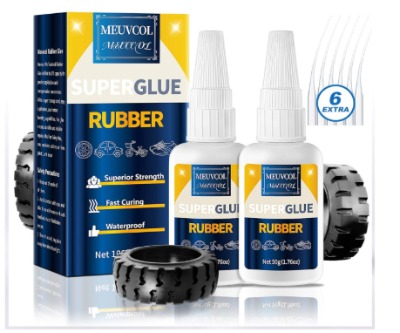
1. Meuvcol Rubber Glue – 100g Super Glue for Rubber, RC Tires, Seals, Gaskets
Product Description
The Meuvcol Rubber Glue comes in a generous 100g bottle, which right away tells you this is built for people who go through a lot of glue. It’s marketed as a heavy-duty rubber adhesive meant for rubber tires, seals, gaskets, shoe soles, hoses, and motorcycle grips, so it’s not a one-trick product built only for RC use. It’s a general rubber bonding glue that happens to work well on RC tires too.
Best Use Cases
This glue shines when you’re gluing a whole set of tires at once, or when you run more than one RC car and need to keep a steady supply on hand. It’s also handy around the garage for other rubber jobs, like fixing a cracked hose or resealing a rubber gasket, so the bottle doesn’t just sit unused between race days.
Key Features Explained Simply
- Big bottle size: At 100g, this is roughly five times the size of most small hobby tire glue bottles, so it lasts much longer per dollar.
- Waterproof bond: Once cured, the glue resists water, so it holds up fine even if your RC car runs through puddles or wet grass.
- Heavy-duty rubber formula: It’s built specifically for rubber-to-rubber and rubber-to-metal bonding, which fits RC tire-to-rim gluing well.
- Multi-surface use: Works on gaskets, hoses, shoe soles, and grips, so it’s a genuinely useful all-purpose rubber glue.
Real-Life Usage Insight
Hobbyists who run tire glue in bulk, like club racers gluing a dozen sets of tires before a race weekend, tend to like this bottle because they’re not stopping every few tires to open a new one. It applies smoothly with a steady, even bead, and it doesn’t clump up the way some thick rubber cements do after a bit of use.
Pros
- Large bottle means fewer reorders
- Genuinely multi-purpose around the house and garage
- Waterproof once fully cured
- Good value for the amount of glue you get
- Bonds well to foam inserts too, which some CA glues struggle with
Cons
- Larger bottles like this tend to dry out or thicken faster once opened compared to small CA glue tubes
- Cure time is a bit longer than fast CA glues, so patience is needed
- Not ideal if you only need a tiny amount occasionally, since a smaller bottle would go further before drying out
Performance Discussion
In terms of raw bonding strength, this glue holds up well under normal racing stress. It flexes with the tire rather than cracking, and it resists heat buildup from friction reasonably well. It’s not the fastest curing option on this list, so plan on letting glued tires sit for a few hours before running them hard.
Ease of Use
The bottle applicator makes it simple to lay down a thin, even line of glue around the rim. No need for extra tools, though a lot of hobbyists still like to use a toothpick or small stick to smooth it evenly into the seam.
Value for Money
For anyone gluing tires often, this is one of the better value picks on the list simply because of how much glue you get per bottle. Just be ready to use it up at a steady pace, since large bottles left half-full for months can thicken over time.
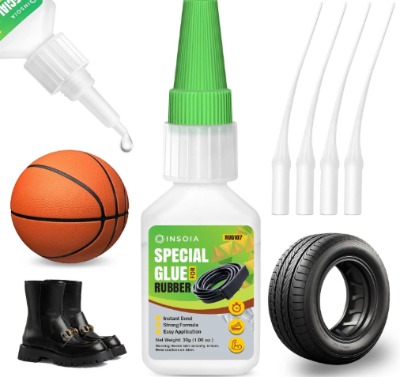
2. Super Rubber Glue – 20g Heavy Duty Rubber Adhesive for RC Tires, Shoe Soles, Belts, Hoses
Product Description
This is a smaller 20g bottle built around a CA-style rubber adhesive. It’s marketed toward RC tires along with a long list of other rubber items like shoe soles, belts, hoses, car seals, mats, and motorcycle grips. Basically, it’s a compact, quick-dry option for anyone who wants a fast fix without committing to a big bottle.
Best Use Cases
This one is a solid pick for casual hobbyists who don’t glue tires every week and just want a small bottle that dries fast and gets the job done between runs. It’s also great as a backup bottle to toss in your race bag for quick repairs on the go.
Key Features Explained Simply
- Quick-dry formula: This glue sets noticeably faster than standard rubber cement, which is handy if you’re gluing tires right before a race.
- Heat resistance: Built to handle the friction heat that builds up during hard runs without softening or peeling.
- Waterproof cure: Holds up fine in damp or wet conditions once fully set.
- Compact size: The 20g bottle is easy to toss in a toolbox or race bag without taking up much room.
Real-Life Usage Insight
Casual bashers and weekend racers tend to like this size because it doesn’t sit around unused for long stretches, meaning it stays fresh from first use to last drop. Since it dries fast, a lot of users find they can glue a set of tires and be back on the track within an hour or two rather than waiting overnight.
Pros
- Fast drying time compared to standard rubber cement
- Small, portable bottle fits easily in a race bag
- Handles heat from friction well
- Good bond strength on foam inserts and rubber tire walls
- Reasonably priced for occasional use
Cons
- 20g runs out quickly if you’re gluing tires often
- Fast-drying formulas can be less forgiving if you’re slow to position the tire correctly
- Thin applicator tip can clog if not cleaned after use
Performance Discussion
Bond strength here is solid for typical hobby-level use. It’s not marketed as a competition-grade adhesive, but for weekend bashing and casual club racing, it holds tires firmly through normal jumps, drifts, and hard cornering.
Ease of Use
Because it dries fast, there’s a bit of a learning curve around working quickly and cleanly. New users should have their tire and rim lined up and ready before applying glue, since there’s less wiggle room to adjust positioning once the glue starts to grab.
Value for Money
For occasional use, this bottle is priced fairly and won’t sit around going stale. Frequent racers going through several sets of tires a month might find themselves buying it more often than they’d like, but for casual use it’s a smart, low-commitment pick.
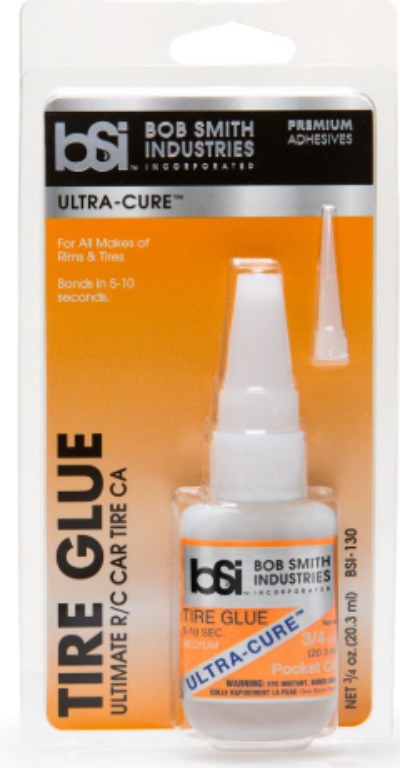
3. Bob Smith Industries BSI-130 Ultra-Cure Tire Glue – Clear CA Adhesive for RC Tires
Product Description
BSI is a name that’s been trusted in the RC hobby scene for a long time, and the BSI-130 Ultra-Cure Tire Glue is built specifically with RC tires in mind rather than being a general rubber adhesive that happens to work on tires too. It’s a clear cyanoacrylate (CA) formula in a 1 oz bottle, designed for high-stress bonds where tire and rim need to stay locked together under hard racing conditions.
Best Use Cases
This is the glue serious racers reach for. If you’re running competitive events where tire failure could cost you a race, this dedicated formula is worth the extra attention it takes to apply correctly. It’s also a strong pick for anyone running high-torque brushless setups where tires get put through more stress than a typical hobby motor produces.
Key Features Explained Simply
- Clear finish: Unlike some rubber glues that dry with a visible tint, this stays clear, so it doesn’t leave marks around the tire seam.
- CA-based formula: Cyanoacrylate glue bonds fast and creates a rigid, strong hold, which is ideal for high-stress racing use.
- Purpose-built for RC tires: This isn’t a repurposed general adhesive, it’s formulated specifically for tire-to-rim bonding in the RC hobby.
- Fast curing: Sets quickly compared to standard rubber cement, letting racers get back on track sooner.
Real-Life Usage Insight
Club racers and competitive hobbyists who need a dependable bond under race-day pressure tend to favor this glue because it’s been a trusted name in RC racing circles for years. It applies thin and clean, and the clear finish means glued tires still look sharp instead of showing sloppy glue lines.
Pros
- Strong, race-tested reputation in the RC hobby community
- Clear finish looks clean on light-colored rims
- Fast cure time supports quick turnaround between runs
- Purpose-built formula reduces guesswork
- Reliable bond under high torque and heat
Cons
- CA glue is more brittle than flexible rubber cement, so it can crack if applied too thick
- Smaller 1 oz bottle means it runs out faster with frequent use
- Needs good ventilation, since CA glue fumes can be strong
- Slightly pricier per ounce than bulk rubber glue options
Performance Discussion
This glue holds up impressively well under hard racing stress, which is exactly what it’s built for. The trade-off is that CA glue in general is less flexible than rubber cement, so a thin, even application matters more here than with the other products on this list. Applied correctly, it creates a bond that resists peeling even during aggressive cornering and jump landings.
Ease of Use
Because it’s a fast-setting CA formula, there’s a short window to line up the tire correctly before it grabs. Most experienced racers apply it in small sections around the rim rather than one continuous bead, pressing the tire down as they go to avoid air pockets.
Value for Money
The price per ounce runs a bit higher than the bulk rubber glue options on this list, but for racers who need dependable performance, the reliability often outweighs the cost. This isn’t the pick for casual bashing, it’s built for people who take their lap times seriously.
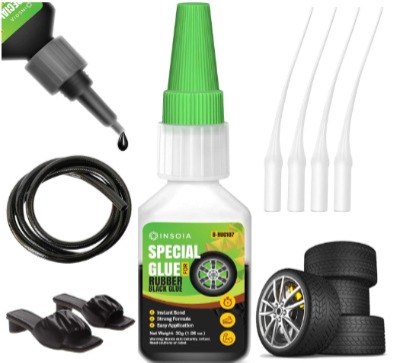
4. Black Rubber Glue – 20g Heavy Duty Rubber Adhesive for Tire, Tube, Shoes, Plastic, Metal
Product Description
This 20g black rubber glue is closer to a traditional rubber cement style adhesive, made for tires, tubes, shoes, plastic, and metal. Its black color makes it a natural pick for sidewall repairs and general tire work, since it blends right in with black rubber tires instead of leaving a visible clear or tan glue line.
Best Use Cases
This one works well for sidewall bonding and general auto-style repairs where the black color helps the glue disappear into the rubber. It’s also a good all-around pick for anyone doing general DIY rubber repairs beyond just RC tires, like patching tubes or reinforcing worn edges.
Key Features Explained Simply
- Black color match: Blends into black rubber tires and sidewalls, so repairs look cleaner and less noticeable.
- Quick-dry: Sets reasonably fast, cutting down wait time between gluing and running the car.
- Waterproof and heat-resistant: Holds up in wet and hot conditions without breaking down.
- Multi-surface bonding: Works across plastic and metal too, not just rubber, giving it some flexibility for mixed-material repairs.
Real-Life Usage Insight
Hobbyists doing sidewall repairs or patch jobs tend to appreciate the black finish since it hides glue lines far better than clear formulas. It’s also a handy backup for general auto and DIY repairs around the house, so the bottle gets used for more than just RC tires.
Pros
- Black color blends naturally with rubber tires
- Solid multi-surface bonding across rubber, plastic, and metal
- Decent heat and water resistance
- Fast enough drying time for weekend use
- Affordable for the amount provided
Cons
- Not as strong under extreme racing stress as dedicated CA tire glues
- Black tint can be a downside if you’re gluing lighter-colored foam inserts, since it can show through
- 20g size runs out fast with regular use
Performance Discussion
For general repair work and casual bashing, this glue performs reliably. It’s not built for elite competitive racing the way the BSI-130 is, but for everyday hobby use and sidewall patch jobs, it does the job without fuss.
Ease of Use
It applies similarly to standard rubber cement, going on smoothly with a small brush or applicator tip. No special technique is needed beyond spreading it evenly and pressing surfaces together firmly.
Value for Money
Priced reasonably for casual and DIY use, though frequent racers might find the small bottle size limiting if they’re gluing tires often.
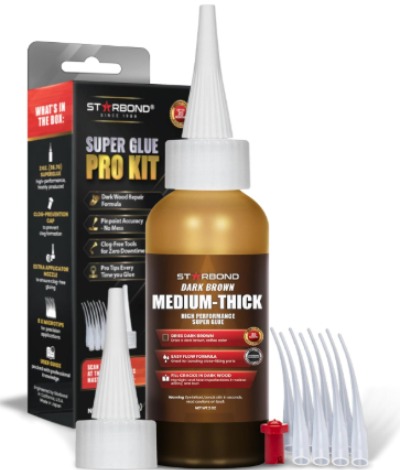
5. Starbond 2 oz Dark Brown Medium-Thick CA Glue – Premium Cyanoacrylate Super Glue
Product Description
Starbond is a name most people know from woodworking and woodturning circles rather than the RC hobby world, but its medium-thick CA glue crosses over nicely into RC hobby use too. This dark brown formula has a 500 CPS viscosity, meaning it’s thicker than standard thin CA glue, which helps it fill small gaps rather than soaking straight through porous material.
Best Use Cases
This glue is best suited for hobbyists who already do woodworking or crafting projects and want one versatile CA glue that also handles occasional RC repairs. It’s less of a dedicated tire glue and more of a general-purpose thick CA adhesive that happens to work reasonably well on rubber gap-filling and bonding jobs.
Key Features Explained Simply
- Medium-thick viscosity: At 500 CPS, this glue sits between thin CA glue and gel CA glue, giving it decent gap-filling ability without being too runny.
- Dark brown tint: Useful for wood projects like knot filling, though it’s a less common color choice for RC tire work.
- Fast cure: Standard CA glue curing speed, setting within seconds to a couple of minutes depending on humidity.
- Versatile crossover use: Works across woodworking, guitar repair, and RC hobby applications.
Real-Life Usage Insight
Woodworkers and hobbyists who already keep Starbond CA glue around for other projects sometimes reach for it in a pinch for RC repairs, since it’s already on the workbench. It’s not the first choice most dedicated RC racers would grab, but it gets the job done for light or occasional tire work.
Pros
- Versatile across multiple hobbies, not just RC use
- Thicker viscosity helps with gap filling on uneven surfaces
- Fast curing time typical of CA glue
- Trusted brand name in the crafting and woodworking community
- Larger 2 oz bottle offers decent value for a CA glue
Cons
- Dark brown color is a mismatch for most tires and rims, standing out rather than blending in
- Not specifically formulated for rubber flexibility, so it can feel more brittle than dedicated rubber glue over time
- Stronger CA fumes require good ventilation
- Less ideal as a primary tire glue for frequent racers
Performance Discussion
As a general CA glue, bonding strength is solid, but rubber-specific flexibility isn’t its main strength. For an occasional quick fix, it works fine, but it’s not the top pick if RC tire gluing is your main need.
Ease of Use
Standard CA glue application applies here, small dots or a thin line, then firm pressure to bond. The thicker viscosity actually makes it a little easier to control than thin CA glue, since it doesn’t run everywhere.
Value for Money
Good value if you already use CA glue for other hobbies and want one bottle that covers multiple uses. Less ideal if RC tires are your only application, since more specialized options on this list will likely serve you better.
Comparison Insights: How These Five Glues Stack Up
Looking at all five side by side, a few clear patterns show up.
For bulk use and value, the Meuvcol 100g bottle wins by a wide margin simply because of how much product you get. If you glue tires regularly across multiple cars, that bottle size pays off fast.
For speed and portability, the Super Rubber Glue 20g bottle and the Black Rubber Glue 20g bottle are close competitors. Both dry reasonably fast and fit easily into a race bag, though the black version has the edge for sidewall work thanks to its color match.
For competitive racing performance, the BSI-130 Ultra-Cure stands out clearly. It’s purpose-built for RC tires, and its reputation in racing circles isn’t accidental. It’s the pick worth reaching for when tire failure isn’t an option.
For crossover hobbyists, the Starbond CA glue makes the most sense if you’re already working in woodworking or crafting and want a do-it-all adhesive rather than a dedicated RC tire glue.
In terms of drying speed, the CA-based glues (BSI-130 and Starbond) cure the fastest, followed by the two quick-dry rubber formulas, with the large Meuvcol bottle taking the longest to fully set.
In terms of flexibility after curing, rubber cement style glues like Meuvcol and the Black Rubber Glue tend to stay more pliable, which some hobbyists prefer for tires that flex a lot during jumps and hard landings. CA glues like BSI-130 and Starbond cure harder and more rigid, which suits high-speed racing but can be less forgiving on rough terrain with heavy impacts.
Buying Guide: What to Look for in RC Tire Glue
A few key factors separate a good tire glue from one that’ll leave you frustrated after a single run.
Cure time. Fast-curing glues get you back on the track sooner, but they also leave less room for adjusting tire placement. Slower-curing rubber glues give more working time but mean longer wait before your car is ready to run.
Flexibility after drying. Tires flex constantly, especially on jumps and rough terrain. A glue that stays a little flexible after curing tends to hold up better long term than one that dries completely rigid.
Bottle size versus how often you glue tires. If you’re gluing tires weekly, a bigger bottle saves money over time. If you only glue tires occasionally, a smaller bottle avoids the risk of the glue thickening or drying out before you use it all.
Color match. Clear or black glue blends better with most tires than tinted formulas, keeping repairs looking clean rather than showing obvious glue lines.
Heat and water resistance. RC tires deal with friction heat and often run through wet grass or puddles, so a glue that holds up under both conditions will last longer between repairs.
Fume strength and ventilation needs. CA glues tend to produce stronger fumes than rubber cement. If you’re gluing tires indoors often, this is worth factoring into your decision.
Who Should Buy Which Glue
Casual weekend bashers who glue tires now and then will likely be happiest with a small, quick-dry bottle like the Super Rubber Glue or Black Rubber Glue, since neither commits you to a large amount of product that might go unused.
Club racers and competitive hobbyists who need dependable performance under race conditions should lean toward the BSI-130 Ultra-Cure, given its track record in the RC racing community specifically.
Hobbyists running multiple cars or gluing tires often, like RC clubs or families with more than one racer, will get the most value out of the large Meuvcol bottle simply due to cost per use.
Crafters and woodworkers who already keep CA glue on hand for other projects and want a multi-purpose adhesive that can handle occasional RC repairs too will find the Starbond glue a reasonable crossover pick, even if it’s not purpose-built for tires.
Common Mistakes to Avoid When Gluing RC Tires
Applying too much glue. A thick, heavy bead doesn’t bond better, it just takes longer to cure and adds unnecessary weight to the tire. A thin, even line around the rim works far better than a thick blob.
Skipping the cleaning step. Old glue residue, dust, and dirt on the rim will weaken the new bond. Wiping the rim clean before applying fresh glue makes a noticeable difference in how well the tire holds.
Rushing the cure time. Running a car too soon after gluing, even with fast-drying formulas, is one of the most common reasons tires peel off during a run. Giving the glue the full recommended time to set pays off in the long run.
Gluing in a poorly ventilated space. CA glues especially can produce strong fumes, so working in a well-ventilated area or outdoors is a smart habit, not just a comfort preference.
Ignoring foam insert compatibility. Some CA glues can react poorly with certain foam tire inserts, causing them to shrink or harden unevenly. Checking compatibility before applying glue to inserts saves a headache later.
Not rotating the tire while curing. Gravity can pull glue unevenly around the rim if the tire sits still while curing. Rotating the tire occasionally during the setting process helps the glue distribute more evenly around the full circumference.
Final Verdict
There’s no single glue that wins in every category, since it really comes down to how often you glue tires and what kind of running you do.
For most everyday hobbyists who want strong performance without babysitting the process, the Meuvcol 100g Rubber Glue offers the best overall balance of value, versatility, and reliable bonding, especially for anyone running more than one car or gluing tires regularly.
If competitive racing is the goal and tire failure simply isn’t an option, the BSI-130 Ultra-Cure Tire Glue is worth the extra care it demands, since its purpose-built formula and racing reputation speak for themselves.
Casual bashers who just need a quick, reliable fix between runs will do just fine with either the Super Rubber Glue or Black Rubber Glue, both offering fast drying and easy application without a big commitment.
And if RC tires are just one small part of a broader hobby lineup that includes woodworking or crafting, the Starbond CA glue is a reasonable multi-purpose option to keep on the shelf.
Whatever you land on, the real key is applying it correctly, letting it cure fully, and avoiding the common mistakes covered above. Get that part right, and your tires will stay put through jumps, drifts, and hard corners instead of leaving you standing on the sidelines mid-race, wondering what just flew off your car.