How to Drift an RC Car?
Drifting looks cool. Really cool. You see those tiny RC cars sliding around corners with their back ends sliding out, and you think “I want to do that.” The good news? You totally can. Drifting an RC car is not some impossible skill locked behind a wall of expensive equipment and years of practice. It’s actually way more accessible than you think.
This guide walks you through everything you need to know. We’ll talk about what gear you need, how your RC car works when it’s drifting, and the exact moves you need to master. By the end, you’ll have a clear path to nailing those sideways slides.
What Exactly Is Drifting?
Let’s start simple. Drifting is when your RC car slides sideways while still moving forward. The tires lose grip with the track, and the rear end swings out. The front tires point one way while the car goes another way. It looks wild and feels amazing once you get the hang of it.
The cool part? Drifting is not just for fun. It’s also a legit racing skill. In real motorsports and RC racing, drifting helps drivers take corners faster and hit the apex perfectly. It’s a technique, not just a show-off move.
Do You Need a Special RC Car to Drift?
Here’s what matters: not all RC cars drift the same way. Some cars make drifting super easy, while others fight against it.
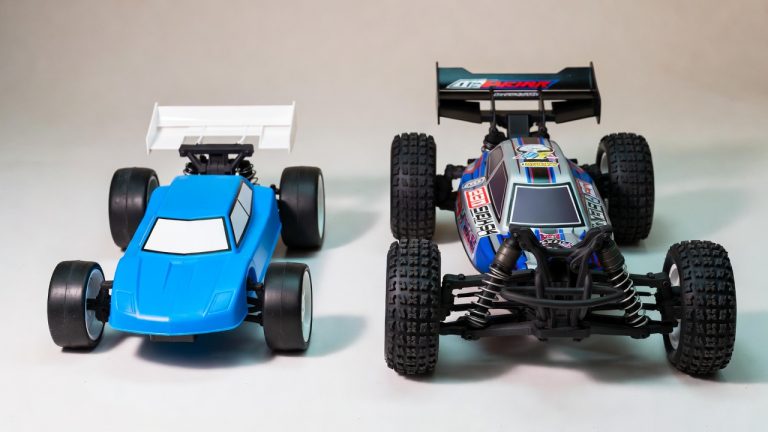
Drift-specific RC cars come with special tires and a lower ride height. These cars have smooth, hard tires that slip easily on the pavement. They also have less grip built into their suspension. If you want to get into drifting seriously, a drift-spec RC car makes sense.
That said, you can also drift with regular RC cars. Some touring cars and on-road racers have enough adjustability to drift if you tune them right. It won’t feel quite the same, and you’ll work harder to make it happen, but it’s doable.
For your first time drifting, think about this: a drift-specific car costs more upfront, but it saves you tons of frustration. You’ll learn faster and enjoy it more.
The Gear You Actually Need
Let’s talk about what sits in your garage before you hit the pavement.
The RC car itself is the obvious one. A basic drift car kit runs you between thirty and fifty dollars if you buy the cheap stuff, and can go way higher for high-end models. You don’t need to break the bank to start, but don’t buy the absolute cheapest either. That sweet middle ground works best.
A decent surface matters more than you think. Smooth pavement is your friend. Concrete works great. Asphalt works okay. Grass or dirt? Forget it. The car needs to slide, which means you need a smooth, hard surface. A parking lot is perfect. A basketball court works. A smooth driveway is ideal.
A remote control comes with your car, but make sure it has good range and responsive controls. You’ll need quick steering inputs to drift properly.
Batteries and a charger keep things running. Grab extra batteries so you can swap them out and keep practicing while one charges. Nothing kills the fun faster than running out of power.
Tires and spare parts save the day. Drifting is hard on tires, so grab some extras. You’ll also want spare parts for when you bump into things or crash (which you will, and that’s totally fine).
How Your RC Car Actually Works When Drifting
Understanding this stuff makes everything click into place.
When your RC car drives normally, the tires grip the surface, and the car turns because you’re telling it to. Simple enough. But when you drift, the tires lose that grip. The car slides instead of turning like usual.
Here’s the thing: your drift car has low grip tires and a specific suspension setup that makes sliding easy. The steering angle gets really aggressive. The throttle stays on while you’re sliding. These things work together to make drifting possible.
Weight distribution plays a huge role. When you’re drifting, your car’s weight shifts around. The rear end becomes lighter, the front becomes heavier. This is why drift cars sit lower and have specific suspension geometry. It helps manage that weight shift and keeps the car balanced during the slide.
Tire contact is critical too. As your car slides, the tires are not gripping straight on. They’re sliding at an angle. The amount of angle affects how fast you drift and how much control you have. Too much angle and you spin out. Too little and you don’t drift at all.
The Basic Drifting Technique
Alright, this is where it gets real. Here’s how you actually make your RC car drift.
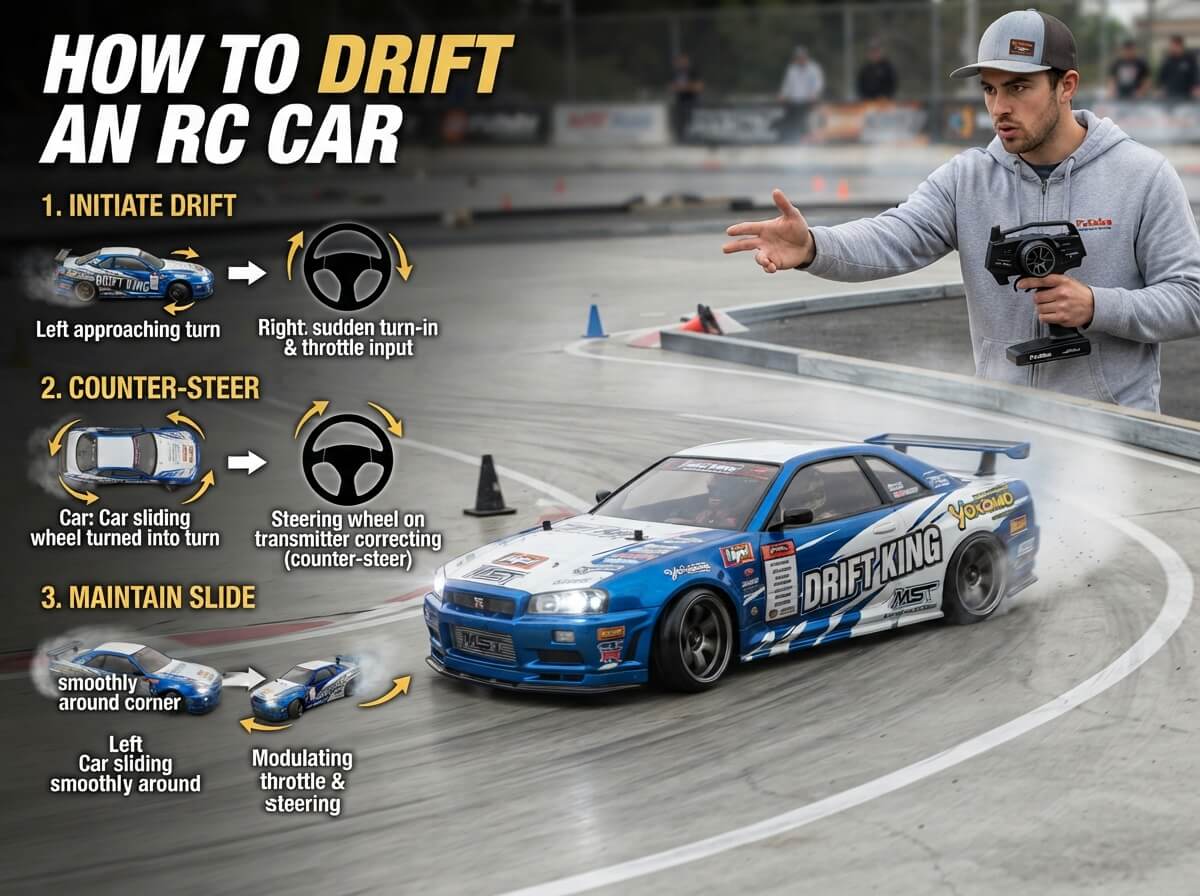
Step one: Build up speed
Drive into the corner with good throttle. You need momentum. A slow drifting attempt just ends in a spinning mess. Think of it like this: speed is your friend when drifting. Get up to a solid pace before you try anything fancy.
Step two: Hit the steering hard
As you approach the corner, snap your steering input hard to one side. Do it fast and do it fully. This sudden steering movement breaks the tire grip. The rear end swaps out immediately. This is called “initiating the drift.”
Step three: Keep the throttle on
This is the big one. Keep feeding throttle throughout the drift. This keeps the rear tires sliding and maintains the drift. If you let off the gas, the tires regain grip and your drift stops. You want constant power to keep that slide going.
Step four: Balance the steering
Once the rear is out, ease your steering input back toward center or even opposite the initial turn. This keeps the car from spinning all the way around. You’re kind of steering into the skid. It feels backwards at first, but it works.
Step five: Straighten out
Come off the throttle and let the tires grab again. The car will grip up and straighten out. Don’t steer back hard though. Just let it happen naturally.
The Entry Technique That Actually Works
The way you enter a drift determines everything. Get this right and the whole thing flows smoothly.
The speed entry works like this: approach the corner at decent speed, then hit the steering hard while keeping throttle on. The car breaks traction and starts sliding. This is the most common way to drift in RC racing.
The power entry is different. You go into the corner at a normal speed, then stab the throttle hard while steering. This works great if your car has enough power to break the rear tires loose.
The bump entry uses obstacles to your advantage. A small tap or riding a tiny lip breaks traction and starts the drift. This one takes practice and only works in certain spots.
For beginners, the speed entry is your best bet. It’s the most consistent and the easiest to control. Get comfortable with this first, then explore the others.
Common Mistakes That Sabotage Your Drifting
Every beginner makes these, so don’t feel bad when you do them too.
Steering too gently kills your drift before it starts. You need aggressive steering input. Be bold. The car can handle it.
Letting off the throttle breaks your drift immediately. Your instinct says “ease up,” but that’s wrong. Stay on the gas and trust the process.
Over-correcting the steering makes you spin out. Once you’ve initiated the drift, back off the steering a bit. Let the car slide naturally. Too much correction spins you right around.
Trying to drift on the wrong surface wastes time. Smooth, hard pavement. That’s the rule. Not carpet, not dirt, not grass.
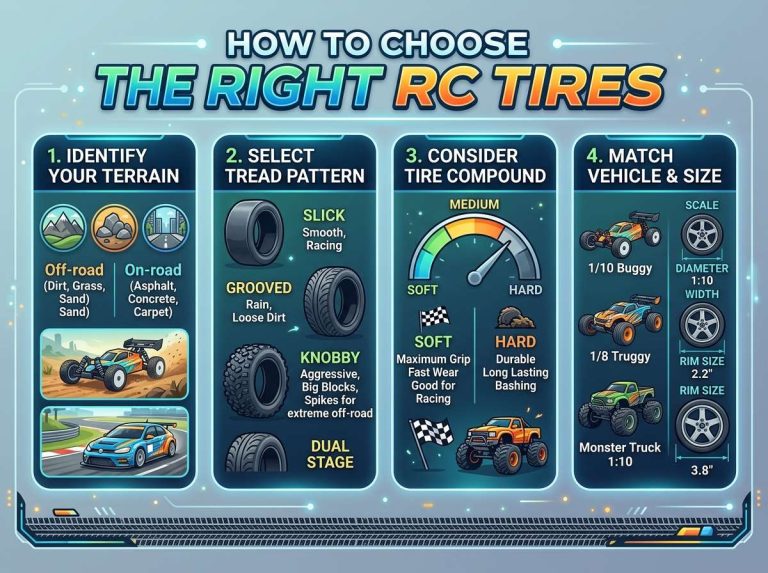
Using the wrong tire compound makes everything harder. Drift tires should be smooth and have low grip. If your tires are grabbing too much, the car won’t slide easily.
Rushing into big drifts when you should be learning basics first. Start with small inputs and gentle slides. Build up from there.
Forgetting about your surroundings leads to crashes. Make sure you have space to practice. An open parking lot is ideal.
Practice Drills That Build Your Skills
You don’t just jump into drifting and hope for the best. You need to train specific skills.
The straight-line practice teaches throttle control. Drive straight, hit the steering hard, get the car sliding, then straighten out. Do this over and over. Focus on smooth inputs, not wild movements.
The corner drifting drill is where you practice actual turns. Set up a marker or use an existing corner. Drive in at speed and drift around it. Try to hit the apex while sliding. This builds your feel for the car.
The figure-eight drill teaches you to drift left and right equally. Set up two corners and alternate drifting around each one. This balances your skills.
The speed control drill helps you understand how speed affects your drift. Try drifting at different speeds and feel how the car behaves. Faster usually means longer, more committed drifts. Slower means tighter, more controlled drifts.
The cone weaving drill adds technical challenge. Set up cones or small obstacles and weave through them while drifting. This teaches precision and car control.
Spend time on each drill. Don’t rush through them. The skills you build here show up when you’re actually racing or showing off for friends.
Tuning Your RC Car for Better Drifts
The right setup makes drifting feel natural. The wrong setup feels impossible.
Tire pressure affects how easily your car drifts. Lower pressure means softer tires that slide more easily. Higher pressure makes the tires harder and less likely to drift. Start with recommended pressure and adjust from there.
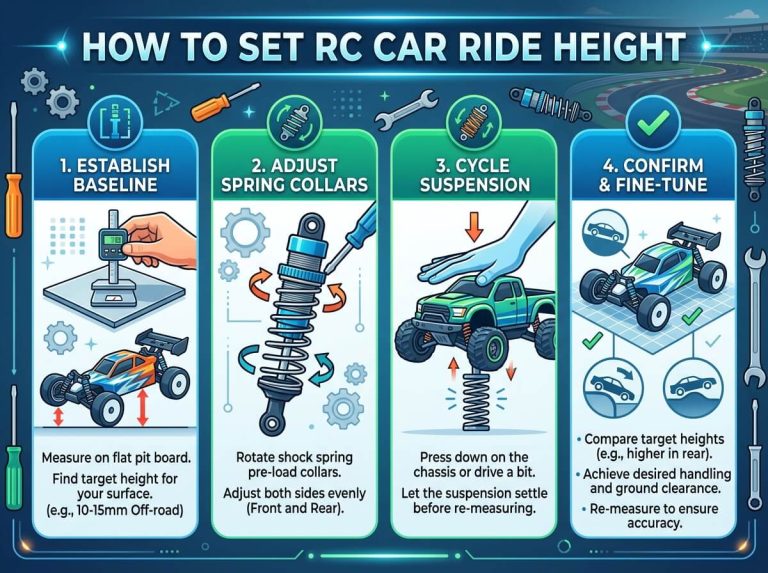
Suspension geometry matters tons. A lowered car drifts better than a raised one. Adjust your suspension to sit as low as safely possible. This centers the weight and improves drifting feel.
Steering sensitivity can be dialed in on many RC cars. If steering feels too responsive, dial it back a notch. If it feels sluggish, bump it up. You want it to feel snappy but controllable.
Motor power affects how easily you can maintain a drift. More power keeps you sliding longer. Less power means shorter drifts. Find what works for your style.
Brake balance makes a difference too. Sometimes tweaking brakes helps you nail the entry into a drift. Don’t overlook this.
Why Some People Find Drifting Easy and Others Struggle
It’s not just about the car. Your technique matters more.
People who come from video game racing often pick up RC drifting fast. They already understand weight transfer and throttle control. People who’ve never driven anything before take a little longer, but they get there too.
The real key is practice. Seriously. You can’t think your way into drifting. You have to feel it. Spend time doing it. Make mistakes. Crash a few times. Feel how the car responds. Eventually, your hands and brain sync up with the car’s behavior, and everything clicks.
Patience is huge. Some people nail their first drift on day one. Others need a week of practice. Both are normal. Keep at it and you’ll get there.
Advanced Drifting Moves to Work Toward
Once you’ve nailed the basics, fun stuff opens up.
Chained drifts link multiple drifts together. You drift around one corner, exit, build speed, then enter another drift immediately. This looks amazing and opens up new racing lines.
Reverse drifts have the car drifting backward. This is hard and requires tons of practice, but it’s incredibly satisfying when you pull it off.
Feint drifts involve steering one direction, switching abruptly, then drifting the opposite way. It’s a flashy move that impresses onlookers.
Hairpin drifts are tight, controlled drifts around sharp angles. These demand precision and smooth inputs.
Don’t rush to these. Get really comfortable with basic drifts first. These moves build on that foundation.
Gear Maintenance Keeps Everything Running
Drifting is tough on equipment. Maintenance keeps your car ready to roll.
Check your tires regularly. Smooth tires get worn down and start gripping too much. Replace them when needed. Dirt and debris on the tires kills your drifting. Keep them clean.
Inspect your suspension after crashes or hard runs. Bent parts don’t perform well. Replace anything that looks damaged.
Keep bearings and moving parts clean. Dust and dirt create friction and wear stuff out faster. A quick wash with compressed air helps tons.
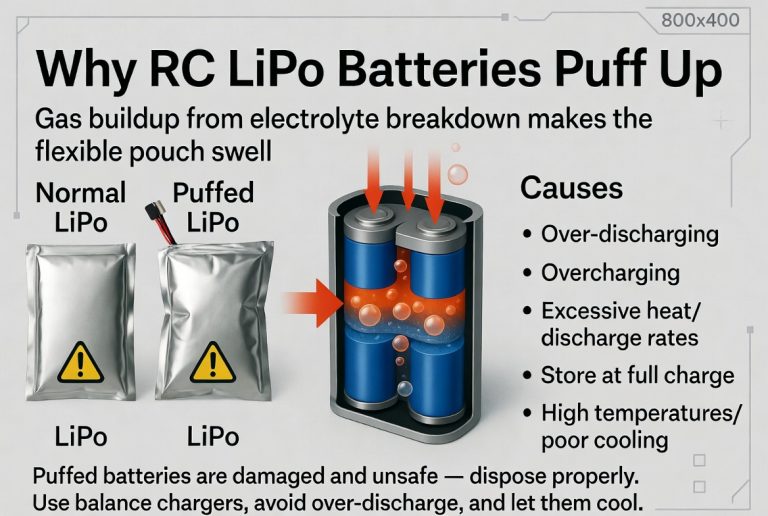
Charge batteries properly. Let them cool before charging. Don’t overcharge them. Proper battery care extends their life significantly.
Check your drivetrain. Loose gears or worn parts kill performance. Tighten everything up and replace parts that are worn.
Where to Practice and Have Fun
The best place to learn is an empty, smooth parking lot. Find one that’s not super busy. Early morning or late evening works great. Make sure you have permission to be there though. Respect the space.
Basketball courts are fantastic. The surface is perfect, and you’ve got some natural boundaries built in.
Smooth sections of driveway work too, though you’ll have less room.
Avoid crowds. Even though drifting looks cool, people often don’t realize how fragile they are compared to an RC car. Keep practice areas clear of humans.
The Bottom Line
Drifting an RC car is an awesome skill that’s totally within reach. Start with the right car and the right surface. Learn the basic technique. Practice the drills. Tune your setup. And then just put in the time.
Yeah, you’ll crash. You’ll oversteer and spin out. You’ll wonder why your car won’t cooperate. That’s all part of it. Every single person who can drift went through the same phase.
But here’s what happens next: one day, something clicks. Your steering input and throttle control sync up perfectly. The car drifts smooth and fast. You come around the corner looking incredible. In that moment, all the practice pays off, and you’ll know exactly why people love this stuff.
So grab your RC car, find a parking lot, and get started. Drifting is waiting for you.