How RC Car Suspension Works?
RC car suspension is like the shock absorbers in a real car. It keeps your remote-controlled vehicle stable, smooth, and fun to drive. If you’re new to RC cars, understanding suspension can seem confusing. But don’t worry. I’ll break it down into simple pieces that make sense.
What Is RC Car Suspension?
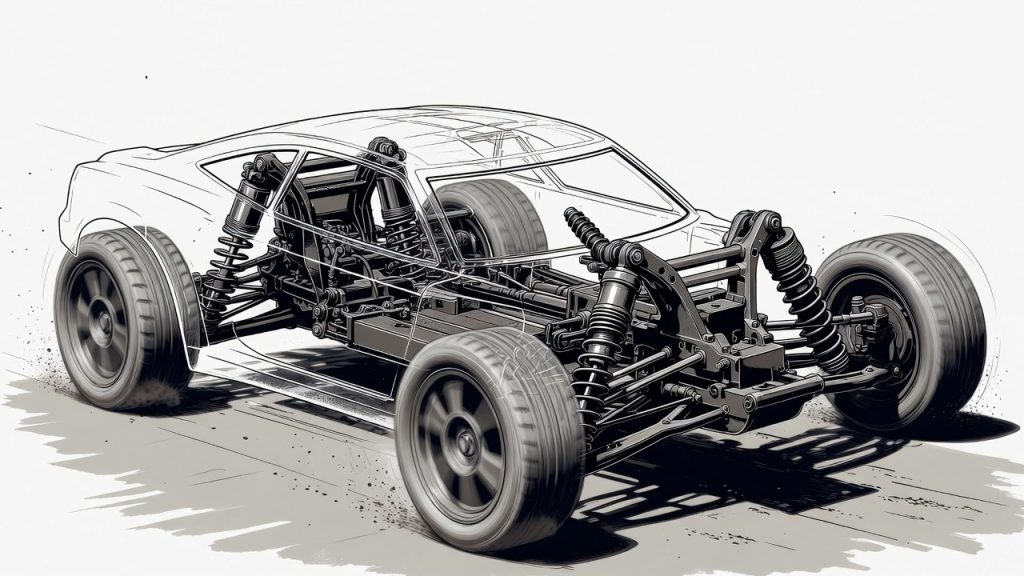
Suspension is the system that connects your RC car’s body to its wheels. Think of it as the bridge between the car and the ground. When your RC car hits a bump, jumps off a ramp, or lands hard after a jump, the suspension absorbs that impact. Without it, your car would bounce all over the place and be impossible to control.
The main job of suspension is to:
- Keep all four wheels on the ground
- Absorb shocks from bumps and jumps
- Keep the car stable during turns
- Allow the wheels to move up and down smoothly
- Transfer your control inputs to the wheels
A good suspension setup makes your RC car handle better. It makes driving faster, easier, and way more fun. Bad suspension makes your car unpredictable and hard to steer.
The Main Parts of RC Car Suspension
Every RC car suspension has several key parts. Let’s look at each one.
Springs
Springs are what do most of the work in RC car suspension. When your car hits a bump, the spring compresses. Then it pushes back and helps the car return to normal. Springs are made of metal coils that twist and bend.
Different springs have different stiffness levels. A stiff spring doesn’t compress much. A soft spring compresses easily. New RC car drivers often use medium springs. As you get better, you can try stiffer or softer springs based on how you want your car to feel.
Springs come in different colors. The color code tells you how stiff the spring is. Red springs are usually soft. Green springs are medium. Blue springs are stiff. But different brands use different color codes, so always check the package.
Dampers (Shock Absorbers)
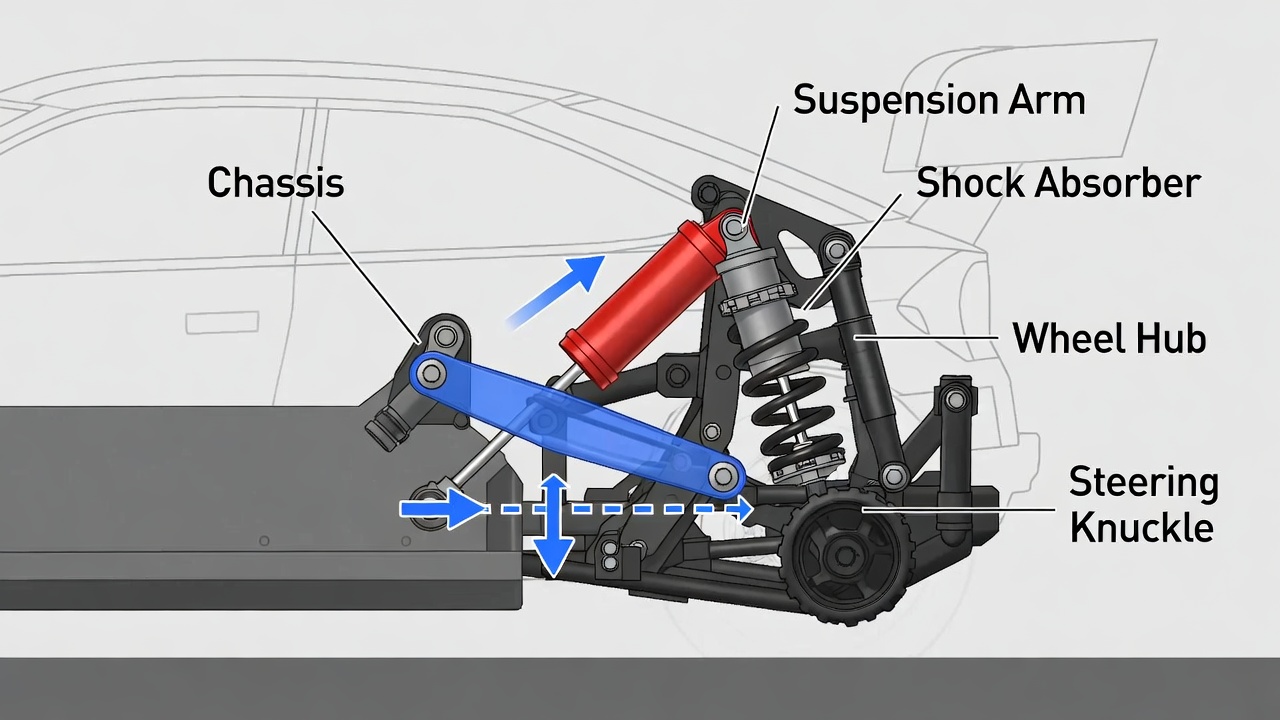
Dampers are the cylinders you see on RC cars. They contain oil and a piston. The spring sits on top of or connects to the damper. The damper does something springs can’t do alone. It slows down the bouncing.
Here’s the difference: A spring will compress and bounce back. But if you only had a spring, the car would bounce up and down forever. The damper stops that bouncing. Oil inside the damper resists the piston’s movement. This resistance slows everything down.
Think of it like this. A spring gives energy back. A damper takes energy away. You need both working together.
Suspension Arms
Suspension arms are metal rods that connect the wheels to the car’s frame. They pivot at both ends. As the wheels move up and down, the arms bend and flex. They guide the wheels in the right direction.
Most RC cars use a system called double A-arm suspension. This means there are two arms on each wheel. One arm points up. One points down. This design keeps the wheel aligned properly during movement.
Some RC cars use other suspension designs. Single-arm suspension is simpler but less stable. Some racing cars use multi-link suspension for extra control. But double A-arm is the most common.
Pivot Balls and Bushings
These tiny parts are the connections. Pivot balls are metal spheres that let the suspension arms rotate. Bushings are rubber or plastic sleeves that let parts move smoothly.
These parts wear out over time. If they get worn, your RC car feels sloppy and won’t handle right. Replacing them is easy and cheap. It’s one of the first maintenance tasks you’ll learn.
Antiroll Bars (Sway Bars)
Antiroll bars are metal rods that connect the suspension on the left side to the suspension on the right side. They reduce body roll during turns. When your car turns hard, the weight shifts to one side. The antiroll bar helps keep the car level.
Stiffer antiroll bars make the car feel more connected during turns. Softer ones make it feel bouncier. You can adjust stiffness by changing which hole you connect the bar to.
How Suspension Works in Action
Let’s walk through what happens when your RC car drives over a bump.
First, the front wheel hits the bump. The bump pushes the wheel up. The suspension arms pivot upward. The spring compresses. As the spring pushes back, the damper slows the rebound. The wheel returns to the ground. All this happens in a fraction of a second.
If the bump is bigger, the spring compresses more. The damper works harder to slow the bounce. The suspension arms move through a larger range of motion.
When your car jumps and lands, the suspension has to absorb a lot of energy at once. This is why good suspension tuning matters for jump racing. If the suspension is too soft, the car bottoms out hard. If it’s too stiff, the landing jars the whole car and upsets the driver.
During cornering, the suspension shifts weight to the outside wheels. The springs on the outside compress. The springs on the inside extend. The antiroll bar helps distribute this force. A balanced setup keeps all four tires pushing on the ground.
Types of RC Car Suspension Systems
Double A-Arm Suspension
This is the most common type. Each wheel has two arms. They form an “A” shape when viewed from the front. This design is stable and lets you tune many settings.
Double A-arm suspension is great for beginners. It’s easy to understand and adjust. Most entry-level and mid-range RC cars use this system.
MacPherson Strut Suspension
This design uses one main arm and a strut. The strut combines the spring and damper into one unit. It’s simpler than double A-arm but doesn’t offer as much tuning.
Some smaller or budget RC cars use this system. It works fine for casual driving.
Trailing Arm Suspension
This uses arms that trail behind the wheel attachment point. It’s less common than double A-arm. Some buggy-style RC cars use it for specific performance benefits.
Independent Suspension
Each wheel has its own suspension system not linked to others. This lets you tune each wheel separately. High-end racing RC cars sometimes use this for maximum control.
Suspension Tuning for Beginners
Getting your suspension right takes practice. But here are the basics.
Ride Height
Ride height is how far your car sits from the ground. If your car is too high, it tips over in turns. If it’s too low, it drags and gets damaged. Most RC cars should sit about half an inch from the ground. You adjust ride height by changing spring mounting positions or spring stiffness.
Spring Stiffness
Softer springs are better for rough, bumpy tracks. They soak up impacts better. Stiff springs are better for smooth tracks and racing. They keep the car more level during turns.
Start with medium springs. Drive your car. If it bounces too much, try stiffer springs. If it feels harsh, try softer springs.
Damping Rates
Dampers have two different rates. One controls how fast the suspension compresses (compression damping). One controls how fast it extends back (rebound damping).
More compression damping makes the car sit lower. Less makes it sit higher. More rebound damping makes the car bouncier. Less makes it feel mushy.
You adjust damping by turning small screws on the damper. One screw controls compression. One controls rebound. Turning them in adds damping. Turning them out reduces it.
For beginners, start in the middle. Make small changes. See how the car feels.
Antiroll Bar Stiffness
You can change how stiff the antiroll bar is. Looser bars let the car roll more. Stiffer bars keep it level. For slow, casual driving, looser is fine. For racing, stiffer is better.
Common Suspension Problems and Fixes
Bouncing Too Much
If your car bounces like a pogo stick, your suspension is too soft. Either the springs are too soft or the damping is too low. Try stiffer springs or more damping.
Harsh Landings
If your car feels harsh when it lands from jumps, your suspension is too stiff. Either the springs are too stiff or there’s too much damping. Try softer springs or less damping.
Tipping Over in Turns
This usually means ride height is too high. Lower your car. You can also try a stiffer antiroll bar.
Uneven Wear on Tires
If the tires wear unevenly, your suspension geometry might be off. Check that all pivot balls are tight. Look for bent suspension arms. Also check that your wheels are pointing straight ahead.
Sloppy Handling
If your car feels loose and doesn’t respond well to steering inputs, your pivot balls might be worn. Tighten them or replace them.
Front vs. Rear Suspension
Front and rear suspension can have different setups. They should work together but can be tuned separately.
Front Suspension Tuning
The front wheels control steering. Stiffer front springs make the car turn sharper. Softer front springs make it turn slower and feel less responsive. Front suspension also affects how the nose dips under acceleration.
Rear Suspension Tuning
The rear wheels affect traction and stability. Stiffer rear springs make the car feel more stable. Softer rear springs let the rear end slide more. This is useful for drifting but makes regular driving twitchy.
Most drivers use stiffer rear springs and softer front springs. This balances steering feel with stability.
Suspension for Different Driving Styles
Casual Cruising
For just driving around for fun, use soft to medium springs. Use low damping. Antiroll bars can be loose. You want comfort and bounce, not precision. Your car will feel forgiving when you make mistakes.
Tight Track Racing
Racing on a tight track needs precise suspension. Use stiffer springs and higher damping. Stiffer antiroll bars. You want the car to feel connected and stable. Every input should feel direct.
Jumping and Bashing
For off-road driving with jumps, use medium springs with good damping. You need springs soft enough to land smoothly but stiff enough to keep the car stable in the air. Higher damping prevents bottoming out on hard landings.
Drifting
Drifting needs special suspension tuning. Soft front springs let the nose dive easily into turns. Stiffer rear springs keep the rear end controlled. You want the rear to slide predictably.
Maintaining Your RC Car Suspension
Good maintenance keeps your suspension working well.
Regular Cleaning
Dirt gets into pivot balls and bushings. Clean your suspension after every few drives. Use water and a soft brush. Dry everything well.
Checking for Damage
Look for bent arms. Check that pivot balls spin freely. Make sure springs aren’t cracked. Replace anything that looks damaged. Small damage gets worse fast.
Replacing Worn Parts
Pivot balls and bushings wear out. When your car feels sloppy, replace them. They’re cheap. It’s easy work for beginners.
Oil Changes in Dampers
Damper oil breaks down over time. Eventually, it loses its ability to resist movement. If your suspension feels mushy, try fresh oil. Some dampers let you replace oil easily. Others need the whole damper replaced.
Suspension Setup Guide for Your First RC Car
Starting with the right suspension is important. Here’s what to do.
Check the Manual
Your RC car came with a manual. Read the suspension section. It tells you what parts you have. It tells you recommended setups for different conditions.
Start with Stock Settings
Don’t change anything at first. Drive your car. Get used to how it feels. Learn to handle it.
Make One Change at a Time
After a few drives, make one small change. Drive again. See how it affects the car. This teaches you how each part works.
Keep Notes
Write down what you change and how it feels. This helps you remember what works. It helps you explain problems to other RC car people.
Ask for Help
The RC car community is helpful. Join online forums. Go to local hobby shops. Talk to other drivers. Learn from their experience.
Advanced Suspension Topics
Once you get the basics down, there are more things to explore.
Suspension Geometry
The angles and positions of suspension parts matter a lot. Camber angle is how much the wheel tilts. Toe angle is how much the wheel points left or right. Caster angle is how much the arm tilts forward or back. Getting these angles right takes practice but makes a huge difference in handling.
Roll Center
Roll center is an imaginary point that affects how the car’s body moves. High roll centers make the car roll more. Low roll centers keep it more level. Top racing teams spend hours getting this right.
Bump Steer
This is unwanted steering that happens when the suspension compresses. It’s caused by suspension geometry. Too much bump steer makes the car unpredictable. Getting it right takes experience.
Compliance
Compliance is how much suspension parts move sideways. Some sideways movement helps tires grip better on uneven surfaces. Too much makes the car feel loose. Finding the right amount is part of fine-tuning.
Suspension Upgrades
As you get better, you might want upgrades.
Better Springs
Upgrade springs give you more tuning options. They usually last longer. They’re worth it for serious drivers.
Aluminum Suspension Arms
Aluminum arms are lighter and stronger than plastic. They don’t bend as easily. They’re better for hard driving.
Adjustable Dampers
Some dampers have more adjustment screws. This lets you tune both compression and rebound separately in different ranges. High-end dampers offer amazing control.
Adjustable Antiroll Bars
These let you change stiffness without removing parts. This is great for testing different setups quickly.
The Relationship Between Suspension and Other Systems
Suspension doesn’t work alone. It works with other systems.
Tires and Suspension
Tires and suspension work together. Soft suspension helps smooth out bumps. But tires also absorb impacts. The two must match. Soft suspension with hard tires feels jerky. Hard suspension with soft tires feels mushy.
Steering and Suspension
Suspension affects steering feel. Soft suspension makes steering feel vague. Stiff suspension makes it feel direct. They must be balanced.
Brakes and Suspension
When you brake, the car’s weight shifts forward. Suspension should allow for this. If suspension is too stiff in front, braking can lock the wheels. If it’s too soft, the front dives too much.
Weight Distribution
Where weight sits on the car matters. Heavier batteries in the back make the car tail-happy. The same batteries up front make it nose-heavy. Suspension has to handle this. Some drivers adjust suspension based on battery placement.
Troubleshooting Suspension Issues Step by Step
When something feels wrong, go through this checklist.
Step 1: Check the Obvious
Are all bolts tight? Is anything visibly bent or damaged? Are you on a different track than usual? Sometimes the problem is simple.
Step 2: Test One Thing at a Time
Change one setting. Drive. See what changed. Change it back. Try something else. This narrows down the problem.
Step 3: Check Alignment
Look at the wheels from the front. Do they point straight? Look from the side. Are they leaning? Misaligned wheels cause all kinds of problems.
Step 4: Check Pivot Balls
Grab a wheel and try to wiggle it. If it moves a lot, pivot balls are worn. This makes the car feel sloppy.
Step 5: Check Damper Oil
If the damper is leaking oil or looks empty, the oil is gone. This kills suspension performance. Replace or refill the oil.
Step 6: Adjust Systematically
If the car bounces, stiffen the springs or add damping. Make small changes. Drive between each change. Don’t change everything at once.
Key Takeaways About RC Car Suspension
Let’s wrap up what you’ve learned.
Suspension keeps your RC car stable and smooth. It has springs that absorb bumps. It has dampers that stop bouncing. It has arms that guide the wheels. These parts work together.
Different tracks need different suspension setups. Bumpy tracks need softer suspension. Smooth tracks need stiffer suspension. Racing needs precise tuning. Casual driving needs comfort.
You can tune suspension by changing springs, damping, and antiroll bar stiffness. Start with stock settings. Make small changes. Notice what happens. Keep notes.
Maintenance matters. Clean your suspension. Check for damage. Replace worn parts. Keep damper oil fresh.
Ask for help. The RC car community shares knowledge freely. Watch videos. Read guides. Talk to other drivers. Learn from their mistakes.
Suspension is complex. But you don’t need to understand everything right away. Start simple. Drive. Feel how changes affect the car. Over time, you’ll develop an intuition for what works.
Conclusion
RC car suspension might seem complicated at first. But it’s just springs, dampers, and arms working together. When you understand each part and how it works, tuning becomes intuitive.
Start with the basics. Learn what each part does. Try one small change at a time. Notice how your car feels. Keep driving and learning.
The best part about RC cars is that you can experiment. Try a softer spring. Try stiffer damping. Try different antiroll bar settings. See what feels right. There’s no one perfect setup for everyone. It depends on you, your driving style, and your track.
As you get better, you’ll start seeing suspension as the connection between you and your car. Good suspension makes driving fun. It lets you push faster. It lets you land jumps smoothly. It makes tight turns predictable.
So get out there. Drive your RC car. Feel how the suspension works. Make small changes. Learn what each part does. Before long, you’ll be tuning suspension like a pro.
RC car suspension is one of the most fun parts of the hobby. You get to experiment. You learn how mechanical systems work. You see real results from your changes. Stick with it. Have fun. Keep learning.
Now go drive.