5 Best Nitro RC Cars In 2026
If you’ve spent any time around the RC hobby, you already know nitro cars feel different from electric ones. They smell like fuel, they sound like tiny race cars, and they give you that raw, gas-powered rush that a battery just can’t copy. But with so many nitro trucks and buggies on the market, it gets hard to tell which one is worth your money.
That’s exactly why we put together this roundup. We looked closely at five popular nitro RC cars that show up again and again in searches for the best nitro RC cars, and broke down what each one does well, where it falls short, and who it actually fits. If you’re new to nitro power, or you’ve run electric RC cars for years and want to try something with more punch, this guide should help you pick the right one without wasting cash on the wrong fit.
We’ll go through each car one by one, then wrap up with a comparison, a buying guide, common mistakes people make with nitro cars, and a final verdict so you walk away knowing exactly what to do next.
What Makes A Nitro RC Car Different From An Electric One
Before we jump into the reviews, it helps to know what sets nitro cars apart. Nitro RC cars run on a mix of fuel, usually methanol, nitromethane, and oil, instead of a rechargeable battery. That fuel powers a small combustion engine, the same basic idea as a full-size car engine, just shrunk way down.
This gives nitro cars a few things electric cars can’t match. Run time is longer once you get a rhythm going, since refueling takes seconds compared to hours of battery charging. The sound and vibration feel more real, and top speeds on many nitro trucks beat similarly priced electric models. On the flip side, nitro cars need more setup, more tuning, and more hands-on care. You’ll deal with glow plugs, air filters, engine break-in, and fuel mixtures instead of just plugging in a charger.
None of that should scare you off. Plenty of beginners learn nitro from scratch and end up loving it more than electric. It just means you go in with the right expectations.
Quick Comparison Table
| Product | Scale | Drivetrain | Top Speed | Best For |
|---|---|---|---|---|
| HSP RC Car 94106 | 1/10 | 4WD | Around 75 km/h | Beginners wanting an all-round off-road truck |
| Adult RTR 80KM/H Short Course Rally Crawler | 1/10 | 4WD | Around 80 km/h | Drivers who want a fast, ready-to-run rally-style truck |
| RC RH1006 Off Road Car | 1/10 | 4WD, single speed | High speed (advanced rating) | Experienced drivers wanting a punchy single-speed setup |
| 90KM/H Two Speed Nitro Crawler Buggy | 1/10 | 4WD, two speed | Around 90 km/h | Drivers who want raw speed and gear-shifting control |
| Two Speed Rock Crawler Short Course Truck | 1/10 | 4WD, two speed | High speed, rock-crawling focus | Drivers who want a mix of crawling grip and short course power |
Keep this table in mind as you read through the reviews below. Each pick has its own personality, so the “best” one really depends on what kind of driving you want to do.
1. HSP RC Car 1/10 Nitro 94106 Off-Road Truck
Product Description
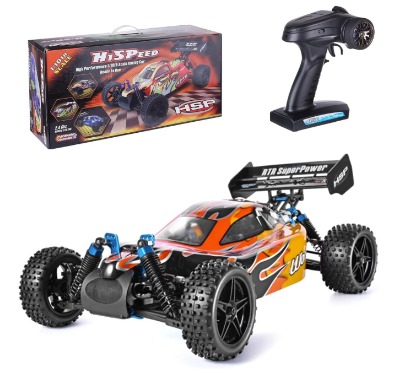
The HSP 94106 is a 1/10 scale monster-style nitro truck built for off-road bashing. It comes ready to run, which means the engine, radio system, and body are already installed, so you’re not stuck building a kit from a bag of parts on day one. It uses a 4WD drivetrain, tall knobby tires, and a chunky suspension setup made for rough yards, dirt trails, and gravel lots.
HSP has built a name for itself in the budget-to-mid-range nitro market for a long time, and the 94106 is one of their more recognized models. It leans into the monster truck look, with a raised stance and big tires, rather than the lower, race-focused body style you’ll see on some other trucks in this list.
Best Use Cases
This truck shines in open spaces with mixed terrain. Backyards, dirt lots, gravel driveways, and light trail riding all suit it well. The tall tires and soft suspension soak up bumps that would rattle a lower-riding car apart, so it’s a solid pick if your driving spot isn’t perfectly smooth.
It’s not built for tight indoor courses or smooth pavement racing. The wide turning radius and taller center of gravity make it less nimble than a dedicated race buggy, so keep your expectations tied to casual bashing rather than track competition.
Key Features Explained Simply
The 4WD system sends power to all four wheels at once, which gives you better grip on loose dirt and grass compared to a 2WD setup. Think of it like the difference between front-wheel drive and all-wheel drive on a regular car. More wheels pulling means less spinning out.
The nitro engine gives it a claimed top speed close to 75 km/h, which is fast for a truck this size and more than enough for most backyard drivers. The radio system uses a standard 2.4GHz frequency, so you won’t run into signal interference if a friend is running another RC car nearby, which used to be a real headache with older frequency systems.
Real-Life Usage Insight
New nitro drivers tend to like this truck because the learning curve isn’t as brutal as some race-focused models. The taller suspension forgives rough throttle inputs and awkward landings a bit more than low-riding buggies do. That said, like most nitro trucks, you’ll need to spend some time on engine break-in and tuning the carburetor before it runs at its best. Skipping that step is one of the most common reasons people think their nitro car is broken when it’s actually just not broken in yet.
Pros And Cons
Pros:
- Beginner-friendly ride height and stable handling
- Strong grip from the 4WD drivetrain on loose surfaces
- Reasonable top speed for casual bashing
- Ready-to-run setup saves time out of the box
Cons:
- Wide turning radius limits use on tight courses
- Requires standard nitro maintenance (glow plugs, fuel mix, air filter cleaning)
- Monster truck styling won’t appeal to drivers wanting a race-look buggy
- Replacement parts can take longer to source compared to bigger-name brands
Performance Discussion
Acceleration feels punchy off the line thanks to the 4WD setup putting power down evenly. Braking is decent for a truck this size, though nitro braking always takes some getting used to since it relies on engine braking along with the actual brake system. Handling on grass and dirt is confident, but you’ll notice more body roll on hard turns compared to lower-profile trucks.
Ease Of Use
For a nitro car, this one sits on the easier end of the spectrum. The RTR setup, straightforward radio pairing, and tolerant suspension make it a fair pick for someone trying nitro power for the first time. You’ll still need patience during the break-in period, and a little know-how with tuning the engine’s needle valves, but nothing here should overwhelm a first-timer who’s willing to read the manual.
Value For Money
Given the price point this truck usually sits at, the mix of size, speed, and beginner-friendly handling makes it a fair deal. It won’t out-race a high-end race buggy, but for casual weekend fun, it earns its keep.
2. 1/10 Nitro RC Truck For Adult RTR 80KM/H Short Course Rally Crawler
Product Description
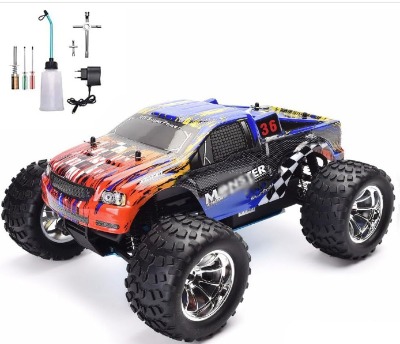
This truck leans into the short course rally look, with a lower, wider stance than the monster-style HSP above. It’s rated for a claimed top speed around 80 km/h and runs a 4WD, oil-powered nitro engine. Like the previous pick, it comes ready to run out of the box.
Short course trucks borrow styling cues from real-life off-road rally trucks, with flared fenders and a lower ride height built for speed over rough dirt rather than crawling over obstacles.
Best Use Cases
This model fits drivers who want speed first. Open dirt fields, packed gravel lots, and wide backyards give it room to stretch its legs. The lower ride height means it handles higher speed turns with less body roll than a taller monster truck, but it also means big rocks or deep ruts will cause more trouble than they would for a taller vehicle.
Key Features Explained Simply
The “RTR” label means it arrives mostly assembled, so you’re not spending your first weekend gluing tires or wiring electronics. The nitro, oil-powered engine burns a fuel mix that includes lubricating oil to keep internal parts protected during high-RPM runs, which matters a lot at higher speeds like the ones this truck is built to hit.
Short course styling with a wider track width gives the truck better stability during hard cornering at speed, since the wheels sit farther apart and resist tipping.
Real-Life Usage Insight
Drivers moving up from electric short course trucks tend to feel at home with this one fast, since the body style and handling feel familiar. The main adjustment is getting used to nitro-specific care, like the glow plug igniter and fuel mixing, if you’ve never run gas-powered RC before.
Because it’s built for speed, sudden hard stops or high-speed rollovers can be tougher on the body and suspension arms than they would be on a slower monster truck, so a bit of a spare parts stash is a smart move for anyone planning to push it hard.
Pros And Cons
Pros:
- Strong top speed for a 1/10 scale nitro truck
- Lower center of gravity gives confident high-speed handling
- Ready-to-run setup with minimal assembly
- Familiar short course look for drivers coming from electric RC
Cons:
- Less forgiving on rough terrain compared to taller trucks
- Higher speeds mean crashes can be harder on parts
- Still needs nitro upkeep like fuel mixing and glow plug management
- Not ideal for tight, obstacle-heavy courses
Performance Discussion
Straight-line speed is the standout trait here. Once the engine’s broken in and tuned, it accelerates hard and holds speed well on open ground. Cornering at speed is stable thanks to the wider stance, though loose gravel can still cause slides if you’re not used to nitro throttle response, which tends to feel snappier than electric power delivery.
Ease Of Use
This one asks a bit more from the driver than the HSP truck above, mainly because higher speeds punish mistakes more. Basic nitro care, like checking the air filter and mixing fuel correctly, still applies. Anyone with a little patience for the learning curve should be fine, but total beginners might want to start slower before pushing this one to full throttle.
Value For Money
For drivers who care about speed above all else, this truck delivers strong numbers for its price bracket. It’s a good value if you already know you want the fast, race-inspired feel rather than a slower, tougher bashing truck.
3. RC RH1006 Off Road Car (80cc Nitro, Advanced Players)
Product Description
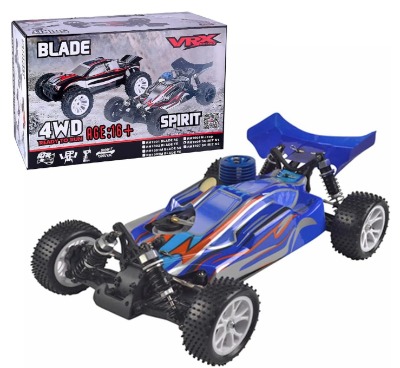
The RH1006 stands out from the rest of this list because it’s marketed directly toward advanced players rather than beginners. It runs an 80cc-class nitro engine, sits on a 1/10 scale 4WD chassis, and uses a single-speed transmission rather than the two-speed setups found on some other picks here. Front and rear support rods add extra structural strength, which becomes important given the speed and torque this engine can put out.
Best Use Cases
This car fits drivers who already have nitro experience and want more raw performance without the added complexity of shifting gears. Open, wide areas work best, since the power and speed on tap need room to be used safely. It’s not the ideal first nitro car for someone who’s never handled fuel mixing, glow plugs, or engine tuning before.
Key Features Explained Simply
A single-speed transmission keeps things simpler mechanically than a two-speed gearbox, since there’s no shift point to tune or maintain. Power delivery stays consistent across the throttle range instead of changing character when a second gear kicks in.
The front and rear support rods act like extra bracing, helping the suspension arms and chassis resist twisting under hard acceleration or rough landings. This matters more on a high-output engine like this one, where the extra stress needs somewhere to go besides the plastic parts.
Real-Life Usage Insight
Drivers who already run nitro cars and want to step up in power tend to appreciate how direct this car feels compared to a two-speed setup. Since it’s aimed at advanced players, the tuning window on the engine can be narrower, meaning small adjustments to the needle valve make a bigger difference in how it runs. That’s not a bad thing, but it does mean new nitro drivers might find it fussier than a beginner-labeled model.
Pros And Cons
Pros:
- High-output 80cc-class engine for serious speed
- Reinforced chassis handles hard driving well
- Simpler single-speed drivetrain with less to maintain
- Solid pick for drivers ready to move beyond entry-level nitro cars
Cons:
- Steeper learning curve for total beginners
- Single-speed setup means less low-end crawling torque than two-speed models
- Tuning window can be less forgiving
- Best enjoyed with prior nitro experience already in hand
Performance Discussion
Raw acceleration and top-end speed are the strong points here. The single-speed setup means power feels steady rather than shifting in character partway through a run, which some drivers actually prefer for consistency. Off-road grip benefits from the 4WD layout, and the reinforced structure holds up to hard driving better than a lighter, less braced chassis would.
Ease Of Use
This is the least beginner-friendly pick on this list, and that’s by design given how it’s marketed. Drivers with some nitro background will find the setup process familiar, but someone brand new to gas-powered RC cars might feel overwhelmed tuning the engine correctly on the first few tries. It rewards patience and prior knowledge more than the RTR-focused picks above.
Value For Money
For an experienced driver looking for genuine performance upgrades over an entry-level nitro truck, this car earns its price through raw capability. Beginners chasing pure value might get more out of an easier model first, then move up to something like this later.
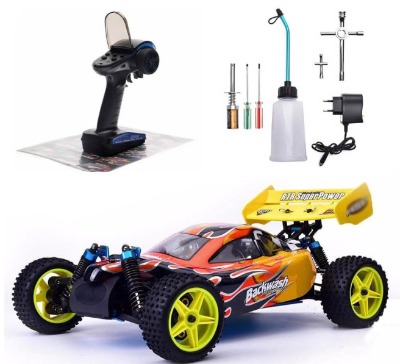
4. 1/10 Nitro RC Car For Adult 75CC Two Speed Off Road Buggy (90KM/H)
Product Description
This buggy claims a top speed around 90 km/h, making it the fastest listed pick in this roundup. It runs a 75cc-class oil-powered nitro engine with a two-speed transmission and 4WD layout. The buggy body style sits lower and lighter than the truck-style options above, which helps with that higher top-end speed.
Best Use Cases
Wide open areas are a must here. Parking lots (when empty and permitted), large fields, and long dirt stretches give this buggy room to actually hit its top speed safely. It’s not the right choice for tight backyards or crowded spaces, since a car built to hit 90 km/h needs distance to slow down safely too.
Key Features Explained Simply
The two-speed transmission works a bit like a simplified car gearbox. First gear gives stronger low-end torque for getting off the line or crawling over small obstacles, and second gear kicks in at higher RPM for top-end speed. This gives more flexibility than a single-speed setup, at the cost of a bit more tuning and maintenance since there’s a shift point to dial in correctly.
Being buggy-style rather than truck-style, it sits lower and lighter, which helps it reach higher speeds with the same engine size compared to a taller, heavier truck body.
Real-Life Usage Insight
Speed-focused drivers tend to enjoy the two-speed shift point once it’s tuned right, since it gives a noticeable power band change that feels closer to driving an actual gear-shifting vehicle. The trade-off is that a poorly tuned shift point can make the buggy feel jerky or hesitant, so it’s worth spending real time getting the gearbox dialed in rather than rushing straight to full-speed runs.
Given how fast this one is rated to go, a lot of drivers find it worth practicing slower, controlled runs first before opening it all the way up, just to get a feel for how the buggy handles at speed.
Pros And Cons
Pros:
- Highest claimed top speed in this roundup
- Two-speed transmission adds flexibility between low-end torque and top speed
- Lighter buggy body helps with both speed and handling
- Strong pick for drivers chasing pure velocity
Cons:
- Needs wide open space to use safely
- Two-speed tuning adds an extra maintenance step
- Higher speeds raise the stakes of any crash
- Less crawling ability than dedicated rock crawler style trucks
Performance Discussion
Top-end speed is the clear standout here, and the two-speed gearbox gives it a wider useful power range than the single-speed RH1006 above. Off-road grip is solid thanks to 4WD, though the lighter buggy body means it can get knocked around more by ruts and bumps at high speed compared to a heavier truck chassis.
Ease Of Use
Moderate difficulty overall. The RTR-style setup helps beginners get moving, but the two-speed tuning and the sheer speed on tap mean new drivers should ease into full throttle runs rather than diving in immediately. Anyone coming from a slower nitro model will need a short adjustment period.
Value For Money
For drivers specifically chasing top speed, this buggy offers strong numbers for the price. If speed isn’t your main goal, one of the other picks on this list might serve you better for the same money.
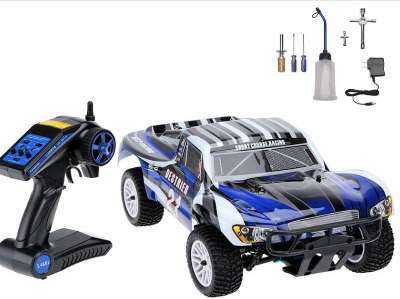
5. 1/10 Nitro RC Truck For Adult Two Speed Rock Crawler Short Course Truck
Product Description
This truck blends short course styling with rock-crawling capability, running a two-speed, methanol-fueled nitro engine on a 4WD chassis. It comes with an igniter included, which saves you a separate purchase most nitro cars require before you can start it up for the first time.
Best Use Cases
This one earns its spot as the most versatile pick on this list. The two-speed gearbox gives it low-end crawling torque for rocky, uneven terrain, plus a higher gear for faster short course-style runs on open ground. Drivers who want one truck that handles both slow, technical terrain and faster open dirt runs will get the most out of this model.
Key Features Explained Simply
Rock crawling refers to slow, controlled driving over rocks, roots, and uneven ground, which relies heavily on strong low-end torque rather than top speed. The included igniter heats the glow plug so the engine can start, and having one bundled in the box means you’re not stuck researching which igniter to buy separately, which trips up a lot of first-time nitro buyers.
The two-speed transmission again splits the difference between torque and speed, similar to the buggy above, but tuned here toward a more balanced feel rather than chasing maximum velocity.
Real-Life Usage Insight
Drivers who split their time between technical terrain and open dirt tend to appreciate having one truck that can do both reasonably well instead of owning two specialized vehicles. The methanol fuel system is standard for nitro cars, so anyone who’s run nitro before will find the fueling process familiar. New drivers should read up on safe fuel handling before their first fill-up, since methanol fuel needs to be stored and handled carefully.
Pros And Cons
Pros:
- Good balance between rock-crawling torque and short course speed
- Included igniter saves an extra purchase for first-time buyers
- Two-speed gearbox adds versatility across terrain types
- Well suited to drivers who want one truck for multiple driving styles
Cons:
- Not the fastest or the best pure crawler, since it splits the difference
- Two-speed tuning still requires some hands-on setup
- Methanol fuel needs careful handling and storage
- Jack-of-all-trades design means dedicated crawlers or racers will out-perform it in their specific strengths
Performance Discussion
Low-end torque is strong thanks to the crawler-focused first gear, letting it climb over rocks and roots with decent control. Second gear brings enough speed for short course-style dirt runs, though it won’t match the outright top speed of the 90 km/h buggy above. The balance is the real selling point rather than any single standout number.
Ease Of Use
This sits in the middle of the pack for ease of use. The included igniter and RTR setup smooth out the first-time experience, but the two-speed gearbox and methanol fuel handling still ask a bit more from a total beginner compared to a simpler single-speed electric-adjacent setup.
Value For Money
Given that it covers two driving styles reasonably well and throws in the igniter, this truck offers solid value for anyone unsure if they want a crawler or a short course truck. It’s a smart middle-ground pick rather than a specialist tool.
Comparison Insights
Looking at all five side by side, a few patterns stand out. The HSP 94106 and the short course RTR truck both lean toward beginner-friendly handling, with the HSP favoring stability and the short course truck favoring speed. The RH1006 stands apart as the pick built for drivers who already have nitro experience under their belt and want raw performance without extra complexity.
The two-speed buggy chases pure top speed harder than anything else here, hitting a claimed 90 km/h, while the two-speed rock crawler short course truck takes the opposite approach, favoring balance and versatility over any single strength.
If terrain variety matters most to you, the rock crawler short course truck or the HSP monster truck fit best. If speed is your main goal, the two-speed buggy or the 80km/h short course truck deserve your attention first. If you already know your way around nitro engines and want a step up in raw power, the RH1006 is built with you in mind.
Buying Guide: What To Look At Before You Buy
Scale Size
All five picks here sit at 1/10 scale, which is a common sweet spot for hobby-grade nitro cars. It’s big enough to handle rough terrain and hold a real engine, but not so large that parts and fuel costs get out of hand.
Drivetrain: 4WD Vs 2WD
Every truck on this list runs 4WD, which spreads power across all four wheels for better grip on loose dirt, grass, and gravel. A 2WD nitro car can be lighter and sometimes cheaper, but it’ll spin out more easily on loose surfaces, so 4WD tends to be the safer bet for new drivers.
Single Speed Vs Two Speed Transmission
A single-speed transmission keeps things simple, with one consistent power delivery across the throttle range. A two-speed transmission adds a low gear for torque and a high gear for speed, which gives more flexibility but also means an extra tuning step to get the shift point dialed in correctly. Beginners often do fine with either, but two-speed setups reward a bit of patience during setup.
RTR Vs Kit
Every model in this roundup is sold RTR, or ready to run, meaning the engine, radio, and body come pre-assembled. This saves a lot of time and frustration for new drivers, since building a nitro car from a raw kit involves a steep learning curve of its own.
Fuel Type And Engine Care
Nitro engines run on a mix of methanol, nitromethane, and oil. Higher nitro percentages generally mean more power but also faster wear on parts, so sticking with a fuel blend recommended by the manufacturer is a smart habit to build early. Regular air filter cleaning and glow plug replacement are part of normal nitro ownership, not signs something’s gone wrong.
Terrain And Space
Think honestly about where you’ll actually drive. A crawler-leaning truck like the two-speed rock crawler short course model suits tighter, rougher terrain, while a speed-focused buggy like the 90 km/h pick needs wide open space to be used safely and to its full potential.
Who Should Buy These Products
New nitro drivers who want a forgiving, stable first car should lean toward the HSP 94106 or the two-speed rock crawler short course truck, since both offer a gentler learning curve alongside real off-road capability.
Speed-focused drivers who already understand basic RC handling will get the most enjoyment from the 80km/h short course RTR truck or the 90km/h two-speed buggy, both of which are built with velocity as the main goal.
Experienced nitro hobbyists ready to step up in raw performance should look closely at the RH1006, since its advanced-player focus and reinforced chassis reward drivers who already know how to tune and maintain a nitro engine.
Drivers who split time between rocky trails and faster open dirt runs will likely get the best all-around value from the two-speed rock crawler short course truck, thanks to its balanced gearing and included igniter.
Common Mistakes To Avoid With Nitro RC Cars
Skipping engine break-in. Running a brand new nitro engine at full throttle right out of the box is one of the fastest ways to shorten its lifespan. Manufacturers include break-in instructions for a reason, and following them properly in the first few tanks of fuel makes a real difference in long-term performance.
Using the wrong fuel mix. Grabbing whatever nitro fuel is cheapest without checking the recommended percentage can lead to poor performance or engine damage over time. Stick with what the manual recommends, especially while you’re still learning how your specific engine behaves.
Ignoring the air filter. Dirt and debris getting into the engine through a dirty or damaged air filter is a leading cause of premature engine wear. A quick check and clean after dusty runs takes just a couple of minutes and saves a lot of headaches later.
Driving in spaces that are too tight. Trying to run a speed-focused buggy or truck in a small backyard is asking for crashes and broken parts. Match your driving space to the vehicle’s actual top speed and turning radius.
Neglecting glow plug maintenance. Glow plugs wear out over time and affect how easily your engine starts and runs smoothly. Keeping a couple of spares on hand avoids a ruined driving day over a small, cheap part.
Storing fuel incorrectly. Nitro fuel should be stored in a cool, sealed container away from direct sunlight and open flame. Poor storage can affect fuel quality and, more importantly, creates a real safety risk.
Forgetting to tune after altitude or weather changes. Nitro engines are sensitive to air density, so a needle valve setting that ran perfectly on a cool morning might run rough on a hot afternoon. A quick re-tune after major weather shifts keeps performance consistent.
Final Verdict
All five of these nitro RC cars earn their place on this list, but they serve slightly different drivers. The HSP 94106 stands out as the friendliest entry point for someone brand new to nitro power, thanks to its stable handling and forgiving suspension. The 80km/h short course truck is the pick for drivers who want speed and a race-style look without stepping up to advanced-level complexity.
The RH1006 rewards drivers who already have some nitro miles under their belt and want a genuine step up in raw performance. The 90km/h two-speed buggy takes the crown for outright speed, provided you’ve got the open space to use it safely. The two-speed rock crawler short course truck rounds things out as the most well-balanced option, capable of handling rocky trails and faster dirt runs without specializing too hard in either direction.
There’s no single “best” answer here since it depends entirely on how and where you plan to drive. Match the vehicle to your skill level and your available driving space first, and the right pick for you becomes pretty clear.

Peterson is an RC hobby enthusiast and product reviewer with a passion for remote-controlled cars, trucks, boats, drones, and accessories. He enjoys testing the latest RC products, comparing features, and sharing practical buying guides to help beginners and experienced hobbyists make informed decisions. Through RCThing.com, Peterson provides honest reviews, maintenance tips, and expert advice to help readers get the most from their RC adventures.