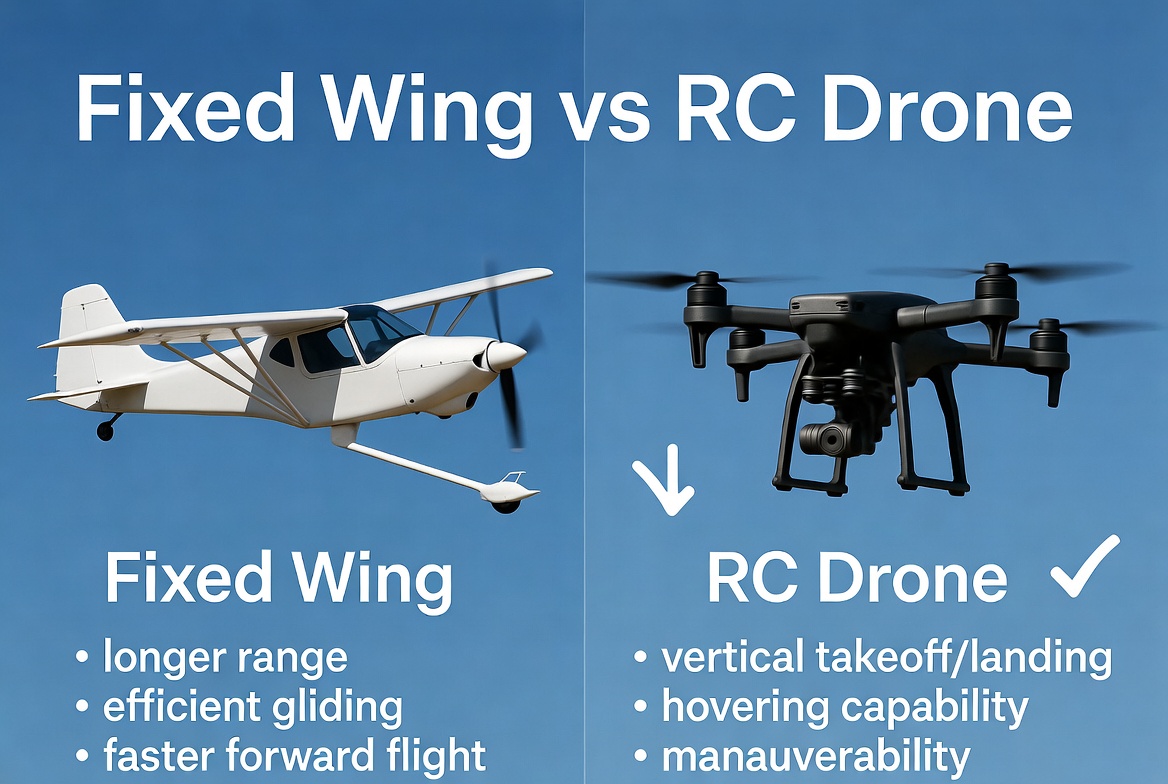
Fixed Wing vs RC Drone
If you’ve been curious about flying something with a remote control, you’ve probably come across two main options: fixed wing aircraft and RC drones. Both are fun, exciting, and cool to watch in action. But they’re pretty different from each other. This guide breaks down everything you need to know to pick the right one for you.
What’s the Real Difference?
Let’s start with the basics. A fixed wing aircraft has wings that stay in one position. Think of a regular airplane. The wings don’t move up or down. The plane moves forward, and the wings create lift to keep it in the air. An RC drone, on the other hand, has spinning propellers. Usually four of them, but sometimes six or eight. These propellers push air down, which lifts the drone up. That’s the main difference right there.
This simple difference changes almost everything about how you fly them and what you can do with them.
How Fixed Wing Aircraft Work
Fixed wing models are basically tiny versions of the planes you see at airports. They need speed to stay in the air. When the wings move through the air fast enough, they generate lift. Without that forward motion, the plane will fall out of the sky.
This means fixed wing aircraft need longer runways or open spaces to take off and land. You can’t just hover them in one spot. They keep moving forward all the time. If you want to look at something specific from above, you have to circle around it.
The good news? Fixed wing aircraft can stay in the air for a very long time. Some models can fly for several hours on a single battery charge. They’re also incredibly efficient. The faster designs can zip across the sky at impressive speeds. Many people love them for racing, long-distance flying, or capturing wide shots of landscapes.
How RC Drones Work
Drones are different beasts entirely. They can hover in one spot without moving. Each propeller spins independently, which means the drone can go up, down, left, right, backward, or forward. You can make it stay perfectly still in the air. This gives you amazing control and stability.
A typical drone has four arms, each with a motor and propeller. Some racing drones have slightly different designs, and some larger drones have six or eight propellers for extra stability. The main computer on the drone adjusts how fast each propeller spins to keep everything balanced and smooth.
Because drones don’t need forward speed to stay up, they can take off and land in small spaces. Your backyard works fine. You can go straight up and down. You can hover and get steady shots from exactly where you want them.
Battery Life and Flight Time
Here’s one of the biggest differences between the two. Fixed wing aircraft win on battery life. A good fixed wing model can stay in the air for two, three, or even more hours. Some lightweight designs push that even further. You’re watching the plane go and go and go while your battery still has juice.
Drones typically get between fifteen and thirty minutes of flight time per battery. High-end models might push forty-five minutes to an hour. But that’s the realistic expectation. Drones work harder to stay in the air, so they burn through batteries faster. You’ll probably want to buy extra batteries if you have a drone.
Speed and Performance
Drones can be incredibly fast. Racing drones will make your head spin. They zip around at speeds over one hundred miles per hour. Regular drones move slower, but they’re still quick and responsive.
Fixed wing aircraft can also move fast, but their speed serves a different purpose. A casual fixed wing model might cruise at twenty or thirty miles per hour. Faster designs go much quicker. But here’s the thing: fixed wing aircraft are optimized for efficiency and endurance. They’re meant to cover distances and stay aloft. Drones are nimble and quick to change direction.
Stability and Ease of Flying
If you’re just starting out, drones are generally easier to learn on. They’re stable and forgiving. Their flight computers help keep them level. Many drones have beginner modes that limit speed and altitude. You can practice without worrying about crashing as much.
Fixed wing aircraft take more skill. They don’t hover. They’re always moving. If you mess up the controls, they drop. But once you get the hang of it, flying fixed wing models feels smooth and natural. It’s like piloting a real airplane.
Takeoff and Landing
Drones can take off and land almost anywhere. Level ground, a parking lot, your driveway, even a small patch of grass. You press a button, and up you go. Landing is just as easy. Bring it down slowly, and it lands softly.
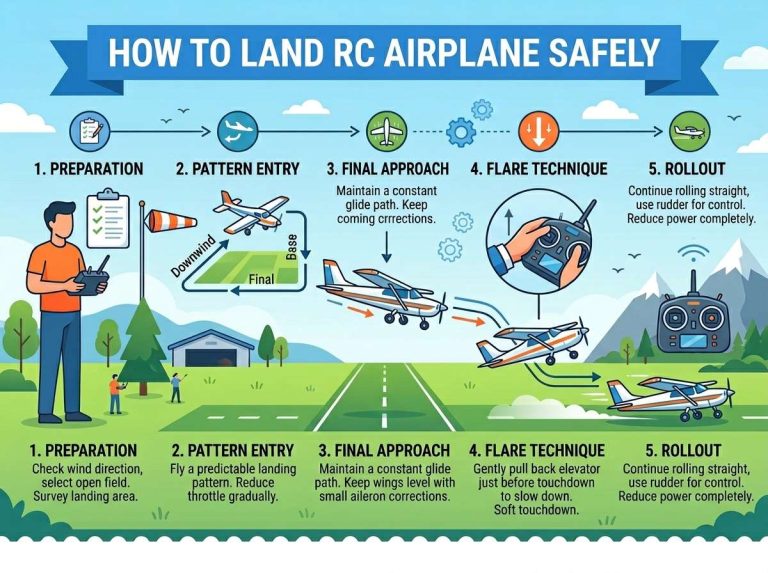
Fixed wing aircraft need space. Some models need a runway. Others can take off in a field, but you need room to run around or have a buddy launch you. Landing them can be tricky too. You need open space to bring them in without hitting trees or buildings. Some people launch them by hand, throwing them into the air to get them started.
What Can You Do With Them?
Fixed wing aircraft shine for long-distance exploration and racing. They’re fast, efficient, and can cover huge areas. People use them to map farms, capture stunning landscape videos, or just enjoy the thrill of speed. If you want to fly far and see what’s beyond the next hill, fixed wing is your answer.
Drones are perfect for photography and video. They hover, so you can frame your shots perfectly. You can get smooth, stable footage without any jiggling or blurriness. Filmmakers, photographers, and content creators love drones. They’re also great for inspection tasks, like checking your roof or bridge structures. You can fly slow, hold position, and look at details.
Cost and Affordability
You can get into RC drones pretty cheaply. Beginner drones start around fifty to one hundred dollars. Mid-range models run two hundred to four hundred dollars. High-end drones cost more, but they’re still more affordable than many fixed wing options.
Fixed wing aircraft have a wider range. Small foam planes cost very little, maybe twenty to fifty dollars. But serious fixed wing models can cost hundreds or thousands. Racing fixed wing aircraft get expensive because they need powerful motors and sophisticated designs.
Durability and Maintenance
Drones take crashes. They’re hardy and bounce back from a lot of abuse. Propellers break easily, but they’re cheap to replace. Motors last a long time. Batteries eventually wear out, but you can buy new ones. Overall, drones are tough and relatively easy to repair.
Fixed wing aircraft can be fragile, especially if you crash them hard. Wings break, fuselage gets damaged, and repairs can be complicated. On the other hand, some foam fixed wing models bounce back from crashes surprisingly well. It depends on the design and what you hit. Higher-end models are often more durable because they’re built with quality materials.
Weather and Flying Conditions
Drones don’t like wind. A strong breeze will push them around. Most drones struggle in winds over fifteen miles per hour. Rain will damage them. They’re really meant for calm, dry days.
Fixed wing aircraft handle wind better because of their design. They’re heavier for their size, so wind pushes them less. But you still want reasonable conditions. Rain is bad for any aircraft.
Learning Curve and Difficulty
Drones are beginner-friendly. Seriously. The flight computer does most of the work. You point them where you want to go, and they go there. Beginners can have fun on day one.
Fixed wing aircraft have a steeper learning curve. You need to understand pitch, roll, and yaw. You need to manage throttle and keep the plane moving forward. It takes practice. But the payoff is worth it. Once you learn, flying fixed wing feels amazing.
Where Can You Fly?
This is important. Most places have regulations about flying drones. You often need to stay in visual range. Some areas have designated zones. Check your local rules before you buy anything.
Fixed wing aircraft have fewer restrictions in some cases because they’re less associated with drone surveillance concerns. But rules vary by location. Always check before you fly.
Legal and Practical Considerations
Drone regulations are strict in many countries. You might need a license or certification to fly commercially. Insurance is often recommended. Some areas ban drones entirely in certain zones.
Fixed wing aircraft regulations are less strict in many places, but they’re still worth researching. You need to be respectful of other people’s property and privacy no matter what you fly.
Portability and Convenience
Drones fold up small. Many fit in a backpack. You can grab your drone and go. Set it up in five minutes.
Fixed wing aircraft are bulkier. Even folding designs take up space. Some break down into pieces, but setup takes longer. If you want to fly spontaneously, a drone wins.
Power and Control Options
Most drones use modern radio controllers with screens. You get precise control and lots of information about battery, altitude, and distance.
Fixed wing aircraft use traditional controllers. Some are simple radio transmitters. Others are more advanced. The control style feels different from drones but is very satisfying once you get used to it.
Community and Support
Both have active communities. Drone communities are bigger because drones are more popular. You’ll find tons of tutorials, forums, and groups dedicated to drones. Fixed wing communities are smaller but passionate. People are helpful in both groups.
Real-World Applications
Drones earn money in the real world. People use them for photography, delivery, inspection, and mapping. This is a growing industry. If you want to turn your hobby into income, drones are the way.
Fixed wing aircraft are less common in commercial applications. But they’re used for surveying large areas, search and rescue, and specialized tasks. They’re valuable, just less common than drones.
Which One Is Right for You?
Pick a drone if you want to take great videos and photos. Pick a drone if you’re a beginner and want to learn quickly. Pick a drone if you have limited space to fly.
Pick a fixed wing aircraft if you want to fly far and fast. Pick one if you have open space and don’t mind a learning curve. Pick one if you want your aircraft to stay in the air for hours.
Think about what excites you most. Is it capturing beautiful footage? Is it the speed and distance? Is it the technical challenge of flying? Your answer points you toward the right choice.
Getting Started With Either
If you choose drones, buy a beginner model from a reputable brand. DJI is the biggest name. Fly in open spaces away from people. Start with the beginner mode.
If you choose fixed wing aircraft, do the same. Pick a beginner-friendly model. Foam planes are forgiving and cheap. Join a local club if you can. Other pilots will help you learn.
The Bottom Line
Fixed wing aircraft and RC drones are both amazing. They’re not really competitors. They’re different tools for different purposes. One isn’t better than the other. They’re just different.
A fixed wing aircraft is efficient, fast, and perfect for exploring large areas. An RC drone is controllable, stable, and perfect for filming. The best choice depends on you.
Many people end up flying both. They discover that each one is fun in its own way. Once you pick one and start flying, you might find yourself curious about the other. That’s totally normal.
Start with what appeals to you most. Learn the basics. Enjoy the experience. Then explore more if you want. The hobby is about having fun and pushing your limits. Either path leads to amazing memories and incredible experiences in the sky.
So what’s it going to be? Are you ready to take your interest to the next level? The sky is waiting for you.

Peterson is an RC hobby enthusiast and product reviewer with a passion for remote-controlled cars, trucks, boats, drones, and accessories. He enjoys testing the latest RC products, comparing features, and sharing practical buying guides to help beginners and experienced hobbyists make informed decisions. Through RCThing.com, Peterson provides honest reviews, maintenance tips, and expert advice to help readers get the most from their RC adventures.