5 Best Rc Transmitter For Beginners In 2026
As an Amazon Associate we earn from qualifying purchases.
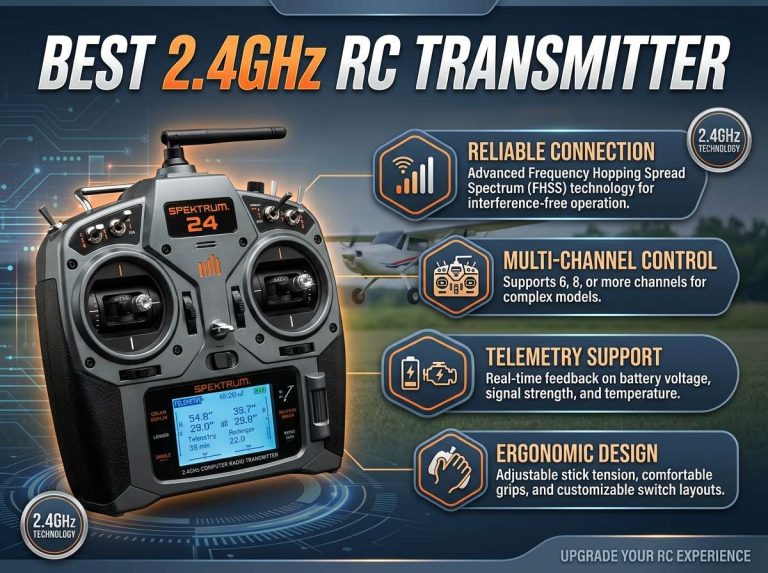
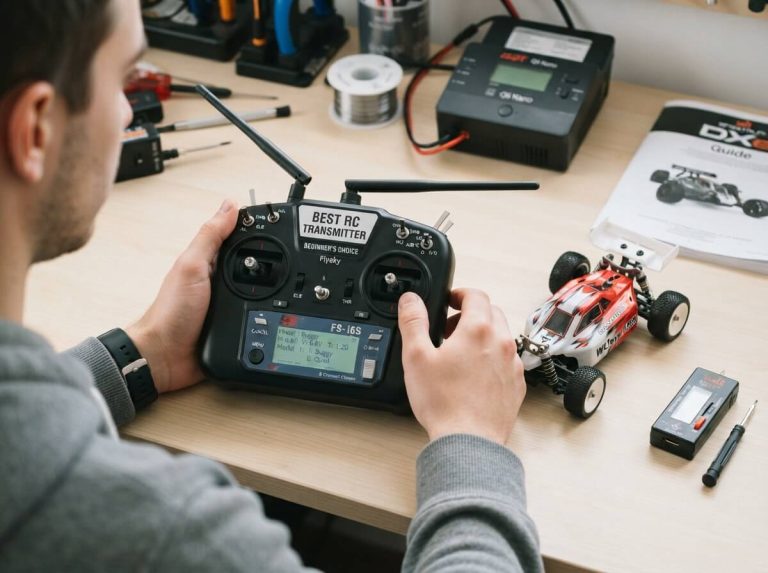
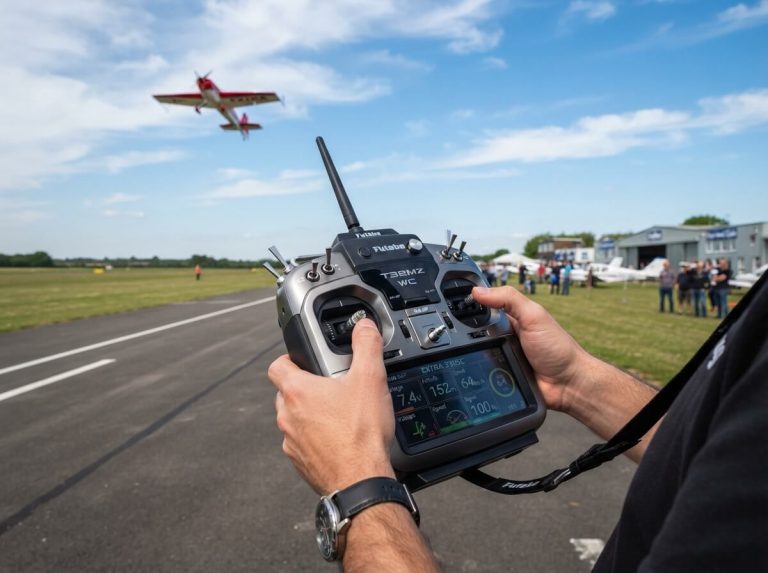
Anyone new to radio control needs a transmitter, the handheld controller that sends commands to a model. Picking one can feel confusing, because the options range from simple one-handed boat controllers to full kits for planes and helicopters. This guide helps beginners understand what each type of transmitter does and which one fits their goals. It covers five popular options for different hobbies.
The five products here share a common purpose: they are all aimed at people with little or no prior experience. Each one offers a basic set of controls, a radio link to a receiver in the model, and features meant to make early practice safer.
The comparison rests on the listed features and typical use, not on personal testing. Read the product details as a guide to what each kit is designed to do, and check the current listing before you buy.



1. Fms 1300MM PA-18 Super Cub RC Plane: best for adults learning to fly a plane
This is a ready-to-fly radio controlled airplane, based on the real Piper PA-18 Super Cub. It comes with a 6-channel transmitter, receiver, battery and charger in one box. It suits adults who want a scale-style trainer rather than a toy.
What it is and who it suits
Ready-to-fly, often shortened to RTF, means the kit arrives with everything needed to fly except the user’s own time and care. There is no assembly to do. The Super Cub style is a classic high-wing plane that is known for slow, controlled flight.
Best use cases
This plane fits open grass fields, dirt strips or gravel areas, where its short takeoff and landing ability helps. It is also listed as an option for adding floats, which is a separate purchase, for water flying.
Key features in simple words
The Reflex V3 gyro is a built-in sensor that helps keep the wings level and reduces the effect of small wind gusts. The flaps are movable surfaces on the wings that help the plane take off and land on short, rough ground. The body is made from EPO foam, a light and fairly tough material.
Daily use and what to expect
Beginners usually find the stabilization helpful in the early stages, because the plane tends to self-level when the sticks are released. Many owners later switch the gyro off as their control improves. Repairs after small crashes are often simpler with foam than with harder materials, although damage will still happen during learning.
Performance and ease of use
Flight performance centers on stable, gentle handling and the ability to use rough strips. The ready-to-fly setup removes the need for assembly, which makes the first session easier to start. Flying still takes patience, since a larger plane needs space and steady practice.
Value for money
The price reflects a complete, larger-scale kit that includes the radio, receiver, battery and charger. Buyers who want a plane they can grow with may see good value. Those who only want a brief try-out may prefer a smaller, cheaper model.
Pros
- Arrives ready to fly, with transmitter, receiver, battery and charger included
- Gyro stabilization helps new pilots build confidence
- Flaps support short takeoffs and landings on rough ground
- Foam body is light and forgiving during the learning stage
Cons
- Needs a reasonably open space, so it does not suit small rooms or parks
- Water flying requires the optional floats, which are sold separately
- Larger size means more to carry and store than a small trainer
- Customer standing is described as moderate, so buyers should read recent feedback
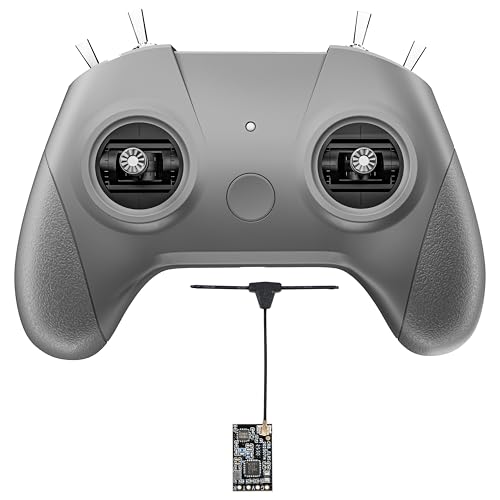
2. C8 ELRS V3 8CH 2.4GHz RC Radio: best for FPV drone beginners
This…is a compact 8-channel radio built for FPV drone flying, which means first-person view, where the pilot sees the camera feed through goggles. It works with simulators and with real ELRS receivers. It suits beginners who want to practice at home before flying a real drone.
What it is and who it suits
ELRS stands for ExpressLRS, a radio link system used by many small drones. This transmitter connects by USB-C to popular flight simulators, so a beginner can practice without any hardware setup. Once ready, the same sticks can be used on a real micro quadcopter or Tiny Whoop.
Best use cases
Home training is the clearest use, since the controller plugs into a computer and runs a range of simulator titles. It also suits small indoor drones and casual outdoor practice. Its light weight makes it easy to carry to a field.
Key features in simple words
The C8 has eight channels, which are separate control signals, along with dual sticks and auxiliary switches for extra functions. Its built-in battery charges through USB-C and is listed as lasting about two hours. A low-voltage alarm warns the user before the battery runs too low, and the unit shuts off automatically to protect it.
Daily use and what to expect
Most beginners spend the first weeks in a simulator, where the controller behaves much like the real thing. Binding, the step that pairs the transmitter with a receiver, is described as simple and quick. Status lights and beeps show the connection and battery state at a glance.
Performance and ease of use
The preconfigured ELRS setup removes many power and menu choices, which keeps early setup short. Latency is listed as 7 milliseconds or less, which helps controls feel responsive. Because the unit is small, hand fit and comfort will vary with each person’s grip.
Value for money
This is a low-cost way to start with both simulators and a real drone link. Buyers who already own a compatible receiver and simulator may find the price especially attractive. Those who plan to fly larger aircraft will need a different radio.
Pros
- Plugs straight into many popular simulators without drivers or setup
- Light and compact, which suits travel and small hands
- Simple three-step binding with clear light and beep feedback
- Built-in battery with low-voltage alarm and automatic shutoff
Cons
- Battery life of about two hours may feel short for long sessions
- Aimed at FPV drones, so it is not a fit for planes or helicopters
- Beginners still need to learn drone flying skills beyond the controller
- Customer standing is described as moderate, so reading recent feedback is sensible
3. havcybin HOTRC DS-600 6CH 2.4GHz RC Transmitter: best for beginner RC boats
This kit pairs a one-handed transmitter with a six-channel receiver, designed mainly for RC boats. The pistol-grip layout and steering wheel make it simple to hold. It suits younger beginners and anyone who wants an easy first boat setup.
What it is and who it suits
A transmitter is the handheld unit that sends signals, and a receiver sits inside the model and reads them. This kit is intended for boats, as the product name indicates. Its design focuses on controlling speed and steering with one hand.
Best use cases
Calm ponds, lakes and pools are the typical places for a beginner boat. The listed range of 300 to 600 meters is the figure given for this kit. Limited speed settings help newcomers learn without rushing.
Key features in simple words
Throttle speed limit adjustment caps how fast the boat can go, which suits first sessions. Brake and fail-safe functions stop the boat or protect it if the signal is lost. The 2.4GHz band is a common radio frequency that resists interference from other devices.
Daily use and what to expect
Many beginners find the pistol grip comfortable for extended steering practice
Many beginners find the pistol grip comfortable during short steering practice. The grip shape is listed as not easy to sweat in, which can help on warm days. Keeping the speed limit low at first gives a clearer sense of how the boat responds.
Performance and ease of use
The integrated one-handed design keeps the setup simple, with few buttons to learn. Speed limiting and braking help control the boat when it is new to the water. Steering feel will depend on the boat itself as much as on the controller.
Value for money
This is one of the lower-cost options in this group. It suits a budget-minded buyer who wants a basic boat controller. Buyers who want a larger or faster boat may need more advanced equipment later.
Pros
- One-handed pistol-grip design is easy for beginners to hold
- Throttle limit and brake functions support safer early practice
- Fail-safe protection stops the boat if the signal is lost
- Low price makes it an accessible first boat controller
Cons
- Designed mainly for boats, so it does not suit planes or drones
- Range is listed as 300 to 600 meters, which limits larger lake use
- Few advanced settings for buyers who want to grow their skills
- Customer standing is described as moderate, so checking recent reviews is wise
4. Helidirect RC ERA C032 Huey UH1 6-Axis: best for beginner RC helicopters
This is a ready-to-fly helicopter modeled on the Huey UH1 style, sold with its own transmitter. It includes a 6-axis gyro and several assist features. It suits adults and beginners who want a helicopter with built-in safety aids.
What it is and who it suits
A 6-axis gyro is a sensor that senses movement and helps keep the helicopter steady. This model is listed as a 6-channel aircraft with three digital servos. It is aimed at people who are new to helicopter flying.
Best use cases
Indoor rooms with some space, or calm outdoor areas without wind, suit this helicopter best. Its 115 gram flying weight and 315 millimeter rotor diameter give it a fairly compact footprint. Flight time is listed as up to 13 minutes per battery.
Key features in simple words
Altitude hold keeps the helicopter at a set height, while optic flow and TOF sensors help it stay in position. A one-button takeoff and landing function makes the start and finish of a flight easier. Stall protection and a low-voltage alarm add further safety.
Daily use and what to expect
Beginners often find the assist features reduce the workload during the first flights. The battery is described as modular and easy to swap, which helps with repeat sessions. Helicopter control still takes practice, even with these aids.
Performance and ease of use
Stability is the main focus, and the sensors are designed to keep the flight steady in gentle conditions. The one-button takeoff and landing lowers the difficulty of the first and last moments. Inverted flight is available with a single button, which suits later practice.
Value for money
The price is among the lowest in this group for a helicopter with multiple assist functions. Buyers get a ready-to-fly aircraft with its own transmitter included. Those who want to fly in windy conditions may need a more powerful model.
Pros
- Altitude hold and position sensors help keep flights steady
- One-button takeoff and landing eases the start and finish of flights
- Stall protection and low-voltage alarm add safety for beginners
- Low price for a ready-to-fly helicopter with several assist features
Cons
- Flight time of up to 13 minutes means frequent battery changes
- Small, light frame may be affected by wind and needs calm conditions
- Helicopter control still requires pract ice and patience to master
- Customer standing is described as moderate, so reading recent feedback is sensible
5. INJORA T6M 2.4GHz Transmitter: best for beginner crawlers and small vehicles
This transmitter and receiver kit is designed for small radio controlled crawlers and cars. It also suits boats and tanks, according to its listing. It fits beginners who want a simple, budget-friendly controller for ground vehicles.
What it is and who it suits
A crawler is a slow, rugged vehicle built to climb over rocks and uneven ground. This transmitter is compatible with 1/24 and 1/18 scale models, which are small sizes. The age recommendation is for users 14 and older, so it is not intended for young children.
Best use cases
Backyards, driveways and indoor hard floors are typical places for small vehicles. Crawler trails and rocky areas suit the vehicle type, though the controller itself is only one part of the setup. The compact size makes it easy to carry to a practice spot.
Key features in simple words
Frequency hopping means the signal jumps between many channels, which helps it resist interference. The throttle speed limit lets beginners practice at a safer pace. Automatic power-off after a period of inactivity helps save battery power.
Daily use and what to expect
Most users start with the speed limit set low and increase it as they gain control. Voltage alarms warn when the transmitter or receiver battery runs low, which helps prevent sudden loss of control. Brakes and fail-safe protection add a margin of safety during practice.
Performance and ease of use
The controller keeps the layout simple, with a clear throttle and steering setup. Speed limiting and brakes help newcomers manage the vehicle while they learn. Steering and climbing feel will depend heavily on the vehicle chosen.
Value for money
This transmitter is listed as cost-effective and sits in the middle of the price range in this group. It suits buyers who want to start with a crawler or small car without a large outlay. Buyers who want advanced tuning may need a more feature-rich radio.
Pros
- Speed limit adjustment lets beginners practice at a safe pace
- Frequency hopping helps resist interference from other signals
- Voltage alarms warn before the batteries become too low
- Compact and suitable for cars, boats and tanks as well as crawlers
Cons
- Not suitable for children under 14, which limits the audience
- Requires a compatible vehicle, since the controller is not sold as a complete model
- Few advanced features for buyers who want deeper tuning later
- Customer standing is described as moderate, so checking recent reviews helps
Comparison insights: how the five transmitters differ
These five products serve different hobbies, so direct comparison needs care. The Fms plane and the Helidirect helicopter both include a complete ready-to-fly aircraft. The C8, DS-600 and INJORA units are radio controllers meant to pair with a receiver in a separate model or simulator.
Performance differs mainly by use. The Fms plane uses a gyro and flaps for stable flight on rough strips. The Helidirect helicopter relies on altitude hold and position sensors. The C8 focuses on responsive simulator and drone control, while the DS-600 and INJORA units focus on speed and steering limits.
Ease of use also varies. The C8 and the DS-600 both aim to be simple to set up and hold. The Helidirect helicopter has one-button takeoff and landing, which many beginners find helpful. The Fms plane needs more open space and steady practice, even with its gyro.
Value for money depends on what the buyer already owns. The Helidirect and DS-600 sit at the lower end of the price range. The Fms plane is the largest and most expensive kit, but it includes everything needed to fly.
The C8 is a low-cost entry point for the simulator and FPV drone path, provided a compatible receiver is available. The INJORA sits in the middle of the range and suits ground vehicles.
Buying guide: key factors for a first RC transmitter
A transmitter is only half of a working radio setup.
It sends commands, while a receiver in the model reads them. Check that the two parts are compatible before you buy.
Channels are separate control signals. A simple boat or crawler may need only two or three channels. Planes and helicopters usually need four or more, so count what the model requires.
Frequency band matters for reliability. Most modern transmitters use 2.4GHz, which is widely used and resists interference well. Check the band listed for each product before you buy.
Battery type and life affect each session. Some units use built-in rechargeable batteries, while others take standard cells. Look for low-voltage alarms and automatic shutoff, since these protect both the radio and the model.
Beginner aids can make learning easier. Features such as throttle limits, gyros, altitude hold and one-button takeoff reduce early difficulty. Choose features that match the hobby, and plan to reduce assistance as your skills grow.
Age recommendations and size should also guide your choice. Some products are not intended for young children. Consider where you plan to fly or drive, and if the model and controller fit that space.
Who should buy these products: matching buyers to each transmitter
Adults who want a larger scale trainer should consider the Fms plane. It suits open fields and buyers who want a complete ready-to-fly kit. Buyers should have space and patience.
People who want to practice FPV drones at home should consider the C8 ELRS radio. It suits simulator users and beginners who plan to fly micro drones. It is less suited to planes or helicopters.
Budget-minded beginners who want a first boat should consider the DS-600. Its one-handed grip and speed limits suit calm water. It is a basic option rather than a route to advanced boating.
Beginners who want a helicopter with safety aids should consider the Helidirect Huey. Its altitude hold, one-button takeoff and stall protection suit calm indoor or outdoor spaces. Buyers should plan for frequent battery changes.
Buyers aged 14 and older who want a simple controller for a crawler or small car should consider the INJORA T6M. Its speed limit and voltage alarms suit careful practice. The buyer will still need a compatible vehicle.
Final verdict: which RC transmitter is the right first choice
No single transmitter fits every beginner, because each product serves a different hobby. The right choice depends on what you want to fly, drive or sail. Start by deciding the type of model first.
For plane flying, the Fms kit offers the most complete package, though it needs space. For drone practice, the C8 is a compact and low-cost entry point. For boats, crawlers and helicopters, the DS-600, INJORA and Helidirect units each suit a specific hobby.
In short, match the transmitter to the model you plan to use. Check compatibility, read recent customer feedback and start with the assist features that suit your skill level. Careful practice will matter more than any single product.
Frequently Asked Questions about beginner RC transmitters
What is an RC transmitter?
An RC transmitter is the handheld controller that sends commands to a model. It works together with a receiver fitted inside the model. Both parts must be compatible.
Do I need a transmitter if my kit already includes one?
Ready-to-fly kits such as the Fms plane and Helidirect helicopter include a transmitter. Separate controllers like the C8, DS-600 and INJORA are usually sold for use with a compatible receiver or model. Check the contents before buying.
What does 2.4GHz mean?
2.4GHz is a radio frequency band used by most modern transmitters. It is widely used and resists interference from other devices. Many of the products in this guide use it.
Are these transmitters suitable for children?
The INJORA T6M states that it is not for children under 14. Adult supervision is sensible for younger beginners with any radio controlled product.
Do I need special skills before my first flight?
No special skills are required, but patience helps a great deal. Practicing in a simulator or a calm, open space reduces early crashes. Most beginners improve steadily with regular short sessions.

Peterson is an RC hobby enthusiast and product reviewer with a passion for remote-controlled cars, trucks, boats, drones, and accessories. He enjoys testing the latest RC products, comparing features, and sharing practical buying guides to help beginners and experienced hobbyists make informed decisions. Through RCThing.com, Peterson provides honest reviews, maintenance tips, and expert advice to help readers get the most from their RC adventures.