How To Set Up An Rc Drift Car
Learning to set up an RC drift car can feel confusing at first. Drift cars have a few extra parts and settings that standard toy cars do not. This guide explains the basics in plain language, so a beginner knows what each part does and why it matters.
You will see what you need before starting, how the car works, and the steps to get it running. You will also find simple tuning tips, a practice routine, common mistakes and answers to frequent questions. The goal is a car that is ready to slide safely and that you understand well enough to adjust.
Key Takeaways
- An RC drift car is built to slide its rear wheels on purpose, usually with rear-wheel drive and a gyro.
- Check every part, charge the battery safely, and bind the transmitter before you drive.
- Confirm steering, throttle and brake direction on a stand before the first run.
- Start on a smooth, open surface and practice throttle control before chasing long drift lines.
- Routine checks of screws, tires and motor heat prevent most common problems.
What an RC Drift Car Is and How It Differs From Other RC Cars
Defining a Radio-Controlled Drift Car
An RC drift car is a radio-controlled model built to slide its rear tires through a turn. The driver keeps the car angled while it moves forward. The car is designed to make this style easier to control.
Most drift cars use rear-wheel drive. Power goes only to the back wheels, so the front wheels steer while the back end breaks loose. This layout is the main reason these cars slide well.
How Drift Cars Differ From Touring and Buggy Models
A standard touring car is built for grip and speed on a track. A drift car does the opposite and is set up to lose grip on purpose. Drift cars also often use a gyro to help steer during slides, which many touring cars do not.
Buggies and monster trucks are made for rough ground and jumps, so they belong to a different category altogether.
What You Need Before You Start
Essential Parts and Tools for a Basic RC Drift Setup
A basic setup needs a drift car, a radio transmitter, a receiver (often built into the car), a battery, and a compatible charger. Many kits include the car and electronics but not the battery or charger, so check the kit list first.
You will also want a hex driver set, a screwdriver, and a hobby knife. A stand that lifts the car off the ground helps with testing. Keep spare tires and common screws nearby.
Beginner-Friendly Drift Car Kits Compared
Ready-to-run kits come with the electronics installed, which suits most beginners. Kits that need assembly teach more but take longer. Some kits include a transmitter and battery, while others do not.
When comparing kits, look at what is included, how clear the instructions are, and if replacement parts are easy to find.
Batteries, Chargers and Power Options Explained
Most drift cars use rechargeable packs, such as LiPo or NiMH types. LiPo packs need a charger made for them. Always use the charger recommended by the manufacturer or the battery label.
Never leave a charging battery unattended. Charge on a hard, non-flammable surface away from anything that can catch fire. Check the battery for swelling or damage before each charge.
How an RC Drift Car Works
How the Motor, Electronic Speed Controller and Receiver Connect
The motor turns the drive wheels and provides power. The electronic speed controller, or ESC, sits between the battery and the motor and controls how much power reaches the motor based on your throttle input.
The receiver gets signals from your transmitter and passes them to the ESC and steering servo. Keyed connectors fit one way only, so wiring stays simple.
What Gyro Steering and Throttle Control Do
A gyro is a small sensor that detects how fast the car is rotating. It adjusts steering automatically to keep the car pointed where you want during a slide, which makes drifting easier for beginners.
Throttle control sets how much power goes to the rear wheels. Smooth input keeps the rear tires sliding without spinning out. Abrupt changes often cause the car to snap sideways.
Why Rear-Wheel Drive Makes Sliding Possible
With rear-wheel drive, the back tires do the pushing. When power is applied through a turn, the rear tires can lose grip and slide outward, while the front wheels steer and guide the slide.
The balance between power and grip decides how much the car slides. Less power means less slide, and more power means more slide. Learning this balance is a key early skill.
Step-by-Step RC Drift Car Setup for Beginners
Unboxing and Checking Every Part
Open the box and lay out every part. Compare the contents with the parts list in the manual. Look for cracked plastic, loose parts or missing screws.
Check that the tires sit straight and the wheels spin freely. Make sure the driveshafts are not bent. Fixing small issues now prevents bigger problems later.
Charging and Installing the Battery Safely
Charge the battery with the correct charger and settings. Follow the label and manual closely. Stop charging if the battery becomes hot or swollen.
Install the battery with the connector aligned and secure it so it does not shift. Keep the battery cable away from moving parts.
Binding the Transmitter to the Car
Binding links the transmitter to the receiver so they communicate. The process differs by brand, so follow the manual. Usually you power on the transmitter and the car in a specific order.
When binding is complete, a light on the receiver often shows a steady signal. If the car does not respond, repeat the steps with both devices close together.
Checking Steering, Throttle and Brake Direction
Lift the car onto a stand so the wheels spin freely. Turn on the transmitter and move the steering wheel left and right. The front wheels should turn the same way.
Test the throttle, where the rear wheels should spin forward, and the brake. If any direction is reversed, change it in the transmitter settings before driving.
Adjusting Ride Height, Camber and Tire Grip
Ride height is the distance between the chassis and the ground. A lower car is generally more stable, while a slightly higher car may be easier to slide. Adjust it slowly and check the result.
Camber describes the tilt of the wheels when viewed from the front. Small changes can affect grip and how the car turns. Keep the tires free of dust, since grip depends on tire type and cleanliness.
Tuning Tips for Better Drifting
Setting Gyro Gain and Steering Limits
Gyro gain controls how strongly the gyro corrects steering. Too much gain makes the car twitchy, while too little makes it hard to hold a slide. Start with a moderate setting and adjust in small steps.
Steering limits set how far the front wheels turn. Limits that are too high can cause the car to turn too sharply. Set them so you can control the slide without overcorrecting.
Adjusting Differential Fluid for Smoother Slides
A differential lets the wheels turn at different speeds through corners. Fluid thickness affects how the rear wheels share power. Thicker fluid usually adds stability, while thinner fluid allows more slide.
Change the fluid one step at a time. Test after each change so you can judge its effect. Keep a note of each change so you can undo it if handling gets worse.
Picking Tire Compound and Tire Wear Management
Drift tires come in different compounds, which describe how soft or hard the rubber feels. Softer tires usually grip more, while harder tires slide more easily. Pick a compound that suits your surface and skill level.
Tires wear faster when they slide often or run on rough surfaces. Check them regularly for flat spots and rounded edges. Rotate or replace them when grip drops noticeably.
Balancing Weight Distribution Over the Rear Axle
Weight distribution describes how the car’s mass sits across the front and rear wheels. More weight over the rear axle helps the rear tires grip and push. Less rear weight makes the back end easier to break loose.
Small changes in battery position or added weights can shift the balance. Adjust in small steps and drive a short test after each change.
Practice Routine and Driving Basics
Starting on a Smooth, Open Surface
Begin on a smooth, clean, open surface with no obstacles. A flat indoor parking lot or a drift mat works well. Keep the area free of debris, since small stones can damage tires and parts.
Drive slowly at first. Get a feel for steering and braking before you attempt any slides. A calm, controlled start builds confidence.
Learning Throttle Control and Counter-Steering
Counter-steering means turning the front wheels opposite to the direction of the slide. This helps you keep the car straight during a drift. Practice small corrections rather than large, sudden turns.
Throttle control works alongside counter-steering. Add power gently to start a slide, then ease off to hold it. Smooth, steady inputs produce cleaner slides than quick jabs on the trigger.
Building Up to Continuous Drift Lines
Once you can hold a single slide, try linking two or three together. Practice a simple loop or figure shape at a comfortable speed. Increase speed only when the car stays under control.
Progress comes from repetition. Short, frequent sessions usually teach more than long, tiring ones. Be patient as the skills build over time.
Common Setup Mistakes and How to Avoid Them
Wrong Gyro Direction and Sensitivity Problems
If the gyro is set to the wrong direction, the car may correct itself the wrong way and spin out. Check the gyro direction on the stand before driving. Lower the sensitivity if the car feels twitchy, and reduce it gradually until steering feels calm.
Overheating Motors and Worn Drift Tires
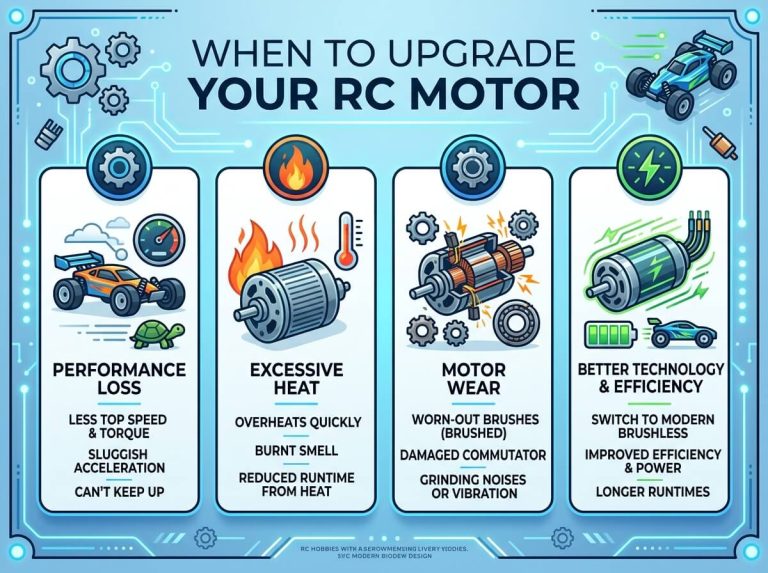
A motor that feels very hot after a run may be working too hard. Let it cool between runs and check that nothing binds the drivetrain. Replace worn tires when the surface looks smooth or uneven, and keep spares on hand.
Loose Screws, Bent Driveshafts and Routine Checks
Vibration can loosen screws over time. Check the chassis, wheels and suspension arms before each session. Bent driveshafts cause uneven power, so replace any that look bent.
Comparing Drift Cars, Drift Tires and Drift Tracks
Drift Car Versus Standard RC Touring Car
A drift car is set up to slide, with rear-wheel drive and often a gyro. A touring car is set up for grip and speed through turns. Choose the type that matches the driving style you want to learn.
Foam Tires Versus Rubber Drift Tires
Foam tires are soft and light, so they slide easily and suit indoor mats. Rubber tires grip more and suit outdoor parking lots. Foam tires can be a gentle start for beginners, while rubber tires reward careful driving.
Indoor Drift Mats Versus Outdoor Parking Lots
Indoor drift mats offer a smooth, consistent surface that is easy to repeat. Outdoor parking lots are larger but often uneven or dirty. Weather also changes grip outdoors, so pick the location that fits your space and goals.
Frequently Asked Questions
Do I need a gyro to drift an RC car?
A gyro is not strictly required, but it helps beginners. It corrects steering during slides and makes control easier. Many people learn to drift without one later.
How long does it take to set up an RC drift car as a beginner?
Ready-to-run kits take less time than kits that need assembly. Allow extra time to read the manual and test each function.
Can I drift an RC car on carpet or tile?
Carpet adds friction and often makes sliding difficult. Smooth tile or a sealed floor usually works better for foam tires. Make sure the surface will not scratch or damage the car.
How often should I maintain my RC drift car?
Check screws, tires and driveshafts before each session. Do a deeper cleaning and inspection after several runs or any crash. Regular checks prevent most common problems.
Is an RC drift car safe for children to use?
Safety depends on the child’s age and the product’s age rating, so follow the manufacturer’s guidance. Adult supervision is wise, especially with lithium batteries and chargers. Keep the car away from roads and crowds.
Conclusion
Setting up an RC drift car is a series of clear steps. Check your parts, charge the battery safely, bind the transmitter, and confirm the controls. Then tune gyro, grip and balance in small changes.
Peterson is an RC hobby enthusiast and product reviewer with a passion for remote-controlled cars, trucks, boats, drones, and accessories. He enjoys testing the latest RC products, comparing features, and sharing practical buying guides to help beginners and experienced hobbyists make informed decisions. Through RCThing.com, Peterson provides honest reviews, maintenance tips, and expert advice to help readers get the most from their RC adventures.