5 Best Drift RC Cars In 2026
If you have typed “best drift RC cars” into a search bar, you are probably standing at the edge of a fun little rabbit hole. Drift RC cars are small remote control vehicles built to slide sideways on smooth floors, just like real drift cars do on a race track. They spin their rear or all four wheels on purpose, kick the tail out, and let you steer through the slide with a joystick. It looks tricky at first, but once you get the hang of throttle control and counter-steering, it turns into one of the most addictive hobbies you can pick up for under a hundred dollars.
This guide breaks down five popular drift RC cars that keep showing up in search results and shopping carts. Some are true 1/18 scale hobby-style rides built for smooth on-road sliding, and a couple are budget-friendly toy-grade options made for kids, teens, or anyone who just wants a fun gift. There is also one all-terrain 4WD truck thrown in for buyers who want speed and grip more than pure drift style. Each one gets a full breakdown covering how it drives, who it fits best, what stands out, and what might annoy you after a few weeks of play.
By the end, you should know exactly which drift RC car matches your skill level, your budget, and the kind of floor or driveway you plan to use it on.
Quick Overview Table
| Product | Scale | Drive Type | Top Speed | Best For |
|---|---|---|---|---|
| LDRC LD1899 (Blue) | 1/18 | RWD | Around 10-15 km/h | Hobby-style drift learners |
| RC Drift Pickup Truck (Nowzeth) | 1/24 | 4WD | 20 km/h | Kids and casual indoor play |
| KAIMIO 1:20 Drift Car | 1/20 | 4WD | Moderate cruising speed | Absolute beginners |
| Aka Supaku 1:16 Off-Road | 1/16 | 4WD | 45 km/h | Speed lovers, rough terrain |
| ACAMMZAR RC Drift Car | 1/24 | 4WD | 20 km/h | Gift buyers, kids, and families |
Now let’s dig into each one.
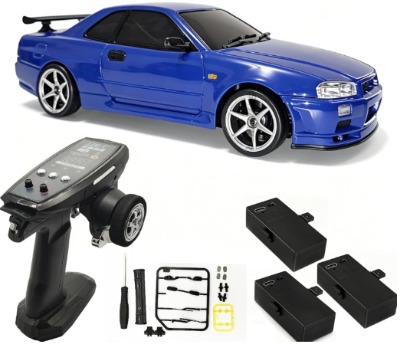
1. LDRC LD1899 RC Drift Car 1/18 RWD with 3 Batteries (Blue)
Product Description
The LDRC LD1899 is styled after a classic Japanese sports coupe, and it leans hard into the “real drift car” look with an alloy shell, textured body panels, and a rear-wheel drive layout that mimics how full-size drift cars actually behave. This is a 1/18 scale model, which puts it right in the sweet spot between a tiny desk toy and a full hobby-grade rig. It ships with three rechargeable batteries, so downtime between drift sessions stays short.
Under the hood, the car uses a small high-speed motor paired with a 2.4GHz radio system, a proportional throttle, and a built-in gyro with an ESP-style stability assist. That last part matters a lot for anyone new to drifting, since the gyro helps catch the rear end when it starts to swing too far, instead of letting the car spin out every single time.
Key Features Explained Simply
- Rear-wheel drive (RWD): Only the back wheels get power, which is exactly how most real drift cars work. This gives you that classic sideways slide feel rather than a car that just skids in a flat spin.
- Built-in gyro and stability system: Think of this as training wheels for drifting. It nudges the steering to help you hold a slide angle instead of losing control completely.
- Metal drive shaft and alloy body: These parts add durability, so the car can handle bumps against furniture legs or curbs without cracking apart.
- Full proportional control: The throttle and steering respond to how far you push the stick, not just on-or-off, so you get finer control over speed and slide angle.
- Three batteries included: More batteries mean less waiting around for a charge, which is a small detail that makes a big difference during a weekend play session.
Best Use Cases
This car shines on smooth indoor floors like tile, laminate, sealed concrete, or a garage floor. It is built for on-road style drifting rather than grass or gravel, so keep it away from rough outdoor surfaces if you want the tires and gearbox to last. It also works nicely as an introduction to RWD drift dynamics before stepping up to a full hobby-grade car later on.
Real-Life Usage Insight
New drivers often report that the gyro assist makes a real difference during the first few sessions. Instead of the car fishtailing wildly the moment you tap the throttle, the stability system smooths things out enough that beginners can start linking small slides together within the first hour of practice. Once you get comfortable, some players actually turn the gyro assist down or off to get a more raw, skill-based drifting feel, similar to how hobby drivers slowly wean off training aids as their thumb control improves.
Pros
- Realistic RWD drift feel that mimics full-size car behavior
- Gyro and ESP assist smooth out the learning curve
- Alloy shell adds a premium look and better crash resistance
- Three batteries reduce downtime between runs
- Metal drive shaft holds up well to regular play
Cons
- Top speed is on the modest side compared to 4WD toy-grade cars
- Best suited to smooth flooring, not outdoor terrain
- Small parts and a delicate shell mean rough outdoor use can cause damage over time
Performance and Ease of Use
Handling feels predictable once you learn how much throttle triggers a slide. The gyro keeps oversteer in check, so you rarely get that frustrating spin-out that turns beginners off from drifting completely. Steering response is smooth thanks to the proportional system, and the RWD layout gives a satisfying, authentic slide compared to 4WD toy cars that tend to just skate around flatly.
Value for Money
Given the alloy shell, gyro system, and three-battery bundle, this car offers strong value for anyone who wants a taste of real hobby-style drifting without jumping straight into an expensive hobby-grade RC setup. It sits in a nice middle ground between toy and true hobby gear.
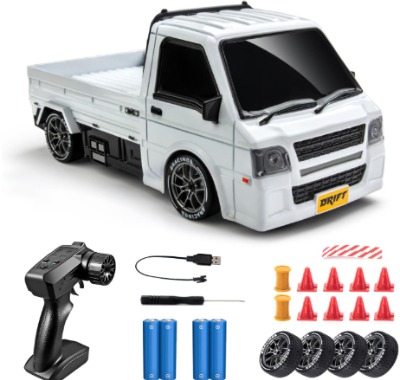
2. RC Drift Car, 1/24 4WD White Japanese-Style Drift Pickup Truck (Nowzeth)
Product Description
This one stands out simply because it is a pickup truck, not a coupe or sedan. Styled in a Japanese kei-truck fashion, it brings a fun twist to the usual sports car look that dominates the drift RC market. It runs on a 4WD system, hits speeds around 20 km/h, and comes packed with LED lights, extra tires, and a compact 1/24 scale body that fits easily in small play spaces.
The brand focuses on beginner-friendly features across its lineup, and this truck follows the same formula: dual speed modes, interchangeable drift and racing tires, and a control range built for indoor rooms as well as backyard driveways.
Key Features Explained Simply
- 4WD drift system: All four wheels get power, which makes the truck easier to control during a slide since traction gets spread across the whole vehicle instead of just the rear.
- Dual speed modes: A low-speed setting lets total beginners get a feel for the throttle before switching to the faster mode.
- Swappable tire sets: Drift tires for smooth indoor floors, and racing tires with more grip for outdoor surfaces like driveways or tile.
- LED lights: Headlights and taillights add visual flair, especially fun for evening play in a driveway or garage.
- Compact 1/24 scale: Small enough to zip around furniture indoors without needing a huge open space.
Best Use Cases
This truck fits families with younger drivers or anyone who wants a fun, low-stakes intro to RC drifting. The dual speed modes make it forgiving for first-timers, and the tire-swapping system means it can move from a hardwood floor to a paved driveway without missing a beat.
Real-Life Usage Insight
Owners often mention that the tire swap system solves a common headache: many cheap drift cars only work indoors because outdoor pavement chews up soft drift tires almost instantly. Having a second grippier tire set built in means the truck can head outside for backyard sessions without needing a separate purchase right away. The pickup truck shape also draws smiles from kids who are bored of the usual sports car styling seen across the category.
Pros
- Unique pickup truck design stands out from typical drift car styling
- 4WD setup gives stable, easy-to-control sliding for beginners
- Dual tire sets extend the car from indoor to outdoor use
- Dual speed modes help new drivers ease into faster play
- LED lights add a nice visual touch for low-light sessions
Cons
- 4WD drift feel is less realistic than a true RWD hobby car
- Plastic build is lighter duty compared to alloy-shell models
- Not built for rough gravel or grass, despite outdoor tire options
Performance and Ease of Use
The low-speed mode is genuinely useful here, letting new drivers get comfortable with steering sensitivity before flipping over to the faster setting. Because it is 4WD, slides tend to feel more controlled and less twitchy than RWD models, which some beginners find less intimidating, even if it trades away a bit of that authentic drift feel.
Value for Money
For the price point, getting a full 4WD system, LED lighting, two tire sets, and dual speed modes packed into one small truck is a solid deal, especially for buyers shopping for a young or first-time RC driver.
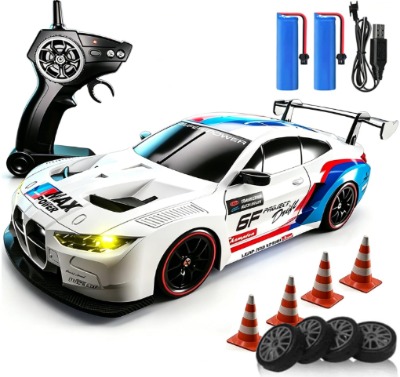
3. KAIMIO 1:20 Scale 4WD RC Drift Car (White)
Product Description
The KAIMIO 1:20 model targets buyers who want the simplest possible entry point into drift RC cars. It runs on a 2.4GHz frequency with auto-pairing support, so multiple cars can run at the same time nearby without signal crossing over, which is handy for friends or siblings racing together. The shell uses a tough PVC material with an ABS chassis, and the whole package includes two batteries plus a spare set of racing tires.
This car keeps things straightforward: no gyro, no fancy stability electronics, just a clean 4WD drift setup built around ease of use.
Key Features Explained Simply
- 2.4GHz auto-pairing system: Multiple people can drive their own KAIMIO cars in the same room without the remotes interfering with each other.
- PVC shell with ABS chassis: A tougher plastic combo that resists cracking from small bumps and tips over better than cheaper toy-grade plastics.
- Drift and racing tire sets: Two tire types included so the car can handle both smooth indoor floors and slightly rougher surfaces.
- Rounded body edges: A small design touch that helps prevent scraped knuckles during handling, a nice detail for younger drivers.
- Two batteries: Roughly 30 minutes of runtime per charge, with a spare on hand to keep the fun going.
Best Use Cases
This is a great pick for someone who has never touched an RC car before and wants a no-fuss way to learn the basics of throttle control and steering. It also works well for group play since several kids or friends can run their own units together without wireless interference.
Real-Life Usage Insight
Because there is no gyro system here, the drift behavior feels a little more raw and less forgiving than the LDRC or Nowzeth models. New drivers may need a bit more patience during the first sessions, since the car reacts quickly to throttle input and can spin out if you are heavy-handed. That said, this rawness also helps drivers build real steering instincts faster, since there is no electronic assist smoothing things over.
Pros
- Very approachable price point for a full drift RC package
- Auto-pairing 2.4GHz system supports group play without signal issues
- Durable PVC and ABS build handles everyday bumps well
- Two tire sets cover both indoor and outdoor surfaces
- Rounded edges reduce scrapes during handling
Cons
- No gyro or stability assist, so the learning curve is steeper
- Runtime of around 30 minutes per battery is on the shorter side
- Top speed is modest compared to the Aka Supaku or Nowzeth trucks
Performance and Ease of Use
Steering feels light and responsive, though without stability assist, tighter drift attempts require a slightly steadier hand. Beginners willing to spend a few sessions practicing throttle taps will pick it up quickly, and the reward is a genuinely satisfying, skill-based drift feel once muscle memory kicks in.
Value for Money
This is one of the most budget-friendly options in the roundup, and it delivers a complete package: two tire types, two batteries, and a sturdy shell, all for an entry-level price. It is a smart pick for anyone who wants to try drifting without spending much upfront.
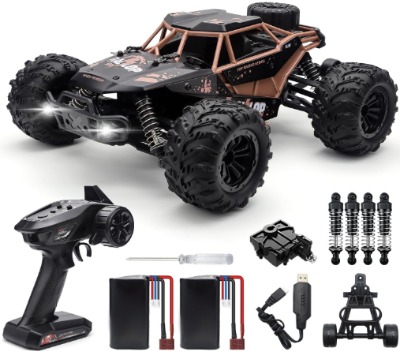
4. 1:16 RC Cars for Adult, 45km/h 4WD Off-Road (Aka Supaku)
Product Description
This one is technically less about pure drift styling and more about raw speed and grip across rough terrain, but it earns a spot on this list because plenty of buyers searching for drift RC cars actually want something fast enough to slide on dirt, grass, or gravel too. The Aka Supaku 1:16 truck runs a 4WD drivetrain with a 390 motor, independent suspension with spring shocks, a steel alloy drivetrain, and dual 1500mAh batteries that combine for around 40 minutes of total playtime.
With a top speed near 45 km/h, this is by far the fastest vehicle in this roundup, and it is built with an alloy body and a wheelie bar for stunt-style acceleration.
Key Features Explained Simply
- 390 high-torque motor: A stronger motor than the smaller drift-focused cars, giving real acceleration and enough torque to break traction on loose surfaces.
- Steel alloy drivetrain and independent suspension: These parts absorb bumps on dirt or gravel, keeping the truck stable at higher speeds instead of bouncing out of control.
- Dual 1500mAh batteries: Swappable batteries stretch total play sessions to around 40 minutes, which is longer than most of the smaller drift toys in this list.
- Wheelie bar: A small design piece that lets the truck pop a front wheelie during hard acceleration, adding a fun stunt element.
- LED lights: Useful for evening runs in a backyard or park.
Best Use Cases
This truck fits buyers who want speed and off-road capability more than tight, technical drift moves. It handles grass, dirt, and gravel far better than any of the smaller on-road drift cars in this roundup, making it the pick for backyard bashing, rough driveways, or open outdoor spaces.
Real-Life Usage Insight
Drivers often use this truck less for classic tight-radius drifting and more for sliding through turns at speed on loose dirt or gravel, which still delivers that fun sideways feel while adding real off-road durability. The dual battery setup is a big plus during longer outdoor sessions, since swapping packs takes seconds and keeps the fun rolling without a long charging wait in between.
Pros
- Genuinely fast, with a 45 km/h top speed that outpaces every other car on this list
- Steel alloy drivetrain and independent suspension handle rough terrain well
- Dual batteries mean longer total playtime per outing
- Wheelie bar adds a fun stunt factor during hard acceleration
- Solid build quality for the price bracket
Cons
- Not a dedicated drift car, so tight, controlled slides are harder to pull off compared to the LDRC or KAIMIO models
- Higher top speed means a steeper learning curve for total beginners
- Larger footprint and stronger motor mean it is less ideal for small indoor spaces
Performance and Ease of Use
Full proportional throttle and steering give smooth acceleration and cornering, but the sheer speed means new drivers should start in an open area rather than a cramped living room. Once you get a feel for the throttle, sliding through gravel turns at speed becomes one of the most fun parts of using this truck.
Value for Money
Considering the motor strength, dual batteries, and rugged build, this truck delivers strong value for anyone who wants speed and durability over precise, technical drifting. It is a good pick if you already own a slower drift car and want a faster, tougher option to add to the collection.
5. ACAMMZAR RC Drift Car, 1:24 4WD (White)
Product Description
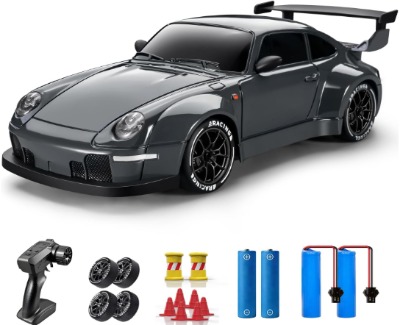
The ACAMMZAR drift car rounds out this list as another approachable, budget-friendly 1/24 scale option built with families and casual buyers in mind. It runs on a 4WD system, hits a 20 km/h top speed, and comes with two rechargeable batteries plus a set of extra drifting tires. The remote offers a 50-meter control range and two speed modes, and the whole package ships with a screwdriver and manual for easy setup right out of the box.
This brand leans into simplicity and reliability rather than flashy extras, aiming to be a dependable pick for anyone buying their first drift RC car as a gift or a casual toy.
Key Features Explained Simply
- 4WD system with full proportional throttle: Makes tail flips, spins, and sideways slides easier to pull off, especially for less experienced hands.
- Two speed modes: Low mode for practicing basic control, high mode once you are ready for faster play.
- Two batteries with roughly 50 minutes combined runtime: A solid runtime figure that keeps the fun going longer between charges.
- Extra drifting tires included: A spare set means you are covered if the originals wear down after regular use.
- 50-meter control range: Plenty of reach for backyard or driveway sessions, even though real-world range shrinks a bit around walls or obstacles.
Best Use Cases
This car is a strong fit for gift shopping, especially for kids or teens getting their first RC car. It also works well for casual adult buyers who just want a fun, low-pressure way to mess around with drifting on a smooth floor or driveway without spending a lot of money.
Real-Life Usage Insight
Buyers often mention that this car strikes a nice balance between being genuinely fun to drive and being simple enough that setup takes just a couple of minutes out of the box. Younger drivers tend to enjoy the low-speed mode as a safe starting point, while older kids and adults can flip to the faster setting once they get comfortable with the steering response. Some reviewers note the remote feels a little basic compared to hobby-grade transmitters, but for casual play it gets the job done without a steep learning curve.
Pros
- Budget-friendly price with a complete accessory bundle
- Dual speed modes make it approachable for beginners
- Two batteries plus spare tires extend total playtime and lifespan
- 4WD system creates stable, controllable sliding
- Straightforward setup process, ideal for gifting
Cons
- Plastic build feels less premium than the alloy-shell LDRC model
- No gyro or stability assist system
- Top speed sits on the moderate side compared to the Aka Supaku truck
Performance and Ease of Use
Handling stays predictable thanks to the 4WD layout, and the two-speed system gives new drivers a gentle ramp into faster play. It will not blow you away with raw speed, but for casual drifting sessions around the house or driveway, it delivers a fun, easy experience without any steep learning curve.
Value for Money
Between the two batteries, extra tires, and simple setup, this car offers a lot of bundled value for a low price tag, making it a smart pick for gift-giving or as a starter drift car for younger drivers.
Comparison Insights
Looking at all five side by side, a few patterns stand out.
Drive type changes the feel more than anything else. The LDRC LD1899 is the only true RWD car here, and that single detail gives it the most realistic drift feel in the group. The rest run 4WD systems, which tend to feel more stable and beginner-friendly but slightly less authentic compared to how real drift cars slide.
Speed does not always mean better drifting. The Aka Supaku truck is by far the fastest at 45 km/h, but it is built more for off-road speed runs than tight, technical drift control. The three 20 km/h-range cars, Nowzeth, ACAMMZAR, and KAIMIO’s slightly more modest speed, actually offer more controllable, beginner-friendly sliding because the lower speed gives you more time to react and correct.
Battery setup matters for session length. The LDRC bundle with three batteries and the Aka Supaku’s dual 1500mAh packs both stand out for keeping playtime going longer, while the smaller 1/24 and 1/20 toy-grade cars top out around 30 to 50 minutes of combined runtime.
Build material affects durability. Alloy shells and metal drive shafts, like on the LDRC model, hold up better to bumps and crashes over time compared to pure plastic builds. That said, plastic shells are lighter, cheaper to replace, and often perfectly fine for casual indoor play where big crashes are rare.
Gyro assist is a genuine beginner advantage. Only the LDRC model in this roundup includes a gyro and stability system, and it noticeably smooths out the learning curve compared to the KAIMIO, ACAMMZAR, and Nowzeth cars, which rely purely on manual throttle and steering control.
Buying Guide: What to Look for in a Drift RC Car
Scale Size
Smaller scales like 1/24 or 1/20 are compact, cheap, and great for tight indoor spaces. Larger scales like 1/16 or 1/18 tend to offer better build quality, more realistic handling, and room for stronger motors and batteries, though they usually cost a bit more and need slightly more open space to drive comfortably.
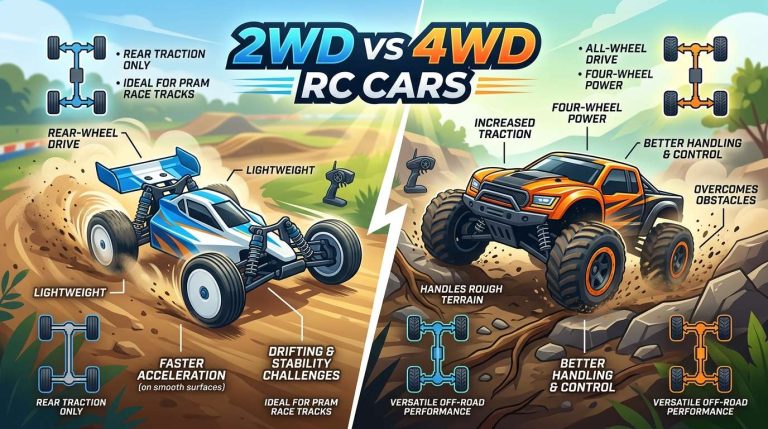
Drive Type: RWD vs 4WD
RWD cars slide more like real drift vehicles, with the rear end stepping out while the front wheels grip and steer. They tend to reward skill and feel more rewarding once mastered. 4WD cars distribute power to all four wheels, which makes sliding easier to control right away, a good trait for beginners or younger drivers who want quick wins without a steep learning curve.
Gyro and Stability Assist
A built-in gyro helps correct oversteer automatically, catching the car before it spins out completely. This feature genuinely speeds up the learning process, especially for first-time drifters, though purists sometimes prefer to turn it off once their skills improve for a more authentic, hands-on challenge.
Battery Life and Charging Time
Look for combined runtime, not just a single battery’s rating. Two or three batteries bundled together mean less time waiting around and more time actually driving. Charging times across most of these budget models run somewhere between 60 and 120 minutes, so having spares on hand really pays off during longer play sessions.
Tire Type
Drift tires are usually smooth or lightly grooved, built to slide easily on hardwood, tile, or laminate floors. Racing or grip tires have more traction and hold up better outdoors on pavement, driveways, or light gravel. A car that includes both tire types gives you more flexibility to move between indoor and outdoor sessions.
Build Material
Alloy shells and metal drive shafts add durability and a more premium feel, but they usually raise the price. Plastic ABS or PVC shells are lighter, cheaper, and often good enough for casual play, especially for younger drivers who are still learning basic control and might bump into furniture or walls more often.
Control Range and Frequency
Nearly every car in this list runs 2.4GHz, which resists interference well and supports multiple cars running at once nearby. Control range typically sits between 20 and 50 meters on paper, though real-world distance shrinks with walls, furniture, or other obstacles in the way.
Age Recommendation and Safety
Most of these cars are recommended for ages 6 and up, largely due to small replaceable parts like tires and screws that could be a choking hazard for very young kids. Always check the specific product listing for age guidance before buying as a gift.
Who Should Buy These Products
Total beginners who want the easiest learning curve should lean toward the KAIMIO 1:20 or the Nowzeth pickup truck, since both offer forgiving 4WD handling and dual speed modes that ease you into faster play.
Buyers who want the most realistic drift experience should look at the LDRC LD1899, thanks to its RWD layout, gyro assist, and alloy body that closely mimics real drift car dynamics.
Parents or gift shoppers on a budget will likely be happiest with the ACAMMZAR car, since it bundles batteries, spare tires, and simple setup into one affordable package that is easy to hand over to a kid or teen without much assembly fuss.
Speed and off-road enthusiasts should go with the Aka Supaku 1:16 truck, since it trades tight drift precision for genuine speed, durability, and the ability to handle rough outdoor terrain like grass, dirt, and gravel.
Group play households, where multiple people want to drive together, will appreciate the KAIMIO’s auto-pairing 2.4GHz system, which avoids signal crossover when several cars run in the same room or backyard.
Common Mistakes to Avoid
Using drift tires on rough outdoor surfaces. Drift tires are built for smooth floors. Running them on concrete, gravel, or grass wears them down fast and can also strain the drivetrain. Always switch to racing or grip tires when heading outside.
Skipping the low-speed mode. Many of these cars include dual speed settings for a reason. Jumping straight to top speed before learning basic throttle control usually leads to crashes, spin-outs, and frustration that could easily be avoided.
Overcharging or leaving batteries plugged in too long. Most of these battery packs are lithium-based, and leaving them on the charger well past the recommended time can shorten their lifespan or cause safety issues. Stick to the charging time listed in the manual.
Ignoring the play surface. Carpet, thick rugs, or uneven ground make it nearly impossible to drift properly, since there is not enough slide friction on rough textures. Smooth tile, sealed concrete, hardwood, or laminate floors give the best results for on-road style drift cars.
Buying based on top speed alone. A faster car is not automatically a better drift car. Slower, well-balanced 4WD cars with stability features are often easier and more fun to learn on than a fast RWD car with no assist system.
Forgetting to check age recommendations before gifting. Small tires, screws, and battery components can pose choking hazards for very young kids, so always double check the listed age range before buying as a present.
Final Verdict
All five of these drift RC cars serve slightly different purposes, so the “best” one really depends on what kind of driving experience you are after.
If you want the most authentic, hobby-style drift feel with a stability assist to smooth out the learning curve, the LDRC LD1899 is the standout pick in this roundup. Its RWD layout, gyro system, and alloy build put it a step above the purely toy-grade options.
If your priority is a budget-friendly, easy-to-use car for kids, gifting, or casual family fun, both the ACAMMZAR and Nowzeth pickup truck deliver solid bundles with dual batteries, extra tires, and forgiving 4WD handling.
If you are shopping for the cheapest possible entry point into the hobby, the KAIMIO 1:20 gets the job done with a durable shell and a genuinely fun, if slightly raw, drift experience.
And if speed and off-road capability matter more to you than tight technical drifting, the Aka Supaku 1:16 truck is the clear choice, with a stronger motor, tougher build, and enough speed to satisfy anyone chasing an adrenaline rush over precision control.
Pick based on your skill level, your budget, and the kind of surface you plan to drive on, and any of these five cars can deliver a genuinely fun introduction to the world of RC drifting.