5 Best RC Sailboat In 2026
As an Amazon Associate we earn from qualifying purchases.
Remote control sailboats are a fun way to learn how wind and sails work, without leaving home. This guide helps beginners who want a clear picture of the best RC sailboat options before spending money. It also suits families, hobbyists and gift buyers who want something that works in a pool, pond or small lake.
The five products here share a few traits. Each one is a radio-controlled boat with a sail, a water rudder and a transmitter. Some rely only on the wind, while others add a small electric motor for control when the air is calm. This comparison rests on the listed features and typical use, not on personal testing. Where a detail is not listed, this guide does not guess at it.




Five RC Sailboats Compared: Features, Use and Value
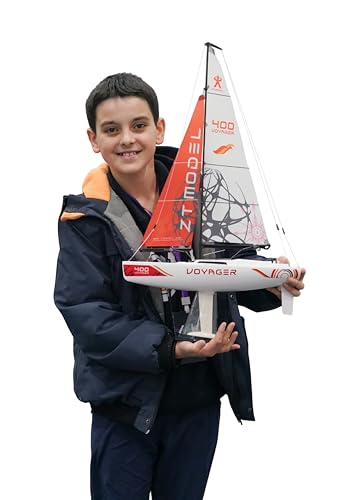
1. PLAYSTEAM Voyager 400 2.4GHz RC Motor Powered: best for mixed wind and calm-water sailing
What this model is and who it suits
This is a motor-assisted sailboat that uses a 1:30 scale design. It measures 400 mm long, 100 mm wide and 672 mm tall. It suits buyers who want to sail in the wind but also need a way to move the boat when there is no breeze.
It is a good fit for a child who is ready for a hobby with a few more steps, or for an adult who wants a sailboat that does not depend entirely on the weather. Beginners who only want a quick, simple toy may find a wind-only model easier to start with.
Best use cases
The detachable electric motor makes this boat useful indoors or on still days. Many buyers use it in a pool or large tub where wind is weak or unpredictable. It also helps when the boat drifts toward a tangle of weeds or a corner.
On a windy lake, the sail provides the classic sailing feel. On a calm pond, the motor keeps the boat moving so the session does not end after a few minutes of waiting. Each setting suits a different location, so think about where the boat will mostly run.
Key features in simple words
The transmitter uses 3-channel control. One channel sets the sail angle, one turns the water rudder and one runs the motor. Two small 9-gram servos handle the sail and rudder movement. A 3.7V 150mAh Li-Po battery powers the system, and the charger sits inside the transmitter.
Three channels mean three separate actions can be adjusted at once. This gives more control than a basic two-channel boat, where steering and sail trim may share a single input.
Everyday use feel
With three controls, the boat responds more precisely than a simple two-control model. Beginners usually need a short practice period to learn how sail trim and rudder work together. The motor reduces the frustration of a boat that refuses to come back to shore.
Expect a few short sessions before the controls feel natural. Start in open water with no obstacles, then add more challenges as your confidence grows.
Performance and ease of use
Because the motor can push the boat forward and backward, it avoids being stuck in tricky spots. The sail adds the traditional sailing feel when conditions allow. Setup involves attaching the parts, so expect a little more handling than a no-assembly model.
Take a few minutes to check that the sail and rudder move freely before each run. Small snags in the linkage can affect steering, so a quick check helps avoid confusion during the first sail.
Value for money
At the listed price, this boat offers more control options than the smaller wind-only models in this group. The extra functions justify the cost for buyers who want flexibility. Buyers who only plan to sail on breezy days may find the motor less useful.
Think about how often you expect to sail and where. If you have a pool or pond with little wind, the motor adds real value. If you have a windy lake, a simpler and less expensive model may meet your needs.
Pros
- Detachable motor helps on calm days and indoors
- Three controls allow precise sail and rudder adjustment
- Built-in charger in the transmitter keeps accessories together
- Motor helps recover the boat from difficult spots
Cons
- Small 150mAh battery may limit how long each session lasts
- Requires some learning to balance sail, rudder and motor
- Assembly is needed before the first sail
2. Ssccgym 84” Inch Remote Control Boat RC: best for large-scale sailing enthusiasts
What this model is and who it suits
This is a large, pre-assembled sailboat with a canvas sail and an ABS plastic hull. Its overall height is listed as 84 inches, and the model is designed around a one-meter size. It suits adults and older hobbyists who want a serious model for display, practice or outdoor events.
Because of its scale, it is a different experience from small toy boats. It asks for more space, more time and more attention from the person operating it. Buyers who enjoy traditional sailing as a hobby tend to find it the most rewarding.
Best use cases
The boat’s size makes it better suited to larger bodies of water such as a lake or big pond. Some owners may use it as a collection piece that suits sailing enthusiasts and collectors, so it is less practical for a small pool. Its listed purpose includes outdoor competition, which points to open water and room to maneuver.
Clubs, groups and friends who meet at a reservoir or park lake can use it for practice sessions and friendly races. For a single person with a backyard, a smaller sailboat will usually be easier to launch and retrieve.
Key features in simple words
The hull is made of ABS, a tough plastic often used in model parts. The sail is canvas, and the boat uses rope for rigging. Electronic components handle the radio control, and no engine or gearbox is involved.
In practice, this means the sail is the main source of power. The driver adjusts the sail angle to catch the wind and steers with the radio controller. Knowing how the rigging responds takes some time, but the basic controls stay simple.
Everyday use feel
Because the boat moves only with the wind, every session depends on weather. Steering takes skill, since the driver has to read the wind and trim the sail. Many buyers find this the main appeal, because the boat rewards practice.
On a calm day, the boat may barely move, while a steady breeze gives it a clear, graceful run. Gusts can push it quickly across the water, so the driver needs to stay alert. Sessions often feel more like real sailing than driving a motorized model.
Performance and ease of use
Assembly is listed as simple, with all accessories ready to fit together. Even so, a boat this large needs more handling and a roomier space for storage and launching. Beginners may need patience, since wind-only sailing has a steeper learning curve than motor-assisted models.
Two people can make launching easier, one to hold the hull and one to check the radio link and sail position. Rinsing the boat after use on open water helps keep it looking good over time. Practice in light wind first, then move to stronger conditions as confidence grows.
Value for money
At the listed price, this is the most expensive model in the group. Its value depends on if the buyer wants a large, realistic sailing model. Casual users who only want a pool toy may find better value in a smaller boat.
Buyers should compare the price with the cost of the space, transport and time they expect to spend. If the boat will be used for display, practice and outdoor sessions over many seasons, the investment may feel justified. If it will sit unused, a smaller and cheaper option is the wiser choice.
Pros
- Large size gives a realistic sailing presence
- Pre-assembled accessories reduce setup work
- Wind-only design suits skill-building sailors
- Durable materials such as ABS hull and canvas sail
Cons
- Needs a large body of water and open space
- Performance depends heavily on wind conditions
- Highest price in this comparison
- Bulky to store and transport
3. PLAYSTEAM Voyager400 2.4GHz RC Motor Powered: best for color choice with motor backup
What this model is and who it suits
This boat matches the blue version in size, design and features, but it comes in red. It is a motor-assisted sailboat at 1:30 scale, measuring 400 mm long, 100 mm wide and 672 mm tall. It suits buyers who like the motor-backed design and prefer a red finish.
If you already know you want this style of boat, the color is the main decision. The shape, controls and build stay the same across both versions. That makes the red model a straightforward pick for someone who wants the same experience in a different look.
Best use cases
The detachable motor helps indoors or when the wind drops. It can also help the boat return to shore if control is lost. Pools, ponds and tubs are common settings for this kind of model.
A motor is useful when you have little or no breeze to work with. Without it, a sailboat simply sits still on a calm day. With it, you can keep the session going and bring the boat back to where you are standing.
Key features in simple words
Three controls handle the sail angle, the water rudder and the motor. Two 9-gram servos move the sail and rudder. A 3.7V 150mAh Li-Po battery powers the boat, and the charger is built into the transmitter.
Because the charger sits inside the transmitter, you carry fewer separate parts to the water. The battery size is modest, so plan on charging between sessions. Keep the transmitter and boat close together when you test the controls for the first time.
Everyday use feel
Owners usually find the three-control layout takes some practice. The motor offers a safety net when the sail alone cannot move the boat. This makes sessions feel less stressful for new drivers.
Many people start by using only the motor to learn steering. Once the rudder feels natural, they add sail control and try the boat in light wind. Taking this step-by-step approach tends to build confidence faster than jumping straight into full sailing.
Performance and ease of use
The boat can move forward and backward under motor power. Sail control adds a more traditional sailing experience when breezes are available. Assembly is needed before use, so set aside a little time for the first build.
Follow the included instructions closely during setup, since the sail and rudder linkages must sit correctly. Check that each control responds before you launch. A short test on land can prevent frustration on the water.
Value for money
The price matches the blue version, so the choice comes down to color preference. Compared with the wind-only models, this boat offers more flexibility for the same type of use. Buyers who do not need the motor may prefer a simpler and less costly option.
The value depends on how you plan to sail. If you will mostly sail in steady wind on open water, the motor may be a feature you rarely use. If you expect calm days or indoor sessions, the motor adds real practical benefit.
Pros
- Red color option matches the motor-powered design
- Motor helps on calm days and indoors
- Three controls give fine sail and rudder adjustment
- Charger built into the transmitter reduces loose parts
Cons
- Small battery may limit session length
- Three-control setup takes practice for new drivers
- Requires assembly before first use
4. PLAYSTEAM Voyager 280 RC Controlled Wind Powered: best Voyager 280 RC Controlled Wind Powered: best for simple, no-assembly pool sailing
What this model is and who it suits
This is a wind-powered sailboat with no motor at all. It stands 17.5 inches tall, with 14 inches above the waterline, and measures 11 inches long. It suits beginners who want a small, easy boat for a pool or pond.
Because it relies only on wind, it asks more of the sailor than a motor-assisted model. That makes it a good fit for people who enjoy the basics of sailing. It is less suited to anyone who wants guaranteed movement on every day.
Best use cases
The boat is listed as suitable for a pool or pond, which makes it a practical choice for small spaces. It works best on days with steady breeze. Families often use boats like this to introduce children to wind and steering.
A pool offers sheltered water, which helps a beginner focus on the basics. Open ponds can have stronger or gusty breezes, so a steady day gives the best results. Choose a calm, clear area with room to sail the boat from one side to the other.
Key features in simple words
The transmitter uses 2-channel control. Two servos handle the water rudder and the sail angle. The boat runs on four AA batteries and needs no tools or assembly before use.
Two channels mean you control direction with one input and sail position with the other. Four AA batteries are a common, easy-to-replace power source. Keep spare batteries on hand if you plan longer sessions.
Everyday use feel
Because there is no motor, the boat depends on the wind to move. Beginners learn quickly that sail angle controls speed and direction. The simple layout makes the first sessions less confusing than a three-control model.
Many new sailors find that adjusting the sail is the key skill. Trim the sail too tight and the boat may lose speed, while letting it out too far can stall movement. Practicing these small changes helps you understand how wind pushes the boat.
Performance and ease of use
The no-assembly design means the boat is ready to sail out of the box. Two channels keep the controls easy to learn. Still, a calm day can leave the boat drifting, since there is no motor to bring it back.
Plan your sessions for days with a steady breeze. If the water goes flat, be ready to retrieve the boat by hand or wait for wind to return. This habit keeps the boat safe and the experience enjoyable.
Value for money
This is the lowest-priced model in the group. For buyers who want to learn the basics of wind sailing, it offers a low-cost entry point. Those who expect motor help or a larger boat will likely look elsewhere.
A lower price makes it easier to try RC sailing without a large commitment. If you find you enjoy the hobby, you can then decide if a motor-assisted or larger model is worth the extra cost. Compare the features against your own needs before buying.
Pros
- No assembly needed, so it is ready quickly
- Simple two-channel control suits beginners
- Compact size fits pools and small ponds
- Lowest price among the five models
Cons
- No motor, so it may drift on calm days
- Smaller size limits use on larger water
- Requires a steady breeze for good performance
5. PLAYSTEM Voyager 400 RC Controlled Wind Powered: best for a larger wind-only boat
What this model is and who it suits
This wind-powered boat is larger than the Voyager 280. It stands 26.5 inches tall, with 21 inches above the waterline, and measures 15.75 inches long. Its size makes it easier to follow across a pond or pool than a smaller hull would be.
It suits buyers who want a bigger wind-only boat without the cost of a large model. It also suits people who have already tried a small sailboat and want a step up in size and challenge.
Best use cases
The listed design works well in a pool or pond. For example, a calm, open pond with a steady breeze gives the boat room to build speed and show its sailing character. A cramped space with tall trees or walls around it will limit how much wind reaches the sail.
Its extra size gives it more presence on open water than the smaller model. It suits sailors who have some wind and want more practice with sail control. Owners who enjoy watching a boat tack and run across the water will find this model rewarding.
Key features in simple words
Two-channel control runs two servos for the water rudder and sail angle. One channel steers the boat, and the other adjusts the sail. Learning how these two controls work together is the main skill to build.
There is no motor, so all movement comes from the wind. The boat uses four AA batteries and comes with a mainsail that needs to be attached. Keep spare batteries nearby so a session is not cut short.
Everyday use feel
The larger hull handles wind a little differently than the small model. Sail trim becomes more noticeable, so beginners may need a few sessions to adjust. A small change in sail angle can shift the boat’s speed and direction more clearly than it would on a smaller hull.
Most owners find the basic controls easy after some practice. Starting in light, steady wind helps new sailors learn the responses before trying gusty conditions.
Performance and ease of use
The boat is listed as needing no assembly, though the mainsail must be attached before sailing. Setting the sail correctly before each outing helps the boat move as intended. Checking the rudder and sail for free movement is a simple habit that prevents frustration.
As with other wind-only models, performance depends on wind strength. The manufacturer states it will replace missing or broken parts, which gives buyers some reassurance. Keeping the original packaging and receipt makes any future claim easier to handle.
Value for money
The price sits between the smallest model and the three motor-assisted boats. Buyers get a bigger boat than the Voyager 280 at a moderate cost. For many people, that middle position offers a good balance between size and spending.
Those who need motor backup should consider the Voyager 400 motor models instead. A motor keeps the boat moving on calm days, which a wind-only design cannot do.
Pros
- Larger size gives more presence on the water
- Two-channel control is simple to learn
- Replacement policy covers missing or broken parts
- Moderate price for a bigger
- Larger size gives more presence on the water
- Two-channel control is simple to learn
- Replacement policy covers missing or broken parts
- Moderate price for a bigger wind-only boat
Cons
- No motor, so calm days can leave it stranded
- Mainsail must be attached before each first use
- Needs more open space than the smaller Voyager 280
Comparison Insights: How the Five RC Sailboats Differ
The five boats fall into two groups. Three use a motor for backup, while two rely only on the wind. This split shapes almost every other difference between them.
Performance varies mostly by power source. Motor-assisted models keep moving on calm days and can return to shore when the air goes still. Wind-only models feel closer to real sailing, but they depend on the weather and reward anyone who learns to read the breeze.
Ease of use follows a similar pattern. The two-channel boats are simpler to learn, since there are fewer controls to remember. The three-channel motor models give finer control over speed and direction, but they need practice before they feel natural.
Size also changes the experience. The 280 suits a small pool, where its compact frame stays easy to reach and retrieve. The 400 models suit mid-sized water such as a park pond, and the 84-inch model needs a lake or large pond with room to tack and maneuver.
Value for money depends on the buyer’s plans. The lowest price buys the simplest entry point for a first session. The motor models cost more and offer flexibility for days with weak wind. The largest boat costs the most and serves enthusiasts with space to sail it and time to learn its handling.
RC Sailboat Buying Guide: Key Factors in Plain Words
Start by deciding where you plan to sail. A pool, a pond and a large lake each suit different boat sizes. A small boat in a big lake can feel lost, while a large boat in a small pool can be hard to turn. Measure the space before you buy.
Next, think about the wind. Wind-only boats need a steady breeze to move well. Light or gusty air can leave them drifting or stalled. If your sailing days are often calm, a motor-assisted model may be more practical.
Check the number of channels. A two-channel transmitter controls the sail and rudder, which is enough to learn the basics of steering and trimming. A three-channel model adds motor control, so you can power through a lull. More channels give more options but take longer to learn.
Look at assembly. Some boats arrive ready to sail, while others need the sail and parts attached first. Read the setup steps before you commit, and set aside time for the first build. Beginners who want quick sessions often prefer no-assembly models.
Consider battery power. Small batteries like the 150mAh Li-Po in the motor models may limit session length, so plan for a few short runs and keep a spare charged if you can. Four AA batteries in the wind-only boats are common and easy to replace at any general store.
Finally, compare the price with your goals. A low price is useful for learning the basics without a large commitment. A higher price makes sense when you want size, realism or extra functions that you will actually use on the water.
Who Should Buy These RC Sailboats
Buyers who want a simple, low-cost start may find the Voyager 280 a good fit. It is ready quickly and uses only two controls, so there is little to set up or memorize. It suits a child or a first-time sailor who plans to use a pool or small pond.
Buyers who want a bigger wind-only boat may prefer the Voyager 400 RC Controlled Wind Powered model. It has more presence on the water while keeping two-channel control, so the learning curve stays manageable. It suits sailors who have steady wind and some practice behind them.
Buyers who want motor backup for calm days or indoor use may choose one of the Voyager 400 motor-powered models. The blue and red versions match in features, so color is the main choice. These suit people who want flexibility and do not mind some setup and battery management.
Enthusiasts who want a large, realistic sailing model for a lake or outdoor event may consider the Ssccgym 84-inch boat. It suits adults who value skill-based sailing and have room to store, transport and launch it. It is the best match for a dedicated hobbyist who is willing to invest time in learning to handle it well.
Final Verdict on the Best RC Sailboat Options
No single boat suits every buyer. The right choice depends on space, wind conditions and how much control you want. The five models here cover a wide range of needs, from small pools to open ponds.
For beginners on a budget, the Voyager 280 offers the simplest start. It has two controls and is the lowest-priced option in this group. For a bigger wind-only experience, the wind-powered Voyager 400 is a practical step up in size and sail area.
For flexibility on calm days, the motor-powered Voyager 400 models add useful backup. The motor lets you keep moving when the breeze drops, which is helpful when wind is unpredictable. You still get the satisfaction of sailing when conditions allow.
For large-scale enthusiasts, the Ssccgym 84-inch boat stands apart. It rewards people who can give it space and wind to match its size. A boat this large needs open water and steady breeze, so it may feel out of place on a small pond. Its presence on the water is the main draw.
In short, match the boat to your water, your wind and your skill level. Measure your available space first, then consider how often you expect calm days. Once those answers are clear, the choice becomes much easier.
Frequently Asked Questions
Can an RC sailboat be used in a pool?
Yes, several of the listed models are described as suitable for a pool or pond. Smaller boats like the Voyager 280 fit small spaces most easily. Check the length and width of your pool before you buy, and leave room for the boat to turn.
Do I need a motor to sail an RC sailboat?
No. Wind-powered models like the Voyager 280 and the wind-powered Voyager 400 need no motor and rely only on the breeze. A motor helps on calm days, but it is not required for sailing. Many beginners enjoy wind-only boats because they teach how sails respond to the wind.
What does a three-channel transmitter do?
A three-channel transmitter controls three functions. In the motor-powered Voyager 400 models, these are the sail angle, the water rudder and the motor. Each channel handles one job, which gives more precise control over steering and speed.
Is assembly required before sailing?
It depends on the model. The Voyager 280 and the wind-powered Voyager 400 are listed as needing no assembly, though the mainsail must be attached on the larger one. The motor-powered Voyager 400 models and the Ssccgym 84-inch boat need some assembly first. Read the setup steps for your chosen model before you head to the water.
Which RC sailboat is best for a beginner?
The Voyager 280 is often the simplest choice because it has two controls and needs no assembly. It is also the lowest-priced option in this group. Beginners who want more size can consider the wind-powered Voyager 400 next, once they feel comfortable steering and trimming the sail.

Peterson is an RC hobby enthusiast and product reviewer with a passion for remote-controlled cars, trucks, boats, drones, and accessories. He enjoys testing the latest RC products, comparing features, and sharing practical buying guides to help beginners and experienced hobbyists make informed decisions. Through RCThing.com, Peterson provides honest reviews, maintenance tips, and expert advice to help readers get the most from their RC adventures.