5 Best Drone Landing Pad In 2026
As an Amazon Associate we earn from qualifying purchases.
A drone landing pad is a flat, portable mat that gives your drone a clean, marked place to take off and land. It keeps the aircraft off loose dirt, wet grass, sand, and sharp stones, which can otherwise get pulled into motors and propellers.
This guide helps beginners who are new to drones and want to protect their aircraft from dust, mud, and stones. It also helps buyers who want a pad that folds small enough to carry in a backpack or hard case.
The five products in this round-up share a few traits. Each one is a foldable pad made for small drones, each has a bright or reflective surface to help the pilot spot it, and each lists a list of compatible models.
This comparison rests on the listed features and typical use of each product, not on personal testing. Where a detail comes from a product listing, the text says so, so you can check it yourself before buying.
Before reading the reviews, it helps to know what matters most in a pad. Size, surface material, weight, and visibility all change how a pad performs outdoors. A pad that is too small may not give a drone enough room to take off cleanly, while a pad that is too large can be awkward to carry. The sections below explain each product and then show how they compare.


1. FPVtosky Nighttime Reflective Drone Landing Pad: best for reflective visibility and easy cleaning
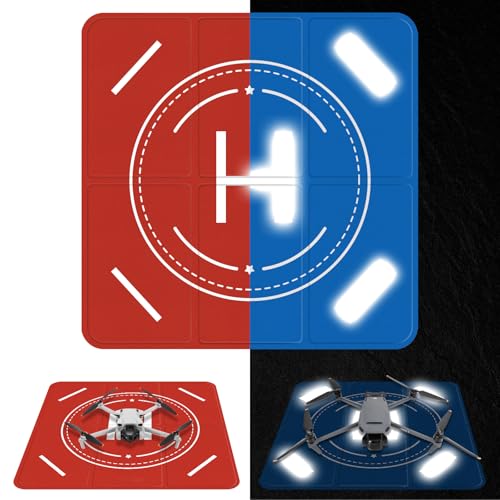
The FPVtosky pad is a double-sided landing mat with a blue side and a red side. It is made from PU leather, a synthetic material that resists water. It is aimed at pilots who fly small models such as the DJI Mini series, Air 3S, and Neo. Two colors give you a choice of contrast depending on the ground you fly over.
The pad is built to fold up quickly and fit inside most protective cases or backpacks. The product listing says it fits most drone sizes, so check the compatibility list before buying. A pilot who flies at dusk or in fog may find the bright colors useful, since a visible landing spot makes the drone easier to bring back in.
Key features in simple terms
The PU leather surface is waterproof and dustproof. Dirt can be rinsed off with water, then the pad is shaken dry. This is helpful after a day in mud or gravel. Letting the pad dry fully before folding it helps prevent trapped moisture from building up inside the case.
The pad is weighted, which helps it stay in place in light wind. The listing says it can stay put under strong wind, but very strong gusts may still move a pad of this size. Pilots should check conditions before every flight and pin or hold the corners on breezy days.
Daily use and performance
In everyday use, the pad is quick to unfold and fold again. This makes it a good choice for pilots who fly in several spots during one outing. The flat surface helps the drone sit level on bumpy ground, which can matter for the landing gear and the gimbal camera.
The reflective surface is said to help pilots see the pad at night. It is a practical option for low-light flying, though it is not a replacement for proper flight lighting rules. Always follow local aviation rules and the manufacturer’s guidance on night operations.
Ease of use and value
Setup takes almost no time, and no tools are needed. The product is priced at the lower end of the range, which makes it attractive for beginners who want to try a landing pad before spending more. Buyers get a flexible pad that is simple to clean and store.
Pros
- Waterproof, dustproof surface that rinses clean
- Folds small enough for most drone cases
- Two bright colors to help with visibility
- Low price for a double-sided pad
Cons
- Strong wind may still move the pad, so pilots should check conditions
- Compatibility list is long, so buyers should confirm their model fits
- Seller standing is moderate, so buyers may want to read recent feedback
2. Hoodman 21 inch Weighted Drone Landing Pad: best for rough outdoor ground
The Hoodman LP21 is a 21-inch round pad built from six vinyl-covered laminate sections. It is aimed at pilots who fly on uneven ground, such as tall grass, sand, gravel, or concrete. It is also used by people who fly professional gear.
The pad is designed to stay in place without stakes or anchors. Its maker describes it as a rugged, field-ready option for regular outdoor work. It suits both hobbyists and pilots who need reliable gear.
A landing pad serves two main purposes. It gives the drone a clear, visible target, and it keeps dirt and debris away from the aircraft. The LP21 is built with both goals in mind, which is why it appears in this round-up.
How the pad holds its ground
The sections conform to the ground, which helps the pad stay put when the rotors push air down. The listing says the laminate inserts weigh 1.9 pounds in total. Because the inserts are flexible, the pad can hug uneven surfaces rather than sitting on top of bumps.
Flat, hard surfaces like a driveway or patio usually give the best grip. On loose sand or thick grass, the pad may still shift slightly, so it is wise to check its position before each takeoff. Pilots should also keep the pad clear of loose items that could be blown underneath.
Protection from dust and debris
Rotor thrust can kick up sand, dust, and small rocks. These particles can scratch lenses, grind motor parts, or nick propellers. A clean pad creates a smaller area where debris can reach the aircraft.
The vinyl surface is designed to resist moisture and dew, so it stays drier on wet grass. Mud can be rinsed off with a hose. Stubborn stains may need a damp cloth and mild dish soap.
Keeping the pad clean is part of routine care. Letting mud dry on the surface makes it harder to remove later. Rinsing the pad after a session in wet or dusty conditions is a simple habit that helps protect both the pad and the drone.
Portability and setup
At 1.9 pounds, the pad is light enough for a hike to a remote spot. Setup requires no assembly. The rubber belt is removed, and the pad unfolds in a few seconds.
Folding takes three steps, and the pad collapses to a small size. The belt is then placed back on the pad for storage. Pilots who move often may find this routine simple to repeat.
Because the pad is portable, it can travel in a backpack or a small bag alongside the drone and its batteries. Pilots who fly from a car trunk or a boat may find this especially handy. Packing the pad dry helps prevent mildew between trips.
Performance and value
The 21-inch diameter gives small aircraft a generous target. The listing says the pad has been tested with several DJI models, including the Mini 4 Pro, Mini 3 Pro, Mavic series, and Spark. The price is higher than the simpler pads in this round-up, so buyers should weigh that against the rugged build.
A larger target is easier to hit, especially for beginners learning to land by eye. Buyers who fly mainly on smooth indoor floors or in clean backyards may not need the extra ruggedness. Those who fly on rough terrain will likely get more value from the weighted design.
Pros
- Holds position on grass, sand, gravel, and concrete without stakes
- Lightweight and folds to a compact size
- Vinyl surface resists moisture and cleans easily
- Listed compatibility with several DJI models
Cons
- Costs more than the simpler pads in this round-up
- The orange color is less eye-catching at dusk than reflective designs
- Seller standing is moderate, so buyers may want to read recent feedback
3. Drone Landing Pad: best for budget buyers who want a classic design
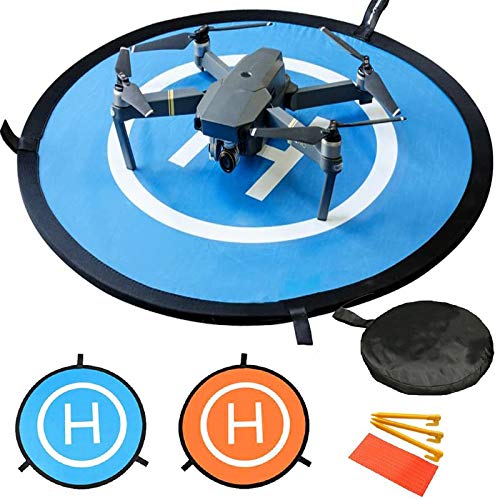
This 30-inch pad from YINGJEE is one of the larger options in the round-up. It is made from waterproof nylon printed with outdoor ink. It suits pilots who use older or mid-sized models such as the Mavic and Phantom series.
The pad is double-sided, so pilots can choose the side that suits the day’s conditions. It comes with a carrying bag that has a hand strap. Its design is straightforward, which many beginners appreciate. It is a practical choice for pilots who want a large, simple platform without extra features to learn.
Features that matter in use
The nylon material is described as waterproof and sun-resistant. Its print is said not to fade. These qualities help the pad keep its look after repeated outdoor use, especially on fields where it sits in direct sun for hours.
Eight reflective strips are attached around the outer edge. The listing says they help pilots find the pad in darkness, which can matter when the light is fading at the end of a flight. Three ground nails are included to hold the pad in windy spots.
Daily use and handling
The pad is light and folds into a zipper bag. Carrying it to a field or park is easy, even with a drone case and batteries in the other hand. The larger size gives more room for takeoff and landing, which can be helpful for beginners who are still learning to hold a steady approach.
Ground nails help when the wind picks up. They work best on soft ground where they can be pushed in fully. On hard surfaces such as concrete or packed gravel, they may not grip as well, so pilots may need to rely on the weight of the pad and their own placement.
Value for money
This is one of the lower-priced options in the round-up. The listing includes a return window of 30 days, which gives buyers some room to check fit and quality at home. Buyers who fly older or mid-sized models may find this pad a sensible choice for the money.
Pros
- Large 30-inch surface gives generous room
- Waterproof, sun-resistant nylon with fade-resistant print
- Reflective strips and ground nails are included
- Low price for a double-sided pad
Cons
- Larger size is less compact than the smaller pads in this round-up
- Ground n ails may not hold well on hard surfaces, so wind protection is weaker there
- Fewer listed compatibility details than some rivals, so buyers should check their model
- Seller standing is moderate, so buyers may want to read recent feedback
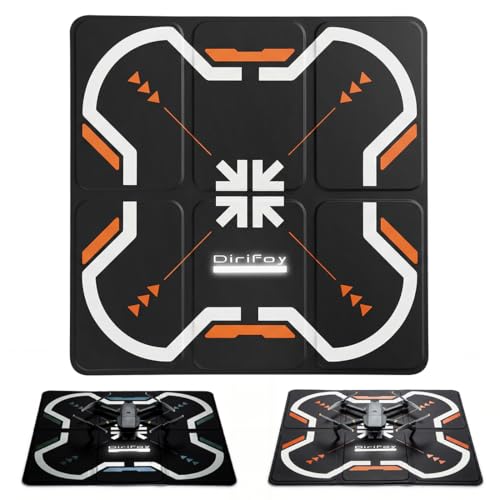
4. DiriFoy Drone Landing Pad 17″ Foldable: best for night visibility on a budget
The DiriFoy pad is a 17-inch foldable mat with reflective strips and a bright logo. It is aimed at pilots who fly at dawn, dusk, or night. It is also suited to travelers who want a compact pad that does not take up much room in a bag.
The pad folds into a small rectangle that fits in the side pocket of most hard cases. Its listing describes it as a practical option for most small to mid-sized drones. It is priced at the lowest end of the round-up, which makes it an easy first purchase for someone trying landing pads for the first time.
Visibility from the air
The pad uses high-intensity reflective strips and a large reflective logo. The listing says these help the drone spot the landing target in low light. A clear target can make the final approach easier to judge, particularly when the sky and ground are both dark.
Modular weight system
The pad can be used without added weight, which keeps it light for travel. When wind picks up, weights can be added to improve stability. The weights are sold separately, so buyers should factor that cost in before they assume the pad is ready for windy days.
The pad is made from textured PU leather that is described as thick and non-slip. Mud and dust are said not to stick, so a rinse with water is usually enough after a flight on wet grass. This suits pilots who fly on grass, dirt, or gravel, where a smooth fabric pad might shift more easily.
Compatibility and everyday use
The listing says the 17-inch size suits drones with a wingspan under 14 inches. Models such as the DJI Mini 4 Pro and Air 3 are named. Larger aircraft may need a bigger pad, so pilots should check their drone’s size and rotor span before they buy.
Because it folds small, the pad is easy to pack for a trip. It takes up little space in a backpack or a camera bag. Pilots who fly often while traveling may value this most, since a small pad is one less thing to carry through airports or hiking trails.
Value for money
This pad is among the most affordable options here. Its low price makes it a sensible starting point for beginners who want to try a landing pad without a large outlay. Buyers who need a larger surface or extra weight for strong winds may need to spend more over time.
Pros
- Bright reflective strips and logo help with low-light visibility
- Folds to a very compact size for travel
- Low price, with optional weights for windy days
- Textured surface rinses clean
Cons
- The 17-inch size suits only smaller drones
- Extra weights are sold separately, which adds cost
- Seller standing is moderate, so buyers may want to read recent feedback
5. CQT Drone Landing Pad Universal Waterproof: best for a wide range of drone models
The CQT pad is a 21.65-inch foldable mat in yellow and dark gray. It is designed to work with a long list of drone models. It is a good choice for pilots who fly several different aircraft.
The pad comes with a storage bag and four ground nails. Its design focuses on easy folding and general-purpose use. It suits buyers who want one pad that fits many situations, such as a backyard session one day and a trip to a park the next.
Color and visibility
The yellow and dark gray sides are meant to help the pilot see the target. The listing says yellow is easier to spot than black. Dark gray gives a contrasting surface on the other side.
Visibility matters most when you are landing in grass, dirt, or sand, where a dark pad can blend into the ground. A bright surface makes it easier to line up the aircraft before touchdown. Pilots can still check the pad position before each flight, since color alone does not guarantee a clear view in low light.
Material and durability
The pad is made from PU material that is described as waterproof, wear-resistant, stain-resistant, and wind-resistant. The listing says it can be used on sand, overgrown grass, dirt roads, and snow. These qualities make it a general-purpose option.
The ground nails help hold the pad in place in light wind. They work best on soft ground. Pilots can add extra care on hard or windy days, such as weighing down the corners or picking a more sheltered spot.
Portability and setup
The pad folds for storage and comes with a bag, which makes carrying it simple. Its 55-centimeter size gives room for many models. Setup is quick, and it requires no tools beyond placing the nails. Folding it back takes only a minute, so it fits well into a daily flying routine.
Value for money
The price sits in the middle of the range, and the package includes the pad, a storage bag, and four ground nails. This makes it a practical all-in-one purchase. Buyers who fly a mix of models may see the most value here, since one pad can replace several smaller ones.
Pros
- Long list of listed compatible models
- Waterproof, wear-resistant, and stain-resistant surface
- Package includes a storage bag and ground nails
- Yellow and dark gray colors aim to aid visibility
Cons
- Ground nails work best on soft ground and may be less secure on hard surfaces
- Compatibility list is long, so buyers should confirm their exact model
- Seller standing is moderate, so buyers may want to read recent feedback
Comparison insights: how the five pads differ
The five pads share a basic purpose, which is giving a drone a clear, stable place to take off and land. They differ in size, surface, and price, and those differences shape how each one performs in the field. Looking at these points side by side helps you decide which trade-offs matter most to you.
The FPVtosky and DiriFoy pads focus on bright colors and reflective features. These details help the pilot spot the landing area in low light. The Hoodman pad takes a different approach and focuses on holding its ground on rough terrain.
In performance, the Hoodman and CQT pads are described as strong on uneven surfaces. Uneven ground can shift a pad under a drone, so a pad that stays put reduces the risk of a bad landing. The DiriFoy pad relies on optional weights for wind, which adds flexibility but also adds cost. The YINGJEE pad is large, which gives more takeoff room but reduces portability.
For ease of use, the FPVtosky and DiriFoy pads fold very small, so they fit easily into a bag or backpack. The Hoodman pad is quick to set up without assembly, which saves time before a flight. The YINGJEE pad is simple to use but larger to carry. The CQT pad adds a storage bag and ground nails in one package, so everything you need comes together.
On value for money, the YINGJEE and DiriFoy pads sit at the low end of the price range. The Hoodman pad costs the most but is described as the most rugged, so its higher price reflects its build. The FPVtosky and CQT pads fall in between and offer a balance of features and cost. Your own budget and flying conditions should guide which trade-off makes sense.
Buying guide: key factors explained in plain words
Size is the first factor to consider. A bigger pad gives more room to land, which helps when a drone drifts slightly during approach. However, a large pad is harder to carry on a hike or in a crowded car. A smaller pad folds easily but suits only smaller drones.
Surface material affects how the pad handles dirt and water. PU leather and vinyl are described as easy to rinse clean, which matters after flights on grass or wet ground. Nylon is light and sun-resistant but may need more care in mud, since dirt can work into the fabric and be harder to remove.
Weight and anchoring keep the pad in place. Heavier inserts or weights resist wind better, especially on open fields. Ground nails work well on soft ground but less well on hard surfaces such as concrete or packed gravel, where a pad may slide instead.
Visibility is useful for flights at dusk or night. Bright colors and reflective strips help the pilot find the target when light is fading. Still, a pad is not a substitute for proper flight lighting, and drone regulations in many places require adequate lighting for night operations.
Compatibility matters most of all. Always check that your drone’s size and model appear on the product’s list before you buy. A pad that is too small can cause landing problems, such as a wheel or leg resting partly off the edge, which can tip the drone over.
Who should buy these products: matching buyers to pads
Beginners who want a simple, low-cost pad may find the DiriFoy or YINGJEE options useful. Both are priced low and easy to store at home or in a vehicle. The DiriFoy suits smaller drones, while the YINGJEE suits larger platforms that need more space to take off and land.
Pilots who fly on rough or uneven ground may prefer the Hoodman pad. Its laminate build is described as holding its shape on tall grass and gravel, so it is less likely to shift under the drone. It suits pilots who want a rugged option and are willing to pay more for durability.
Travelers who fly several different drones may find the CQT pad a good fit. Its long compatibility list and storage bag make it a flexible choice when you carry more than one model. It works well for mixed fleets, where one pad needs to serve different sizes.
Pilots who fly at night may value the FPVtosky pad. Its bright colors and easy-clean surface suit low-light and muddy outings, and its small folded size makes it easy to pack. It is a practical choice for everyday flying, especially for pilots who want good visibility without a large investment.
Final verdict
No single pad suits every pilot. The best choice depends on drone size, ground type, budget, and how often you fly. Checking the compatibility list is the most important step, because a pad that does not match your drone can cause more problems than it solves.
For rugged outdoor use, the Hoodman pad is the strongest option described here, though it costs more. Its heavier build and durable surface suit pilots who fly on gravel, sand, or damp grass and want a pad that lasts. For low-cost budgets and night flying, the DiriFoy and FPVtosky pads offer useful visibility at a lower price. Their reflective or bright surfaces help you find the landing spot in dim light.
For a large, simple pad with included accessories, the CQT and YINGJEE options are worth a look. A bigger surface gives more room for landing, which helps beginners who are still learning to judge distance. In short, match the pad to your drone, your ground, and your budget.
Frequently Asked Questions
Do I need a drone landing pad?
A landing pad is not required, but it helps keep dust, grass, and small stones away from the motors and camera. It also gives the pilot a clear target to aim for. Many pilots find that a visible target makes landings more consistent, especially for beginners.
Will a landing pad keep my drone from blowing away?
Some pads are weighted or include ground nails, which can resist light wind. Strong gusts may still move a pad, so check conditions before every flight. A pad is a helpful aid, not a guarantee of stability, and it should never replace sensible decisions about when to fly.
How do I know which pad fits my drone?
Check the product’s compatibility list and compare your drone’s size with the pad’s diameter or width. Leave some room around the drone when it sits on the pad, so the rotors do not hit the edges during takeoff or landing. A pad that is too small can make landing harder.
How do I clean a landing pad?
Most of these pads can be rinsed with water and shaken dry. Stubborn stains may need a damp cloth and mild dish soap. Let the pad dry fully before folding it away, since trapped moisture can lead to odor or mildew over time.
Are reflective landing pads useful at night?
Reflective strips and bright colors can help the pilot spot the pad in low light. They are a helpful aid but do not replace proper flight lighting and local flying rules. Always confirm the drone’s own lights are working and that night flight is permitted where you plan to fly.

Peterson is an RC hobby enthusiast and product reviewer with a passion for remote-controlled cars, trucks, boats, drones, and accessories. He enjoys testing the latest RC products, comparing features, and sharing practical buying guides to help beginners and experienced hobbyists make informed decisions. Through RCThing.com, Peterson provides honest reviews, maintenance tips, and expert advice to help readers get the most from their RC adventures.