How Long Do Rc Car Batteries Last
Learning how long RC car batteries last helps you plan your sessions and maintain your equipment. This guide explains the factors that affect your run time and how to keep your batteries healthy for as long as possible.
You will learn the difference between various battery types, how to estimate your driving time, and the best practices for charging and storage to extend the lifespan of your power packs. Using the right battery and maintenance routine ensures you spend more time driving and less time troubleshooting.
Key Takeaways
- Run time depends on battery capacity, motor efficiency, and the terrain you drive on.
- LiPo batteries offer high power, while NiMH batteries are known for durability and ease of use.
- Proper storage and charging habits prevent premature degradation of your battery cells.
- Driving style significantly impacts how quickly your battery drains during a session.
Battery Types and Capacity Explained
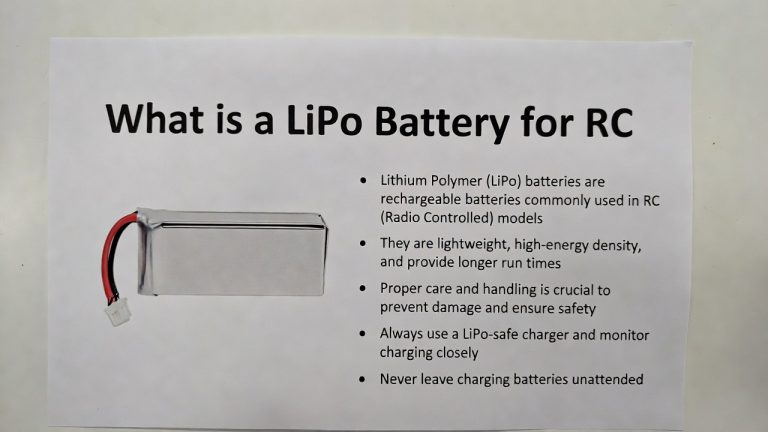
RC car batteries generally fall into two main categories: Nickel-Metal Hydride (NiMH) and Lithium Polymer (LiPo). Each type has unique characteristics that influence how long they last during a run and over their total lifespan.
NiMH batteries are the traditional choice for beginners. They are stable, durable, and generally safer to handle. However, they are heavier and hold less energy compared to modern alternatives.
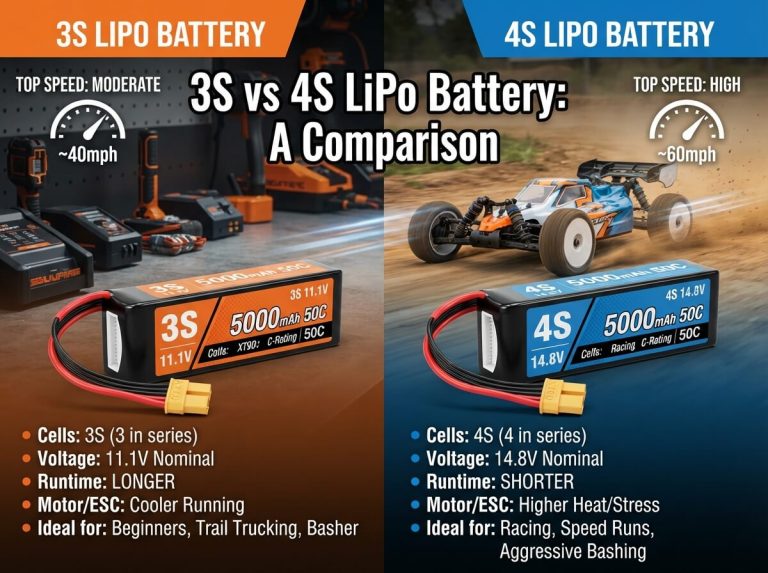
LiPo batteries are the current standard for performance. They are lightweight, compact, and provide a consistent power delivery throughout the entire charge. Because they provide more power per gram, they are popular for high-speed vehicles.
The Role of Milliamp Hours (mAh)
The capacity of a battery is measured in milliamp hours, or mAh. This number represents how much energy the battery can store. A higher mAh rating generally means the battery can power the car for a longer duration.
Think of mAh as the size of a fuel tank. A 5000mAh battery will theoretically last longer than a 3000mAh battery if everything else stays the same. The motor draws current from this “tank” while you drive.
It is important to note that increasing capacity often increases the physical size and weight of the battery. You must ensure the battery fits securely in the chassis of your specific RC car model. Excess weight can also stress the motor and drivetrain, which might offset some of the gains in run time.
Comparing LiPo and NiMH Batteries
NiMH batteries tend to lose voltage steadily as they discharge. This means the car might feel slightly slower as the battery nears the end of its charge. They are less sensitive to storage conditions but can be slower to charge.
LiPo batteries maintain high voltage until they are almost empty. This provides a punchy, responsive feel until the very end of the run. Because of this, LiPo batteries require specialized chargers and careful handling to prevent damage.
Most hobbyists eventually switch to LiPo for the improved run time and performance. Still, NiMH remains a reliable option for those who prioritize simplicity and lower maintenance requirements. Always check your specific vehicle manual to confirm which battery chemistry is compatible with your electronic speed controller.
Factors That Influence Run Time
Several variables determine how many minutes your car will stay on the track. While capacity is the most obvious factor, the way you use the vehicle matters just as much.
The motor and electronic speed controller (ESC) are the primary consumers of energy. A high-performance motor will drain a battery much faster than a standard, entry-level motor. High-torque motors pull more current to move the vehicle, which consumes the stored energy at a higher rate.
How Driving Style Affects Power Usage
Aggressive driving drains batteries quickly. Constant full-throttle acceleration and sudden braking place a high demand on the battery cells. This rapid discharge generates heat, which further reduces efficiency and shortens the time you spend driving.
In contrast, smooth and controlled driving allows the battery to discharge more gradually. By avoiding excessive wheel spin and rapid speed changes, you can squeeze more minutes out of a single charge. Gentle acceleration helps maintain a steady current draw, which is easier on both the battery and the drivetrain.
The Impact of Terrain and Surface Conditions
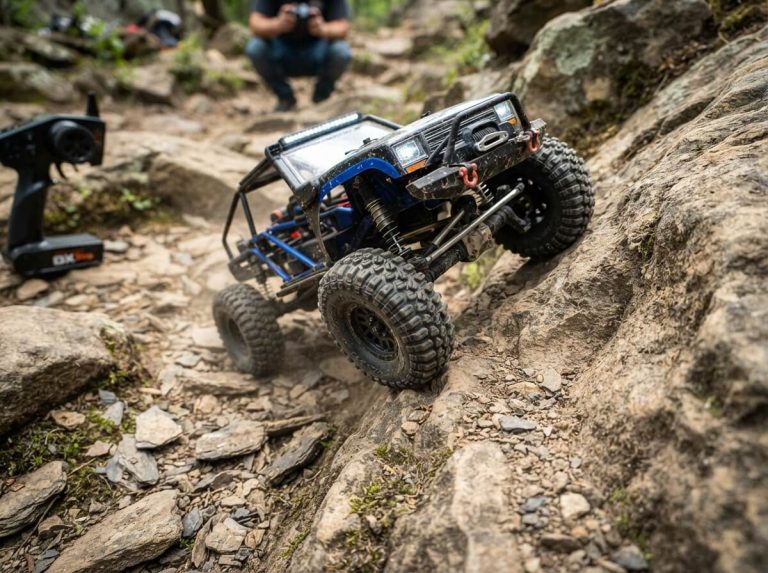
Driving on high-friction surfaces like thick grass or deep sand requires much more power than driving on smooth pavement. The motor works harder to overcome the resistance of the terrain. The drag created by blades of grass or loose sand forces the battery to dump energy rapidly.
When the wheels struggle to gain traction or move through debris, the current draw increases significantly. You will notice the battery depletes much faster in these harsh conditions compared to a flat, clean parking lot. Pavement offers low resistance, allowing the wheels to spin freely without forcing the motor to fight against constant friction.
Weight and Motor Efficiency
The weight of your vehicle is a constant drain on the power source. A heavier car requires more energy to accelerate, turn, and maintain speed. If you add heavy accessories or protective parts, expect shorter run times because the motor must work harder to move the extra mass.
Motor efficiency also plays a vital role. Modern brushless motors are much more efficient than older brushed motors. They convert more energy into motion and less into heat, which helps extend the total run time. Brushes inside older motors create physical friction and sparking, which wastes energy that could otherwise power your wheels.
Tips for Extending Your Battery Life
Treating your batteries with care ensures they provide reliable performance for as long as possible. Small habits during charging and storage make a measurable difference in the health of the cells. Consistent care prevents premature capacity loss.
Proper Charging Procedures
Always use a charger specifically designed for your battery type. Using the wrong settings can cause damage or create safety hazards. Follow the manufacturer’s recommended charge rate to avoid overheating the cells, as this protects the internal structure of the battery.
Avoid “fast charging” your batteries unless the manufacturer explicitly states it is safe. Charging at a slower, steady rate usually keeps the battery cooler and helps preserve its internal chemistry over time. Slow charging allows the cells to balance properly, ensuring each cell reaches its full potential without stress.
Best Practices for Storage
Never store your batteries fully charged or fully empty for long periods. LiPo batteries are particularly sensitive to this. If you do not plan to drive for a few days, bring the battery to a “storage voltage.”
Most modern chargers have a dedicated storage mode. This setting automatically adjusts the voltage to a safe level where the battery remains stable. Store batteries in a cool, dry place away from direct sunlight, as high temperatures can degrade the internal components over time.
Monitoring Battery Temperature
Heat is the primary enemy of all rechargeable batteries. If a battery feels very hot to the touch after a run, let it cool down completely before placing it on the charger. Cooling allows the chemical reactions inside the battery to stabilize.
Charging a hot battery can lead to permanent degradation. If you notice your batteries are consistently getting too hot during normal use, consider checking your gear ratio or ensuring the motor is not binding. Proper maintenance of the drivetrain keeps the power draw within safe limits for your battery.
Frequently Asked Questions
How many minutes can I expect to drive on one charge?
Most RC cars provide between 15 and 30 minutes of run time depending on the battery capacity and driving intensity. High-performance setups might provide less time, while casual driving can extend this range significantly.
Does a bigger battery always mean longer run time?
Generally, yes, a higher mAh rating provides more energy and longer run times. However, the extra weight of a larger battery can offset those gains by requiring more power to move the car.
How do I know when my battery is losing its capacity?
You will notice the car slows down much sooner than it used to during a typical run. If the battery takes significantly less time to charge than it did when it was new, the cells are likely aging.
Is it safe to leave batteries in the charger overnight?
It is not recommended to leave batteries unattended on a charger for extended periods. Even with modern safety features, it is best practice to unplug them once the charge cycle is complete.
Why does my RC car slow down before the battery dies?
This is often caused by voltage sag, where the battery can no longer provide the necessary current to maintain high speed. In many modern cars, the speed controller detects low voltage and limits power to protect the battery from damage.
Conclusion
RC car batteries are the heart of your vehicle, and their performance dictates your overall experience. By learning the basics of capacity and chemistry, you can manage your expectations for run time.
Remember that driving style, terrain, and proper maintenance are the most significant factors in how long your batteries last. Keep your batteries cool, store them at the correct voltage, and avoid pushing them past their limits.
With these habits, you will enjoy more consistent power and a longer life for your battery packs. Each run will be more predictable, letting you focus on the fun of driving your RC car.
Peterson is an RC hobby enthusiast and product reviewer with a passion for remote-controlled cars, trucks, boats, drones, and accessories. He enjoys testing the latest RC products, comparing features, and sharing practical buying guides to help beginners and experienced hobbyists make informed decisions. Through RCThing.com, Peterson provides honest reviews, maintenance tips, and expert advice to help readers get the most from their RC adventures.