2.4GHz vs 27MHz RC Controller
Hey there, RC fan! You grab your remote control transmitter and fire up the car, truck, boat, or plane. It zooms across the grass or water, and you feel that rush. Then the signal drops or it jerks sideways out of nowhere. Super annoying, right? The secret often hides in the frequency your controller uses. Some run on 27MHz. Others go with 2.4GHz. This guide breaks down every detail in plain talk so you see exactly how they differ. You walk away ready to make your RC sessions smoother and more fun. We cover signals, range, glitches, and real tricks that help beginners like you get the most out of every drive or flight. Stick with me and you spot the clear winner for your setup.
You know the basic drill already. The transmitter sits in your hands with sticks or a wheel. You push forward on the throttle. The car speeds up. You yank the steering left. The front wheels turn. All that magic happens through invisible radio waves that jump from your hands to the vehicle. The receiver inside the RC model catches those waves and passes the orders to the motors and servos. Easy stuff. But the frequency decides how clean and far those waves travel. It also decides how much other stuff messes with them. So we start there and build up slow.
Basics of How RC Controllers Send Signals
Radio waves carry your commands through the air like tiny messengers. The transmitter turns your stick moves into a coded signal. It blasts that signal out on a specific frequency. The receiver listens only for signals on the right frequency and decodes them fast. Then servos twitch and motors spin. You get instant action. Simple as that.
Different frequencies act like different radio stations. 27MHz sits lower on the dial with longer waves. 2.4GHz sits way higher with shorter waves but smarter tech. The lower one feels old school and basic. The higher one packs modern tricks that keep the link rock solid. You turn on the transmitter. It sends the signal. The receiver grabs it right away. No drama if everything lines up. But when things go wrong, you see the frequency at work.
What Makes 27MHz RC Controllers Tick
27MHz systems follow the classic way RC controllers started out. They send signals on a lower radio band. You often slide in a small crystal to lock the exact channel. Only a few channels exist total, so you double check with anyone nearby. The transmitter shoots the signal straight out on that fixed spot. The receiver in your car or boat tunes to the same spot and listens close.
These setups show up a lot in budget RC cars, trucks, and toys. The transmitter looks plain with a tall antenna sticking up. The receiver needs its own long wire antenna too. You match the crystals on both ends and you roll. No fancy steps. The signal pushes decently through open air and even some light obstacles. You drive around the yard and feel the control right in your fingers.
The whole package stays light on your wallet. You buy a full transmitter and receiver combo for cheap and you start playing right away. Parts stay easy to swap if something breaks. You find replacements at most hobby spots without hunting hard. The simple design means fewer things fail during a quick backyard session. You power it up, match the channel, and go.
Some folks still love it for solo fun. You head to an empty field alone. The car zips around with zero other signals nearby. It feels straightforward and you focus on learning turns and speed instead of tech headaches. Boat fans sometimes pick it because the longer waves dive through water a bit better in calm conditions. You mount the receiver smart and you steer your scale boat across the pond without extra fuss.
Why Some Folks Still Grab 27MHz Systems
Budget rules the day for many new users. You spend less cash and you still get hours of RC action. That leaves money for extra batteries or fun upgrades like bigger tires. The basic controls feel familiar right out of the box. You twist the wheel. The car turns. You push the trigger. It speeds up. No learning curve on extra buttons or screens.
In quiet spots with no crowd, the system shines. You practice drifting or straight-line speed runs and the signal stays steady. No one else runs the same channel so glitches stay rare. The transmitter feels light in your hands during long play sessions. You pack it easy in a small bag and head out.
Some RC boats and subs work great on this band because the waves handle moisture and distance in water well. You drop the model in and steer without the signal bouncing off the surface too much. It keeps things reliable for scale builds where you want that classic look and feel.
You also avoid complicated pairing steps. Turn everything on, confirm the channel matches, and you drive. That quick start wins over beginners who just want to play fast.
Now Let’s Check Out 2.4GHz RC Controllers
2.4GHz systems bring the modern upgrade everyone talks about. They use digital signals that hop around inside the band automatically. The transmitter and receiver talk in a private code. You press a button to bind them once. After that they ignore every other signal except yours. No crystals needed ever again.
The transmitter looks sleek with short stubby antennas. The receiver tucks inside your RC model with a tiny wire or even inside the body shell. You power both up and they lock together tight. The signal jumps frequencies dozens of times a second to dodge any busy spots. You get crystal clear control the whole time.
These controllers dominate serious RC cars, trucks, boats, planes, and drones. You see them at tracks and parks everywhere. The tech keeps the link strong even when WiFi routers and phones fill the air around you. You drive fast and the car follows every tiny input without lag.
Cool Perks That Come with 2.4GHz Tech
You enjoy rock solid reliability first. The hopping system skips interference like a pro. Other RC users nearby cause zero problems because each pair locks private. You line up ten cars at a race and everyone runs smooth at the same time.
Range stretches far in real conditions. You roam across big fields or open water and the signal holds strong. The digital boost fights noise better than older waves. Your vehicle keeps listening even when you step back a good distance.
Fail safe kicks in smart if the link ever drops for a split second. The car slows to a stop or holds position instead of running wild. You stay safe and your model stays intact.
Binding happens fast. You press a button on the receiver and one on the transmitter. They remember each other forever. Swap receivers easy when you upgrade models. No channel worries at all.
Antennas stay short so you hide them inside the body. Your RC car looks clean with no tall whips waving around. The receiver fits tight and you focus on speed and fun instead of antenna position.
Response snaps quick. You flick the wheel and the servo moves instantly. That crisp feel makes high speed runs and tight turns way more exciting.
Head to Head: How They Stack Up
You see the differences clear when you line them up. Range, interference, cost, and daily use all tell their own story. Here comes the straight comparison so you picture it fast.
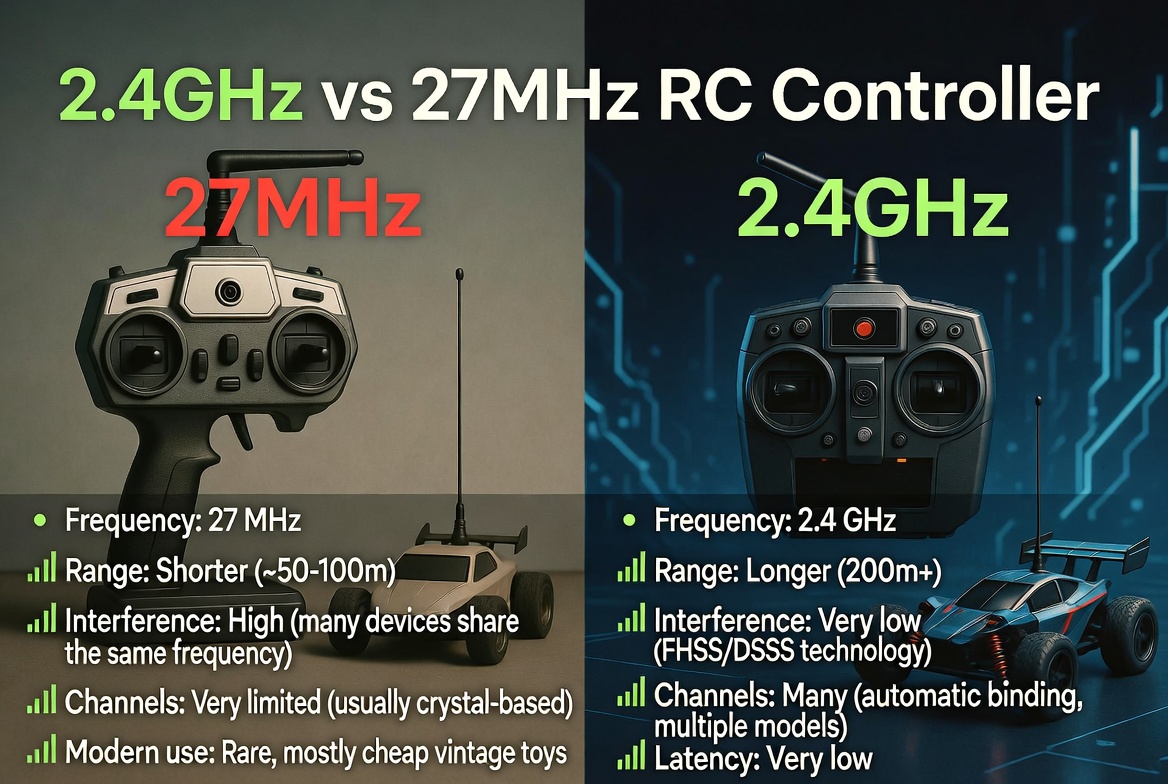
| Aspect | 27MHz | 2.4GHz |
|---|---|---|
| Cost | Lower upfront price | Higher upfront but lasts longer |
| Interference | High chance from other signals | Very low thanks to hopping tech |
| Range | Decent in open flat areas | Often stretches farther with steady link |
| Channels | Limited and you match crystals | Plenty so many users run together |
| Setup | Simple crystal match | Quick bind and forget |
| Response | Good but can lag in busy spots | Snappy and precise every time |
| Antenna | Long and visible | Short and easy to hide |
| Best for | Solo backyard or budget play | Crowded parks, races, and all vehicles |
Range shows the real difference in action. 27MHz gives you solid distance on empty ground. You drive maybe a football field away before it fades. But trees, walls, or hills cut it short fast. You stay close to keep full control. 2.4GHz pushes the limit farther because the digital signal fights dropouts. You roam bigger areas and the car still listens sharp. You step back and keep steering without panic.
Interference changes everything. 27MHz picks up noise from other radios, toys, or even truck traffic on the same band. You lose control mid-turn and the car keeps rolling straight. Frustrating when it happens at the wrong moment. 2.4GHz dodges that noise completely. It jumps channels so fast you never notice. You drive next to friends and their signals stay out of your way. Pure peace.
Cost hits your pocket different ways. 27MHz saves money right away so you jump in cheap. You grab a transmitter and receiver and start playing same day. Over time you might replace parts if interference damages them. 2.4GHz costs extra at the start but you get years of glitch-free runs. The value shows when you run it hard every weekend.
Setup feels night and day. 27MHz needs you to check crystals every time you power up with others around. You swap them if someone else uses the same spot. 2.4GHz binds once and you forget it. Turn on both and go. That speed lets you focus on driving instead of fiddling.
Response decides how fun the drive feels. 27MHz works fine for casual play but can feel a hair slow when signals get crowded. 2.4GHz delivers instant moves. You push the stick and the servo snaps right then. High speed cornering feels tight and you nail every jump.
Antennas matter for looks and function. 27MHz needs those long ones to send and catch the waves. They bend or snag easy. 2.4GHz keeps them tiny so your model looks factory fresh. You tuck everything inside and forget about it.
Use in Different RC Vehicles
RC cars on pavement or dirt love 2.4GHz best. You race at full speed and the link stays locked. Steering stays sharp even when you slide sideways through dust. 27MHz works for slow backyard crawls but glitches hit harder at speed.
Boats on water need extra thought. 27MHz waves sometimes push through spray better because they travel deeper. You steer your scale ship across the lake and it holds steady. 2.4GHz still wins if you mount the receiver high in the hull away from water. Keep the antenna tip clear and you get long runs with no drops. Many boat fans switch and never go back.
Planes and drones fly high so 2.4GHz shines bright. The signal reaches far into the sky without breaking. You loop and roll with full control the whole time. 27MHz limits your flight distance and risks interference from ground stuff.
Trucks and crawlers handle rough trails fine on either but 2.4GHz keeps the fun rolling when rocks block the line of sight. The digital link bounces back fast.
Real Stories from the Field
You hear stories all the time from fellow RC fans. One buddy ran 27MHz on his monster truck near a busy road. Halfway through a jump the signal cut and the truck kept driving straight into a ditch. He switched to 2.4GHz the next week. Now he launches big air and lands clean every time because the link never quits.
Another guy brings three cars to the park with friends. They used to take turns on 27MHz because channels clashed. One switch to 2.4GHz and all three race at once. They laugh and chase each other for hours with zero radio fights. The bind feature makes swapping models quick too.
A boat fan stuck with 27MHz for his tug model. It worked okay in calm water but wind and waves caused drops near the shore. He upgraded the receiver to 2.4GHz and mounted it high. Now he sails the full pond and the boat answers every command crisp. He says the extra cost paid itself back in saved frustration.
One plane pilot practiced low passes on 27MHz. A neighbor’s toy car on the same band caused a glitch mid turn. The plane dipped hard. After he moved to 2.4GHz he flies confident and even joins group events where everyone flies together safe.
These tales show how the right frequency turns good days into great ones.
Tips to Get the Most from Your Controller
You boost performance with small habits. Keep the transmitter antenna straight up and clear of your body. For 27MHz you always confirm the channel matches before you start. Test the range by walking away slow until the signal feels weak. Mark that spot so you stay inside it.
For 2.4GHz you bind every new receiver fresh and test the link indoors first. Charge the transmitter batteries full every time. Keep the receiver antenna away from metal parts or batteries inside the model. You drive in open areas when you can so waves travel free.
Check servo connections tight and use fresh batteries in the vehicle too. A weak power pack makes any signal seem worse. You clean the transmitter buttons now and then so they click sharp.
Common Fixes for Signal Woes
Glitches pop up and you fix them fast. On 27MHz you move farther from roads or other people. Swap crystals if you suspect a clash. Shorten sessions if the band feels busy that day.
On 2.4GHz you raise the receiver higher in the body if drops happen. Check the bind again if it forgets. Move away from thick metal or water spray that might bounce signals. Update firmware on fancy models if the maker offers it.
You test everything at home before big trips. Walk the full range in your yard and watch for any hiccups. That habit saves headaches at the park.
FAQ
You probably have questions left so here come straight answers.
What happens if I mix brands on 2.4GHz?
Most systems need the same brand transmitter and receiver for the bind to work. You stick with one line to keep it simple and safe.
Can I upgrade my old 27MHz car to 2.4GHz?
Yes you swap the receiver for a new 2.4GHz one that matches your model plugs. The transmitter changes too but the rest of the car stays the same. You gain all the modern perks quick.
Does weather affect either system?
Rain or fog hits 27MHz harder because moisture blocks the waves. 2.4GHz handles light weather better but you still keep electronics dry.
How many people can run 2.4GHz at once?
Dozens run together at big meets with no problem. The private links keep everyone separate.
Is 27MHz dead for new buyers?
It still works great for cheap entry fun or quiet solo play. You save money and learn the ropes before you step up.
Do I need special tools to switch frequencies?
No. You buy the new transmitter and receiver pair and plug them in. The rest bolts on easy.
Final Thoughts
You see the full story now. 27MHz brings cheap easy entry for backyard sessions and solo drives. It keeps things light on the wallet and simple to start. 2.4GHz delivers reliable control, longer range, and zero drama when crowds show up. It shines for races, group play, boats, planes, and anything you push hard. Both get you rolling and flying with big smiles. You match the system to your budget, where you play, and how many friends join. Grab the one that fits your style and you enjoy every single run. Head out there, push that throttle, and feel the difference for yourself. Your next RC adventure waits right now.