How Big Is a 1/5 Scale RC Car?
Are you thinking about getting into the world of remote control cars but wondering what a 1/5 scale RC car actually means? You’re not alone. Many people start looking at RC cars and get confused by all the numbers and ratios. The good news is that it’s way simpler than it sounds.
Let me break down everything you need to know about 1/5 scale RC cars. By the end of this article, you’ll understand exactly what size these cars are, how they compare to other models, and whether they’re right for you.
What Does 1/5 Scale Actually Mean?
Think of scale like a recipe. When you follow a recipe, you might use half the ingredients to make a smaller batch. A 1/5 scale car works the same way, but with size instead of ingredients.
When something is 1/5 scale, it means the model is five times smaller than the real version. If a real car is 15 feet long, then the 1/5 scale version would be 3 feet long. You take the actual size and divide it by five to get the model size.
So when you see “1/5 scale,” you’re looking at a car that measures one unit of size for every five units of size on the real thing. This ratio stays the same no matter what measurement you use—whether it’s inches, feet, or centimeters.
The Actual Size of a 1/5 Scale RC Car
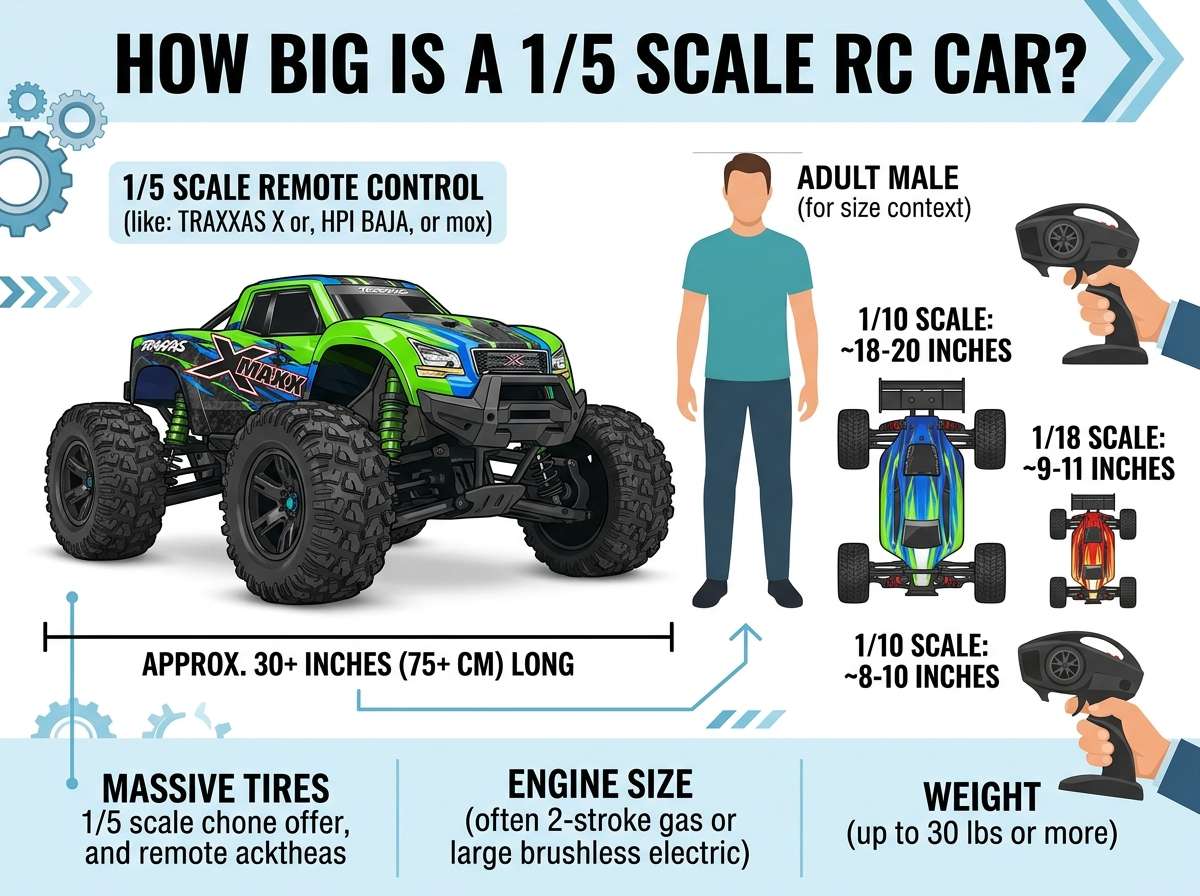
Let’s talk numbers. A typical 1/5 scale RC car measures around 24 to 28 inches long. That’s roughly the same length as a medium-sized dog or about two feet. Width-wise, these cars are usually between 12 and 14 inches across.
When you pick one up, it feels substantial in your hands. It’s not a toy that fits in your pocket like the tiny 1/18 or 1/24 scale cars. You can actually feel the weight and craftsmanship.
The height of a 1/5 scale RC car typically ranges from 8 to 10 inches. These dimensions make them bigger than most living room furniture but small enough to store in a closet or garage.
For reference, here’s how 1/5 scale stacks up:
- Length: 24-28 inches
- Width: 12-14 inches
- Height: 8-10 inches
- Weight: Usually 3-7 pounds depending on the type
How 1/5 Scale Compares to Other RC Car Sizes
RC cars come in many different scales. Understanding how 1/5 compares helps you make smart choices about which one fits your needs.
Smaller Scale Cars
The 1/10 scale cars are twice as small as 1/5 scale models. These measure around 12 to 15 inches long and weigh about 1-2 pounds. They’re easier to transport and take up less space, but they don’t have as much power or detail as 1/5 scale.
The 1/18 and 1/24 scale cars are even tinier. You can hold them in the palm of your hand. These are great starter cars for kids or people with limited space, but they’re almost like toys compared to 1/5 scale vehicles.
Larger Scale Cars
The 1/4 scale cars are bigger brothers to the 1/5 scale models. They measure around 32 to 36 inches long and can weigh 10 pounds or more. These monsters are seriously powerful but need more space and cost significantly more money.
The Sweet Spot
Many hobbyists consider 1/5 scale the sweet spot for RC cars. They’re big enough to feel real and powerful, yet still portable and manageable for most people. They’re not so large that you need a warehouse to store them, and they’re not so small that you feel like you’re playing with toys.
Why Size Matters When Choosing an RC Car
Size isn’t just about fitting your RC car somewhere. It affects many aspects of your experience.
Space Requirements
A 1/5 scale car needs room to run. You can’t zip around your bedroom or bathroom with it like you might with a 1/18 scale car. Most people run these cars in parking lots, open fields, or dedicated RC tracks.
Think about where you’ll actually drive your car. Do you have access to open spaces? If you live in an apartment, you’ll need to travel to find suitable driving locations.
Transportation
Carrying a 1/5 scale RC car in your car is easy. It doesn’t require a special trailer or truck. You can throw it in your backseat, and you’re ready to go. Compare this to 1/4 scale models that might barely fit in some vehicles.
Handling and Control
The larger size makes 1/5 scale cars easier to control. Your fingers have room to make fine adjustments with the remote control. Smaller cars require more precision and quick reflexes to control properly.
Visibility
From a distance, 1/5 scale cars are easy to see. You can watch your car zoom around and still keep track of what it’s doing. Smaller cars can become hard to follow with your eyes, especially outdoors.
Battery Life and Run Time
Because 1/5 scale cars are bigger and heavier, they consume more battery power. You’ll get 10 to 20 minutes of run time on a single charge, depending on the specific model and driving style. Smaller cars might run longer per battery, but the 1/5 scale size offers a good balance.
Different Types of 1/5 Scale RC Cars
Not all 1/5 scale cars are the same. The hobby includes several different categories, and each type handles a bit differently.
Buggy Style Cars
These look like dune buggies with roll cages and big tires. They’re lightweight for their size and built for speed. Buggies handle rough terrain and dirt tracks well.
Truck Style Cars
RC trucks look like real pickup trucks or monster trucks. They’re heavier and lower to the ground than buggies. Trucks excel at bashing through obstacles and driving over tough terrain.
On-Road Cars
These models look more like real sports cars and sedans. They’re built for smooth asphalt surfaces and racing tracks. On-road cars are faster and sleeker than off-road models.
Monster Trucks
Monster trucks are the show-offs of the RC world. With giant tires and high suspensions, they climb over objects and do crazy stunts. They’re built to look cool and perform fun tricks rather than race fast.
The Real-World Size Comparison
Let me put the 1/5 scale size into perspective by comparing it to real-world objects you see every day.
A 1/5 scale RC car is about the same length as a large cat stretched out lengthwise. It’s smaller than a Chihuahua but bigger than a volleyball. If you stack them end to end, you’d need about 30 RC cars to equal the length of a school bus.
Imagine standing next to a real car. A 1/5 scale version would look like what you’d see if you were standing 100 feet away from the actual vehicle. It captures the major details and proportions while being small enough to handle and play with.
When parked next to a 1/10 scale car, the 1/5 looks noticeably bigger and more impressive. Compared to a 1/4 scale car, the 1/5 looks almost tiny, but it still feels substantial.
Power and Performance at 1/5 Scale
Size affects how these cars perform. A 1/5 scale RC car is significantly more powerful than smaller models.
Speed Capabilities
1/5 scale cars can reach speeds of 30 to 50 miles per hour easily. The fastest models push beyond 70 miles per hour. That’s genuinely fast for something you hold in your hands.
At these speeds, your reaction time matters. You need good reflexes to steer around obstacles and avoid crashes. It’s thrilling and demands real skill.
Climbing and Terrain
The bigger wheels and weight distribution mean 1/5 scale cars can climb steep hills and navigate rough ground. They can hop curbs, drive through mud, and handle rocky terrain that would stop smaller cars.
Jump Height
With their power and weight, 1/5 scale cars can launch into impressive jumps. You can catch some serious air off ramps and terrain. Landing properly requires practice though.
Costs Associated with 1/5 Scale RC Cars
Size comes with a price tag. Bigger cars cost more money than smaller models.
Initial Purchase
A quality 1/5 scale RTR (ready to run) model costs between $400 and $1,200. That’s a serious investment compared to 1/10 scale cars that might run $200 to $500.
If you want to build from a kit and learn how everything works, you’ll spend even more. Kits range from $800 to $2,000 or higher depending on the quality and brand.
Fuel and Power
Electric 1/5 scale cars use bigger batteries, which cost more to replace. A quality battery pack runs $150 to $300. You might want multiple batteries for longer play sessions.
Nitro-powered 1/5 cars need special fuel, which gets expensive if you run them frequently. A gallon of nitro fuel might cost $20 to $30.
Replacement Parts
Bigger cars mean bigger crashes, and bigger crashes mean more expensive parts to replace. Tires, suspension pieces, and chassis components cost more for 1/5 scale cars than smaller models.
Maintenance Supplies
Oil, grease, and cleaning supplies specifically for 1/5 scale cars add up over time. If you want your car to last, you need to spend money keeping it in good condition.
Benefits of Going with 1/5 Scale
Despite the higher cost, plenty of people choose 1/5 scale cars for good reasons.
Realistic Driving Experience
These cars feel more like real vehicles. The size, weight, and power create an experience closer to driving an actual car than playing with toys.
Impressive to Watch
1/5 scale cars look cool. Friends and family think they’re awesome. People stop and watch when they see one in action.
Durability
The bigger, stronger construction means 1/5 scale cars handle crashes better than fragile smaller models. They can take hits that would destroy a 1/18 scale car.
Community and Racing
The 1/5 scale hobby has a large community. You’ll find racing clubs, competitions, and events. Making friends with other enthusiasts becomes part of the fun.
Customization Options
With so many parts and accessories available, you can customize your 1/5 scale car exactly how you want. You can upgrade components, change the appearance, and tune performance.
Longevity
These cars last years with proper care. You develop a real relationship with your vehicle, which makes the hobby more rewarding than disposable toy cars.
Challenges of 1/5 Scale Ownership
The hobby isn’t perfect. There are some challenges to consider.
Space Needs
You absolutely need outdoor driving space. You can’t run these indoors on carpet safely. Weather affects when you can drive.
Learning Curve
Controlling a 1/5 scale car takes practice. They move fast and respond quickly to your input. Beginners crash a lot while learning.
Maintenance Demands
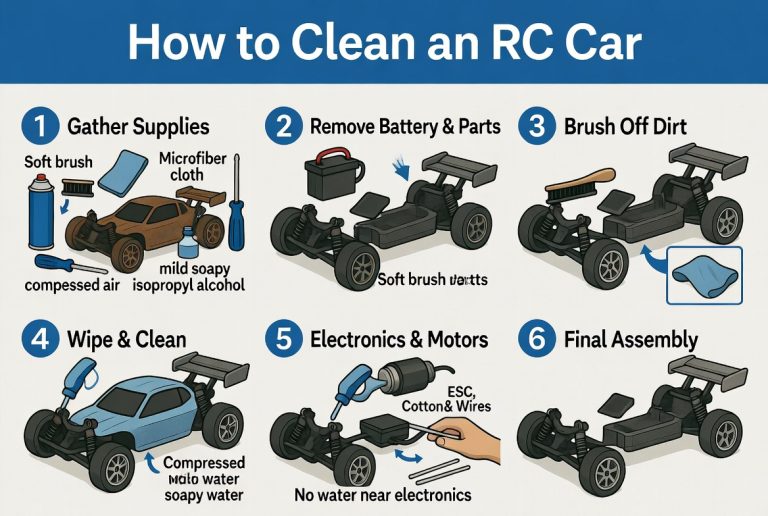
These cars need regular maintenance. You can’t just play with them and ignore upkeep. Dirt, debris, and wear require attention.
Noise Level
1/5 scale cars make noise. They’re not silent whisper-quiet vehicles. Your neighbors might hear them, especially if you drive frequently.
Time Investment
Learning to maintain, repair, and properly tune a 1/5 scale car takes time. The hobby demands patience and dedication.
Electric vs. Nitro Power at 1/5 Scale
You’ll choose between two power options for 1/5 scale cars.
Electric Models
Electric 1/5 scale cars run on rechargeable batteries. They’re quieter, cleaner, and easier to maintain than nitro models.
Advantages:
- Low noise level
- No smell or emissions
- Easy to refuel (just charge batteries)
- Lower fuel costs
- Beginner-friendly
Disadvantages:
- Limited run time per battery charge
- Expensive batteries
- Slower acceleration than nitro models
- Less power overall
Nitro Models
Nitro-powered cars run on special fuel containing nitromethane. They’re loud, powerful, and beloved by experienced hobbyists.
Advantages:
- Longer continuous run time
- More power and speed
- Better acceleration
- More authentic engine sound
Disadvantages:
- Higher operating costs
- Smelly and produce emissions
- Requires maintenance on fuel lines and engine
- Steeper learning curve
- Louder, which bothers neighbors
For beginners, electric 1/5 scale cars make more sense. They’re easier to learn on and don’t require as much mechanical knowledge.
Choosing Your First 1/5 Scale RC Car
Ready to jump into the hobby? Here’s what to think about.
Your Budget
How much can you spend on your new hobby? Remember that the initial purchase is just the beginning. Budget for spare batteries, replacement parts, and upgrades.
Where You’ll Drive
Think about the terrain and spaces available to you. Do you have access to parking lots, dirt tracks, or open fields? The type of driving space affects which style of car you should choose.
What Interests You
Do you want to race against others? Bash through terrain for fun? Do cool tricks and stunts? Your interests guide the type of car that’s best for you.
Your Mechanical Skills
If you enjoy fixing and tuning things, you might love the maintenance side of the hobby. If you’d rather just play without mechanical work, electric models need less tinkering.
Time Availability
Can you dedicate time to learn, practice, and maintain your car? Casual hobbyists might feel overwhelmed, while enthusiasts thrive on the time investment.
Storage and Display
One nice thing about 1/5 scale cars is they don’t take up too much space. You can store one in a garage corner, closet, or spare room without major issues.
Many enthusiasts display their cars on shelves or stands. A 1/5 scale car looks impressive sitting on display. It looks professional and cool.
If you transport your car frequently, a carrying case or bag protects it during travel. The durable construction of 1/5 scale cars means they handle bouncing around in vehicles without damage.
Getting Started with 1/5 Scale RC
Once you buy your first 1/5 scale car, you’ll want to take care of it and learn to drive it well.
Finding Your Community
Join online forums and local RC clubs. Experienced drivers offer tips, advice, and friendship. You’ll learn faster from people who’ve already made mistakes.
Practice Patience
Don’t expect to drive perfectly on day one. Everyone crashes when learning. It’s normal and part of the fun. Each crash teaches you something.
Invest in Basics
Get spare batteries, extra tires, and common replacement parts. Keep your car clean and maintained. Small investments in care prevent expensive repairs.
Watch and Learn
Watch videos of experienced drivers. See how they control their cars at high speeds. Learn the techniques they use.
Start Slow
Don’t immediately turn the throttle all the way. Practice in open spaces before attempting tricks or racing. Build your skills gradually.
Comparing 1/5 Scale to Real Cars
While 1/5 scale cars are much smaller than real vehicles, they share surprising similarities.
A real car might handle a turn at 30 miles per hour safely. Your 1/5 scale car handles similar speeds. The proportions mean that a jump that’s 2 feet high for your RC car is like a jump that would be 10 feet high for a real car. The experience is remarkably similar.
The differences include precision and consequences. In a real car, poor driving decisions mean expensive accidents or injuries. With your 1/5 scale car, mistakes just result in a few scratches and a laugh.
The Future of Your RC Hobby
Starting with 1/5 scale RC cars opens doors. Many people begin with one car and end up with a whole collection. Some advance to racing competitively. Others explore building and customizing.
The hobby community continues growing, with manufacturers releasing new models constantly. Technology improves every year, making cars faster, more reliable, and more affordable.
Whether you stay casual or go deep into the hobby, 1/5 scale cars offer fun that lasts for years.
Final Thoughts on 1/5 Scale RC Cars
A 1/5 scale RC car is roughly 24 to 28 inches long, weighs a few pounds, and sits comfortably between too small to enjoy and too large to manage. It’s the perfect size for someone serious about the RC hobby but not ready to commit to massive equipment.
These cars offer real thrills. The speed is genuine. The control requires actual skill. The community is welcoming and fun.
If you’ve been wondering whether 1/5 scale is right for you, consider what we’ve covered. Think about your available space, your budget, and your genuine interest level. Visit a local RC club if possible and see these cars in action.
The 1/5 scale RC car hobby has introduced thousands of people to countless hours of outdoor fun, friendship, and excitement. The size might seem big or small depending on what you’re used to, but it’s just right for making the perfect hobby accessible and rewarding.
Your RC car journey could start today. The question isn’t whether you have room for a 1/5 scale car. The real question is whether you’re ready for the fun and excitement that comes with it.
Peterson is an RC hobby enthusiast and product reviewer with a passion for remote-controlled cars, trucks, boats, drones, and accessories. He enjoys testing the latest RC products, comparing features, and sharing practical buying guides to help beginners and experienced hobbyists make informed decisions. Through RCThing.com, Peterson provides honest reviews, maintenance tips, and expert advice to help readers get the most from their RC adventures.