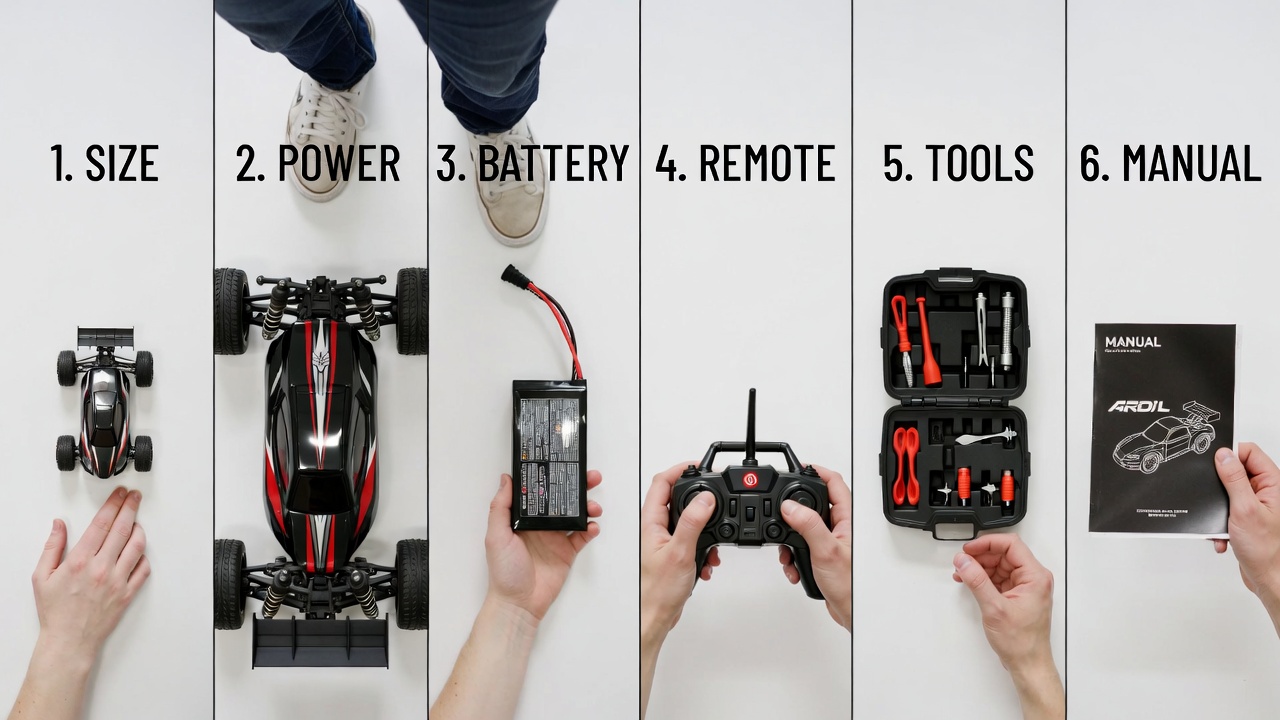
How to Choose an RC Car?
Getting into RC cars is fun and exciting. There’s nothing quite like controlling your own remote-controlled vehicle. But before you jump in and buy the first one you see, you need to know what you’re looking for. This guide breaks down everything you need to know to pick the right RC car for your situation.
What Even Is an RC Car?
Let’s start simple. An RC car is a small vehicle you control using a remote transmitter. You steer it, speed it up, slow it down, and make it do tricks. The car has tiny motors, batteries, and electronic parts inside. Think of it as a toy that runs on electricity and responds to your hand signals through the remote control.
RC cars come in different sizes, speeds, and styles. Some are basic beginner models. Others are high-performance racing machines. The fun part is finding one that fits what you want to do with it.
Types of RC Cars: Let’s Break This Down
Before you even think about brands or prices, you need to decide what type of RC car appeals to you. Each type has its own purpose and feels different to drive.
On-Road RC Cars
On-road RC cars are made for smooth surfaces. Think parking lots, roads, and flat ground. These cars have sleek designs and low ground clearance. They look like real sports cars or sedans shrunk down to toy size.
On-road models tend to be faster and more precise. If you like high speeds and smooth driving, this type might call to you. They’re great for practicing racing skills. The wheels are thin and smooth, which helps them grip asphalt and concrete.
Off-Road RC Cars
Off-road RC cars are tough little machines. They have bigger wheels with deep treads and stronger suspension systems. These cars can handle dirt, grass, gravel, rocks, and mud.
If you want to take your RC car out to a field or forest and do some exploring, go off-road. They can bounce over obstacles and climb hills. This type is more forgiving for beginners because rough terrain is more forgiving than precise racing tracks.
Rock Crawlers
Rock crawlers are the extreme off-roaders. They’re built for climbing over huge obstacles like rocks, logs, and walls. They move slowly but with power. These aren’t speed demons. Instead, they’re about control and conquering tough terrain.
Rock crawlers have lifted suspensions, protective cages, and strong frames. If you want to see your RC car scale a boulder or cross a stream, this is your type.
Dune Buggies and Buggies
Dune buggies are lightweight and nimble. They’re built for speed on sandy or loose terrain. These cars are like the sports cars of the off-road world. They can drift, jump, and race across uneven ground.
Buggies split into categories. 2WD buggies are front-wheel drive or rear-wheel drive. 4WD buggies have all four wheels getting power. More wheels getting power means better traction and control.
Short Course Trucks
Short course trucks look like real pickup trucks, just tiny. They’re made for fast racing on bumpy, uneven ground. They’re tougher than buggies and can handle bigger jumps and obstacles. Short course racing is popular, and lots of people build communities around it.
Drift Cars
Drift cars are made for sliding and performing tricks. They use special wheels that let them skid around corners. If you like style and flashy moves, drifting is your jam. These cars need smooth surfaces and take practice to master.
Scale Size: How Big Should Your RC Car Be?
Scale matters. It affects speed, control, cost, and where you can drive.
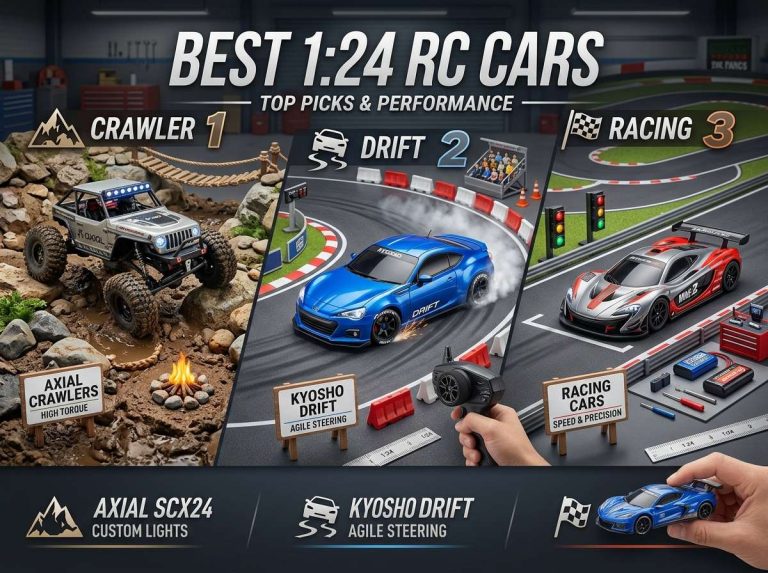
1/24 Scale and 1/18 Scale
These are tiny cars. They’re perfect for kids or if you have limited space. They fit in your hand almost. They’re cheap and easy to store. The downside is they’re harder to control and break more easily.
1/16 Scale
This is a sweet spot for many people. Big enough to be sturdy and easy to drive. Small enough to store and transport. Prices are reasonable. You get good control and they handle impacts well.
1/10 Scale
1/10 scale is the most popular size for adults and serious hobbyists. These cars are around 12-15 inches long. They’re big enough for real precision and speed. They handle rough treatment. Most racing competitions use 1/10 scale cars. Parts are easy to find, and the community is huge.
1/8 Scale
These are large, powerful machines. They’re fast and impressive to watch. They cost more money. They need more space. But they’re built tough and can handle serious stunts.
Power Source: Gas, Electric, or Something Else?
How your RC car powers up changes everything about how you use it.
Electric RC Cars
Electric cars run on rechargeable batteries. They’re quiet, clean, and easy to maintain. You just charge the battery and go. No smell, no messy fuel.
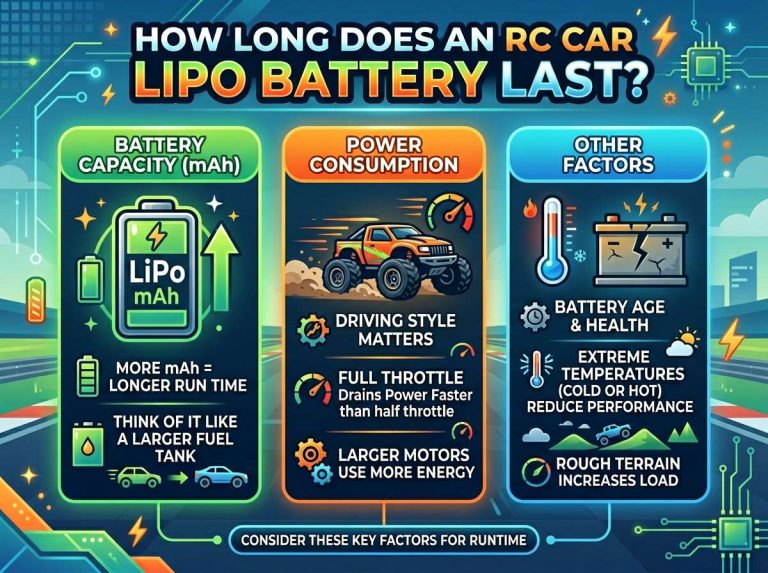
Electric cars are great for beginners. They’re simpler to operate. The speed is consistent. Batteries last for 15-30 minutes of driving before needing a recharge. You can buy extra batteries to swap out and keep driving all day.
Electric motors are powerful and responsive. You get instant acceleration. Electric cars are perfect for racing and precise control.
Nitro RC Cars
Nitro cars run on special fuel. They’re loud, fast, and smell like racing. They sound like real cars, which is cool. They produce real power and speed.
Nitro cars need more maintenance. You have to mix fuel, tune the engine, and clean parts. They’re not beginner-friendly. The fuel is messy. Nitro cars are for people who love the mechanical side and want a challenge.
Gas-Powered RC Cars
These large cars run on regular gasoline. They’re the biggest and most powerful. They’re expensive and complicated. Most people don’t start with gas cars. These are for dedicated hobbyists.
Battery Types
Electric cars use different battery types. The most common are LiPo batteries and NiMH batteries.
LiPo batteries are lighter and more powerful. They hold more energy in less space. LiPo batteries need a special charger and careful handling. They can get damaged if not treated right.
NiMH batteries are older tech but still good. They’re more forgiving. They don’t need fancy chargers. They’re heavier and don’t last as long per charge. They’re great for beginners who might be careless.
Budget: How Much Should You Spend?
Your budget is real and matters. RC cars range from $20 toys to $500+ hobby machines. Here’s what different price ranges get you.
Under $100
Budget cars exist. They’re okay for trying out the hobby. They break easily and perform poorly. They often come with cheap radios that don’t respond well. If you break it, you’re not out too much money. These are good for young kids or testing the waters. Don’t expect greatness.
$100 to $300
This is a sweet spot for beginners. You get decent quality and good performance. Most beginner-friendly brands sit here. The radio is responsive. The car handles rough play. You get replacement parts easily. This range gives you a real hobby experience without huge expense.
$300 to $500
Serious hobby-level cars live here. Better motors, better batteries, better construction. You get real speed and control. These cars can last years with proper care. This range is where you know you’re committed to the hobby.
Over $500
These are high-end racing or competition cars. They’re fast, precise, and built from quality materials. You’re either serious about racing or collecting. Parts can be customized and upgraded. This is for people who live and breathe RC cars.
New vs. Used: Which Makes Sense?
You don’t have to buy new. Used RC cars can be great deals.
Buying New
New cars come with a warranty. Everything works. You know the full history. You pick exactly what you want. New is safe but costs more.
Buying Used
Used cars cost less. Sometimes way less. You can try the hobby cheap. The downside is you might get a lemon. Old batteries might not hold charge. Parts might be missing. Do your research. Ask the seller questions. Check reviews online. Test it before paying if possible.
Local hobby shops sometimes have used inventory. Online marketplaces work too. Forums dedicated to RC cars often have buy-sell sections. Be careful with shipping costs on used items since they’re heavy.
Beginner-Friendly Features to Look For
Not all RC cars are created equal. Some are much easier to learn with.
Durable Construction
Beginners crash. A lot. Your car needs to take hits without breaking immediately. Look for cars with plastic body panels that don’t shatter. Check that the frame is reinforced. Read reviews about crash resistance.
Easy-to-Find Parts
When you break something, you need replacements. Popular models have lots of spare parts available. Weird or discontinued models leave you stuck. Buy a car with an active community behind it. That means parts, tips, and support.
Responsive Controls
Bad radios ruin the experience. You want your car to respond instantly to your inputs. Read reviews about radio quality. Video reviews on YouTube let you see the control lag in real time.
Good Battery Life
Nobody wants to charge every five minutes. Look for cars that run at least 15-20 minutes on a charge. You can buy extra batteries to swap out. Just make sure charging is fast and easy.
Adjustable Speed Settings
Many RC cars have different speed modes. Beginner mode goes slower. Expert mode goes faster. This feature helps you learn without flying off cliffs immediately. It’s really helpful for getting comfortable with your car.
Clear Instructions
If the manual is confusing, you’re in trouble. Look for cars with video setup guides online. The best companies make learning easy. Read customer reviews about how clear the instructions are.
Where You’ll Drive: Your Environment Matters
Think about where you actually plan to drive your RC car. This changes what type you need.
Parking Lots and Driveways
Smooth, flat surfaces are perfect for on-road cars. You can get incredible speeds here. The car stays clean. You don’t risk losing it in tall grass. This environment is ideal for learning and racing.
Backyard and Grass
Soft ground and grass need off-road cars. Regular cars get stuck. Off-road models handle grass, dirt, and uneven ground. Make sure you have space to drive without disturbing neighbors.
Rough Terrain
Hills, rocks, and obstacles need capable off-road vehicles. Rock crawlers and buggies excel here. You’ll need suspension and ground clearance. Plan for your car to get muddy.
Beaches
Sand needs special consideration. Dune buggies love it. Regular cars get bogged down. Salt water is bad for electronics, so wash your car after beach trips. The sand gets everywhere in your car.
Indoor Driving
Small spaces need small cars. 1/24 and 1/18 scale models fit indoors. Basements and warehouses become racetracks. These cars are usually on-road models. Indoor tracks sometimes have community events.
Brand Reputation: Does It Matter?
Yes. Some brands have been around forever and build solid products. Other brands are unknown for reasons.
Traxxas
Traxxas is huge in the hobby. They make reliable cars that work straight out of the box. Parts are everywhere. Community support is strong. They cost a bit more but last longer.
HPI
HPI makes quality off-road cars. They focus on durability and performance. They’ve been trusted for years. Their cars handle rough conditions well.
Team Associated
This brand is serious about racing. Their cars are fast and precise. They’re used in competitions. Quality is top-notch but prices are higher.
Axial
Axial specializes in rock crawlers and scale vehicles. If you want to climb rocks and obstacles, they’re the go-to. Their cars are tough and capable.
ECX
ECX (part of Horizon Hobby) makes beginner-friendly cars. They’re affordable and reliable. Great entry-level brand. Community is growing.
Cheap Brands
Some no-name brands exist on Amazon and eBay. They’re tempting because they’re cheap. Often they break quickly. Parts are hard to find. Avoid unless you truly don’t care if it breaks tomorrow.
Essential Accessories You’ll Need to Buy
The car is just the start. You need other stuff to really enjoy the hobby.
Batteries and Charger
You need at least one extra battery. Two is better. Charging speed matters. A good charger can fully charge a battery in 30-60 minutes. The charger should balance charges for longer battery life.
Battery Care and Storage
LiPo batteries need special care. You need a LiPo-safe bag for storage. You need a balancer charger. You need to understand how to maintain them. NiMH batteries are more forgiving.
Spare Parts
Buy spare parts before you need them. Tires wear out. Suspension parts break. Motors burn out. Having spares means you’re never stuck waiting for shipping. Common spares include tires, shock oil, ball joints, and connectors.
Tools
You need tools to work on your car. Allen keys, screwdrivers, pliers, and tweezers are essential. Some cars come with a basic tool kit. A real toolbox with organized bits is better for long-term hobby success.
Maintenance Supplies
Oils, greases, and cleaning supplies keep your car in shape. Shock oil reduces bouncing. Bearing lubricant keeps wheels spinning smooth. Degreasers clean out dirt before it damages parts.
Protective Gear and Transport
A carrying case keeps your car safe and organized. It protects from dust and damage. If you drive outdoors, a waterproof case is smart. This might seem extra, but it keeps your investment safe.
Performance Specs to Understand
The numbers on a spec sheet matter, but they don’t tell the whole story.
Top Speed
Faster isn’t always better. Fast cars are harder to control. They break more easily when crashing. For learning, a car that goes 20-25 mph is plenty. Racing cars might reach 40+ mph.
Acceleration
How fast does it get to top speed? Quick acceleration feels responsive and fun. Sluggish acceleration feels boring. Read reviews about how a car feels to drive, not just top speed numbers.
Runtime
How long does the battery last? 15 minutes is minimum. 20-30 minutes is good. Hour-long runtimes are rare and usually happen with bigger cars. Having extra batteries lets you drive longer total time.
Suspension Travel
How far do the shocks compress? More travel means better absorption over bumpy ground. A car with high suspension travel can take bigger jumps without breaking. This matters for off-road cars especially.
Waterproofing
Can you drive in water or wet grass? Some cars are sealed. Others aren’t. Sealed electronics mean you can handle wet conditions without worry. If you plan to drive near water, check this spec.
Making Your Final Decision
Okay, you’ve read all this. You know the types, the sizes, the power sources, and the brands. How do you actually pick one?
Start with your environment. Where will you actually drive this thing? That narrows down the type.
Then consider your experience level. Be honest. Are you a beginner or experienced? Beginner cars are more forgiving and easier to repair.
Look at your budget. Don’t spend more than you’re comfortable losing. You might crash and break it.
Read reviews specifically from people with similar situations. If someone in cold weather drove it, that matters. If they drove it on the same surface as you plan to, their experience is gold.
Watch YouTube videos. See it in action. Hear how it sounds. Watch people set it up. This gives you confidence.
Check community forums. Ask questions about the specific model you’re eyeing. Most RC communities are helpful and honest.
Buy from a retailer with good return policies. Sometimes a car isn’t what you expected. Being able to return it without penalty reduces your risk.
Start simple. The best first car isn’t the fanciest or fastest. It’s one you can afford, that’s fun to drive, that you can fix easily, and that works in your environment.
Common Mistakes Beginners Make
Learn from others’ mistakes so you don’t repeat them.
Buying Too Fast
Don’t rush. Spend a week researching. Watch videos. Read reviews. Ask questions. The best purchase happens when you’re sure, not when you’re excited in the moment.
Buying Too Cheap
That $30 RC car isn’t a bargain. It’s a waste of money. Spend at least $100-150 for something that actually works and lasts.
Ignoring Maintenance
RC cars need care. Dirty cars break fast. Dry bearings don’t spin. Dead batteries ruin your fun. Set aside time for cleaning and maintenance. It’s part of the hobby.
Crashing in Anger
When your car crashes, don’t race to pick it up mad. You might throw it or stomp on it. Take a breath. Check for damage calmly. Getting angry leads to more damage.
Not Reading the Manual
Yes, it’s boring. Yes, there are videos. But the manual explains how your specific car works. Read it. Your understanding will be better.
Comparing Every Spec
Don’t get lost in spreadsheets. Specs matter, but real-world experience matters more. A car with slightly lower specs that’s fun to drive beats a spec-sheet champion that bores you.
Getting Into the Community
RC cars are more fun with other people.
Local Hobby Shops
Find a hobby shop near you. They have advice, parts, and usually host events. Some shops have tracks. The people there help beginners. Shops are community hubs.
Racing Tracks and Clubs
Many areas have RC racing clubs. They maintain tracks and run competitions. You can watch, learn, or race. These communities range from casual to serious. Most are welcoming to beginners.
Online Forums
Reddit has active RC communities. Dedicated RC forums exist for specific brands. YouTube channels focus on reviews and how-tos. Discord servers have real-time chat. These online spaces are huge resources.
Social Media Groups
Facebook groups, TikTok, and Instagram are full of RC enthusiasts sharing videos and tips. Following hashtags like #RCcars or #RCdriving shows you what’s possible.
Meetups and Events
Some communities organize meetups where people gather to drive together. Events might be casual parking lot sessions or organized races. These are fun ways to meet people and learn.
Maintenance Tips to Keep Your Car Happy
Once you have your RC car, keep it running right.
After Every Drive
Wipe down your car. Check for loose parts. Remove dirt and debris. This takes five minutes and extends your car’s life significantly.
Weekly Maintenance
Check all connections. Make sure screws are tight. Inspect tires for damage. Charge batteries properly. Look for cracks or wear.
Monthly Maintenance
Deep clean your car. Degrease the chassis. Check suspension components. Look for bent parts. Replace worn parts before they break.
Store Properly
Keep your car in a dry place. Don’t leave it in extreme heat or cold. Store batteries separately, fully charged. A storage case protects it from dust and damage.
Know When to Upgrade
Parts wear out. When performance drops, replace worn parts. Upgrading to better parts sometimes happens. Just don’t feel pressured to upgrade constantly.
The Bottom Line
Choosing an RC car is personal. What works for your friend might not work for you. But now you know what questions to ask and what to look for.
Start with an honest assessment of where you’ll drive, how much you want to spend, and how much work you want to put in. Pick a reputable brand. Don’t buy the cheapest option or the most expensive one. Read reviews. Watch videos. Ask in communities.
Your first RC car doesn’t need to be perfect. It needs to be right for you. Once you find it, you’ll join millions of people who love this hobby. RC cars bring joy, challenge your skills, and build friendships.
Get out there. Find your car. Take it to your favorite spot. Hit the throttle. Feel that rush. Welcome to RC driving.
Ready to get started? Do your homework. Pick a car that speaks to you. Join the community. Have fun. That’s what it’s all about.
Peterson is an RC hobby enthusiast and product reviewer with a passion for remote-controlled cars, trucks, boats, drones, and accessories. He enjoys testing the latest RC products, comparing features, and sharing practical buying guides to help beginners and experienced hobbyists make informed decisions. Through RCThing.com, Peterson provides honest reviews, maintenance tips, and expert advice to help readers get the most from their RC adventures.