
Rc Car Brands Comparison
Shopping for a remote control car can feel confusing, especially when dozens of brands look similar on store shelves. A clear rc car brands comparison helps you see what really separates one maker from another. This article explains the main differences in plain words, so you can narrow your options with confidence.
You will learn what RC means, why the brand name matters, and how brands differ in build quality, spare parts, electronics and support. You will also see how brands group by purpose, what price levels usually deliver, and which mistakes beginners often make. A short FAQ at the end answers common questions.
Key Takeaways
- Brand matters because it affects build quality, spare parts availability and long-term support.
- Toy-grade and hobby-grade cars differ in materials, electronics and how easy they are to upgrade.
- Check if parts and batteries are easy to find before you buy.
- Price tends to rise with better components, but a higher price does not guarantee a better fit for you.
- Read independent reviews and compare warranty and service policies side by side.
What Are RC Car Brands and Why Do They Matter?
RC car brands are the companies that design and sell remote control vehicles. Each brand builds its cars with its own chassis, motors, electronics and body styles. Some brands focus on toys, while others serve hobbyists who enjoy tuning and racing.
Brand choice shapes what you get after the box is opened. It influences how the car handles, how long it lasts and how easy it is to fix. Because of this, comparing brands is often more useful than comparing a single model.
What Does “RC” Mean for Beginners?
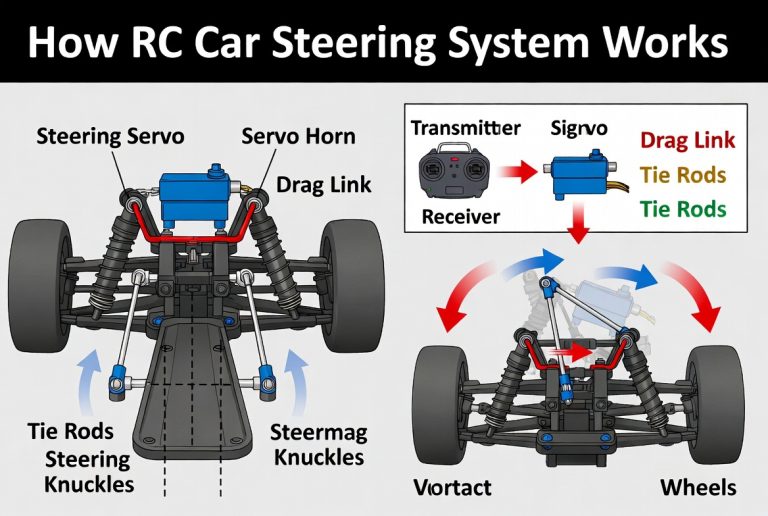
RC stands for radio controlled. A handheld transmitter sends signals to a receiver inside the car, which controls the steering and speed. Most modern RC cars use this same basic idea, even when the models look very different.
Some cars use infrared or simple wired controls, but radio is the common standard for hobby use. Knowing this helps you understand the controller and receiver parts that brands sell.
Why the Brand Name Affects Your Experience
A brand name often signals how the car was designed and supported. Well-established makers usually publish manuals, sell spare parts for years and maintain online communities. Smaller or newer brands may offer lower prices, but support can be harder to find.
In practice, the brand decides if a broken part can be replaced in a few days or never found at all. That is why it pays to look beyond the box artwork.
Common Types of Remote Control Cars
RC cars come in several main types. On-road cars run on smooth surfaces like pavement and indoor floors. Off-road cars handle dirt, grass and gravel. Monster trucks, buggies and drift cars each serve a specific style of driving.
Scale models copy real vehicles in a smaller size. Knowing the type you want narrows the brand list quickly, since some makers specialize in certain categories.
How RC Car Brands Differ From One Another
Brands differ in several areas, and most of these differences only become clear after some use. Looking at each area separately makes the comparison easier. The four areas below cover what matters most to beginners.
Build Quality and Materials
Build quality refers to how well a car is made and what materials it uses. Chassis and suspension parts may be made from plastic, nylon composite or metal. Stronger materials usually handle impacts better, but they also raise the price.
Look at how screws, bearings and joints feel when you handle a product photo or a shop display. Solid fittings usually signal more careful assembly. That said, rough use will test any car, so no material is completely crash-proof.
Parts Availability and Spare Parts Support
Parts availability means how easily you can buy replacements. Crashes happen often in RC driving, so spare parts matter a great deal. A brand with a wide parts catalog keeps your
a car running. Some brands sell tires, shocks, gears and bodies in many shops and online stores. Others sell only a few parts, and older models may be discontinued quickly.
Before buying, search for common wear items such as tires, driveshafts and body shells. If you find many listings, the brand is probably well supported. If you find few, expect longer waits or higher costs when something breaks.
Electronics, Radios and Control Systems
The electronics include the motor, speed controller, receiver and transmitter. Together they control how the car accelerates, brakes and steers. Brands vary in how they package these parts and if they use standard components.
Some makers bundle a radio with the car, while others sell it separately. Bundled systems are simple for beginners. Standard components, however, make it easier to swap in a different motor or radio later.
Manuals, Community Support and Online Guides
Clear manuals help you assemble, adjust and maintain your car. Brands that provide detailed instructions reduce frustration, especially during the first build. Diagrams and step-by-step guides are a good sign of careful documentation.
Online communities also add value. Forums, video channels and hobby groups often share setup tips and repair advice. A brand with an active community is usually easier for beginners to learn from.
Major RC Car Brands Compared
Instead of ranking brands, it helps to group them by purpose. Each group serves a different style of driving and a different type of buyer. Matching the group to your goals makes the choice far simpler.
Brands Known for Entry-Level Models
Some brands focus on ready-to-run cars that suit first-time buyers. These models usually include the radio, battery and charger, so you can start driving quickly. Ease of use and a low price are the main selling points.
Because of this, entry-level brands often sell in large retail stores. They may offer fewer upgrade options, but they keep things simple for newcomers.
Brands Focused on Racing and Performance
Racing-focused brands design cars for speed, handling and tuning. Their models often come as kits that you assemble yourself. Many owners enjoy adjusting gear ratios, suspension settings and tires to suit a track.
These brands usually have strong parts networks and racing communities. The trade-off is that the learning curve is steeper, and the cost of racing upgrades can add up.
Brands Aimed at Scale Models and Collectors
Scale brands copy real vehicles with close attention to shape and detail. Buyers often value appearance as much as performance. These cars may run slower, but they look realistic on a display or a crawling course.
Collectors may also seek limited editions or hard-to-find bodies. Prices for rare pieces can rise over time, so it is wise to check current listings before you decide.
Brands Built for Off-Road and Rough Terrain
Off-road brands design cars for dirt, sand, mud and rocks. Their models usually have higher ground clearance, stronger suspension and larger tires. They are built to handle bumps and uneven ground.
Look for sealed or water-resistant electronics if you plan to drive outdoors. In short, match the brand to the terrain you expect most often.
Price Ranges and What You Get at Each Level
Prices in the RC hobby vary widely. Higher prices usually bring better materials, stronger electronics and more upgrade options. Still, price alone does not show if a car suits your needs. The levels below describe general patterns rather than fixed rules.
Budget RC Cars Under a Fixed Price Point
Budget models keep costs low by using simpler parts and plastic bodies. They often include a basic radio and battery. These cars can be fun for light use, though they may wear out faster under hard driving.
Check if parts for a budget brand are still sold after a few years. Affordable cars are a good start only if repairs stay affordable too.
Mid-Range Models for Hobbyists
Mid-range models offer sturdier chassis parts, better motors and more adjustable settings. Many hobbyists choose this level because it balances cost and durability. balance cost and durability. These cars often accept upgrades more easily, so you can improve them over time as your skills grow.
Premium Kits and Ready-to-Run Models
Premium kits use higher-grade materials, precise machining and advanced electronics. Buyers usually expect detailed instructions and strong parts support. Ready-to-run premium models trade some tuning freedom for convenience.
Premium pricing does not guarantee a better result for every buyer. A beginner may enjoy a mid-range car just as much and spend less while learning.
Tips for Comparing RC Car Brands Side by Side
A simple checklist keeps your comparison focused. Write down the same questions for each brand you consider. Doing so makes differences easier to spot.
Checking Reviews From Independent Sources
Independent reviews come from people who have no link to the seller or maker. Look for reviewers who describe both strengths and weaknesses. Repeated comments about the same problem are worth noting.
Read a range of opinions rather than a single glowing or angry post. Balanced feedback gives a more realistic picture of daily use.
Looking at Warranty and Customer Service Policies
A warranty explains what the brand covers and for how long. Read the terms carefully, since many warranties exclude crash damage. Customer service matters too, so check how easy it is to reach a real person.
In short, a clear warranty and responsive support can save time and money after a rough day of driving.
Comparing Replacement Parts and Upgrade Options
Compare the price and availability of common spare parts across brands. Also check if upgrades such as motors, batteries or suspension parts fit the car. Standard sizes and widely used parts make future changes easier.
Because of this, a little research on parts now can prevent frustration later.
Common Mistakes Beginners Make When Comparing Brands
Many new buyers focus on the wrong details. Avoiding a few common errors leads to a better purchase. The points below cover the most frequent ones.
Focusing Only on Top Speed
Top speed sounds impressive, but it says little about handling, durability or fun. A very fast car can be hard to control for a beginner. Balance and steering often matter more in daily driving.
Ignoring Battery Type and Charging Time
Batteries affect runtime, charging time and total cost. Some cars use rechargeable packs with different connectors, while others use a different standard. Check what battery and charger come in the box and what extra packs cost.
Overlooking Where You Plan to Drive
A car built for smooth pavement may struggle in grass or sand. Think about your usual driving spot before you pick a brand. Matching the car to the surface prevents disappointment.
Frequently Asked Questions
Are expensive RC car brands always better for beginners?
Not always. Expensive cars often offer stronger parts and more upgrades, but they can also be harder to learn on. Many beginners do well with a mid-range or entry-level model.
Which RC car brand is easiest to repair?
Ease of repair depends on parts availability, manuals and community guides. Brands with wide parts catalogs and clear documentation are generally easier to fix. Check these details before buying rather than relying on a single name.
What is the difference between a toy-grade and a hobby-grade RC car?
Toy-grade cars are built for simple play and usually use basic plastic parts and fixed electronics. Hobby-grade cars use stronger materials, adjustable settings and replaceable parts. Hobby-grade models generally cost more but last longer under regular use.
Do I need to buy the same brand’s batteries and charger?
Not always, but it helps to check. Some brands use standard connectors that accept third-party packs, while others require their own. Confirm compatibility before you buy extras.
How do I find out if a brand has good customer support?
Read the warranty terms and try contacting the company with a simple question. Look for responsive service and active Look for responsive service and active community forums, and see if replacement parts are easy to order. Independent reviews also reveal how a company handles problems after the sale.
Conclusion
Comparing RC car brands becomes simpler when you look at build quality, parts availability, electronics and support. Group brands by purpose, then match them to your budget and the terrain you plan to drive on. Price helps, but it does not replace careful checking.
In short, a clear comparison helps you choose a car you will enjoy and be able to keep running for a long time.
Peterson is an RC hobby enthusiast and product reviewer with a passion for remote-controlled cars, trucks, boats, drones, and accessories. He enjoys testing the latest RC products, comparing features, and sharing practical buying guides to help beginners and experienced hobbyists make informed decisions. Through RCThing.com, Peterson provides honest reviews, maintenance tips, and expert advice to help readers get the most from their RC adventures.


2 Comments