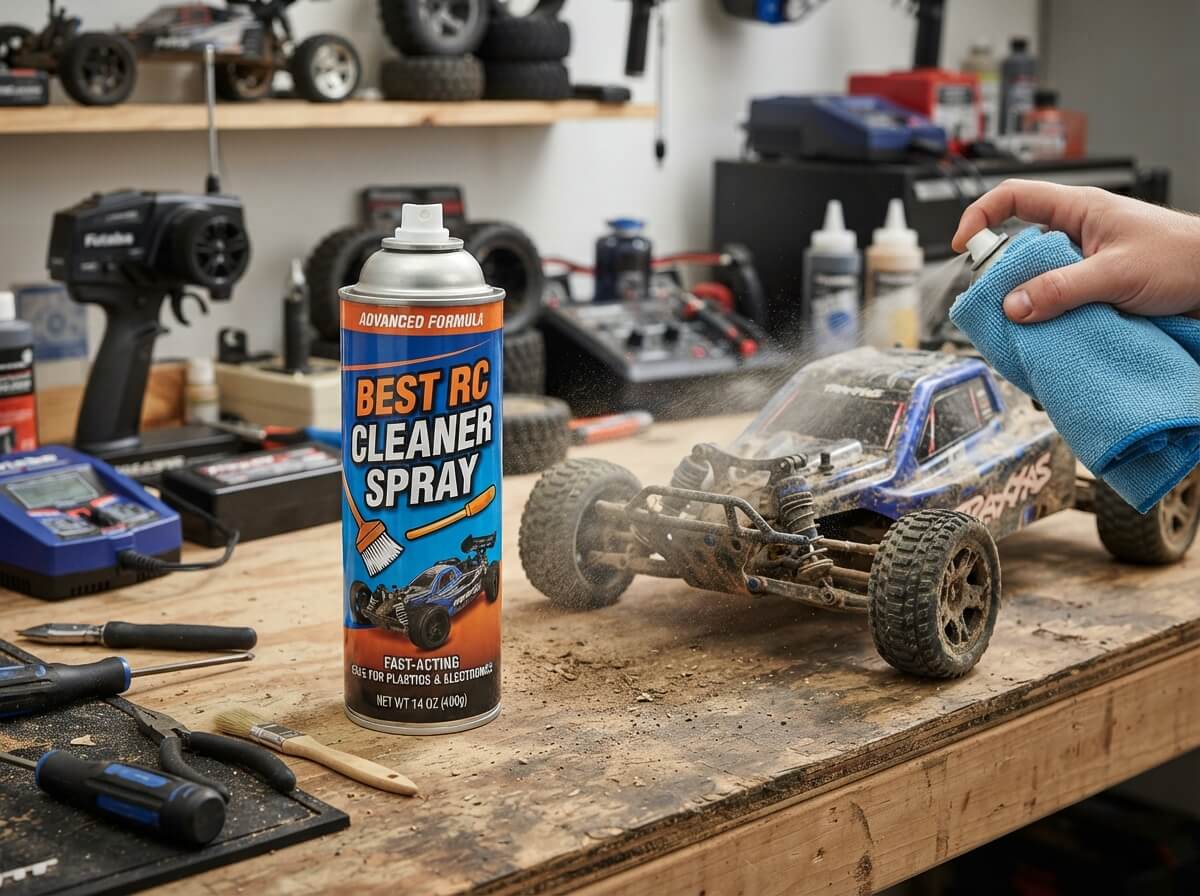
5 Best RC Cleaner Spray In 2026
If you run RC cars, trucks, or crawlers, you already know the drill. Mud gets into every gear. Dust sneaks into the electronics. Grease builds up on bearings until your motor sounds like it’s chewing gravel. A good cleaner spray is not a luxury item, it’s part of keeping your rig alive.
The tricky part is that not every spray on the market is built for RC gear. Some are made for cars, some for kitchens, and some are made specifically for tiny electronic contacts and metal parts that spin at high speed. Grabbing the wrong bottle can leave residue on your PCB, strip protective coatings off plastic, or just fail to cut through grease at all.
In this roundup, I’m breaking down five cleaner sprays that hobbyists often bring up when the topic of RC maintenance comes up. Two of them are made specifically for RC parts and electronics. The other three are general-purpose cleaners that some people try to repurpose for hobby use, and I’ll be honest about where they actually fit and where they fall short.
By the end of this guide, you’ll know exactly which spray to grab for your controller sticks, which one to use on a mud-caked chassis, and which ones you should probably leave in the kitchen cabinet instead of your workbench.
Let’s get into it.
Why RC Cleaner Spray Matters More Than People Think
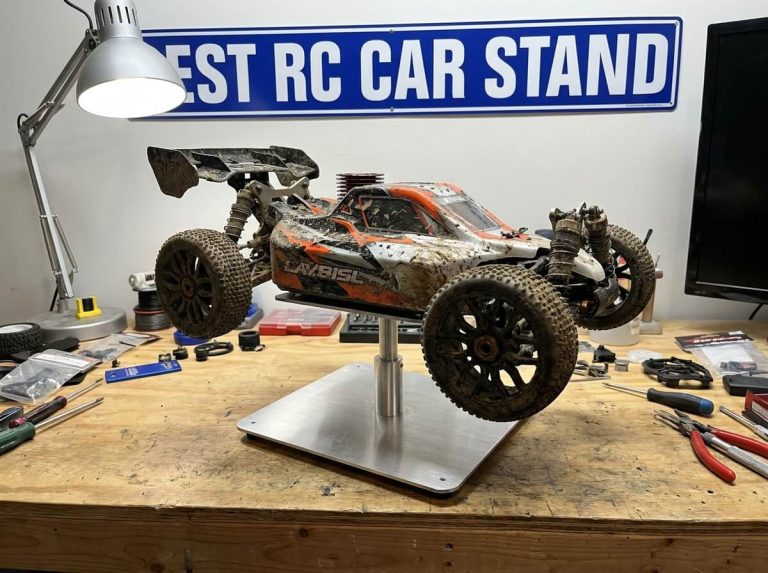
New hobbyists often skip cleaning until something breaks. That’s usually a costly habit. Dirt and grit inside a gearbox act like sandpaper, slowly wearing down teeth and bearings every time the motor spins. Moisture trapped in an electronic speed controller can corrode contacts and cause random glitches during a run. A dirty motor can overheat faster because dust blocks airflow around the can.
A dedicated cleaner spray does two jobs at once. It lifts dirt, grease, and grime away from surfaces, and in the case of electronic-safe formulas, it does this without leaving behind a film that conducts electricity or damages plastic housings. Regular household cleaners are built for a different purpose. They’re formulated to smell nice, cut through kitchen grease, and rinse away with water. That combination is exactly what you don’t want near a receiver board or a set of brushed motor contacts.
This is why the type of spray you pick actually matters. Not every “cleaner” is safe for hobby electronics, and not every RC-safe cleaner is strong enough for grease-packed differentials. Knowing the difference saves you money and saves your gear.
Quick Comparison Table
| Product | Best For | Non-Flammable | Electronic Safe | Size |
|---|---|---|---|---|
| BW-100 Electronic Contact Cleaner | Contacts, boards, controllers | Yes | Yes | 8oz |
| Armor All Multi Purpose Cleaner | Car interiors, plastic trim | No | No | 16oz x2 |
| Better Life All Purpose Cleaner | Household surfaces | No | No | 24oz x2 |
| CowRC Moo Kleen Part & Chassis Wash | Chassis, gears, general parts | Yes | Partial | 8oz |
| CowRC Moo-Kleen Industrial Grade Electrical Cleaner | Motors, bearings, electrical parts | Yes | Yes | 13oz |
Now let’s look at each one in detail.
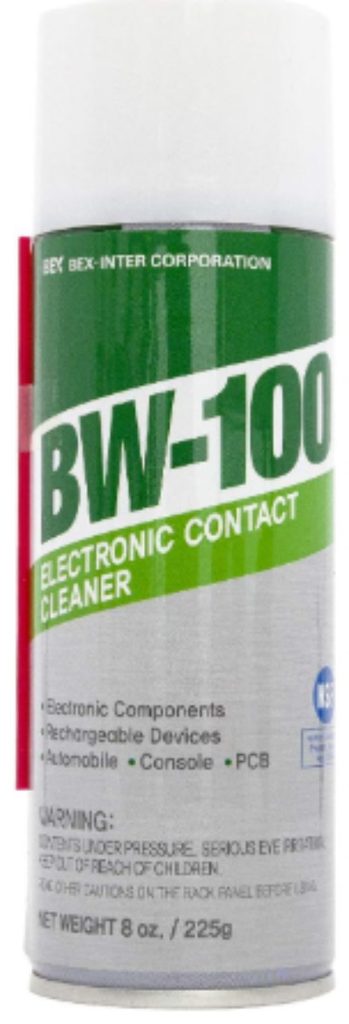
1. BW-100 Non-Flammable Electronic Contact Cleaner Aerosol Spray
Product Description
The BW-100 is built with one job in mind: cleaning electronic contacts without hurting anything around them. It’s marketed for cleaning items like Joycons, computer components, and PCBs, and it removes dust, dirt, and contaminants sitting on contact points. Since it’s non-flammable, it’s a safer pick for anyone spraying near sensitive components or working in a space without heavy ventilation.
For RC hobbyists, this translates directly to transmitter sticks, receiver pins, battery connectors, and speed controller contacts. Any spot where metal touches metal to carry a signal or current is fair game for this spray.
Key Features Explained Simply
- Non-flammable formula: You don’t need to worry about it igniting near a soldering iron or a warm motor, which matters a lot if you clean gear right after a run.
- Quick dry: The spray evaporates fast, so you’re not left waiting around before you can power the device back on.
- 8oz can: A manageable size that fits in a tool bag or a drawer without taking up much room.
- Safe on plastics: Formulated so it won’t eat through the housings on controllers or small connectors.
Best Use Cases
This spray shines on:
- Transmitter and receiver contacts that get grimy from finger oils and dust
- Battery connector pins that develop a dull film over time
- PCB boards on ESCs that pick up dust from being near a spinning motor
- Trigger and stick potentiometers inside a controller that start feeling scratchy
Real-Life Usage Insight
A common scenario where this spray gets used is when a transmitter starts acting glitchy, sticks feel gritty, or a trigger doesn’t snap back cleanly. Instead of tearing the whole unit apart and hoping a replacement part fixes it, a short blast of contact cleaner into the mechanism often solves the issue right away. Hobbyists also reach for it after opening up a receiver box that picked up dust from a dirt track, wiping down the pins before reassembly.
Pros
- Genuinely safe for electronics, not just labeled that way
- Fast evaporation means less downtime
- Non-flammable, so it’s easier to use safely indoors
- Works on more than just RC gear, useful for general electronics too
Cons
- Not meant for heavy grease or mud, it’s a contact and dust cleaner, not a degreaser
- The can size is on the smaller side if you use it often
- Scent can be noticeable in a small room, so a bit of airflow helps
Performance Discussion
In terms of actually cutting through the kind of gunk that builds up on contacts, this spray does what it says. Dust and light grime lift off quickly, and there’s no oily residue left behind that could attract more dirt later. Where it’s not the right tool is on gearboxes packed with old grease, since that’s a heavier job that calls for a proper degreaser instead.
Ease of Use
The nozzle sprays in a fine, controlled stream, which is helpful when you’re aiming at a tiny pin or a narrow gap between contacts. There’s no messy runoff to clean up afterward since it evaporates on its own.
Value for Money
For anyone with a drawer full of controllers, receivers, and small electronics, this can lasts a long time since a little goes a long way per spray. It’s a solid buy if your main headache is dusty contacts rather than greasy parts.
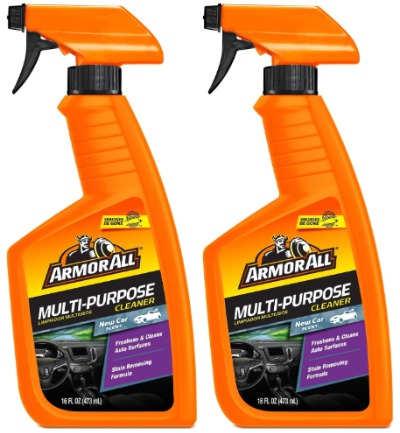
2. Armor All Multi Purpose Cleaner
Product Description
Armor All Multi Purpose Cleaner is a well-known name in the car care aisle. It’s designed for auto surfaces like dashboards, door panels, seats, and other interior plastics and fabrics. It comes as a two-pack of 16oz bottles, which is a generous amount for regular car detailing.
This one isn’t made for RC gear at all, but it comes up often in forums because people assume “car cleaner” means it’s fine for anything with wheels, including their crawler or bashing truck.
Key Features Explained Simply
- Multi surface formula: Works on plastic, vinyl, rubber, and fabric inside a vehicle
- Trigger spray bottle: Easy to control where the product lands
- Two bottle pack: Good value if you actually need it for car detailing
- Pleasant scent: Leaves a fresh smell behind after cleaning
Best Use Cases
This cleaner is genuinely good for:
- Wiping down the outside body shell of an RC truck, especially the painted lexan body
- Cleaning a dusty RC pit bag or storage case made from fabric or vinyl
- General workshop cleanup where you’re not dealing with electronics or mechanical internals
Real-Life Usage Insight
Some hobbyists keep a bottle of this in the garage simply because they already use it on their full-size car and figure it’s handy for wiping down the outer shell of their RC truck after a dusty run. It does a fine job at that specific task, restoring some shine to a faded plastic body. The trouble starts when people spray it directly into a gearbox or onto exposed electronics, since it’s simply not formulated for that kind of contact.
Pros
- Great at cleaning plastic and vinyl surfaces
- Leaves things looking shiny without feeling greasy
- Trigger spray gives good control
- Affordable for the amount you get
Cons
- Not safe near exposed electronics or bare metal contacts
- No degreasing power for gearboxes or bearings
- Can leave a slippery film that’s fine on a dashboard but bad on parts that need grip or clean metal contact
- Not built with hobby-grade cleaning in mind at all
Performance Discussion
Where this cleaner performs well is purely cosmetic and surface-level cleaning on non-mechanical, non-electronic parts. Ask it to clean a shell or a fabric bag, and it does a decent job. Ask it to cut grease off a differential or clean a motor’s electrical contacts, and it’s simply the wrong tool.
Ease of Use
Spraying and wiping is about as simple as cleaning gets, and the trigger nozzle makes it easy to apply just the amount you need.
Value for Money
If you already own it for your car, it’s a reasonable bonus item to keep nearby for wiping down RC body shells. It’s not worth buying specifically for hobby maintenance since it doesn’t cover the areas that actually need attention on an RC vehicle.
3. Better Life All Purpose Cleaner

Product Description
Better Life All Purpose Cleaner is a household cleaning spray built for kitchens, bathrooms, glass, countertops, and general home surfaces. It comes unscented in a 24oz two-pack, and it’s marketed toward people who want a plant-based, less harsh cleaner for everyday home use.
Like the Armor All spray, this one is not built for hobby electronics or mechanical parts, but it’s included here because plenty of people have a bottle sitting under the sink and wonder if it can double as a workbench cleaner.
Key Features Explained Simply
- Plant-based formula: Made with fewer harsh chemicals compared to typical household cleaners
- Unscented option: No added fragrance, good for people sensitive to strong smells
- Large 24oz bottles: Two of them, so you get a lot of product for home use
- Multi-surface use: Works on countertops, glass, and general household items
Best Use Cases
This spray is genuinely useful for:
- Wiping down your workbench table itself after a messy build session
- Cleaning glass display cases if you keep finished RC models on a shelf
- General household cleaning duties that have nothing to do with your hobby gear
Real-Life Usage Insight
A typical situation where this spray gets used near a hobby setup is wiping down the workbench surface, not the RC parts themselves. After a build session with glue, dust, and small debris scattered around, a quick spray on the table and a wipe cleans things up fast. It’s simply not meant to touch the actual mechanical or electronic components of your vehicle.
Pros
- Gentle formula that’s easier on hands and surfaces
- Good size bottles for the price
- Works well for its intended household purpose
- Unscented version avoids strong chemical smells in a workspace
Cons
- No use at all for gears, bearings, or motors
- Not safe for electronic contacts
- Leaves moisture behind that isn’t ideal near metal parts prone to rust
- Doesn’t address any of the actual maintenance needs of an RC vehicle
Performance Discussion
As a household cleaner, it performs exactly as expected on counters and glass. As an RC maintenance product, it has no real role beyond keeping your workspace tidy. This is worth mentioning clearly because a water-based household cleaner near an open ESC or exposed bearing can cause more harm than good, introducing moisture where you want dryness.
Ease of Use
Just spray and wipe, no learning curve at all.
Value for Money
Good value if you need a household cleaner. Not a purchase to make with your RC hobby in mind.
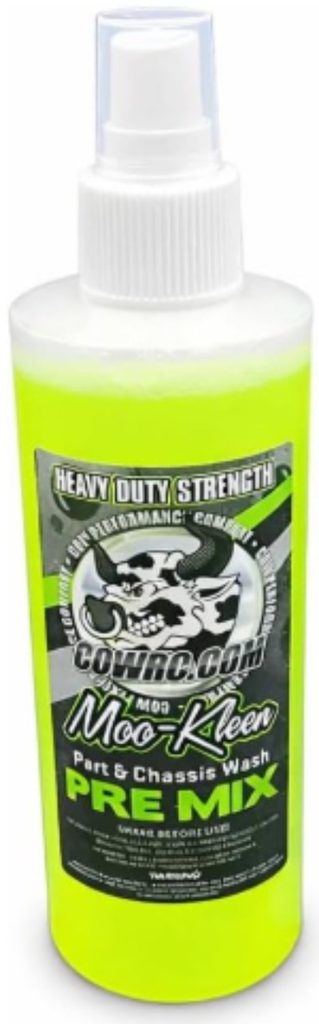
4. CowRC Moo Kleen Part & Chassis Wash
Product Description
Now we’re back into gear built specifically for the hobby. CowRC Moo Kleen Part & Chassis Wash is an 8oz pre-mix cleaner and degreaser made for cars, trucks, crawlers, and general RC parts. It’s labeled as non-flammable, which is a big plus for indoor use, and it’s aimed at cutting through the mud, dirt, and light grease that builds up on a chassis after a run.
Key Features Explained Simply
- Pre-mix formula: Ready to use straight out of the bottle, no dilution needed
- Non-flammable: Safer to use in a garage or indoor workspace
- Degreasing power: Cuts through mud and light grease buildup on chassis parts
- RC-specific design: Built with hobby vehicles in mind rather than general household use
Best Use Cases
This one is at its best for:
- Cleaning a mud-covered chassis after a crawling session
- Wiping down suspension arms, shock bodies, and links
- Getting dirt out of wheel wells and axle housings
- General exterior part cleaning before a rebuild or inspection
Real-Life Usage Insight
After a rough day on a dirt track or a crawling trail, a chassis often comes back caked in dried mud packed into every crevice. Spraying this cleaner directly onto the chassis and letting it sit for a minute before wiping or rinsing makes the caked-on dirt come loose far more easily than trying to scrub it dry. It’s a common step before a full teardown, since a clean chassis makes it much easier to spot cracked parts, stripped screws, or worn bushings.
Pros
- Built specifically for RC vehicles, not repurposed from another category
- Non-flammable formula adds a safety margin
- Pre-mixed, so there’s no guesswork on dilution ratios
- Cuts through mud and light grease effectively
Cons
- Not intended for direct use on sensitive electronic contacts
- 8oz can run out fairly fast if you clean often or run larger vehicles
- Works best on light to moderate grime, heavier grease buildup may need extra scrubbing
Performance Discussion
On chassis and exterior parts, this cleaner does a solid job of loosening dried mud and light grease without needing a ton of elbow grease. It’s not marketed as an electronics-safe formula, so it’s best kept away from open ESCs and receiver boards, sticking instead to plastic and metal chassis components, suspension parts, and wheels.
Ease of Use
Spray, let it sit briefly, then wipe or rinse. No mixing or measuring involved, which makes it beginner friendly.
Value for Money
A fair price point for a product built specifically for RC maintenance. The smaller can size means frequent users may want to buy more than one at a time.
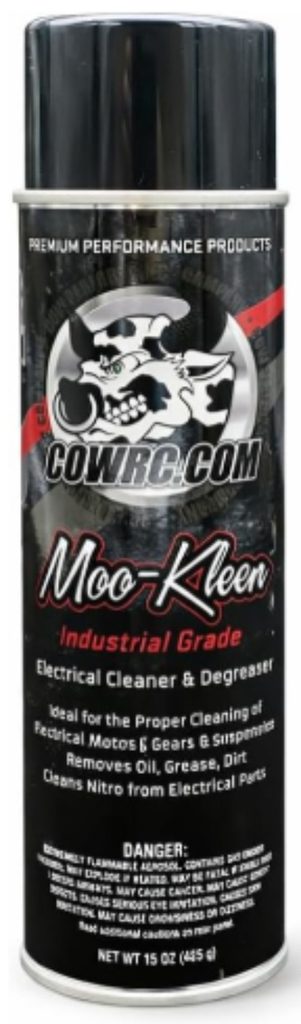
5. CowRC Moo-Kleen Industrial Grade Electrical Cleaner & Degreaser
Product Description
This is the bigger sibling in the CowRC lineup, a 13oz industrial grade cleaner and degreaser built for motors, gears, bearings, and chassis parts. Unlike the Part & Chassis Wash, this one leans into electrical safety, making it a fit for cleaning around motor housings and other components where current runs through metal contacts.
Key Features Explained Simply
- Industrial grade strength: Formulated to cut through tougher grease and grime buildup
- Electrical safe design: Made to be used around motor contacts and electrical components
- Larger 13oz can: More product per can compared to the standard chassis wash
- Multi-part use: Works across motors, gears, bearings, and chassis in one bottle
Best Use Cases
This spray earns its place for:
- Flushing old grease out of gearboxes before repacking with fresh grease
- Cleaning motor cans and bearing surfaces
- Clearing grime off diff cases and internal gear sets
- General degreasing before a full drivetrain rebuild
Real-Life Usage Insight
When it’s time to repack a gearbox or clean out a differential, old grease often turns dark and gritty, mixing with metal shavings and dirt. Spraying this cleaner into the housing and letting it flush out the old grease saves a lot of manual scrubbing before adding fresh lubricant. It’s also handy on a motor that’s picked up dust and grime around the bell housing, since the electrical-safe formula reduces the worry about damaging the windings or contacts inside.
Pros
- Strong enough for real grease and grime, not just light dust
- Safer than general degreasers around electrical components
- Larger can size means fewer refills
- Versatile across multiple part types in one bottle
Cons
- Stronger formula means it should be used with some ventilation
- Not intended for delicate transmitter electronics, better suited to motors and mechanical parts
- Slightly pricier than basic all purpose sprays, though the specialized formula justifies it
Performance Discussion
This is the pick when the job is tougher than a quick wipe down. Grease-packed gears, grimy bearings, and dusty motor housings respond well to this formula, cutting through buildup that a lighter contact cleaner simply can’t touch. It fills the gap between light dust removal and full-on mechanical degreasing.
Ease of Use
A steady spray pattern makes it easy to direct into tight spaces like gear housings and bearing seats. Wiping away the loosened grime afterward is straightforward with a shop rag or brush.
Value for Money
Given the larger can size and the specialized electrical-safe degreasing formula, this is a strong value pick for anyone doing regular drivetrain maintenance on their RC vehicles.
Comparison Insights
Looking at all five sprays side by side, a clear pattern shows up. The BW-100 and both CowRC products are built with hobby maintenance in mind, while the Armor All and Better Life sprays are general household or automotive products that happen to get mentioned in RC circles because people already own them for other reasons.
Between the two CowRC products, the difference comes down to job size. The Part & Chassis Wash is the better daily driver for wiping mud off a chassis after a run, while the Industrial Grade Electrical Cleaner steps in for heavier degreasing jobs like gearbox rebuilds or motor cleaning.
The BW-100 fills a different role entirely, focused purely on electronic contacts rather than grease or mud. It’s the spray you reach for when the problem is a glitchy stick or dusty receiver pins, not a dirty chassis.
The Armor All and Better Life sprays, honest, aren’t real contenders for hobby maintenance. They’re worth mentioning because they show up in searches often, but their formulas are built for surfaces that don’t overlap much with what an RC vehicle actually needs cleaned.
Buying Guide: What to Look for in an RC Cleaner Spray
Before grabbing any bottle off a shelf, run through these points:
Check if it’s electronic safe. If you’re cleaning near a receiver, ESC, or transmitter, the label needs to say it’s safe for electronics or contacts specifically. General cleaners that mention “safe for plastic” alone aren’t the same thing.
Look at flammability. Non-flammable formulas are much safer to use indoors or near a warm motor right after a run. Flammable solvents need extra caution and ventilation.
Match the strength to the job. Light dust and contact grime need a gentler formula, while packed grease in a gearbox needs a stronger degreaser. Using a weak cleaner on heavy grease wastes time, and using a harsh degreaser on delicate electronics risks damage.
Consider residue. Some sprays leave a light protective film behind, others evaporate completely. Contacts and boards generally want a residue-free finish, while some chassis parts benefit from a light protective layer.
Think about can size versus frequency of use. If you clean gear weekly, a larger can saves money over time. Occasional cleaners can get by with smaller sizes.
Read the intended surface list. A spray labeled for auto interiors or kitchen counters was never tested against RC-specific materials like lexan bodies, brass gears, or aluminum shocks, so results can be unpredictable.
Who Should Buy Each Product
If you’re someone who tinkers with transmitters, receivers, and small electronic parts often, the BW-100 belongs in your toolbox. It’s a small investment that solves a specific, common annoyance.
If your hobby leans toward crawling, bashing, or general off-road driving where mud and dirt cake onto the chassis, the CowRC Moo Kleen Part & Chassis Wash is a smart pick for regular post-run cleanup.
If you rebuild gearboxes, clean motors, or do deeper mechanical maintenance on a regular basis, the CowRC Moo-Kleen Industrial Grade Electrical Cleaner is worth having on the shelf for those bigger jobs.
If you already own Armor All or Better Life for other purposes around the house or car, keep using them for those jobs, but don’t rely on them as your main RC maintenance solution. They can play a small supporting role for wiping down body shells or your workbench, nothing more.
Common Mistakes to Avoid
Spraying household cleaners directly onto electronics. Water-based, scented cleaners can leave moisture and residue that interferes with electrical contacts, sometimes causing corrosion down the line.
Using strong degreasers on delicate parts. Industrial strength cleaners are great for gearboxes and motors, but they’re not meant for thin plastic housings on transmitters or receivers.
Skipping ventilation. Even non-flammable sprays can have strong fumes, so cleaning in a space with some airflow is always a good habit.
Not letting parts dry fully before reassembly. Rushing to put a gearbox or electronic component back together while still damp with cleaner can trap moisture inside, causing problems later.
Ignoring the label’s intended use. A bottle that says “auto interior” or “kitchen surface” was tested for those jobs specifically, not for RC gear, so results near sensitive parts can be inconsistent or damaging.
Overspraying into open connectors. Even electronic-safe sprays should be used with some control, aiming directly rather than soaking a connector for longer than needed.
Final Verdict
After going through all five products, the clear standouts for actual RC maintenance are the BW-100 Electronic Contact Cleaner and the two CowRC Moo Kleen sprays. Each one covers a different part of the maintenance routine, contacts and electronics with the BW-100, general chassis and mud cleanup with the Part & Chassis Wash, and heavier grease and gearbox work with the Industrial Grade Electrical Cleaner.
Together, these three cover nearly everything a hobbyist runs into during regular upkeep. The Armor All and Better Life sprays have their place in a garage or kitchen, but they’re not built to handle the specific demands of RC gear, and using them on sensitive parts isn’t worth the risk.
If you had to start with just one, base your pick on what breaks down most often for you. Glitchy sticks and dusty contacts point toward the BW-100. Mud-caked chassis after every run point toward the Moo Kleen Part & Chassis Wash. Grease-packed gearboxes and motor cleanup point toward the Industrial Grade Electrical Cleaner. Many hobbyists end up keeping all three on hand since each one handles a job the others simply aren’t designed for.
Keeping your RC gear clean isn’t about chasing a shiny finish, it’s about protecting the small mechanical and electrical parts that make your vehicle run smoothly. Pick the right spray for the right job, and your gearboxes, motors, and electronics will thank you with fewer breakdowns and a longer life on the trail or track.