
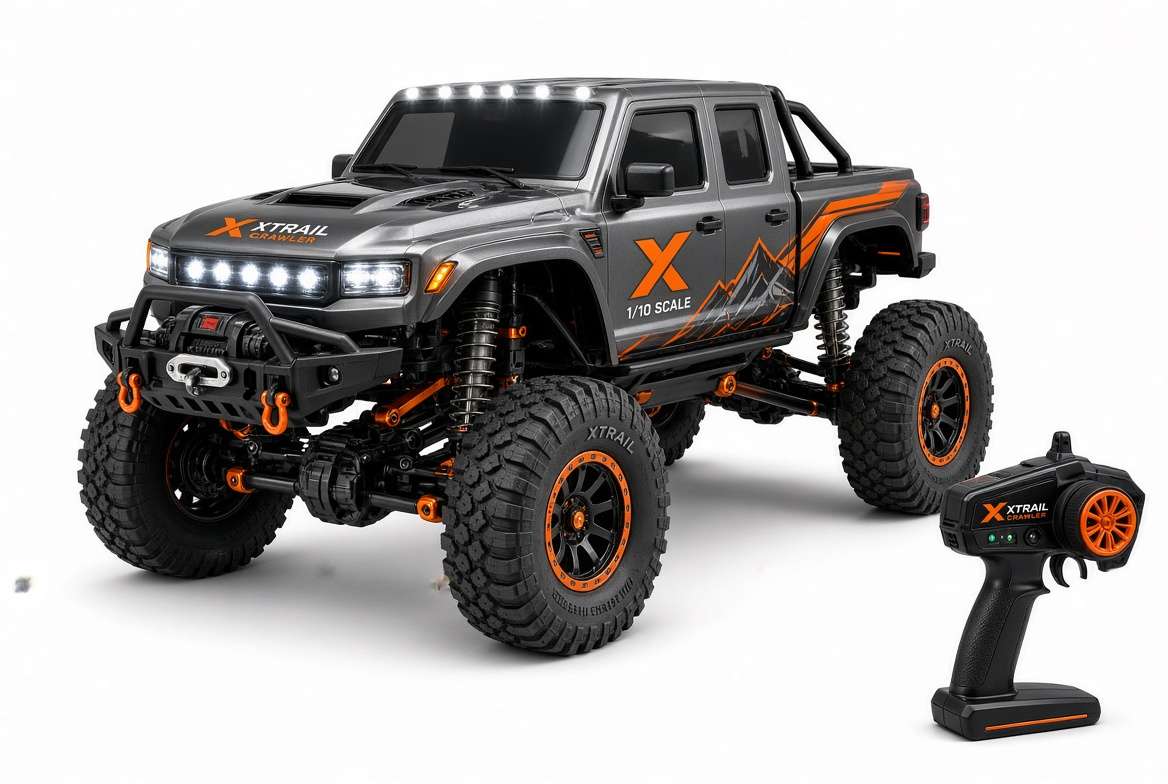
5 Best 1/10 Scale RC Crawler In 2026
Rock crawlers are some of the most fun vehicles in the RC hobby. You drive them slowly over rocks, logs, and steep hills, and the fun comes from working out the line, not from going fast. A 1/10 scale crawler is the most popular size because it’s big enough to feel solid and small enough to fit in a car trunk or a backyard corner. It’s also the size where you’ll find the most choices, from cheap toy-grade trucks to serious hobby-grade rigs.
That range is exactly why shopping can feel confusing. A $40 monster truck and a $300 trail truck both have big tires and a spot on the same shelf, but they’re built for very different people. This roundup covers five popular 1/10 scale crawlers, from a budget pick for kids to a fully featured trail truck. Each review explains what the truck is, who it suits, what it does well, where it falls short, and how it feels to run in real conditions.
Before the reviews, a quick note on how to read them. Specs and features come from product listings and common hobby knowledge, so check the latest details on the seller’s page before you buy. Performance notes describe what you can generally expect from each type of truck, and your results will depend on your batteries, terrain, and how you set the truck up. Prices change often, so treat any price range as a rough guide.
Quick Look at Our Picks
| Truck | Best For | Power System | Rough Price Level |
|---|---|---|---|
| FMS LC80 Brushless Pro V2 | Scale-body fans who want smooth power | Brushless | Mid to high |
| Eoyeskido 6-Wheel Monster Truck | Young kids and first-time buyers | Basic electric | Budget |
| Redcat Danchee Ridgerock | Beginners who want a ready-to-run rock crawler | Dual motors | Budget to mid |
| Redcat Ascent | Hobbyists who want a tougher, upgrade-friendly crawler | Electric, LiPo ready | Mid |
| Traxxas TRX-4 Sport | Buyers who want a well-known, easy-to-support platform | Brushed electric | Mid |
How We Judged These Crawlers
Every truck here got the same set of questions. How easy is it to get running? How does it handle real terrain? How tough is it when it tips over, and it will tip over? How simple is it to fix? And does the price match what you get?
We also looked at the parts system behind each truck. A crawler with cheap parts that break often can cost more over time than a pricier truck that holds up. Spare parts availability matters too, and a well-supported brand usually makes life easier when something snaps on a rock.
We judged each truck on a practical level, not on top speed or flashy lights. Crawling is about control at low speed, so steering precision, throttle smoothness, and suspension travel count for more than raw power.
1. FMS 1/10 LC80 Brushless RC Crawler Pro V2
Product Description
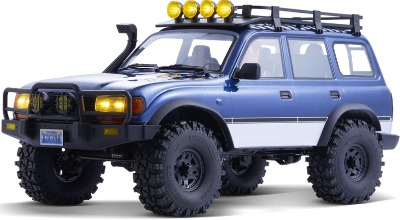
The FMS LC80 is a 1/10 scale crawler built around a Toyota Land Cruiser 80 inspired body. It’s a 4WD truck with a brushless electric motor and a 2.4GHz radio, aimed at hobbyists who care about how a crawler looks as much as how it drives. The “Pro V2” name signals a step up from basic toy-style trucks, and it’s sold as a hobby-grade vehicle.
The body shape is the main draw. Many crawlers look like generic off-road toys, but the LC80 has the boxy, classic lines that fans of Land Cruisers recognize right away. Scale-body crawlers like this one tend to attract buyers who enjoy detailing and scenic rock-crawling setups.
Best Use Cases
This truck works well for scenic crawling on rock piles, gravel trails, and garden obstacles. It’s also a good pick for someone who likes to build a little scene around the truck, with trees, rocks, and toy figures. Because the brushless system gives smooth, controllable power, it’s also comfortable for slow technical trails where you need small, precise throttle inputs.
Key Features Explained Simply
The brushless motor is the big feature here. Brushless motors are more efficient than brushed motors, and they usually give smoother power and longer run times on the same battery. In plain terms, you get more consistent control at low speed, which matters a lot when you’re easing over a rock.
The 4WD setup sends power to all four wheels, which helps the truck pull itself up steep or slippery spots. The 2.4GHz radio gives a strong, interference-resistant link between your transmitter and the truck, so you won’t have to worry about another remote on the same channel messing up your run.
The lights and body details are more of a bonus than a core feature. They add some fun for night driving or for display, but they don’t change how the truck performs on the trail.
Real-Life Usage Insight
In practice, this truck feels calm and steady. The brushless system makes it easy to creep forward at a walking pace, which is the speed you want on a steep climb. New crawler drivers often try to go too fast, and this truck rewards a gentle hand.
The body sits fairly high on the chassis, which helps with ground clearance but also makes the truck feel a little top-heavy when it leans on a tall rock. Drivers should plan their line carefully. Going straight at a big rock usually works better than trying to angle across it.
Scale-body trucks often have thinner body panels than tougher rock-focused crawlers. A hard roll or a bad landing can crack a panel, so it’s smart to keep a spare body shell or at least a few replacement clips on hand.
Pros
- Smooth, controllable power at low speed
- Strong, classic Land Cruiser styling that stands out
- Brushless system is more efficient than basic brushed setups
- Solid 4WD grip for steep climbs
- Good option for scenic crawling and display builds
Cons
- Scale bodies can crack or break in hard tumbles
- Higher price than basic toy crawlers
- Setup and maintenance are a step up from simple toys, so beginners may need a short learning curve
- Body details and lights are more about looks than performance
Performance Discussion
On a steep rock climb, the LC80 pulls well and stays steady. The brushless motor gives a feeling of control that you don’t get from cheaper trucks. Throttle response is smooth, so you can cross uneven ground without jerky movement. That’s a big deal when you’re trying to avoid bouncing the truck off a ledge.
On flat, loose dirt, the truck handles fine but doesn’t feel like a high-speed machine. That’s expected for a crawler. The steering works well for technical turns, but very tight low-speed maneuvers may take a bit of practice to get right.
Ease of Use
This truck is easy to run once it’s charged and ready. The controls are simple, and the 2.4GHz radio pairs quickly. The biggest learning curve is teaching yourself to drive slowly and pick good lines. Once you get used to that, the LC80 feels very natural.
Maintenance is a bit more involved than with a basic toy. You’ll want to check screws, gears, and drive shafts after each session, especially after a rough run. Keeping a basic toolkit nearby helps a lot.
Value for Money
For buyers who want a scale-body crawler with a brushless system, the LC80 offers good value. You pay more than for budget trucks, but you get smoother power and a look that many crawler fans love. If you only want a fun toy for a kid, a cheaper option will do the job. If you want a truck you can enjoy for years, this one is a solid pick.
2. RC Monster Truck, 1:10 Scale 6-Wheel 4WD by Eoyeskido
Product Description
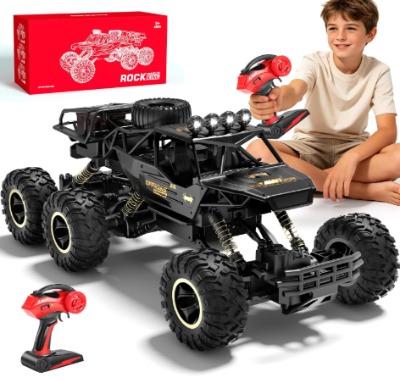
This is a 1:10 scale remote control monster truck with six wheels, a 46 cm body, and two included batteries. It’s sold as a budget off-road toy aimed at kids and first-time RC buyers. The listing describes it as a 4WD rock crawler style truck with a black body, and it’s marketed for ages roughly 4 to 12, as well as adults who want a simple, affordable truck.
The six-wheel layout looks different from most crawlers, and it adds a bit of visual fun. Since it’s a budget product, the focus is on simple operation and durability for the price, not on hobby-level performance.
Best Use Cases
This truck is a good fit for backyard play, sandboxes, and grassy areas. It’s also a practical pick for a kid’s first RC vehicle, since the price is low enough that a rough run won’t feel like a disaster. It can also work as a gift for a child who enjoys off-road toys but isn’t ready for a serious hobby-grade model.
Key Features Explained Simply
The two batteries are the best feature for casual play. Having a spare means you don’t have to sit around waiting for one battery to charge, and that alone keeps the fun going for longer sessions.
The 4WD setup and six wheels help the truck grip loose ground and climb small obstacles. It’s not built for serious rock climbing, but it can handle small bumps, dirt, and light grass.
The 46 cm size is big enough to feel substantial in a child’s hands but still easy to carry. That size also makes it easy to see from a distance, which helps young drivers keep track of it.
Real-Life Usage Insight
Expect this truck to behave like a fun toy rather than a precision crawler. Steering and throttle response are simple, and the truck moves at a pace that suits kids. It’s easy to flip over on uneven ground, but righting it is simple, which is part of why it works well for younger drivers.
Parts are made to a budget, so plastic components can crack after rough play. Parents should expect some wear and tear, and it helps to keep an eye on loose screws and wheels after each session. Keeping the truck clean and dry will also extend its life.
Pros
- Very affordable compared with hobby-grade crawlers
- Two batteries mean longer play sessions
- Six wheels give a unique look and decent grip for casual use
- Simple controls that kids can learn quickly
- Good size for backyard fun
Cons
- Build quality is basic, so parts may break under hard use
- Not designed for serious rock crawling or technical trails
- Run times and range are typical of budget toys and may fall short of expectations
- Limited upgrade options and replacement parts compared with hobby brands
Performance Discussion
On smooth or lightly rough ground, the truck runs fine. It climbs small mounds and can push through loose dirt, but steep rock climbs will test its limits. Speed is modest, which suits young drivers. Turning is simple, though tight maneuvers may take a bit of practice.
The six-wheel design helps balance on bumps, but the truck can still tip if you push it too hard. Think of it as a casual off-road toy that can handle the bumps in a yard, not a machine for technical trails.
Ease of Use
This is one of the easiest trucks in this roundup to start using. Kids can pick up the controls quickly, and the truck doesn’t require any setup beyond charging the batteries. Adults who want a simple, no-fuss RC toy will find it just as easy.
Charging takes time, and you’ll want to follow the charging instructions carefully to protect the batteries. Using the included charger as directed and not leaving batteries on the charger for long periods helps them last longer.
Value for Money
For a budget buyer, this truck offers a lot of fun for the price, especially with two batteries in the box. It won’t last as long as a hobby-grade crawler under heavy use, but for casual play it’s a practical choice. If you expect hard, daily crawling, you’ll get more value from a higher-end model.
3. Redcat Racing Danchee Ridgerock 1/10 Scale 4WD Electric RC Rock Crawler
Product Description
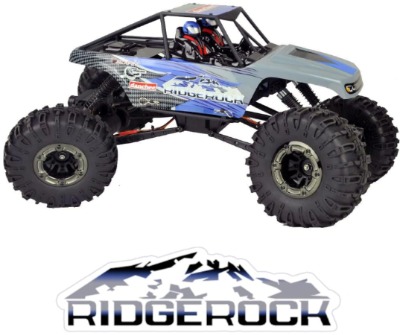
The Danchee Ridgerock is a ready-to-run (RTR) 1/10 scale rock crawler from Redcat Racing. It comes with a 4WD drivetrain, dual motors, a 2.4GHz radio, four-wheel steering, and a USB charger with a Li-ion battery. The package is designed so you can take it out of the box and start driving with little setup.
RTR means the truck arrives mostly assembled and ready to run, which makes it friendly to beginners who don’t want to build a kit. It sits in the middle of the budget and mid-range market, offering more capability than a toy truck without the cost of a full hobby setup.
Best Use Cases
This truck is a strong pick for beginners who want a true rock crawler. It’s good for rock gardens, gravel trails, and light trail driving. Four-wheel steering also makes it fun for tight turns on uneven ground, which suits crawling practice in a small area.
Key Features Explained Simply
The dual motors split the driving work, which helps the truck climb and pull. Each motor sends power to its own axle, so the truck has a good chance of getting through tough spots.
Four-wheel steering is a useful feature for crawling. When the rear wheels turn with the front, the truck can make tighter turns and line up better over obstacles. Beginners often find it easier to position the truck on a rock when the steering is more flexible.
The 2.4GHz radio gives a stable link and avoids the channel conflicts that older radio systems can have. The included Li-ion battery and USB charger make charging simple, since you can plug in a standard USB cable instead of hunting for a special charger.
Real-Life Usage Insight
In everyday use, the Ridgerock feels like a real crawler. You can creep it up a rock step, and the four-wheel steering helps you line up the wheels. It’s forgiving enough for a new driver to learn the basics without feeling lost.
Ground clearance and articulation are good enough for light rock crawling. The truck can handle a few small obstacles, but very large rocks or steep ledges will push it hard. Drivers should expect to spend time learning how to read the terrain and pick a clean line.
The USB charging system is a real convenience. You can top up the battery in the house, in the car, or with a power bank, which makes the truck easier to use on a trip or at a park.
Pros
- Ready to run, so setup is simple for beginners
- Dual motors give good pulling power on climbs
- Four-wheel steering helps with tight, technical turns
- USB charging is convenient and easy to use
- Solid value for a beginner rock crawler
Cons
- Brushed motors may not match the smoothness of brushless systems
- Run times are typical for stock batteries, so spare batteries are a good idea
- Parts are less common than those from the most popular crawler brands
- Not built for extreme rock crawling without upgrades
Performance Discussion
On a rocky slope, the Ridgerock climbs with steady effort. The dual motors give it a good push, and the four-wheel steering lets you put the wheels where you want them. It doesn’t feel as refined as a higher-end brushless truck, but it does a respectable job for its class.
On flat ground, it runs at a relaxed pace. The truck feels best at slow speeds, which suits how crawlers are meant to be driven. Pushing it too fast on rough terrain can cause it to bounce or tip, so smooth throttle work pays off.
Ease of Use
This truck is one of the easiest rock crawlers to start with. The RTR setup means you can unbox it, charge it, and drive it without building anything. The controls are simple, and the four-wheel steering takes a little getting used to but feels natural after a few runs.
Maintenance is straightforward. Check the screws, wheels, and drive parts after each session, and keep the electronics clean and dry. Basic cleaning and a quick once-over will keep the truck running well.
Value for Money
The Ridgerock gives good value for buyers who want a real rock crawler without spending a lot. You get dual motors, four-wheel steering, and a ready-to-run package that’s easy to live with. Buy a spare battery and you’ll get even more time on the trail for a small extra cost.
4. Redcat Ascent 1/10 Scale Rock Crawler
Product Description
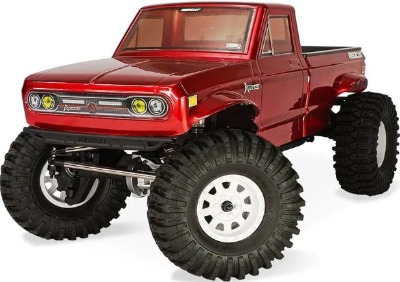
The Redcat Ascent is a 1/10 scale 4WD trail truck designed for rock crawling. Redcat markets it as a high-torque crawler with portal axles, waterproof electronics, and LiPo battery compatibility, and it comes ready to run. The red body is the most visible color option, and the truck is aimed at hobbyists who want a more capable crawler than entry-level models.
Portal axles are a key part of the design. They raise the axle line above the wheel hub, which adds ground clearance without making the truck top-heavy. That’s a big help when you’re crossing rocks or ledges.
Best Use Cases
The Ascent suits hobbyists who want to try harder rock crawling, steep climbs, and technical trail driving. It also works well for buyers who plan to upgrade over time, since the truck has a platform that supports more power and better batteries. Waterproof electronics make it a good match for wet grass, shallow puddles, and damp trails.
Key Features Explained Simply
Portal axles give the truck extra ground clearance. You can drive over bigger rocks without the chassis scraping, which is a big deal for technical crawling.
High-torque performance means the truck can pull hard at low speed. In plain terms, it has the muscle to climb steep ground without stalling as easily.
Waterproof electronics protect the receiver, the ESC, and other parts from water and moisture. This doesn’t make the truck fully submersible, but it does give you some peace of mind on wet trails.
LiPo ready means the truck can run on lithium polymer batteries. LiPo batteries deliver strong power and can improve run times when used correctly. They do need careful handling and proper charging, so beginners should read the battery safety guidance before plugging one in.
Real-Life Usage Insight
The Ascent feels more serious than the Ridgerock. The portal axles let you roll over larger rocks, and the truck holds its line well on steep grades. It rewards careful driving, and it’s easy to see how a hobbyist would want to tune and upgrade it over time.
Because the truck sits a bit higher, it can feel tippy on very steep side slopes. Driving straight up or down hills works better than crossing them at an angle. Learning that habit early saves a lot of rollovers.
Battery choice matters a lot. With LiPo packs, the truck gets more punch and better run times, but you need a suitable charger and safe storage habits. Many drivers start with the battery that comes with the truck and move to LiPo later once they know what they’re doing.
Pros
- Portal axles add useful ground clearance for big rocks
- High-torque power helps on steep climbs
- Waterproof electronics handle damp conditions better than many budget trucks
- LiPo ready gives room to upgrade performance
- Good platform for hobbyists who want to learn and improve
Cons
- Higher price than entry-level crawlers
- LiPo batteries require careful charging and storage
- Can feel tippy on steep side slopes if driven carelessly
- Some buyers will need time to learn the tuning and setup basics
Performance Discussion
On steep rock ledges, the Ascent shows its strength. The high torque gives it a confident feel, and the portal axles keep the body clear of the rocks. Crawling over uneven ground feels stable once you get the hang of it.
On flat ground and gentle slopes, the truck runs smoothly and predictably. It doesn’t feel like a racing machine, which is fine because crawling is more about control. Expect a bit of wheel slip on loose dirt, which you can reduce by picking better tires or adjusting your throttle inputs.
Ease of Use
The Ascent is ready to run, so it’s simple to start. The controls are straightforward, and the truck responds well once you learn its feel. The biggest learning curve comes from picking good lines and managing the power, especially on steep ground.
Maintenance is a bit more involved than with basic toys. You’ll want to check drivetrain parts, screws, and tires regularly, and it helps to keep a small toolkit and a few spare parts on hand. Battery care also matters, so charge and store your packs with the right gear.
Value for Money
The Ascent offers good value for hobbyists who want portal axles, waterproof electronics, and upgrade options without paying top-tier prices. It’s a sensible step up from entry-level trucks, especially if you plan to keep improving your setup. Casual buyers may find cheaper options just as fun, but serious crawlers will appreciate what this truck can do.
5. Traxxas TRX-4 Sport 1/10 Scale 4X4 Crawler
Product Description
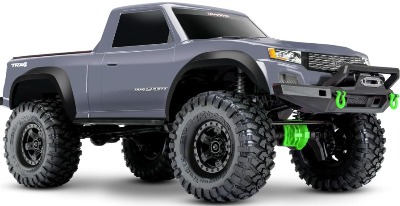
The Traxxas TRX-4 Sport is a 1/10 scale 4×4 crawler from Traxxas, a brand known for durable RC vehicles and strong parts support. The TRX-4 line is one of the most recognized crawler platforms in the hobby, and the Sport version is the more affordable member of the family. It uses a brushed electric motor and a TQi 2.4GHz radio system, and it’s designed to be easy to drive and maintain.
The gray color option gives the truck a clean, understated look. Compared with bright, flashy crawlers, the TRX-4 Sport looks like a serious tool for the trail.
Best Use Cases
This truck fits buyers who want a well-supported crawler that they can grow with. It’s good for trail driving, rock gardens, and beginner-to-intermediate crawling. The large aftermarket for Traxxas parts also makes it a good base for future upgrades, and many hobbyists enjoy building around the TRX-4 platform.
Key Features Explained Simply
The TQi radio system is a strong, reliable 2.4GHz link designed for steady control. It helps keep the truck responsive, even in busy RC areas where lots of radios are in use.
The brushed motor is simpler and less expensive than a brushless system. It delivers solid, predictable power for crawling, though it doesn’t offer the same efficiency or smoothness as a brushless setup. For many beginners, the difference is small, and the cost savings are real.
The 4×4 drivetrain sends power to all four wheels, which helps the truck climb and grip. Traxxas has a long track record with this type of drivetrain, and the system is well understood by a large community of owners and builders.
Real-Life Usage Insight
In real use, the TRX-4 Sport feels confident and predictable. It climbs steadily and handles uneven ground well. Many drivers find it easy to trust, which is a big plus when you’re trying to line up a difficult obstacle.
The brushed motor will feel less refined than a brushless system, especially when you’re trying for very fine throttle control. Still, the power is more than enough for trail crawling. Drivers who want more punch or smoother control can upgrade later, which is one of the reasons the platform is so popular.
Parts support is a major advantage. When something breaks, you can usually find a replacement quickly, and many hobby shops and online stores carry Traxxas parts. That makes repairs less stressful than with brands that have limited support.
Pros
- Trusted brand with strong parts support
- Large community and aftermarket for upgrades
- TQi 2.4GHz radio system is reliable and responsive
- Solid 4×4 grip for steep climbs
- Simple, predictable handling for new crawlers
Cons
- Brushed motor is less efficient and smooth than brushless options
- Price is higher than budget RTR trucks
- Some features may need to be upgraded for more serious crawling
- Gray color may look plain to buyers who want a flashy truck
Performance Discussion
On a rocky trail, the TRX-4 Sport is steady and capable. It climbs well, handles uneven ground with confidence, and keeps its composure on moderate obstacles. The truck doesn’t feel fragile, which gives drivers room to learn without constant worry.
On loose or slippery ground, traction depends a lot on tires and driving style. Gentle throttle work helps the truck keep its grip. On steep, tall obstacles, the truck can push hard, but very technical lines are best approached slowly and with care.
Ease of Use
The TRX-4 Sport is easy to get going. The radio is simple to use, and the truck responds in a predictable way. New drivers usually find it comfortable within a few sessions, especially if they start on gentle terrain.
Maintenance is manageable with basic tools. Keep an eye on screws, drivetrain components, and tires, and clean the truck after muddy or dusty runs. Because parts are widely available, it’s easy to keep the truck running for a long time.
Value for Money
The TRX-4 Sport offers good value for buyers who want a reliable, well-supported crawler with room to grow. You pay a little more than for budget RTR trucks, but you get a platform that’s easy to maintain and upgrade. For long-term enjoyment and easy repairs, this one is a strong option.
Side-by-Side Comparison Insights
Looking at all five trucks together, a few patterns stand out. The biggest split is between toy-grade trucks and hobby-grade crawlers. The Eoyeskido monster truck is fun and cheap, but it’s built for casual play. The other four trucks are closer to real crawlers, with better steering, more power, and more room for upgrades.
Power systems also set the trucks apart. The FMS LC80 uses a brushless motor, which gives smoother control at low speed. The Redcat Danchee Ridgerock uses dual motors to share the work. The Redcat Ascent offers high torque and a LiPo ready setup, which suits hobbyists who want to push their gear further. The Traxxas TRX-4 Sport uses a brushed motor, which keeps costs down and still delivers solid grunt for trail driving.
Steering and chassis design make a big difference too. Four-wheel steering on the Ridgerock helps with tight turns. Portal axles on the Ascent add clearance for big rocks. The LC80 has a scale body that looks great but needs more care in rough falls. The TRX-4 Sport has a proven platform that many drivers trust.
Parts support is another key point. Traxxas has one of the largest aftermarket support networks in the hobby, which helps the TRX-4 Sport stand out for long-term owners. Redcat parts are also widely available, though they may be less common in some local shops. Budget toy trucks often have the hardest time finding replacement parts, so it’s worth considering that before you buy.
Price and value follow the same pattern. The Eoyeskido truck is the cheapest and easiest to justify for a child’s first RC toy. The Ridgerock offers a lot of crawling capability for its price. The Ascent and TRX-4 Sport sit higher but give you a platform that can keep growing with you. The LC80 sits in the upper range, mostly because of its brushless system and scale body.
Buying Guide: What to Check Before You Buy
Before you pick a crawler, think about how you plan to use it. A truck for a child’s backyard fun has different needs than a truck for technical trails with rocks and ledges. Start with your main use, then work out the rest.
Power system is the first thing to check. Brushed motors are simpler and cheaper, and they work well for most beginners. Brushless motors offer smoother control and better efficiency, but they cost more and can be a bit more complex to maintain. If you want the best low-speed control and don’t mind paying extra, brushless is a good choice.
Battery type matters a lot. Some trucks come with a basic NiMH or Li-ion battery, while others support LiPo packs for more power. LiPo batteries deliver strong performance, but they need a suitable charger and careful handling. If the truck includes a basic battery, plan to buy a spare so you can keep driving while one charges.
Look at the drivetrain and steering setup. Four-wheel drive helps with climbing and grip. Four-wheel steering helps with tight turns. Portal axles give extra ground clearance. Think about the kind of obstacles you’ll face and pick features that help you handle them.
Check the ready-to-run status. RTR trucks arrive mostly assembled and ready to drive, which suits beginners. Kits require building and are better for people who enjoy assembly and want to learn how the truck works inside out. Most buyers in this roundup will do well with an RTR model.
Parts support is worth a close look. Popular brands usually have more replacement parts, more upgrade options, and more people who can help when something goes wrong. Budget trucks may be harder to fix once a part breaks, so think about how you’ll handle repairs before you buy.
Size and weight matter too. A 1/10 scale truck is a good middle ground, but the exact size and weight vary. Larger trucks feel more solid but are harder to carry and may need more room to drive. Lighter trucks are easier to transport but can feel less stable on rough ground.
Finally, think about your budget beyond the truck itself. Spare batteries, a charger, basic tools, and a few replacement parts all add to the total cost. A cheaper truck with no spares might cost more in the long run than a slightly pricier truck that comes with a good battery and clear support.
Who Should Buy Which Crawler
If you’re buying a first RC vehicle for a child, the Eoyeskido 6-Wheel Monster Truck is the easiest pick. It’s affordable, comes with two batteries, and is simple to run. Keep expectations realistic, though. It’s a backyard toy, not a rock-crawling machine.
If you’re a beginner who wants a real rock crawler without a big spend, the Redcat Danchee Ridgerock makes a lot of sense. It’s ready to run, has four-wheel steering and dual motors, and charges easily over USB. It’s a forgiving truck to learn on.
If you’re a hobbyist who wants a more capable crawler and plans to upgrade over time, the Redcat Ascent is a strong option. Its portal axles, waterproof electronics, and LiPo support give you room to grow. It suits people who enjoy tuning and improving their setup.
If you want a well-known platform with excellent parts support and a big community, the Traxxas TRX-4 Sport is hard to beat. It’s a reliable crawler that many drivers trust, and it’s easy to keep running for years. It’s a good fit for beginners who expect to get serious.
If you love scale bodies and want smooth, brushless power, the FMS LC80 Brushless Pro V2 is the pick for you. It’s a great choice for scenic crawling and display builds, especially for fans of classic off-road trucks. It needs a little more care than budget toys, but the look and feel are hard to match.
Common Mistakes to Avoid
One of the most common mistakes is driving too fast. Crawling works best at a slow, steady pace. Beginners often push the throttle too hard, which causes bouncing, tipping, and broken parts. Slow down and let the truck do the work.
Another mistake is ignoring battery care. Lithium batteries need proper charging and storage. Leaving a battery on the charger for too long, charging it in a hot place, or storing it fully charged for weeks can shorten its life. Read the battery instructions and follow them.
Many new drivers also skip maintenance. After every run, check screws, wheels, and drivetrain parts for looseness or damage. A quick inspection takes a few minutes and can prevent a broken axle or a lost wheel on the next trip.
Buying without a spare battery is another common error. One battery means you’ll spend a lot of time waiting for a charge. A spare is cheap insurance and keeps the fun going.
Some buyers pick the wrong truck for their terrain. A toy monster truck may struggle on steep rock piles, while a high-end crawler may feel like overkill for a grassy yard. Match the truck to where you’ll drive it.
Finally, don’t skip the basic tools. A small set of hex drivers, a screwdriver, and some zip ties or small parts storage will save you trouble. Keeping things organized makes repairs faster and less frustrating.
Driving on wet or muddy ground without cleaning afterward is another trap. Dirt and grit can work into bearings and gears and wear them down. A quick rinse and a dry-off after muddy runs help a lot, as long as you follow the manufacturer’s guidance on water exposure for your specific model.
Final Verdict
All five trucks in this roundup have a place, but they suit different buyers. The Eoyeskido monster truck is the easy choice for kids and casual fun on a small budget. The Redcat Danchee Ridgerock is the best pick for beginners who want a real rock crawler without a big investment. The Redcat Ascent suits hobbyists who want portal axles and upgrade room. The Traxxas TRX-4 Sport wins on support and reliability, and the FMS LC80 Brushless Pro V2 stands out for its scale-body looks and smooth brushless power.
If you’re new to rock crawling and want the best mix of price, ease, and fun, start with the Redcat Danchee Ridgerock. If you want a truck you can keep building on for years, the Traxxas TRX-4 Sport or the Redcat Ascent is a better long-term match. If you’re buying for a child, the Eoyeskido is the simple, budget-friendly way to get started.
No truck here is perfect. Every crawler needs care, practice, and a bit of patience. Pick the one that fits your budget, your terrain, and your skill level, and you’ll have plenty of enjoyable runs ahead.
Frequently Asked Questions
Is a 1/10 scale crawler good for beginners?
Yes. It’s a popular size that offers a good balance of control, cost, and parts availability. Many beginners start here because the trucks are easy to handle and widely supported.
Do I need a brushless motor?
Not necessarily. Brushed motors work well for many beginners and cost less. Brushless motors offer smoother control and better efficiency, which some drivers prefer, but they aren’t required for fun crawling.
Can these trucks run in water?
Most crawlers handle light moisture, but few are fully waterproof. Check the manufacturer’s guidance for your model, and dry and clean the truck after any wet run.
How long does a battery last?
Run times vary a lot based on battery size, terrain, and driving style. Crawling is slow, so batteries often last longer than they would in fast-paced driving. Spare batteries are the easiest way to extend your session time.
Are spare parts easy to find?
It depends on the brand. Traxxas usually has the strongest parts support, followed by Redcat. Budget toy trucks may be harder to repair once a part breaks, so think about that before you buy.
What should I buy first with a new crawler?
A spare battery is usually the best first purchase. A basic toolkit and a few replacement screws and parts come next. These small extras make the hobby more enjoyable from day one.

Peterson is an RC hobby enthusiast and product reviewer with a passion for remote-controlled cars, trucks, boats, drones, and accessories. He enjoys testing the latest RC products, comparing features, and sharing practical buying guides to help beginners and experienced hobbyists make informed decisions. Through RCThing.com, Peterson provides honest reviews, maintenance tips, and expert advice to help readers get the most from their RC adventures.
One Comment