5 Best RC Pit Mat In 2026
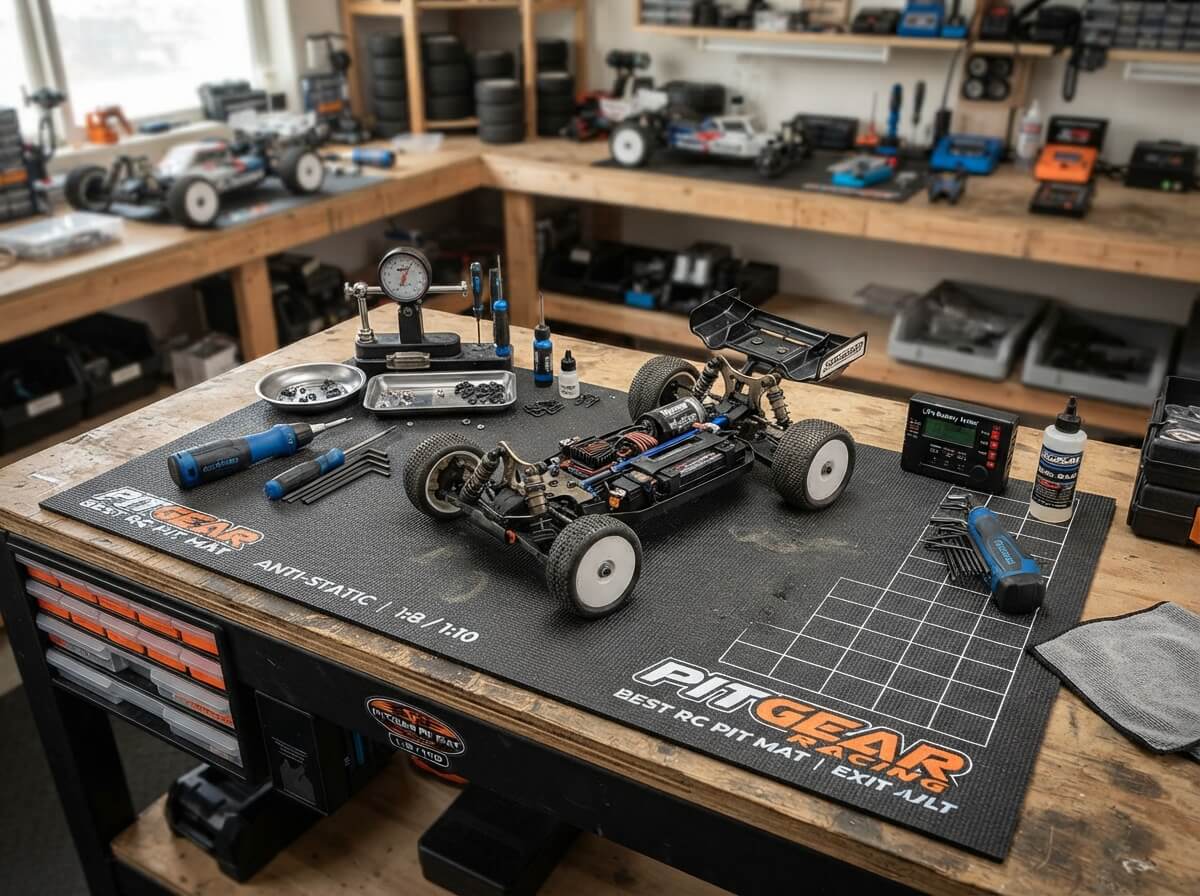
Every RC driver knows the feeling. You sit down to swap a shock, and a tiny screw rolls off the table. A drop of grease lands on the wood. The car slides around while you pull the wheels off. A good pit mat fixes all of that.
Finding the best RC pit mat sounds simple, but the options are not all alike. Some mats are long foam strips made for race tracks. Some are thin silicone sheets built for small crawlers. Others are thick rubber pads that handle heavy trucks. Each type fits a different kind of user.
This roundup looks at five popular mats. We cover what each one is, how it works in real life, and where it falls short. We also share a buying guide, a list of common mistakes, and a final verdict. Nothing here is hype. The goal is to help you pick the right RC work mat the first time.
Quick Comparison Table
| Product | Material | Size | Best For |
|---|---|---|---|
| TLR Team Foam Pit Mat (TLR70007) | Foam | 24 x 68 in | Racers, track days, big work areas |
| INJORA Silicone Pit Mat (600x450mm) | Silicone | 600 x 450 mm | Home builders, 1/10 scale upgrades |
| Traxxas 3426 Pit Mat | Rubber | 36 x 20 x 0.25 in | Bashers, 1/10 trucks, heavy builds |
| INJORA Silicone Pit Mat (420x297mm) | Silicone | 420 x 297 mm | 1/18 and 1/24 scale cars, small desks |
| LGRP Rubber Non-Slip Mat | Rubber | Check the listing | Mini crawlers, SCX18, SCX24 |
What Does an RC Pit Mat Actually Do?
A pit mat is a flat pad you place under your car while you work on it. That sounds basic, but it solves many small problems at once.
First, it protects your table. Grease, thread lock, and shock oil can stain wood or damage a nice desk. A mat soaks up or blocks most of that mess.
Second, it keeps your car steady. Wheels and tires roll on bare tables. A mat with some grip holds the chassis in place, so your hands stay free to turn screws.
Third, it keeps small parts from escaping. Many mats have a slight texture or soft surface. Screws, E-clips, and ball studs stay put instead of bouncing away.
Fourth, it helps with cleanliness. Dirt from a bashing session falls onto the mat, not your floor. You can shake it out or wipe it down later.
Last, it gives you a clear workspace. A dark or colored mat makes small silver parts easy to spot. That alone saves a lot of frustration.
Individual Product Reviews
1. TEAM LOSI RACING TLR Team Foam Pit Mat 24 x 68 (TLR70007)
Product Description
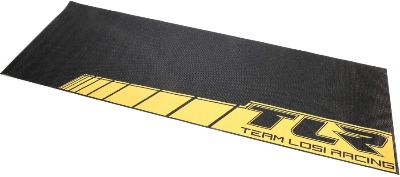
The Team Losi Racing foam pit mat is a long, narrow mat made for the racing side of the hobby. At roughly 24 by 68 inches, it covers far more space than most other mats on this list. It carries the TLR branding, so it also doubles as a bit of team gear.
Racers often work on folding tables at the track. Those tables are long, and the mat matches that shape well. It gives you room for the car, a toolbox, a tire bag, and a few spare parts all in one zone.
Best Use Cases
This mat fits best in a few situations:
- Race days at an indoor or outdoor track
- A long workbench at home
- A shared pit table where two cars sit side by side
- A pit area where you want a branded, tidy look
It is less ideal for a small desk. At 68 inches long, it needs real table space.
Key Features Explained Simply
Foam surface. Foam is soft and has some cushion. A car set down on it will not scratch or rattle. A dropped part also lands softly instead of bouncing.
Big size. The large footprint is the main selling point. You can lay out tools, bodies, wheels, and a car without crowding.
Rollable build. Foam mats are light. You can roll one up, slide it into a bag, and carry it to the track with little effort.
Team branding. The TLR look appeals to fans of the brand. It also makes your pit spot easy to find in a busy paddock.
Real-Life Usage Insight
At a race, speed matters. You have a few minutes between rounds to fix a bent arm or swap a motor. A big mat gives you a set place for everything. Reviewers who use foam mats often say they work faster because their tools and parts always sit in the same spot.
At home, a foam mat also helps with noise. Setting a metal chassis on a hard table makes a clunk. Foam softens that sound, which helps if you build late at night.
The tradeoff shows up with fluids. Foam can soak up oil, grease, and cleaner. Once a stain sinks in, it is hard to get out. Most users wipe spills fast and avoid heavy solvents on the surface.
Pros
- Very large work area
- Soft, quiet surface
- Light and easy to carry
- Good match for race tables
- Team branding looks sharp
Cons
- Too large for small desks
- Foam can hold stains
- Not as easy to wipe clean as silicone or rubber
- Sharp tools can nick the surface
- May hold fine dirt and dust in the surface
Performance
For its main job, it performs well. It protects the table, cushions the car, and gives you a big, organized area. Grip is decent, though a car with slick tires may still slide a little if you push it hard.
Durability is fair. Foam wears faster than thick rubber, especially at the edges and in the spots where you work the most. Careful users can still get long use from it.
Ease of Use
Very easy. Unroll it, flatten it, and start working. The foam usually lies flat after a short time. If it arrives with a curl, a little weight on the corners helps.
Cleaning is the weak point. You wipe it with a damp cloth and mild soap. Deep stains may stay.
Value for Money
This mat gives you a lot of surface for the money, which is its biggest strength. If you need a large pit mat for racing, the value is good. If you only work on one small car at a time, you pay for space you will never use.
2. INJORA RC Silicone Pit Mat Work Mat (600x450mm)
Product Description
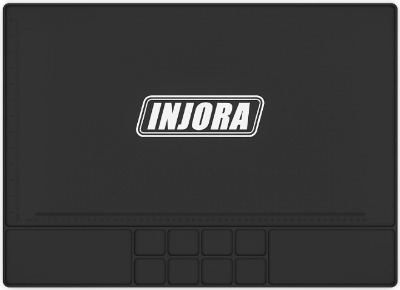
This INJORA mat is a silicone work mat with a mid-size footprint of 600 by 450 millimeters. That works out to about 24 by 18 inches. It suits a typical hobby desk and gives plenty of space for a 1/10 scale car or crawler.
Silicone has become a favorite material for hobby mats. It resists heat and oil, wipes clean easily, and stays flexible. This mat is marketed for RC car upgrades and general workbench use.
Best Use Cases
This one works well for:
- Home workbenches and desks
- 1/10 scale crawlers and trucks
- Detailed upgrade jobs like gear swaps and bearing installs
- Light soldering or glue work nearby (always follow the maker’s heat guidance)
- Shared hobby spaces where the table must stay clean
Key Features Explained Simply
Silicone material. Silicone does not soak up liquids. Oil, grease, and cleaner sit on top, so you can wipe them off. That makes it one of the easiest mats to keep tidy.
Handy size. At 600 by 450 millimeters, it fits on most desks. It is big enough for a full chassis and a small tool tray.
Non-slip feel. Silicone has a natural grip. Cars, tools, and trays stay in place better than on bare wood or glass.
Flexible build. You can fold, roll, or bend it for storage. It returns to a flat shape after a bit of time.
Many silicone mats of this type also include printed lines, grids, or rulers, which help with spacing and measuring. Check the product listing for the exact color and print details, since sellers sometimes change designs.
Real-Life Usage Insight
Silicone shines during messy jobs. Think about packing diff grease into a gearbox. A little always ends up outside the case. On a silicone mat, you wipe it off with a paper towel in seconds. On cloth or foam, that grease would stay for good.
Small parts also behave well. Screws tend to stay where they land rather than rolling away. Many hobbyists use the mat edges as a fence to keep parts from falling off the desk.
Dust is the small annoyance. Silicone can attract lint and fine dust because of its slightly tacky surface. A quick rinse with warm water and mild soap brings it back to normal. New mats can also have a faint rubbery smell at first, which usually fades after airing out.
Pros
- Easy to wipe clean
- Good size for home desks
- Resists oil and grease
- Gives a stable, grippy surface
- Flexible and easy to store
Cons
- Attracts dust and lint
- May have a mild smell when new
- Can hold a crease if stored folded for a long time
- Offers less cushion than foam
- Dark colors can show dust and fingerprints
Performance
The mat does its job quietly and well. It protects the table, controls mess, and holds parts in place. Heat resistance gives it extra flexibility compared with foam or thin rubber, though you should still avoid direct flame or a very hot iron tip resting on it.
Durability is strong. Silicone does not crack or crumble easily, and it handles repeated washing. Sharp blades can cut it, so keep hobby knives off the surface or use a small cutting pad on top.
Ease of Use
Extremely easy. Lay it flat, work, and wipe it down. Beginners like it because it forgives mistakes. A spilled drop of oil is no big deal.
Value for Money
This mat offers a strong mix of size, material quality, and price. It sits in the sweet spot for most home hobbyists. If you want one mat that does nearly everything, this is a safe pick.
3. Traxxas 3426 Pit Mat (Rubber, 36 x 20 x 0.25)
Product Description
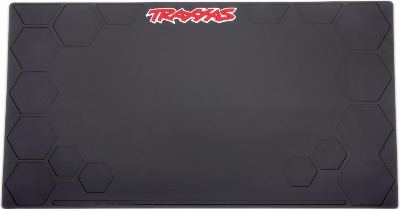
The Traxxas 3426 is a rubber pit mat that measures 36 inches long, 20 inches wide, and a quarter inch thick. That thickness makes it feel solid compared with thin silicone sheets. It carries Traxxas branding and targets the large community of Traxxas truck and car owners.
This mat leans toward durability. It feels more like a shop mat than a craft mat.
Best Use Cases
It suits these situations well:
- Bashing and backyard racing, where cars come back covered in dirt
- Heavy 1/10 scale trucks, monster trucks, and buggies
- Garage workbenches and rough tables
- Outdoor work stations at a park or driveway
- Shared family workspaces
Key Features Explained Simply
Thick rubber. A quarter inch of rubber gives a firm cushion. It protects hard surfaces from the weight and sharp edges of a heavy truck.
Generous size. At 36 by 20 inches, you get a lot of room without taking over a whole table. It is longer than most home mats but narrower than race mats.
Good grip. Rubber holds the car and tools steady. You can push on a screw without the chassis sliding away.
Branded look. Fans of the brand like the logo. It makes the mat easy to spot in a shared garage.
Real-Life Usage Insight
Bashers know the routine: you run, you crash, you come home with a car full of mud. A rubber mat takes the abuse. You set the truck down, blow off the dirt, and brush it away.
Heavy trucks also feel safer on it. A big truck with large tires can scratch a wooden table. The thick rubber stops that, and it adds a bit of noise control.
Rubber has its own quirks. New mats often smell strongly of rubber for a few days. Some users air them outside before putting them on a desk. Rubber can also curl at the corners when it comes out of the packaging. Laying it flat in the sun or under a few books helps it relax.
Pros
- Tough and long-lasting
- Thick enough to protect furniture
- Good grip for heavy cars
- Easy to rinse and brush clean
- Large but not too large
Cons
- Strong rubber smell at first
- Can curl at the edges when new
- Heavier than foam or silicone
- Less flexible for tight storage
- Can leave faint marks if harsh chemicals sit on it
Performance
This mat performs best under rough use. It handles oil, dirt, and heavy loads with little fuss. Grip is steady, and it stays in place on most tables. It takes impacts well, so a dropped part or tool will not do much harm.
It is not the best mat for fine detail work. The surface is plain, so you will not get printed grids or rulers. Small screws can still hide against a dark rubber color, so many users keep a small tray nearby.
Ease of Use
Simple. Unroll it, flatten it, and go. Weight makes it a bit harder to carry around than foam, but it works fine for a fixed spot. Cleaning takes a damp cloth or a quick rinse.
Value for Money
For anyone with a larger truck or a hard-use routine, the value is solid. You pay a little for the brand, but you also get thick material that lasts. A person with a small desk and a 1/18 scale car may find it more mat than they need.
4. INJORA Silicone Pit Mat Work Mat for 1/18 1/24 RC Car Upgrade (420×297mm)
Product Description
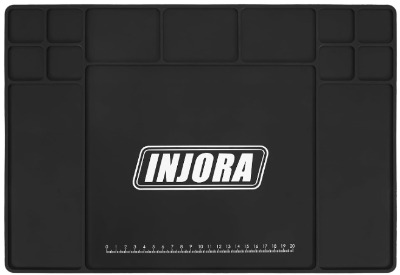
This smaller INJORA mat measures 420 by 297 millimeters, which is close to A3 paper size. It is built with mini crawlers and small-scale cars in mind. Think 1/18 and 1/24 scale models like the popular tiny crawlers that fit on a desk.
It uses the same silicone material as the bigger INJORA mat. The difference is the size, and that makes it a better match for tiny builds.
Best Use Cases
This mat fits these needs:
- Mini crawlers and scale rigs in 1/18 and 1/24 sizes
- Small desks, shelves, and apartment workspaces
- Travel kits and shoebox-style toolkits
- Fine detail jobs like painting parts or installing tiny bearings
- Kids and beginners who want a simple starter mat
Key Features Explained Simply
Compact size. The footprint is small, so it fits on almost any surface. It also fits inside many storage boxes.
Silicone surface. You get the same wipe-clean benefit as the larger version. Oil, paint drops, and glue spots clean up quickly.
Grippy texture. Tiny cars are light, so they slide easily. Silicone’s natural grip keeps them still while you work.
Easy to carry. You can roll it up and tuck it in a bag next to a small tool set.
Like other silicone pit mats, designs and printed markings can vary. Read the listing for the latest color and layout.
Real-Life Usage Insight
Small-scale cars use very small screws. Dropping one is easy, and finding it is not. On a compact silicone mat, parts tend to stay in the work zone. The edges form a loose border, and the surface keeps pieces from rolling far.
Many hobbyists also use a mat like this as a parts tray on top of a larger table. They set it beside the main mat and use it only for screws and small pieces. That keeps the work area clear.
The only real limit is space. A 1/10 scale truck will overhang the edges. Even with a small crawler, you may find tools take up more room than you expect. A person who builds several cars at once may feel cramped.
Pros
- Perfect size for mini scale cars
- Fits small desks and tool boxes
- Easy to clean
- Light and easy to store
- Good grip for tiny chassis
Cons
- Too small for 1/10 scale trucks
- Little room for tools and trays
- Attracts dust and lint
- New mats can have a light odor
- Not ideal for heavy or sharp items
Performance
For its target use, it performs very well. The surface holds a light car steady, protects the table, and keeps small parts close. It handles light oil and cleaner without trouble.
Do not expect it to carry heavy loads. A large truck would press into it and could stretch the edges. Keep the weight within what a small mat should hold.
Ease of Use
Excellent. It is simple enough for a first-time hobbyist. Lay it down, set the car on it, and start. Cleaning takes a soft cloth and a bit of soapy water.
Value for Money
This is a budget-friendly pick that makes sense for small-scale fans. You pay for a small mat and get a small mat that fits the job. Anyone with larger cars should skip it or buy it only as a parts tray.
5. LGRP Rubber Non-Slip Work Mat for 1/18 1/24 RC Car, SCX18, SCX24 (Generic)
Product Description
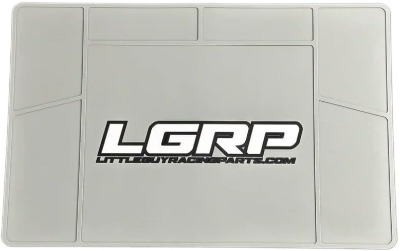
The LGRP mat is a rubber non-slip work mat made for tiny crawlers and small RC cars. The listing names models like the SCX18 and SCX24, and it says the mat works with brands such as Axial, RGT, Element, Enduro, and URUAV. It also mentions general hobby, craft, and airplane use, so it doubles as a general work pad.
It is sold under the Generic brand label. That means you will not get the name recognition of Traxxas or Team Losi Racing. You get a plain, practical rubber mat.
The size is not given in the product title you provided, so check the listing for exact dimensions before buying.
Best Use Cases
It fits these situations:
- Mini crawler builds and tune-ups
- Desk-top scale rig displays and photo shoots
- Small RC planes and drones that need a clean work surface
- Craft projects and model kits
- Beginners who want a low-cost starter mat
Key Features Explained Simply
Rubber surface. Rubber is firm, tough, and easy to wipe. It stands up to many small spills.
Non-slip design. The grip keeps small cars from sliding. It also holds the mat itself in place on most tables.
Broad compatibility. The listing lists many small-scale models and brands. That makes it a flexible choice for people who own more than one mini car.
Multi-hobby use. Because the mat is simple and neutral, you can use it for other crafts too.
Real-Life Usage Insight
Small-scale crawlers are popular because you can build and run them indoors. That also means your workspace is often a dining table, a shelf, or a kitchen counter. A rubber mat gives you a defined zone, and it protects the surface from scratches and drops of lubricant.
Users of budget mats often mention two things. One is the smell. Fresh rubber smells strong, and airing it out helps. The other is color consistency. Cheaper mats sometimes show small flaws in the surface, like light marks or uneven texture. These issues rarely affect function, but they matter if you care about looks.
Rubber also handles sharp tools better than thin silicone. A dropped screwdriver is less likely to leave a dent. A hobby knife can still cut it, so keep blades off the mat.
Pros
- Firm, tough surface
- Good non-slip grip
- Works for many small-scale cars and other hobbies
- Easy to clean with a damp cloth
- Budget-friendly and simple
Cons
- Generic brand with less proven track record
- Rubber smell when new
- Exact size and finish can vary by listing
- Less heat resistant than silicone
- Basic design with few extras
Performance
The mat does what a basic rubber pad should do. It holds the car, protects the table, and cleans up quickly. For small cars, that is enough. The surface is not fancy, but it works.
Heat is the one area where it trails silicone. A hot soldering iron tip can damage rubber. Keep any hot tool away from it, or place a heat-safe pad underneath.
Ease of Use
Very easy. There is no setup, and no special care. Keep it flat, wipe it clean, and store it in a dry place.
Value for Money
This mat gives fair value for beginners with small cars. It costs little and does a clear job. Buyers who want a long track record or a brand name may prefer one of the other mats. Buyers who simply need a basic rubber pad will find it fine.
Comparison Insights
Now that each mat has its own review, here is how they stack up in the areas that matter most.
Material: Foam vs. Silicone vs. Rubber
The TLR mat uses foam, and that gives you softness and low weight. It is great for transport but weaker against spills.
Both INJORA mats use silicone. Silicone cleans up fastest, resists oil, and handles light heat. It also gathers dust.
The Traxxas and LGRP mats use rubber. Rubber is firm and tough. It works well for rough use but can smell strong at first and does not like heat.
If you hate cleaning, pick silicone. If you need cushion and portability, pick foam. If you need toughness, pick rubber.
Size: Small, Medium, and Large
The smallest mats are the INJORA 420x297mm and the LGRP, which target mini crawlers. The INJORA 600x450mm is the middle option for most home desks. The Traxxas 3426 is a large mat for trucks. The TLR foam mat is the biggest by far, built for race tables.
Size drives the whole choice. A mat that is too small feels cramped. A mat that is too big does not fit the table. Measure your space first.
Cleanability
Silicone wins. Wipe, rinse, and you are done. Rubber comes next. A damp cloth handles most dirt, though oily stains can need a bit more effort. Foam is last, because it can soak up liquids.
Durability
Rubber is the toughest, especially the thick Traxxas mat. Silicone follows closely, since it resists tearing and washing. Foam is the softest and wears the fastest, but it still lasts a long time with care.
Portability
Foam is the lightest. The TLR mat rolls up easily despite its large size. Silicone is also easy to carry, especially the small INJORA mat. Thick rubber is the heaviest and works best for a fixed workspace.
Grip
All five mats give better grip than a bare table. Rubber and silicone grip best. Foam has less grip but offers cushion.
Price and Value
Prices change often, so check the listing for current costs. In general, the small silicone and rubber mats cost the least. The branded Traxxas and TLR mats cost a bit more because of the brand and size. The mid-size INJORA mat sits in between and offers good balance.
Quick Pick Guide
- Best for racers: TLR Team Foam Pit Mat
- Best all-around home mat: INJORA 600x450mm Silicone
- Best for bashers: Traxxas 3426 Rubber Pit Mat
- Best for mini crawlers: INJORA 420x297mm Silicone
- Best budget rubber option for small cars: LGRP Rubber Non-Slip Mat
Buying Guide: How to Pick the Right RC Pit Mat
A pit mat looks simple, but a few details change how happy you will be with it. Use this guide to narrow your list.
1. Match the Mat to Your Car Size
Start with your car. A 1/24 scale crawler needs far less space than a 1/8 scale buggy. Measure the longest car you own. Add room for your tools, and you have your minimum mat size.
For mini cars, a mat near 420 by 297 millimeters is plenty. For 1/10 scale cars, aim for at least 20 by 24 inches. For multiple cars or race days, a longer mat makes sense.
2. Think About Your Workspace
Where will the mat live? A small desk limits your options. A garage bench gives you more freedom. A folding table at the track calls for a long, narrow mat.
Measure your table. Leave a small border so the mat does not hang over the edge.
3. Pick the Right Material
Each material has its own strengths:
- Foam is soft, light, and quiet. It suits racers and travelers.
- Silicone is easy to clean and handles light heat. It suits home builders.
- Rubber is tough and thick. It suits bashers and heavy cars.
Think about what you do most. If you work with a lot of oil and grease, silicone is a smart pick. If you drop heavy parts, thick rubber helps.
4. Check the Grip
A good mat holds the car still. Look for words like “non-slip” in the listing. Also look at how the underside is built. A mat that slides on the table can be as annoying as a car that slides on the mat.
5. Think About Cleaning
A mat that is hard to clean turns into a dirty mat. Pick one that matches how messy you are. Silicone and rubber are the easy ones. Foam needs more care.
6. Look at Thickness
Thicker mats protect your table better and cushion your car. Thin mats store easier and cost less. For heavy trucks, thickness matters. For small crawlers, a thin mat does the job.
7. Consider Heat Resistance
If you solder, melt heat shrink, or use hot glue near the mat, heat resistance matters. Silicone handles heat better than most other materials. Even so, check the product listing, and never rest a hot iron directly on a mat unless the maker says it is safe.
8. Look for Useful Extras
Some mats include printed grids, rulers, or storage zones. These details help with measuring and organizing. They are not required, but they are handy for detail work.
9. Think About Smell and Setup
New rubber and silicone mats can carry a smell. Air them out in a ventilated spot for a day or two. If you are sensitive to smells, plan for that.
10. Read Recent Reviews
Product designs and quality can shift over time. Read recent buyer reviews to see how the mat holds up. Look for comments about curling, smell, and wear.
Who Should Buy These Products?
Beginners
If you are just starting, grab a simple silicone or rubber mat. The INJORA 600x450mm silicone mat is a friendly first pick for 1/10 scale cars. The small INJORA or LGRP mats are good starters for mini crawlers.
A beginner mat should be easy to clean, easy to store, and low in cost. These three tick those boxes.
Racers
If you spend weekends at the track, the TLR foam mat makes the most sense. It is long, light, and made for pit tables. It also looks sharp with your gear.
Bashers and Backyard Drivers
If your cars get dirty often, the Traxxas 3426 rubber mat is built for you. It handles mud, dirt, and heavy trucks. It also protects the garage bench from rough use.
Mini Crawler Fans
If you run SCX24, SCX18, or similar tiny rigs, a small mat is all you need. The INJORA 420x297mm silicone mat and the LGRP rubber mat both fit. Pick silicone for easy cleaning and rubber for a firmer surface.
Detail Builders and Scale Modelers
If you love adding fine scale details, you will benefit from a mat with a clean, grippy surface. Silicone works best here, since it holds small parts and wipes clean after paint or glue.
Families and Shared Workspaces
If the hobby happens on the dining table, a mat protects the surface. A silicone or rubber mat gives you a quick cleanup and keeps the peace at home.
Who Should Skip a Pit Mat
If you only tighten a screw once in a while, a towel may do the job. If you have a very small desk, a giant mat will only get in the way. In both cases, a small, simple mat is still more helpful than none.
Common Mistakes to Avoid
Even a simple product can cause trouble if you use it the wrong way. Here are the mistakes hobbyists make most often.
Buying a mat that is too big. A large mat looks great online, but it can overflow a small desk. Measure first.
Buying a mat that is too small. A tiny mat looks cute, but a 1/10 scale truck will hang off the edges. Match the size to your biggest car.
Skipping the airing-out step. New rubber and silicone can smell. Leave the mat in a ventilated area before you use it indoors.
Using harsh solvents. Strong cleaners can damage foam, rubber, and silicone. Use mild soap and water, and test any new cleaner on a small corner first.
Letting spills sit. Oil and grease sink in, especially on foam. Wipe them fast.
Cutting on the mat. Hobby knives slice through silicone, rubber, and foam. Use a separate cutting pad.
Resting hot tools on the surface. Soldering irons, heat guns, and hot glue can melt or mark the mat. Use a heat-safe pad under hot tools.
Folding it tight for long periods. Creases can stay in silicone and rubber. Roll the mat loosely, or store it flat.
Ignoring the underside. Dust or grease on the bottom makes the mat slide. Clean both sides now and then.
Forgetting about dust. Silicone attracts lint. Keep a damp cloth nearby and wipe it before each session.
Ignoring the edges. A mat that curls at the corners can trip a car. Flatten it under a weight for a day if it arrives curled.
Buying on brand alone. A famous name does not always mean a better fit. Match the material and size to your needs first.
Frequently Asked Questions
Is a pit mat really worth it?
Yes, for most hobbyists. A pit mat protects your table, keeps parts close, and makes cleanup easier. The cost is small compared with the time it saves.
What size pit mat do I need?
For 1/18 and 1/24 scale cars, a mat around 420 by 297 millimeters works well. For 1/10 scale cars, aim for about 24 by 18 inches or bigger. For racing or multi-car setups, a long mat like the TLR foam model helps.
Are silicone mats better than rubber mats?
Neither is better in every case. Silicone is easier to clean and handles light heat better. Rubber is thicker and tougher for heavy use. Pick the one that fits your habits.
How do I clean a pit mat?
Wipe it with a damp cloth and mild soap. Rinse with clean water and let it dry flat. Avoid strong solvents unless the maker says they are safe.
Can I use a pit mat for other hobbies?
Yes. Many people use them for model kits, painting, electronics, and crafts. Just keep hot tools and sharp blades away from the surface.
Why does my new mat smell?
Fresh rubber and silicone often carry a faint smell from manufacturing. It usually fades after a day or two in open air.
Will a pit mat stop screws from rolling away?
It helps a lot, but it does not stop every roll. A mat with some grip and a small border keeps most parts in place. A small parts tray adds extra safety.
Final Verdict
There is no single winner for every driver. The best RC pit mat depends on your car size, your table, and your habits. Still, each of these five mats has a clear job.
The TLR Team Foam Pit Mat earns the top spot for racers. Its long size, soft surface, and light weight make it a smart choice for track days. It is less suited to small desks or messy oil jobs.
The INJORA 600x450mm Silicone Pit Mat is our pick for the best all-around home mat. It cleans up fast, fits a normal desk, and handles many kinds of work. It is the one we would suggest to most beginners with 1/10 scale cars.
The Traxxas 3426 Rubber Pit Mat is the tough guy of the group. If you bash hard, run heavy trucks, or work in a garage, this thick rubber mat holds up well. It smells at first and weighs more, but it takes abuse.
The INJORA 420x297mm Silicone Pit Mat is the best fit for tiny crawlers and small desks. It keeps small parts close, wipes clean, and tucks into a toolbox with ease. It is too small for bigger cars.
The LGRP Rubber Non-Slip Mat is a simple, budget-friendly rubber option for 1/18 and 1/24 scale cars. It lacks a famous name, so check the listing for size and recent buyer comments before you buy. For basic use, it does the job.
To sum it up in one short list:
- Racing at the track: TLR foam mat
- General home use: INJORA 600x450mm
- Rough bashing: Traxxas 3426
- Mini crawlers on a small desk: INJORA 420x297mm
- Simple rubber mat for tiny cars: LGRP
Whatever you pick, measure your space, think about how messy your builds get, and match the material to your habits. A good pit mat will not make your car faster, but it will make every tune-up smoother, cleaner, and a lot less stressful. Pick one that fits your style, and enjoy the time you spend at the bench as much as the time you spend at the track.