How to Clean an RC Car?
So you just got back from a dusty track day or a muddy backyard session with your RC car, and now it looks like it needs a bath. Your remote control vehicle spent the last few hours rolling through dirt, splashing through puddles, and collecting debris like it’s on a treasure hunt. The good news? Cleaning your RC car isn’t rocket science. With some basic supplies and a little patience, you can have your ride looking and running like new again.
This guide walks you through everything you need to know about maintaining your RC vehicle. Whether you race competitively, bash casually, or run on-road, keeping your car clean extends its life and helps it perform at its best.
Why You Need to Clean Your RC Car
Let’s start with the why before we jump into the how. Your RC car works hard for you. Every dirt particle, dust cloud, and mud splash puts stress on the tiny parts inside. Think about your car’s motor, gears, and bearings. These components are precision machines that work together to make your car zoom forward, turn left and right, and accelerate smoothly.
When dirt builds up, it acts like sandpaper inside your car. It scratches metal parts, slows down gears, and makes the motor work harder than it needs to. A motor working too hard burns out faster. Gears grinding against dirt wear down quicker. Bearings, which should spin freely, get stuck and sluggish.
Regular cleaning also helps you spot problems early. A crack in the chassis, a bent suspension arm, or loose bolts all become visible when you wipe away the grime. Catching these issues before they become major problems saves you money and keeps your car running strong.
Your RC car battery and electronics also benefit from staying clean. Dirt near the battery connector can cause poor connections. Dust on circuit boards can trap heat and cause failures. Clean electronics mean reliable performance every single time you hit the track or yard.
Gather Your Cleaning Supplies
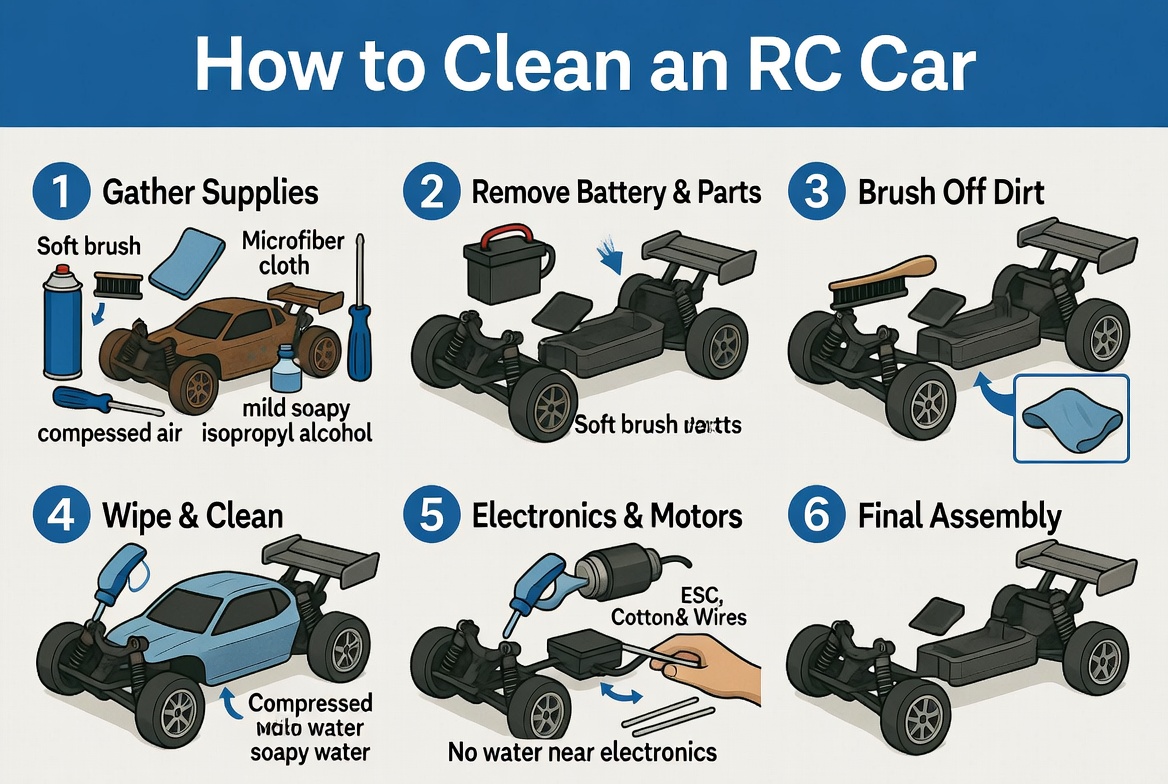
You don’t need expensive equipment to clean an RC car. Most items you probably already have at home. Here’s what works best:
The Essentials Start with soft brushes. An old toothbrush works great for tight spaces. Brass wire brushes work well on caked mud without scratching plastic. Avoid steel wire brushes because they can damage anodized aluminum parts.
Grab some clean towels or rags. Microfiber cloths are perfect because they don’t leave lint behind. Paper towels work too, but they fall apart when wet.
You’ll want a spray bottle filled with water or RC car cleaner. Distilled water is best because tap water can leave mineral deposits. RC-specific cleaners are gentle on plastic and electronics.
A bucket of clean water lets you rinse parts without wasting spray. Some people use two buckets—one for soapy water and one for rinsing.
The Nice-to-Haves Air blowers push water and dirt out of tight spots. A can of compressed air from the computer section works, or you can buy an electric air pump.
Cotton swabs or small paintbrushes fit into tiny gaps where bigger brushes can’t go. These work great around the motor and transmission.
Old newspapers or a large towel creates a work surface and catches drips. This keeps your cleaning area from becoming a mess.
A parts organizer keeps screws and small pieces organized while you work. You can use a muffin tin or small containers.
Prepare Your Work Area
Before you start spraying, set up a good workspace. Pick a spot where water can drip without ruining your carpet or floor. A garage, driveway, or patio works perfectly. If you’re indoors, lay down old newspapers or cardboard to protect surfaces.
Make sure you have good light. You need to see dirt and debris clearly. Work during daytime near a window or grab a desk lamp. You can’t clean what you can’t see.
Keep your cleaning supplies within arm’s reach. Having everything organized means you spend less time searching and more time actually cleaning. Grab a small container and fill it with your brushes, cloths, and tools.
Remove the battery before cleaning. You never want to spray water near the battery compartment or the electronic speed controller. This is non-negotiable. Most RC car fires happen because water got near the battery or ESC during cleaning. Once the battery is out and stored safely away from your workspace, you’re ready to begin.
Wash the Body and Shell
The plastic body shell gets dirty first and often the dirtiest. Start by rinsing off loose dirt with water from your spray bottle. Aim for the outside first to avoid pushing dirt deeper into the car.
Use your soft brush to gently scrub away stubborn mud or clay-like dirt. Don’t scrub hard—just gentle circles. The dirt should lift away without you needing to force it. If something doesn’t come off easily, spray it with water again and wait a minute for it to soften.
For baked-on mud, soak the area with your RC car cleaner and let it sit for a few minutes. The cleaner loosens the dirt so you can brush it away without damage. Never use harsh chemical cleaners or abrasive scouring pads. These can crack plastic and ruin paint.
Rinse thoroughly with clean water. Use your spray bottle to flush away all soap and cleaner. Any residue left behind can leave streaks or attract more dirt.
Dry the body with a towel. Grab a microfiber cloth and wipe down the entire shell. Don’t just let it air dry because water spots can form on the plastic. A quick towel dry takes thirty seconds and makes your car look amazing.
Check the body for damage while you clean. Look for cracks, dents, or bent areas. These pieces of information matter because they tell you about wear and tear. A crack in the bumper might need replacement soon.
Clean the Chassis and Frame
Your RC car’s frame or chassis is the skeleton that holds everything together. This metal or plastic part sits under the body and touches the ground. It gets absolutely filthy because it rides just inches above dirt and mud.
Flip your car over carefully once the body is clean. You’ll see the chassis covered in dust, dirt, and probably some mud splatter. Start spraying with water to rinse away loose stuff. Use a stiff brush—your brass brush works great here—to scrub away packed dirt.
Pay special attention to gaps and crevices where dirt hides. Spray water into these spots and use a brush to dislodge debris. Cotton swabs help reach into really tight areas. The goal is to get every bit of dirt out because trapped debris will keep damaging parts.
Clean around the suspension components. Your RC car’s suspension consists of suspension arms, springs, and shocks that help it drive smoothly over bumps. These parts need to move freely. Dirt buildup restricts movement and makes your car handle poorly. Spray and brush around all these moving parts.
Don’t forget the underside screws and fasteners. Dirt around these can cause problems when you need to remove parts for maintenance. A quick brush over all metal fasteners keeps them clean and accessible.
Rinse the entire chassis with fresh water. Make sure all soap, cleaner, and dirt wash away completely. A residue left on metal parts can lead to rust over time. Dry thoroughly with your towel, paying special attention to areas where water pools.
Tackle the Wheels and Tires
Wheels and tires pick up the most dirt because they roll through everything. They also need the most focused cleaning since this is where your car contacts the ground.
Remove the wheels if you can. Most RC cars have wheels that pop off or unscrew easily. Removing them gives you access to the inside surfaces and brake areas. If your wheels don’t come off easily, just leave them on and work around them.
Spray the tires with water and use a brush to scrub the tread. Roll them as you brush to get all sides. Dirt loves hiding in tire grooves. This is where a stiff brush really shines. Really work it into those grooves until the tires look clean.
Scrub the wheel rims where dirt accumulates. A soft brush works here because aluminum rims can scratch. Soap and water clean off most stubborn grime. Dry the wheels and tires with your towel.
For the brake area if your car has brakes, use a soft brush and water to gently clean around the rotor and pads. Be careful not to contaminate brake fluid if your car uses hydraulic brakes. Stick to water and avoid heavy scrubbing.
Replace the wheels once they’re dry. Make sure they’re attached securely. Spin them by hand to confirm they roll freely without wobbling.
Clean the Motor and Drivetrain Components
This step requires care because the motor and drivetrain are delicate. Never submerge these parts in water or spray them directly with heavy water pressure. Water inside a motor causes corrosion and failure.
Use a dry brush first. A soft or medium brush removes dust and light dirt from around the motor bell and housing. Brush gently around the motor shaft and can. If your car has exposed gears, brush these carefully to remove dirt without disturbing lubrication.
For stubborn dirt near the motor, use a barely damp cloth instead of spraying water. Dampen a small rag with cleaner and wipe around the motor area. This gives you control and keeps water away from the motor internals.
The pinion gear and spur gear system needs attention. These gears mesh together to transfer power from the motor to the wheels. Dirt between the teeth causes grinding and wear. Use a soft brush or cotton swab to gently clean between gear teeth. Rotate the gears by hand while you brush to access all sides.
Check that the motor shaft spins freely by rotating it by hand. It should spin smoothly with minimal resistance. If it feels rough or stuck, the motor might need professional cleaning or service.
The transmission or gearbox also needs a light touch. These metal boxes contain multiple gears working together. Brush around the outside to remove dirt, but avoid getting water inside. If your car has a removable transmission, you might want to consult your manual before taking it apart.
Air dry the motor area for several minutes. If you used any liquid cleaner, let it evaporate completely before reassembling. Spin the motor by hand one more time to confirm smooth operation.
Address Electronics and Connections
The electronic speed controller, receiver, and servo connections are vital to your car’s operation. These components need careful handling during cleaning.
Inspect all connectors for dirt or corrosion. Battery connectors, servo plugs, and receiver connections should look shiny and clean. If you notice green or white corrosion on metal pins, this is a problem. Corrosion prevents good electrical connection and causes performance issues or complete failure.
Gently wipe connectors with a barely damp cloth. Never spray water on electrical connectors. A quick wipe with a cloth slightly dampened with distilled water removes light dirt. Let them air dry completely.
If you see significant corrosion, use a battery terminal cleaner or a drop of white vinegar on a cloth to gently clean the connector pins. Wipe away the vinegar with a dry cloth afterward. If corrosion is severe, the connector might need replacement.
The receiver should stay mostly dry. It sits inside your car protected from dirt, but dust can still settle on it. Use a soft brush or compressed air to blow dust away from the receiver. Avoid touching the circuit board directly with wet items.
Check all wires for damage. Look for cuts, abrasions, or exposed copper. Damaged wire insulation lets dirt and moisture reach the wire inside. This causes shorts or connection problems. Any damaged wires need immediate attention and probably professional repair.
Make sure all connections are plugged in firmly after cleaning. Loose connections cause intermittent problems that are frustrating to diagnose.
Dry Everything Thoroughly
This step sounds simple but it’s crucial. Leftover moisture causes rust, corrosion, and electrical problems. Your RC car needs to be completely dry before you run it again.
Start with the outside. Use clean towels or microfiber cloths to wipe every surface. Get into corners and crevices where water collects. The towel method works best for this.
Move to the internal areas. Compressed air or an electric air pump blows water out of tight spots. Direct the air stream into gap and crevices to push out trapped moisture. Work methodically from top to bottom so gravity helps water drain out.
Let the car sit in a warm, dry spot for at least an hour before using it. Faster drying is even better. Some people use a fan pointed at their car to speed up the drying process. Never use heat sources like hair dryers or heat guns because these can damage plastic.
Check that everything is dry by looking for water drops or shiny wet spots. If you see any moisture remaining, keep drying. Patience here saves you from expensive repairs later.
Reassemble and Test
Once everything is completely dry, you can reassemble your car and prepare to run it. Start by installing the battery. Make sure the battery connector snaps in firmly and sits flat. A loose battery connection causes electrical problems or the car won’t run at all.
Double-check that all fasteners are tight. Grab a wrench or screwdriver and go through all visible bolts and screws. Cleaning can loosen fasteners without you realizing it. A quick check prevents parts from vibrating loose during your next run.
Spin the wheels by hand. They should rotate freely without grinding or resistance. If they feel rough, something is stuck inside. The wheels should spin for several seconds after you spin them by hand.
Turn on your transmitter and receiver. The car should power on normally without beeping errors. Confirm that all servos respond when you move the controls. Test throttle, steering, and any other functions your car has.
Take your car for a quick test run before going all out. Start slow and listen for any unusual sounds. Watch how the car handles. Everything should feel normal if the cleaning went well.
Maintenance Tips for Longer Intervals Between Cleaning
You can reduce how often you need to do deep cleaning by maintaining your car regularly. After each run, blow loose dirt off the car with compressed air. This takes two minutes and removes most debris before it gets packed on.
Store your car in a clean, dry place. A box or storage bag protects it from dust between runs. This keeps it cleaner longer.
Check fasteners weekly if you run your car regularly. Vibration from driving loosens bolts gradually. Tightening them takes a minute and prevents parts from falling off.
Inspect your tires for damage and wear. Tires wear unevenly based on how you drive. Replacing worn tires keeps your car handling well.
Keep your battery charged and stored properly. A well-maintained battery runs better and lasts longer. Check the battery connector for corrosion regularly.
Common Mistakes to Avoid
Don’t use the garden hose at full blast. Water pressure can push water into places it shouldn’t go, like inside the motor or onto the receiver. Stick with a spray bottle for controlled water application.
Never submerge your whole car in water even if it seems really dirty. Water finds its way into electronics and causes massive damage. Spot clean instead.
Don’t use dish soap or household cleaners. These contain chemicals that can damage plastic and finishes. RC-specific cleaner or plain water works better.
Avoid working too fast. Rushing cleaning often means you miss dirty spots or accidentally damage components. Take your time and work methodically.
Don’t skip the drying step. Moisture causes more problems than dirt ever will. Dry everything completely before running.
Conclusion
Cleaning your RC car keeps it running smoothly and looking sharp. The process isn’t complicated and doesn’t take hours. With your supplies gathered and a good workspace set up, you can get your car clean in thirty to forty-five minutes.
Remember that regular maintenance between deep cleans makes the job easier. A quick brush-off after each run, checking fasteners regularly, and storing your car properly all extend the time between full cleaning sessions.
Your RC car will reward you for taking care of it. Clean cars run better, handle better, and last longer. You’ll enjoy driving it more when you know it’s been properly maintained. Start with this guide, develop your own routine, and soon cleaning your RC car becomes second nature. Happy cleaning and happy driving!